All posts by Paul Lenihan

Going South

“Going South” was the cryptic cable Roald  Amundsen sent to Robert Falco Scott after Amundsen changed his mind about going to the North Pole when he learned it had been reached and instead decided to try and conquer the South Pole.

In our own little way we are “going south” on a big bus from London to Paignton and then a smaller bus to Brixham. Strictly speaking we are going more south west than south and definitely somewhere warmer than the pole.

Today was supposed to be a relaxing repositioning day. Our original plan was to get the 9.37am train Paddington to Paignton, 3 hr 20 min, then a 15 min local bus Paignton to Brixham and a 15 min walk to our B an B, arriving there early afternoon. However the two day train strike put the kybosh on that. We now had a bus leaving Victoria Coach Station, 6 hr 40min, to Paignton then the local bus and walk as before, getting to our B and B in the evening, arriving at 8pm.

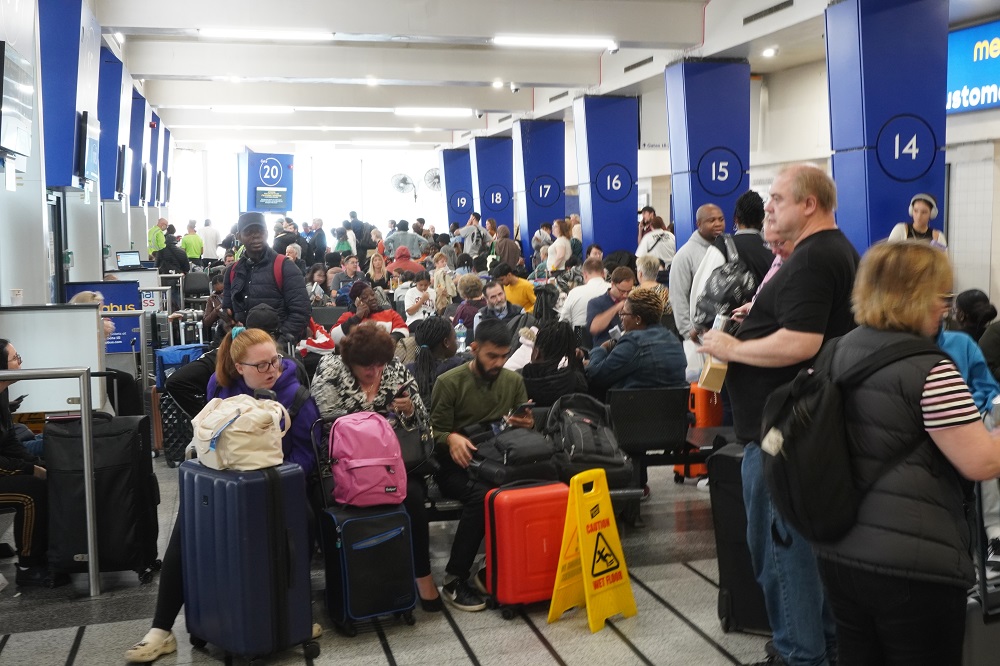
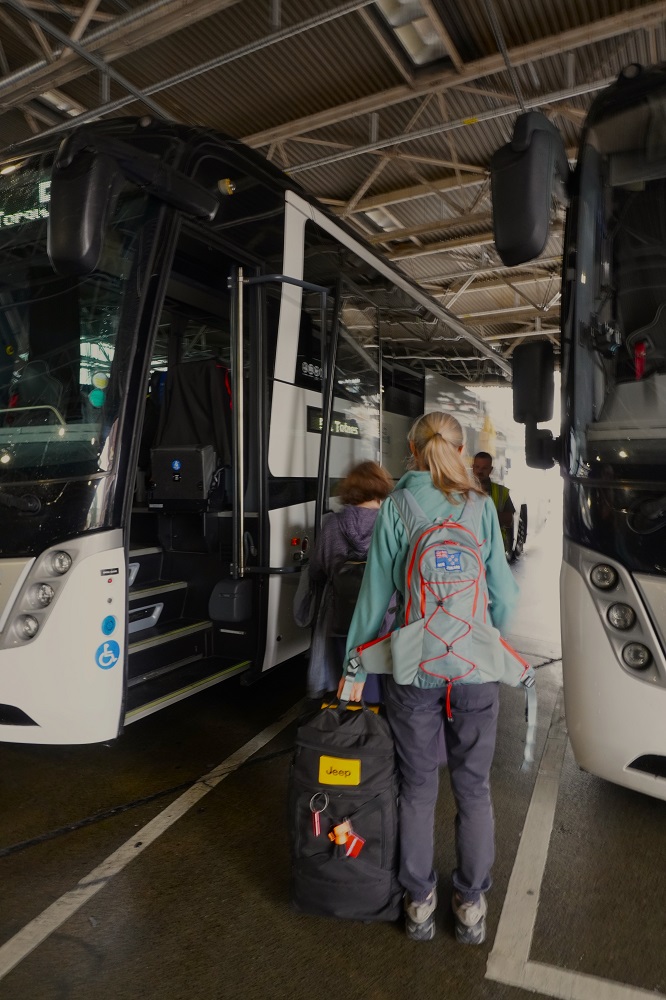
We had a very lazy start for us not leaving the hotel until after 10am and getting two tubes to Victoria Train Station, another one of those fabulous cavernous 19th century engineering wonders with a vast arched roof. From there a 200 hundred metre walk to Victoria Coach Station. This place is not huge and has two bus departure areas, both absolutely packed with people and bags. It was Friday so lots of people travelling for the weekend, it was the last weekend of the school holidays and of course no trains so everyone was after a seat on a bus. Thank goodness as soon as we heard of the strike we got online and booked our two seats. All the buses leaving were fully booked.

Our route had very few stops, the first being Heathrow Terminal 5 which should take 30 minutes but took just over an hour. The next was Taunton, way down south and should have taken about 3 hours however the motorways out of London were absolutely choked with traffic and we crawled along. The driver was getting real time information on traffic volumes, hold ups and which roads were clear. Instead of going south west through Salisbury and Winchester he went west all the way to Bristol, through a back route in the suburbs to Western sur Mer and then south and east back along small country roads to Taunton, A longer route but much quicker today. We did see many beautiful little Devon villages, not just endless motorway At the driver change at Taunton he told everyone this had put us back on schedule, for which he got a round of applause.

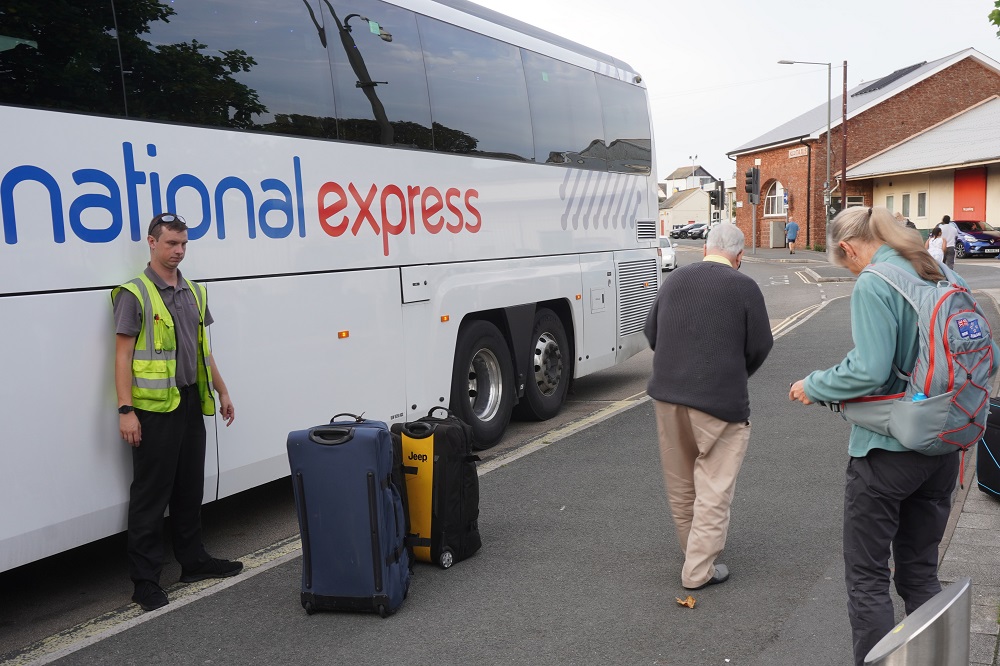
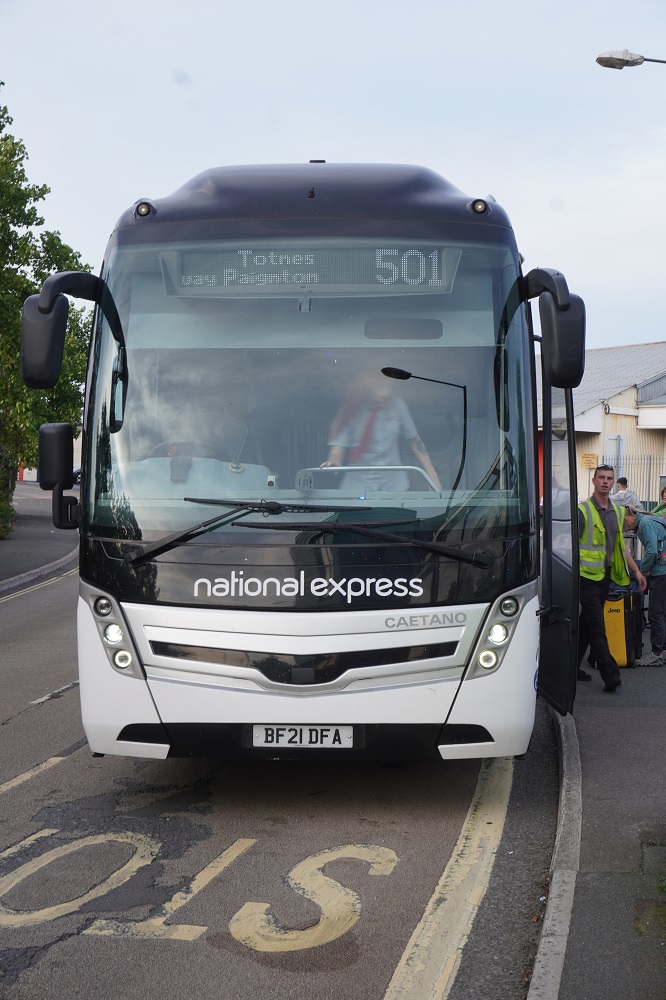
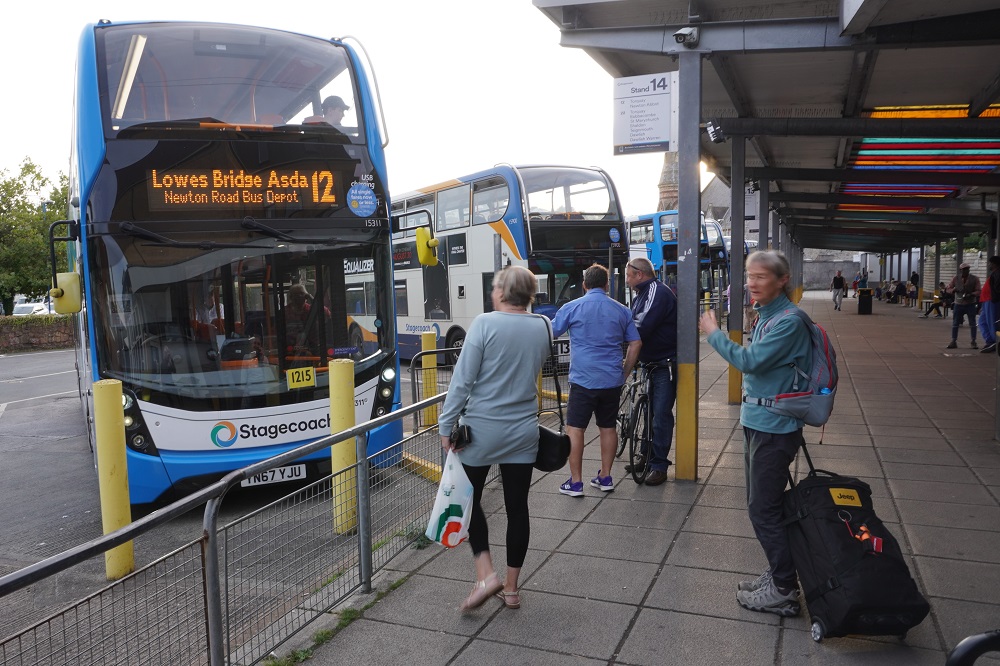
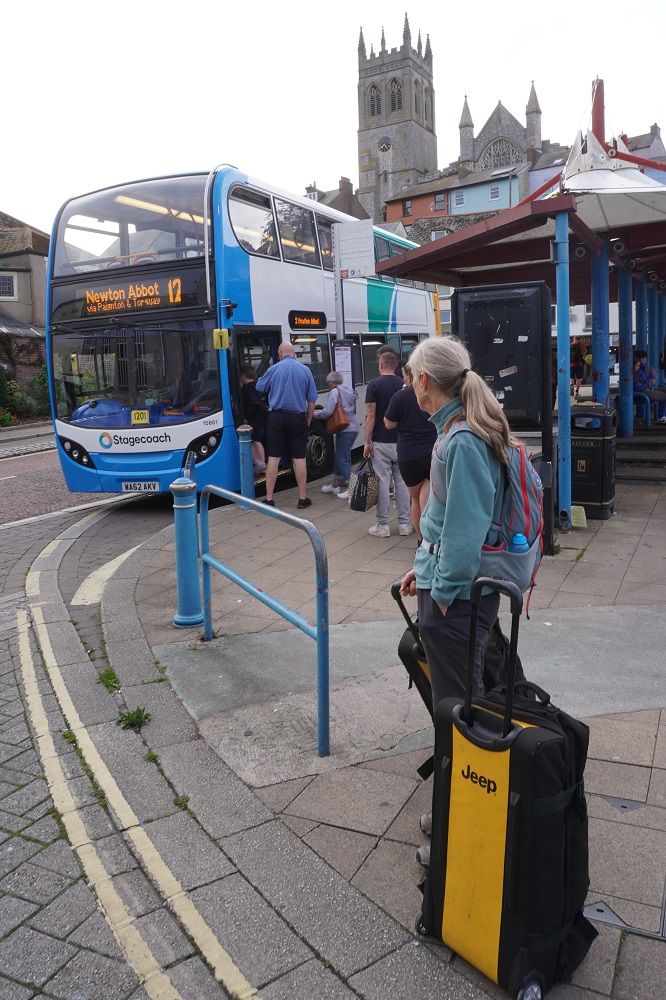
He was lying! But not by much, we arrived in Paignton half an hour behind schedule. As we were inching our way out of Heathrow I had been imagining sleeping in a bus shelter after midnight in Paignton, long after the last local bus to Brixham had gone. It was interesting that the bus driver could react to real time traffic conditions and use alternative routes as necessary. This only works on a route like ours which had no drop offs or pick ups for 5 hours between Heathrow and Exeter. If there are many stops all along the way then I guess you can’t change the route. We had good timing at Paignton, less than a minute after getting off the National Express bus the no.12 Stagecoach Southwestern bus pulled up and for £2 each we were off.

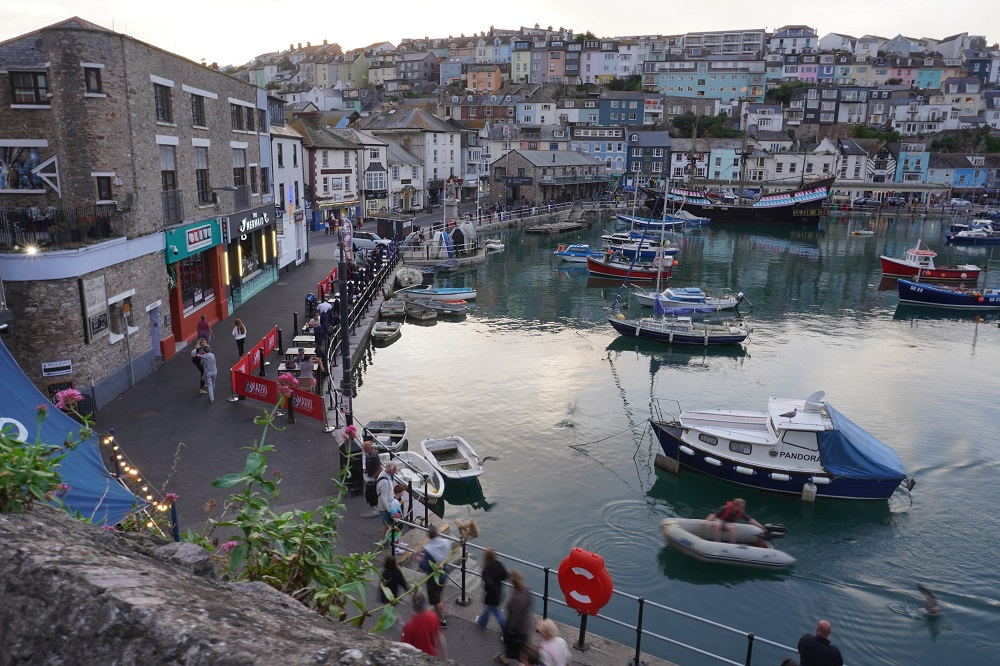
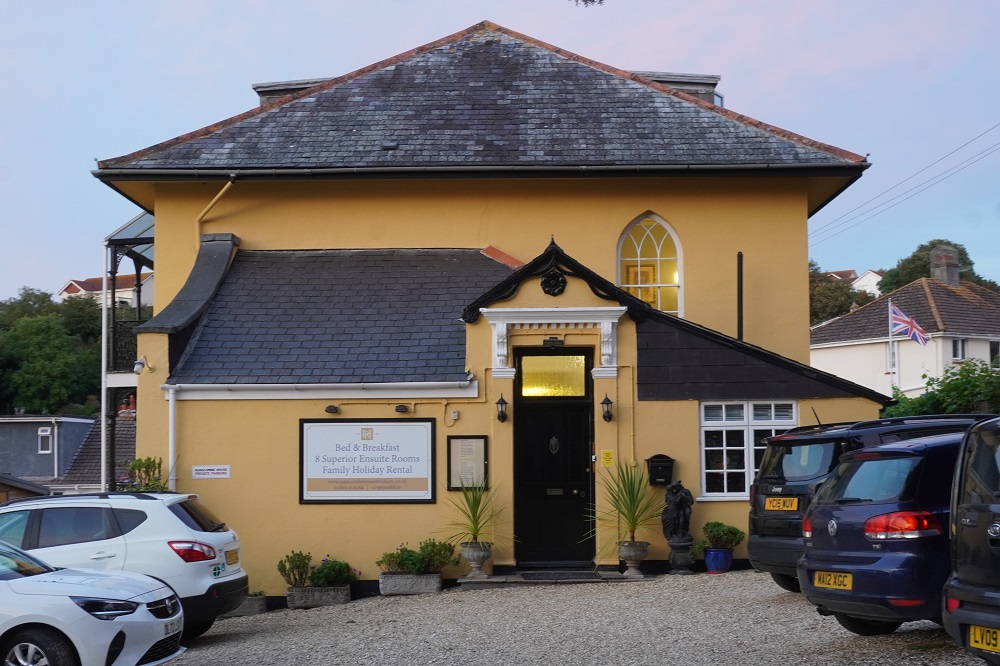
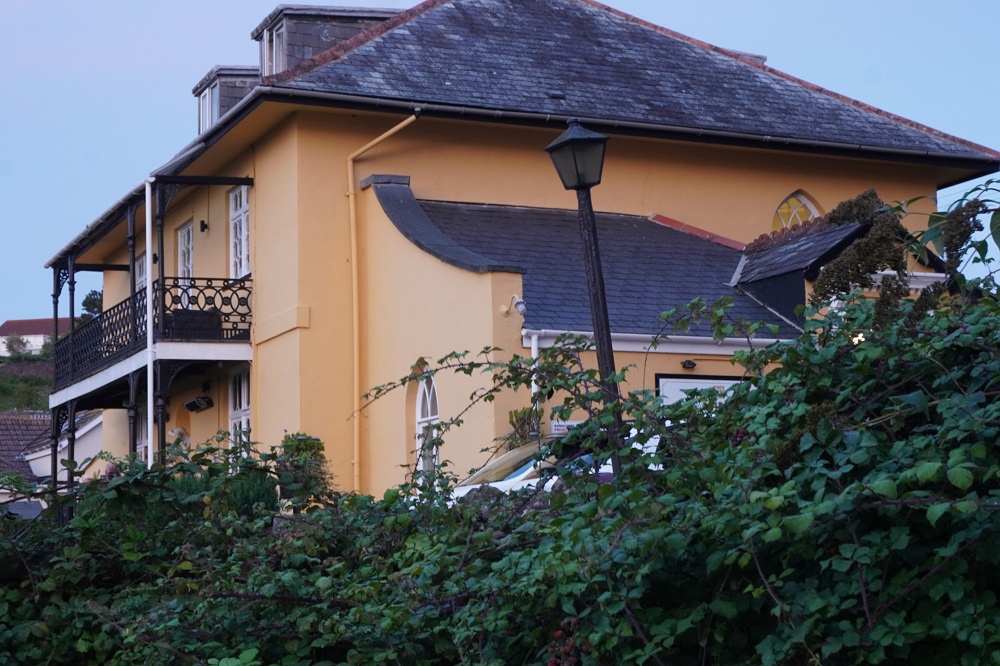
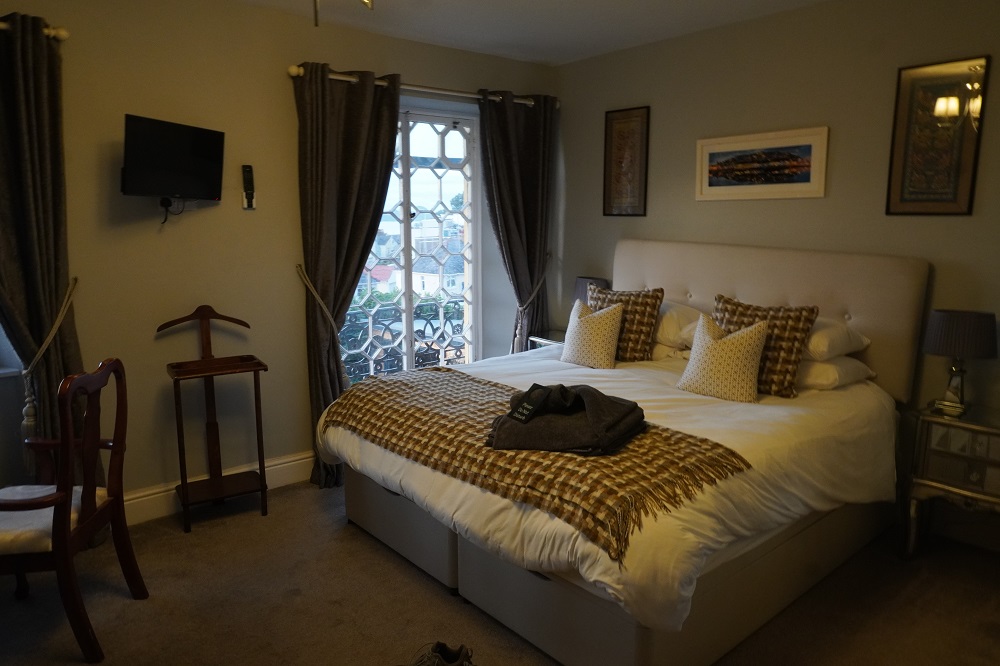
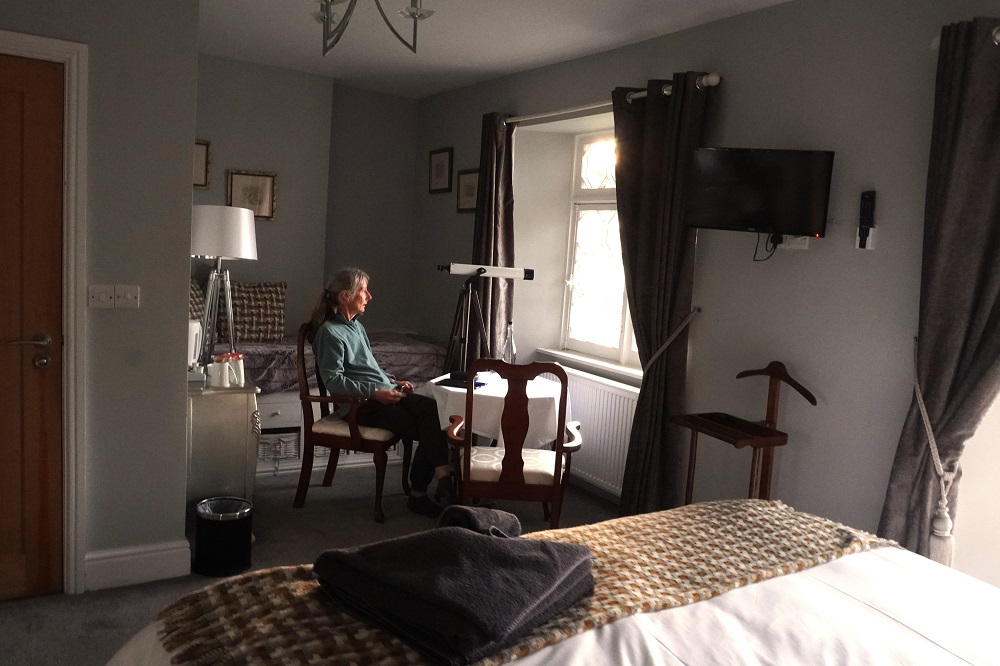
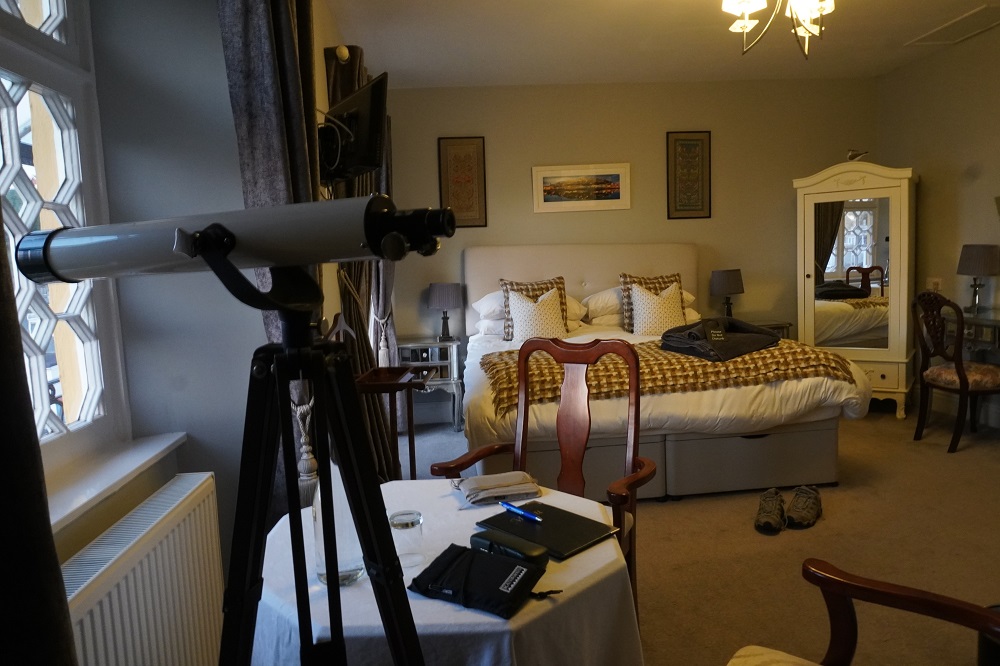
At Brixham we bought some food at Tesco and trundled up the hill to our bed at Ranscombe House. This is a rambling 18th century house with eight rooms to let. Our host Pip (Phillip) gave us a very warm welcome and showed us to the Admiral’s Suite, a spacious room with views out over Torbay and its own deck. We settled in and went out onto the deck to relax and eat our food. The sky to our left was orange then pink as the sun set. The lights across the bay from Torquay and Paignton appeared as it got darker. It was so still, peaceful and quiet, just so quiet save for a distant muffled conversation from someone’s garden (and the Tinnitus in my head). We were very happy to shed the layers of stress and be far away from the noise and crowds of London, the tubes, buses and trains, and to be safely here. Tomorrow we just walk, I can’t wait.

We are still to get our train refund from Great Western Railway but think we are making progress. Two weeks ago now we were advised by email that our train was cancelled but we could apply for a refund. Because we bought on line we had to apply on line and the refund would go to our credit card. A few days ago I went on line, accessed our account and started the refund process. This is an eight step progress but couldn’t get past step 2, there was no next or continue button. I tried again another day and same result. On our way back from Greenwich we called into the GWR booking office at Paddington Station to see if we could sort it. The very kind lady selling tickets explained she could not refund us as we bought on line. If we had bought at a ticket office she could. She gave us her cell phone and a number to try and get further help. I made the call and it was to a call centre with a very bad connection and a slight delay. We were in a very noisy booking hall and I couldn’t understand the accent of the woman on the other end and she couldn’t understand mine. Every sentence had to be repeated 3 or 4 times and in the end I just gave up.

I tried again this morning while filling in time before checking out of London. Got to step 2 again but this time a little box popped up in the bottom right corner asking if I wanted to chat to an expert. It was an email chat, so I typed yes. The instant reply was that I was next in line and an expert would email me in a moment. And sure enough Agnieska emailed wanting to know my problem. So back and forth we went as I explained what i wanted to do. She asked a few questions and eventually informed me that even though my train was cancelled weeks ago I can’t apply for a refund until after the date and time that the train would have run. I guess in a way it makes sense in that if the strike was called off, right up until the last minute, they could still have run the train. She also said I have 28 days from the train date to make an application. So I will try again in a few days.

I saw on the GWR site that you can apply for compensation if there are train delays. Of course there are loads of conditions but there is a graduated scale of compensation depending on the delay, starting at 15 minutes. GWR claim to shell out millions of pounds each year because of delays. Might be good system for our Wellington buses.
East and West

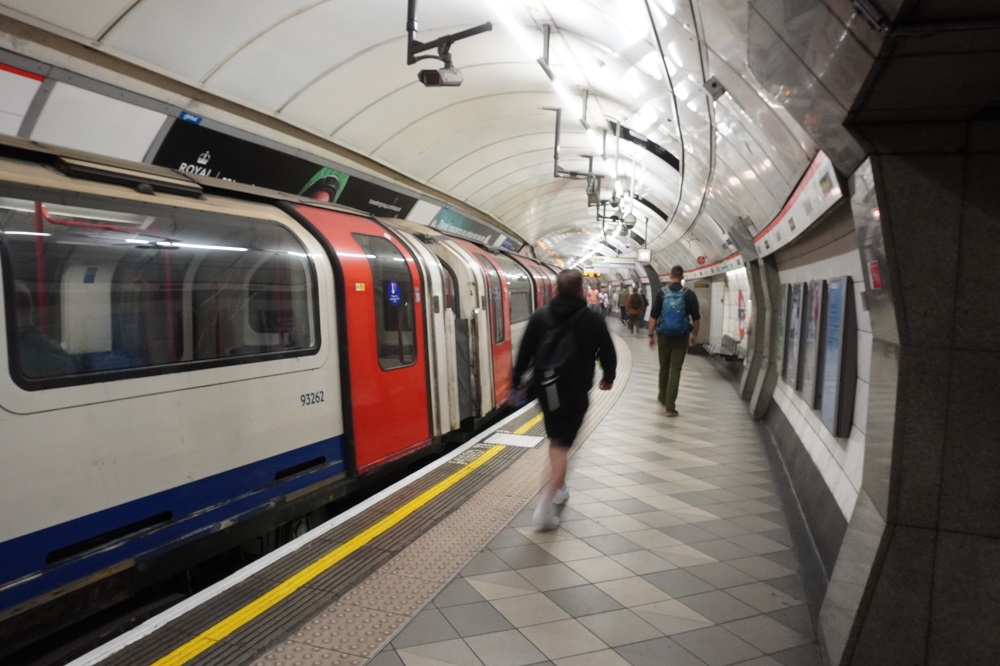
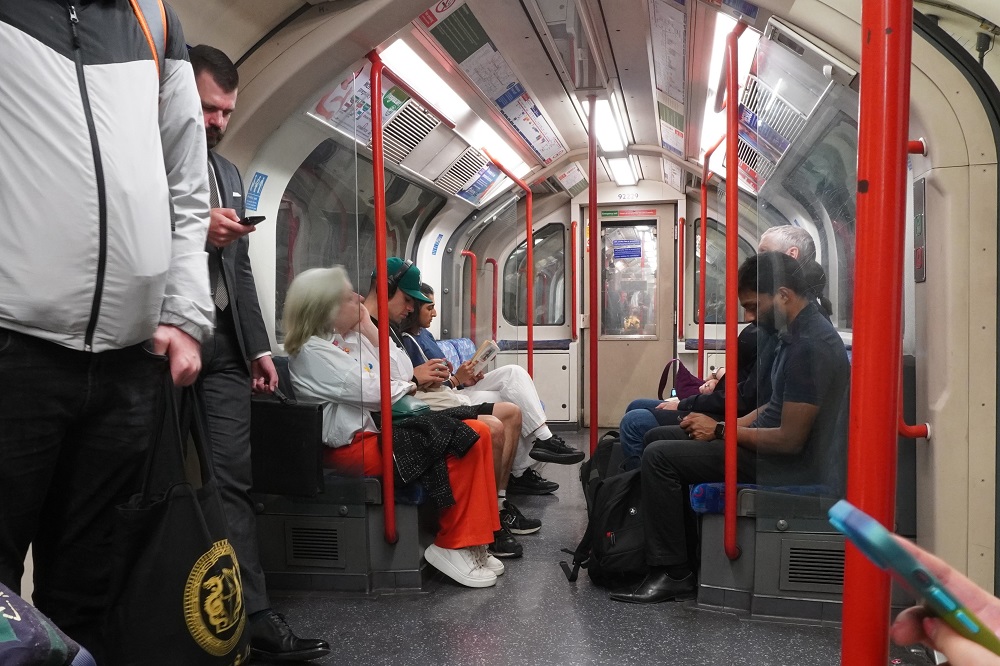
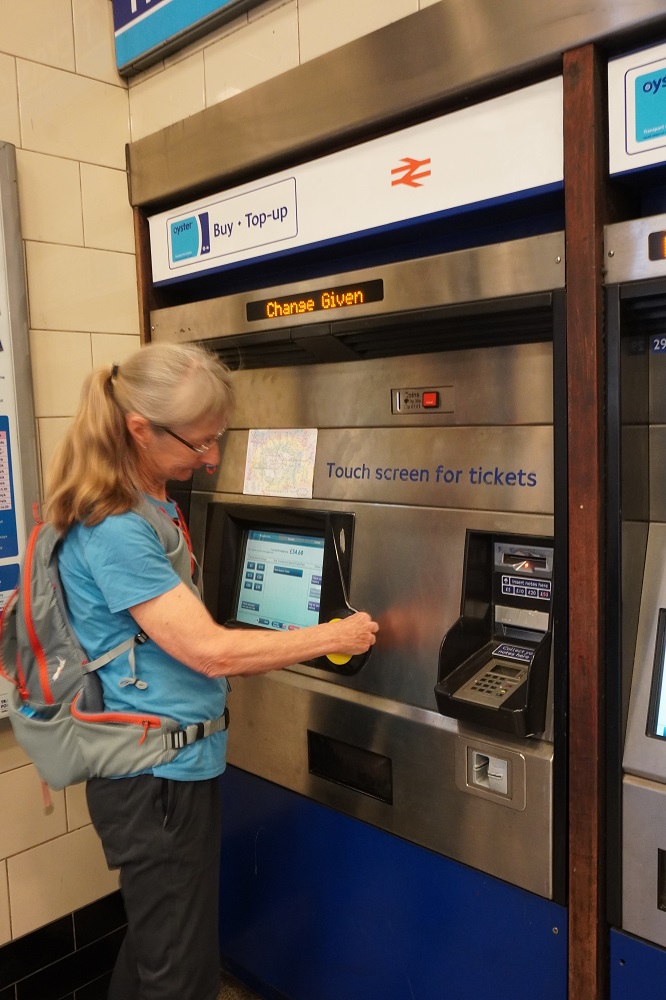
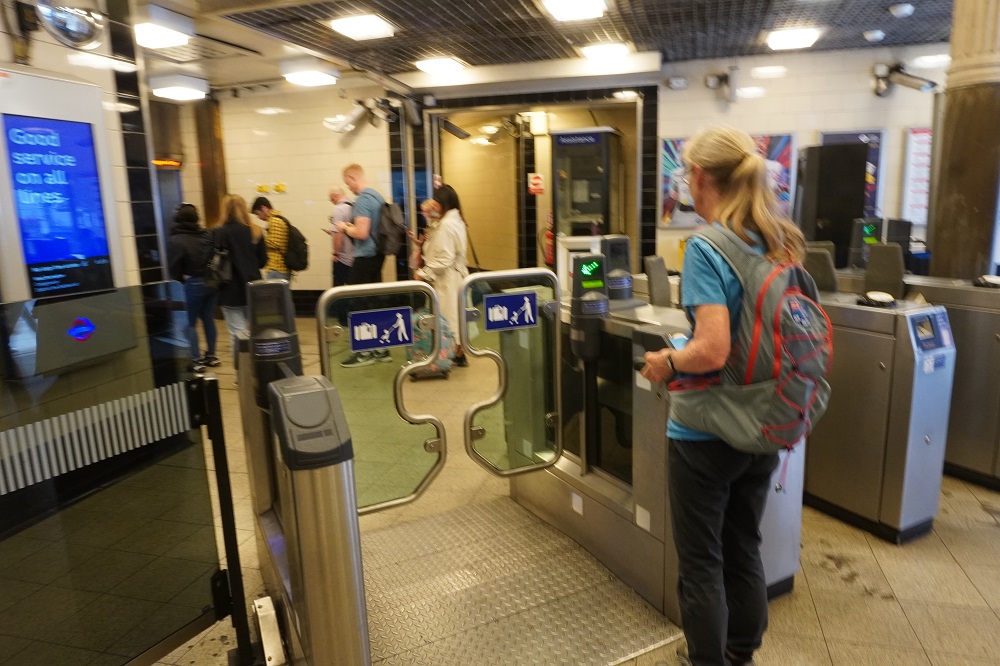
After the raucousness of yesterday’s alternative culture and punk of Camden Town today we enjoyed the more staid and conservative atmosphere of Greenwich. Today we also got more confident at getting around on the tube as efficiently as possible doing multiple trips with transfers using different lines. The only unsettling incident occurred  before Bond Street station when the train came to a screeching halt. The old trains are deafeningly noisy (the new Elizabeth Line trains are serenely quiet in comparison) and it was quite eerie sitting there in total silence as the engines shut down. The carriages were packed as it was still rush hour but nobody seemed to be at all concerned. Twice there were garbled unintelligible announcements from the driver. We were wondering how on earth do you get out of here, hundreds of feet below ground in a tunnel. After 15 minutes the engines noisily came to life and the train suddenly took off.
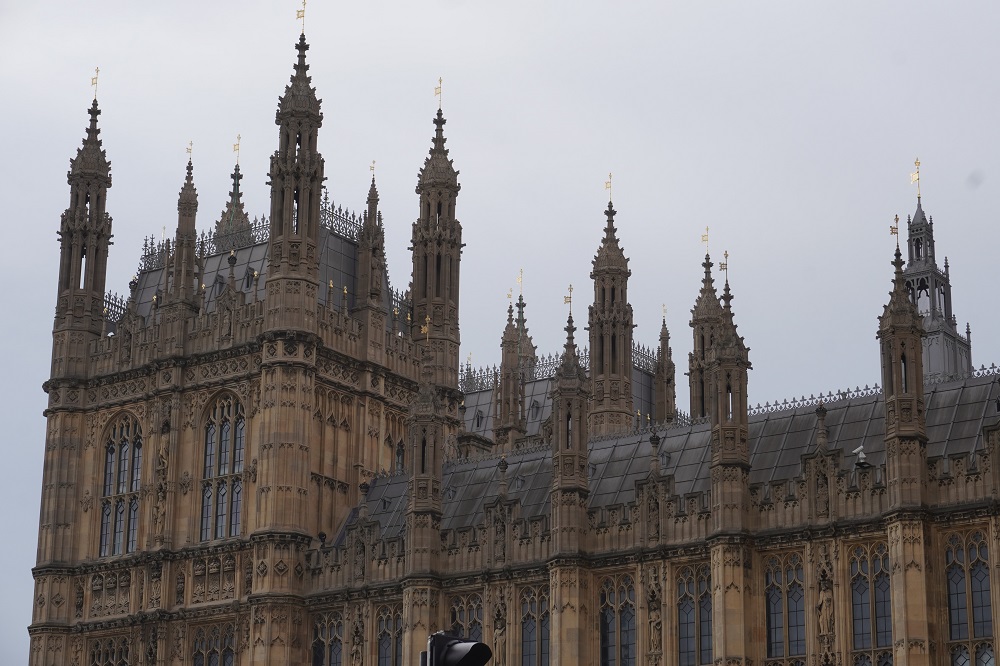
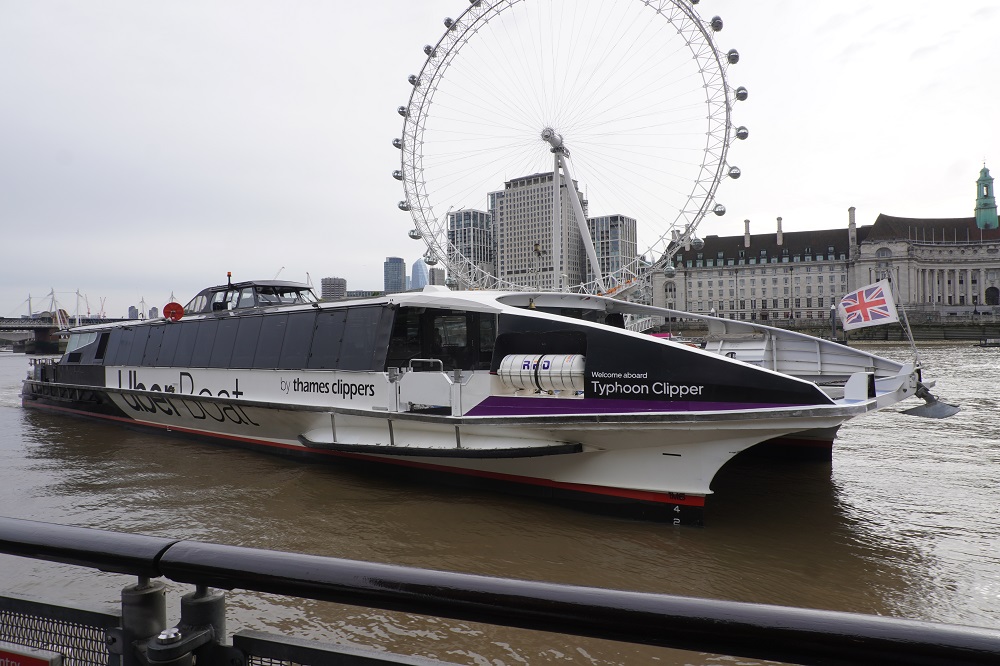
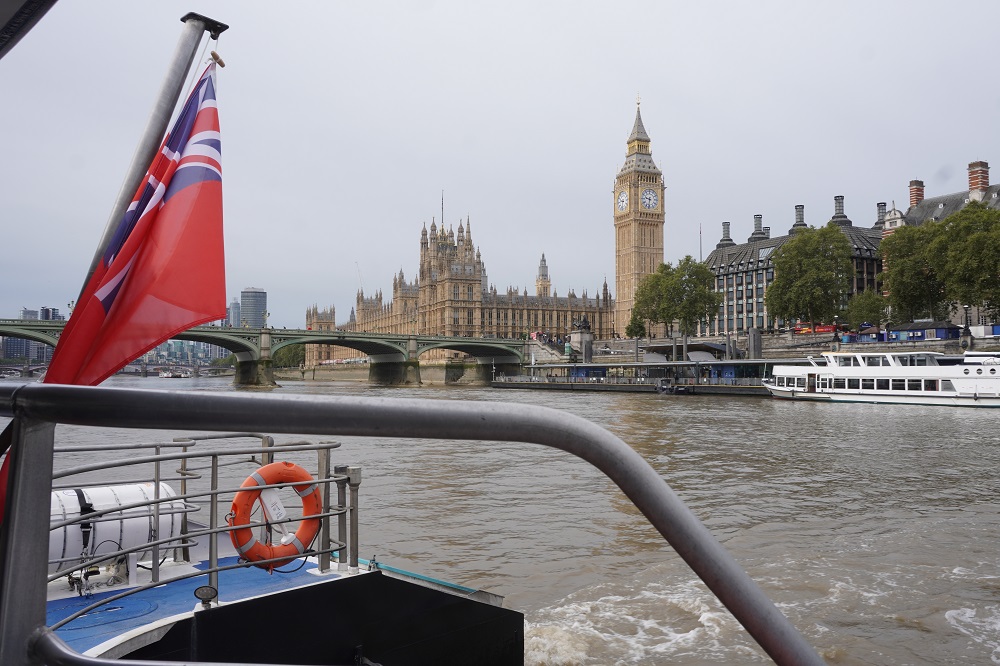
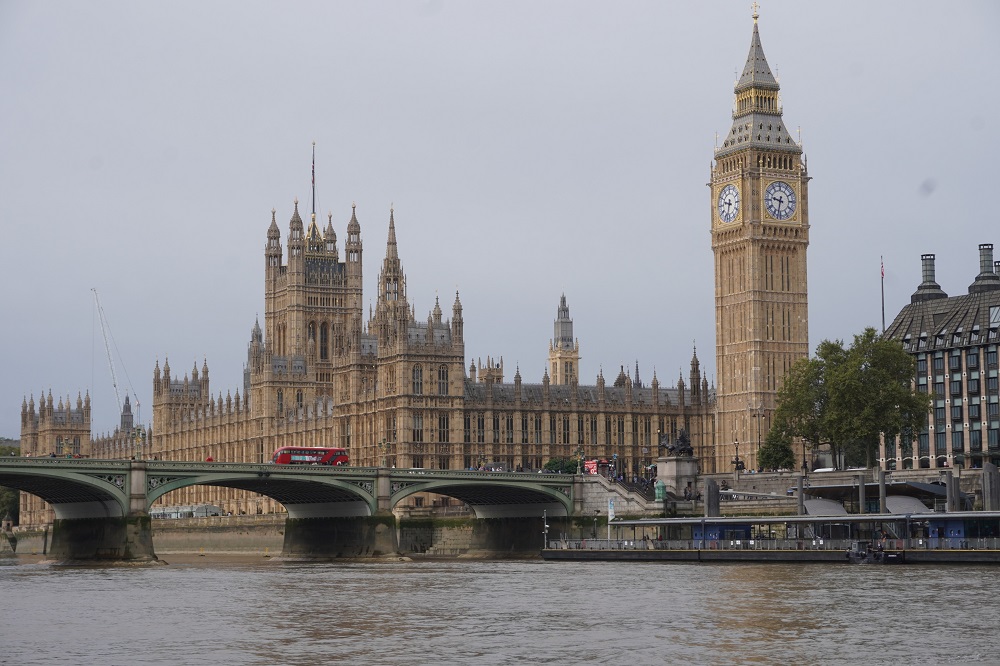
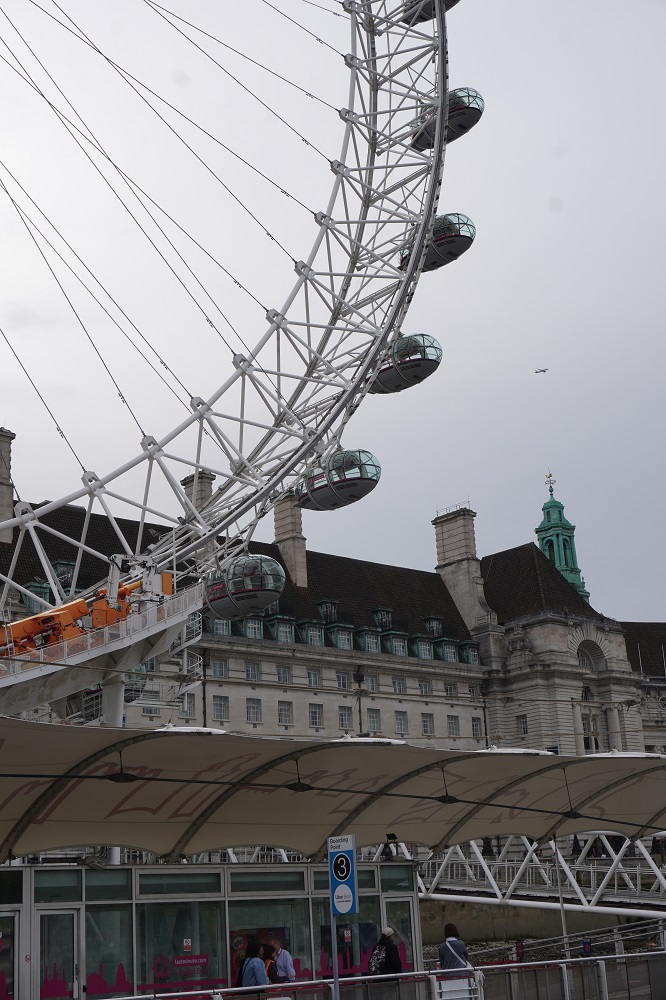
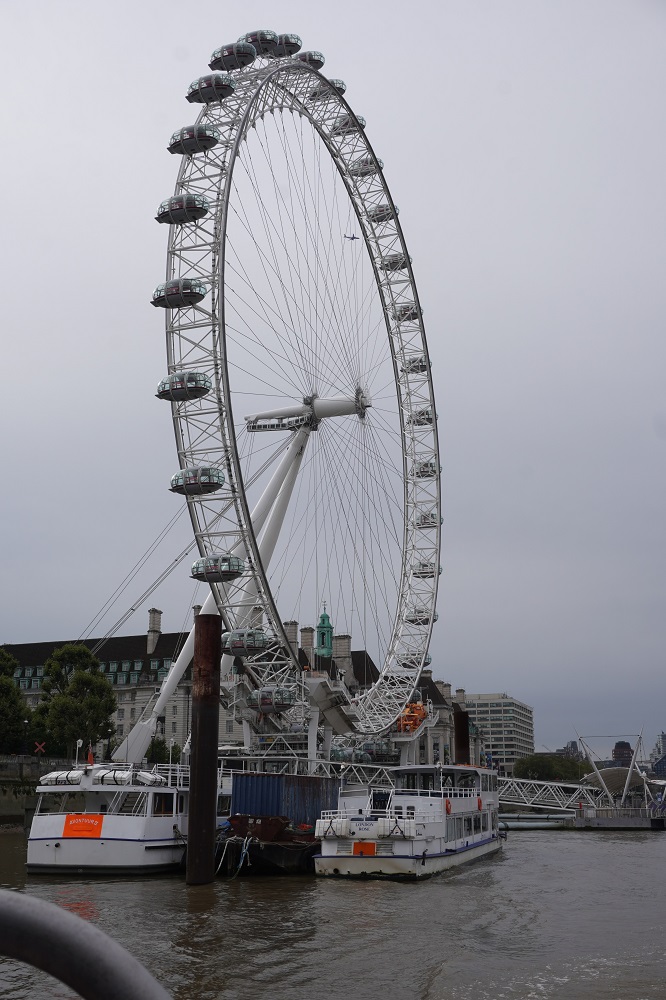
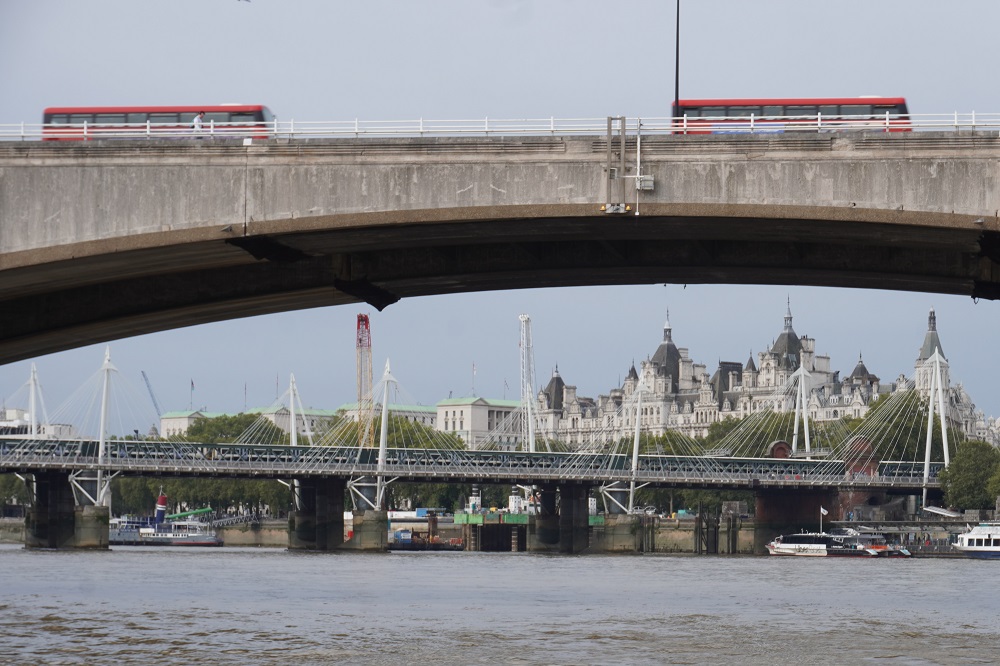
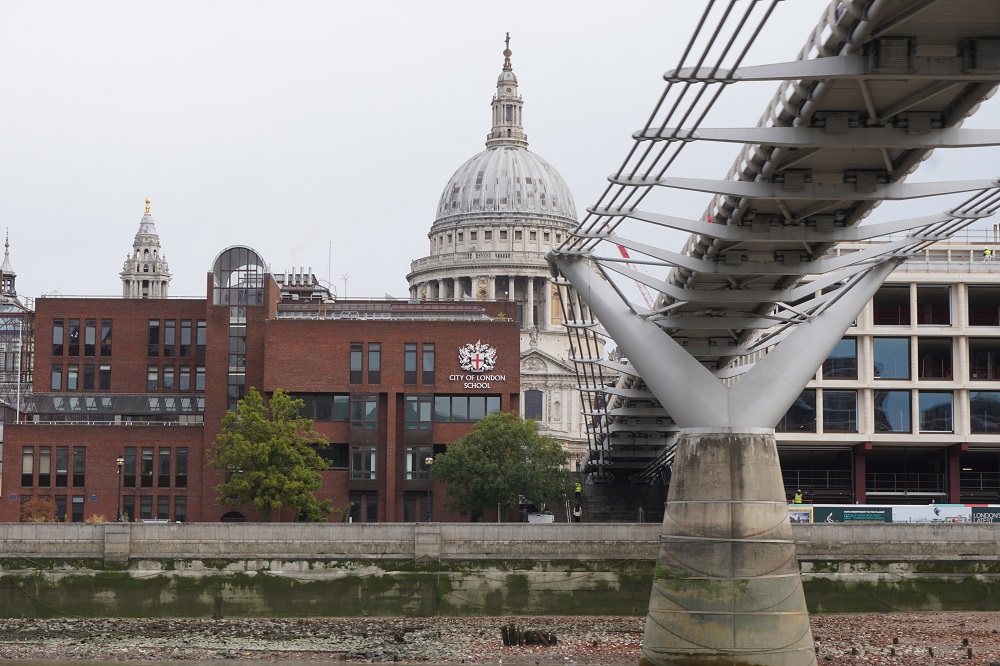
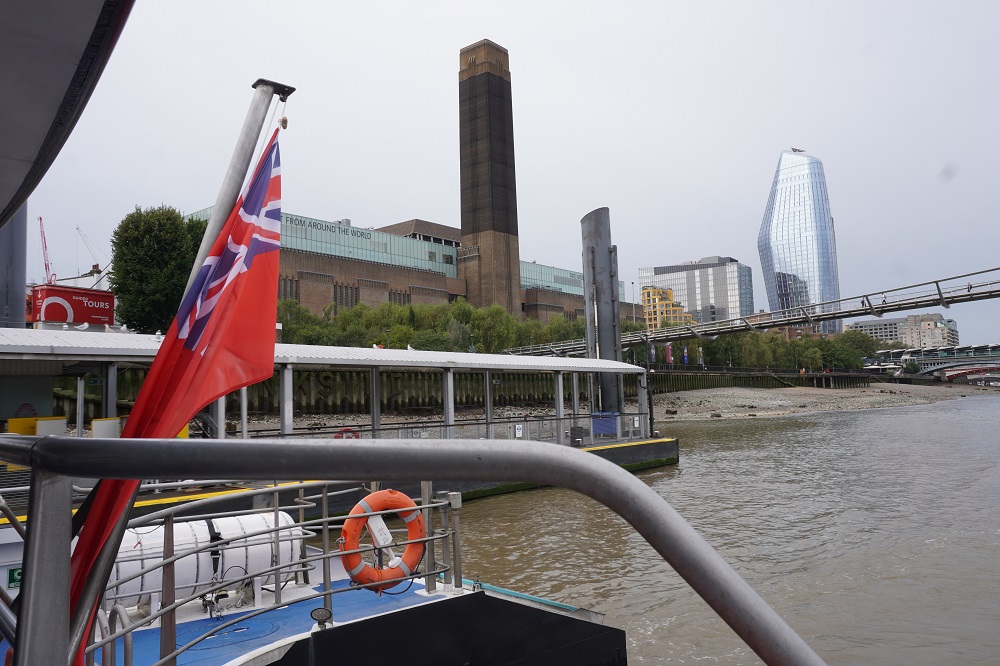
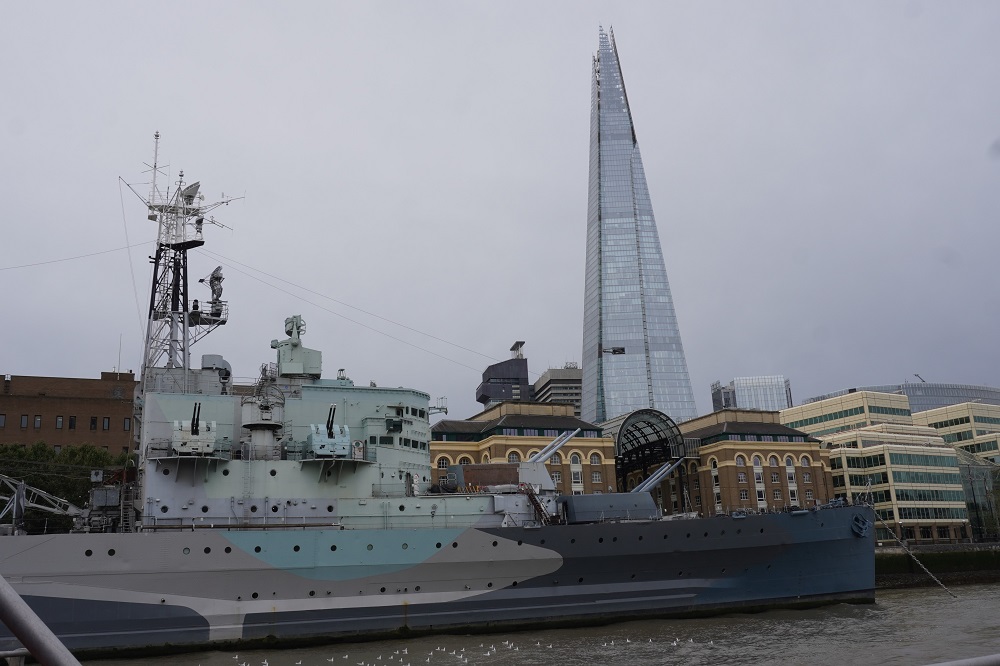
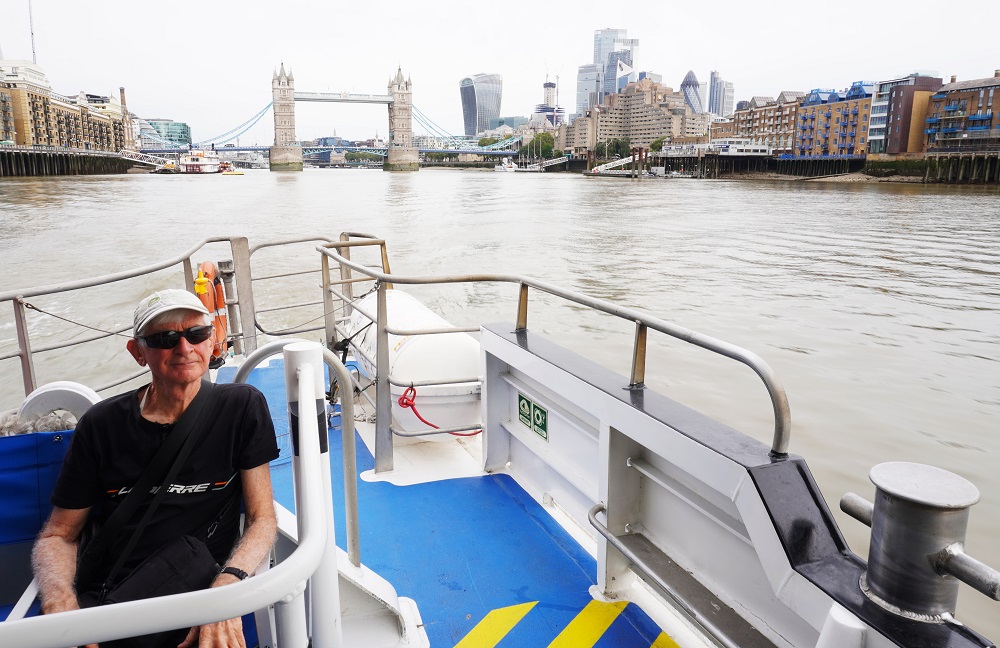
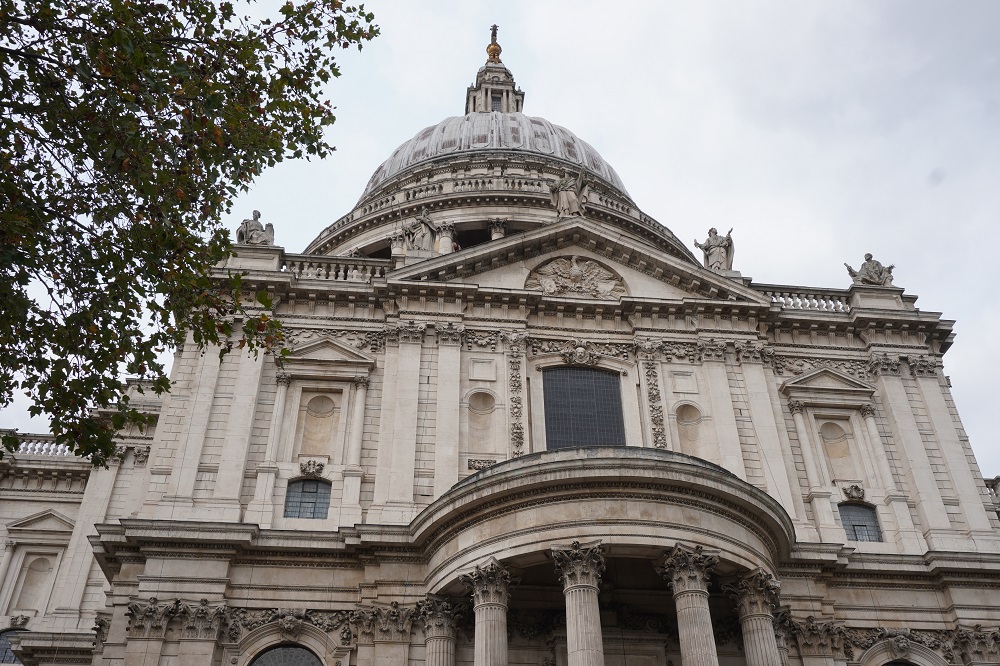
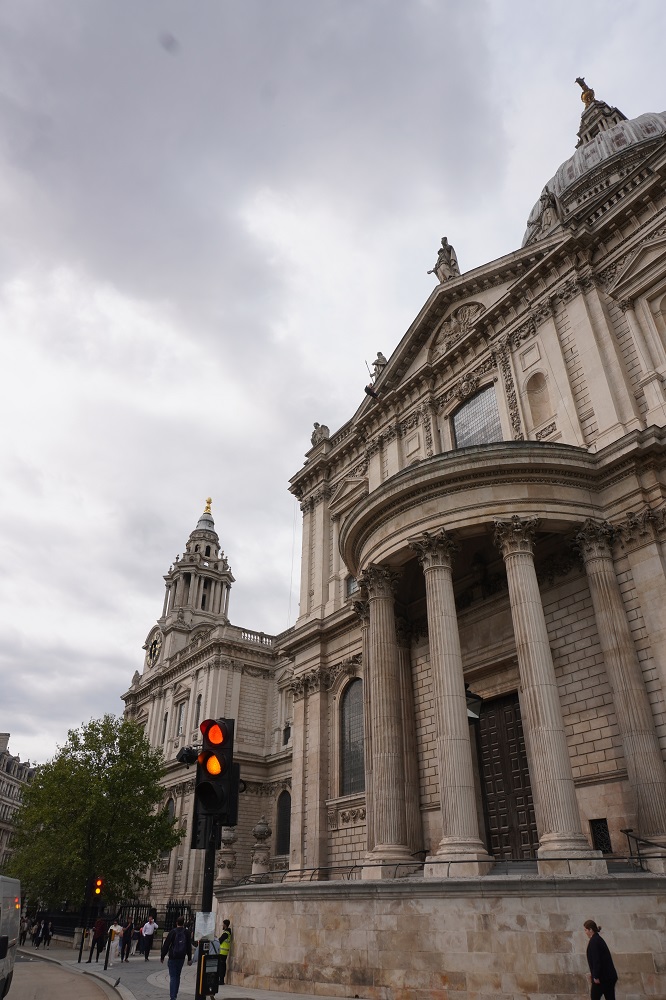
We escaped the underground at Westminster where we transferred to the Uber Boat which is a commuter boat running up and down the Thames River. You can  use your Oyster Card on this boat so it is just an extension of the bus and train system. Being on the river is a great way to see a lot of London’s icons; the Palace of Westminster, the London Eye, St Paul’s Cathedral, the Tate Modern, The Tower of London, The Shard, Canary Wharf etc and going under all the bridges: Hungerford, Waterloo, Blackfriars, Millennium, Southwark, London, and Tower bridges. It takes about 50 minutes from Westminster to Greenwich with about half a dozen stops to pick up and drop off passengers.
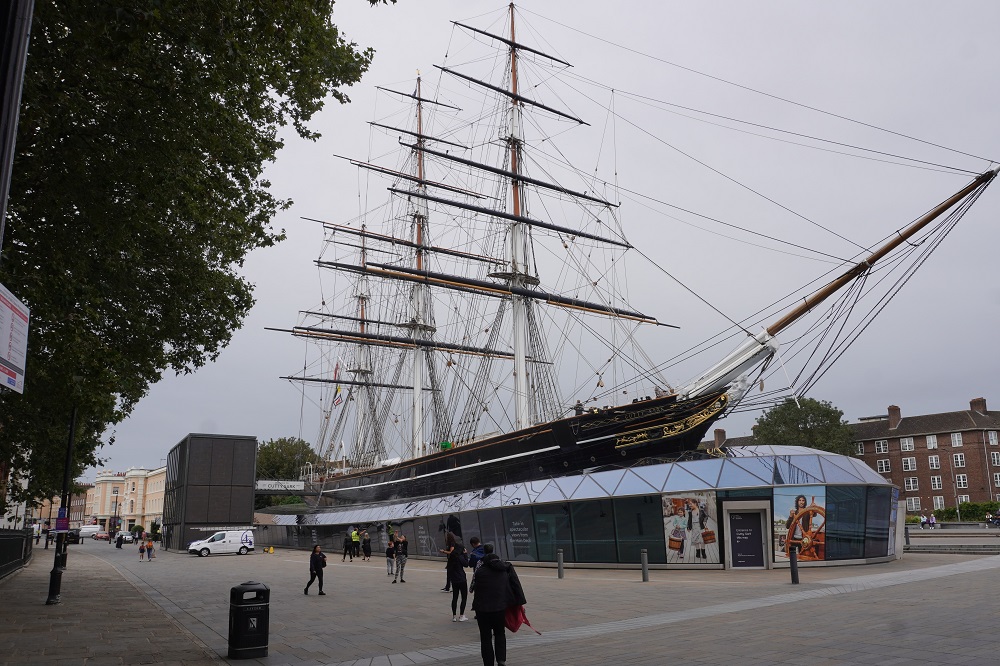
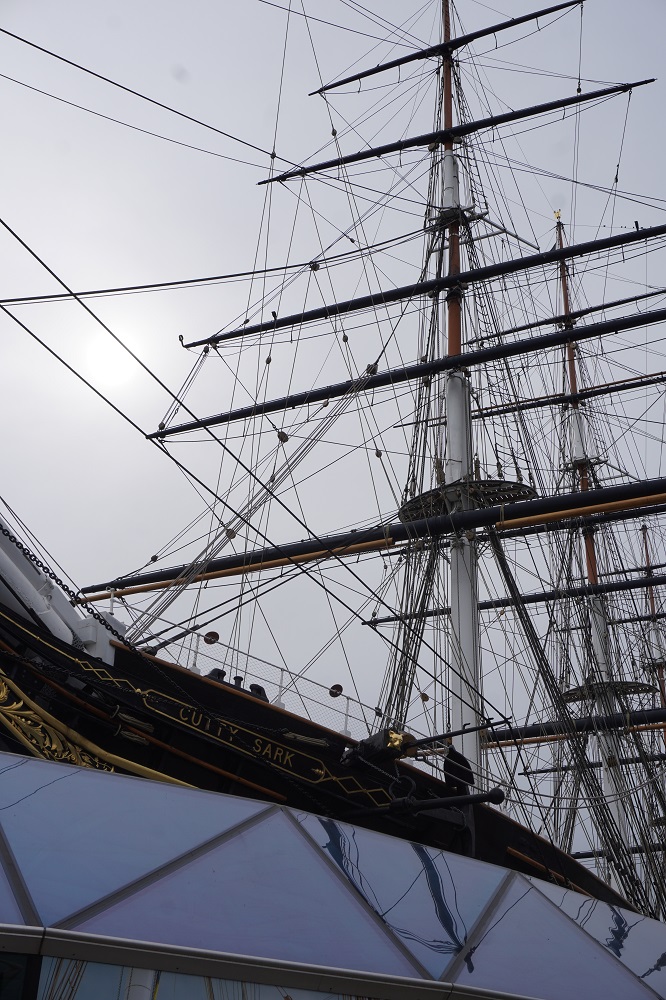
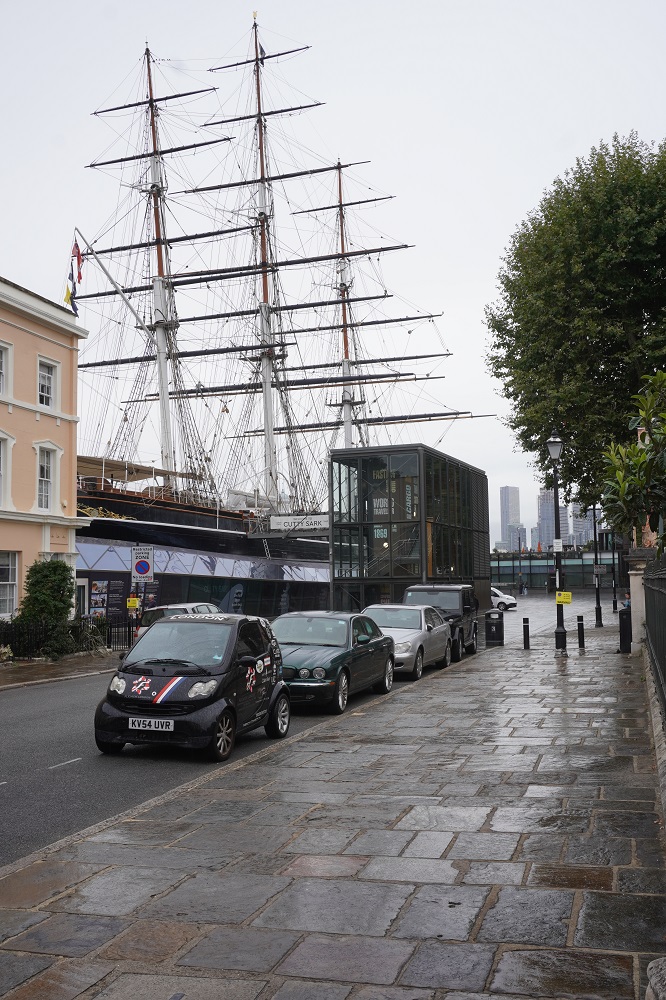
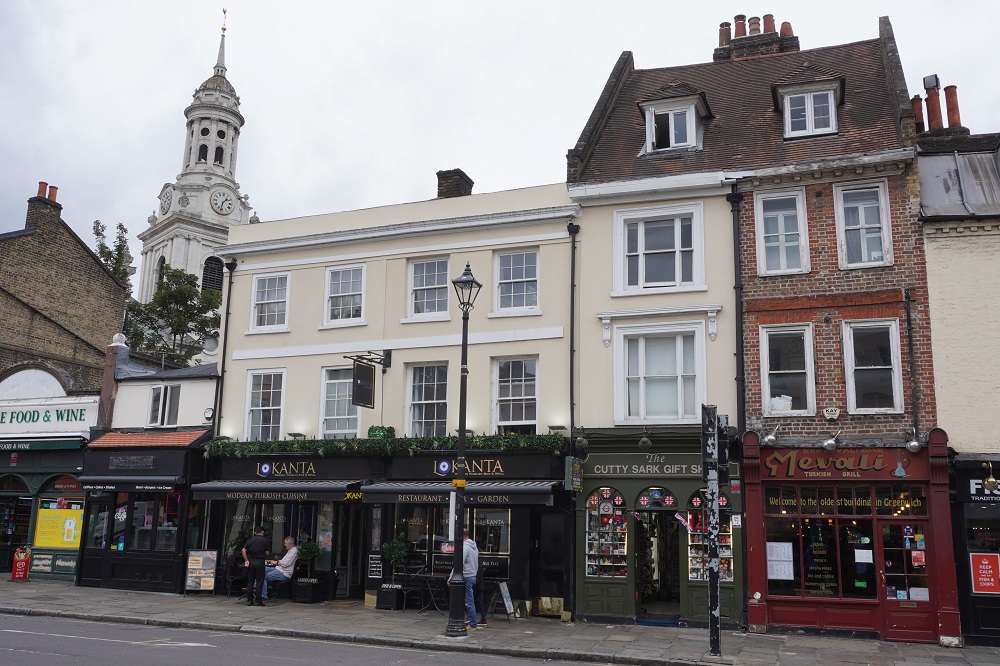
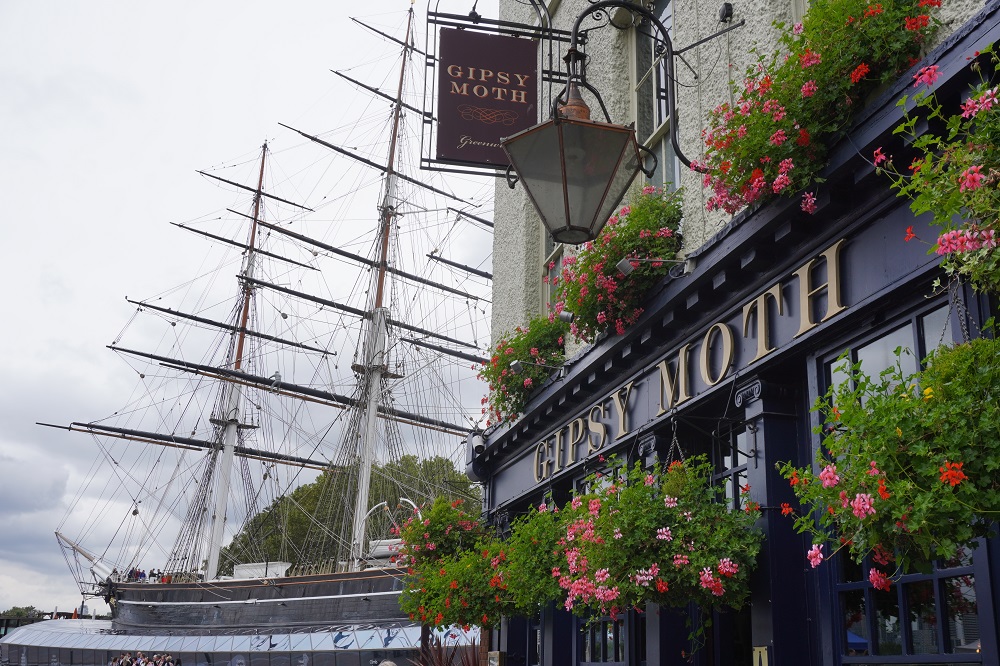
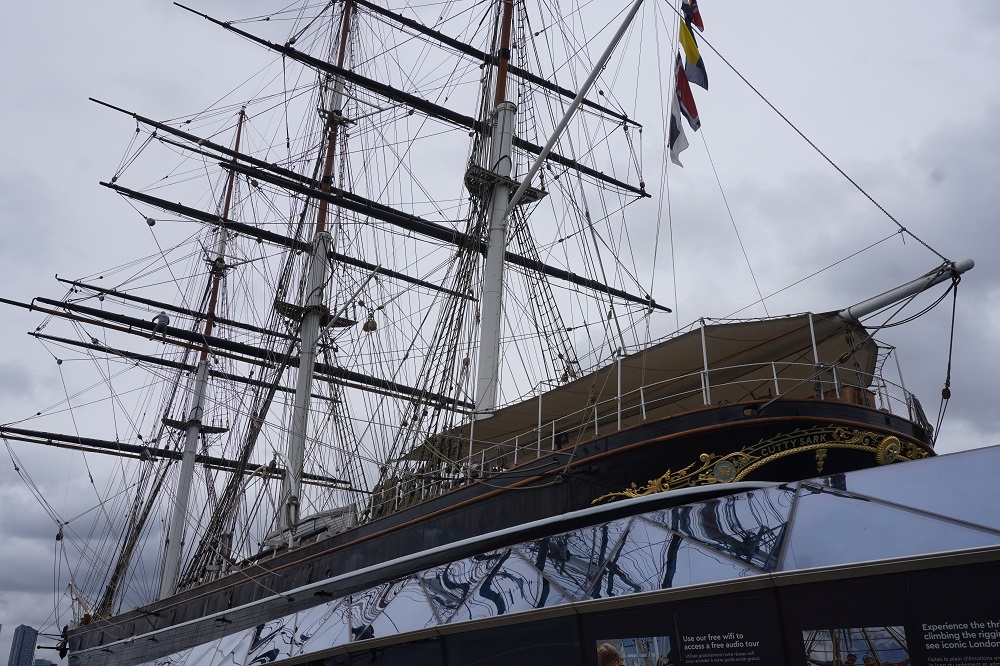
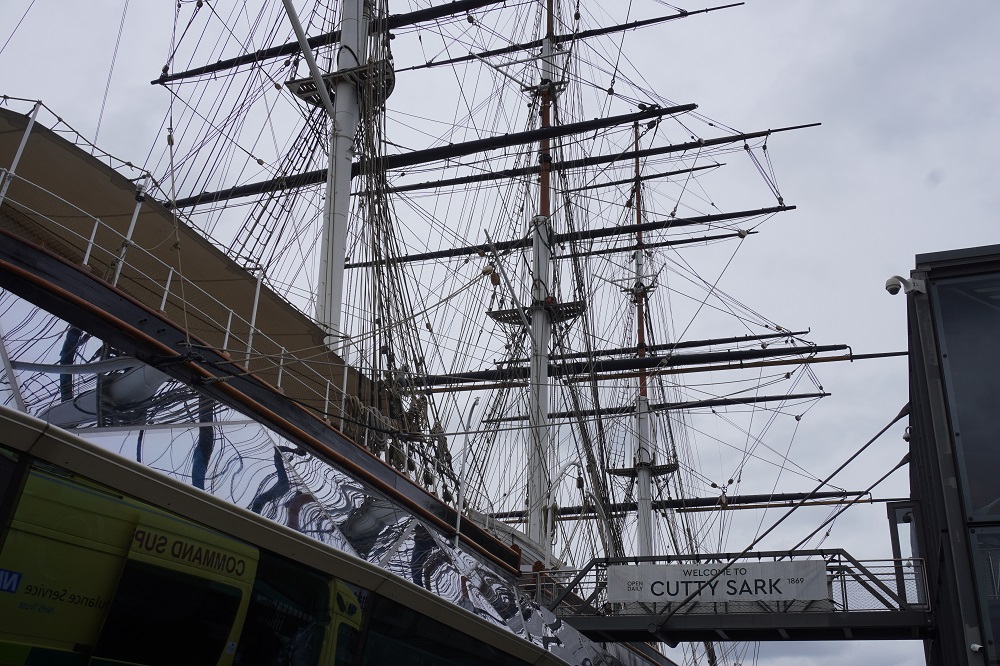
The first landmark at Greenwich is the Cutty Sark, the last of the great clipper ships that sailed between China and England in the 19th century. We didn’t go into the ship but is a great museum with films, interactive maps, plenty of illustrations and props so you can relive the life on board a tea clipper in the late 19th century.

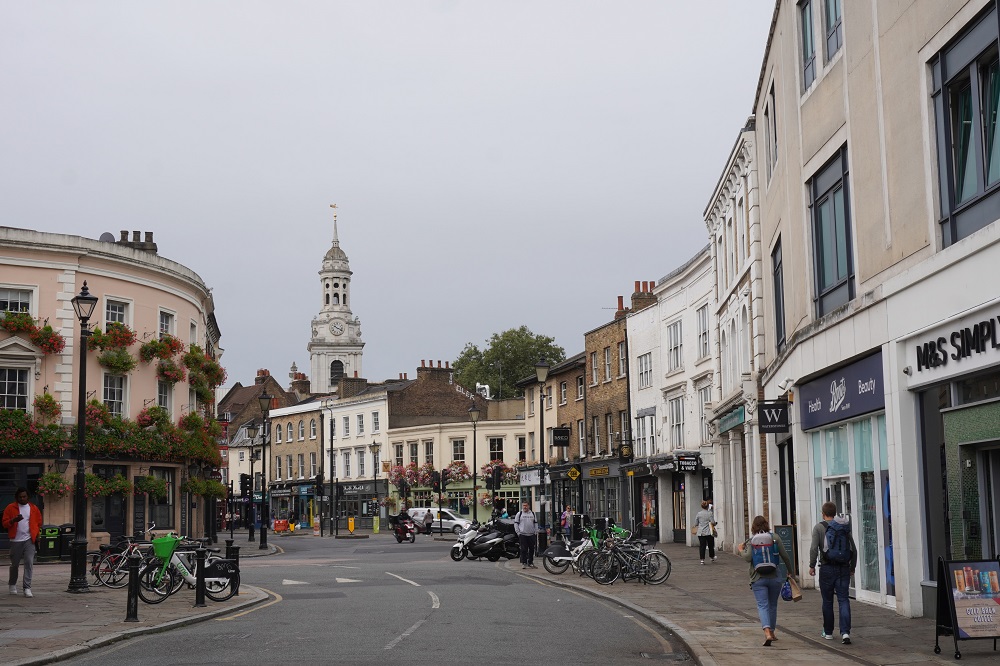
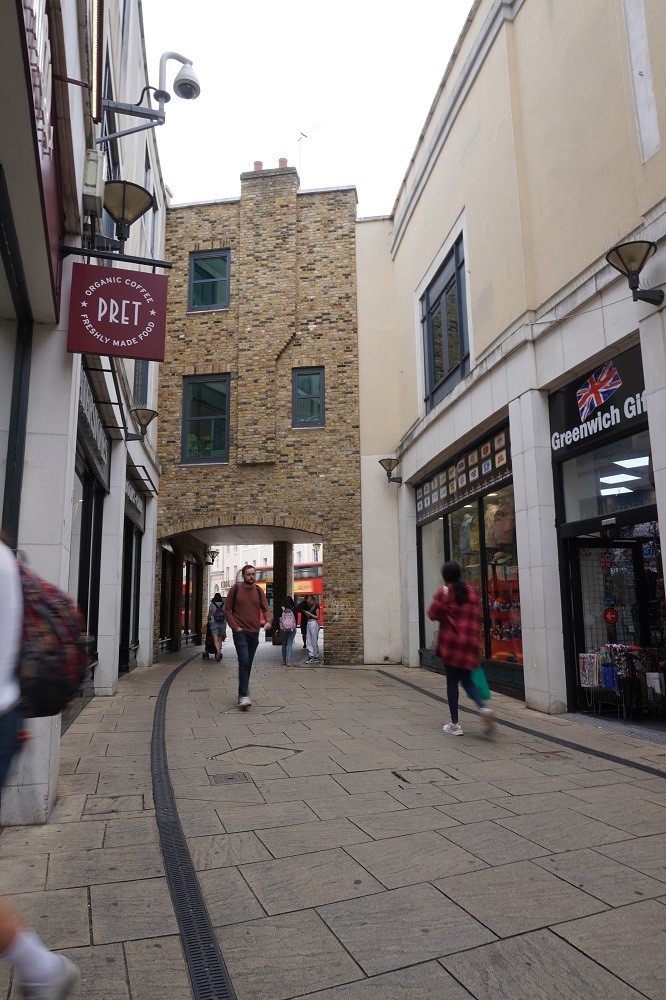
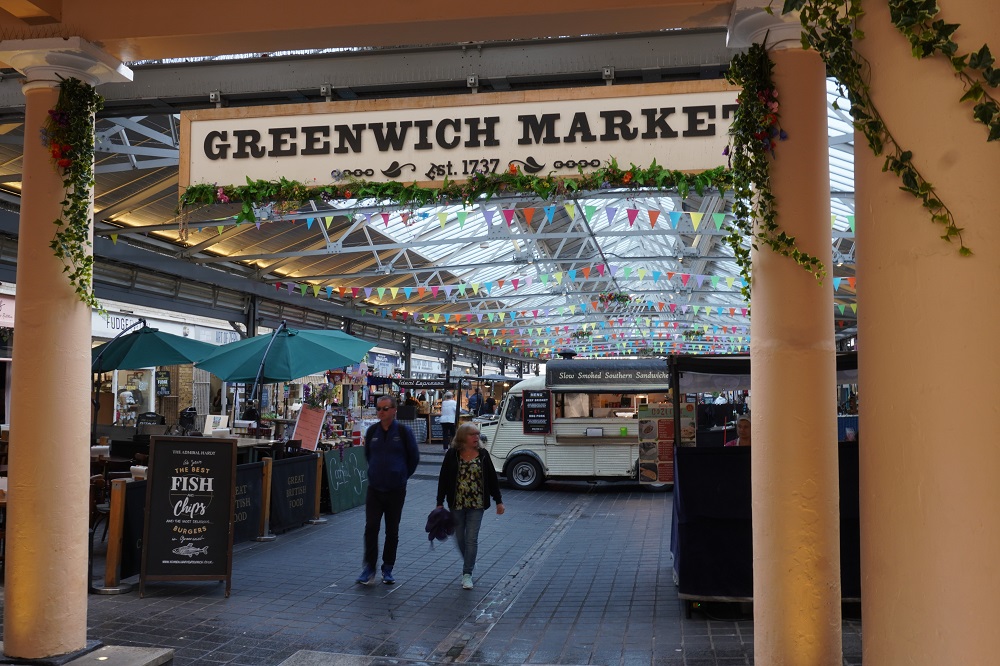
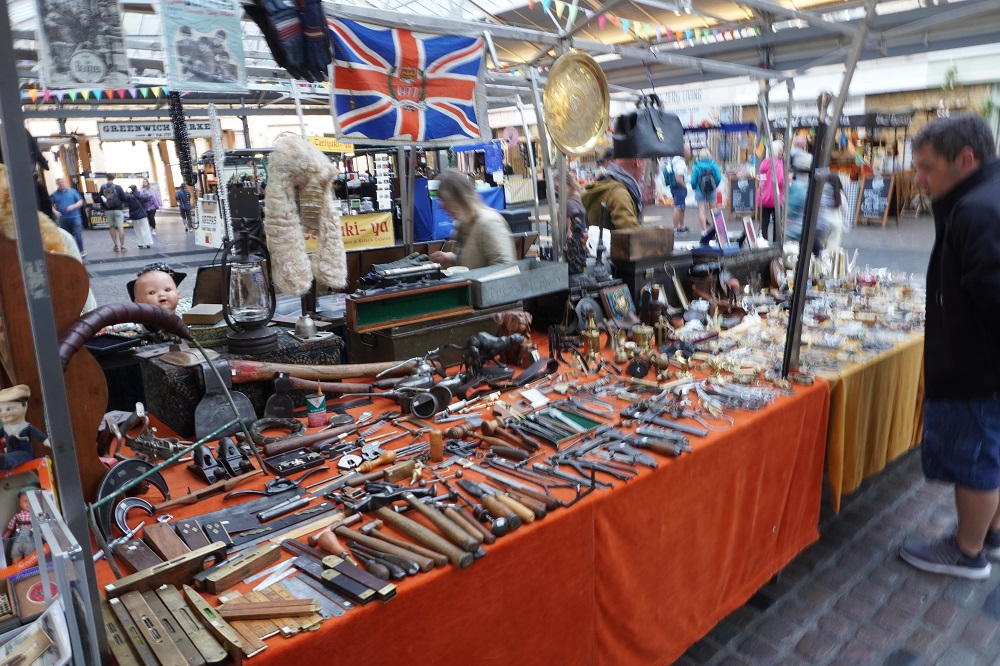
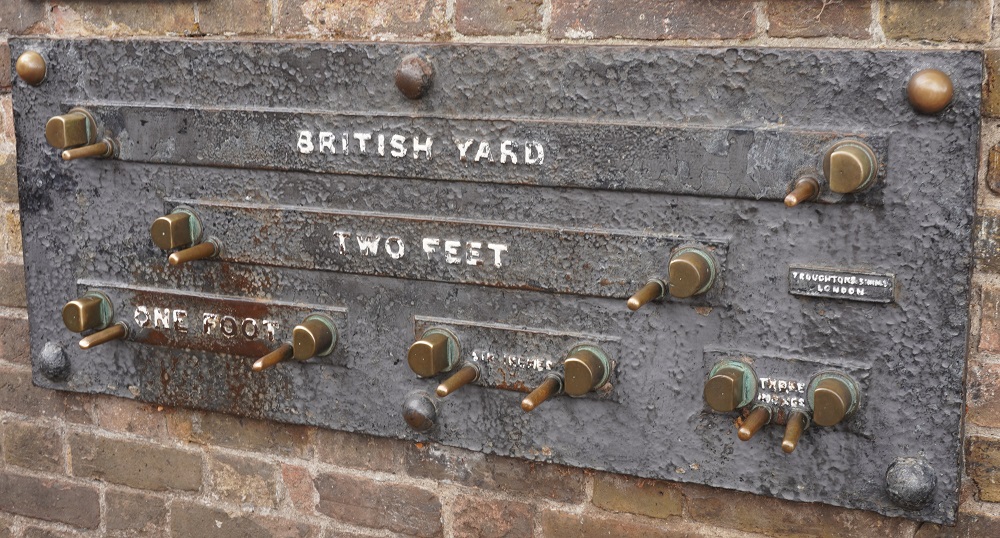
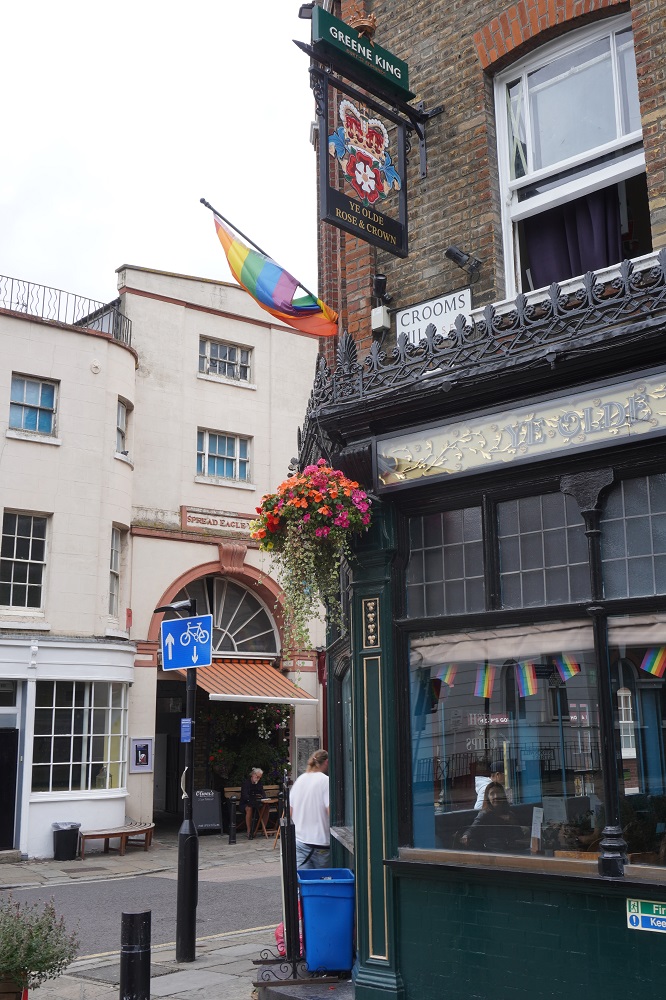
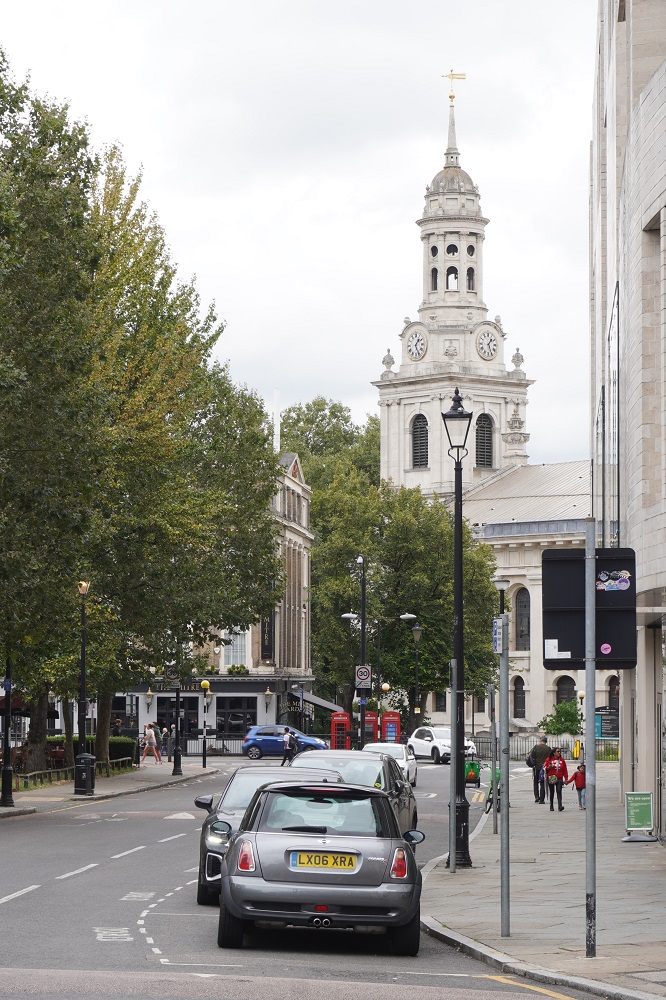
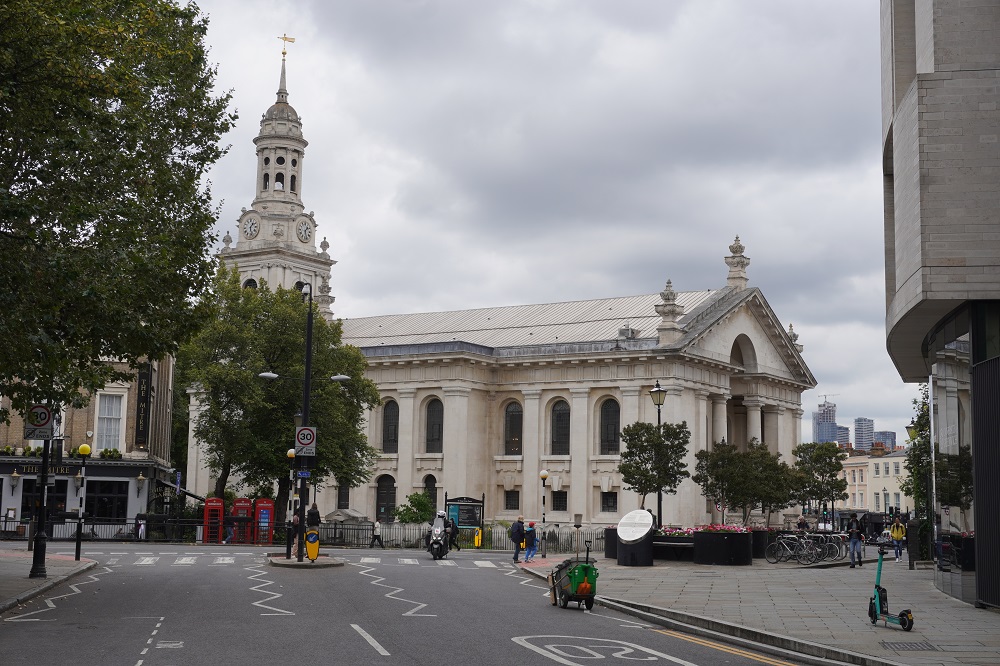
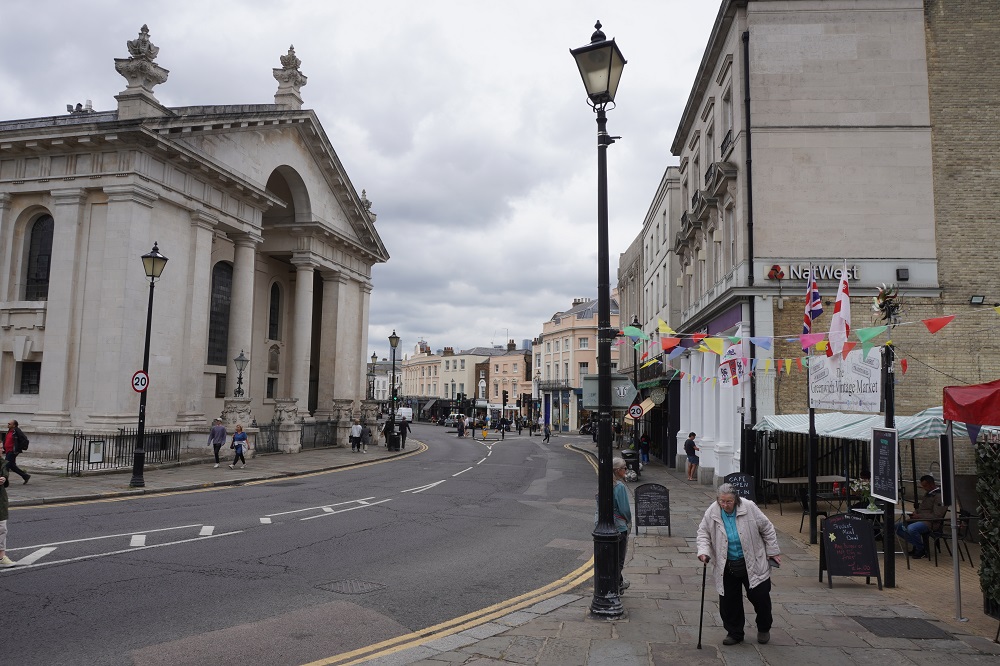
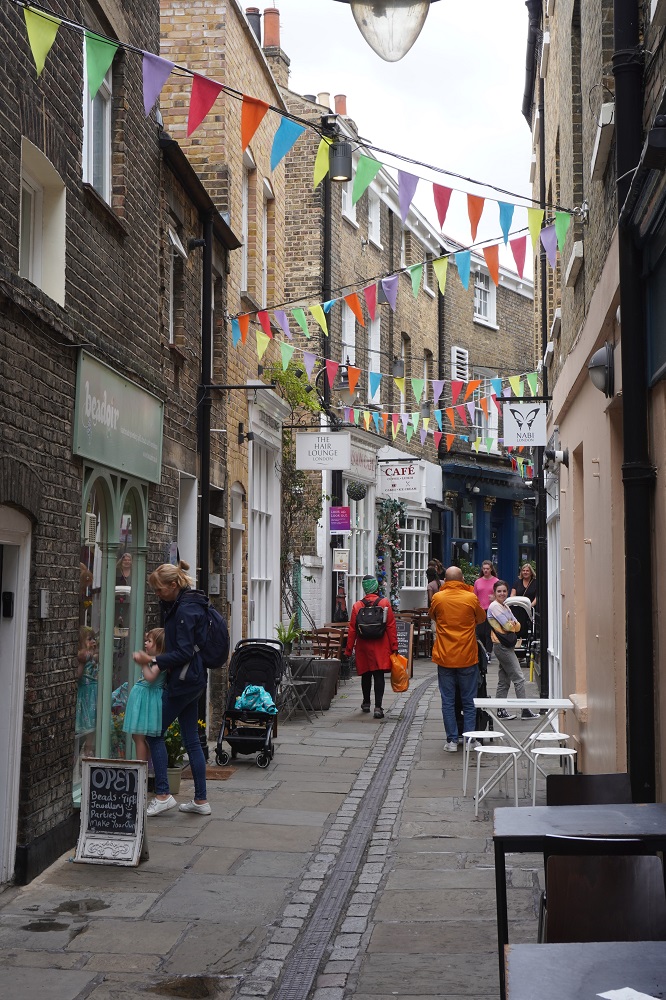
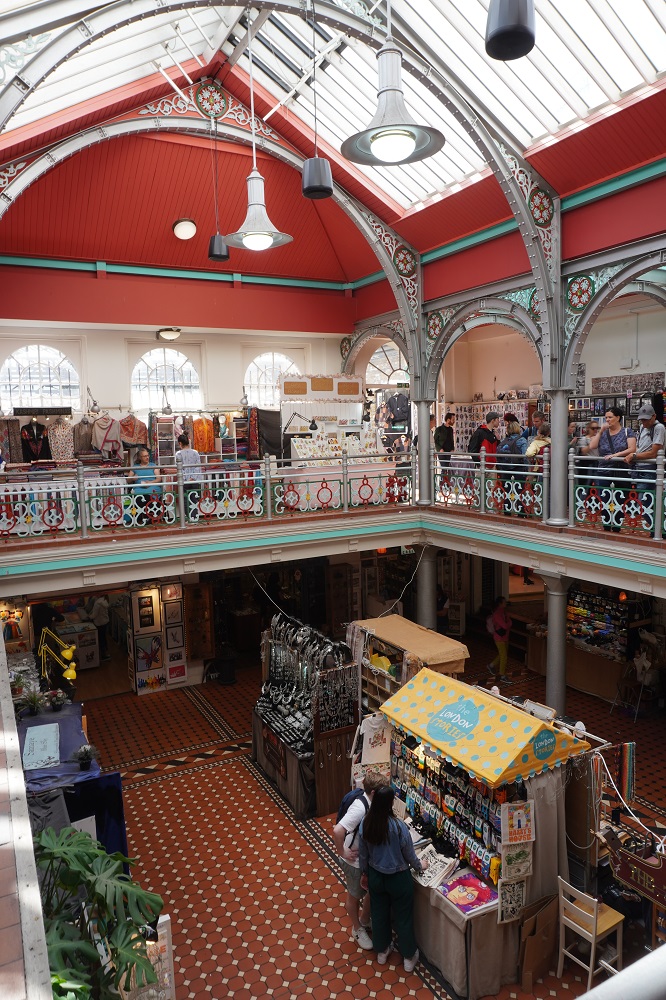
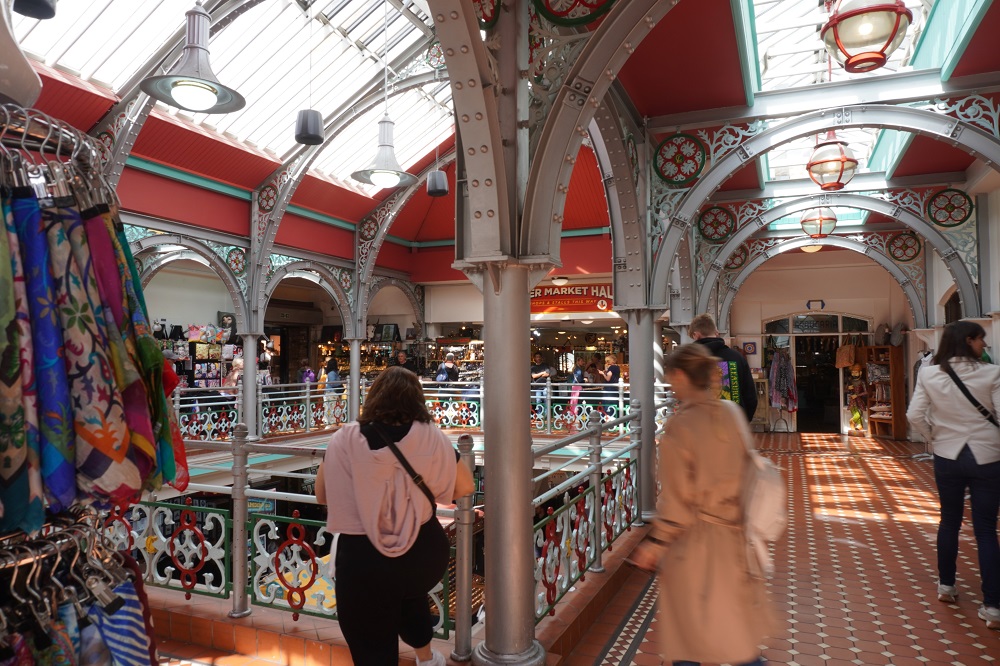
From the Cutty Sark we explored Greenwich which is a lovely small town full of Georgian and Victorian architecture, cafes, pubs, a theatre, a fan museum, boutique shops. There is also a covered market. There has been a market here since the 14th century and the present market dates from the 1700s.

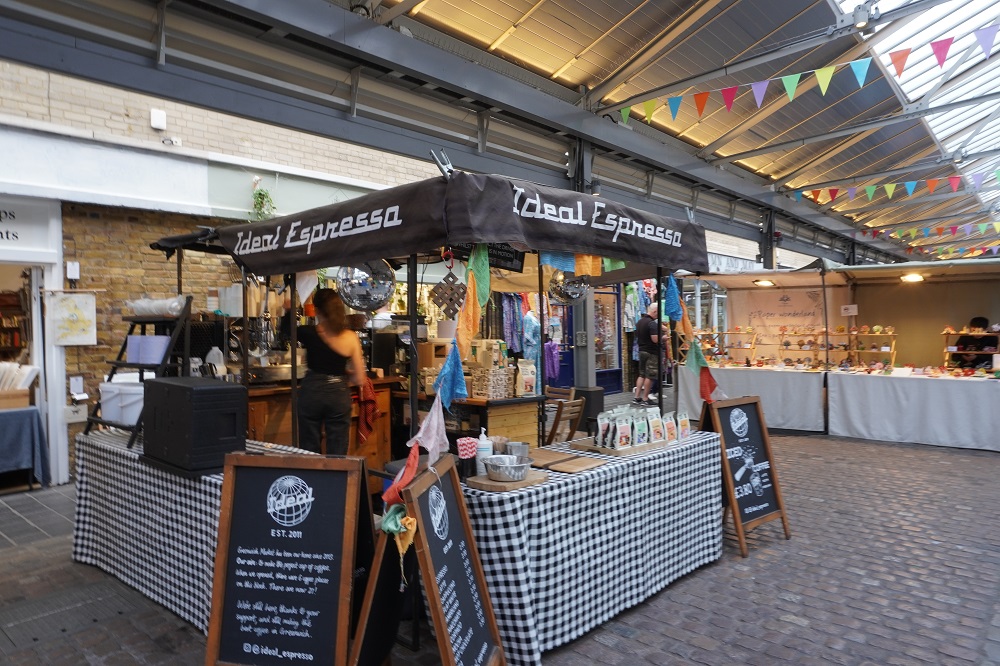
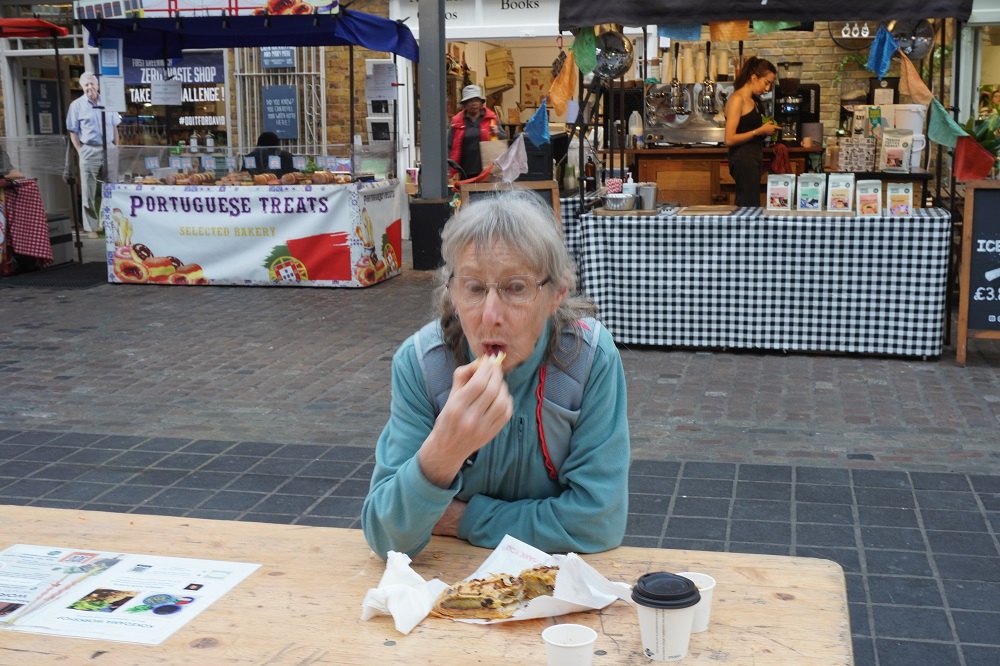
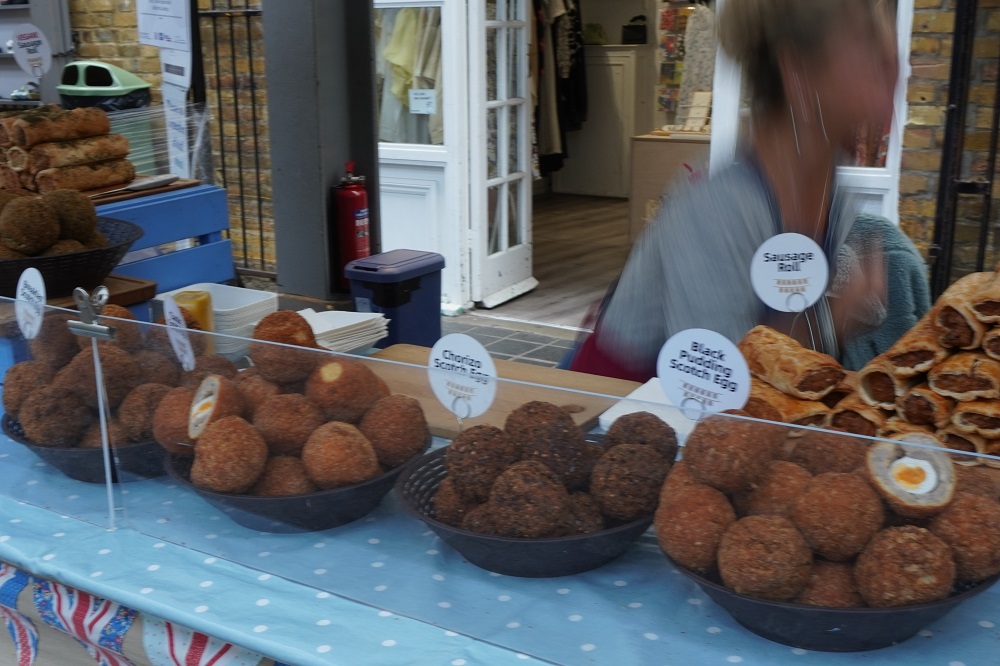
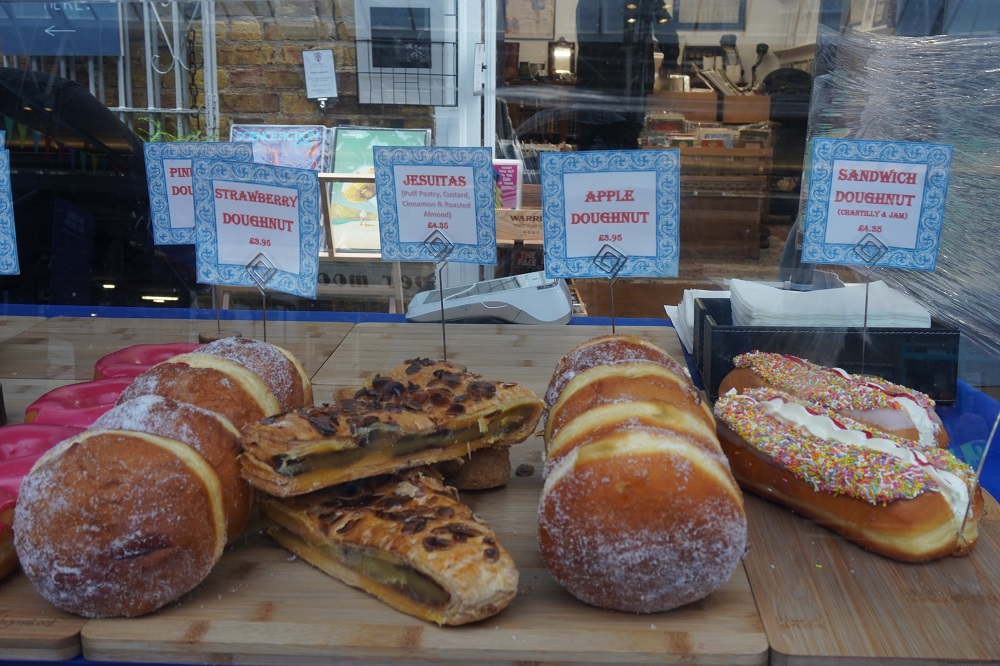
We stopped in the market for a coffee and something to eat. It is rare to find a long black in the UK (it is a New Zealand and Australia thing) but we have discovered if you order a double shot espresso and get some hot water on the side you can concoct your own long black. The young lady at Ideal Espresso made us a very, very good coffee, Next door at Portuguese Treats we bought some Jesuitas – puff pastry with custard, chocolate, cinnamon and roasted almonds – yummy!

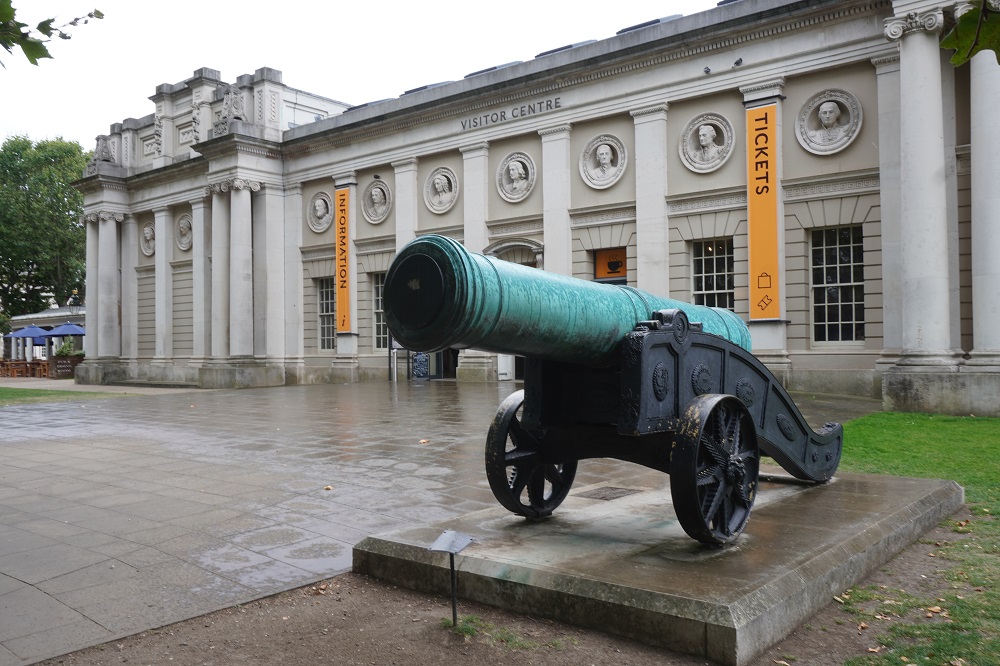
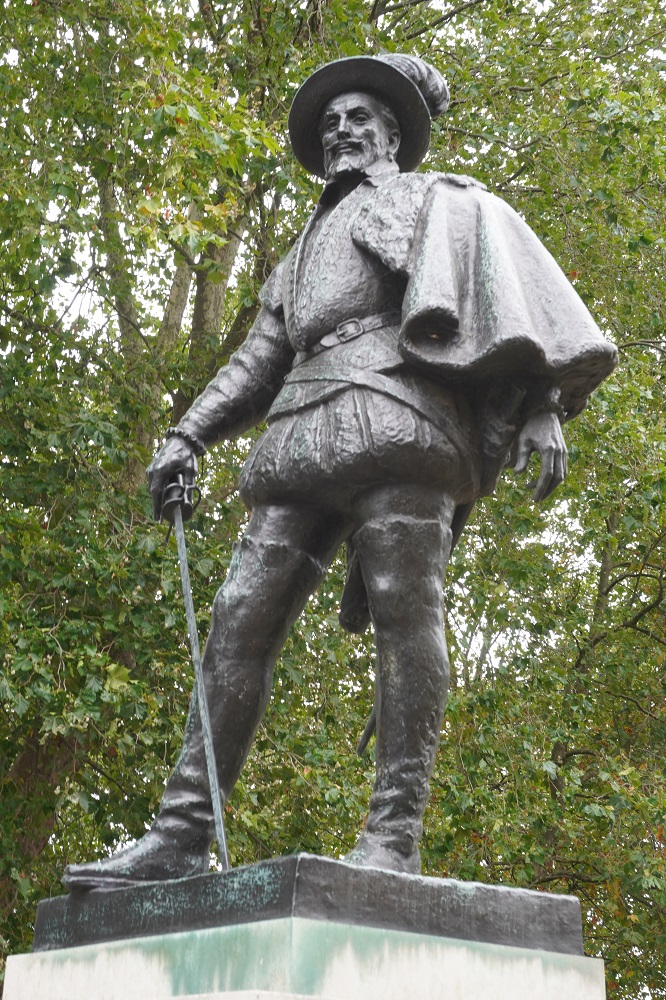
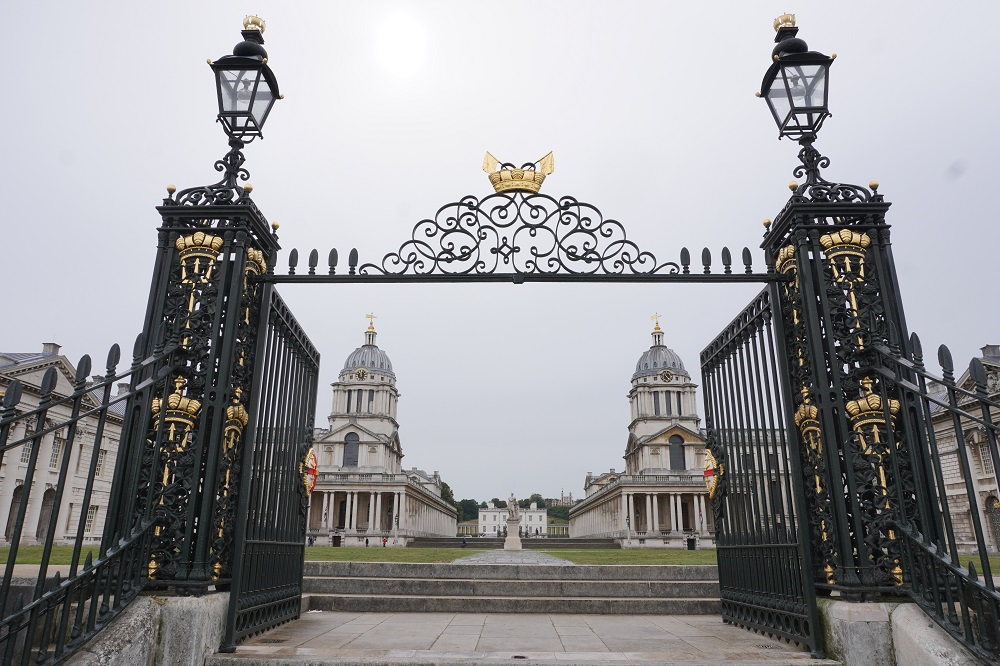
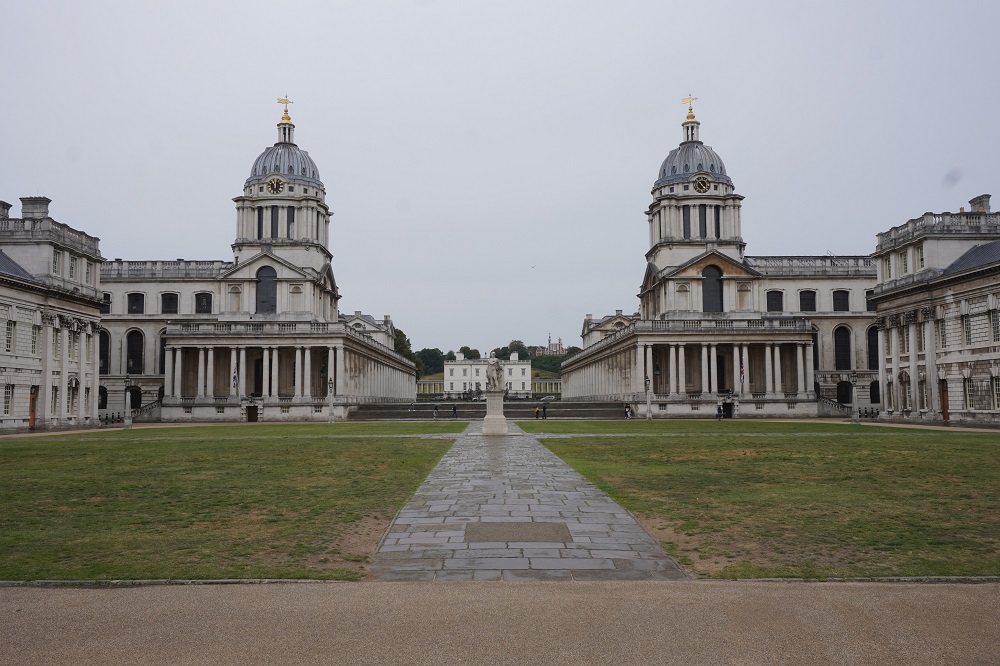
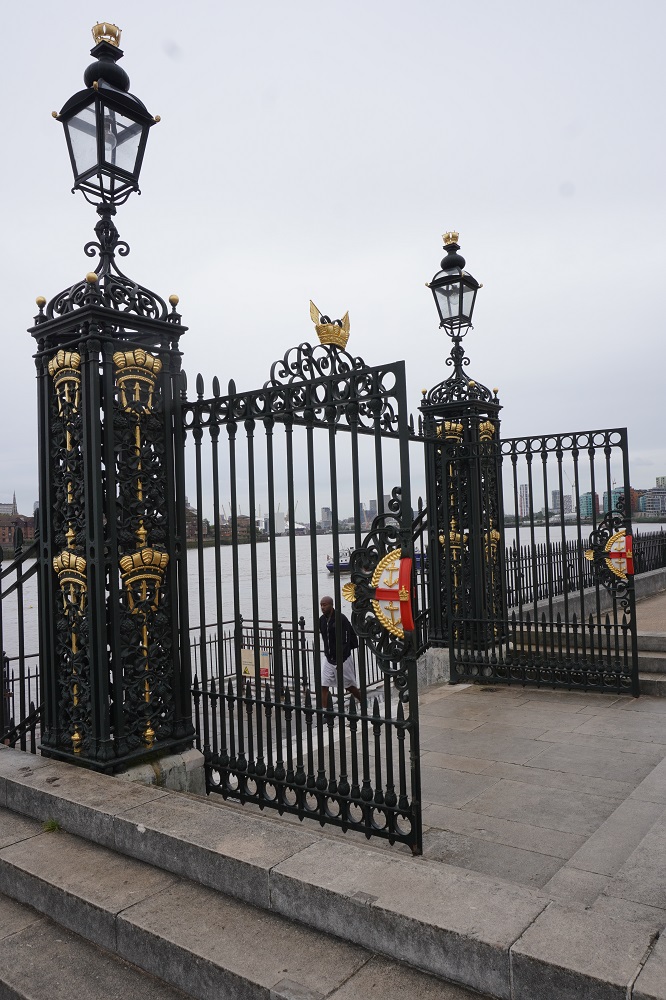
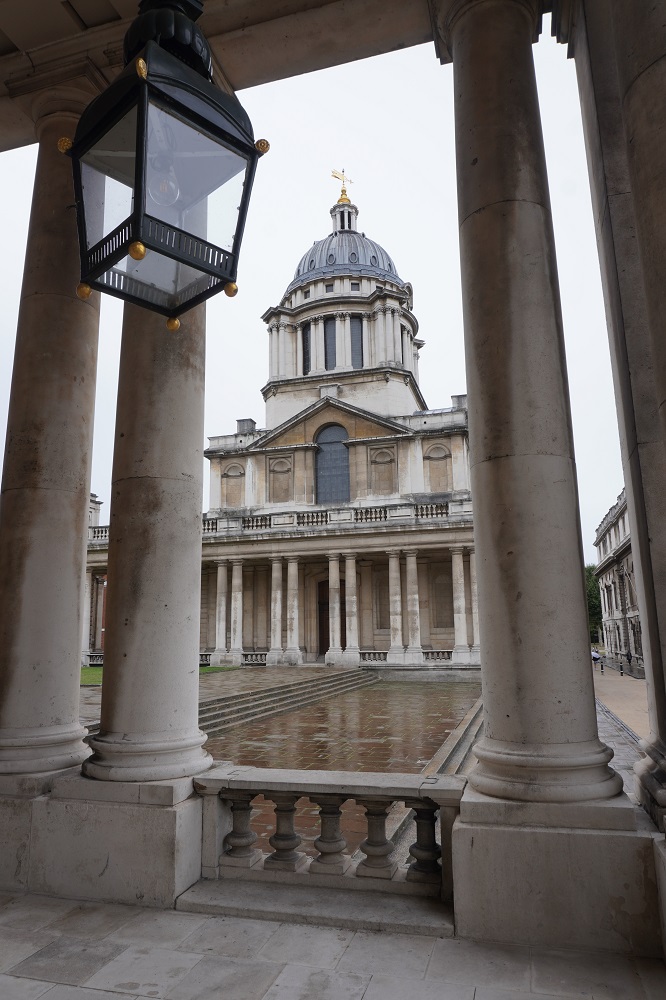
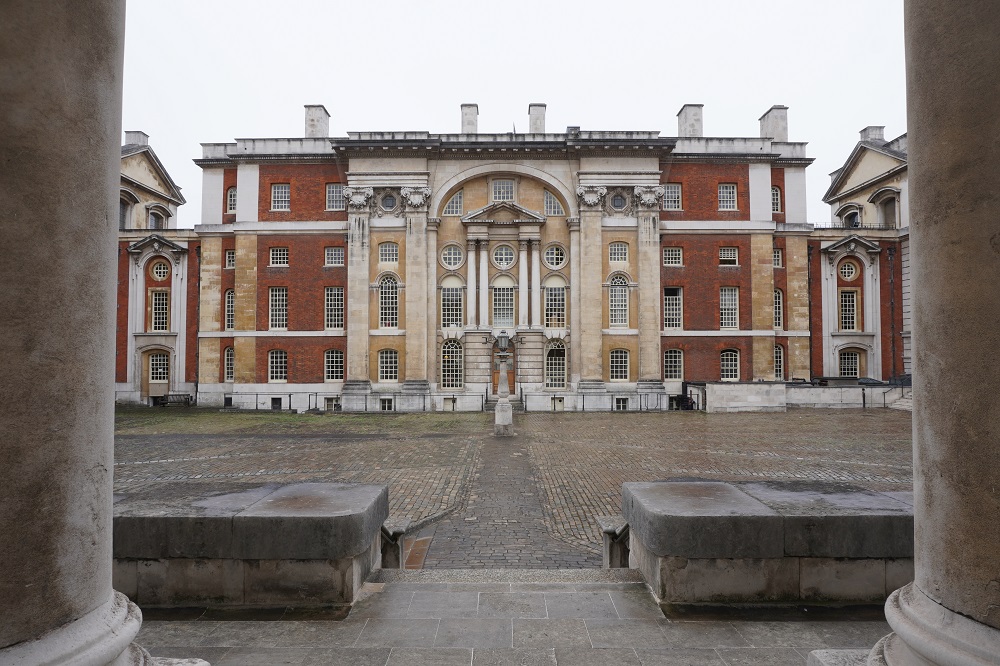
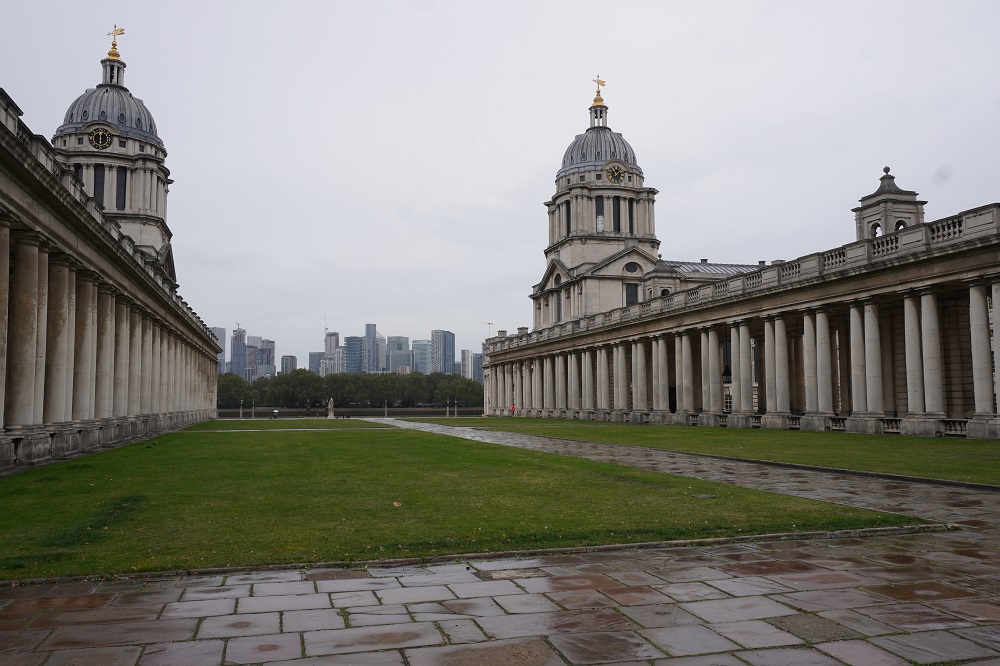
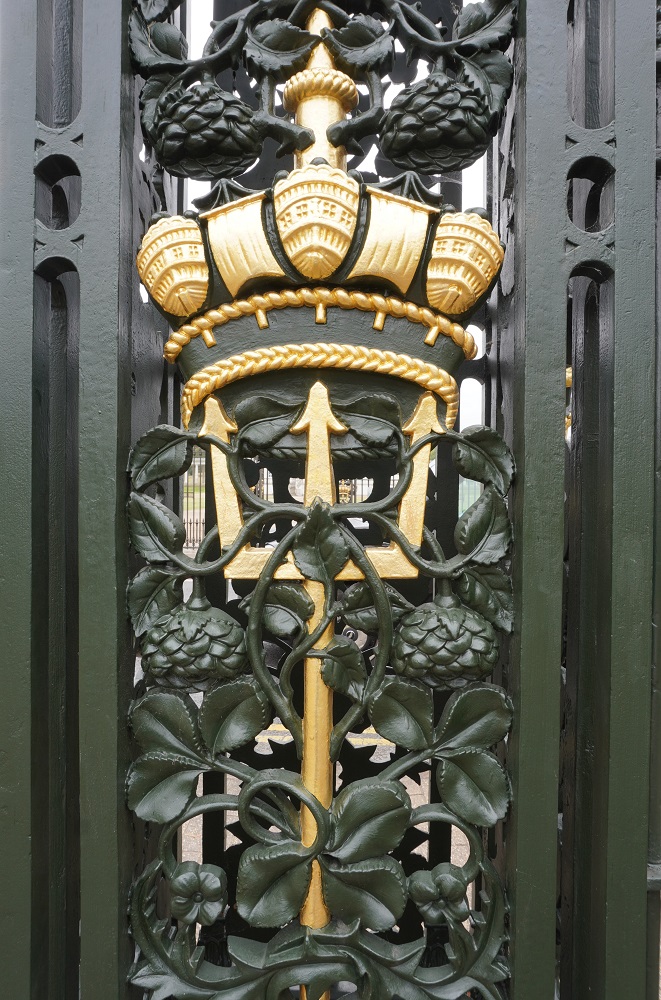
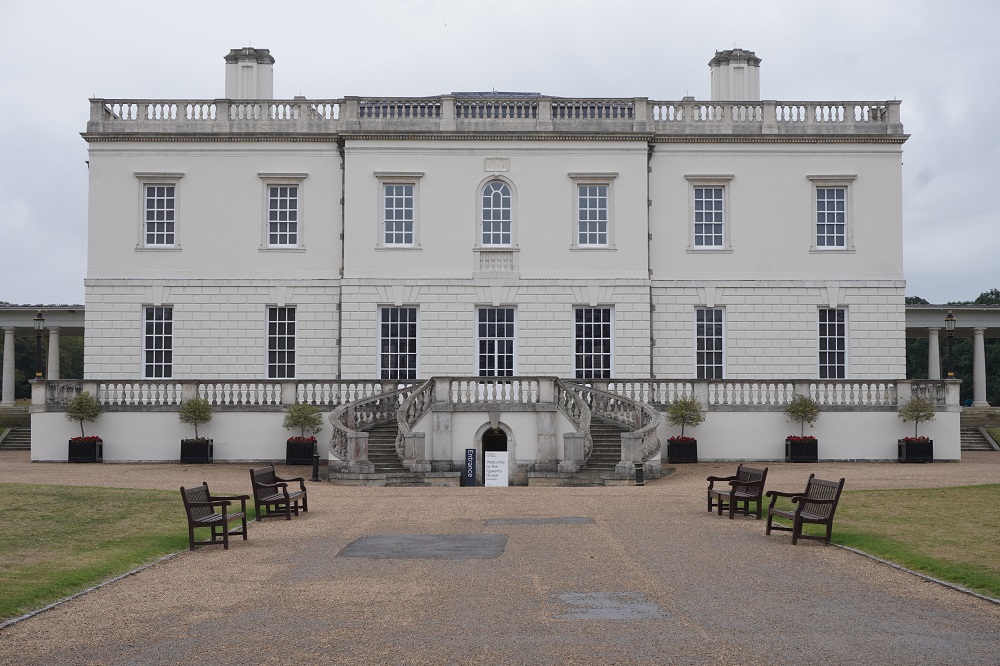
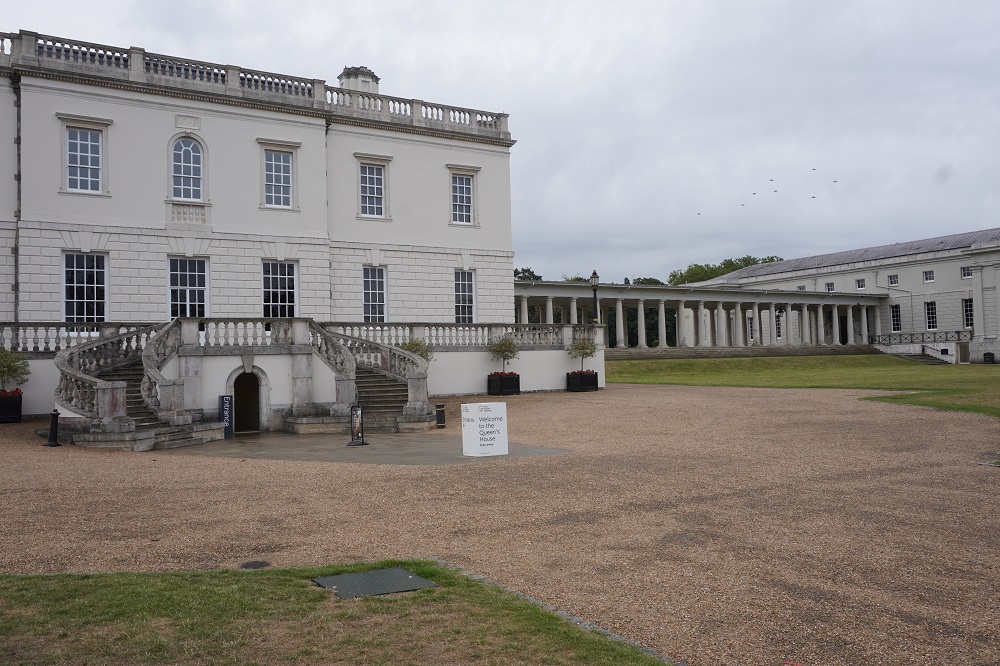
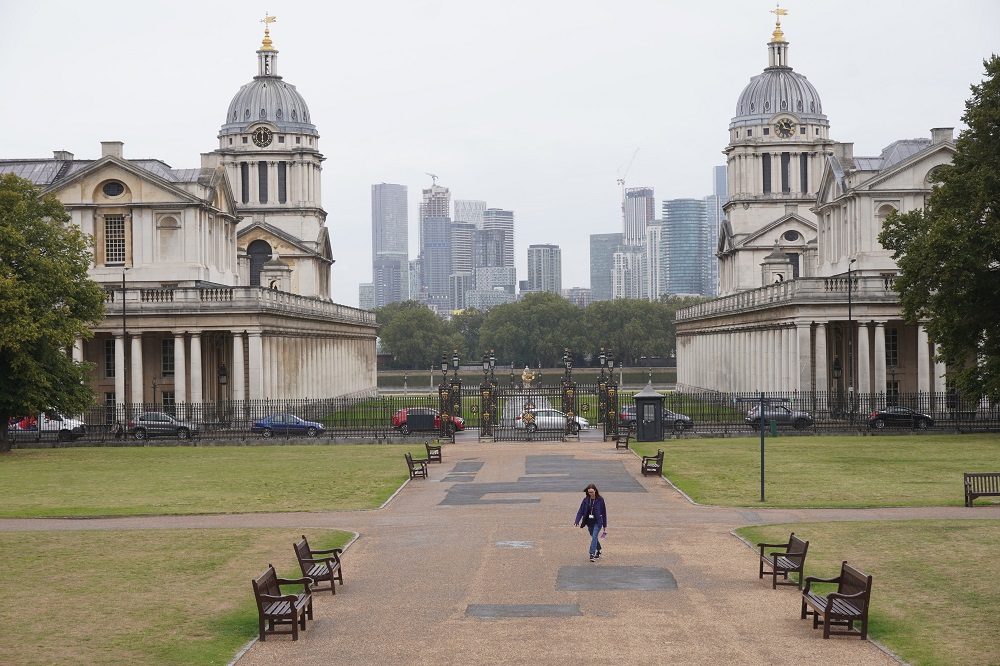
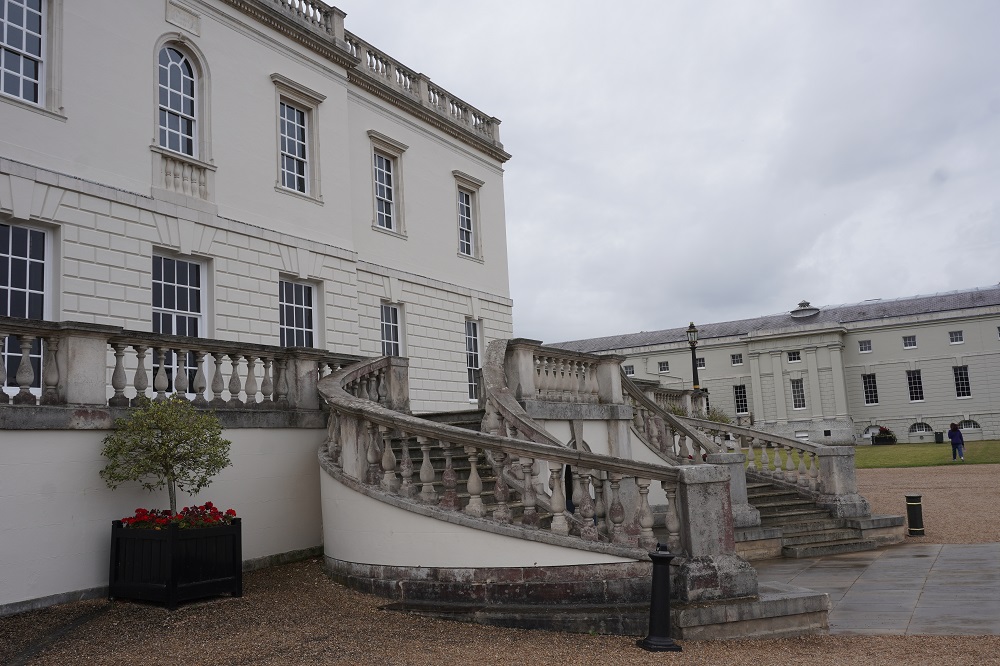
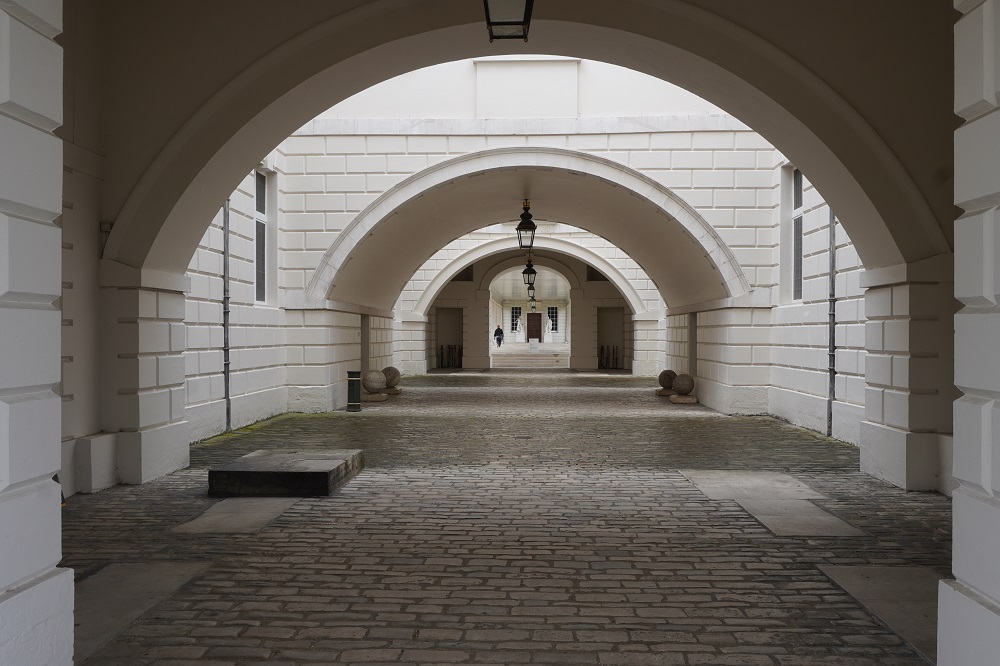
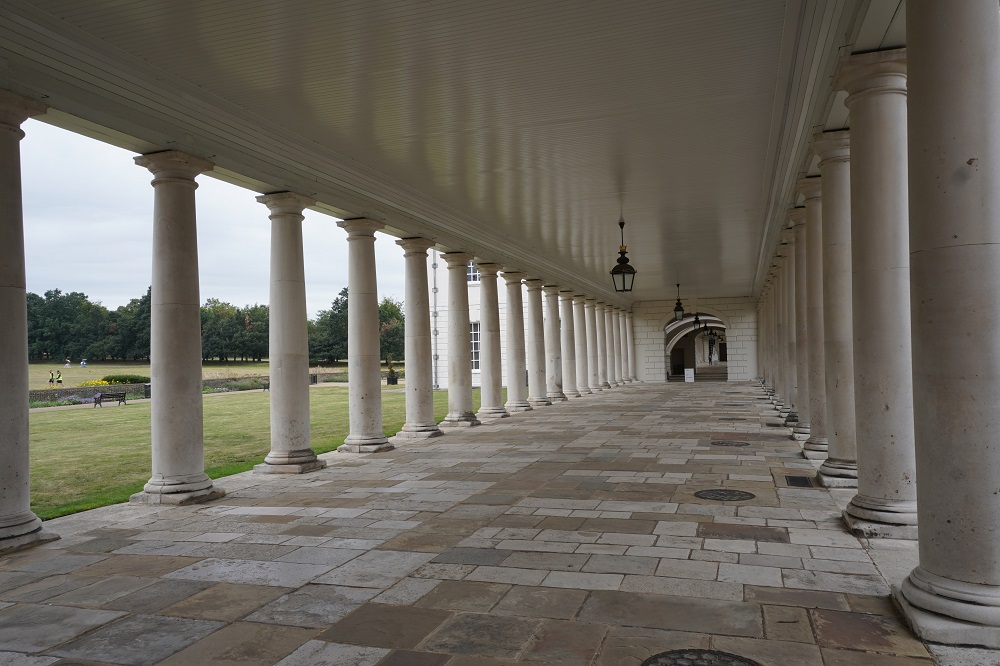
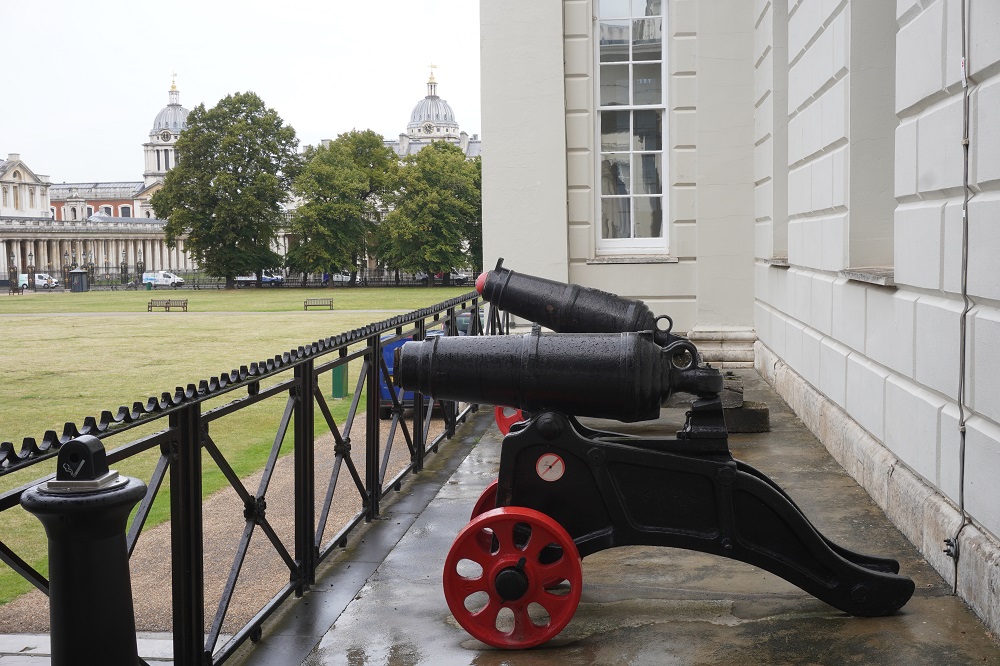
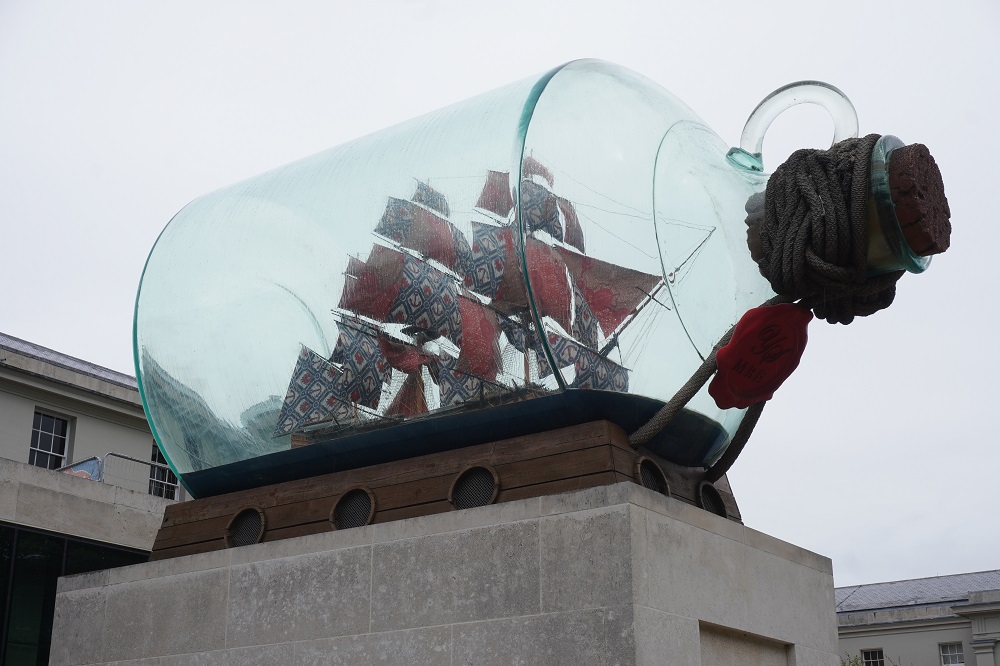
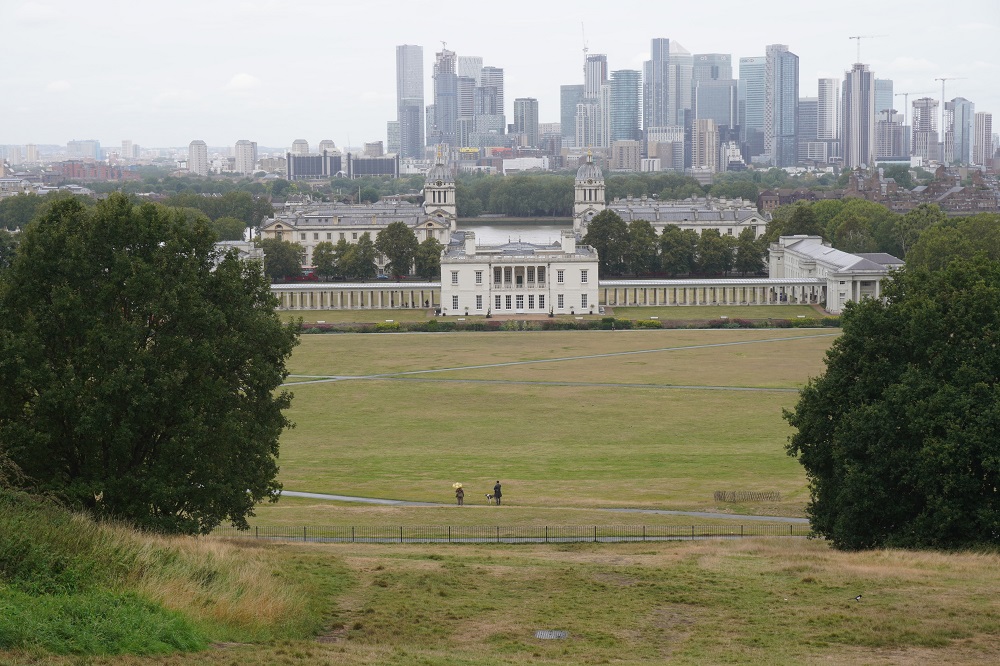
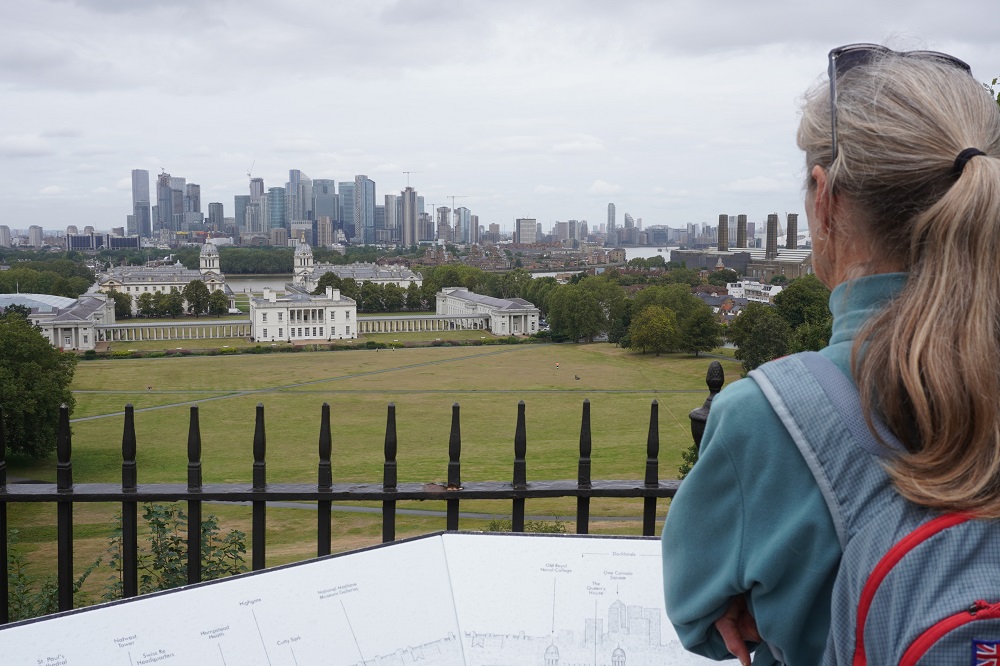
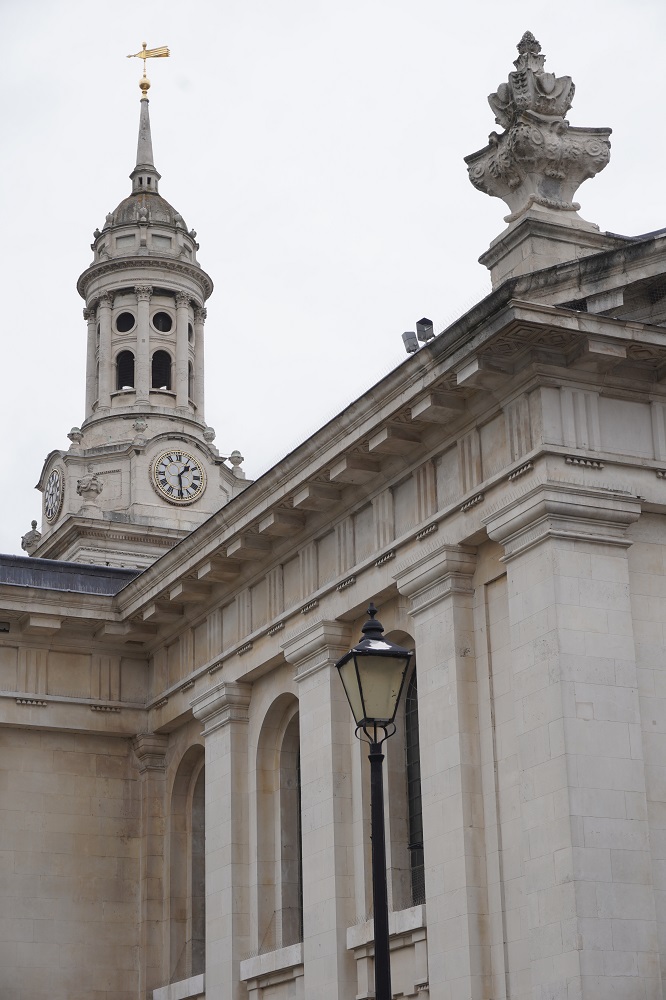
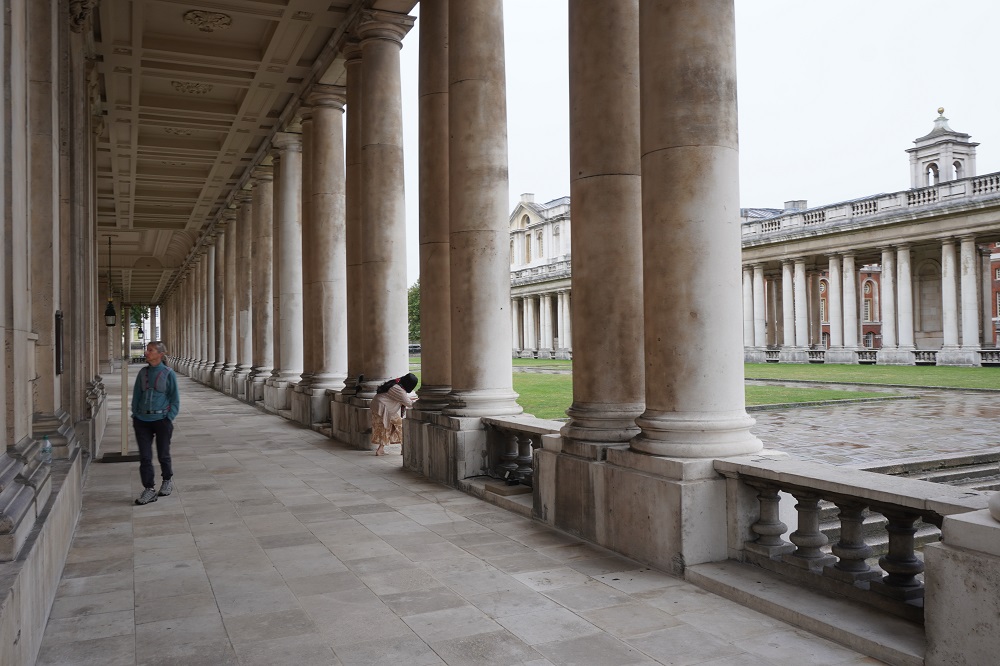
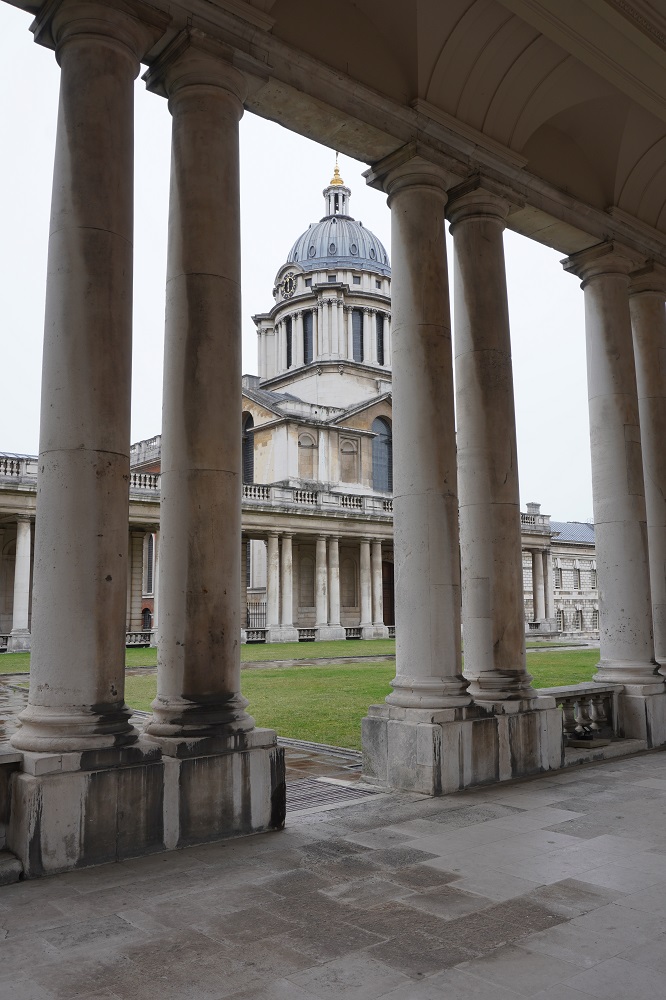
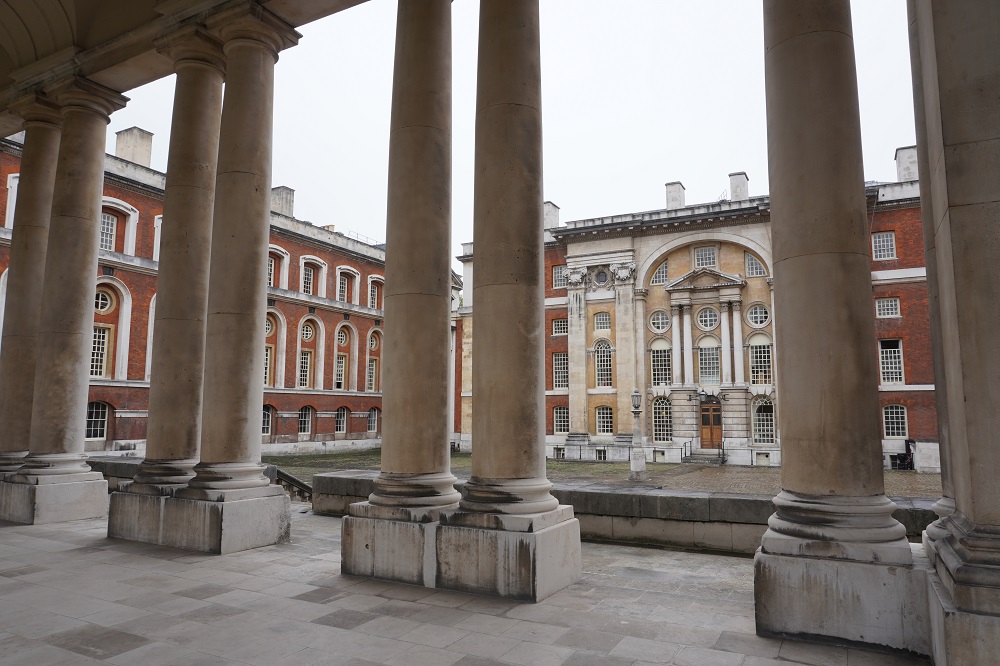
From the market we called into the Greenwich Visitor Information Centre in the old Royal College, passed the statue of Sir Walter Raleigh, to the University of Greenwich housed in the Naval Hospital which then became the Old Royal Navy College. This is a Sir Christopher Wren masterpiece. It is in two separate halves to protect the river views from the Queen’s House further up the hill. The Queen’s House is a Palladian design by another heroic architect, Inigo Jones. From The Queen’s House we had a quick look at an incredibly detailed replica of Nelson’s flagship HMS Victory, in a large glass bottle.
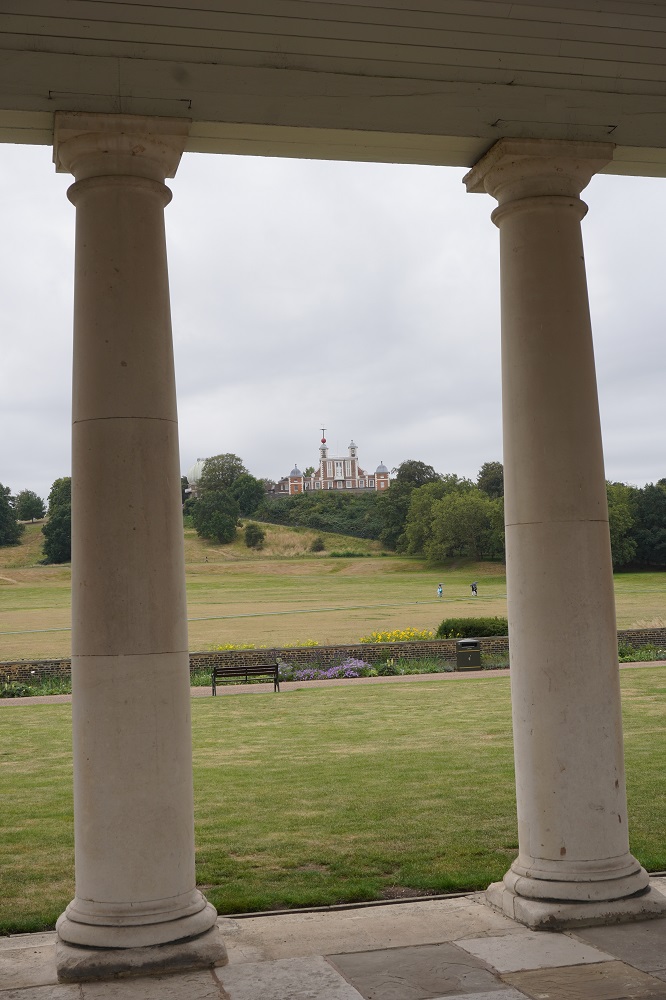
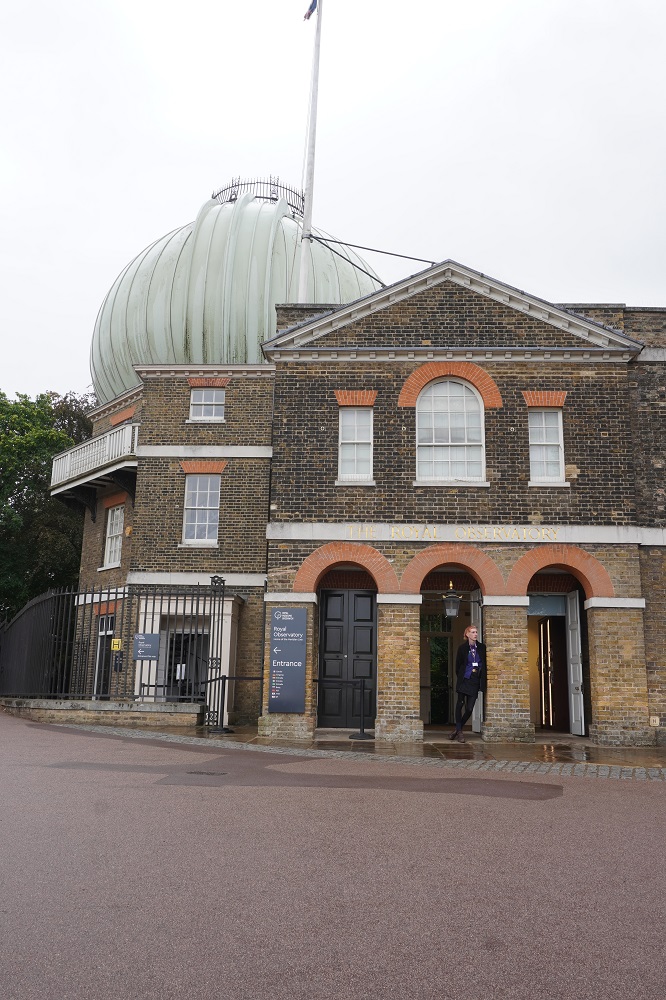
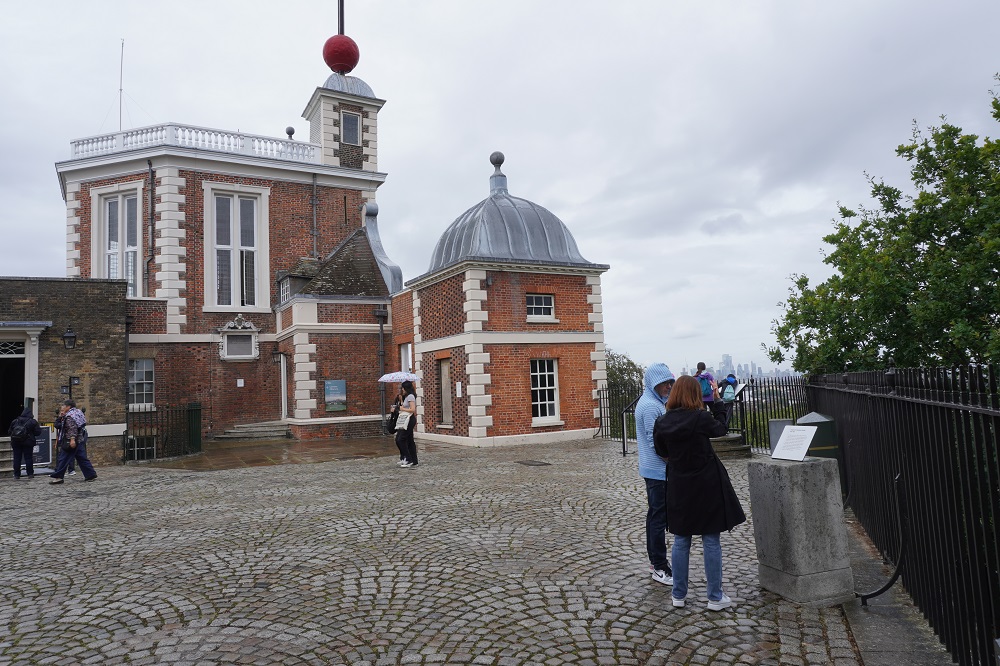
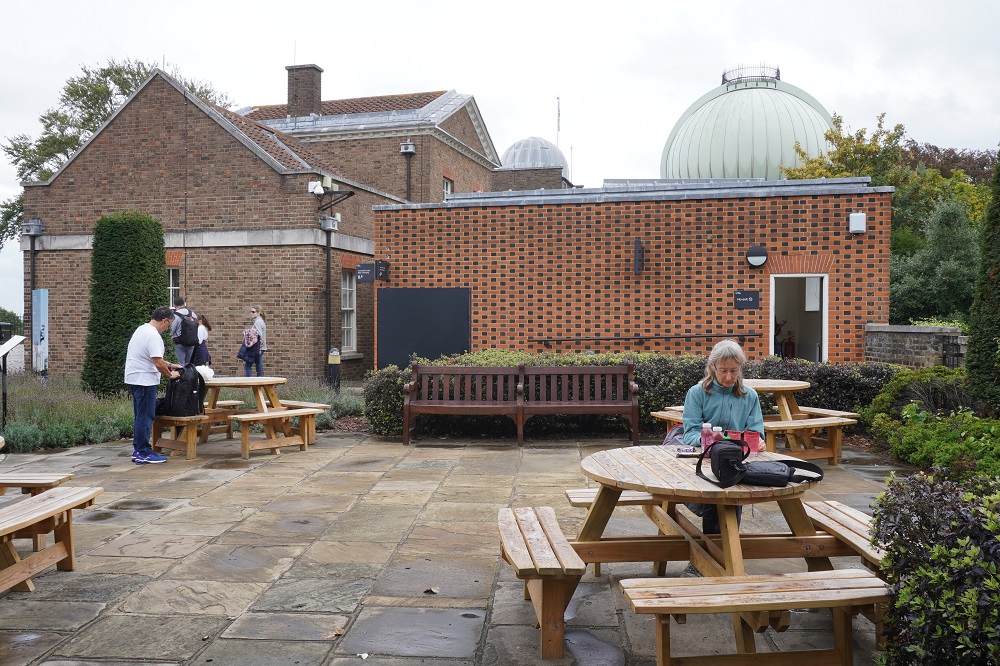
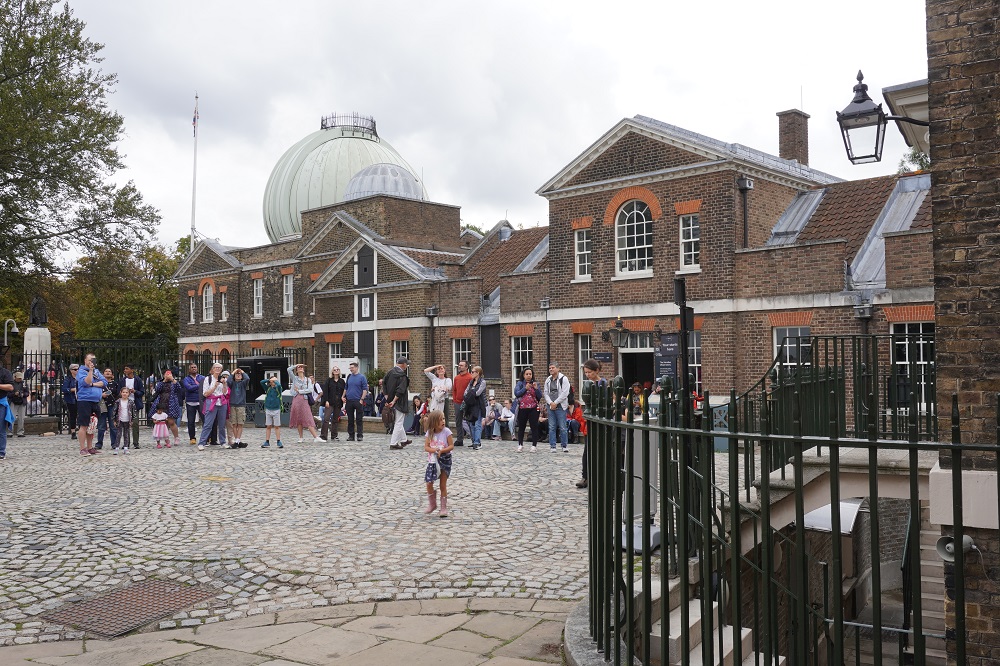
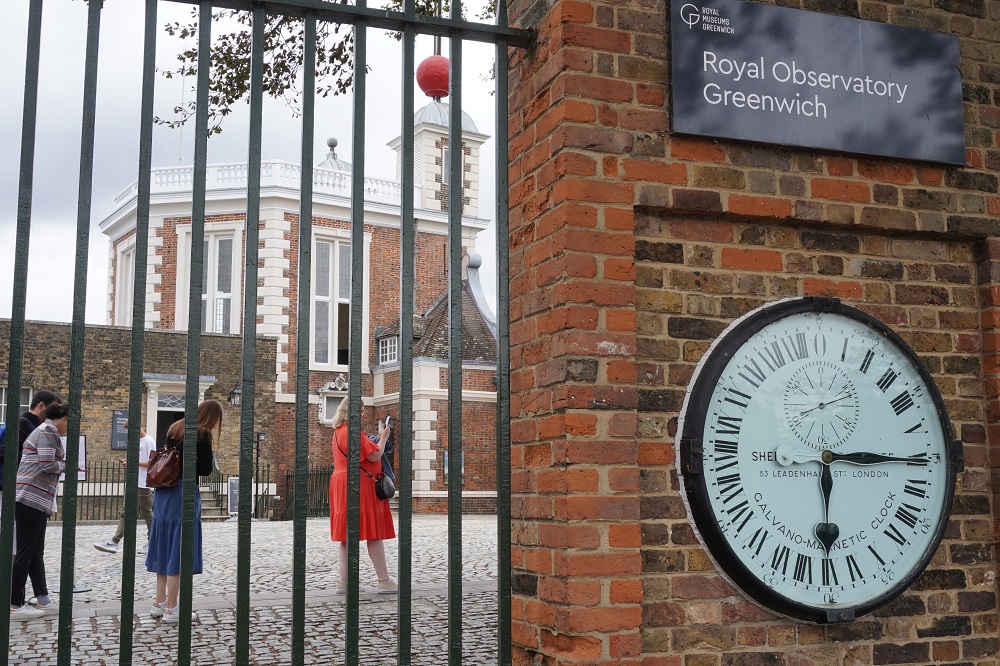
From the ship in a bottle it is an easy climb up through one of London’s loveliest expanses of green, Greenwich Park. It covers 73 acres and is the oldest of the enclosed Royal parks, with picturesque walks, a rose garden and many wonderful mature trees. At the top of the hill is the Royal Observatory with the Prime Meridian.
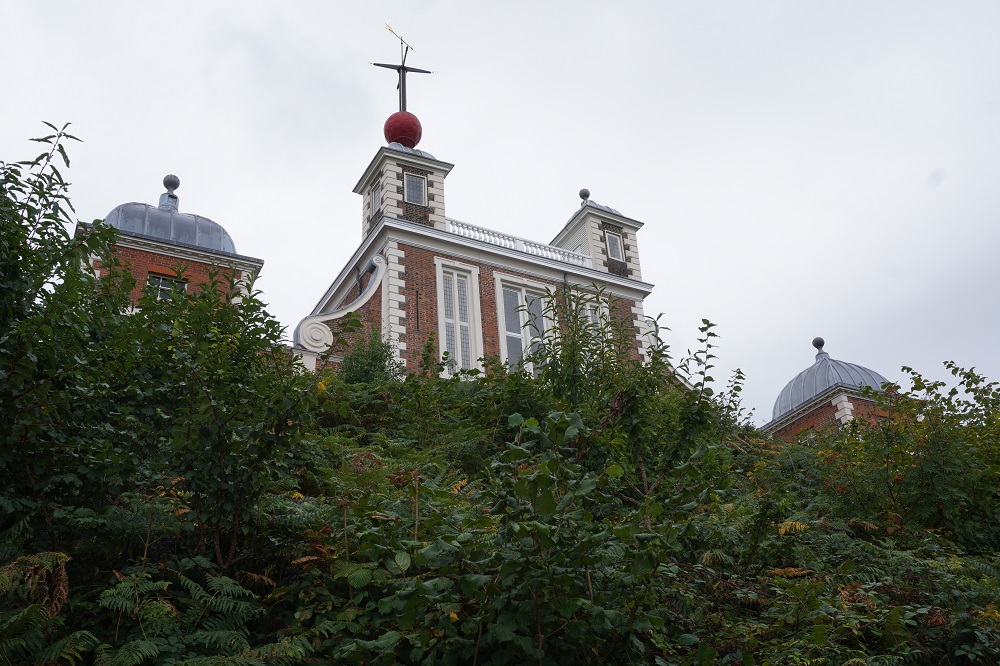
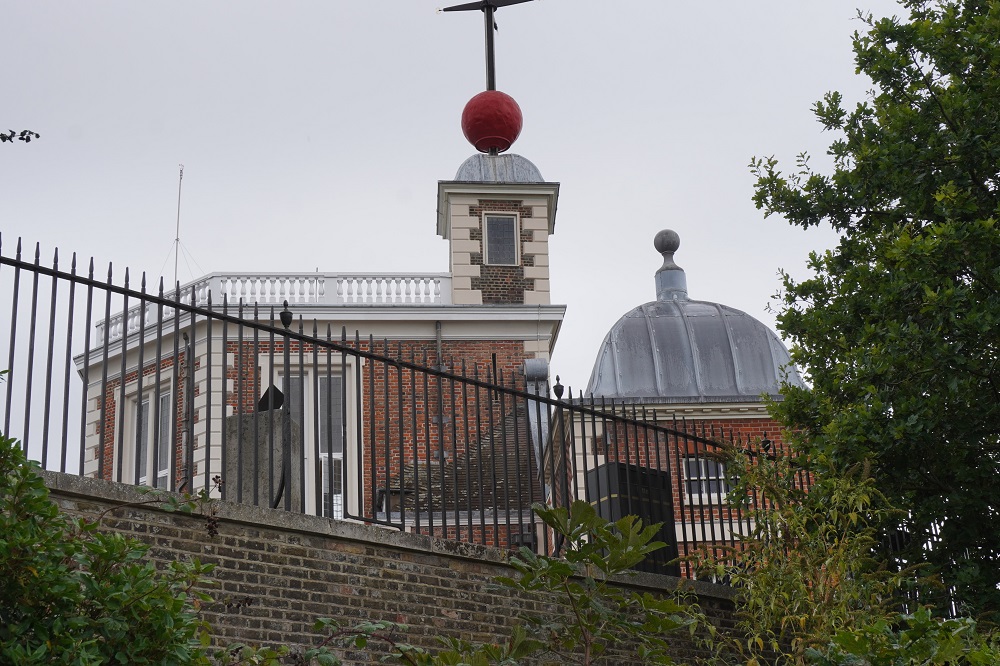
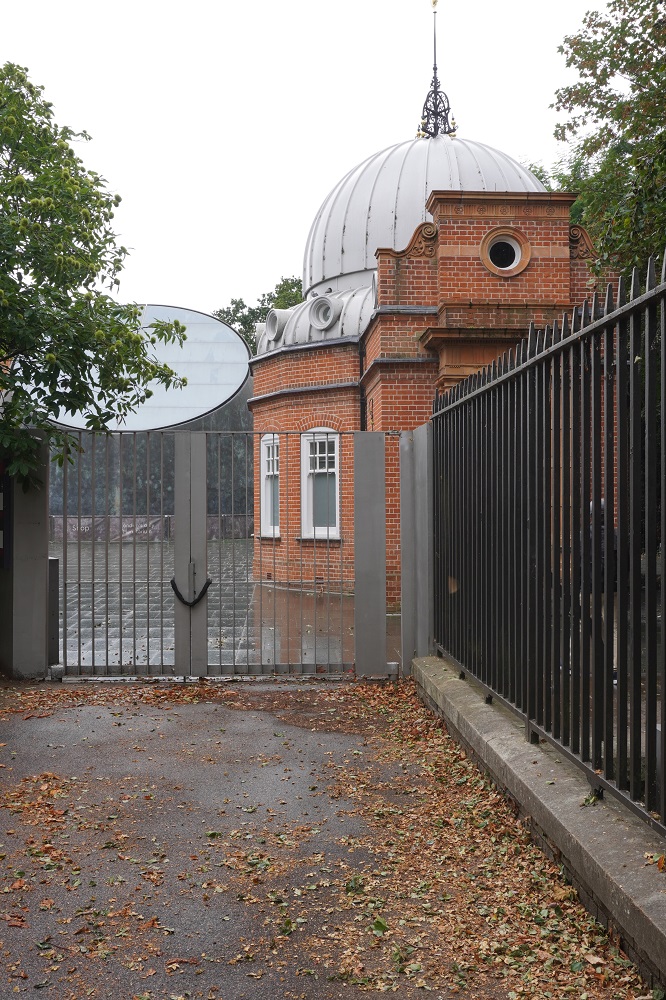
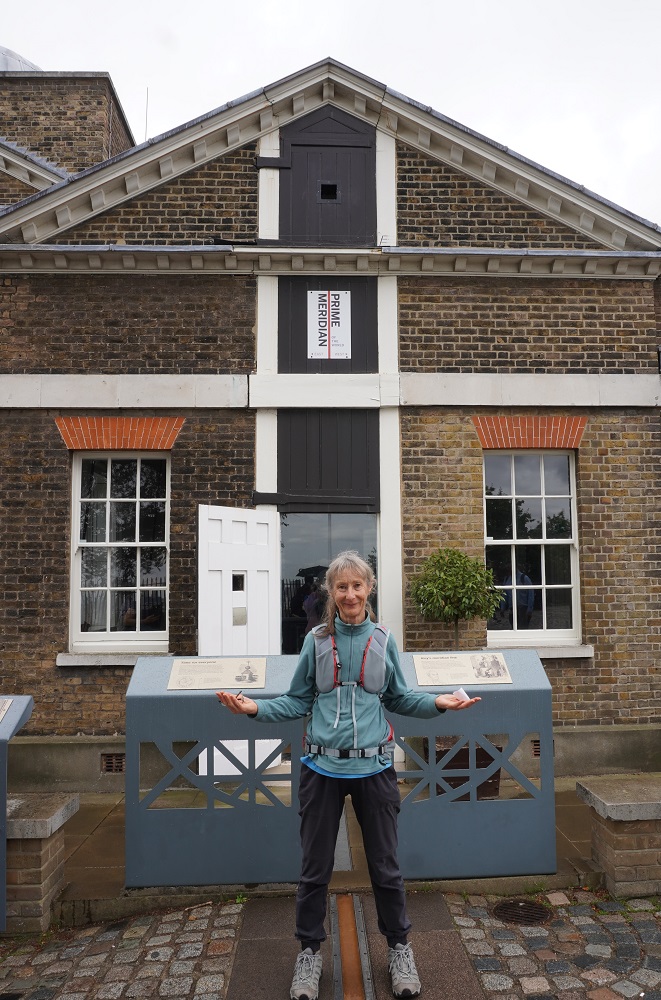
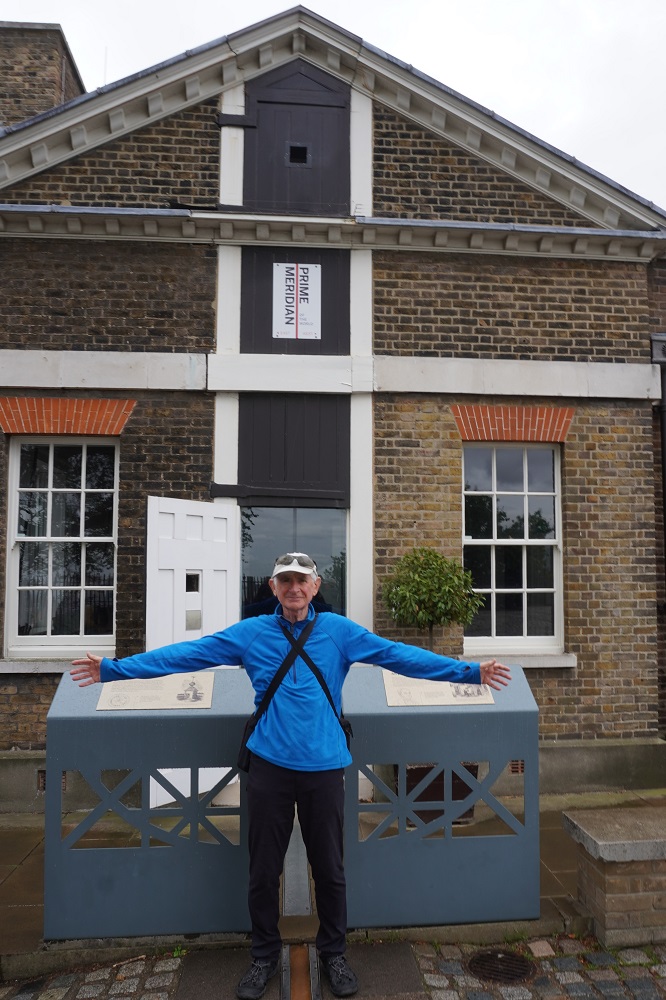
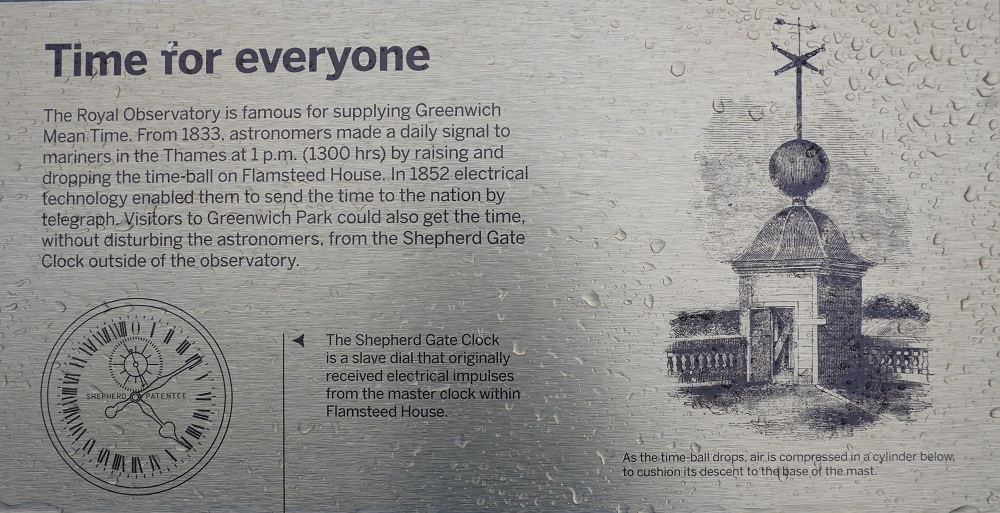
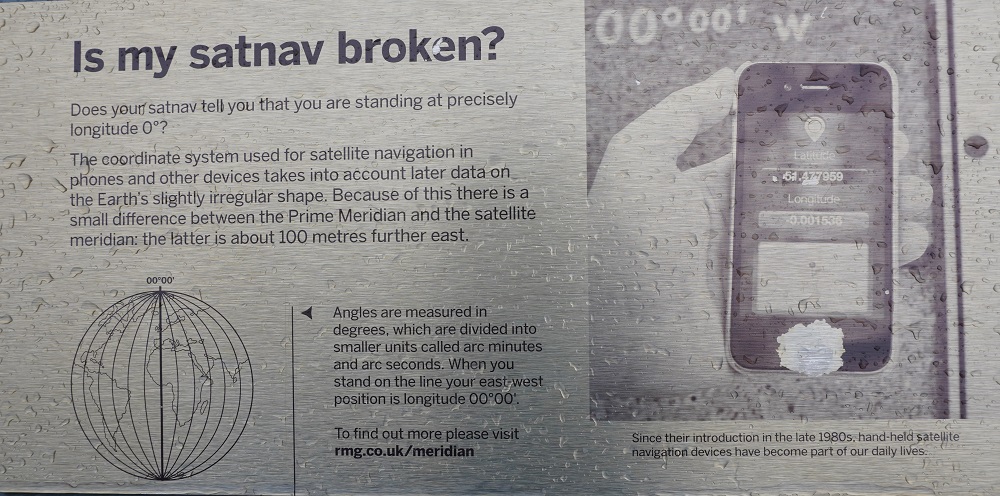
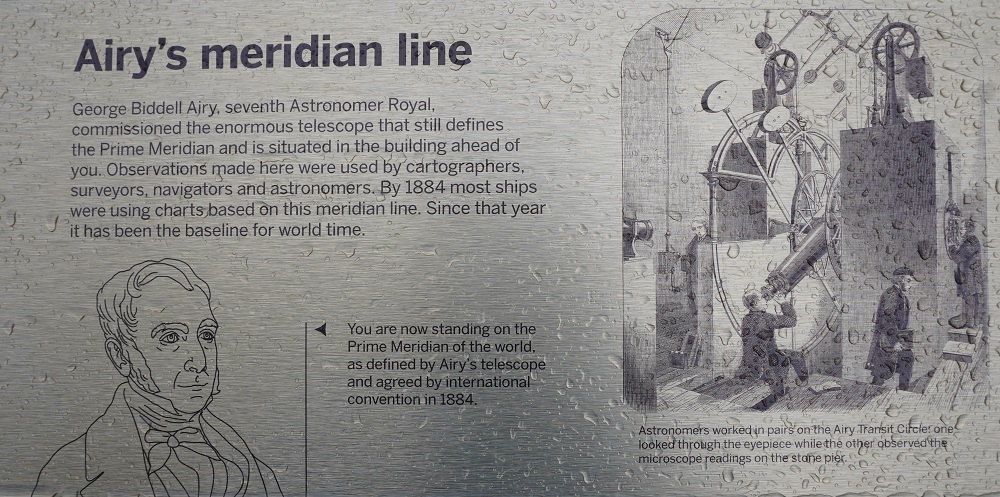
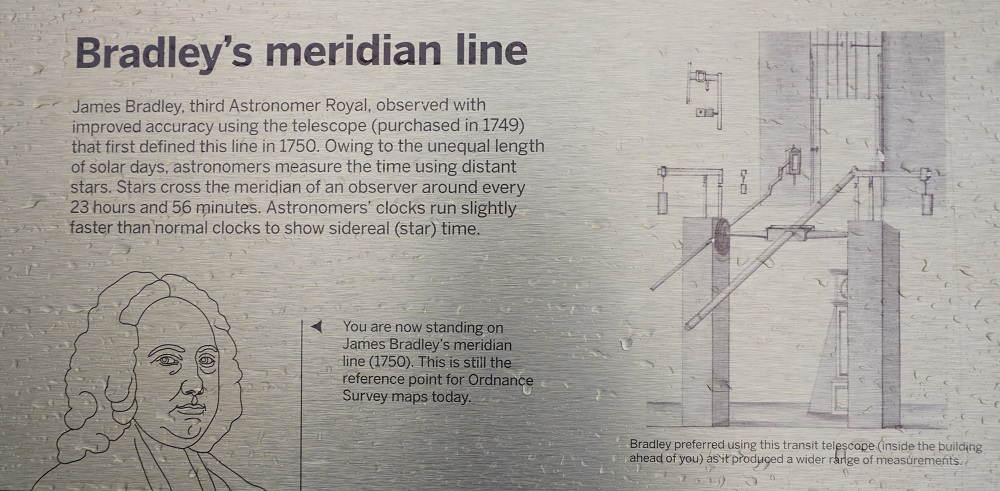
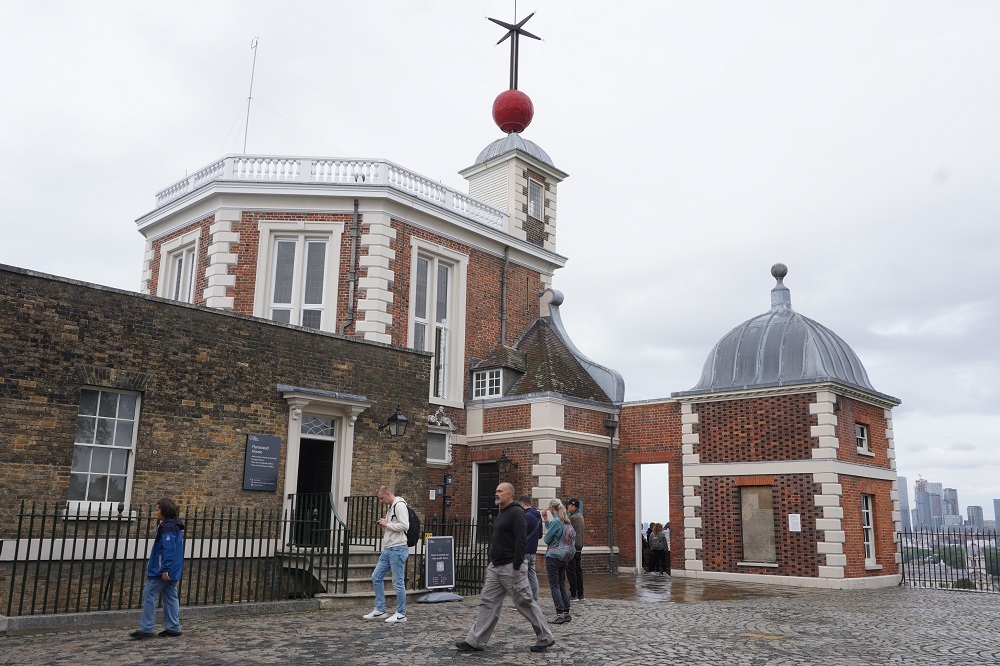
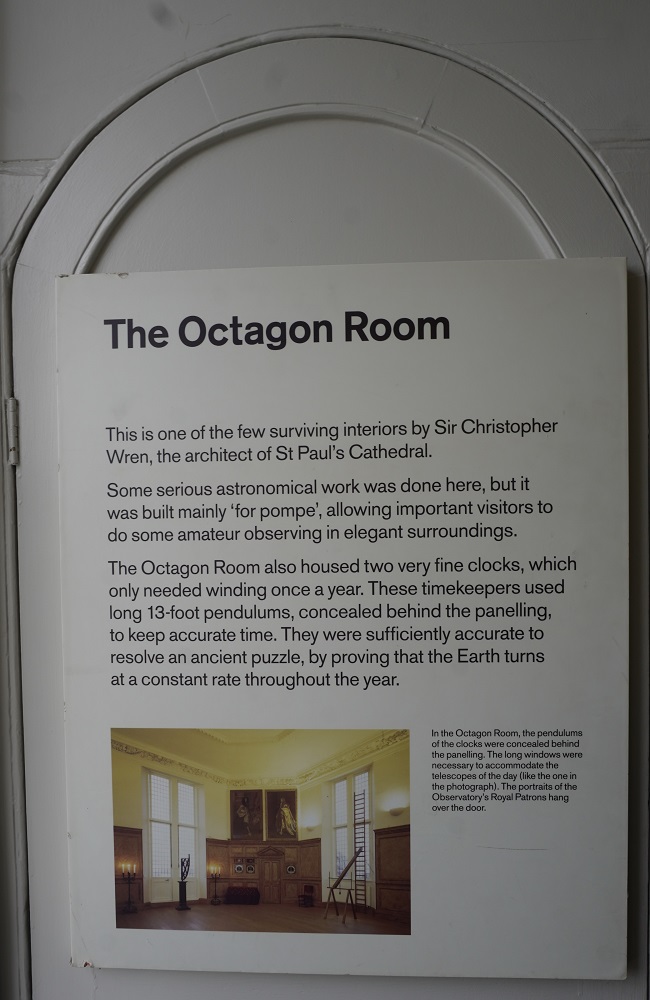
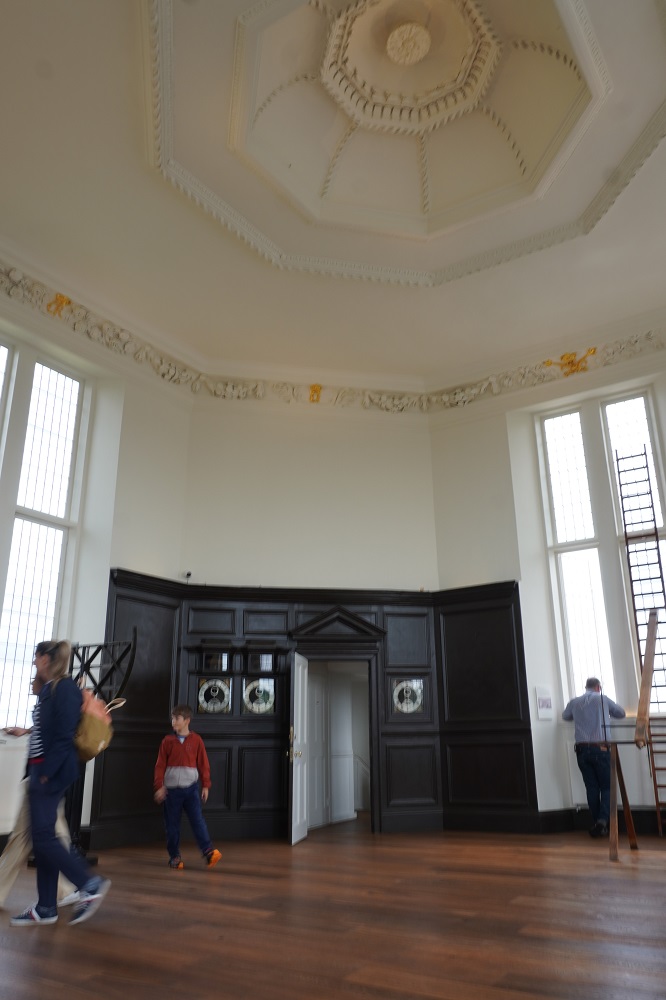
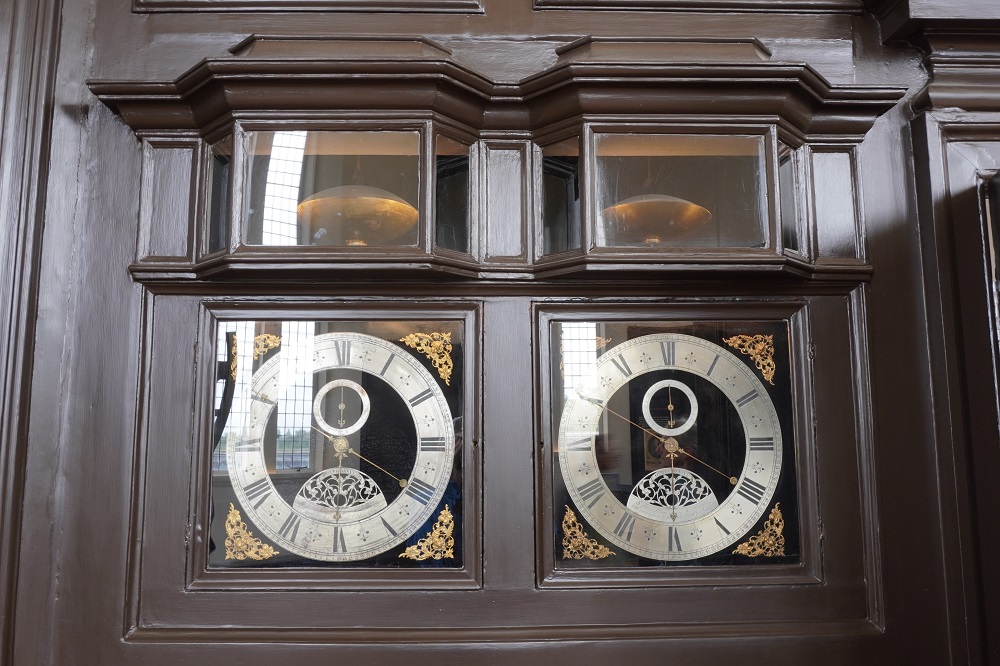
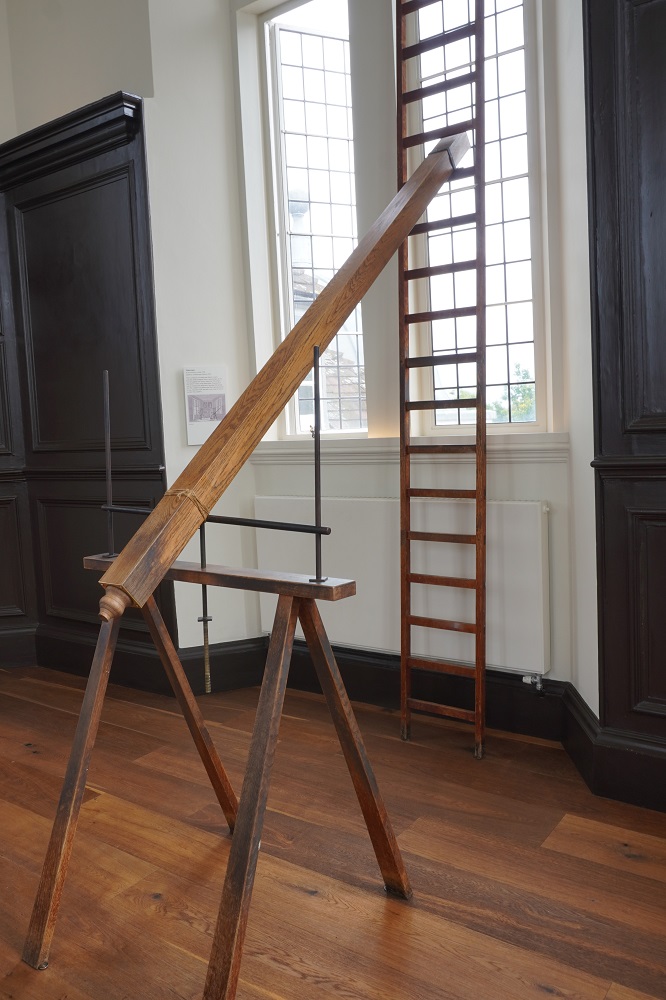
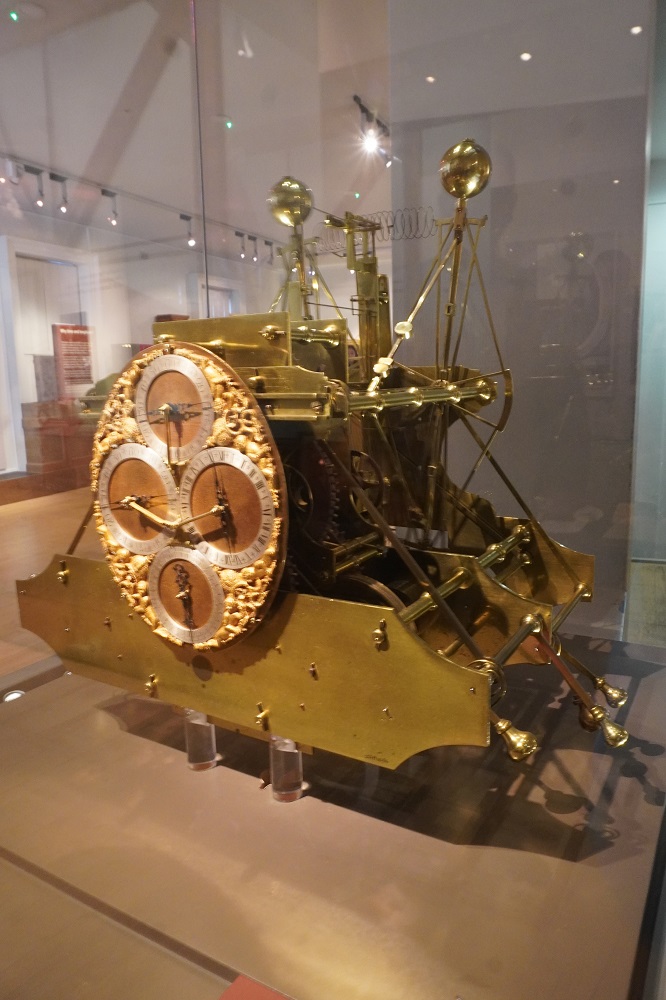
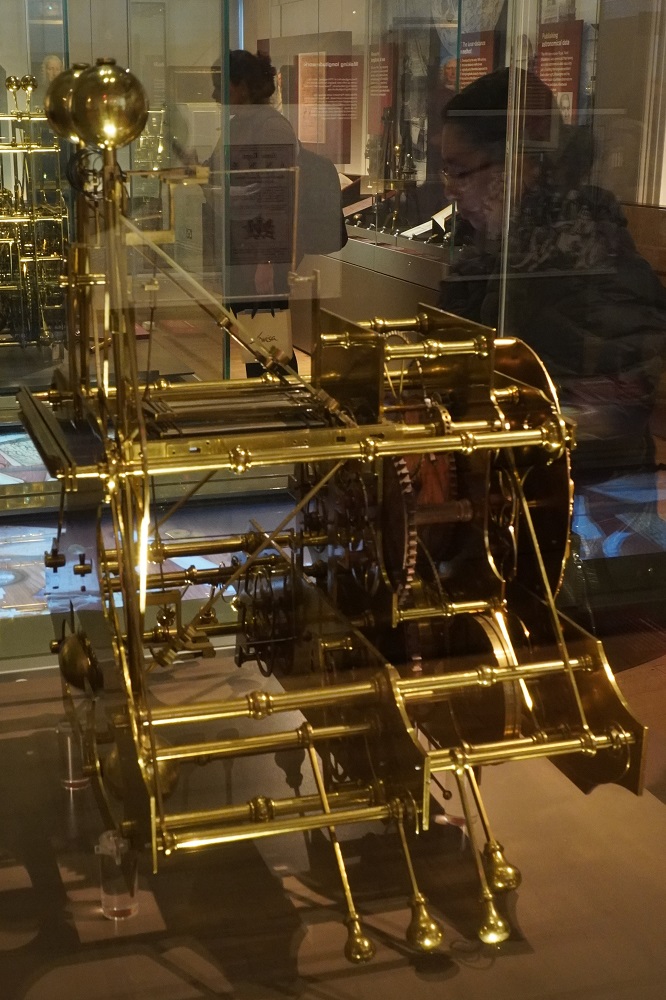
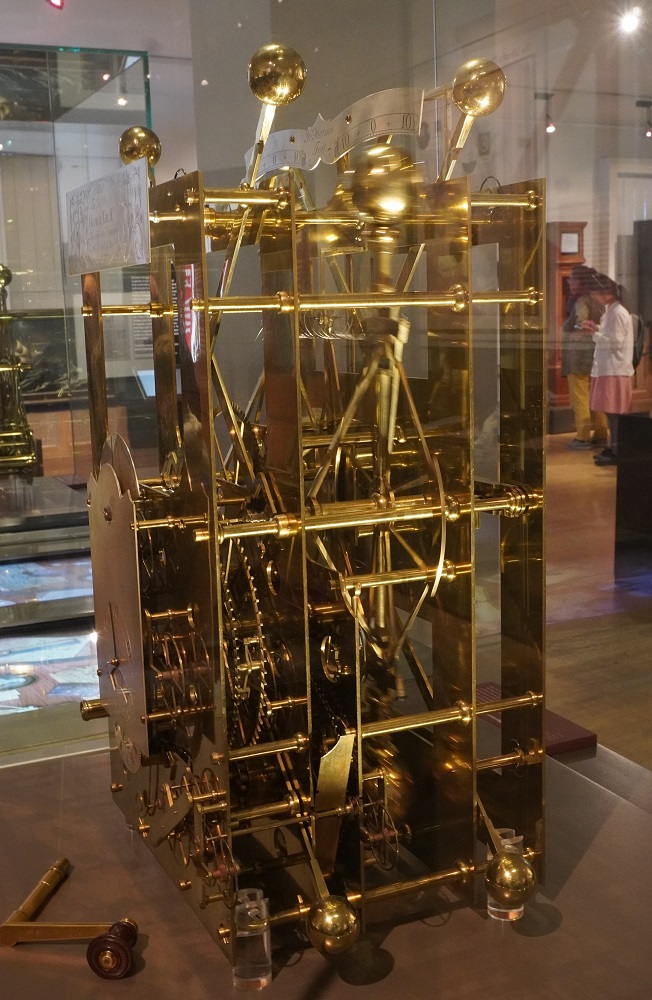
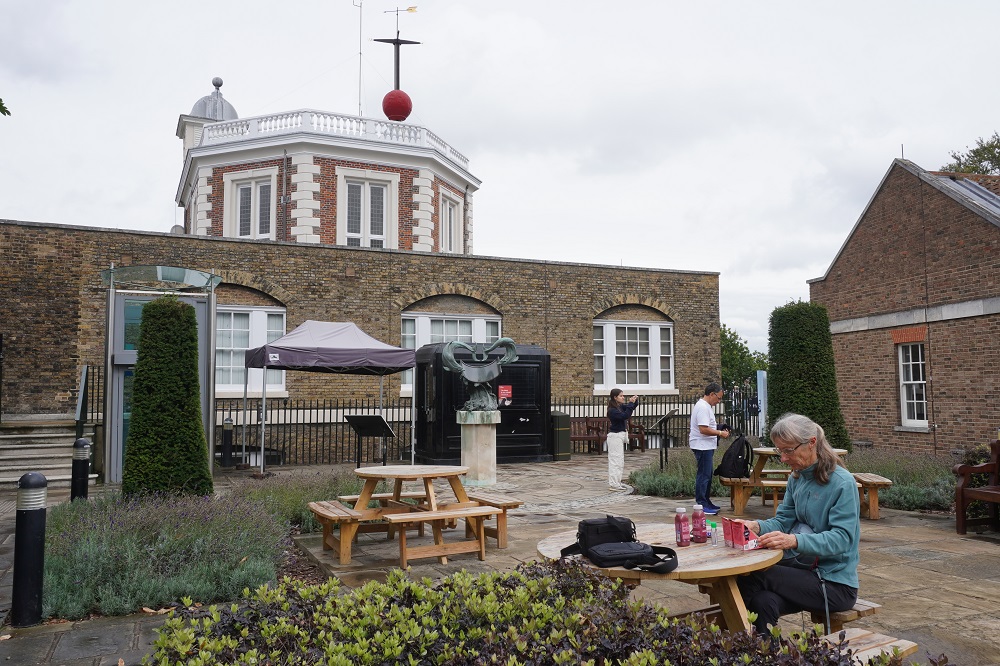
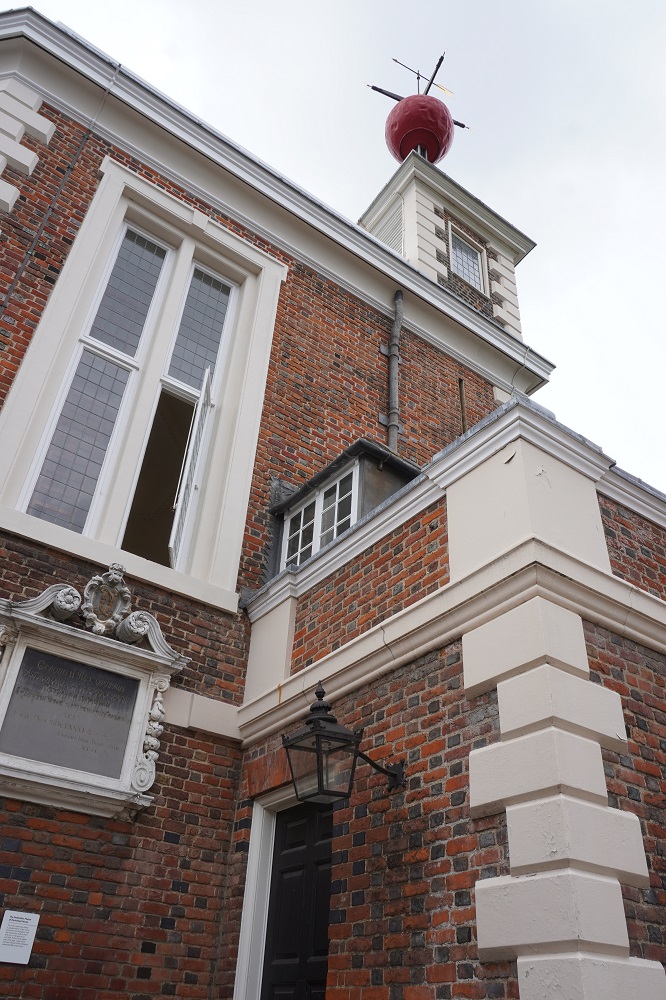
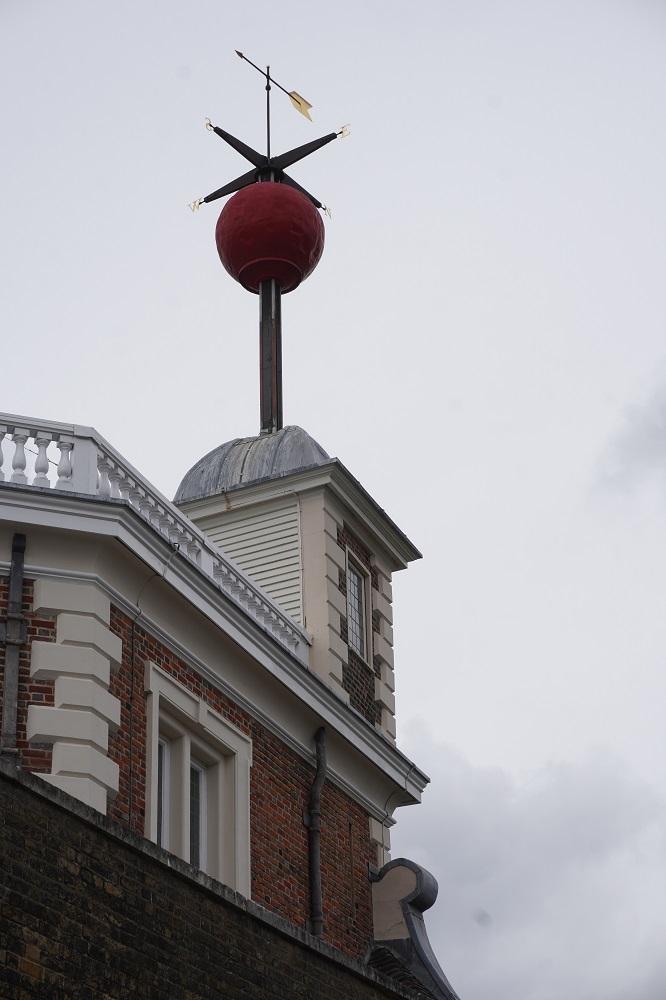
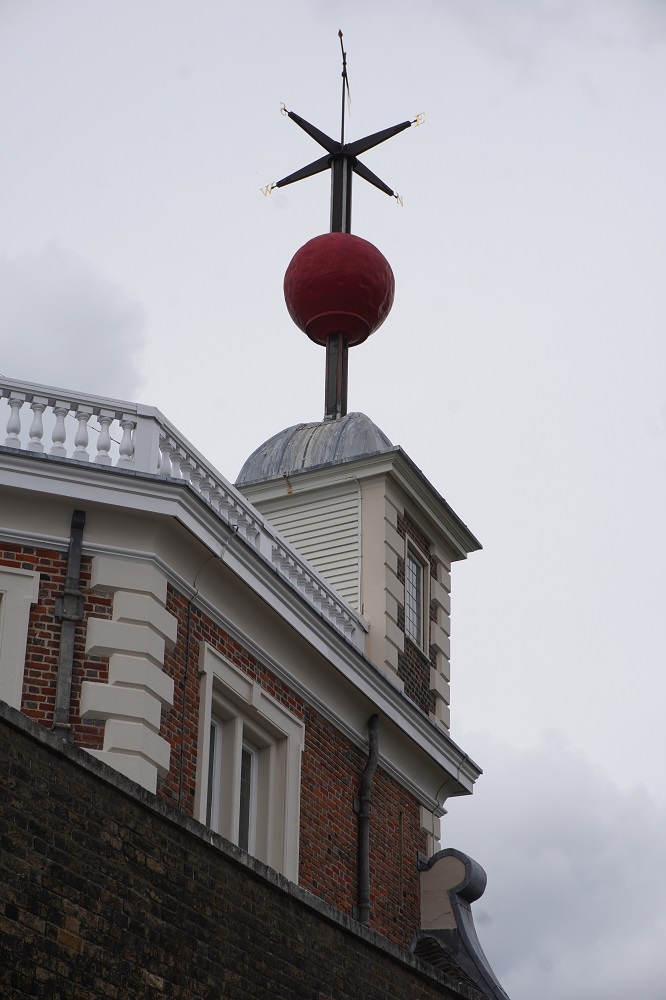
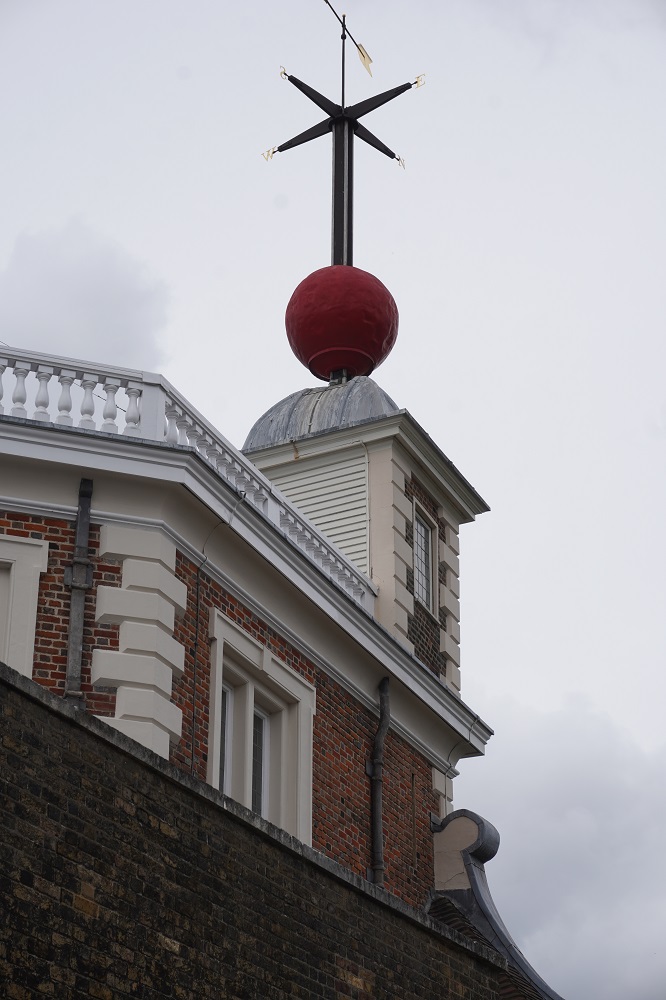
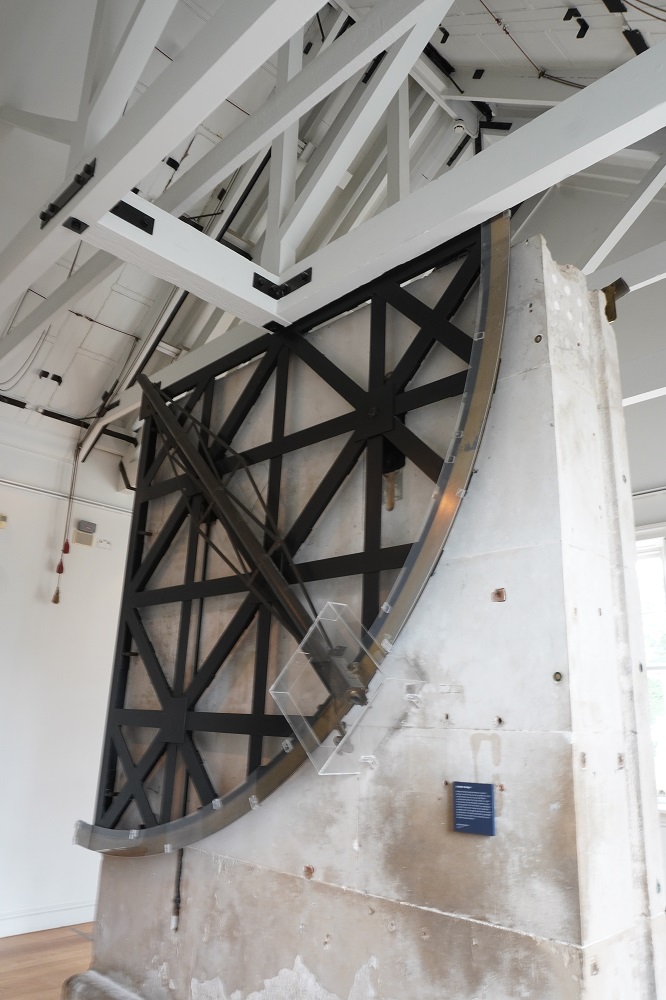
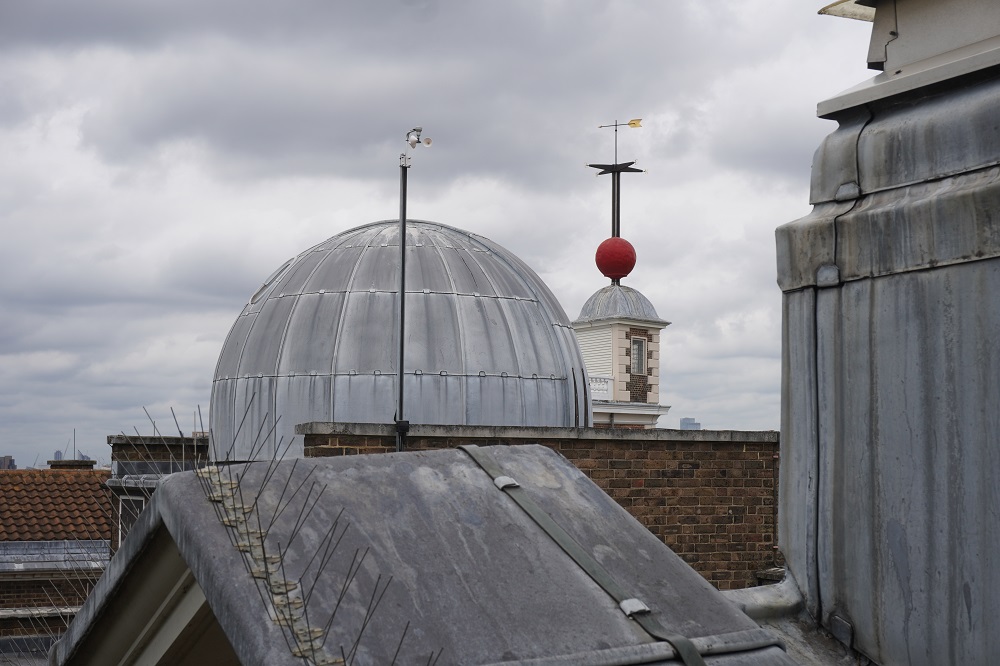
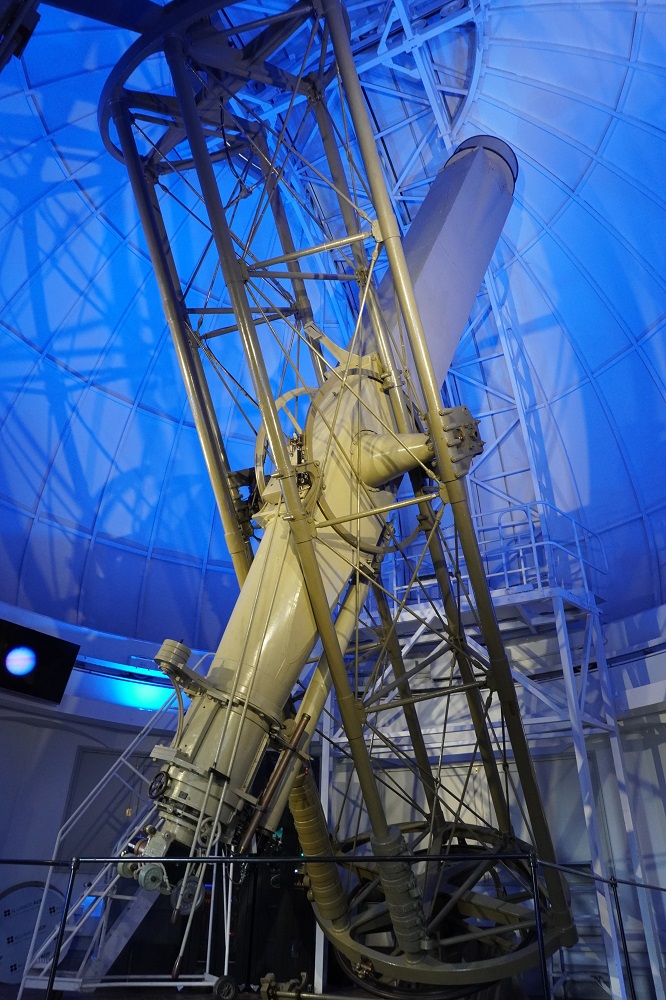
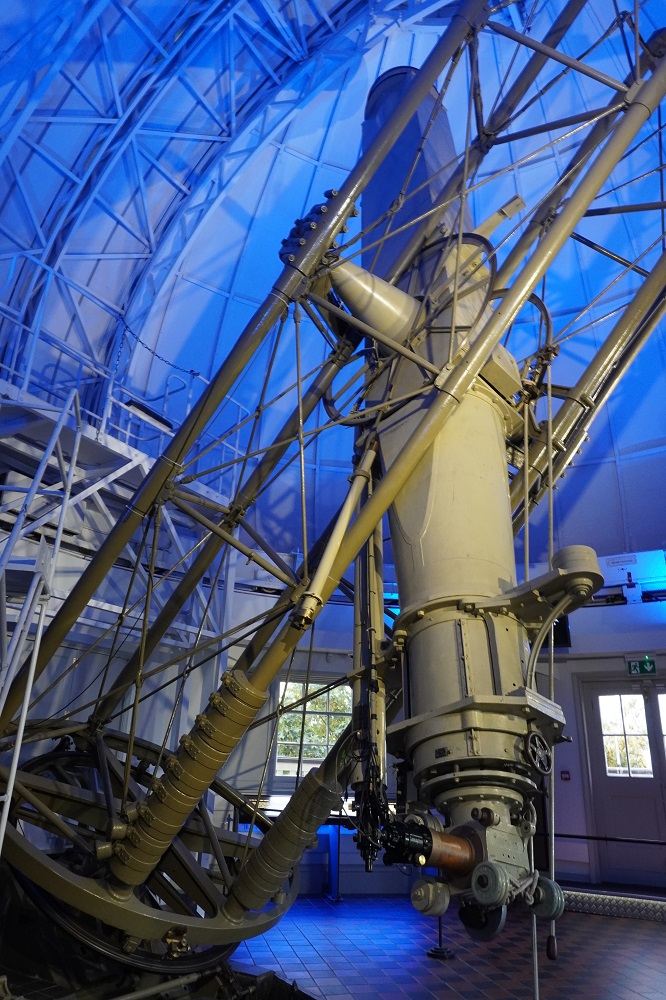
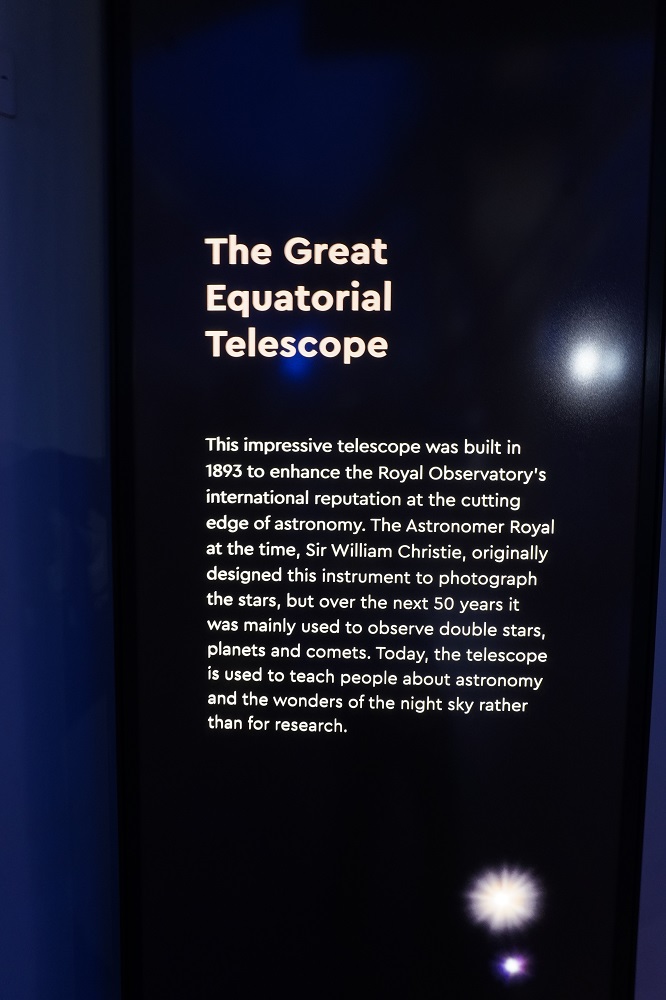
The prime meridian, arbitrarily set by international agreement in 1884, is the line from the north to south poles that defines 00°00’ 00”. This line slices earth into east and west and visitors including us can straddle both hemispheres with one foot either side of the meridian line. The original observatory building, Flamsteed House, is where the Astronomer Royal and his family lived and worked. The buildings now contain brilliant  galleries explaining how the longitude problem – how to accurately determine a ship’s east/west location – was solved through astronomical means and the development of accurate chronometers. Also at Flamsteed House every day at 1pm the red time ball is dropped, as it has done every day since 1833.

After watching the time ball drop we had our lunch in the Meridian Garden behind the observatory and then made our way back down through Greenwich Park to get the Uber Boat back to Westminster and the tube to Paddington. A wonderful day if you are interested in astronomy, time keeping, latitude and longitude and some of the great scientific minds of 17th , 18th  and 19th centuries.

Lost Underground

Our plan for today was to go by the underground to Camden Town and then walk back along Regent’s Canal to Little Venice and then to Paddington Basin and back to our hotel.

There was no easy route on the underground from our nearest tube station, Queensway, so we decided to walk an easy 15 minutes to Paddington where we could get the Hammersmith or Circle lines to Euston and then change to the Northern line and alight at Camden Town. All went well until we got off at Euston and could not find any connection to the Northern Line. The only tube map we had was the size of an envelope and both of us have marginal eyesight at the best of times. After wandering around dazed and bewildered for a while Barbara asked a young man who was assisting at the turnstiles how to get to Camden. He was very helpful and explained that Euston has two stations, Euston and Euston Square. They are not connected underground. You have to go up to street level, cross a road and go down underground to get on the Northern Line. We were at Euston Square and would have to go to Euston. Apparently everyone except newbie tourists knew this. This would have meant swiping out at Euston Sq and swiping in again at Euston – 2 zone 1 fares. But he suggested the easiest way was to get on the next Circle line tube and go one stop to King’s Cross which had an underground route to the Northern Line. This avoided swiping in and out and was only 1 zone 1 fare. This we did which was fine but the underground walk seemed to be an endless maze going up and down escalators and long twisting tunnels. It all worked out fine and we finally arrived at Camden Town. One good thing about the London Tube is that trains come every few minutes and they move between stations very fast.

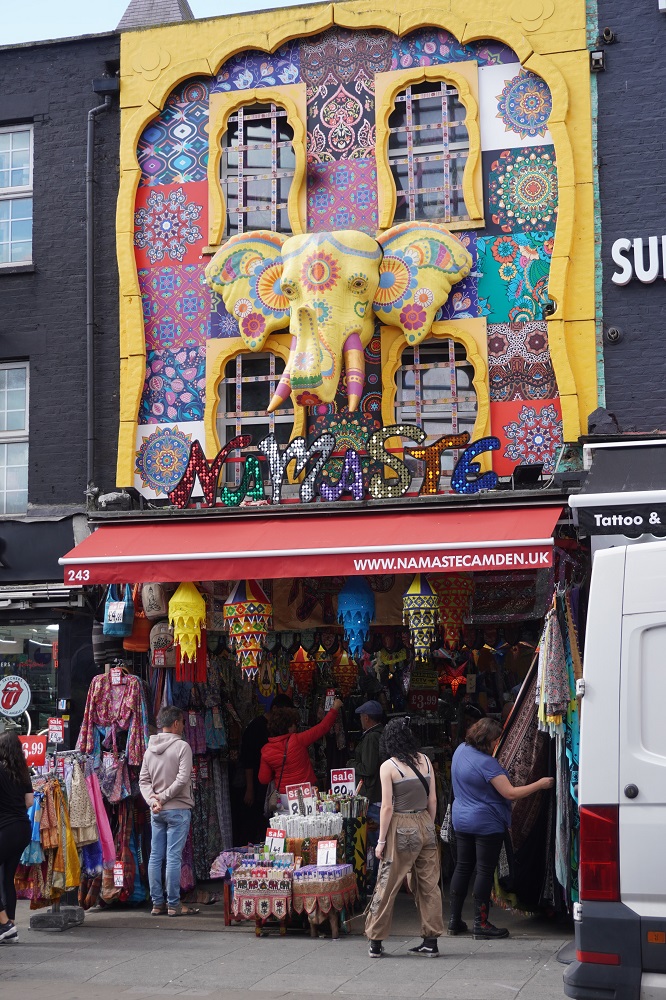
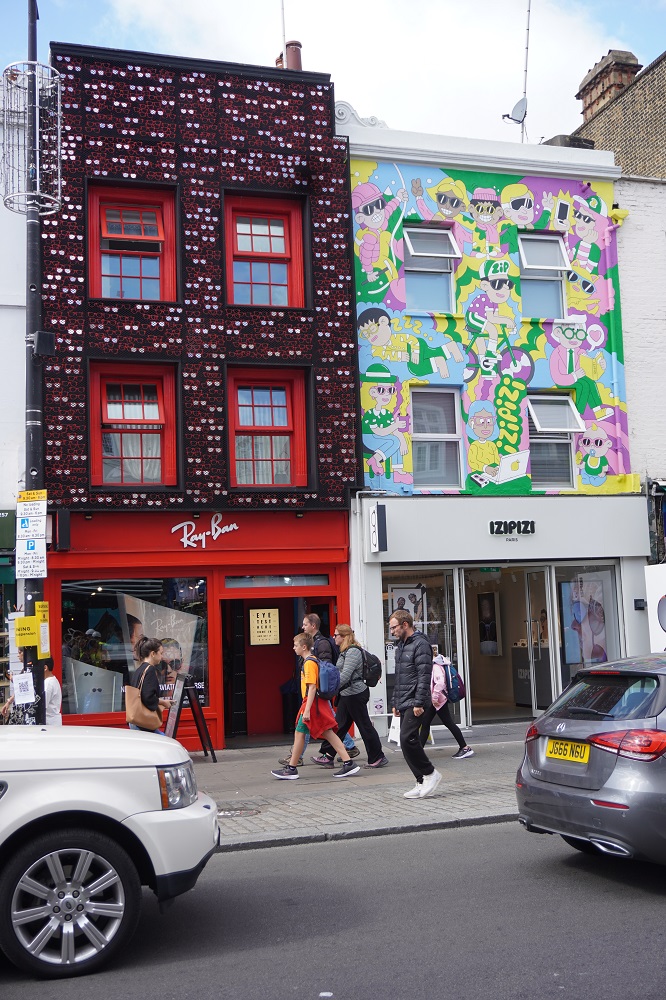
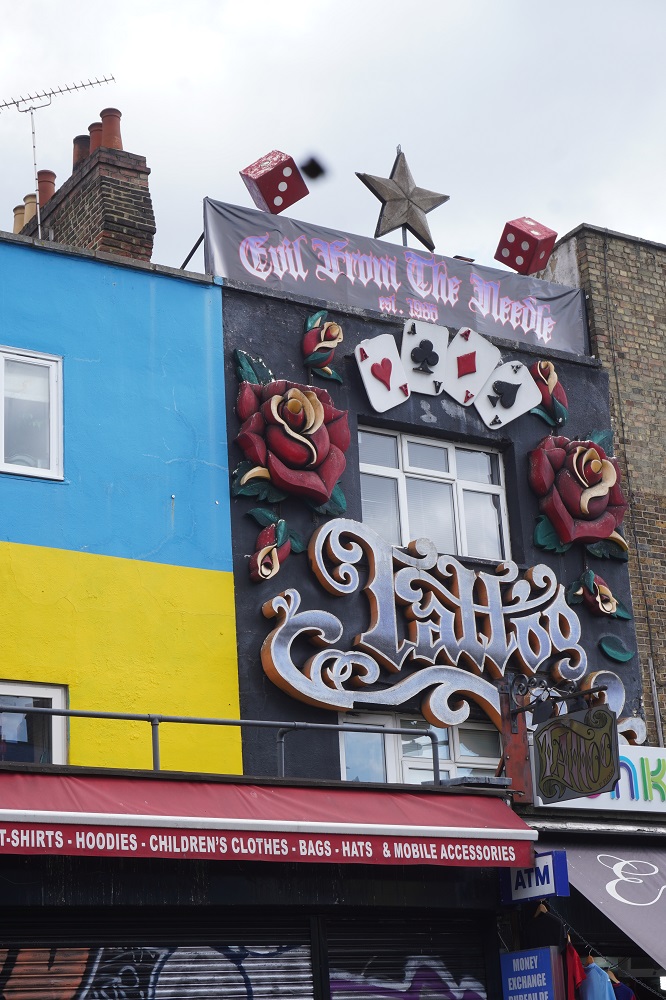
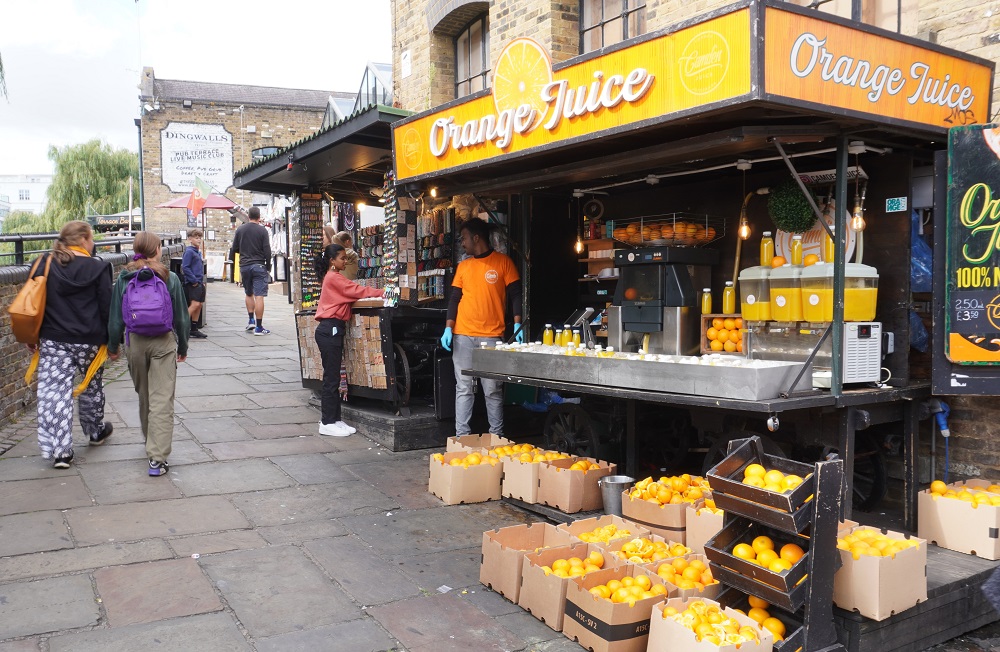
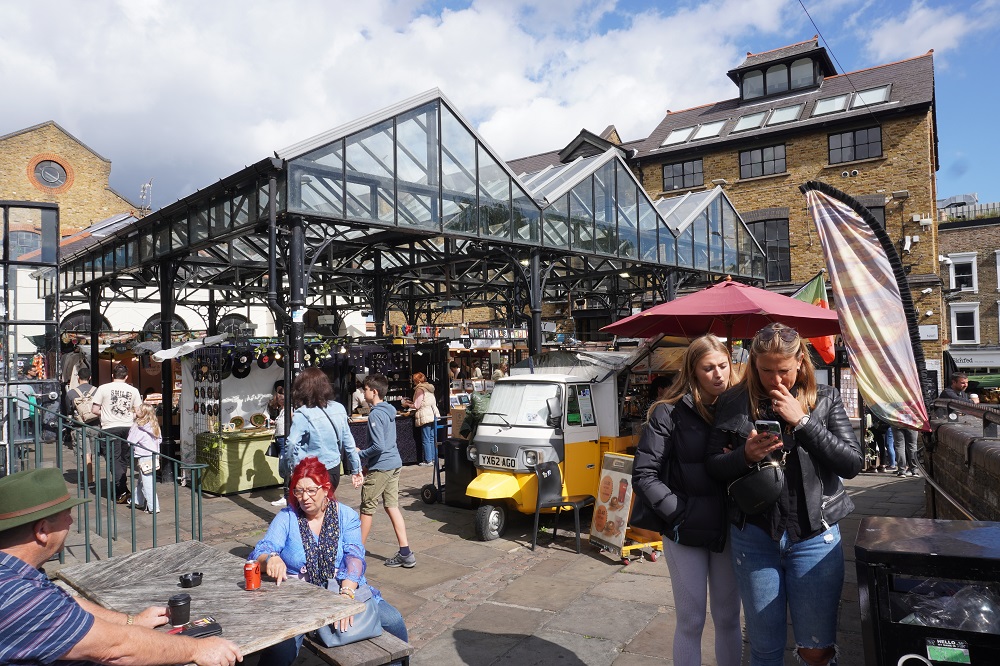
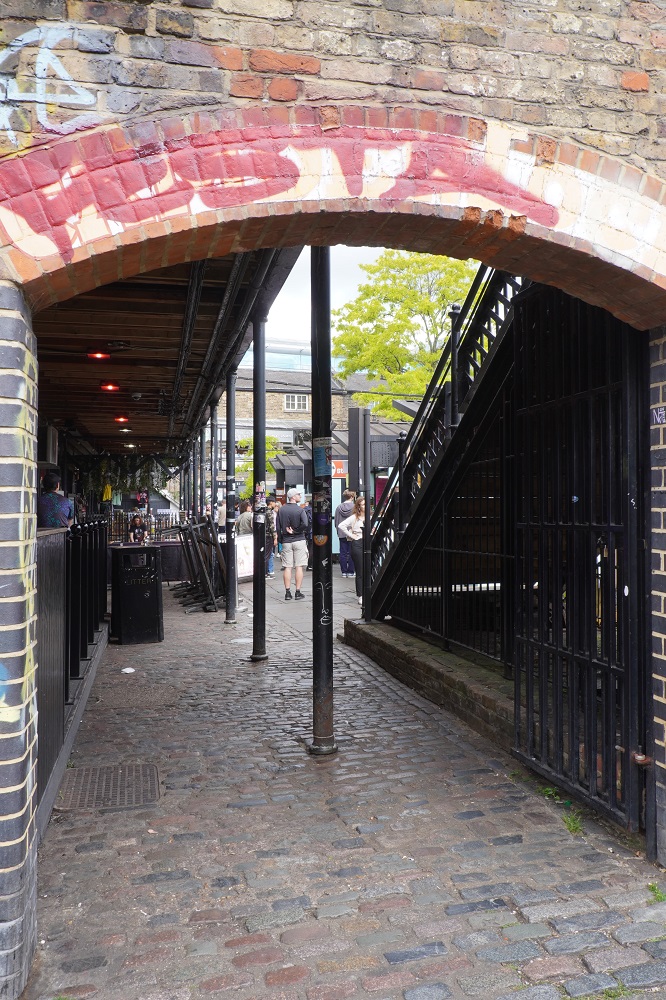
Camden is famed for its market and is a hive of counter culture. It is a favourite of tourists, teenagers and punks. It has a thriving counter culture of alternative fashion and music scenes with live music in alt. clubs, traditional pubs and jazz cafes. Many languages are spoken here and there are many different cultures and communities throughout the borough. Many of the stars of tomorrow once started on the stages of Camden’s music venues. The buildings on Camden High Street are all decked out in amazing colour schemes and quirky “added on bits” relating to what ever business is in the building.

Camden has been home to many famous people including John Keats, Charles Dickens, George Bernard Shaw and JB Priestley. More recently Amy Winehouse was big in Camden and by big I mean B I G. There is a stature of her erected by the Town Council. 

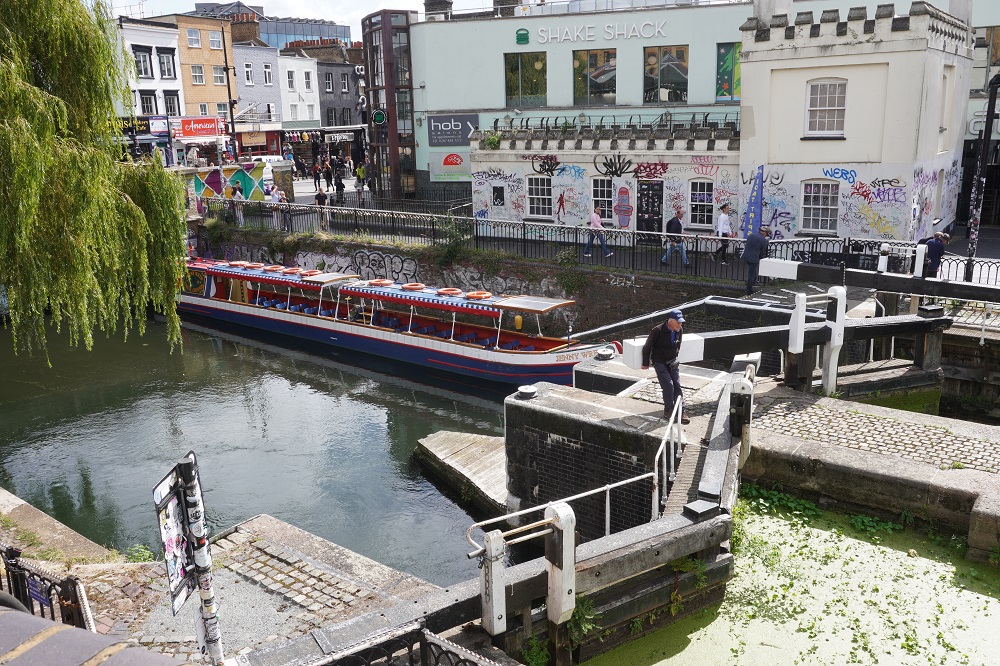
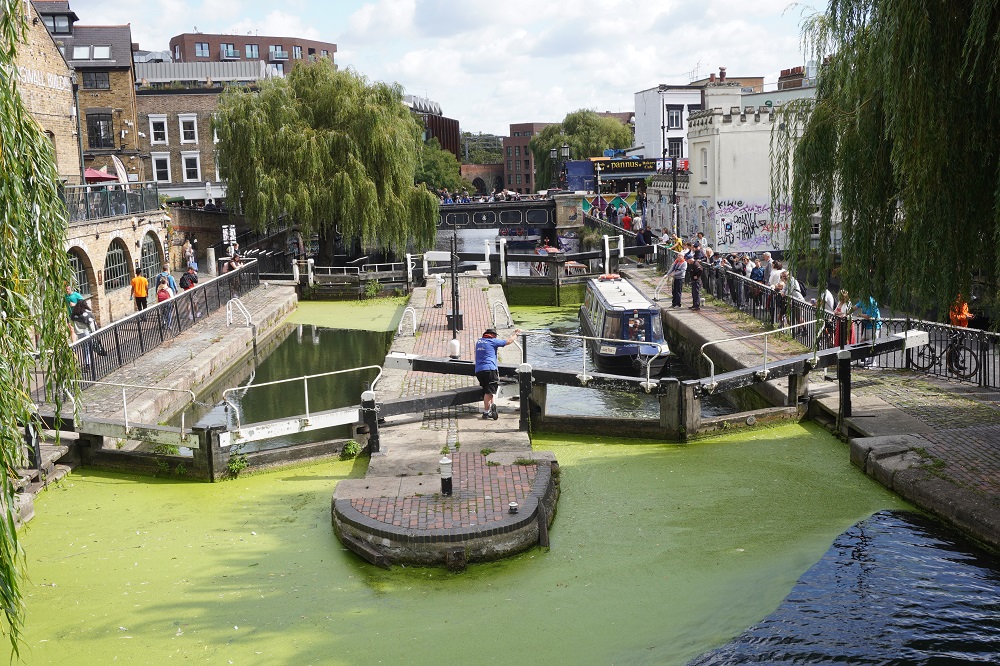
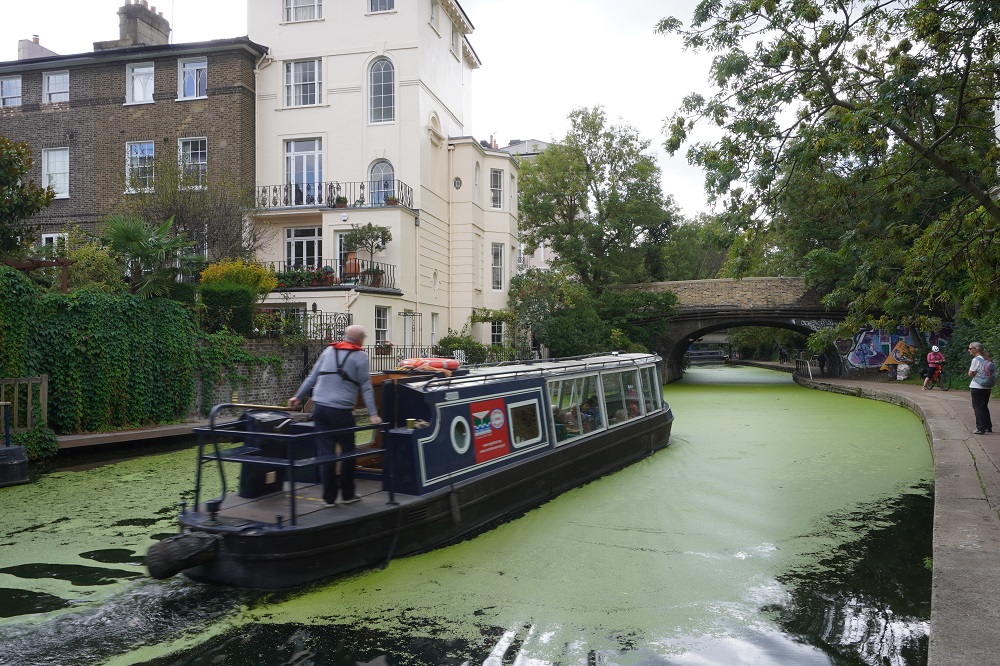
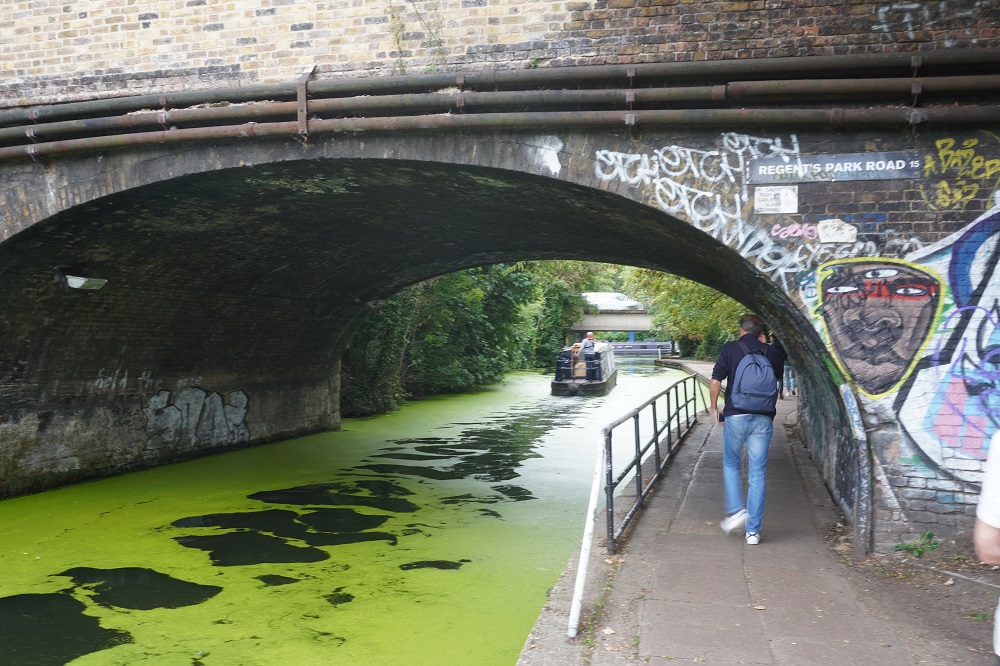
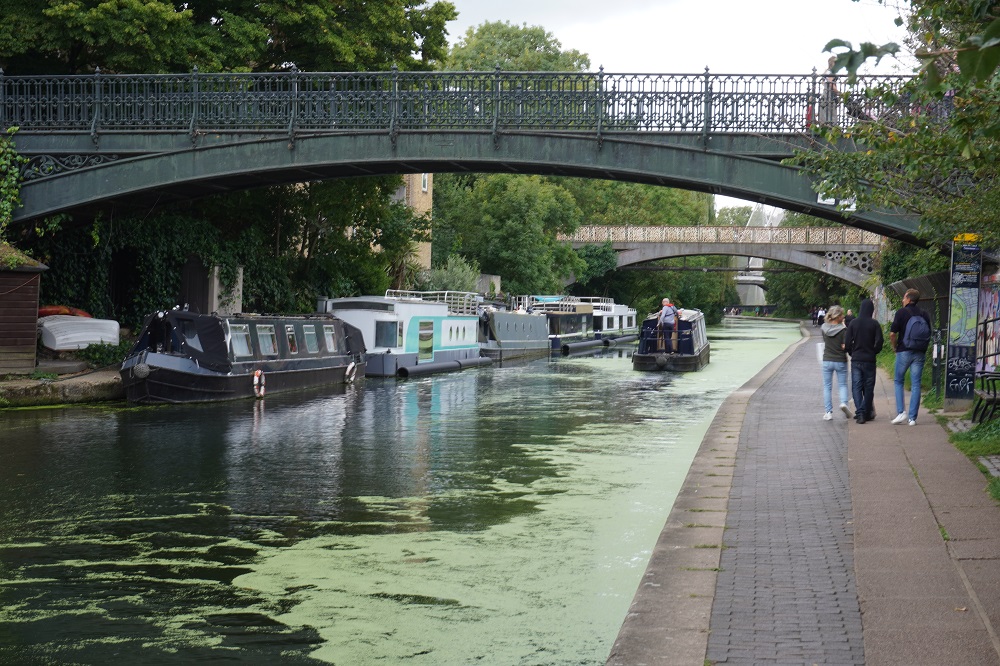
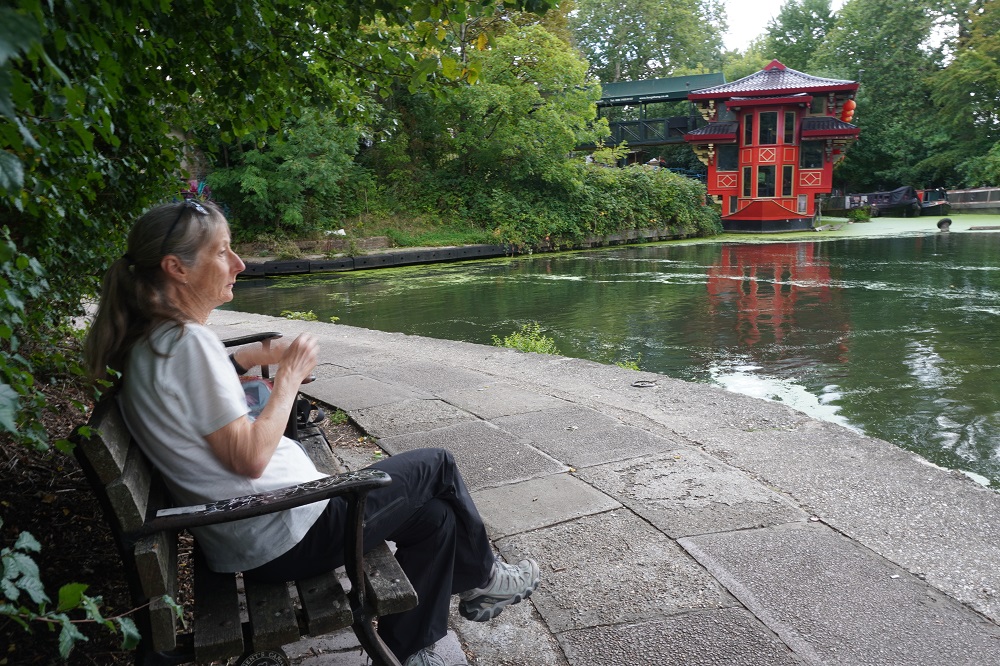
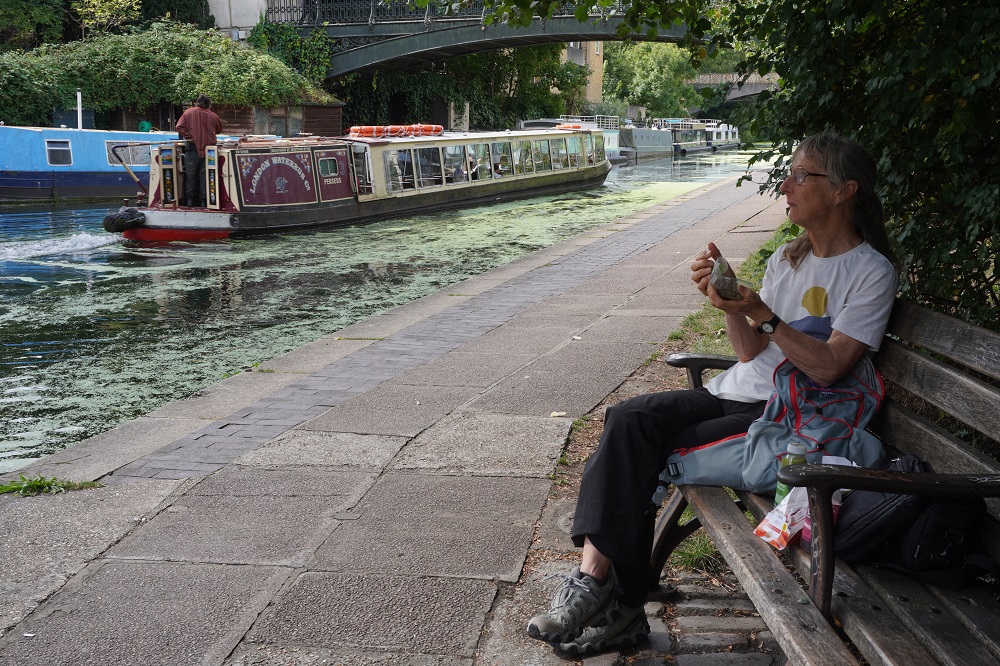
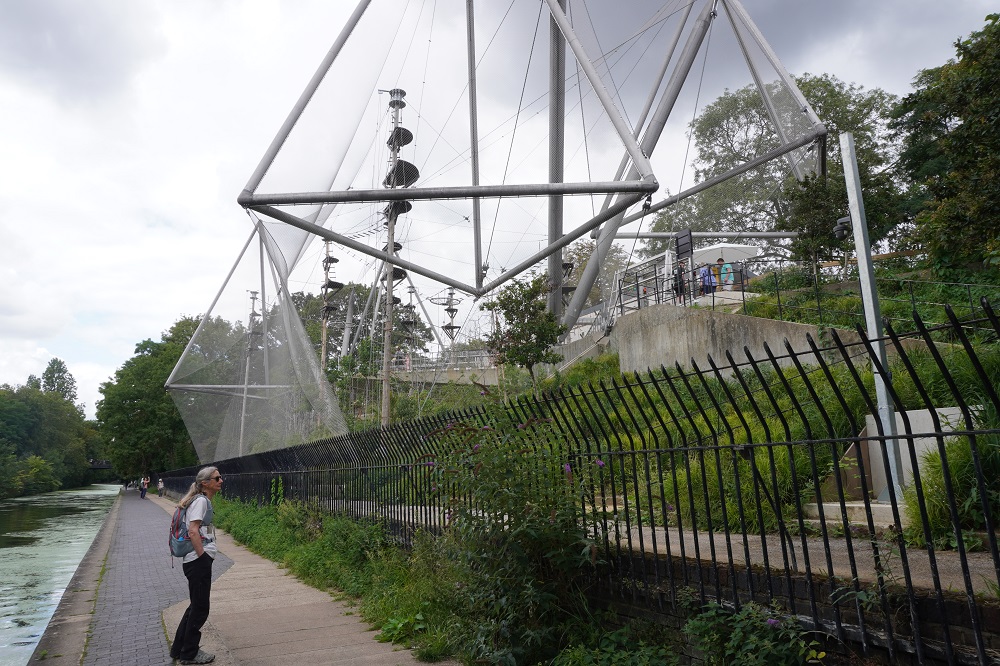
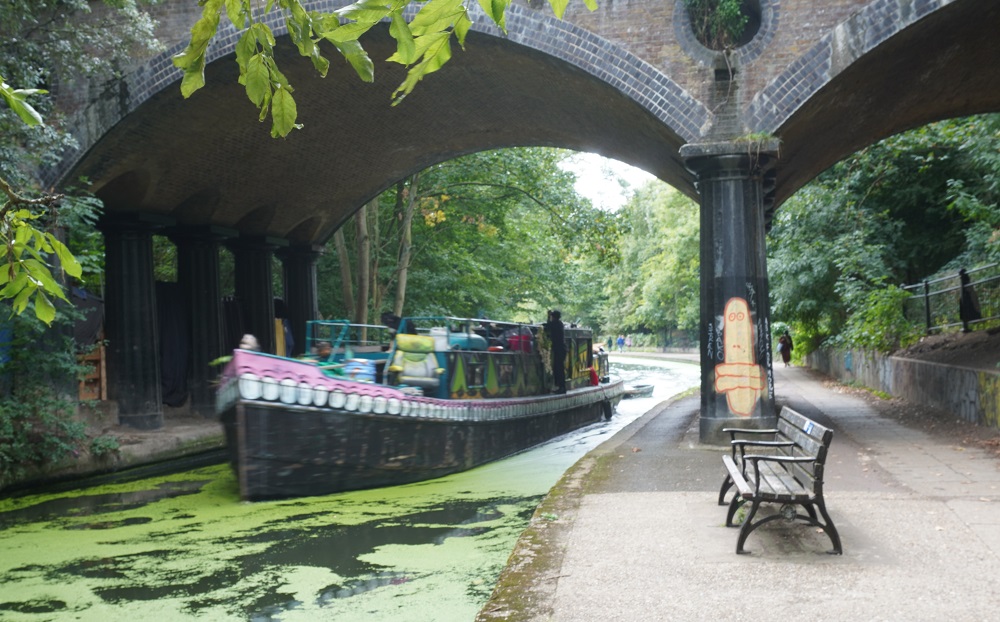
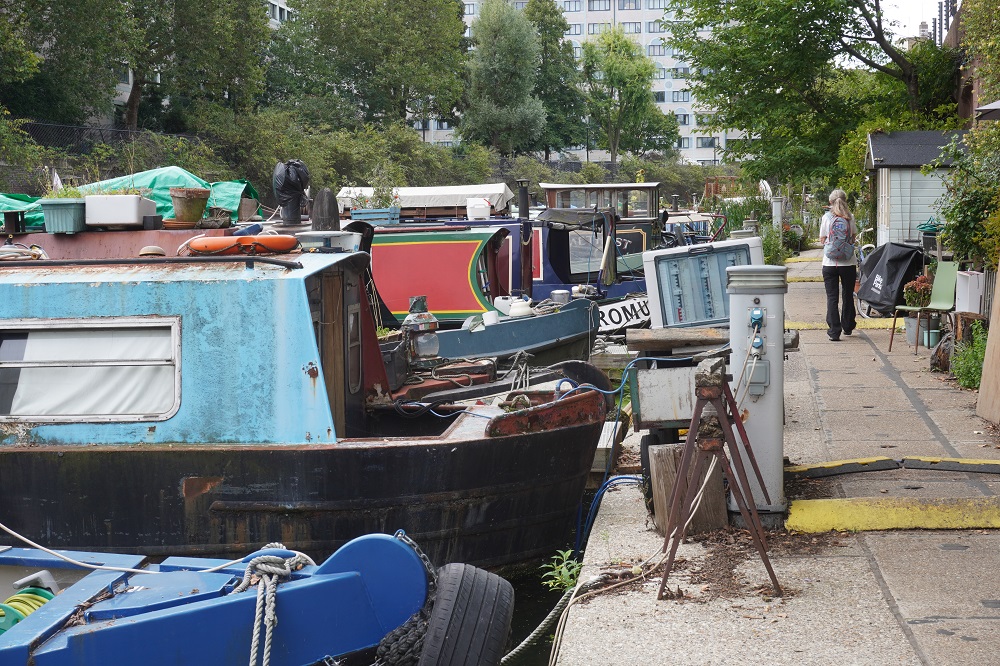
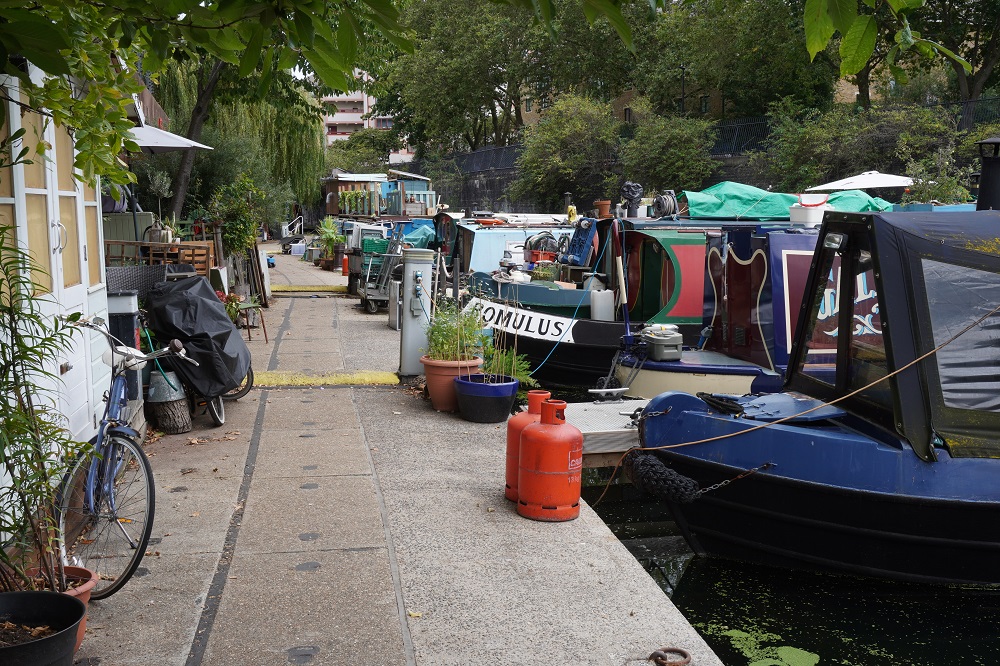
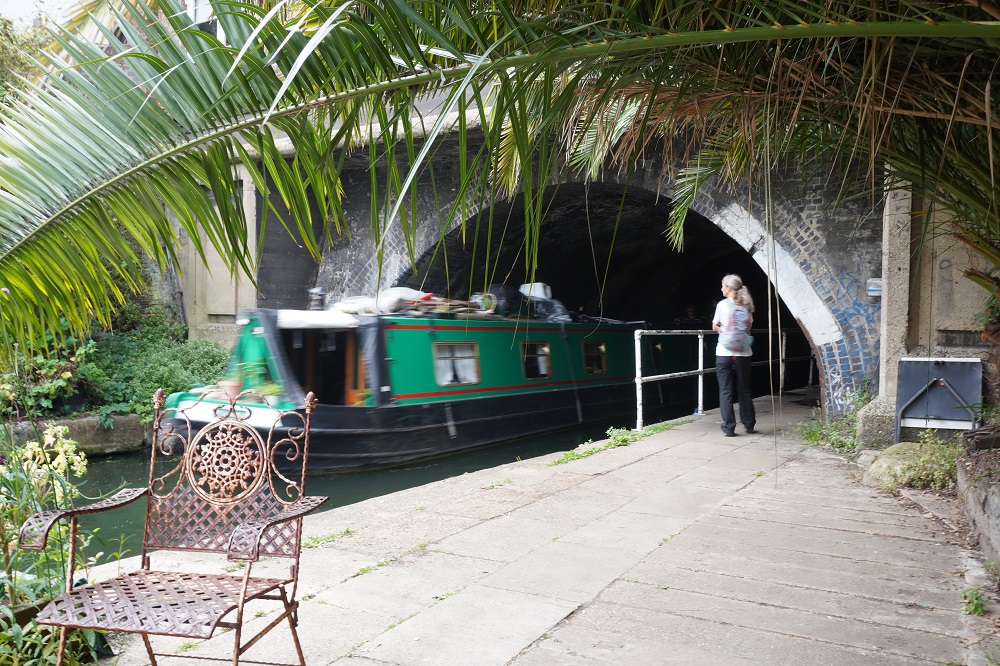
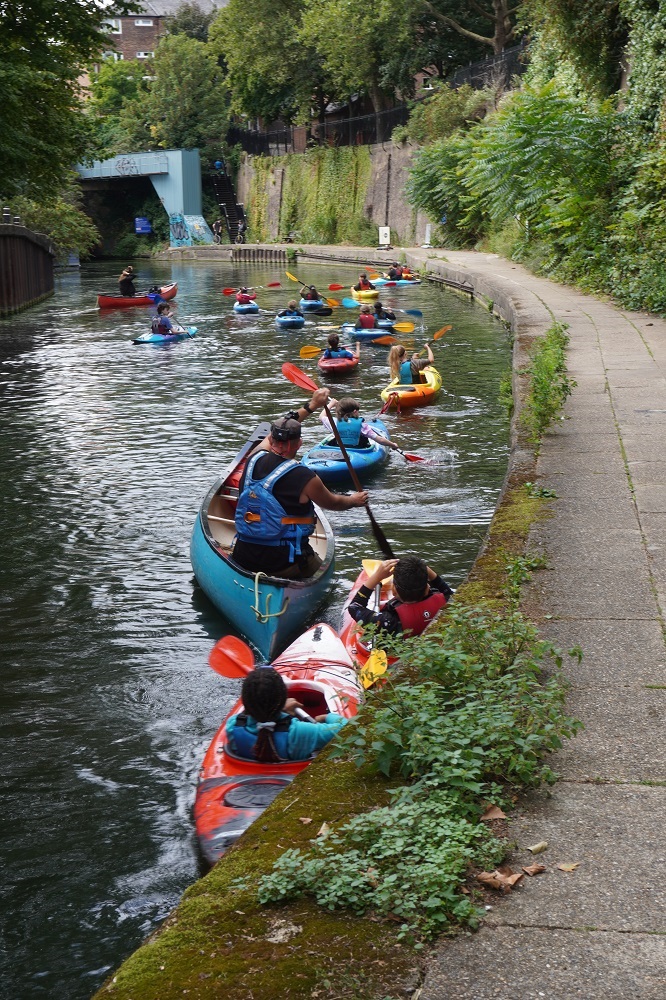
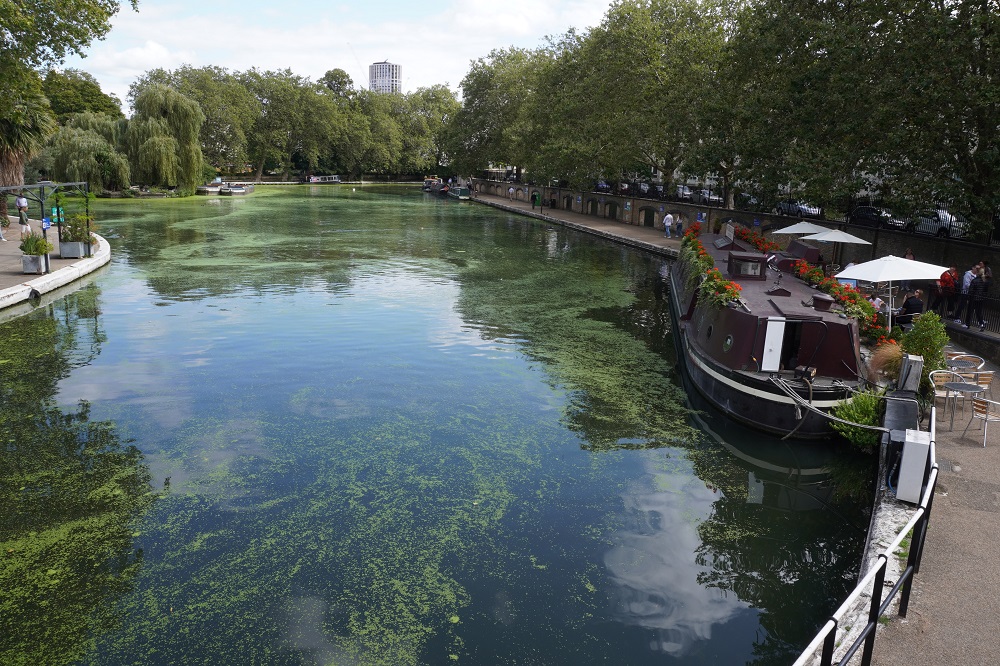
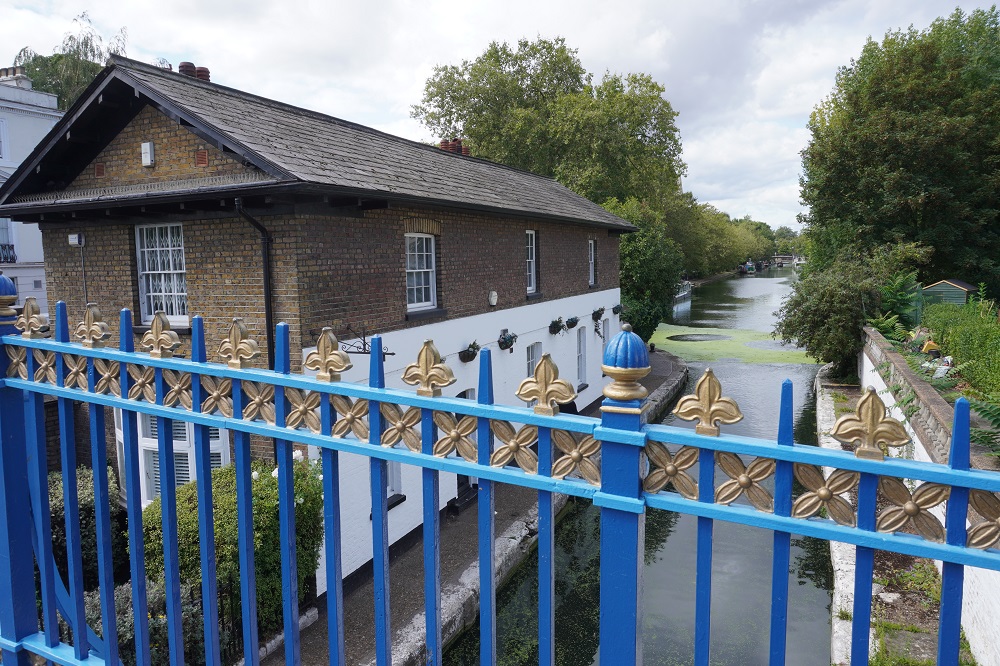
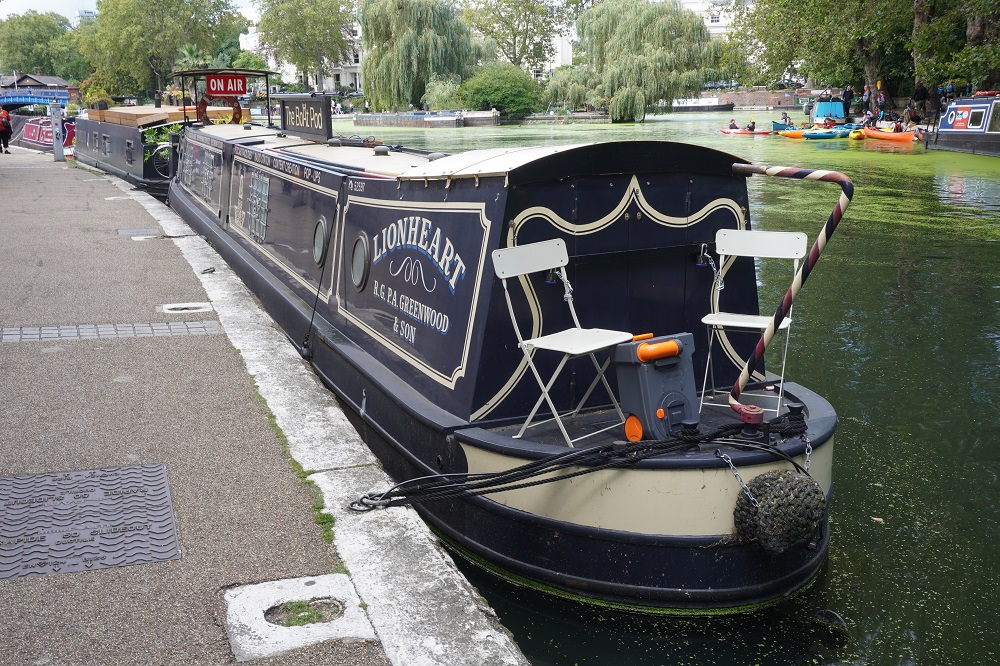
Camden is also on the Regent’s Canal and has its own Camden Lock. It was here we left all the hustle and bustle, noise and music of the High Street and Market and walked the very tranquil and quiet path along the canal to Little Venice. This is a favourite walk of ours as it is so peaceful and seems a world away from the crowds and busyness of London just a few metres beyond the tree lined canal. The canal is still very much used with tourist boats going up and down and canal boat communities living along its length. We also saw a group of school children in kayaks having a lot of fun. It takes just over an hour to walk from Camden Lock to Little Venice but we also sat beside the canal to eat our lunch. The canal also runs through Regent’s Park Zoo with the Snowden (Husband of Princess Margaret, sister of Queen Elizabeth II) aviary at the side of the path.  This aviary, built in 1965 was the first zoo walk-through aviary. It is no longer an aviary, it is now Monkey Valley.

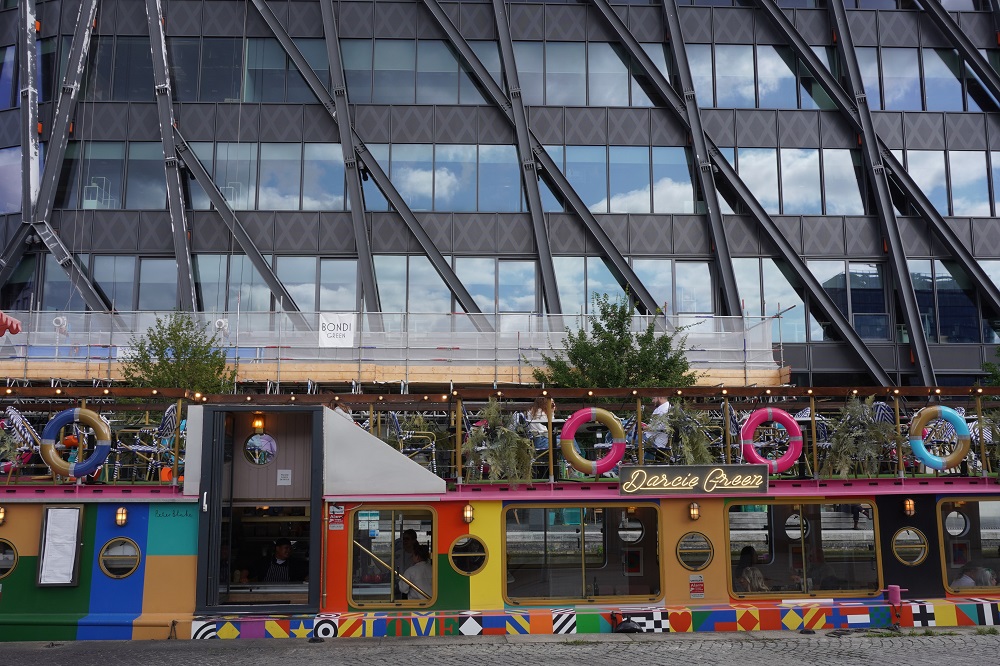
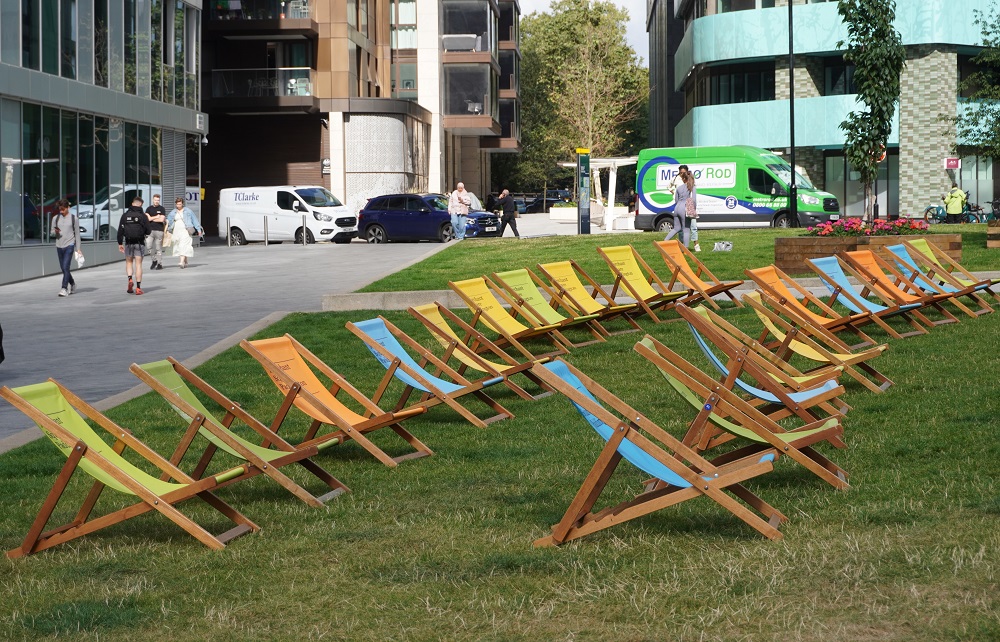
Little Venice is an affluent residential area around the junction of the Paddington Arm of the Grand Union Canal, the Regent’s Canal, and the entrance to Paddington Basin. The junction forms a triangular shape basin. It is very pretty and has several cafes and restaurants on canal boats, From here we walked along Paddington Basin which has been redeveloped with modern office blocks and apartments but also with nice outdoor spaces, an outdoor concert venue, boat hire, food trucks, many eateries and seems to be its own thriving community, albeit a very affluent one.

Back at Paddington we bought some groceries at a Tesco Express we remembered form the last time we were in London in 2019. From there we staggered back to our hotel, still not adjusted to the time zone and finding it difficult to sleep when we should at night.

London’s Burning

Slept amazingly well last night. Went to sleep early about 7pm, woke up at 12 and thought that was that. Had a drink and a chat and went back to sleep waking up about 6am. And managed to keep going all day even though we are still jet lagged.

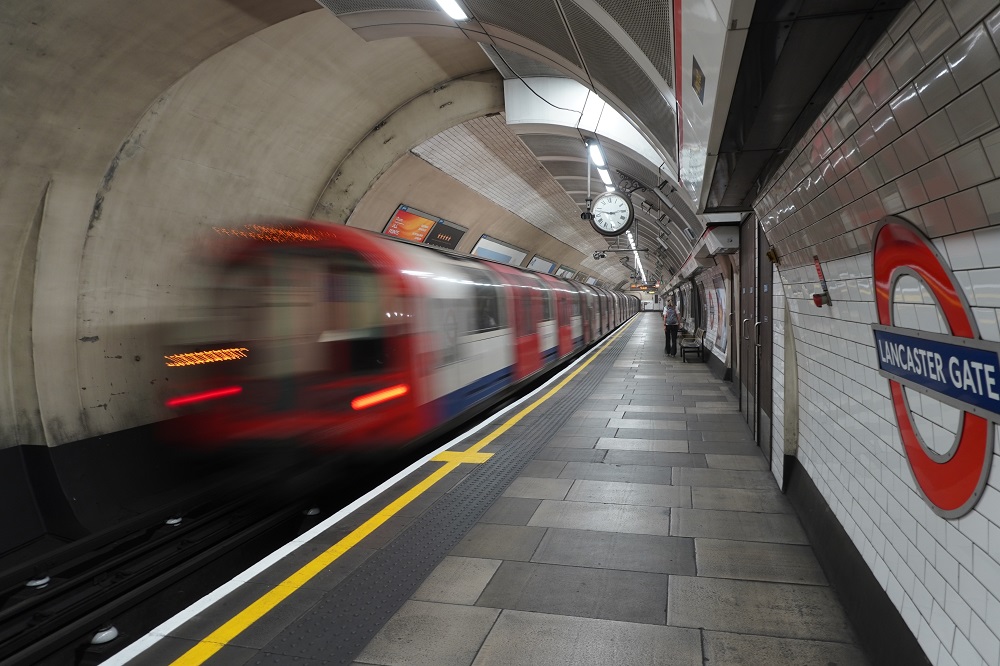
First thing today was to get our old money changed. Got the tube from Lancaster Gate to Bank on the Central line and showed up at the Bank of England Threadneedle Street in the heart of the financial district. After getting through the security check we were put in a line of fellow tourists trying to ditch old pounds. A lady came round and advised if we had less than 300 pounds to change then go to the Post Office as they would do it much quicker and only needed passport i.d. If more than 300 pounds then the bank would do it, but it was a slow process requiring two forms of i.d, proof of address and filling out of forms. She even had a map for everyone showing how to get to the City of London Post Office about 10 minutes walk away. We each had 160 pounds so headed off to the Post Office. Sure enough it was a quick and easy process. Just show your passport and they handed over nice new clean plastic money.

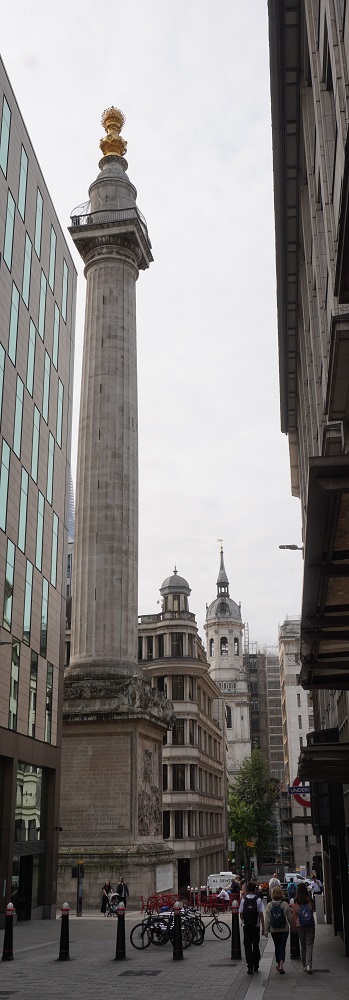
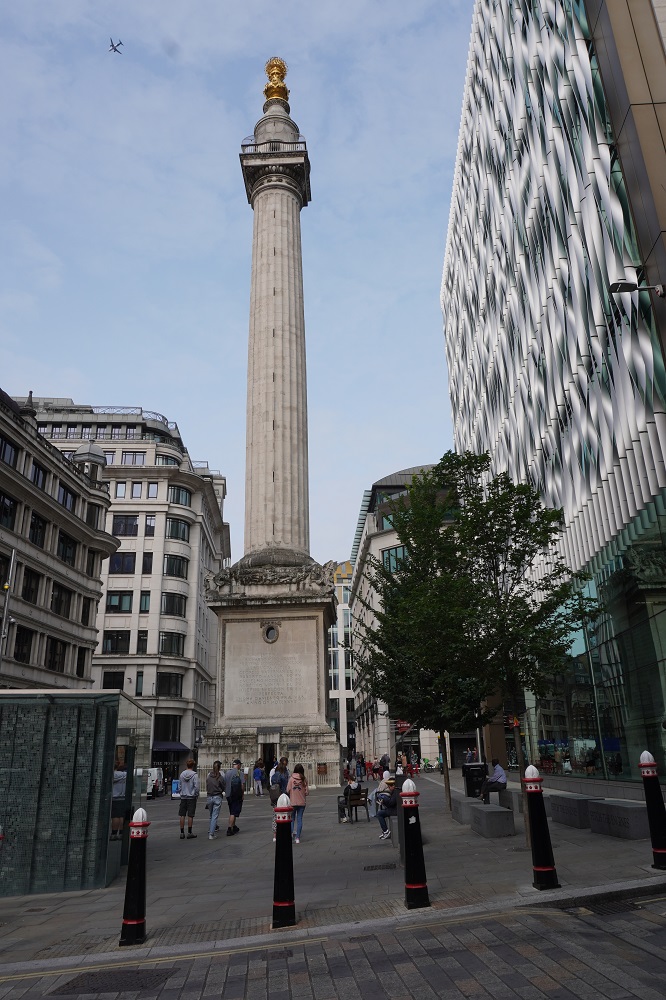
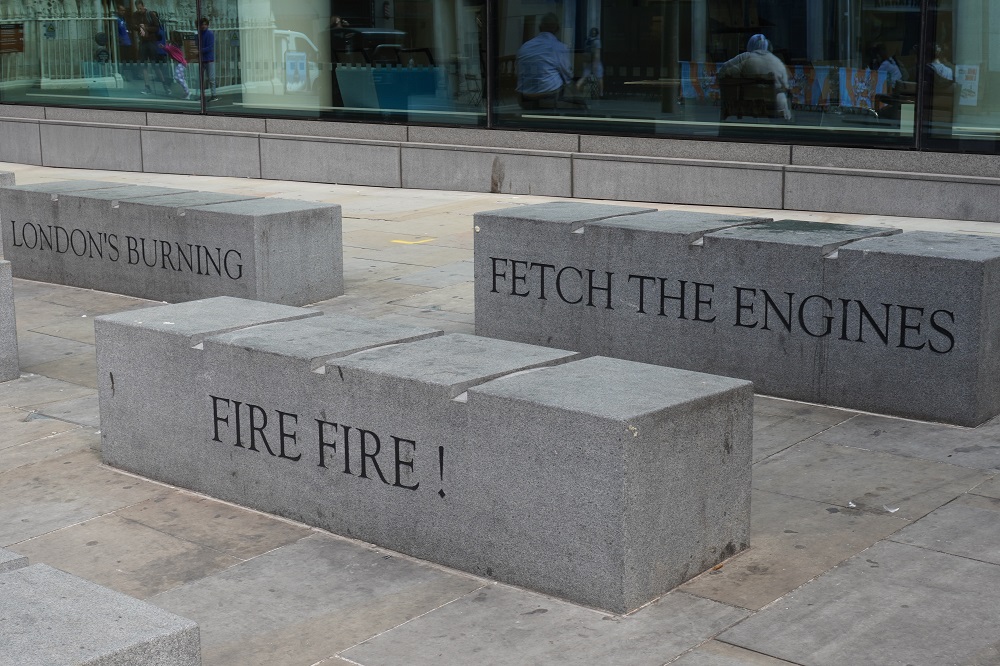
From the Post Office intended to head down to the river and walk to The Tower of London and walk over Town Bridge. Quite by accident we came across The Monument.  This is a huge Doric column erected in 1667 as a memorial to The Great Fire of London of 1666 when tens of thousands of Londoners were left homeless and much of the city was destroyed. The column is 60.6 metres tall, the exact distance it stands from the bakery in Pudding Lane where the fire reputedly started. For £6 you can climb the 311 spiral steps to the top for a fine view. We didn’t. At the base of the column are some stone seats with the words of the children’s nursery rhyme engraved in them:

London’s burning, London’s burning                                                                           Fetch the engines, fetch the engines                                                                         Fire fire, Fire fire                                                                                                                   Pour on water, pour on water.

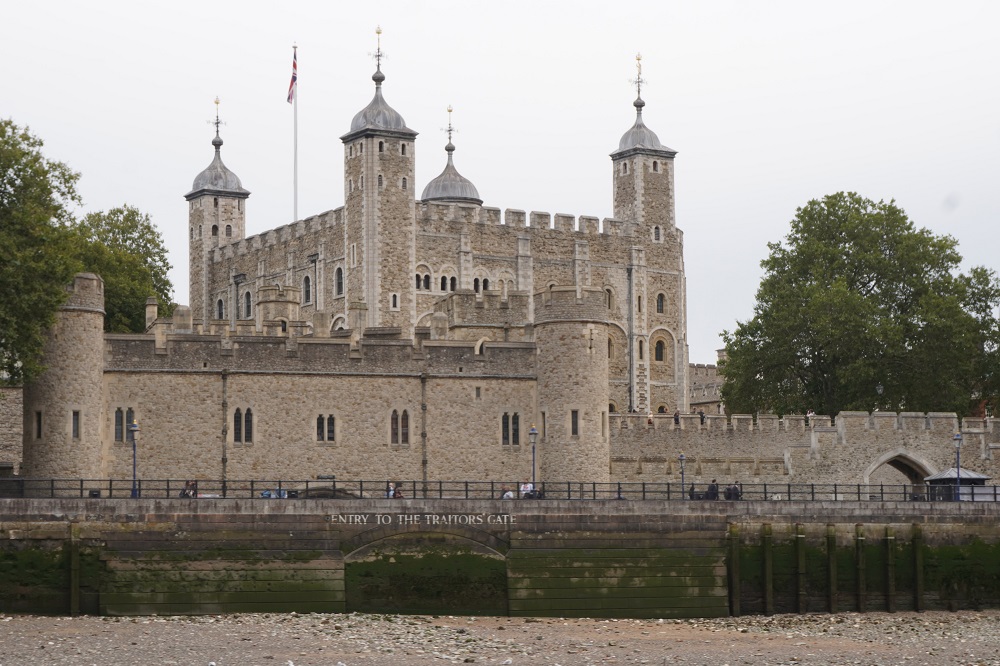
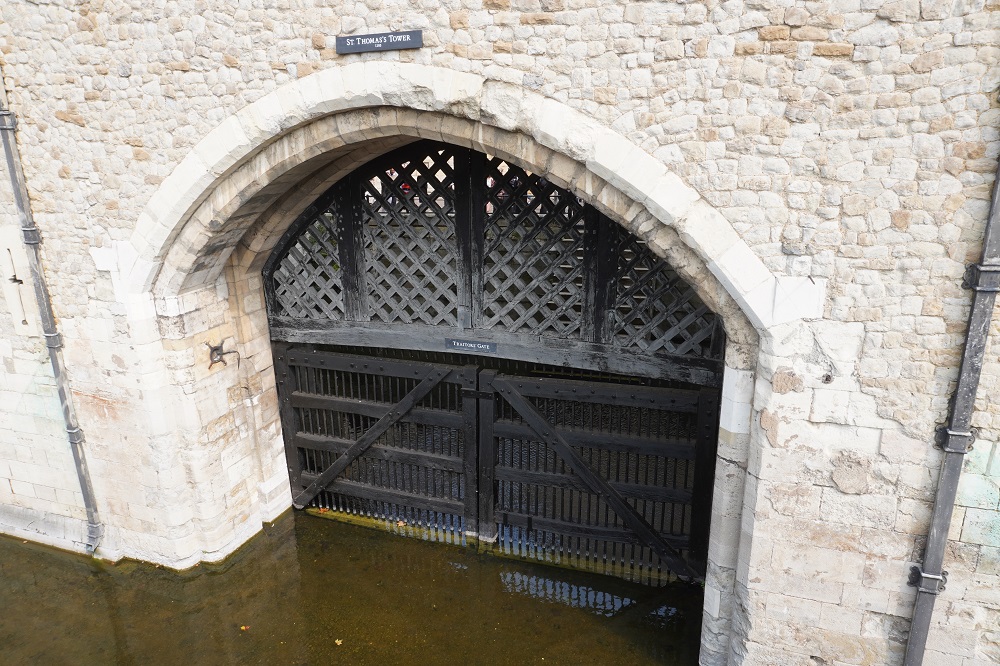
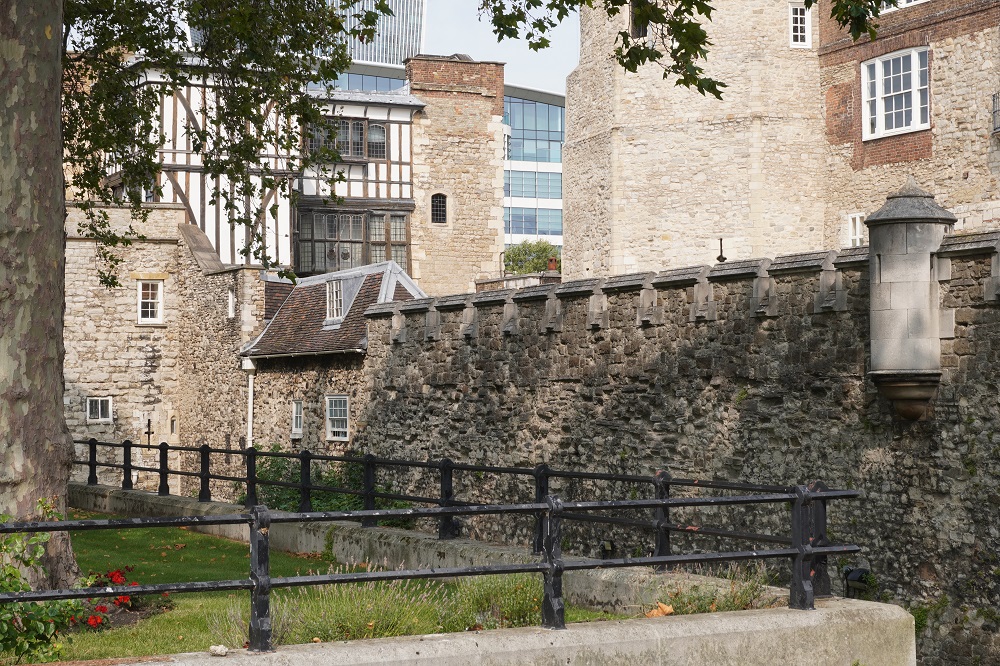
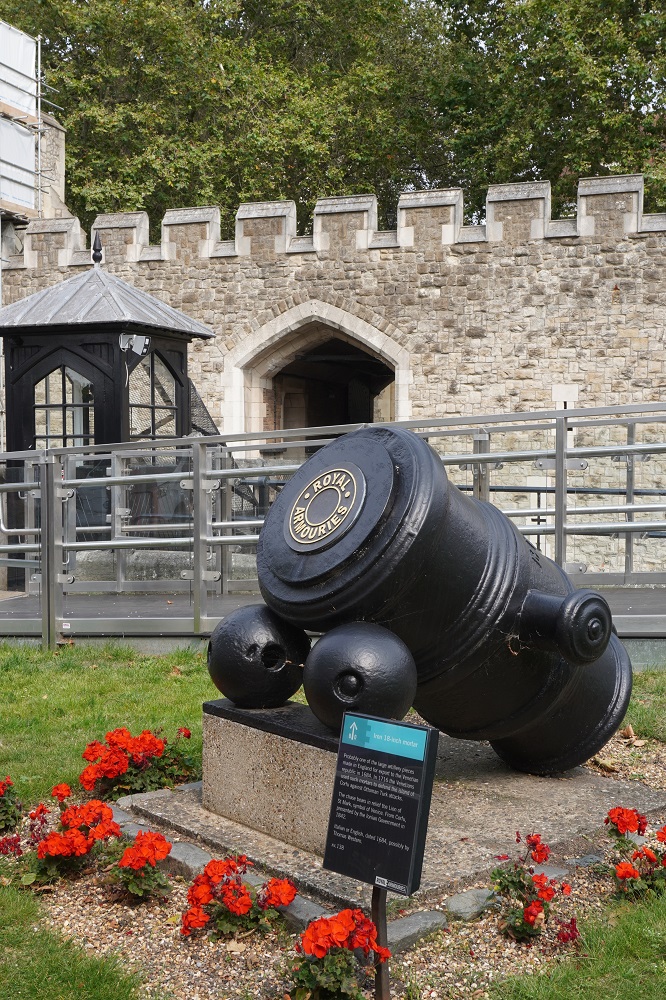
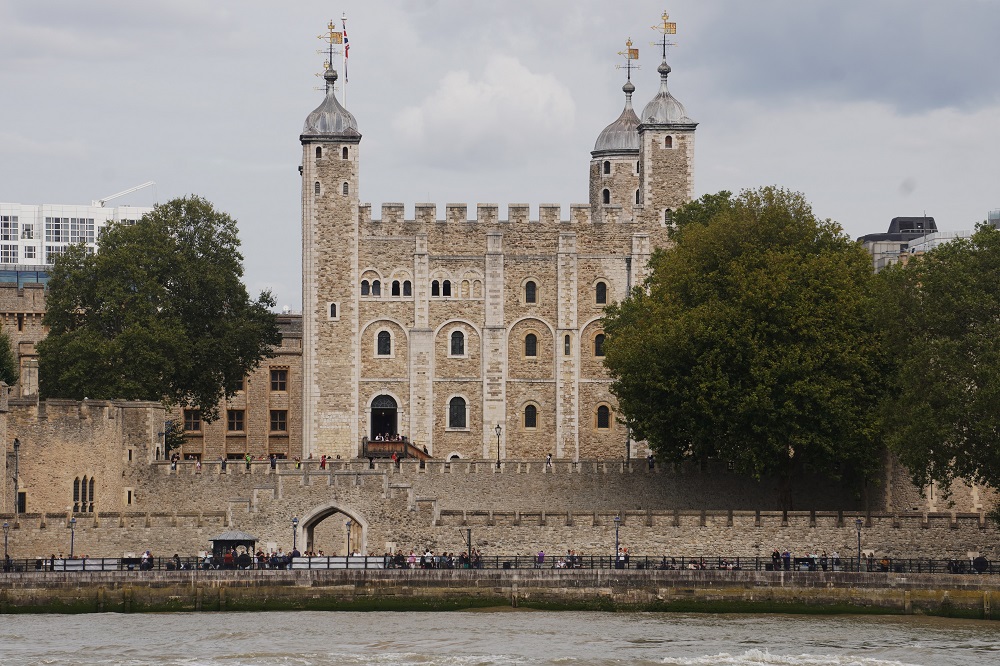
From the Monument we walked to the Tower of London. The absolute icon of London, with a history as bleak and bloody as it is fascinating. Begun during the reign of William the Conqueror, 1066 – 1087, the Tower is in fact a castle with 22 towers and has expanded greatly over the centuries and has served as a palace, observatory,, storehouse, mint, home of the crown jewels, a zoo but most famously as a prison and place of execution. We didn’t go inside as we had been there before but did walk around the perimeter.

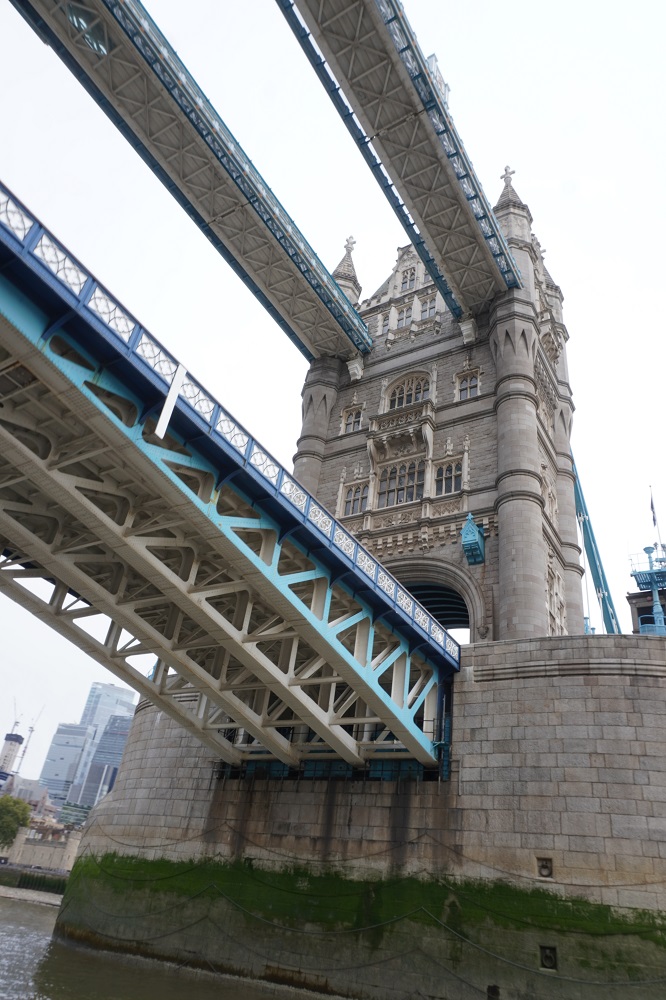
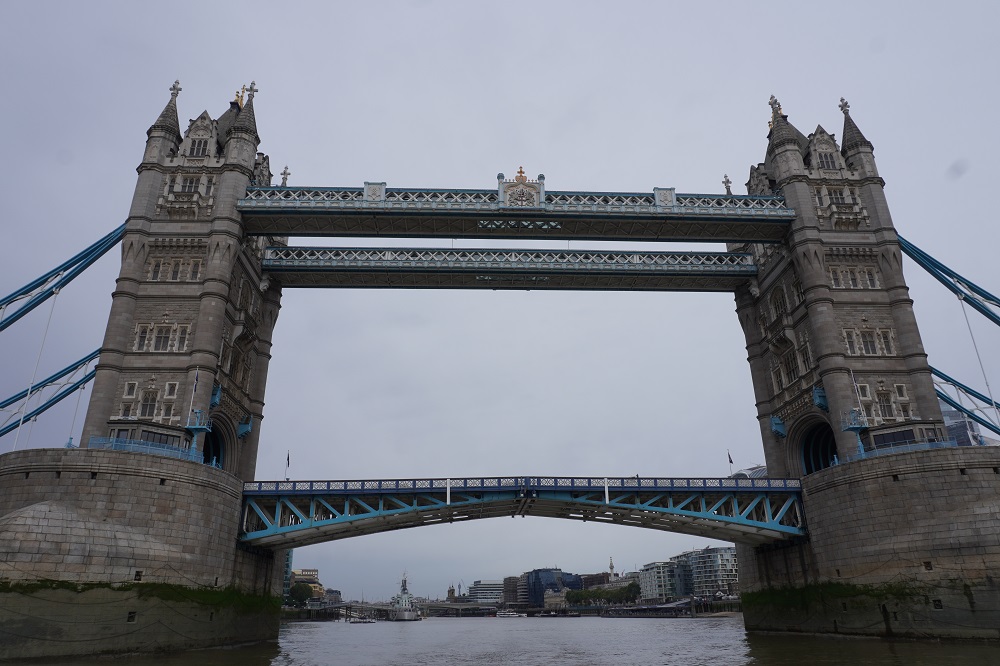
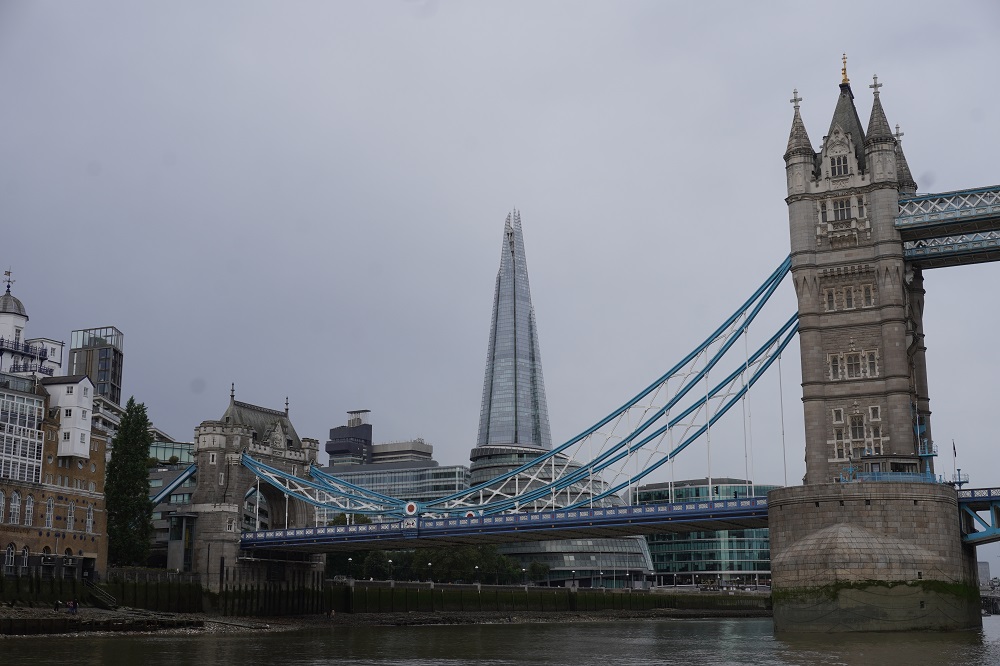
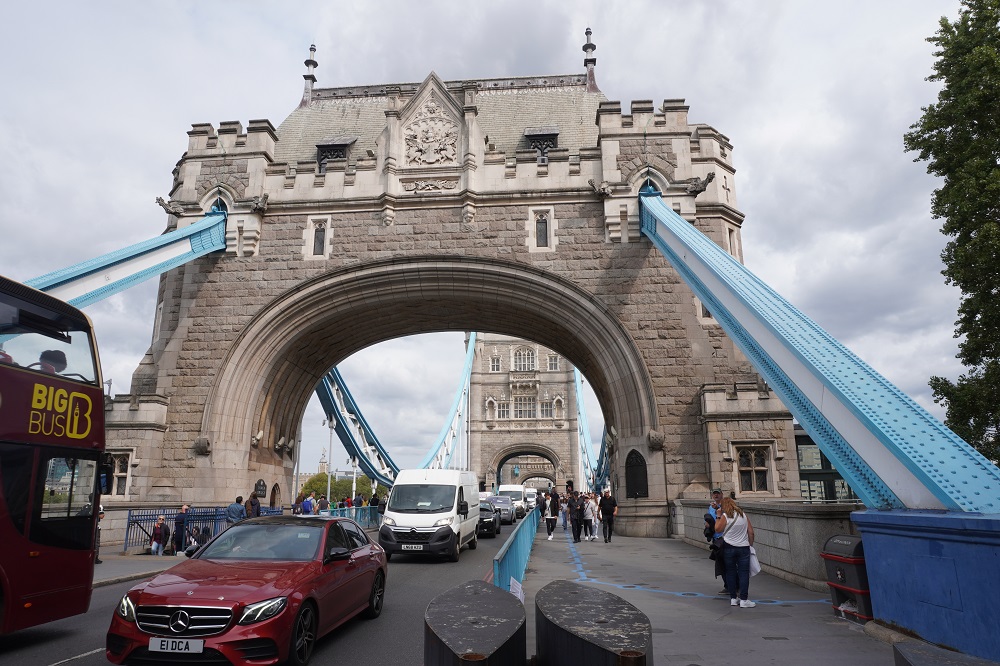
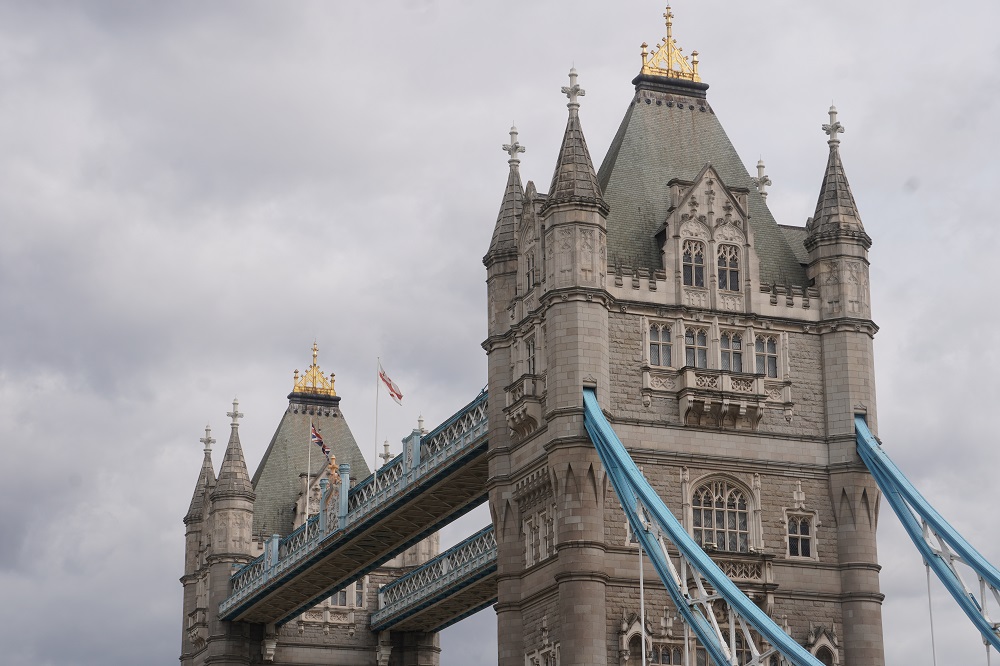
Right next to the Tower of London is one of London’s most recognisable sights, Tower Bridge. We had been driven over the bridge a few times before in busses but had never walked across it so that was on our “to do” list for this time. Built in 1894 the great neo-gothic towers and blue suspension struts are quite enthralling. The bridge was equipped with a for then revolutionary bascule (see saw) mechanism that could raise the centre spans for oncoming ships in 3 minutes. You can pay to enter the Tower Bridge Museum and walk across between the two towers 42 metres above the river.

We were now on the South Bank and walked through the very modern Hays Galleria, full of boutique shops, eateries and a fabulous steam punk ship, all under a soaring glass arched roof.

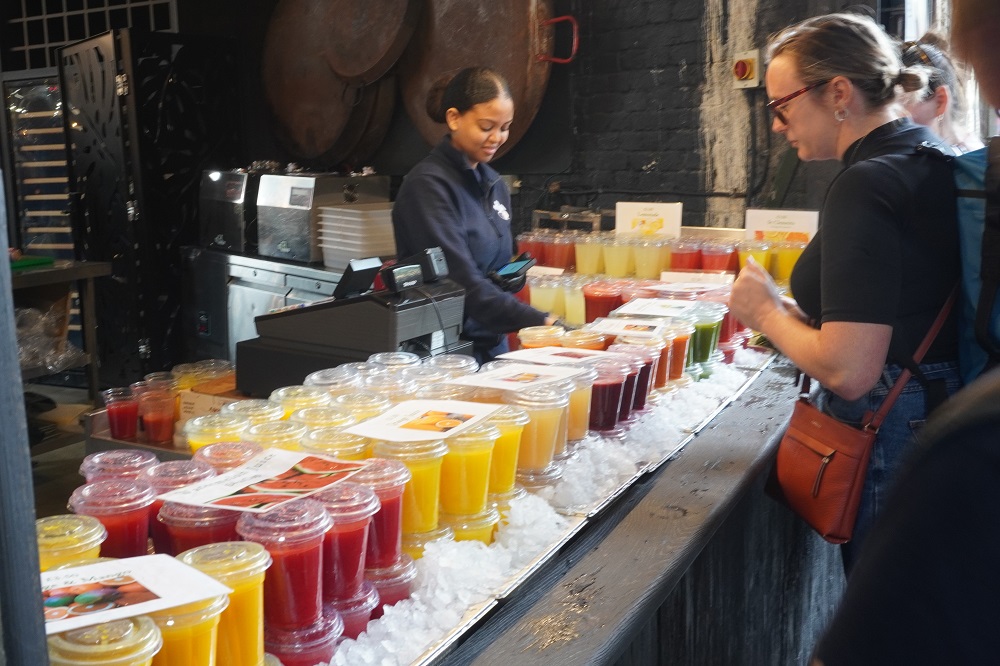
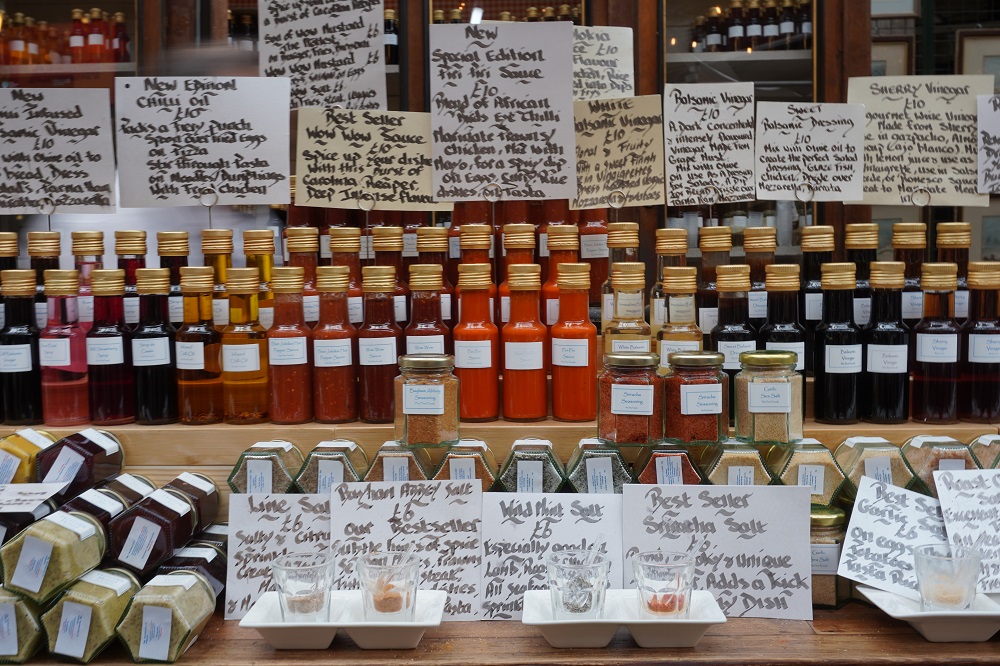
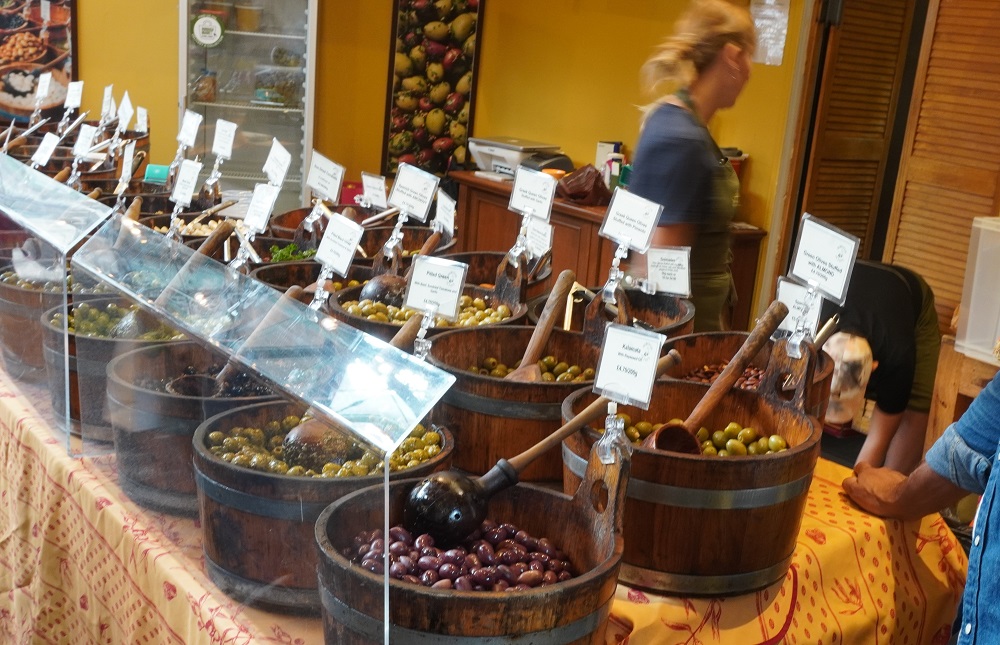
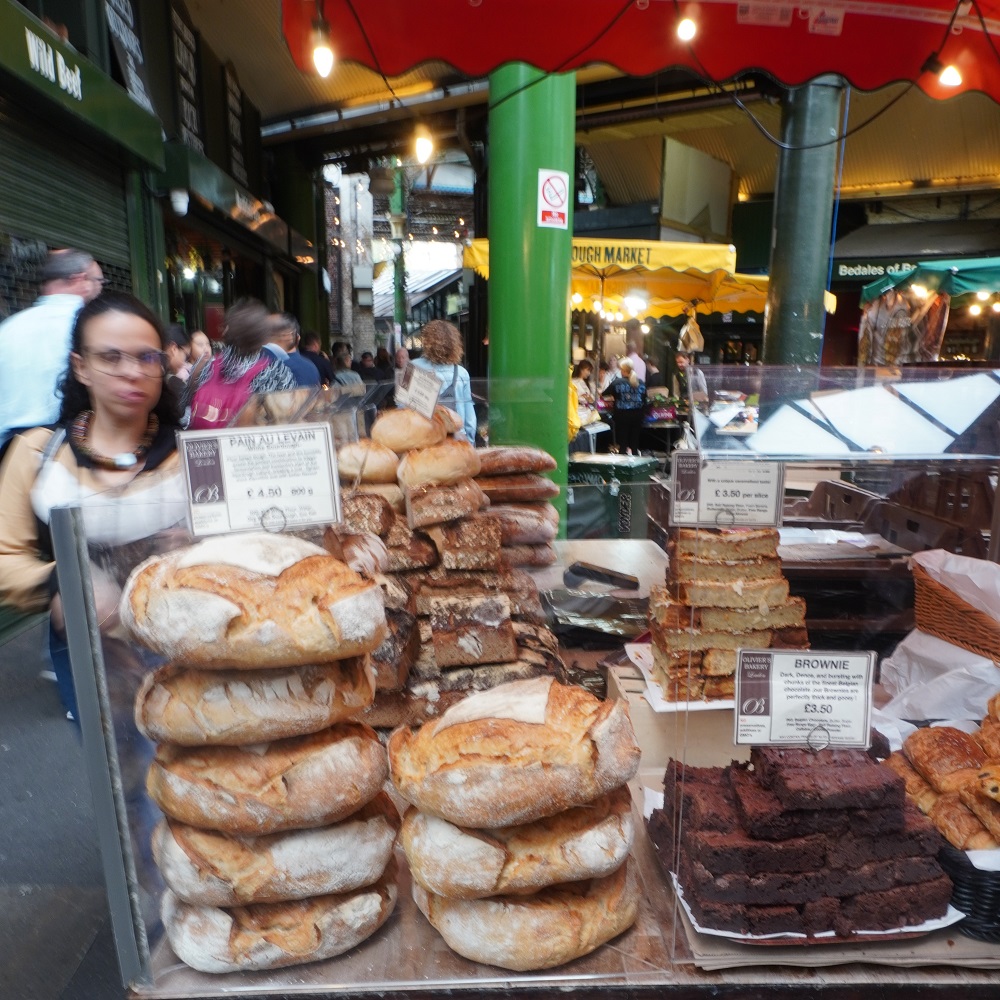
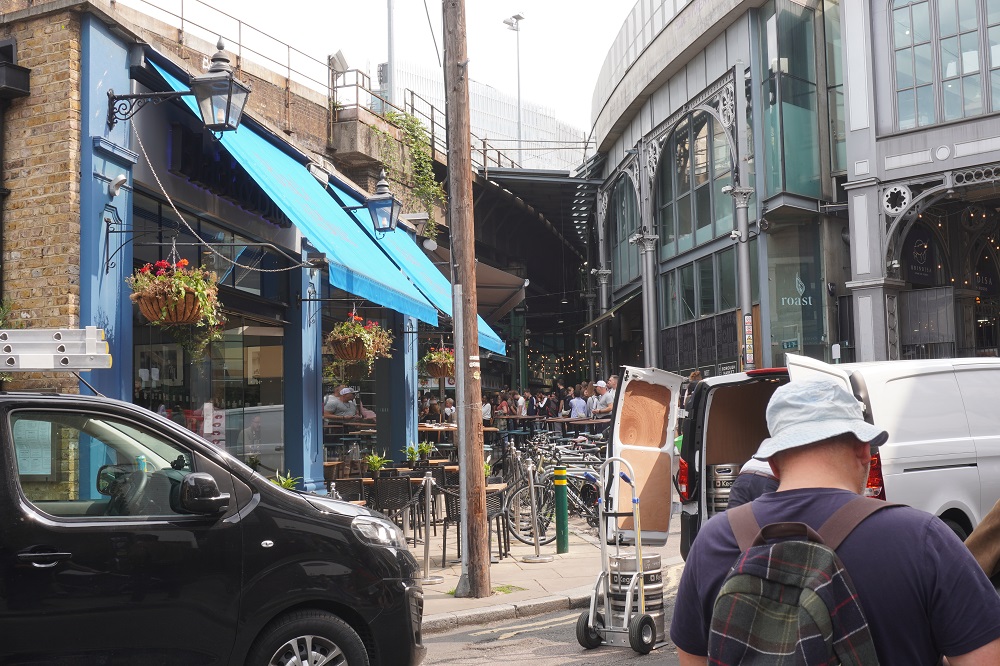
After the Galleria we made our way to Borough Market. A market has been located her in some form or other since the 13th century and is known as “London’s Larder”. It is always overflowing with food lovers, inveterate gastronomes and wide eyed tourists like us,  It is a large sprawling area located under the overhead railway and every few minutes you here and feel the rumbling of a train passing overhead. There are sections for every appetite, exotic vegetables, quality fresh fruit, organic meat, sea foods, cheeses, home-grown honey, homemade bread, craft beers and wines etc, etc. And dozens of takeaway stalls with gourmet sausages, chorizo sandwiches, quality pizzas, exotic burgers etc.

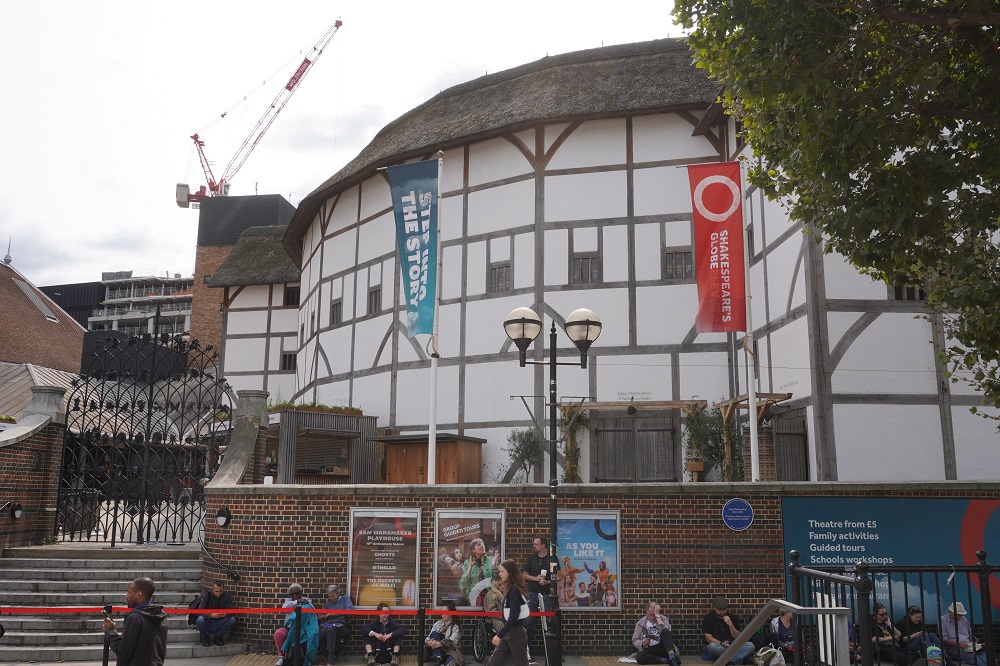
From the market we passed Shakespeare’s Globe. This is a replica designed to resemble the original as closely as possible, painstakingly constructed with 600 oak pegs (no nails or screws), specially fired Tudor bricks and thatching reeds from Norfolk that pigeons are not supposed to like. The plaster contains goat hair, lime and sand, as it did in Shakespeare’s time. The theatre, like the original is open air, and standing spectators are exposed to  London’s fickle weather.

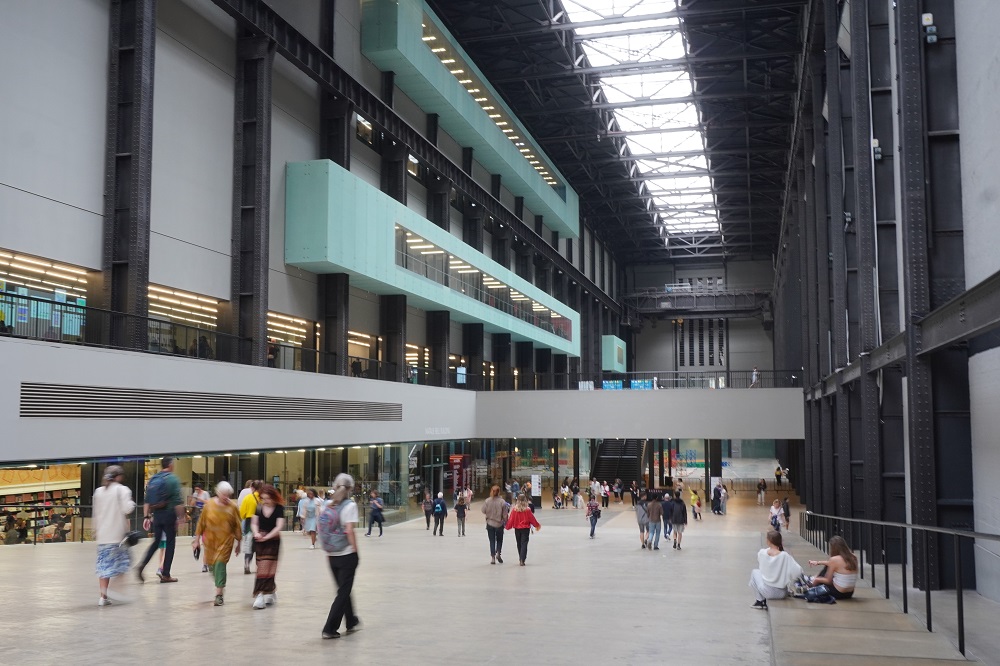
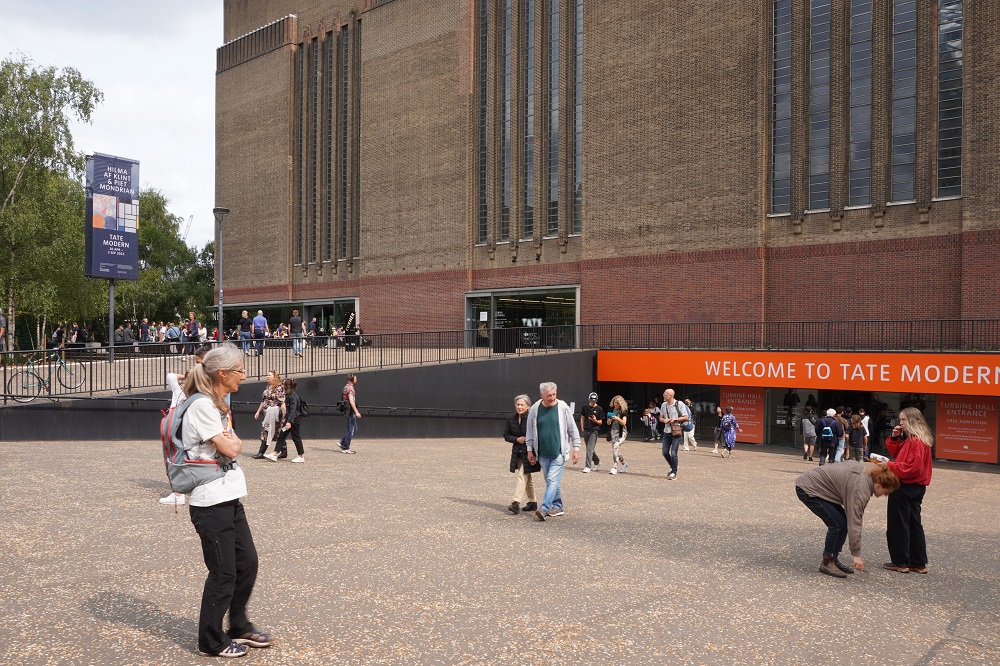
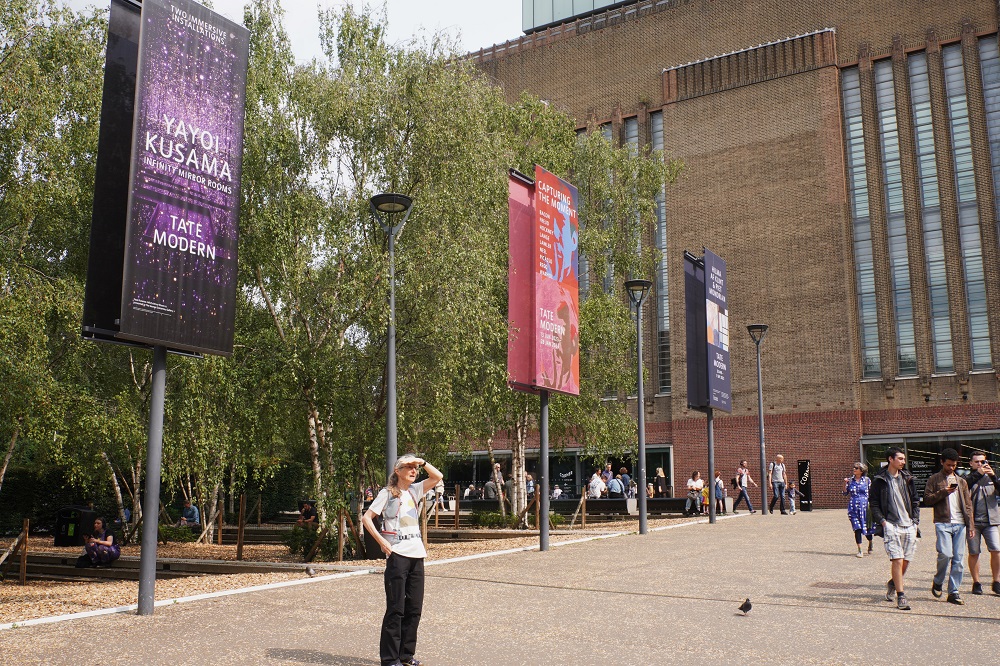
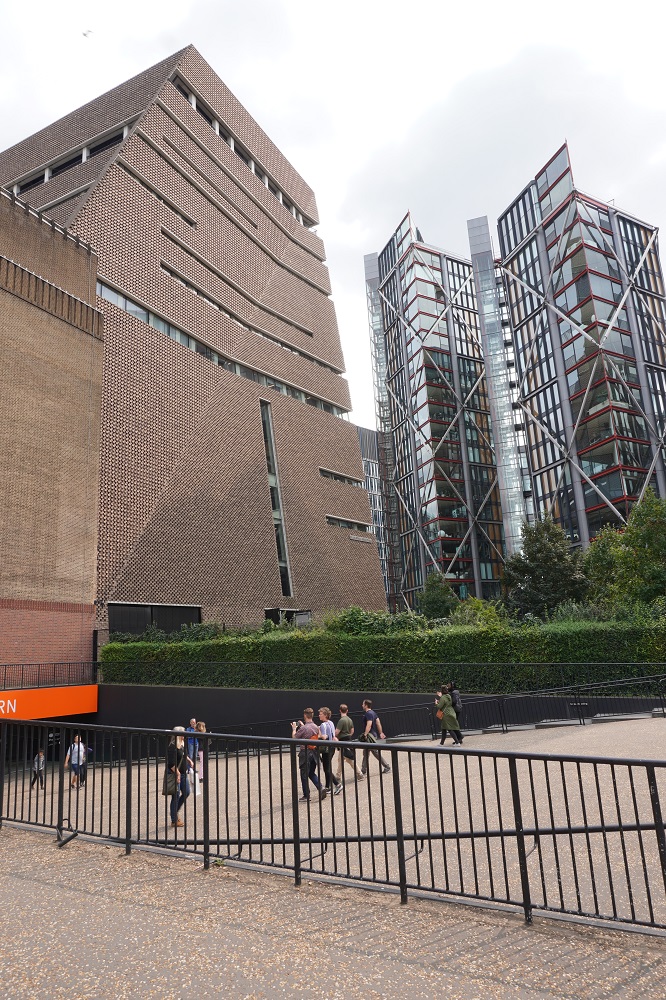
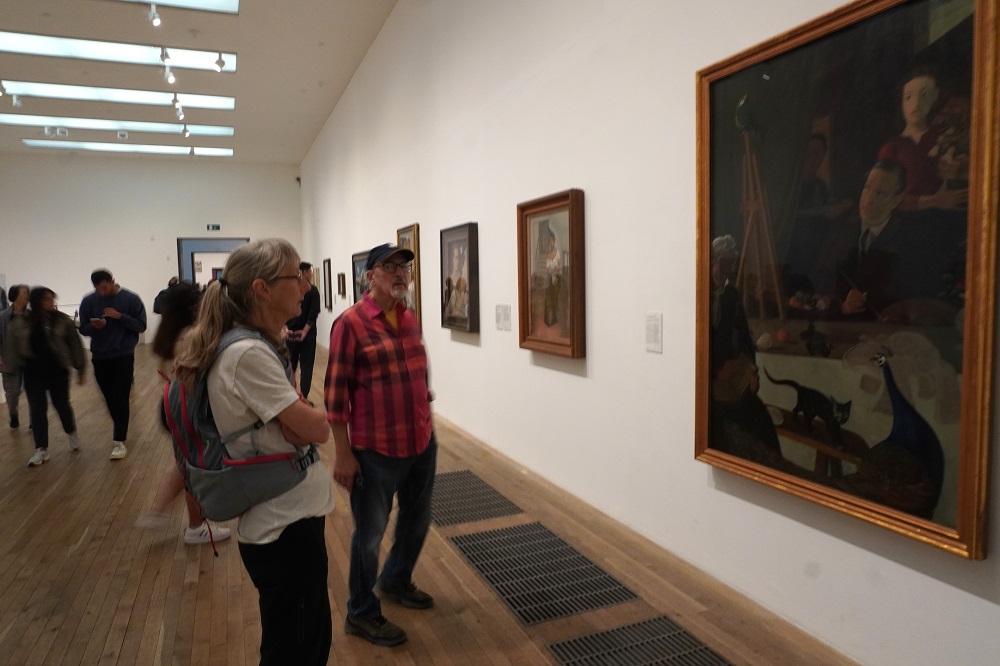
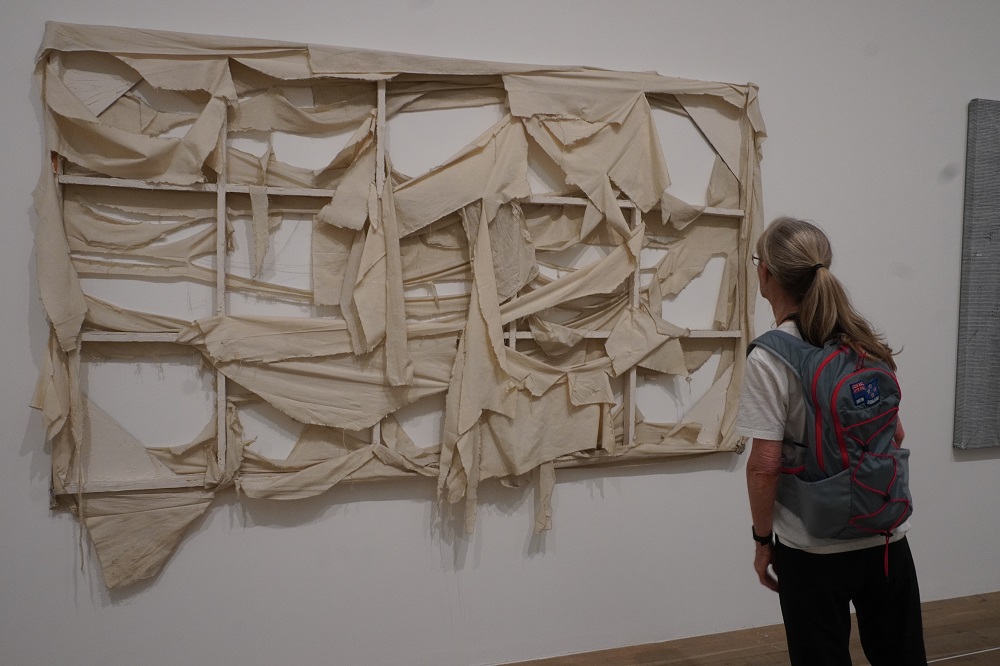
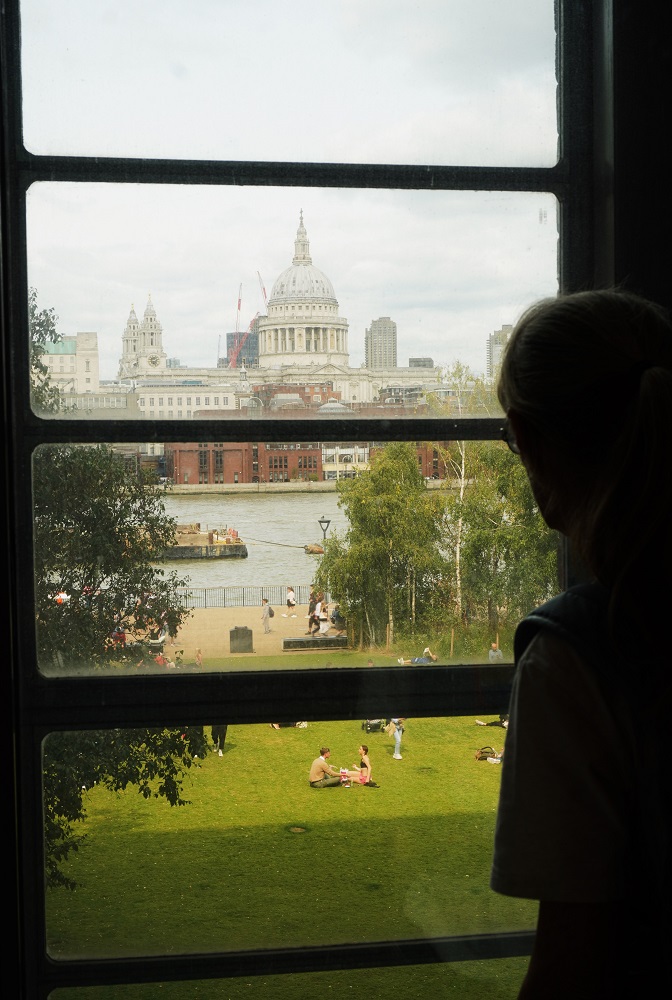
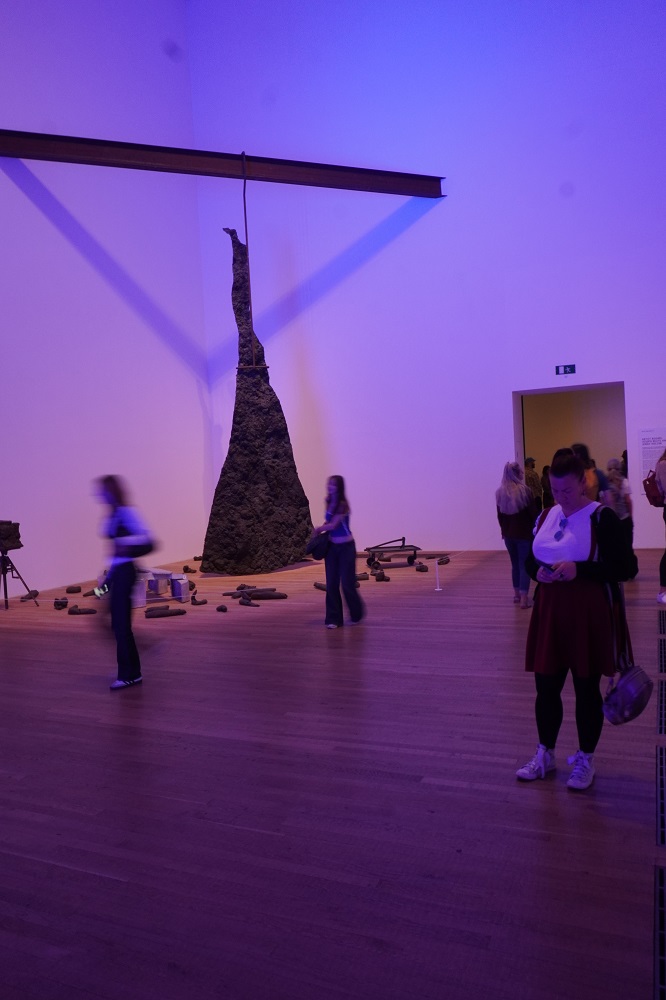
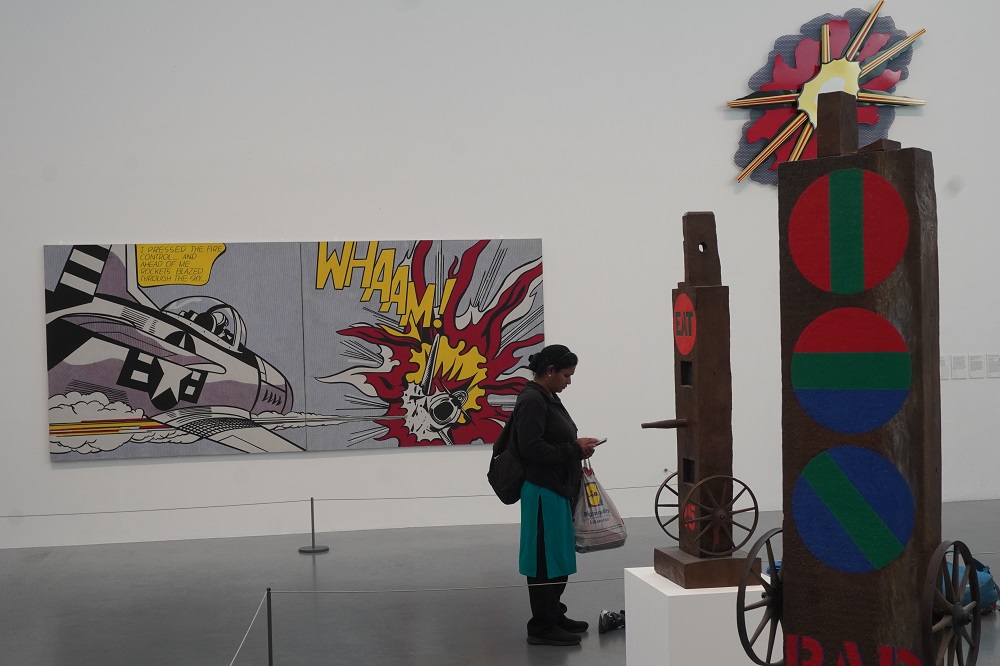
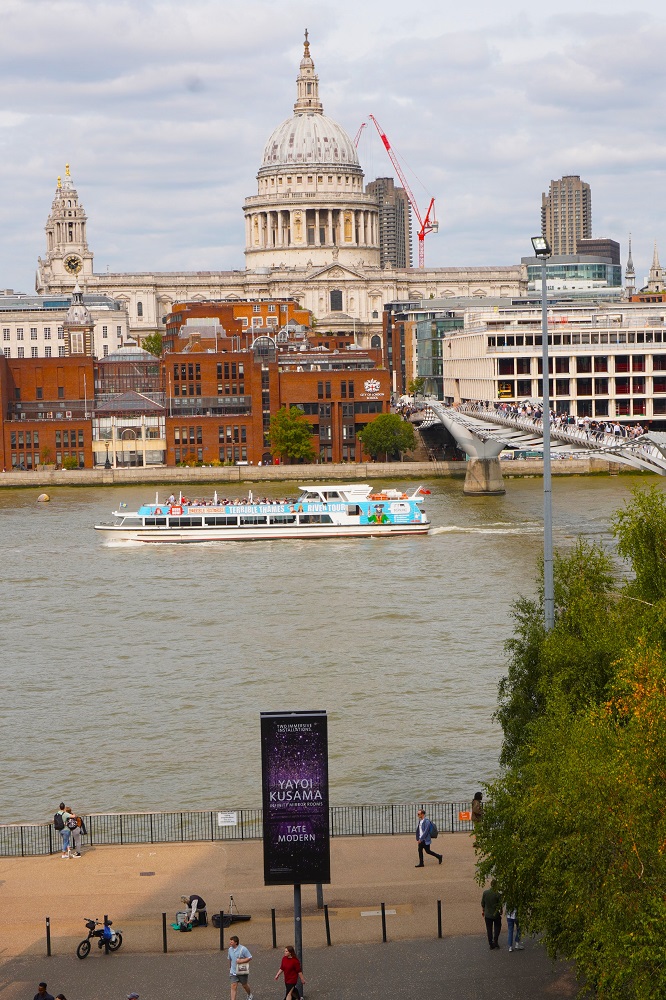
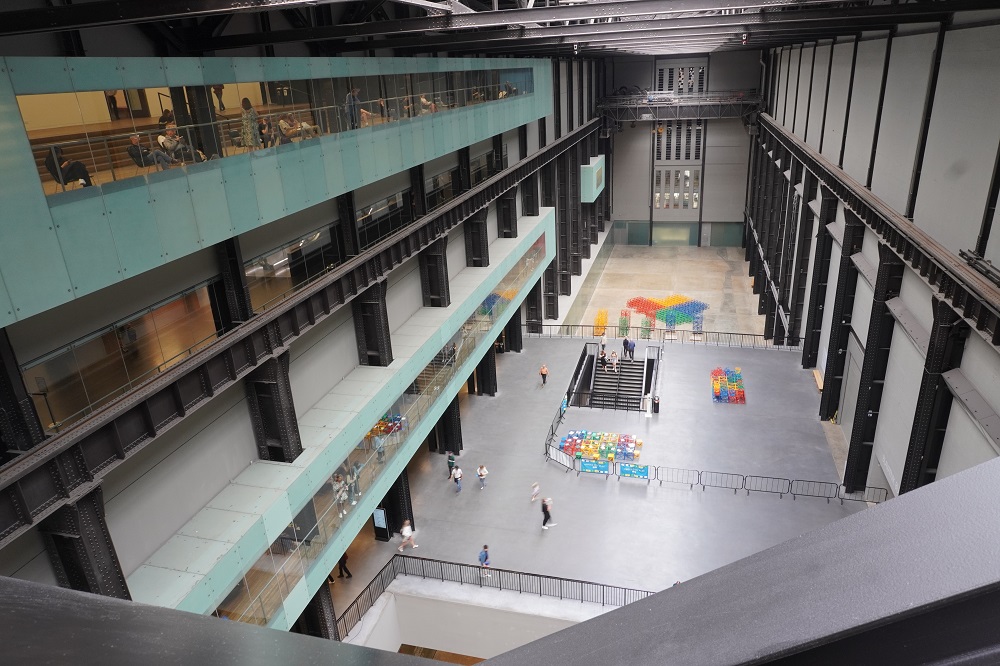
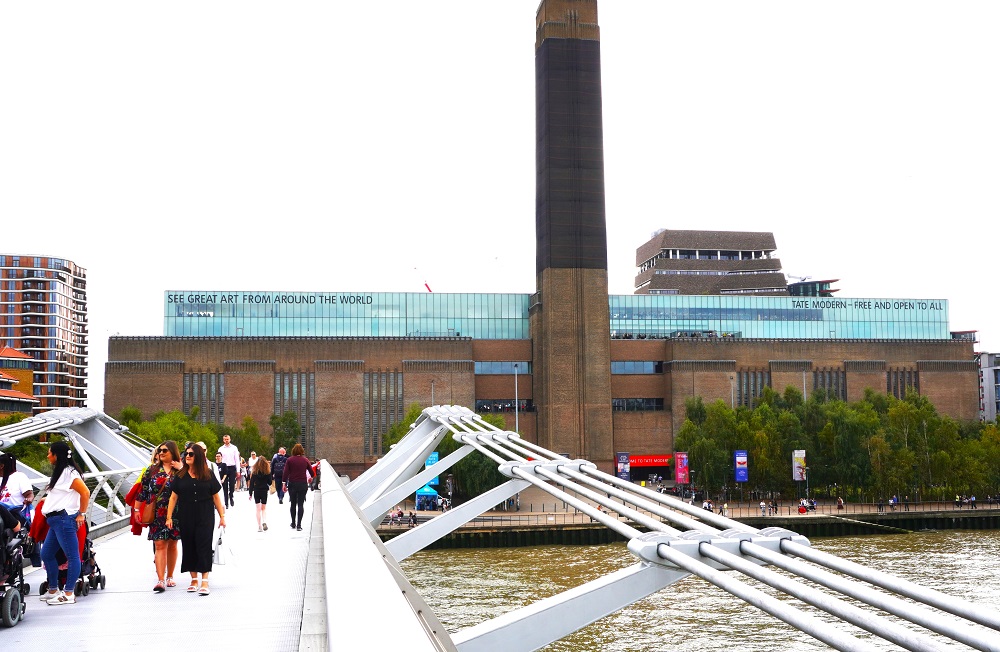
Then for me the high light of the day. The Tate Modern. An enormous modern-art gallery housed inside what was the Bankside Power Station. Converted in the year 2000 it has been phenomenally successful, 50 million visitors in the first 10 years and now has a equally enormous modern addition  (2016) at the rear. I was as interested in the building itself as much as the mostly modern art on display. The cavernous 6 storey high turbine hall has been kept as a dramatic entrance foyer, the 99 metre has been kept with a lookout at the top (closed when we were there!), and there are galleries in the three vast subterranean oil tanks. There are dozens of galleries all with interesting, fascinating, challenging, humorous and demanding works in all forms. It would take many, many visits to see everything that was going on there, and as well they have special exhibitions. At present there are exhibitions on Gustav Klimt and Piet Mondrian. The latter a favourite of myself and many architects.

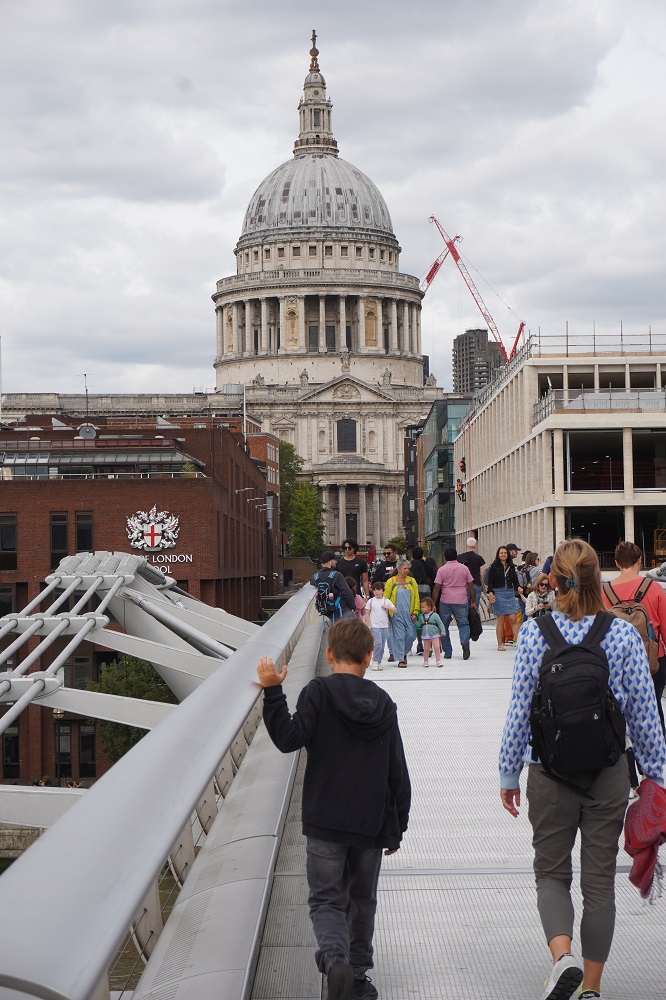
It was now mid afternoon and we were pretty tired and still not adjusted to local time so headed over the Millennium Bridge (nicknamed the Wobbly Bridge after it swayed alarmingly when first opened in 2000) to the St Paul’s station to get the tube back to our hotel.  I think we did pretty well to last as well as we did today, hopefully we will get a better sleep tonight.

From chrysalis to butterfly

We were forty minutes late leaving Auckland for San Francisco but the pilots must have put the hammer down, or perhaps when we were all asleep we went through a time warp, because we arrived exactly on time. It was not too bad a flight, we both slept quite well as far as cattle class on a 100% full Air NZ allows.  I think the time of day made all the difference. A delayed 8.25pm lift off, time to settle in then have a meal, we just naturally felt like sleep.

We were seated on the RH side of the aircraft, me on the aisle, Barbara in the middle, and a young woman in her late teens at the window. She was very polite and well spoken and at first we thought she was English but it turned out she was Lucinda from Australia and was a diver. She wore old sneakers, black track pants, a baggy formless top and had her hair tied up. But for all that she was obviously very good looking. About half an hour before landing in San Francisco she went to the bathroom with a bag and re-emerged with designer sandals, a denim mini skirt, backless sheer white top, tanned and toned, all made up and her hair let down. A  butterfly had emerged from the chrysalis. We last saw her at baggage claim where she fluttered off to have fun in the California sun.

Getting through border control, baggage claim, customs, , rechecking baggage, back through security all took a good hour and a half so our four hour stop over passed quite quickly. Our travel agent had told us our bags would be checked right through from Auckland to Heathrow but this is not the case. Everyone entering the United States has to collect their baggage and re-check it even if only transiting for a few hours.

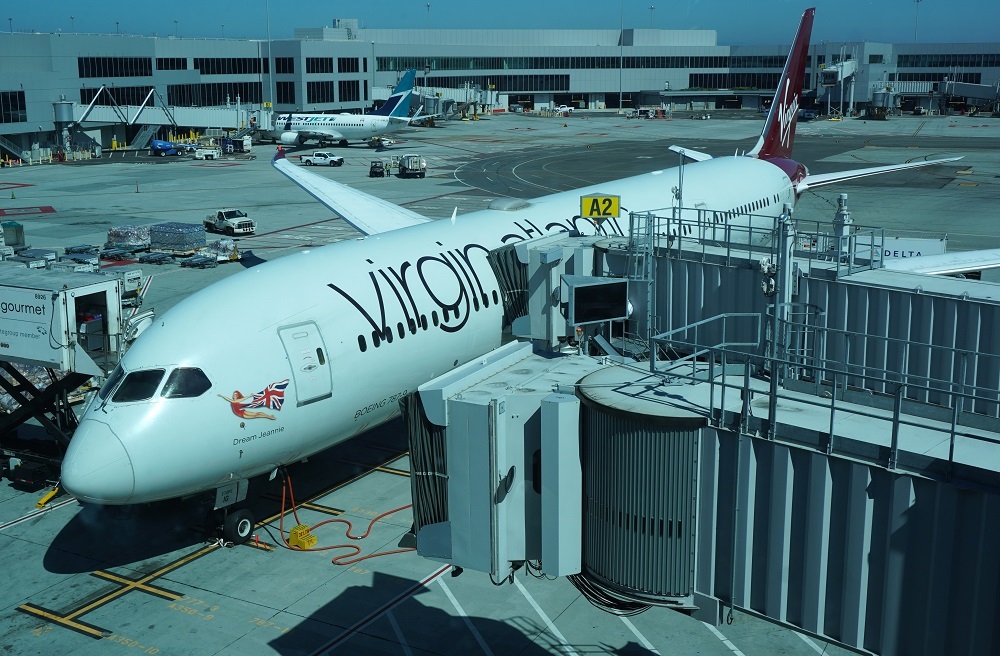
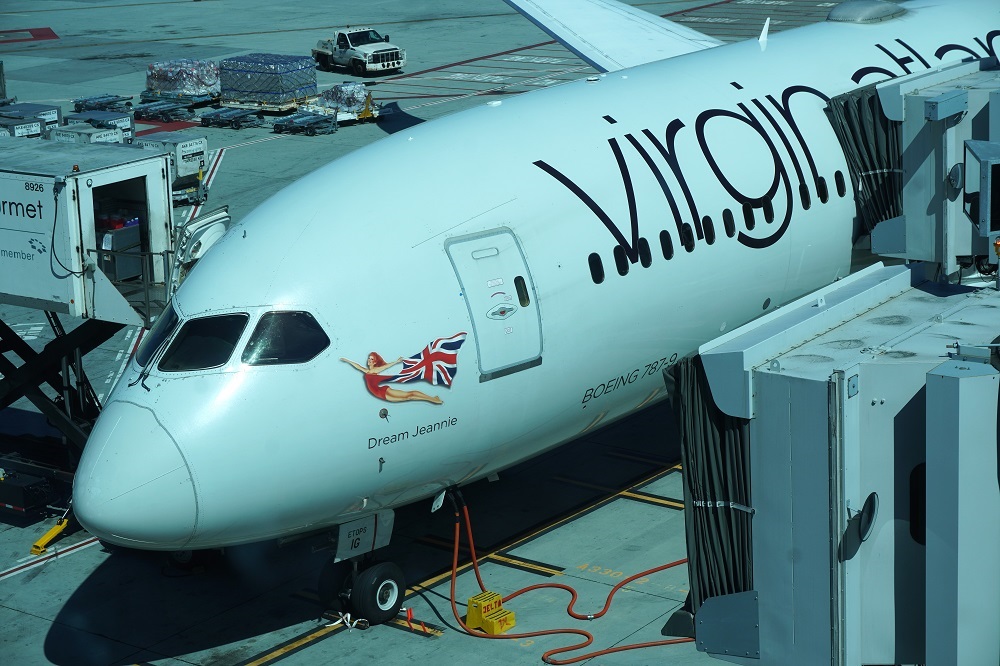
The flight from San Fran to Heathrow left right on time, was 100% full and arrived in London about half an hour ahead of schedule. All to no avail as our gate was still occupied by a departing aircraft and so we waited on the tarmac for half an hour while it was loaded and towed away. This time our body clocks were totally out of sync thinking it was afternoon and early evening and so we didn’t sleep a wink. Never mind there were some good movies to watch.

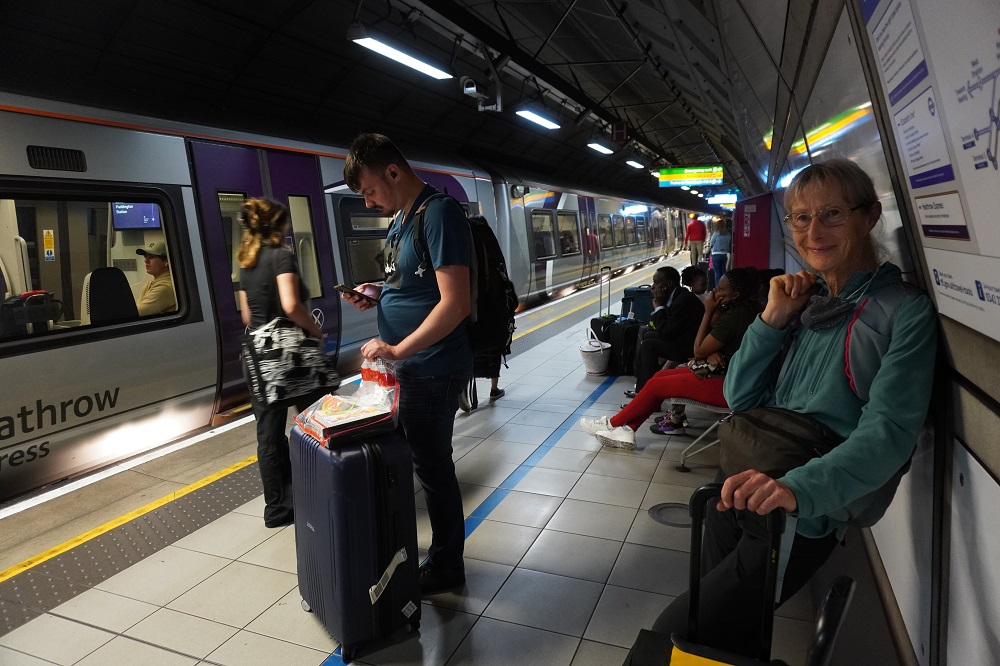
Terminal 3 at Heathrow was almost deserted and it took only ten minutes from leaving the aircraft, going through border control, collecting baggage, clearing customs, and heading for the Elizabeth Line tube train to Paddington. Today is a Bank Holiday in the UK so the tube was very busy and the streets around Paddington, Kensington were packed with people. We think there was some sort of carnival in nearby Notting Hill and lots of people had dressed up in outrageous costumes for the event. Everyone was in very good spirits and there was a large police presence as well.

We were at our hotel by about 1.30pm but were feeling pretty zonked so got a few groceries, went for a walk in Hyde Park before crashing. Tomorrow our task is to get rid of our old pound notes.


A Straight Forward Day

A seamless day, all connections worked out well. So no dramas and no stress. Everything was like the pre-COVID days. It felt great to be back travelling after 4 years.

We left home at 9.45am and were in our hotel in Auckland by 2.45pm using:

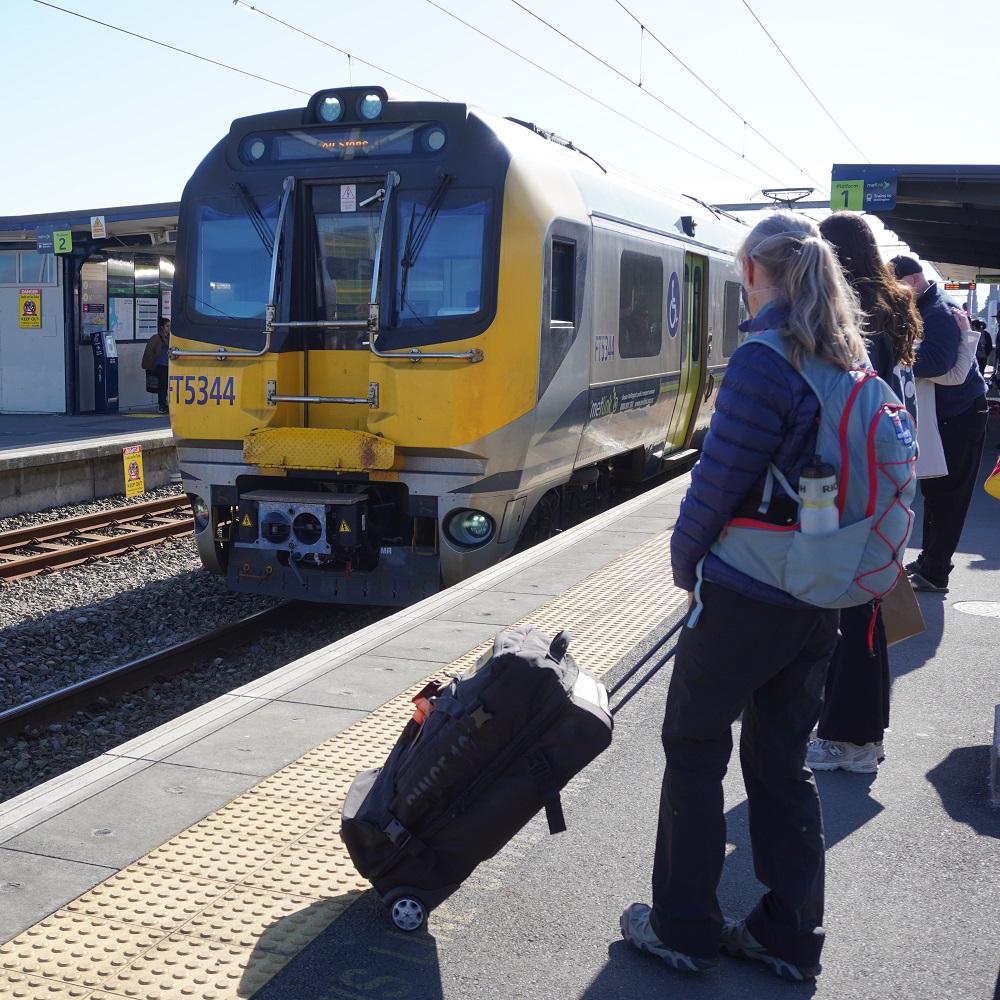
  • Metlink bus Paraparaumu Beach to Paraparaumu Railway Station
  • Metlink train Paraparaumu to Wellington
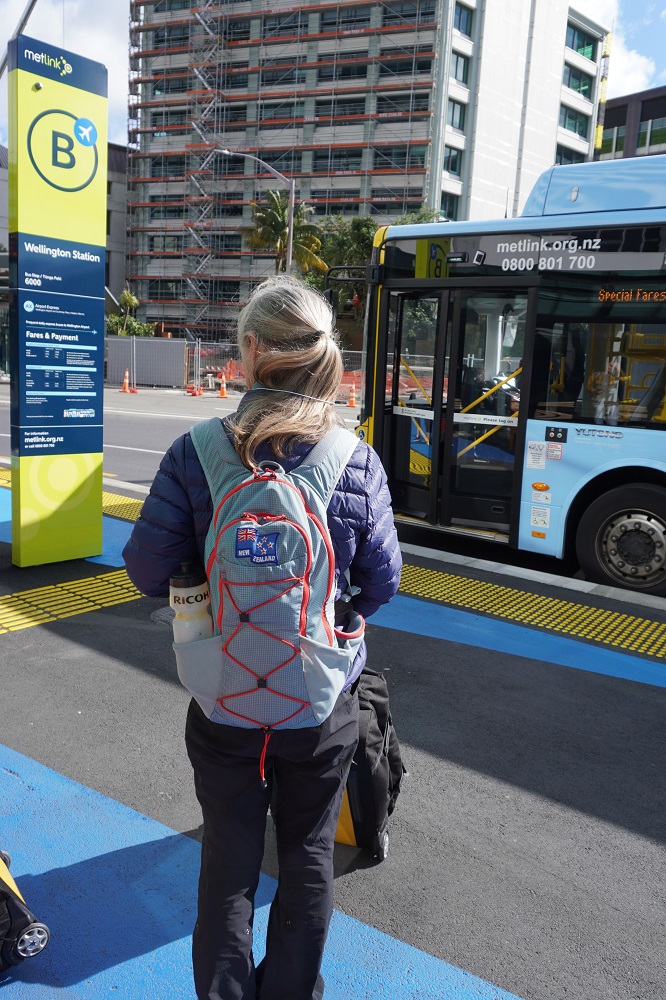
  • Metlink Airport Express bus Wellington Railway Station to airport
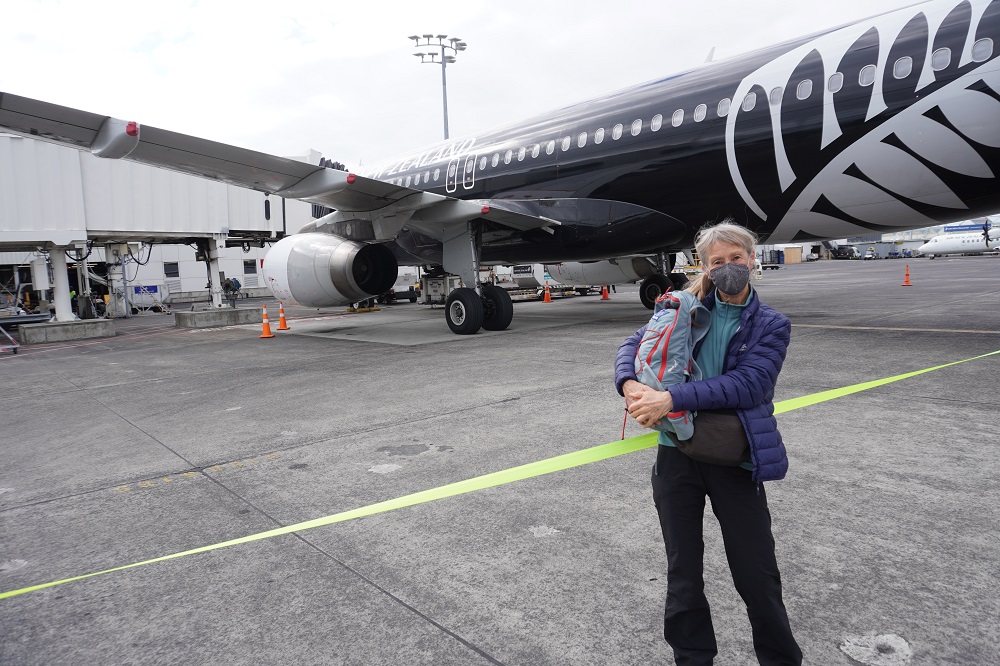
  • Air New Zealand Wellington to Auckland
  • Airport Garden Inn shuttle Auckland Airport to motel in Mangere

The only hiccup so far has been in getting from London down to Paignton on the south coast of England. Two or three months ago we had reserved and prepaid a seat on the Great Western Railway train. Two days ago we received an email from GWR to advise us there is to be a general railway strike on Friday 1st September, the day we were to travel. We were offered a full refund or a transfer to another date. It was a bit tricky to change the date as we had hotel bookings in London and down south in Brixham. Also our walking tour started on Saturday 2nd September.

We opted to keep the travel date but use the National Express bus. The bus is actually cheaper by $30 but instead of taking 3hr 20min like the train, it takes 6hr 40min. Also the train left London at 9.30am but the bus doesn’t leave until noon so we will be in Paignton much later and still have to get a local bus to Brixham and walk to our B & B.

Not too much of an inconvenience. We just can’t wait to get to Brixham and start walking.

Money, Money, Money

At the end of our visit to the United Kingdom in 2019 we had about £340 made up of £50 and £20 notes and coins. We opted to keep this and not convert ii back into NZ$. As part of our preparation for our 2023 trip to the United Kingdom we decided to buy some more pounds sterling and duly purchased some through the Westpac Bank.

We picked these up on Monday of this week and Barbara noticed that the £20 notes were different in feel, appearance and size to the £20 notes we had from 2019. We did not get any new £50 notes.


On Wednesday we were picking up some documentation from our travel agent and Barbara mentioned by chance that the new pound notes were different to our old ones.  Our agent said oh yes the UK Government had changed all their bank notes over the last couple of years and the old ones were no longer legal tender, ie they would no longer be accepted in shops, on public transport etc. She thought they could be exchanged at a bank like for example Lloyds.

Some searching on Google informed us it was not quite as simple as that. The old notes were phased out because they are paper and the new notes are polymer and have a much longer service life. The good news is that old notes can always be exchanged for new notes and there is no deadline.

There are a few options to exchange your old notes:

  • At some post offices (five branches in London) and a limit of £300 in two years
  • At your bank. They will credit the old notes to your account. We don’t have any bank account in the UK
  • By post to the Bank of England. Mail them at your own risk and they can deposit into a bank account or mail new notes to you, can take up to 90 days
  • At the Bank of England Threadneedle Street London. Join the queue. You will need photo ID and the usual type of document showing your current address. They will exchange old notes for new.

When we arrive in London we will try the Bank of England first and second choice one of the post offices.

The Bank of England in Threadneedle Street is the headquarters of the central bank of the UK and worth a visit in its own rite. The Bank of England was founded in 1694 and has been in this location since 1734. The present building dates from the 1920s, is in a neo classical style, and is the most iconic building in London’s financial centre known as “the City”.


Yes decided to go back, but then ………..

We had only been home a week before we were making enquiries about going back to the United Kingdom in 2020 and completing the South West Coast Path.

Macs Adventures the company we used in 2019 to transfer our bags and book our accommodation along the path do not do the sections from Brixham to Exmouth.  However we found another company, Absolute Escapes, who did all the sections from Brixham to Poole and so decided to go with them.

By the end of October we had paid Absolute Escapes a deposit and made airline bookings for May 2020. We also booked accommodation in London and the Isle of Wight. We planned to spend a few days on the Isle of Wight after completing our walk as it is not too far from Poole, the end of the trail. We planned to leave home on May 8th and return on 9th June 2020.

And then COVID-19 arrived.

The first human cases of COVID-19 were identified in Wuhan, China in December 2019. The World Health Organisation  declared the COVID-19 outbreak a “Public Health Emergency of International Concern” on 30 January 2020 and a pandemic on 11 March 2020. In New Zealand nationwide alert levels were put in place and set at level 2 on 21 March, Level 3 on 23 March and Level 4 on 25 March, setting all New Zealand in a nationwide lockdown.

By the middle of March virtually the whole world was going into lockdown and we had decided to postpone our walking holiday. On 15 March we advised Absolute Escapes we wished to postpone our trip as the New Zealand Government had strongly recommended that all non-essential overseas travel should be cancelled. At this time the government had introduced a 14 day isolation requirement for all people entering New Zealand. As it happened also at this time the United Kingdom introduced travel restrictions and Absolute Escapes advised us that all walking holidays in the UK were cancelled.

For several months we were distracted by the world wide catastrophe of the pandemic but also wondered what we had lost through all the travel restrictions and disruptions. Eventually we received a full refund of our airfares, accommodation in Auckland and the Isle of Wight. Absolute Escapes said they would honour the deposit we had paid and could use it for any future trip.  Expedia gave us a credit for our accommodation in London to be used within a year. This was later extended to two years but we never got to use it, So overall we were not unhappy.

The COVID-19 pandemic took its tragic course and we did not consider any overseas travel for the remainder of 2020, or for 2021 and 2022. By the beginning of 2023  the world was pretty much back to normal and we were getting itchy feet. We decided it was now safe enough to go to the United Kingdom and complete the South West Coast Path.


Do we finish it off?

Over two years, 2018 and 2019, we have walked from Minehead in Somerset, the coast of North Devon, the entire coast of Cornwall and the coast of South Devon to Brixham, 780 kilometres of the 1020 kilometre South West Coast Path

The question for us is: do we return and do the remaining 240 kilometres from Brixham, the coast of East Devon to Poole in Dorset?

The remaining section is more urbanised than North Devon and Cornwall, being the “English Riviera” with major seaside towns such as Paington, Torquay, Teignmouth, Exmouth, Lyme Regis and Weymouth.  But there are also quiet undeveloped areas and the 150 kilometre Jurassic Coast, England’s only natural World Historic Site, for fossil hunting, along with the highest cliffs on England’s south coast.

This section contains rocks, cliffs and fossils from three geological eras: the Palaeozoic (570-250 million years ago), the Mesozoic (250-60 million years ago), and the Cenozoic (65 million years ago to the present day). This results in a wide range of geographical and geological features including red sandstone and mudstone cliffs, marsh-fringed estuaries, sand bars, bright white chalk cliffs, the single largest shingle ridge in the world at Chisel Beach, an ‘almost’ island of hard limestone (Isle of Portland), sandy beaches, off shore rock stacks and arches. And there is the fossilised record of mammal evolution with the fossils of fish, amphibians, reptiles and dinosaur footprints.

As if this isn’t interesting enough, there are also attractive Georgian sea fronts, inland pastoral countryside, Norman castles, elegant Regency towns, grand terrace housing, charming picture-postcard villages, picturesque fishing villages, working harbours, the most scenic part of Isambard Kingdom Brunel’s Great Western Railway, caravan sites, golf courses, amusement parks, military airfields and firing ranges.

Going back would also give us the satisfaction of having walked every inch of Britain’s longest national trail.

Perth

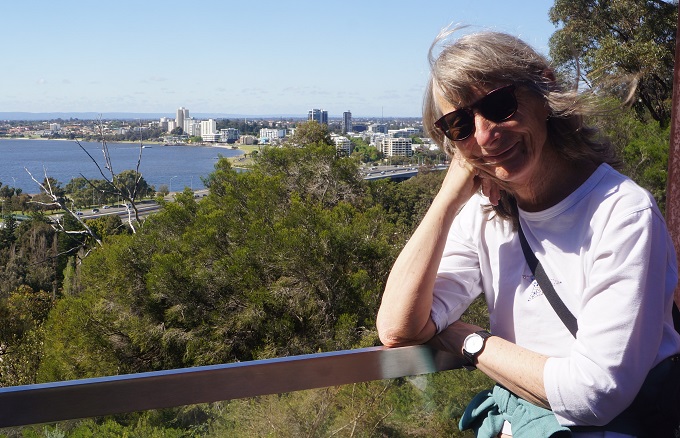
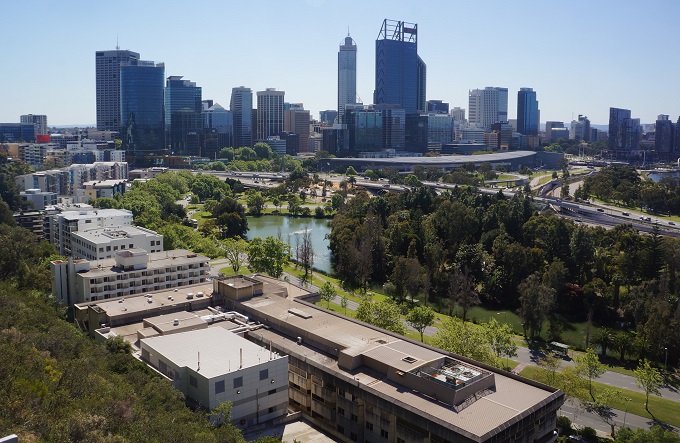
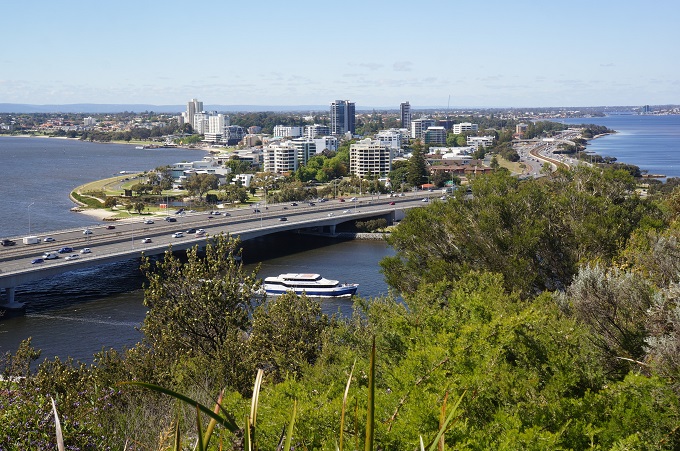
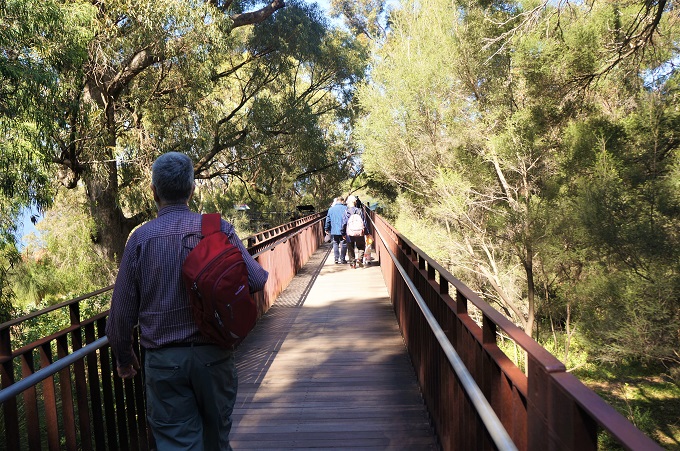
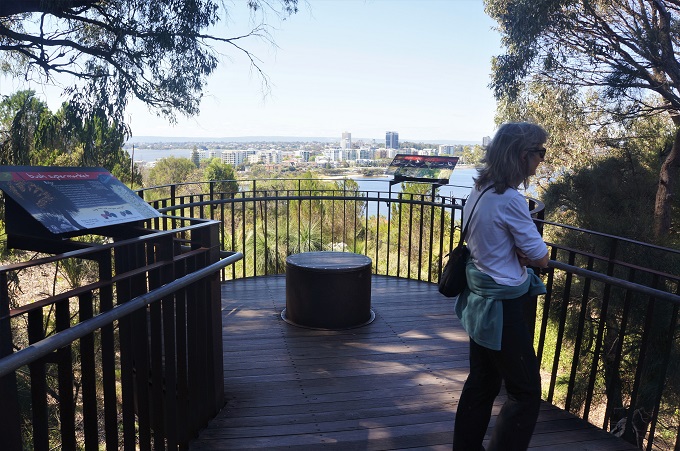
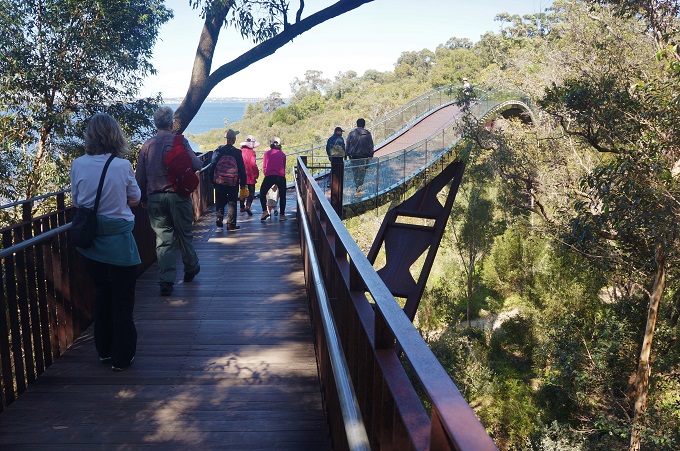
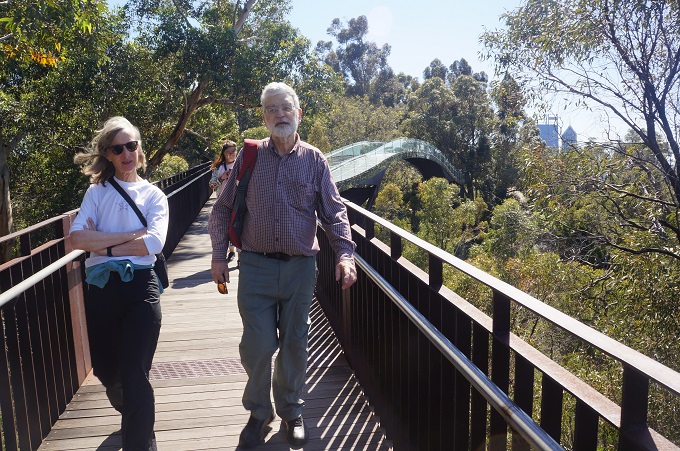
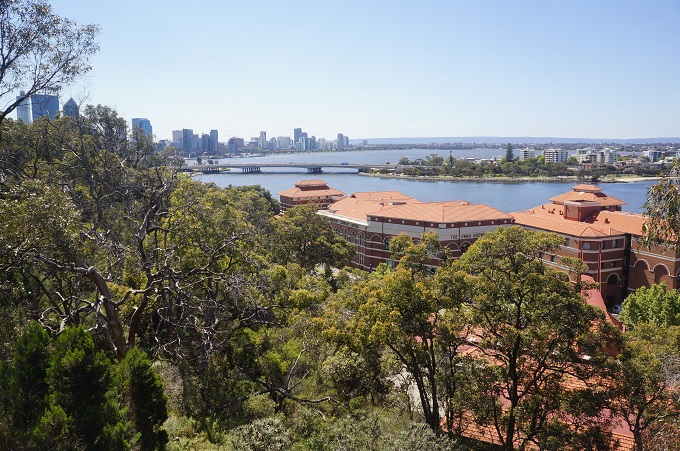
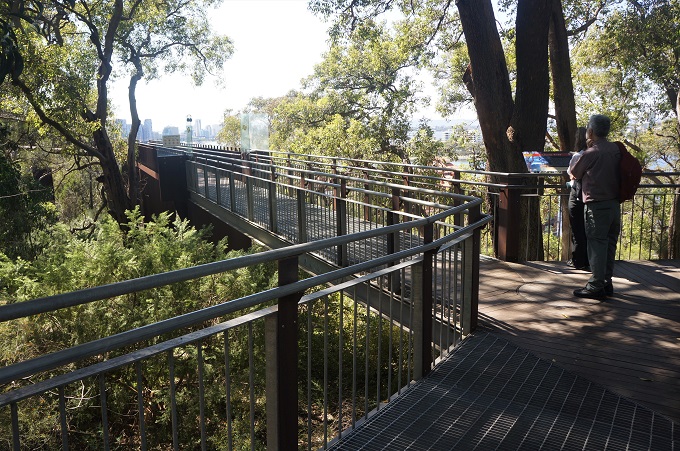
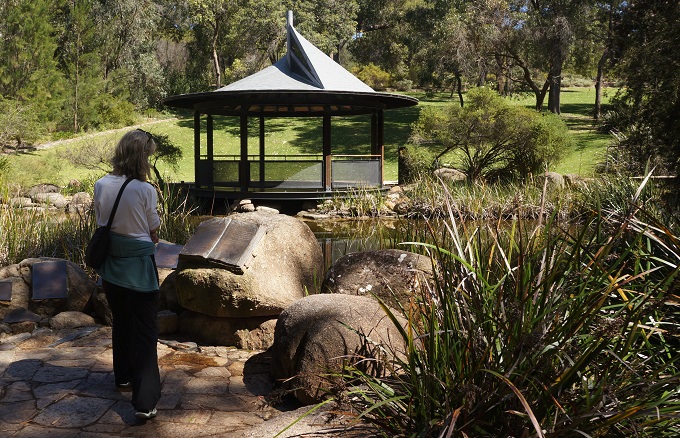
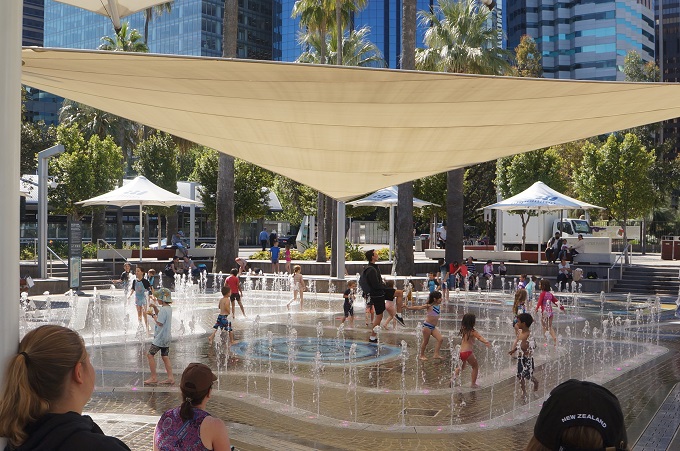
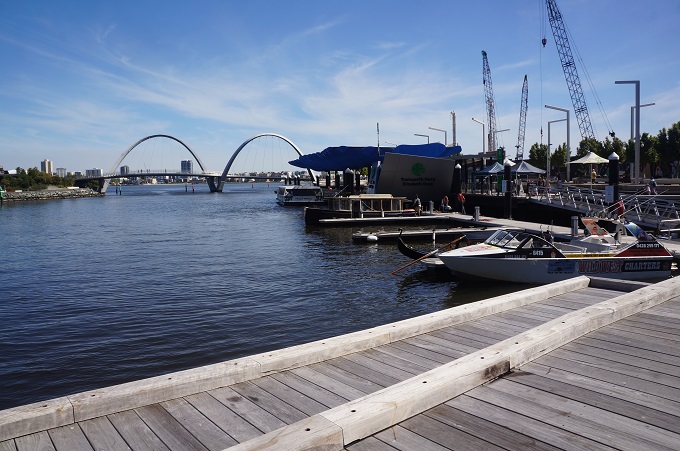
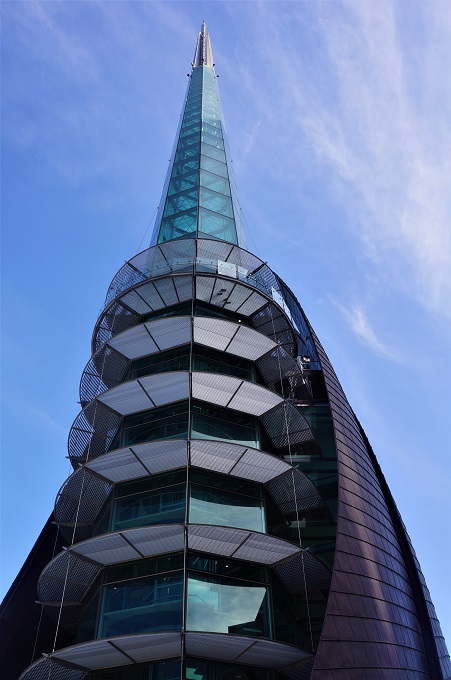
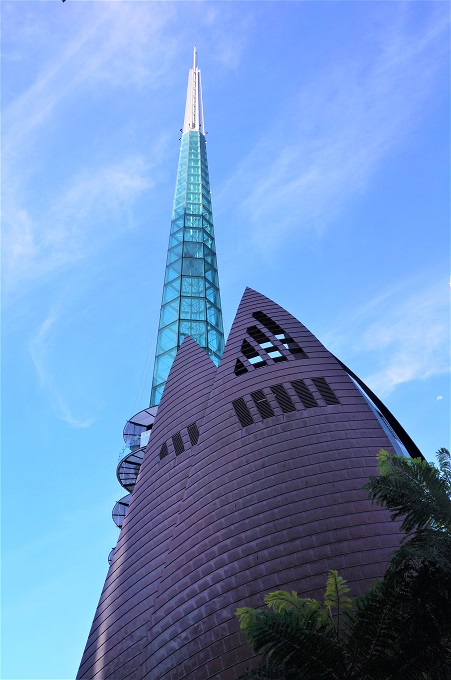
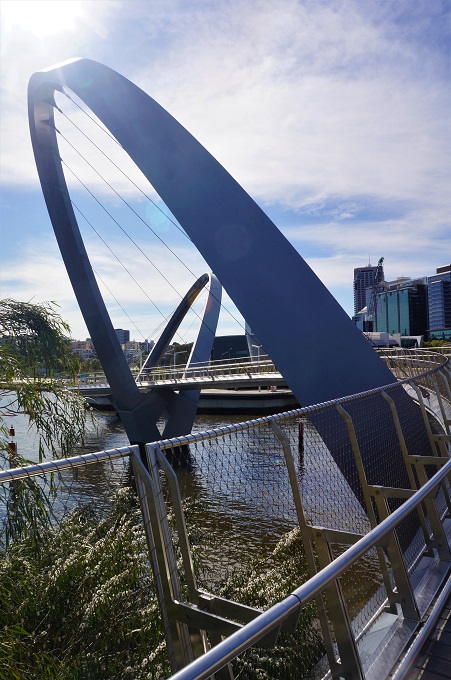
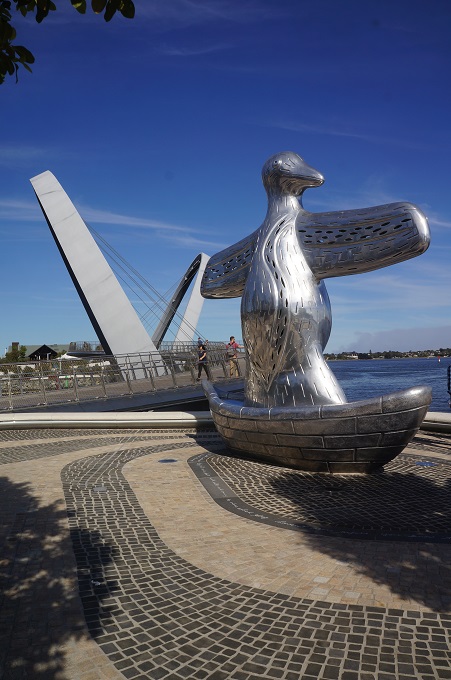
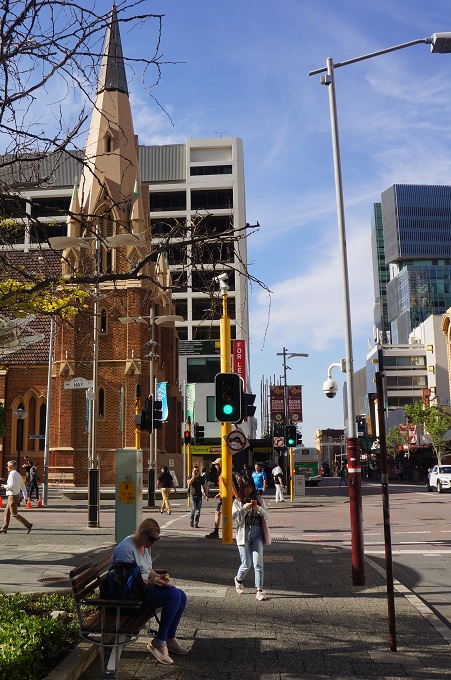
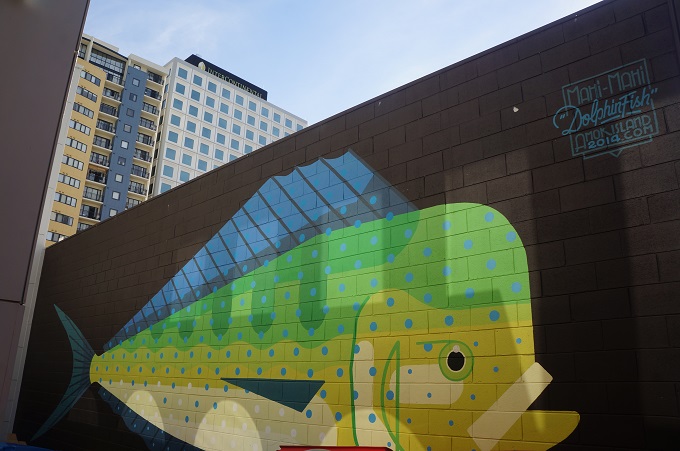
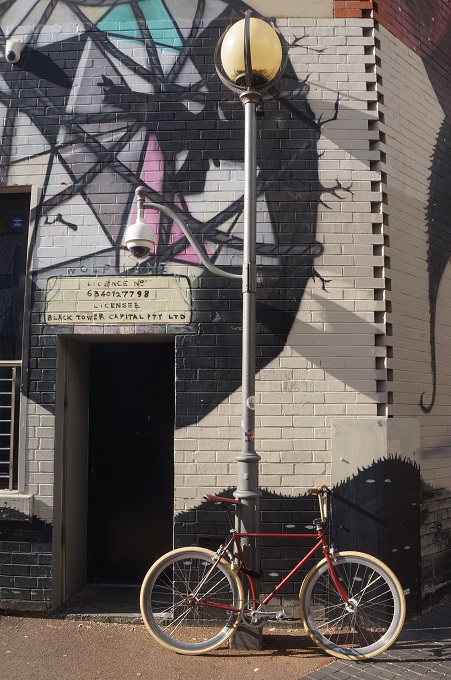
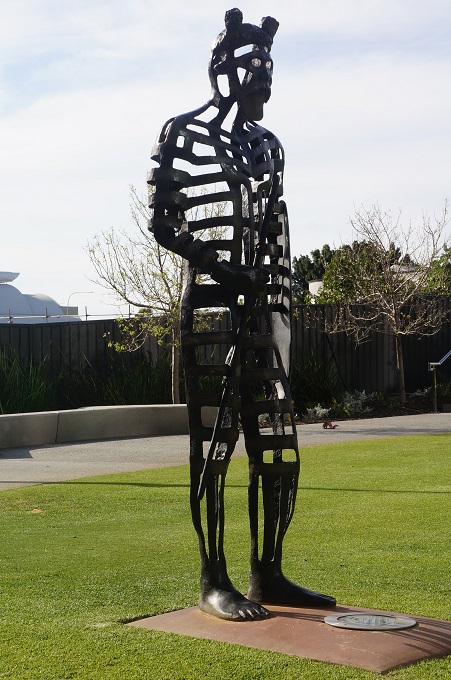
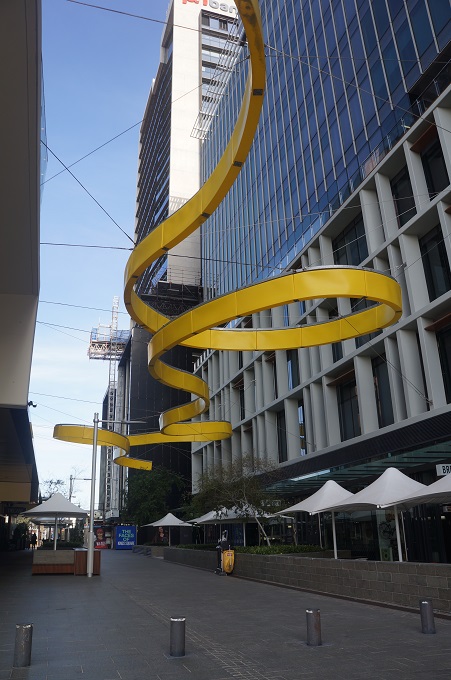
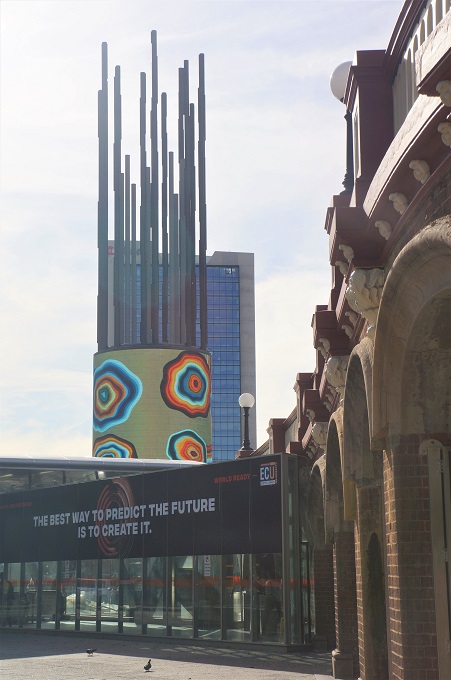
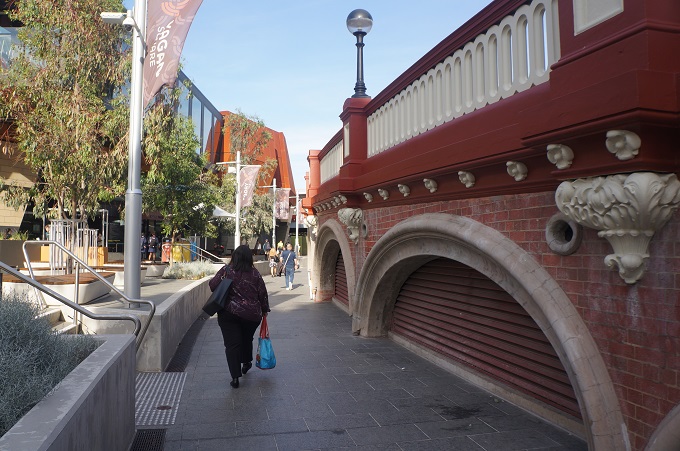
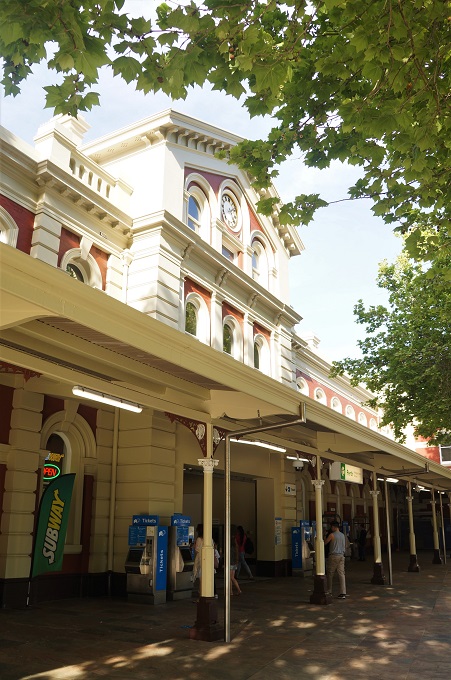
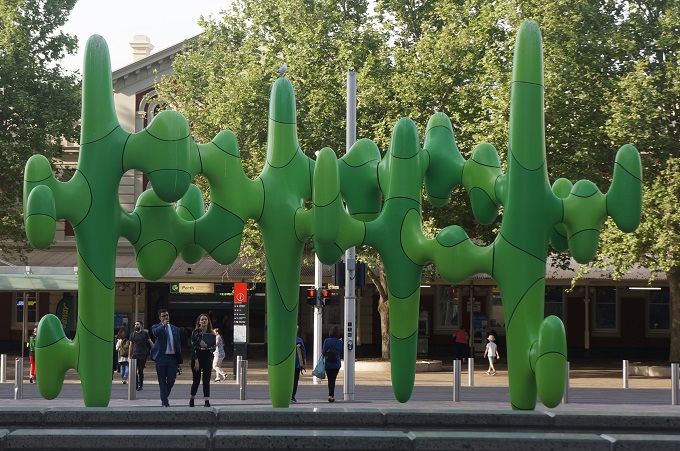
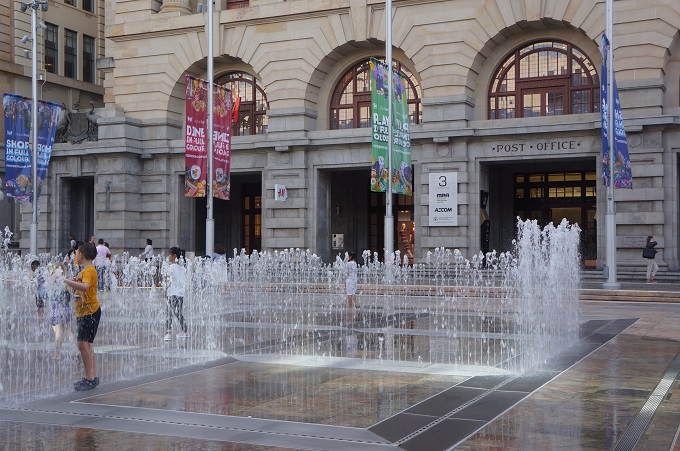
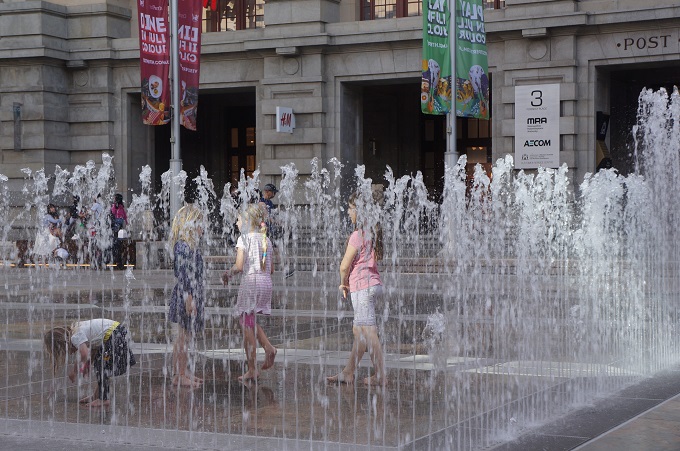
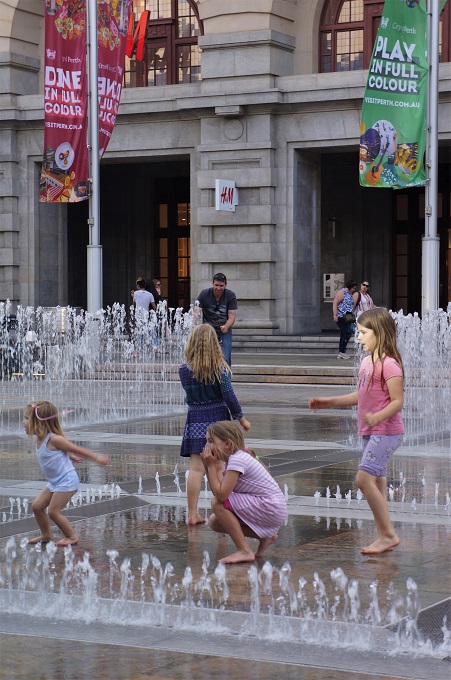
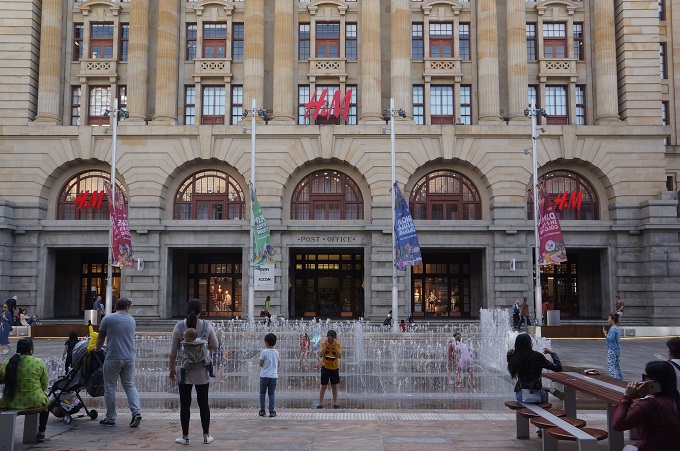
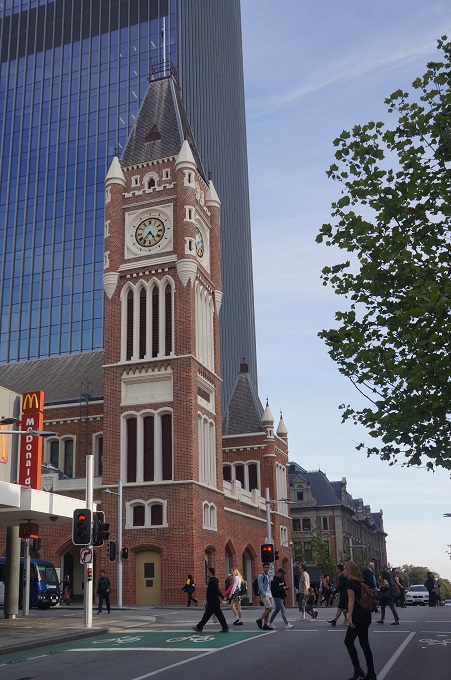
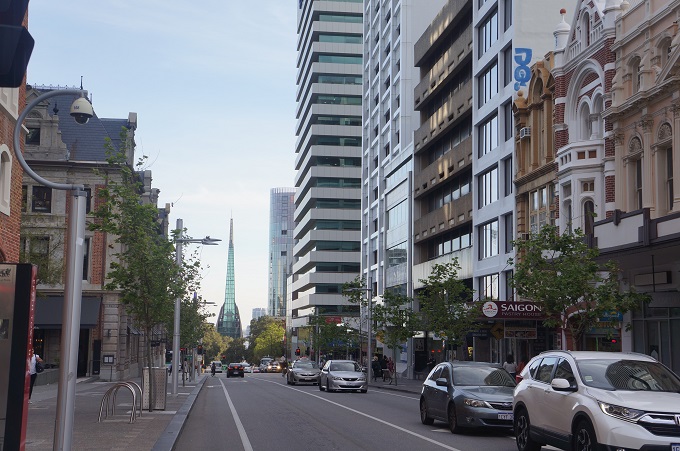
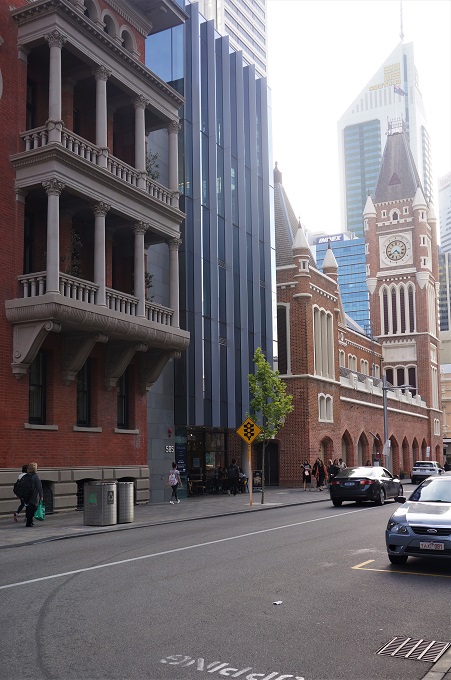
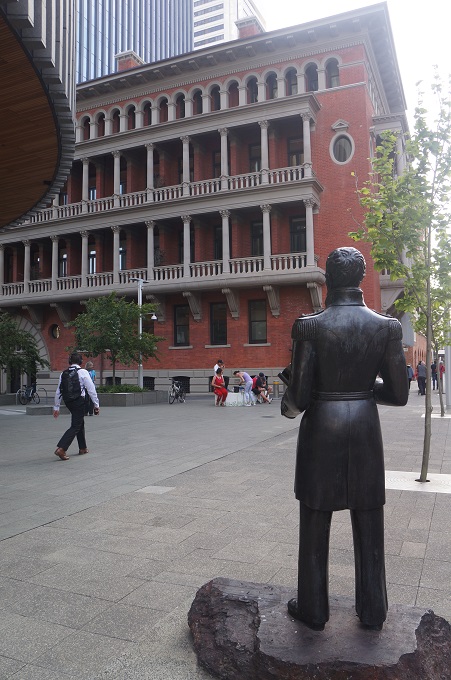
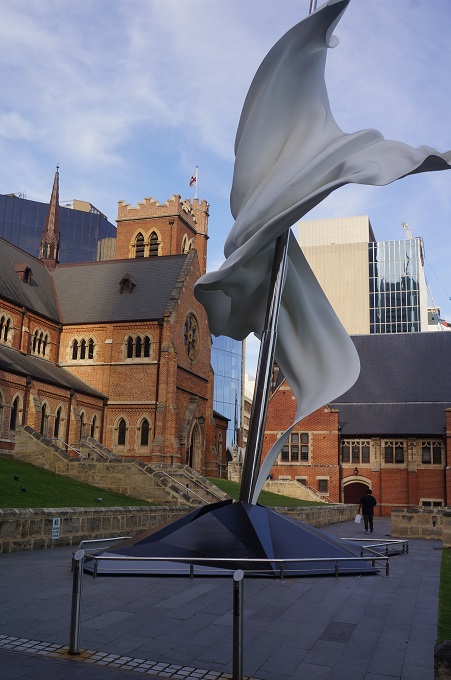
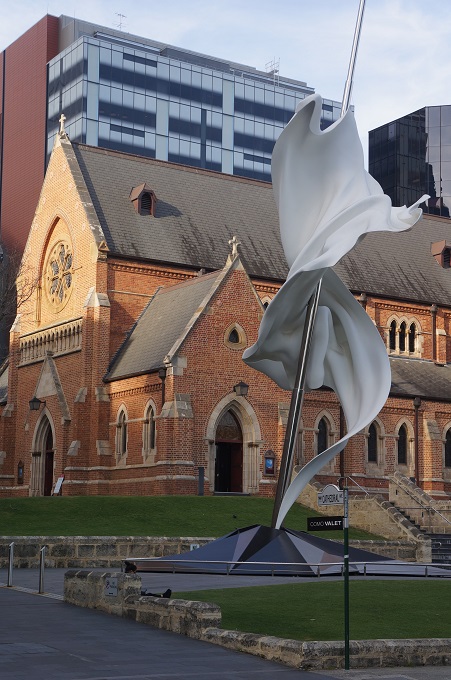
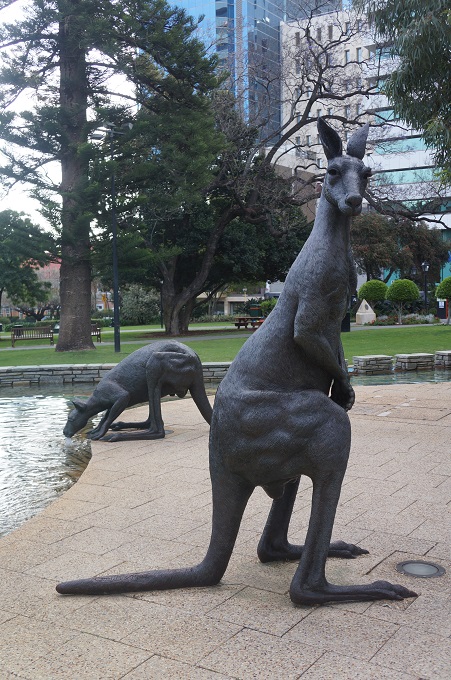
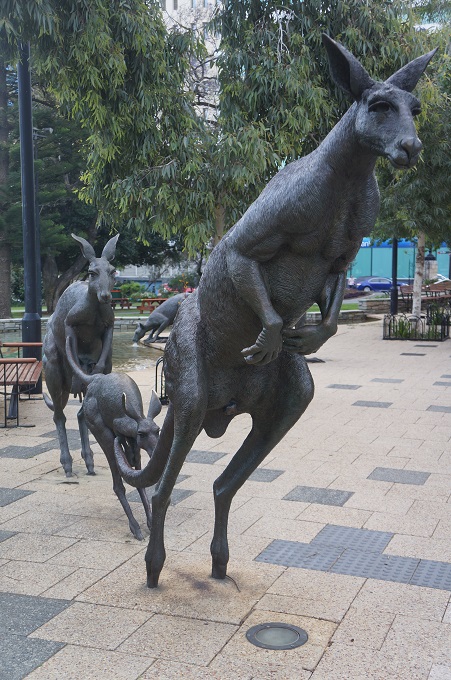
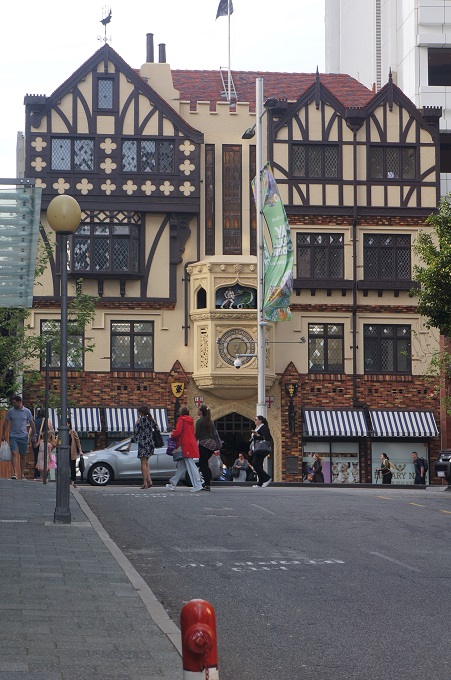
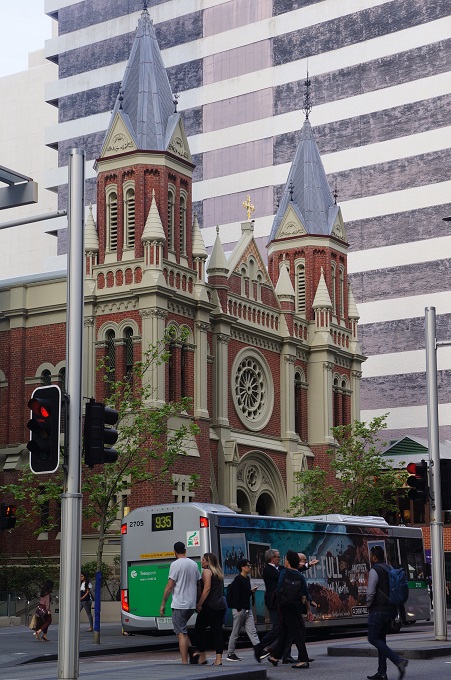
Last day of our holiday. Met up with Tom, an old school friend, who took us on a tour of Kings Park and the Botanic Gardens. A very pleasant space, nice and cool under the trees and with great views down over the Swan River and city of Perth. In the afternoon we did a self-guided walking tour of ‘Art City’ Perth.