All posts by Paul Lenihan

Just for Cath

This post is just for Cath.

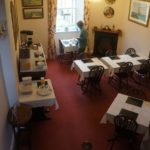
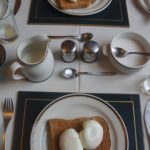
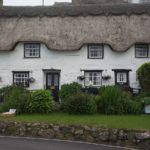
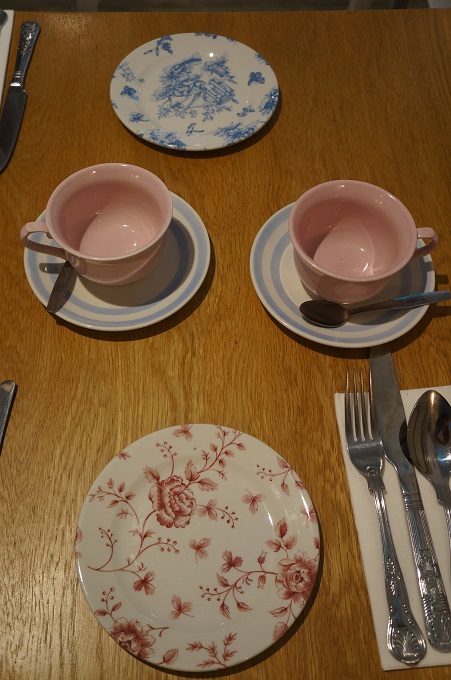
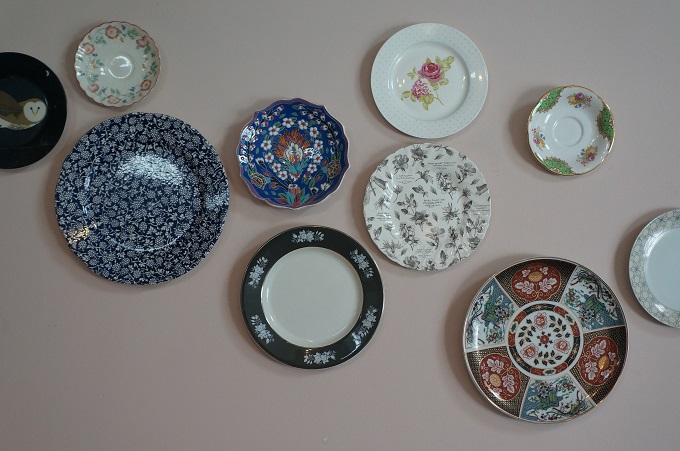
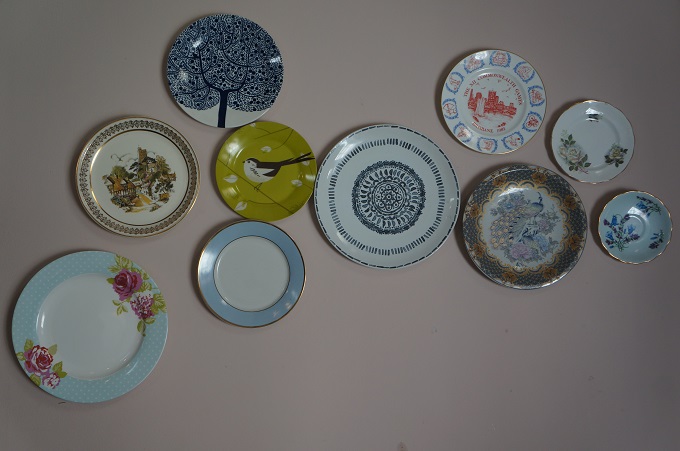
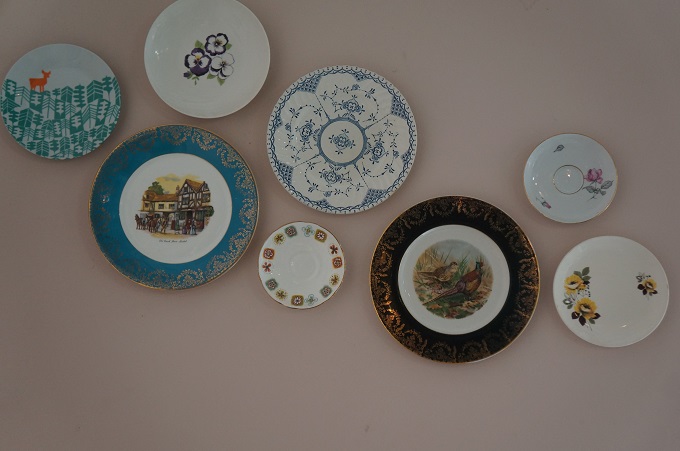
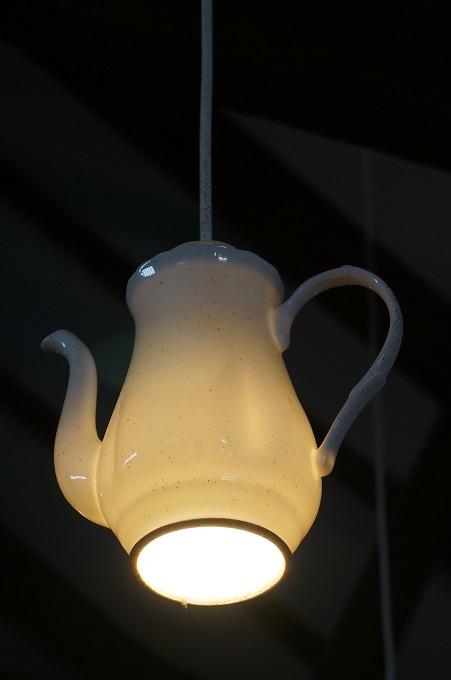
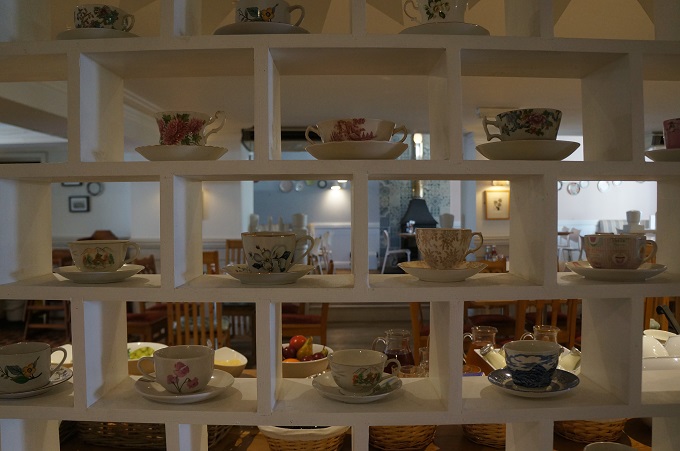
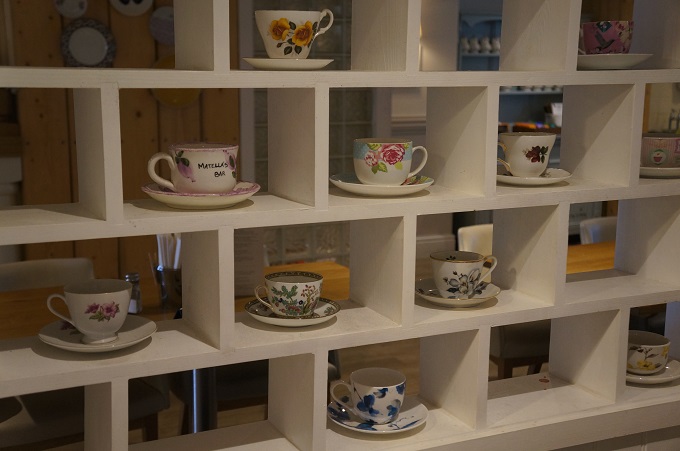
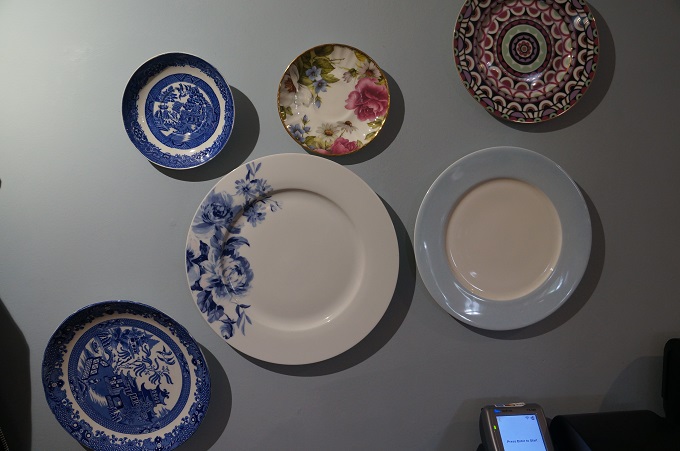
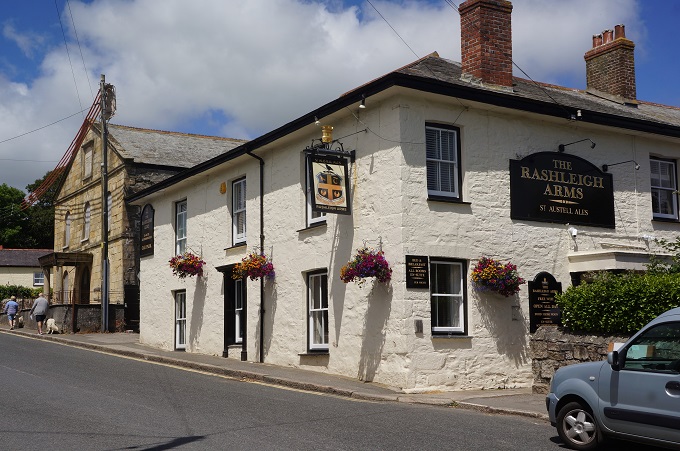
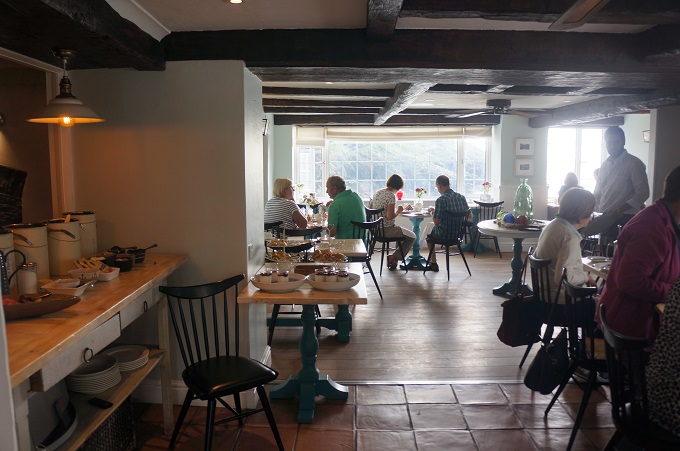
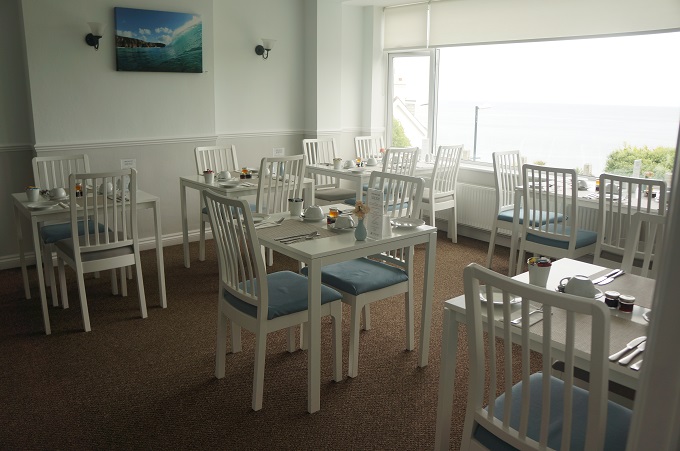
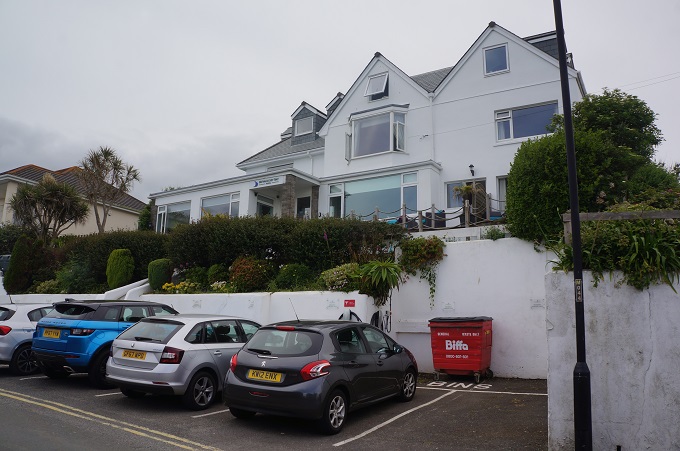
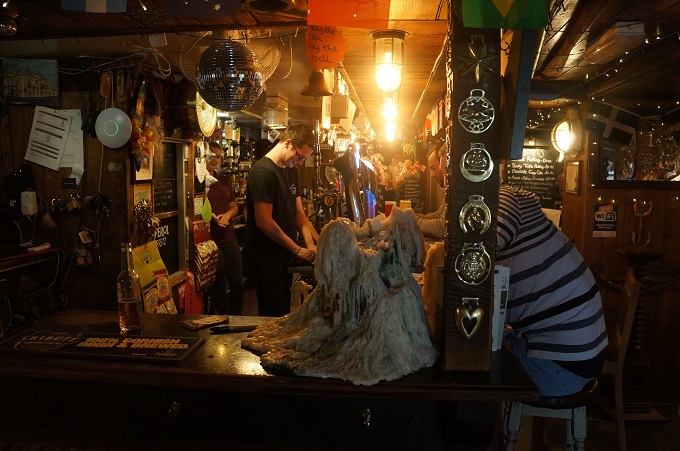
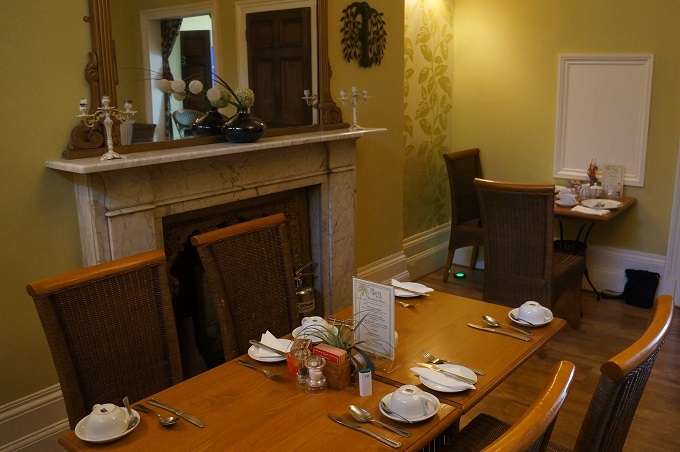
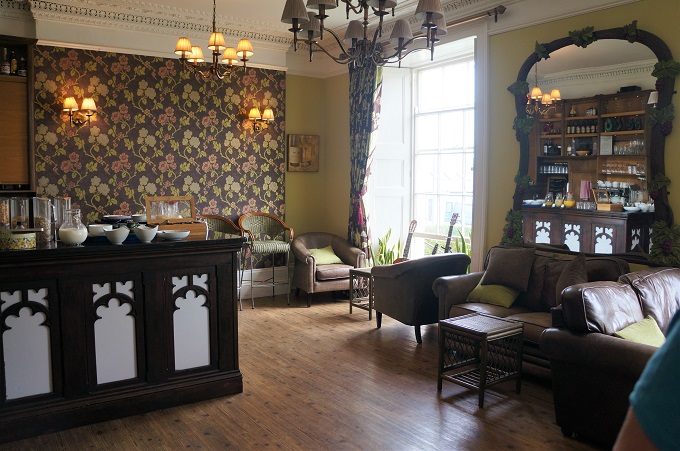
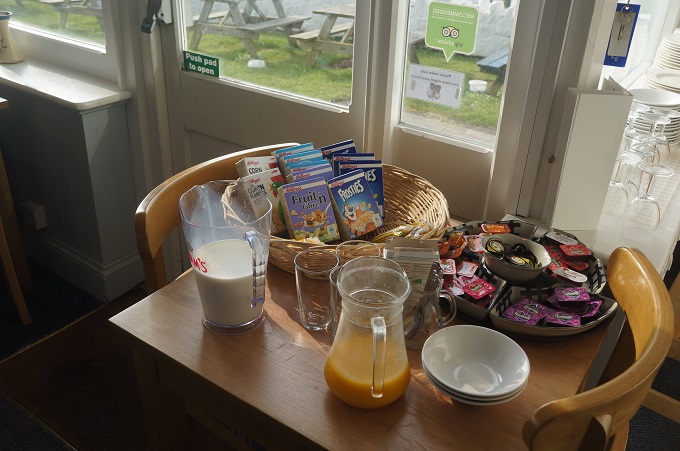
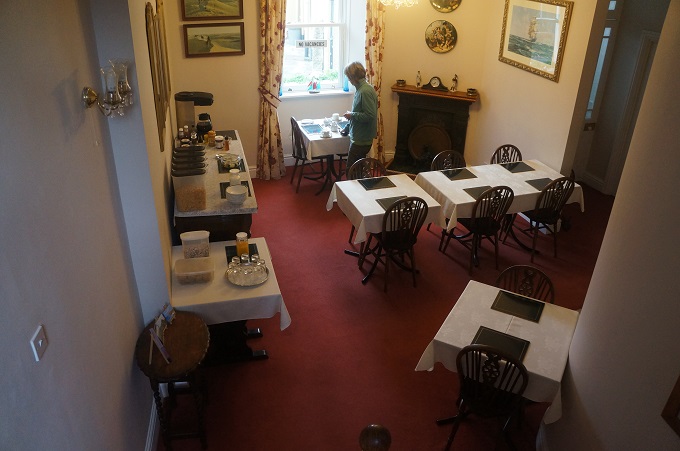
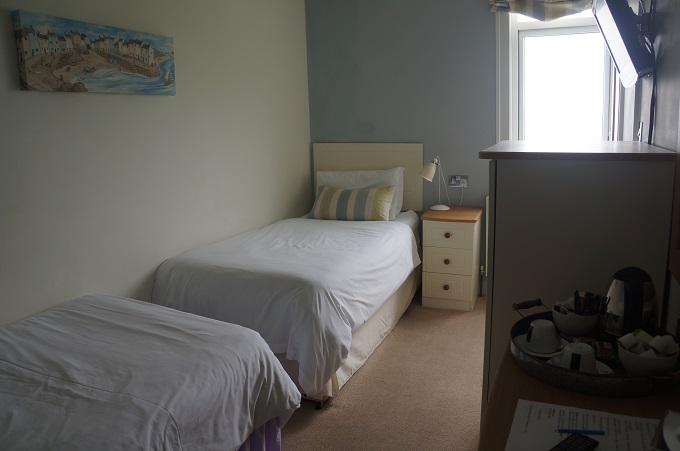
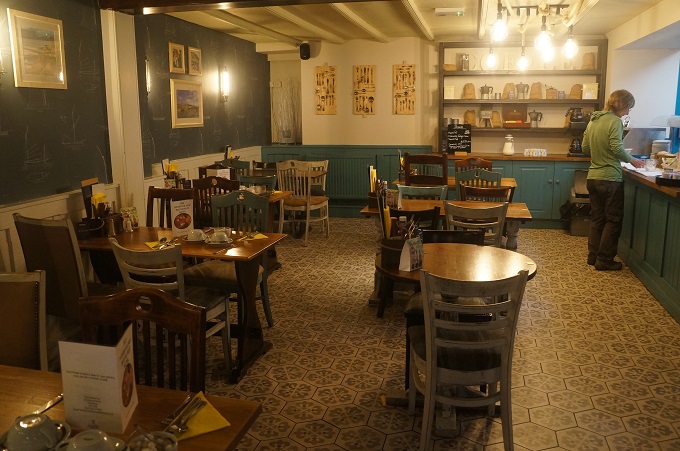
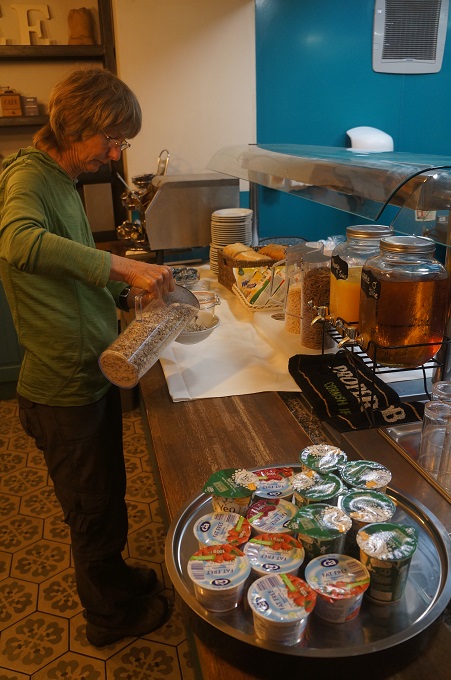
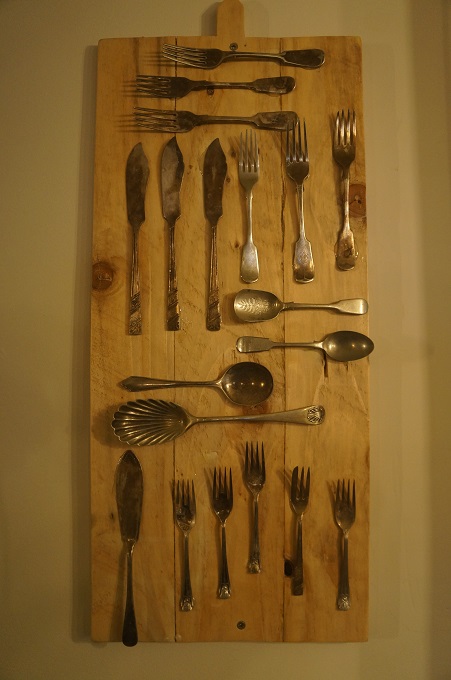
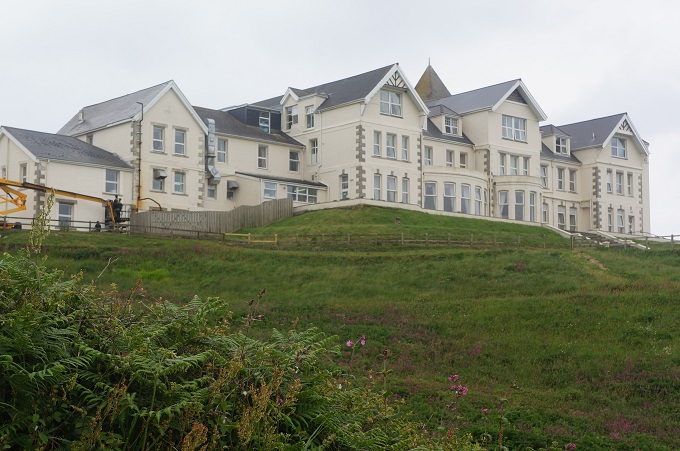
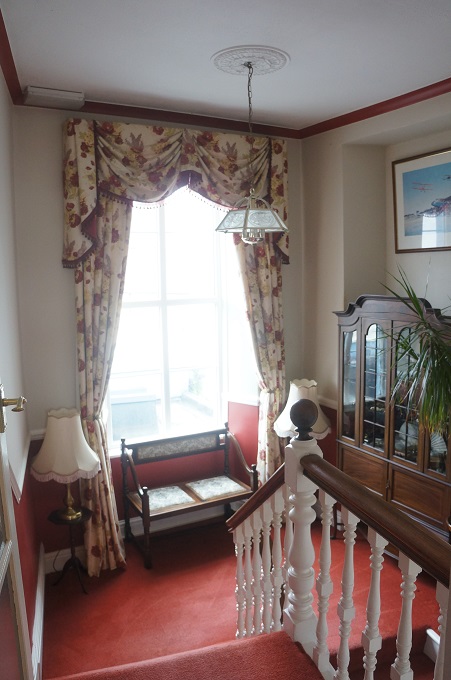
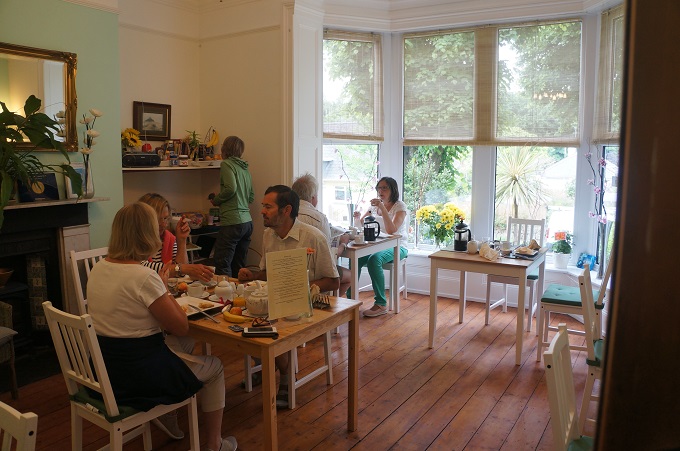
We think she might like it here at the Rashleigh Arms Hotel in Charlestown. They like to put their china up on the walls and they have a great collection of tea cups and saucers. We’re not sure if you’re allowed to pick your own tea cup and saucer off the display for your coffee. Might try this tomorrow at breakfast and see what happens.

Thank you Cath for all the  comments on the blog.  When we are a bit worse for wear at the end of the day it always gives a lift to get your positive feedback.


Wet feet and tingling hands

Mevagissey to Charlestown, 13 km, 542m climbing

‘Walk towards the good in life and one day you will arrive’. Leviticus

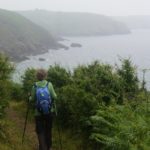
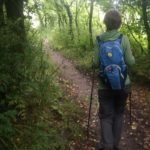
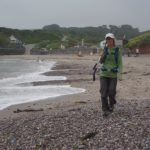
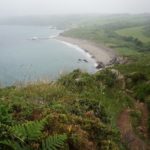
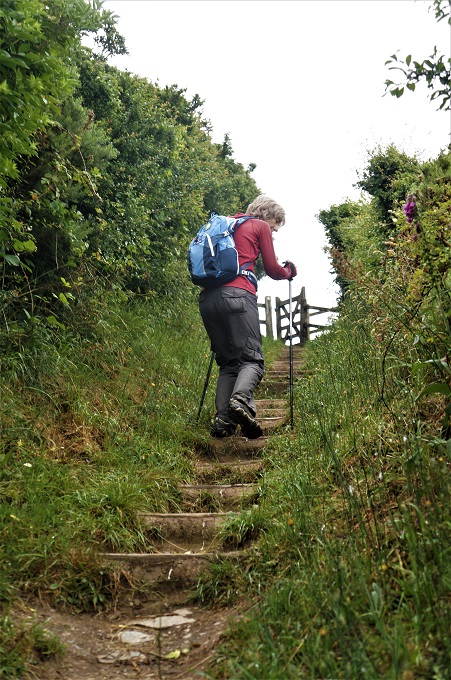
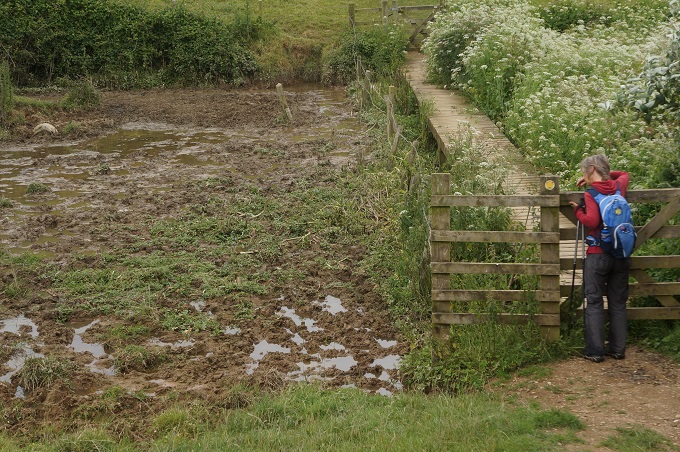
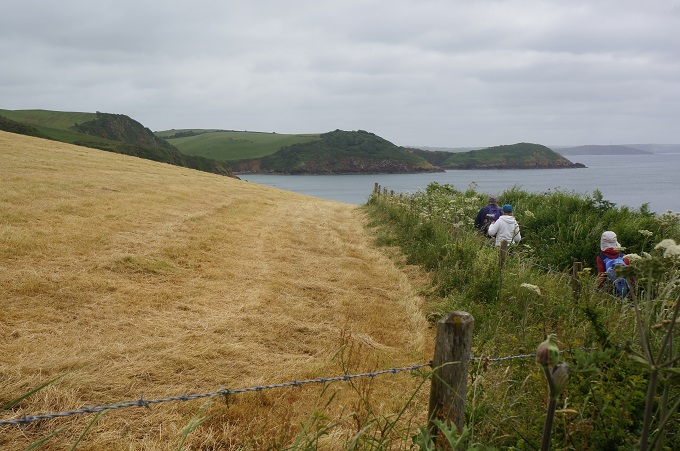
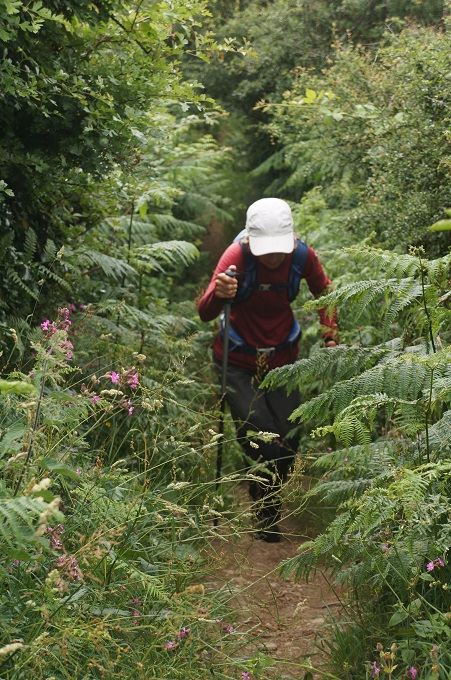
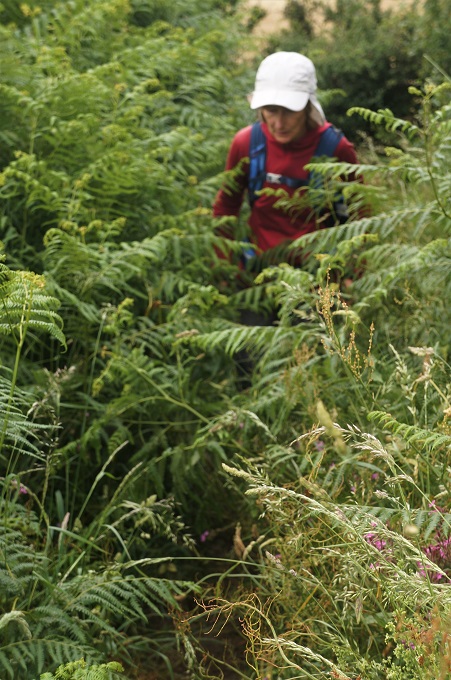
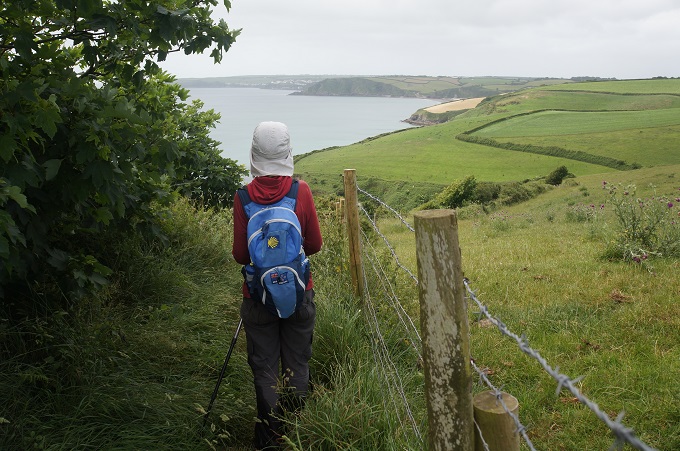
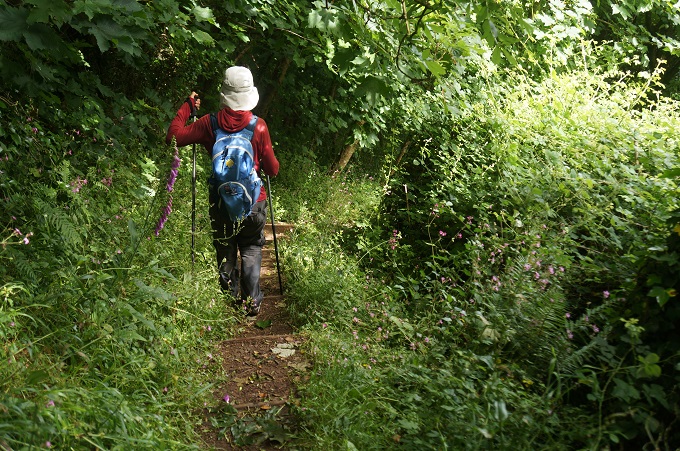
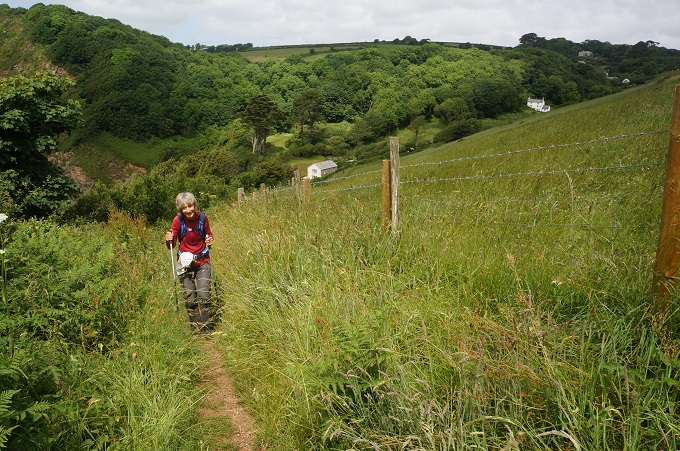
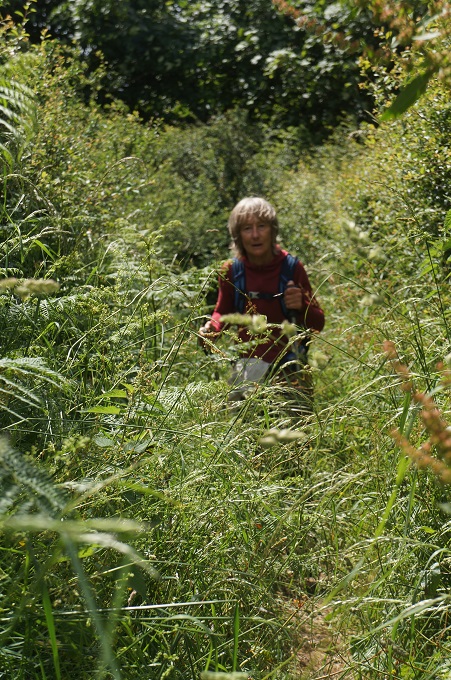
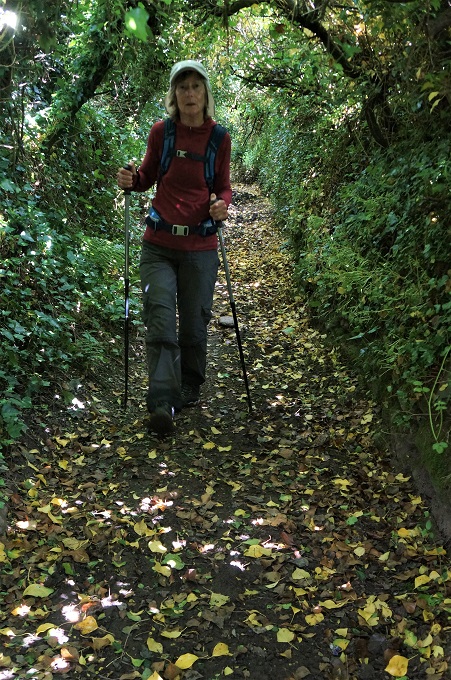
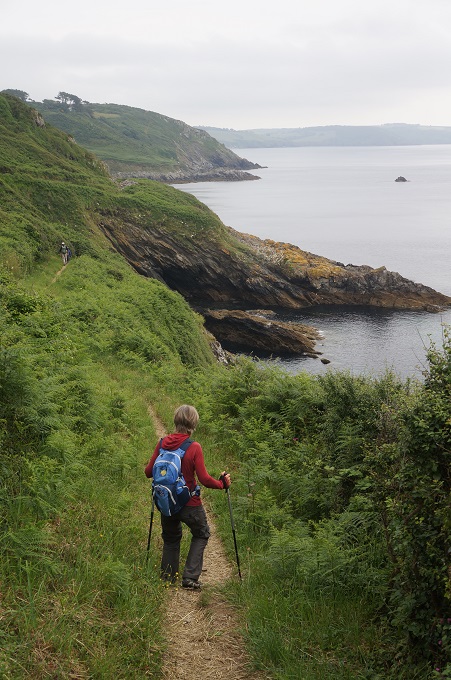
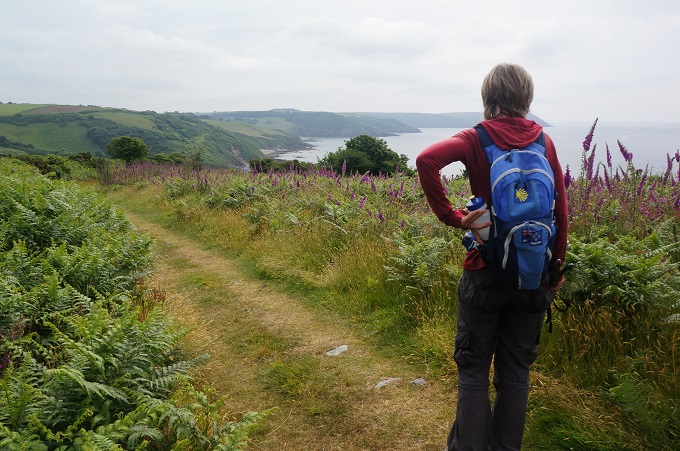
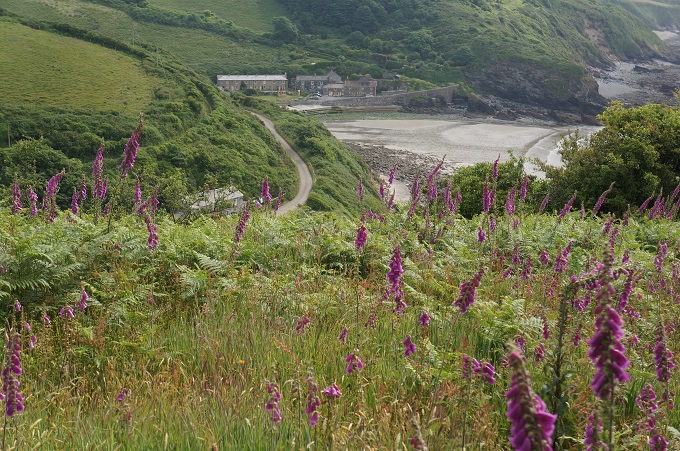
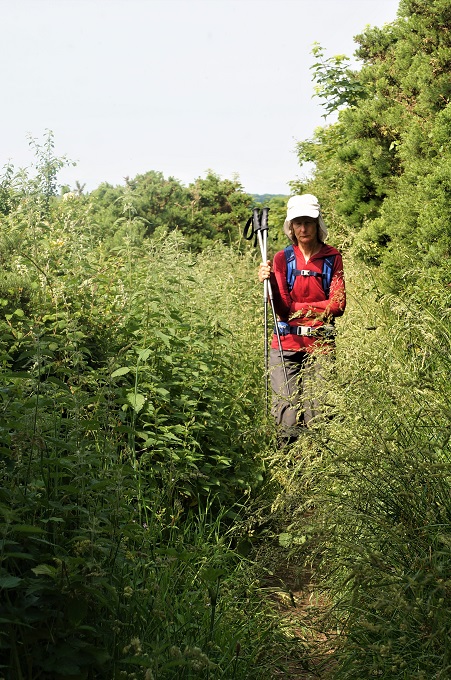
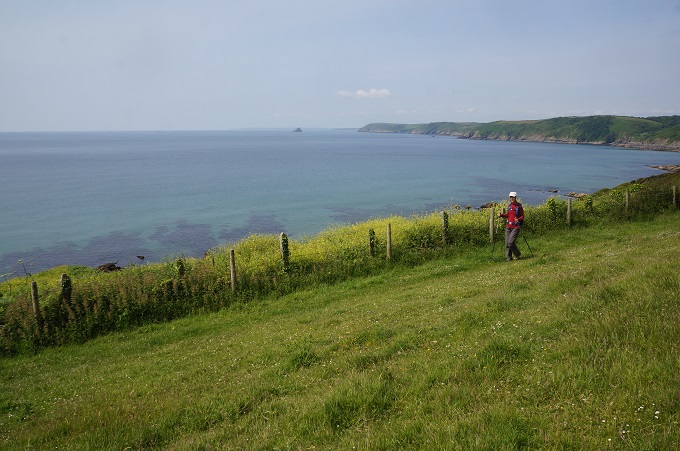
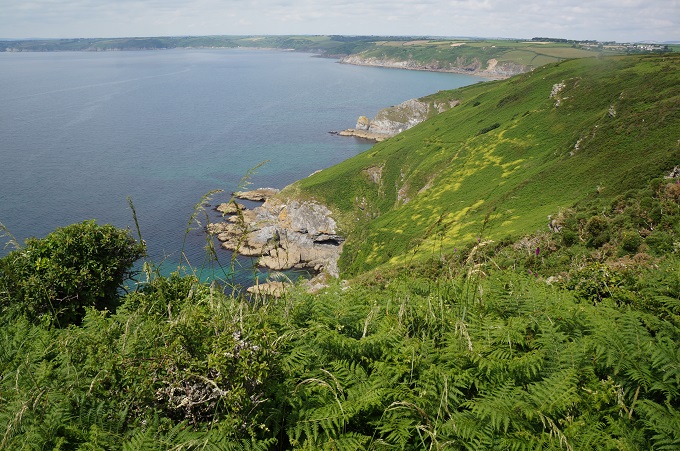
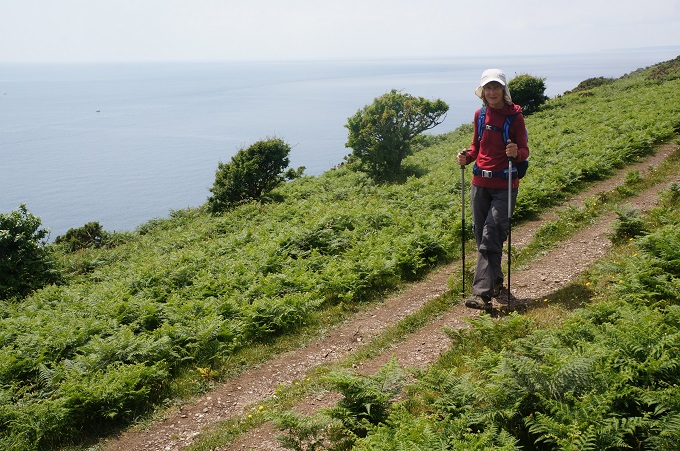
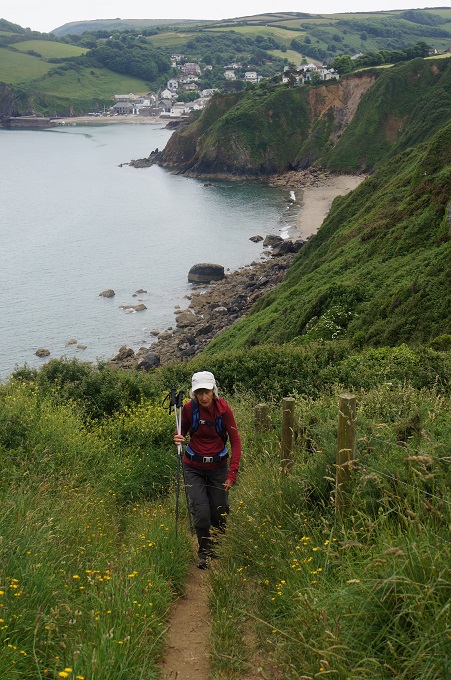
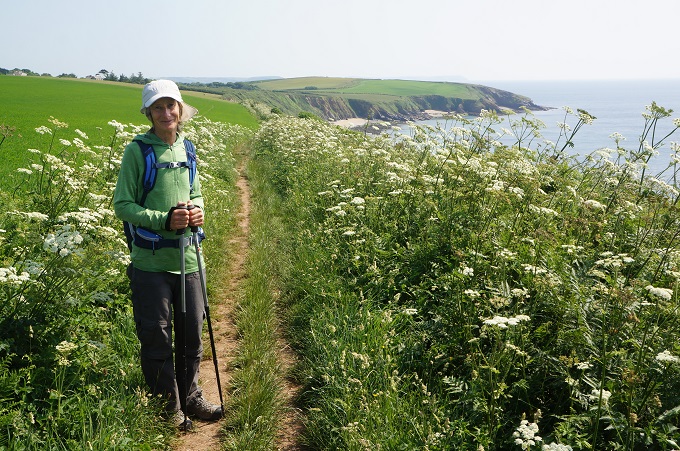
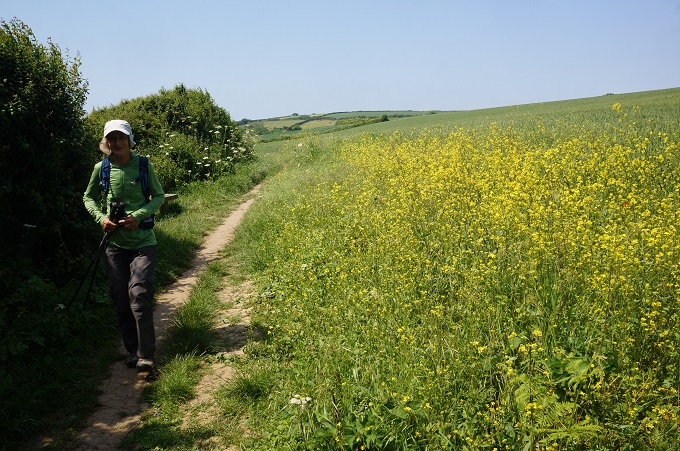
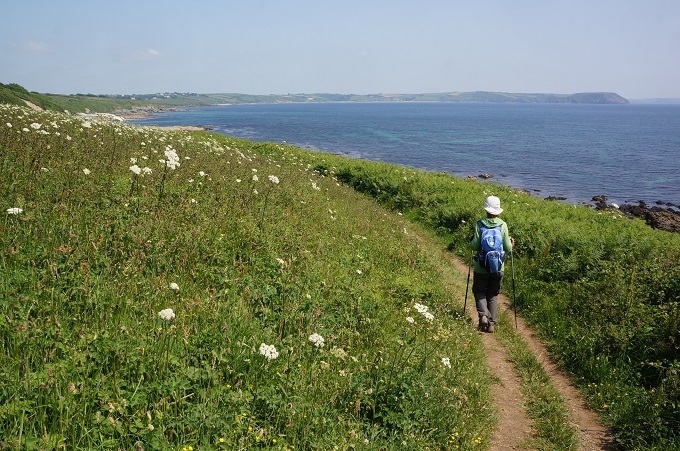
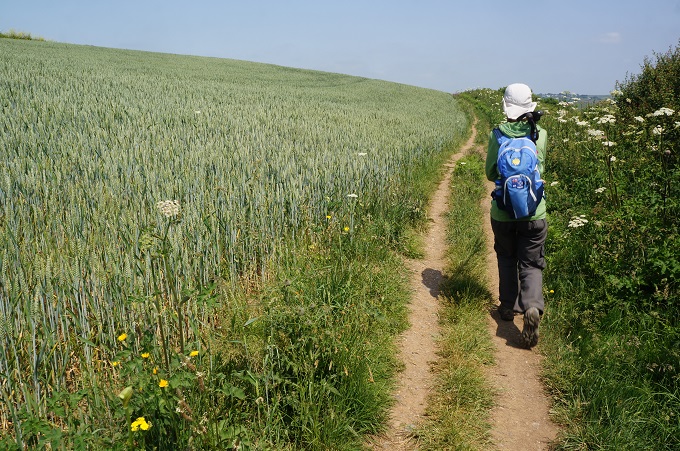
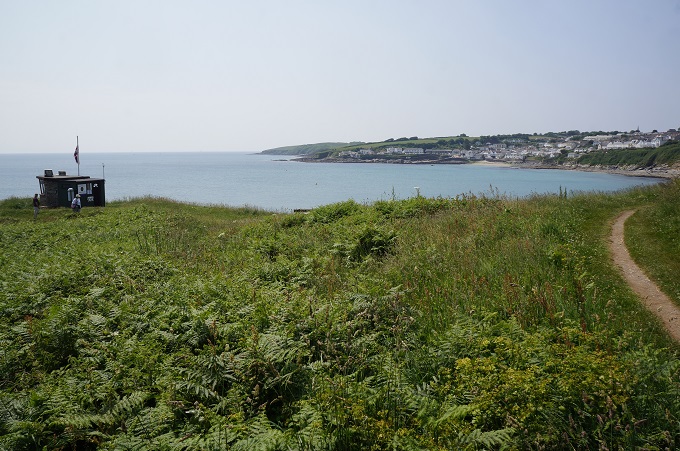
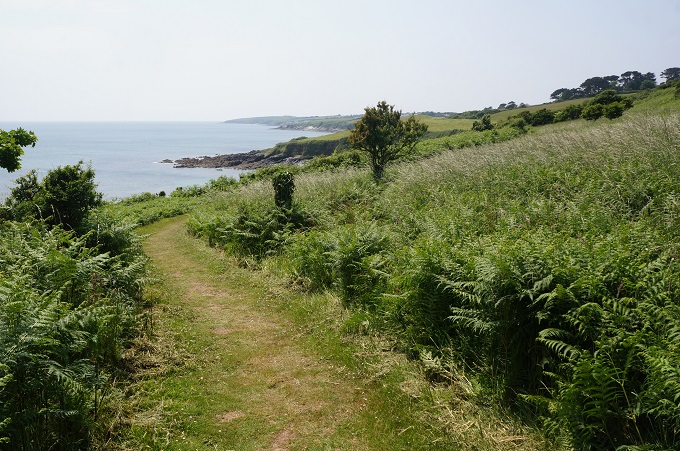
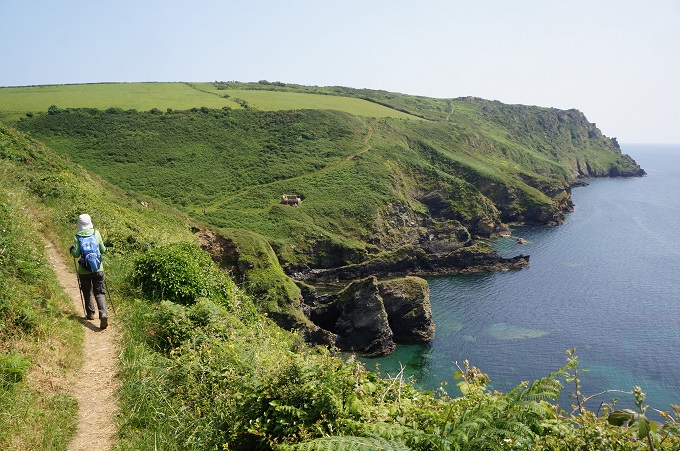
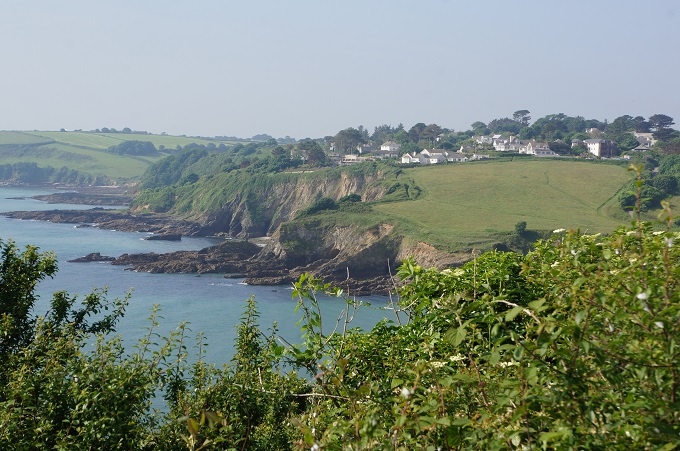
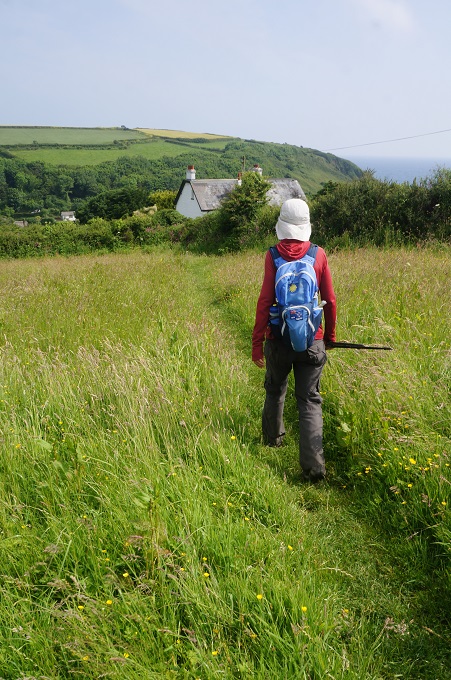
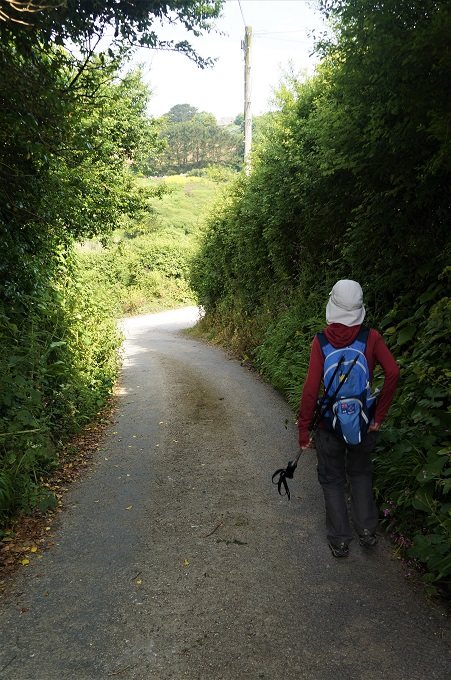
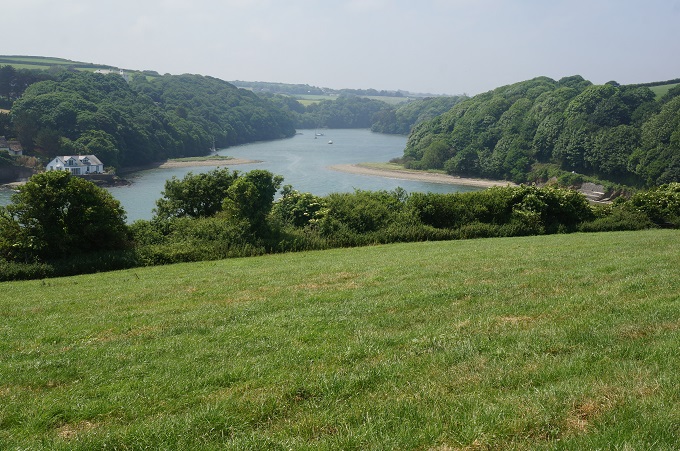
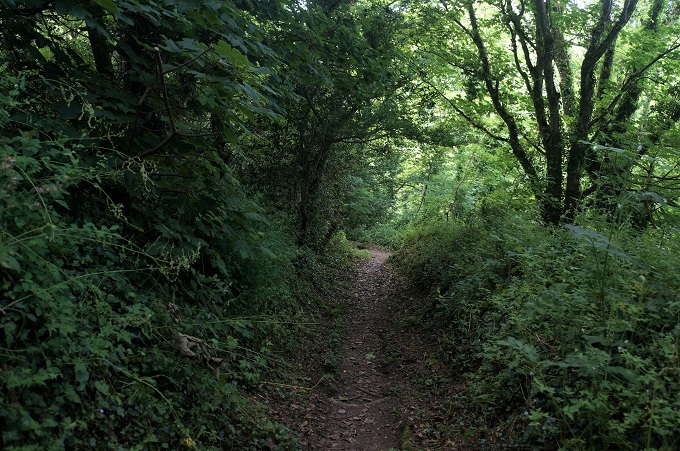
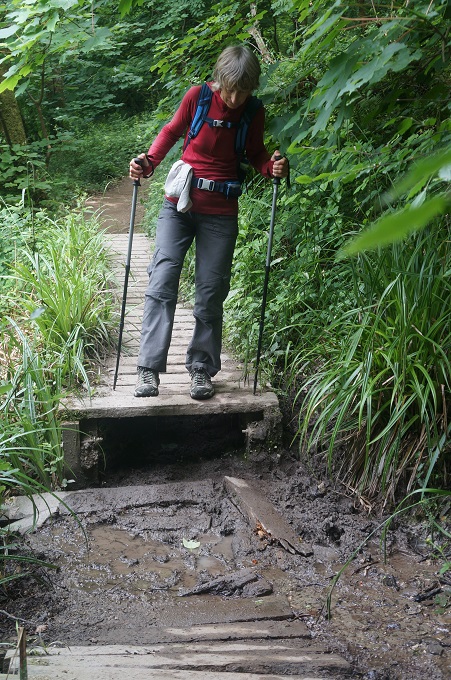
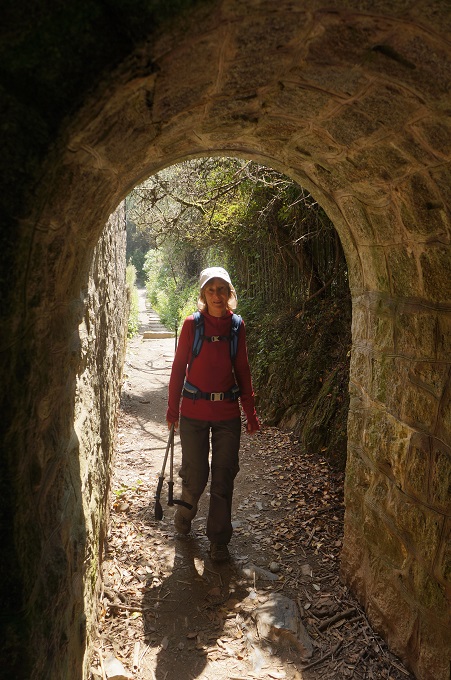
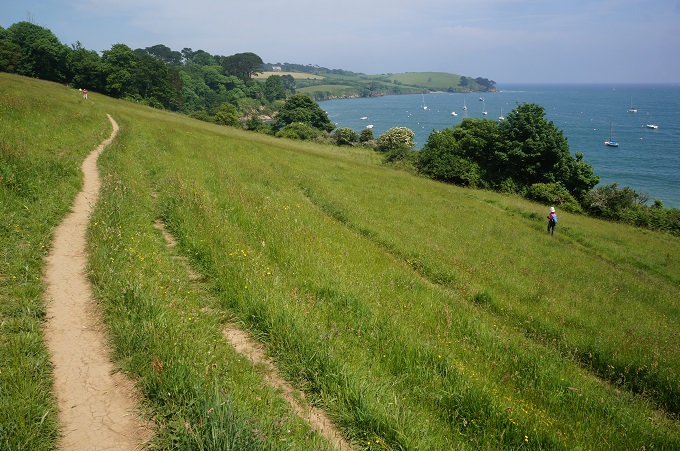
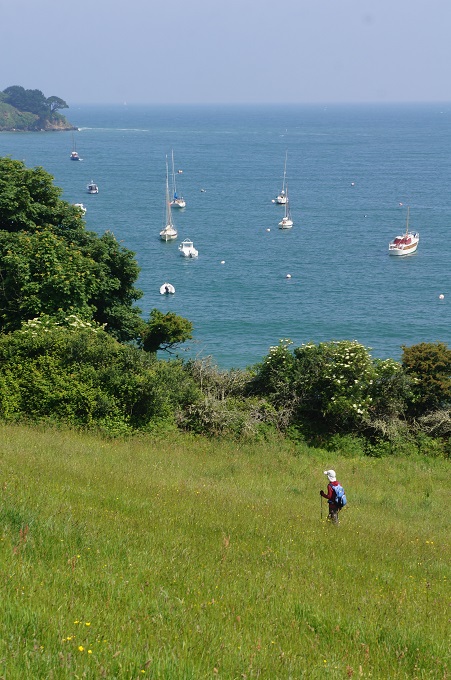
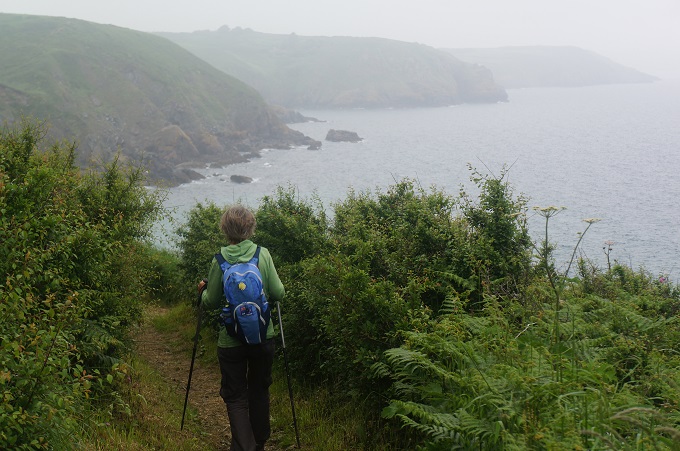
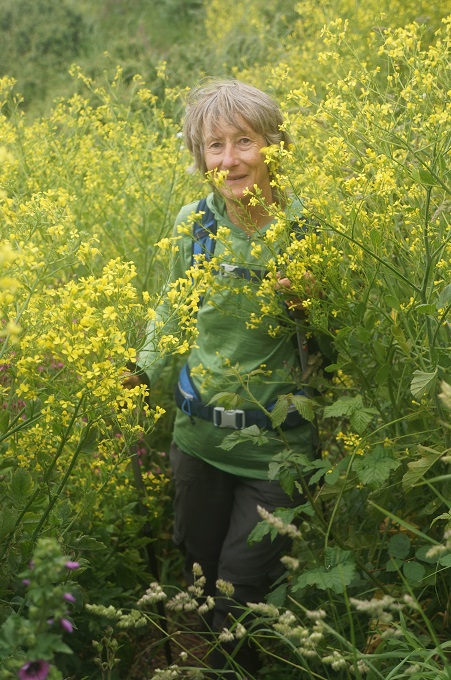
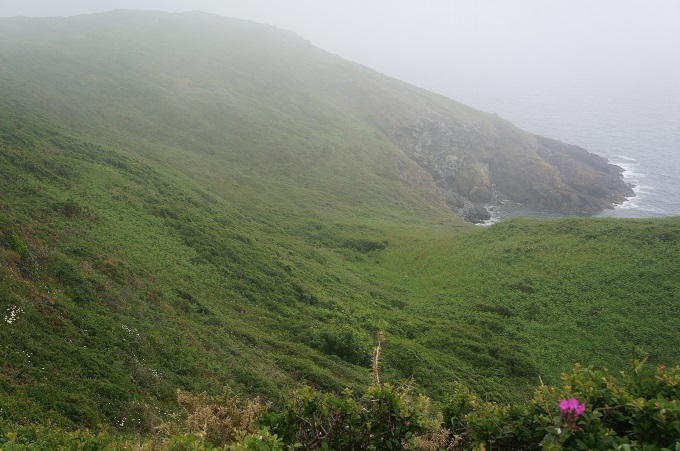
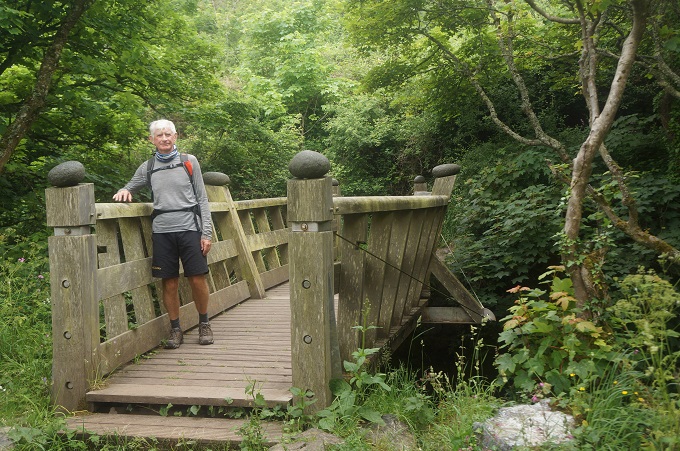
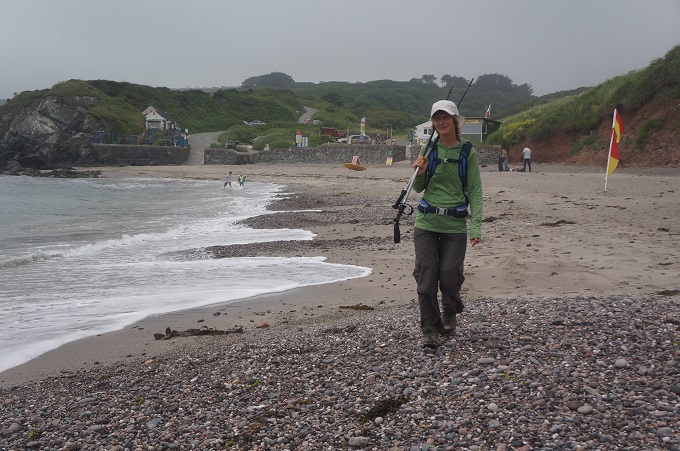
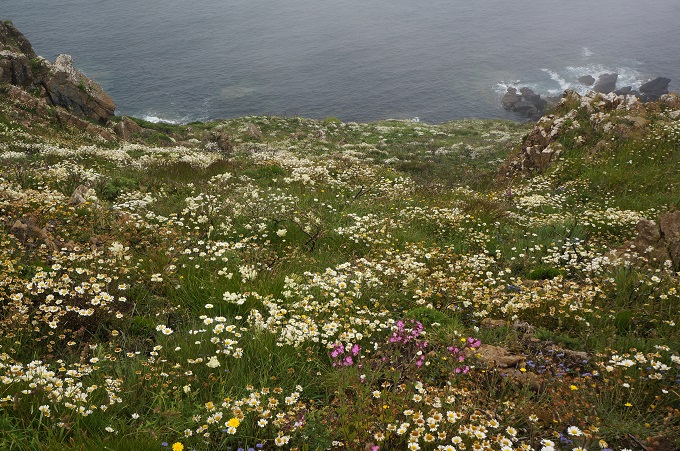
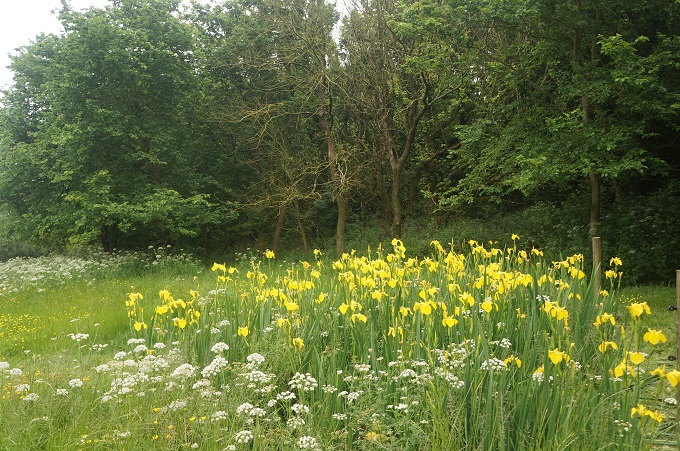
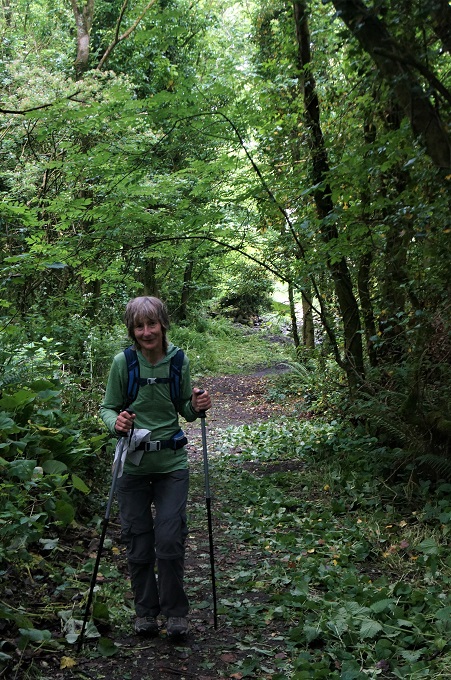
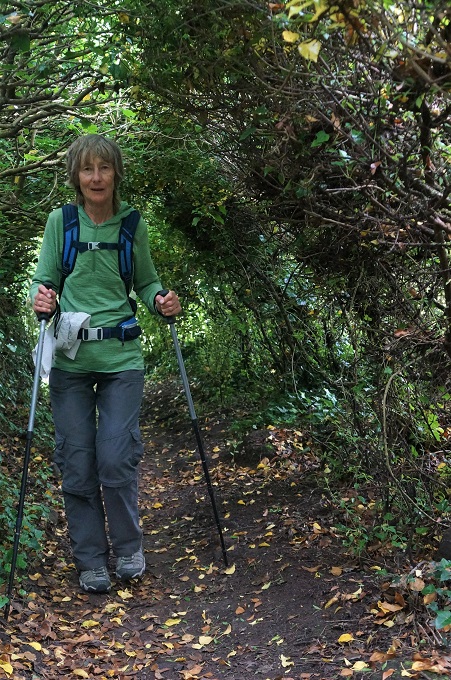
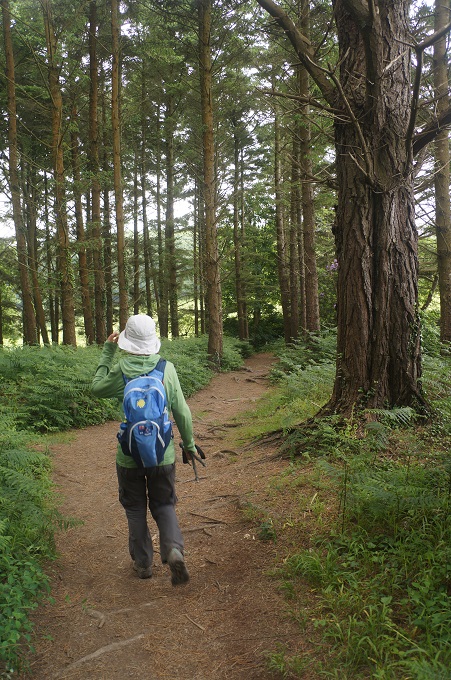
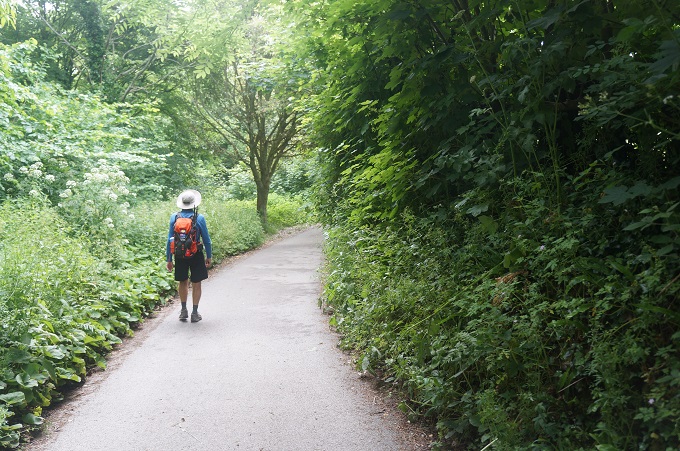
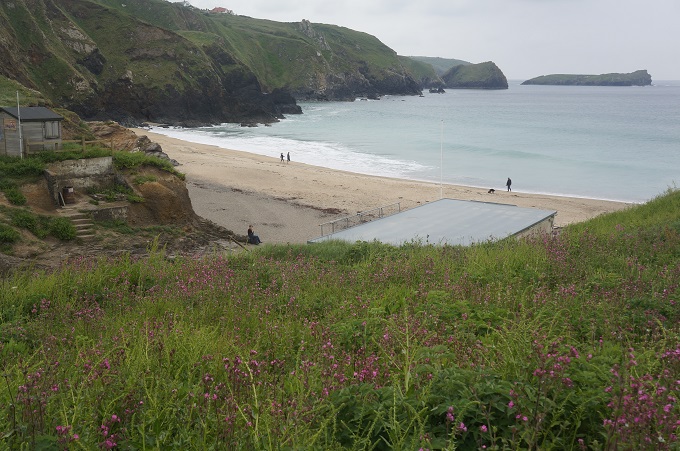
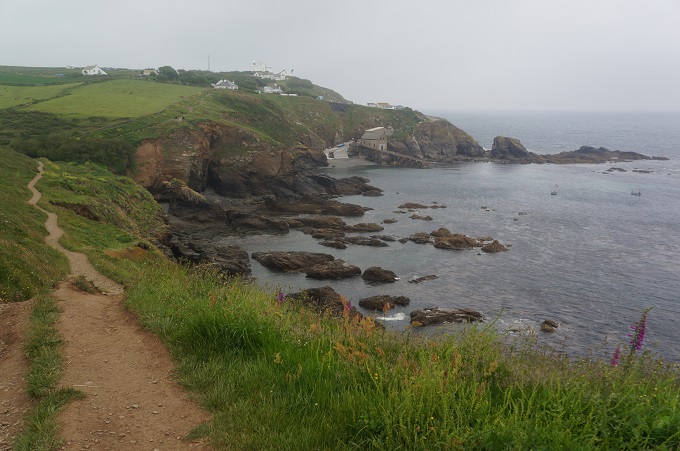
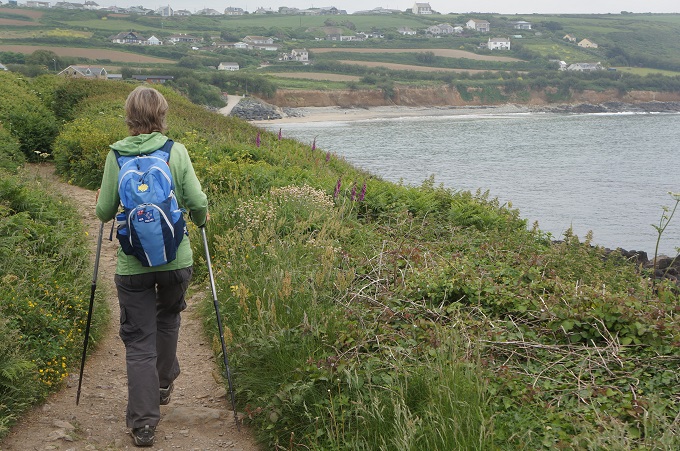
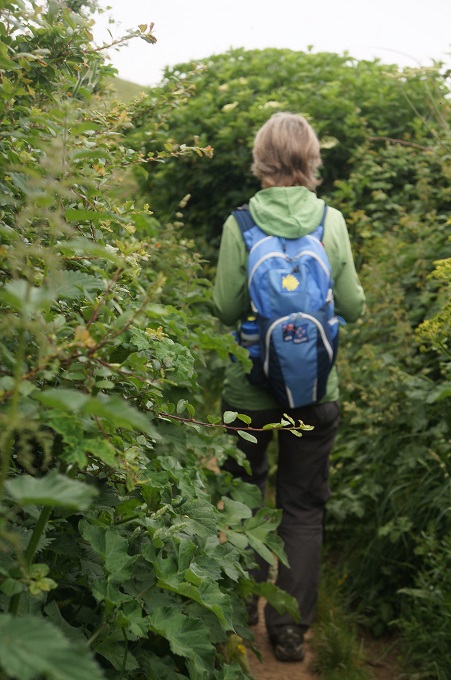
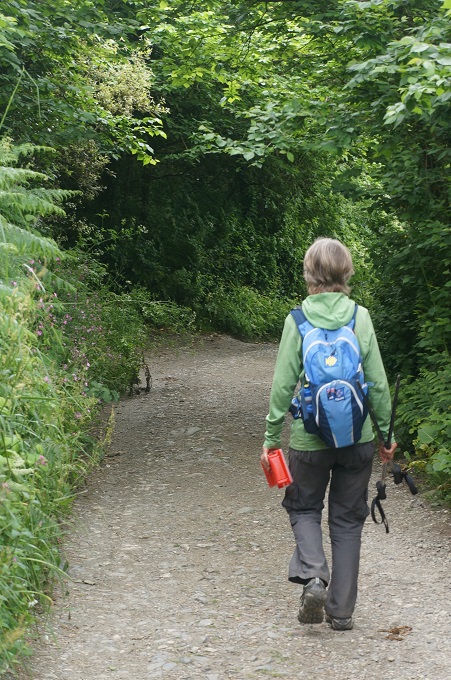
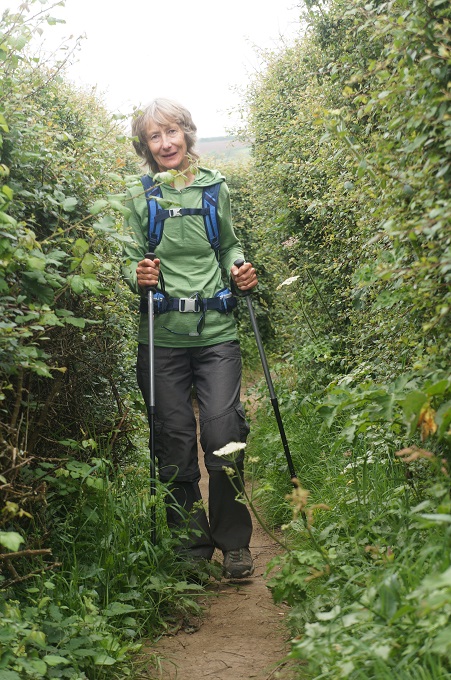
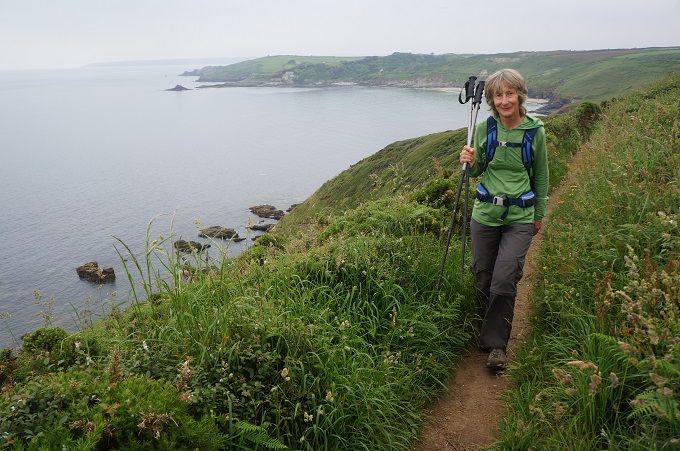
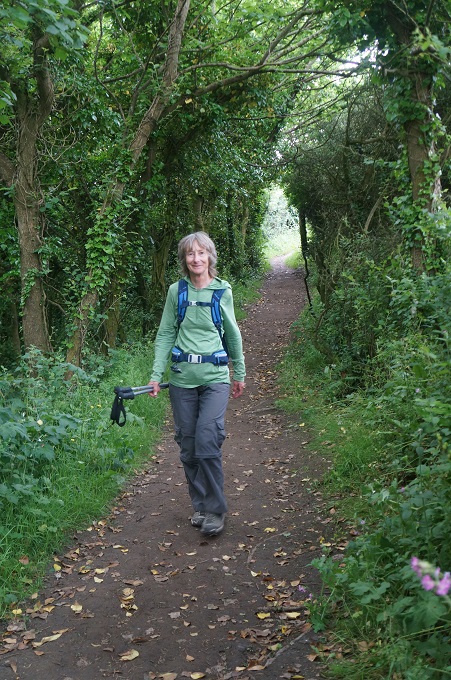
There was rain overnight and a shower just before breakfast but by the time we started it was all over and blue sky was on its way. It is very lush on the south Cornish coast and often the path is overgrown thigh high with bracken, thistles, nettles, ferns, grass, rape seed, wild flowers etc. The path is given a haircut by volunteers armed with petrol driven edge trimmers and most of it is very good for walking. The barber was overdue on today’s section and all the thigh high foliage was wet from the rain. It didn’t take long for us to have saturated shorts/trousers, socks and shoes, Squelch, squelch, squelch. We have been very lucky. Today is only the second day I can remember having wet feet.

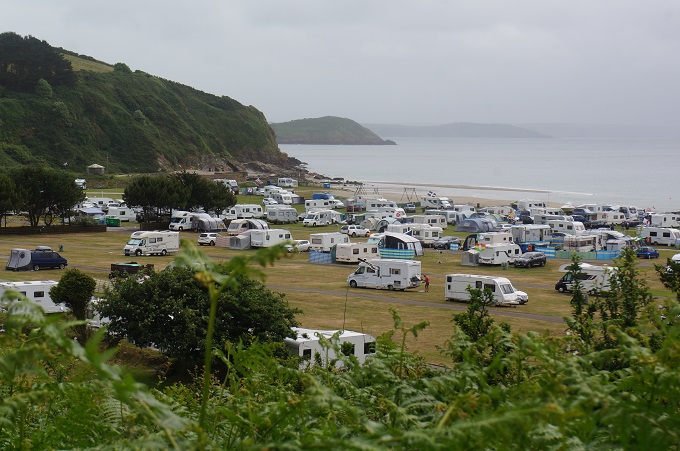
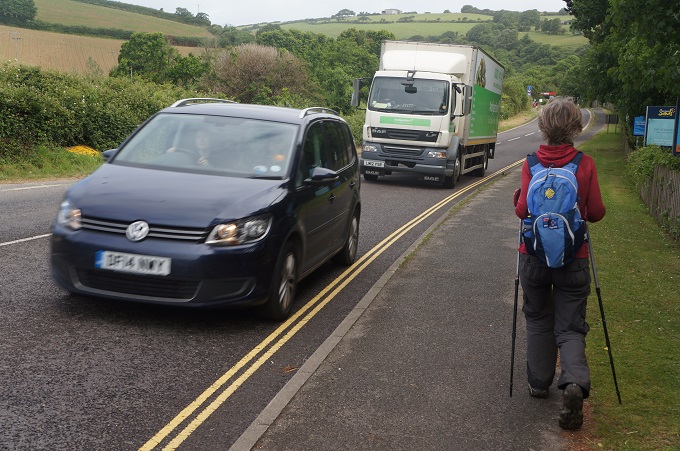
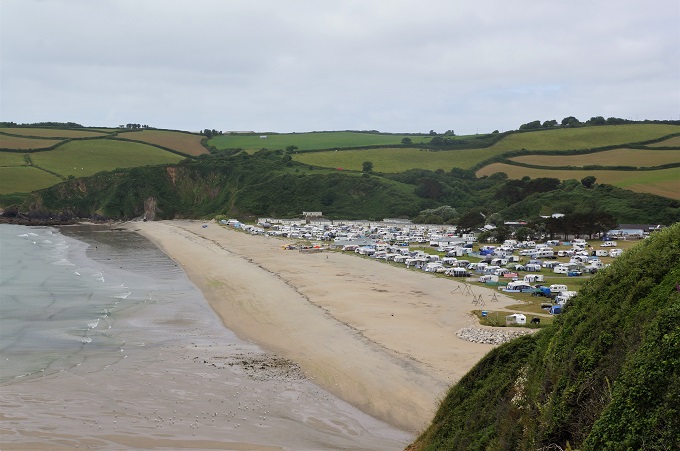
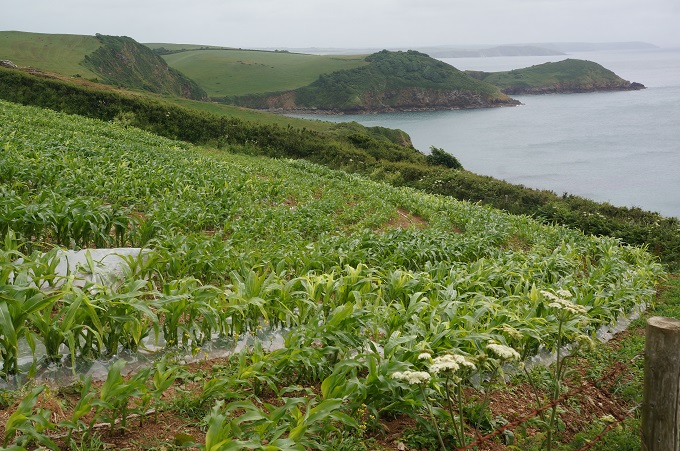
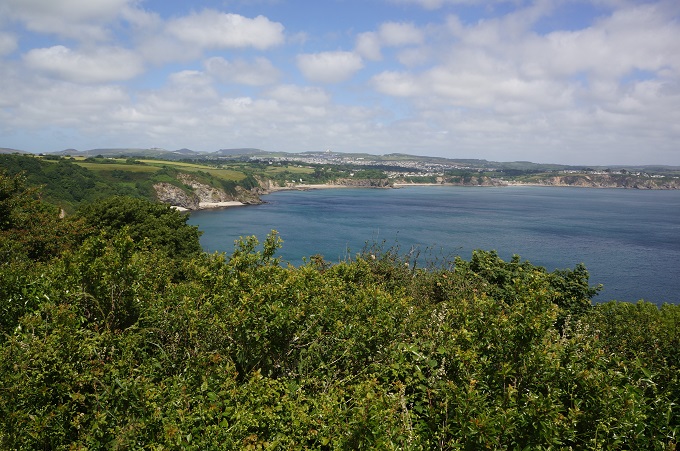
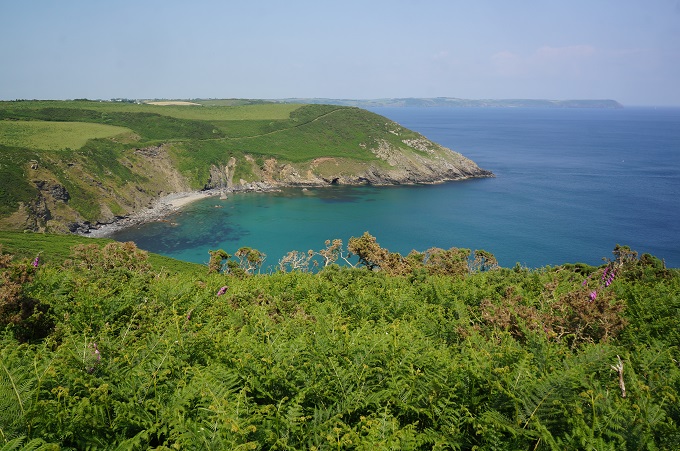
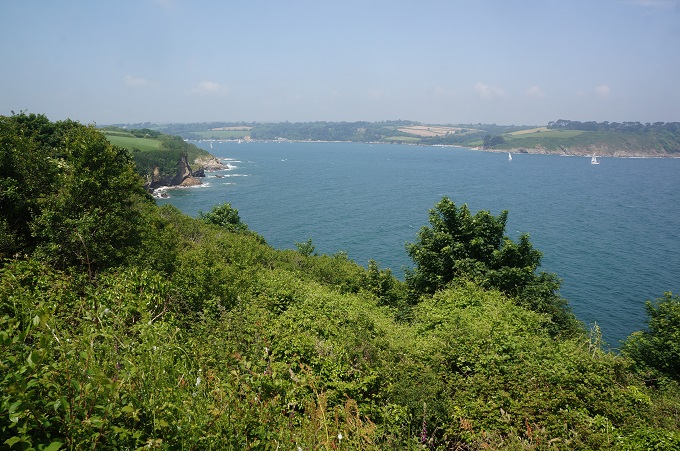
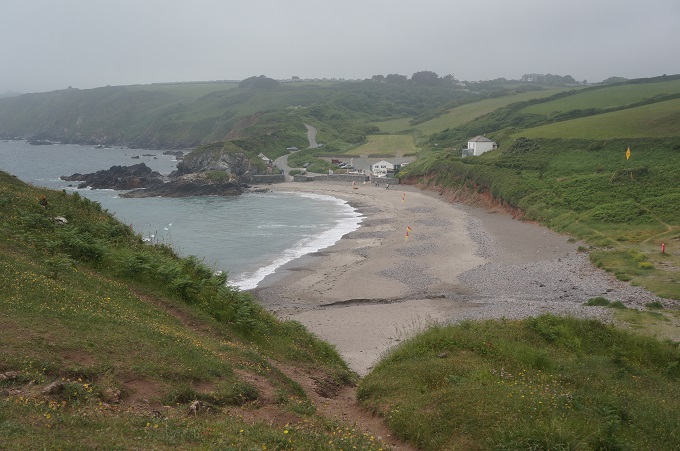
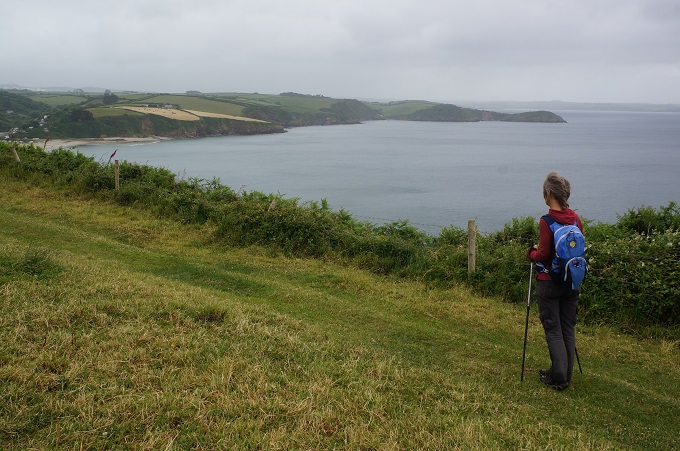
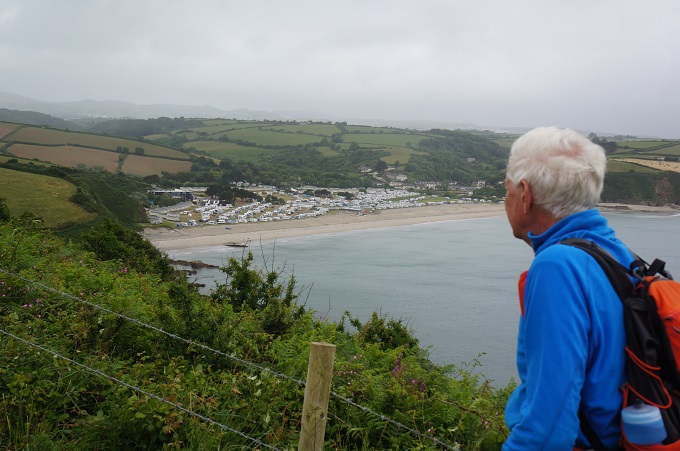
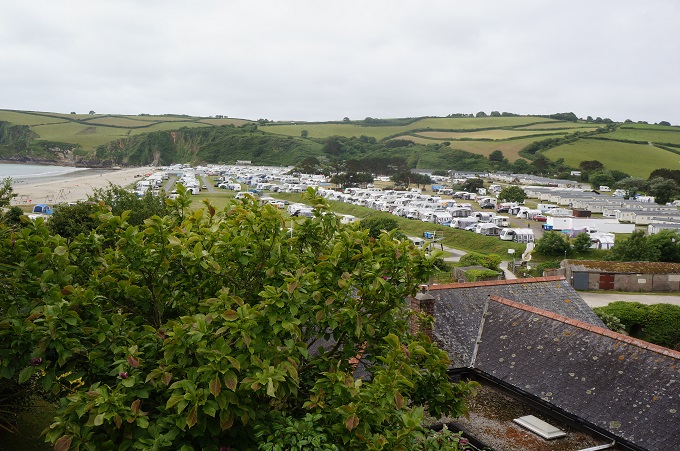
Mevagissey to Charlestown, although short, is considered one of the toughest on the south Cornish coast (ie from about The Lizard east) but we found it pretty comfortable going. After a few undulations the first obstacle was getting around a huge beachside holiday park, The Sands, at Pentewan. The beach is beautiful but it is owned by the park and so we had to walk inland on a busy road to get around it. Only rarely on the whole South West Coast path have we had to walk alongside a busy road and we had become blasé to the pleasure it is to walk completely isolated from the noise and smell of traffic. Pentewan is a small and unassuming hamlet squashed hard by the coast and the caravan park.

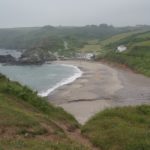
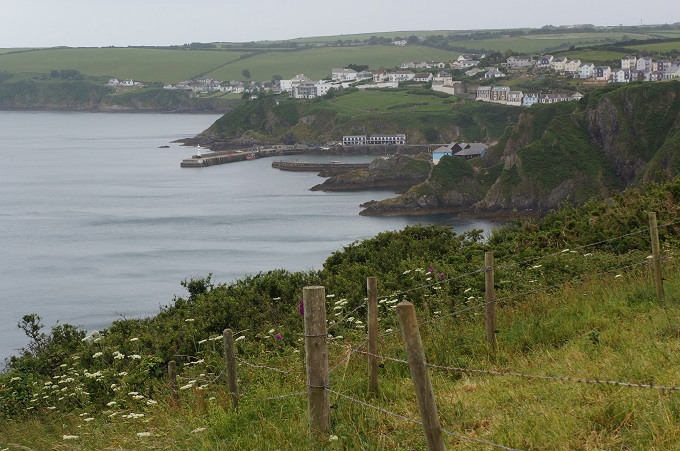
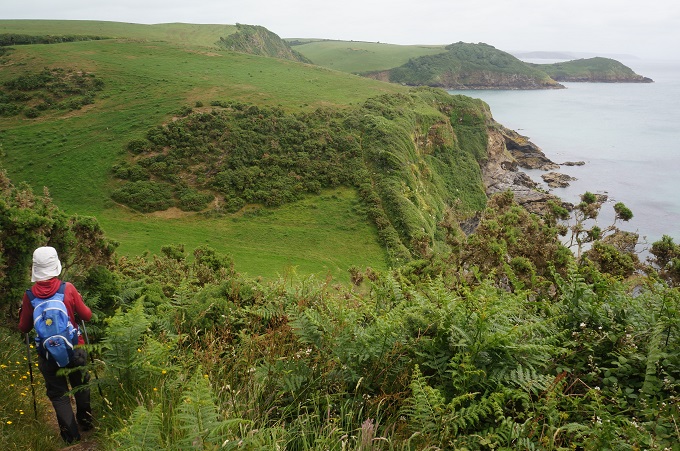
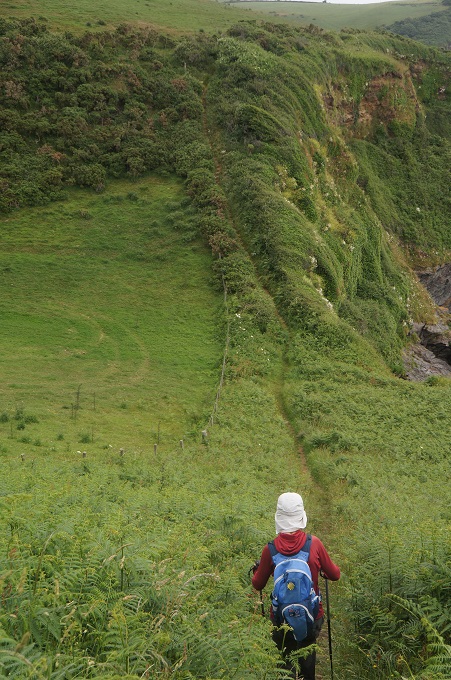
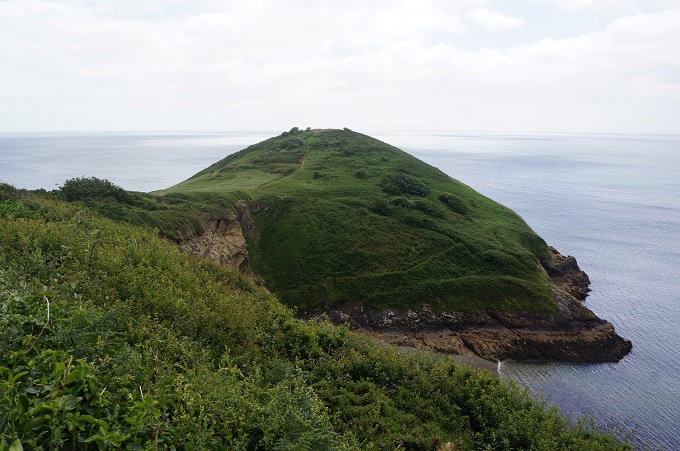
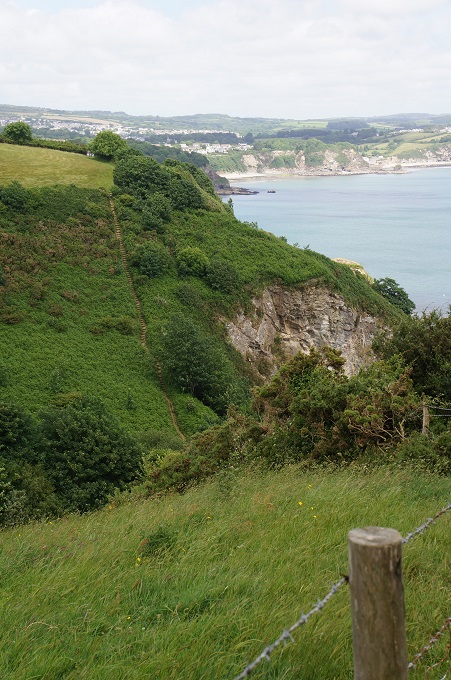
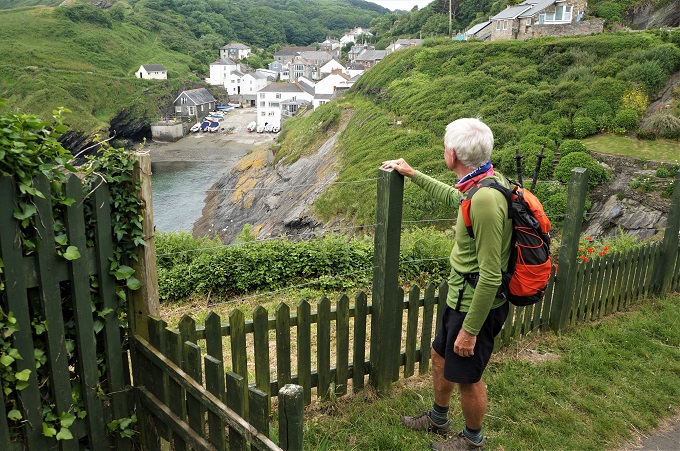
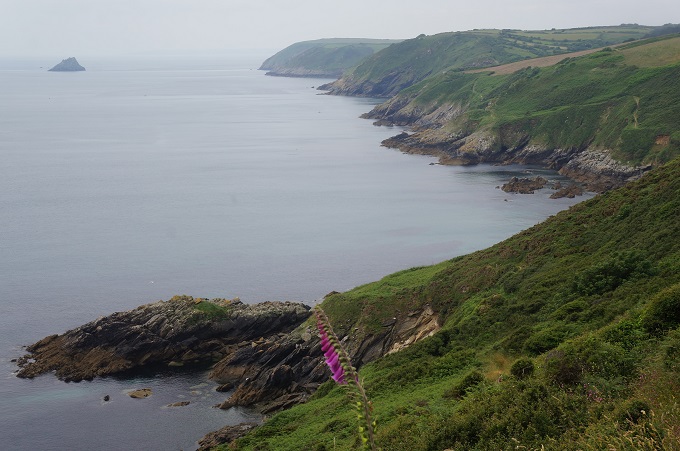
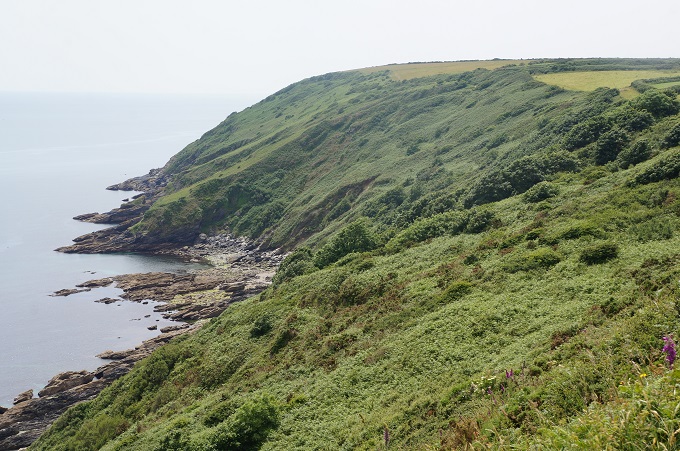
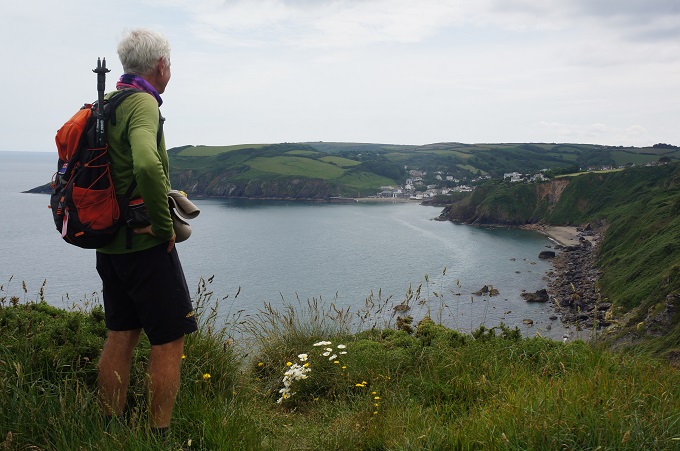
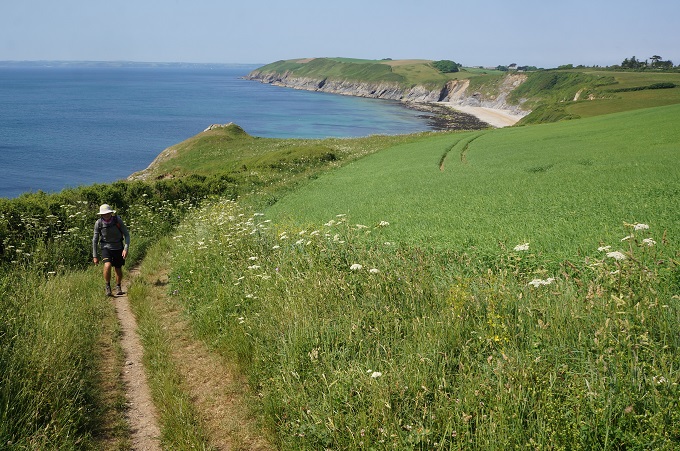
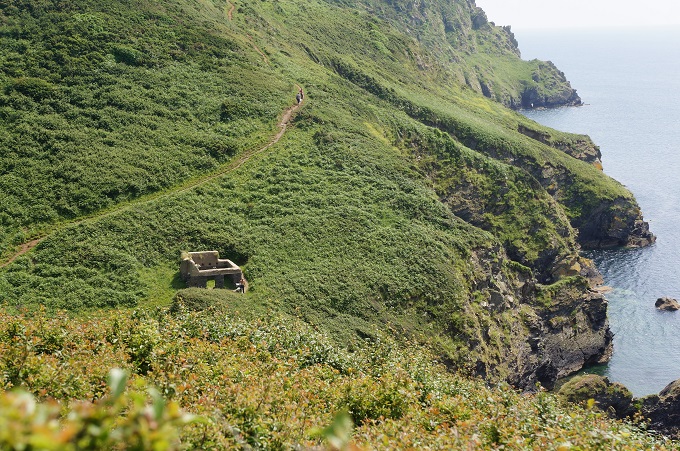
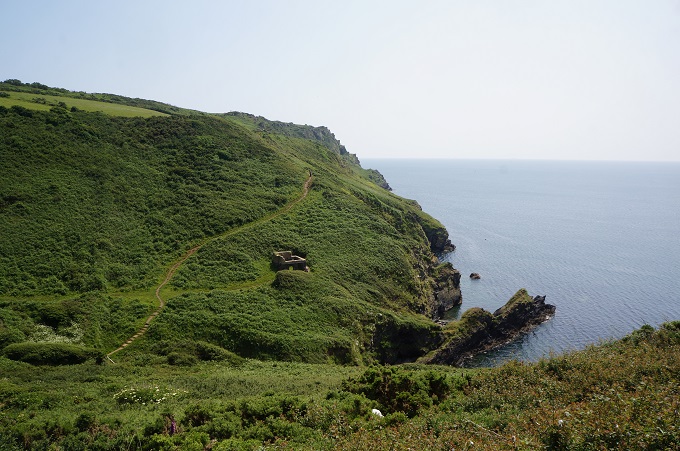
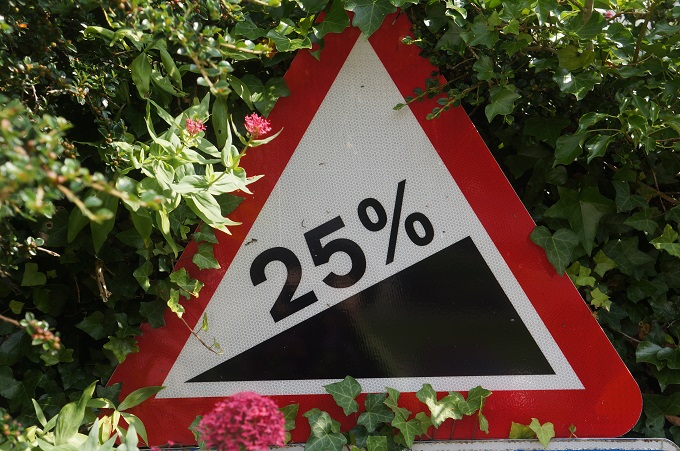
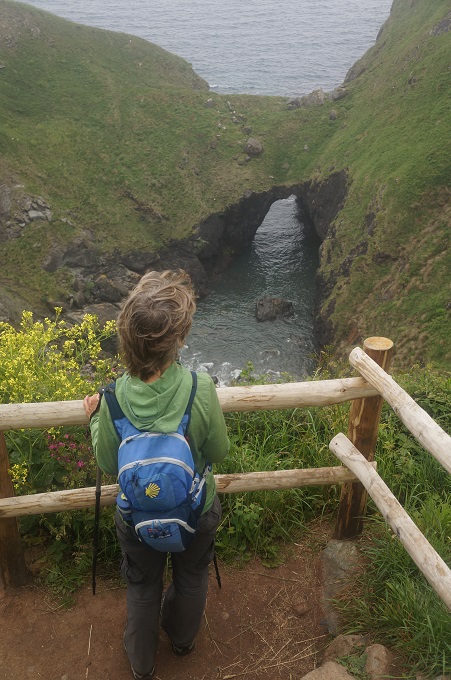
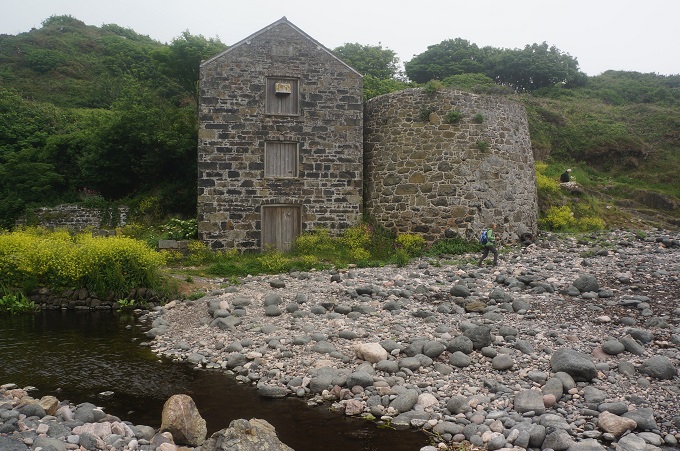
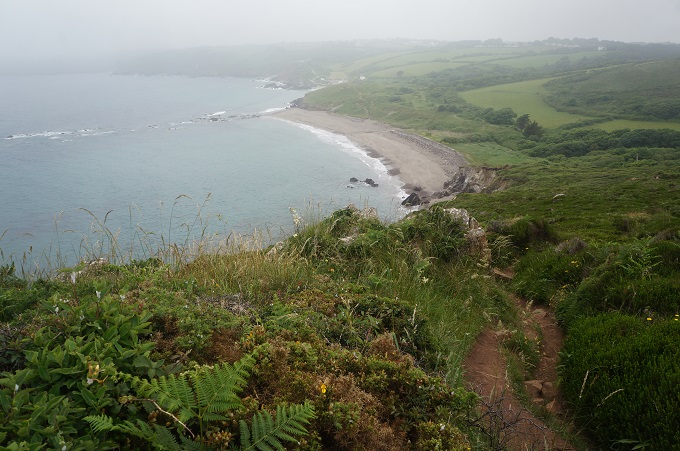
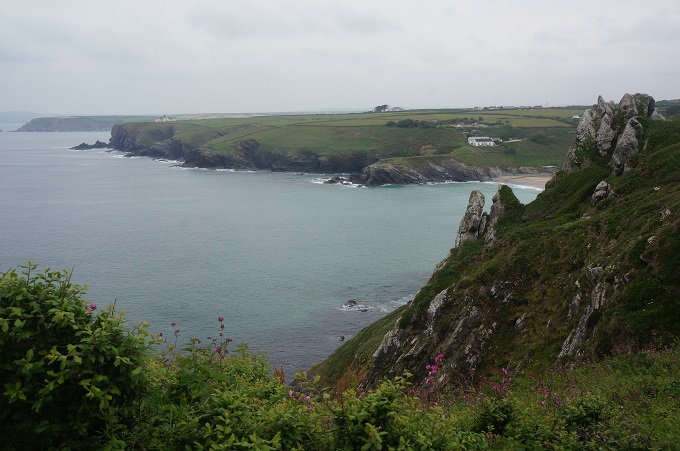
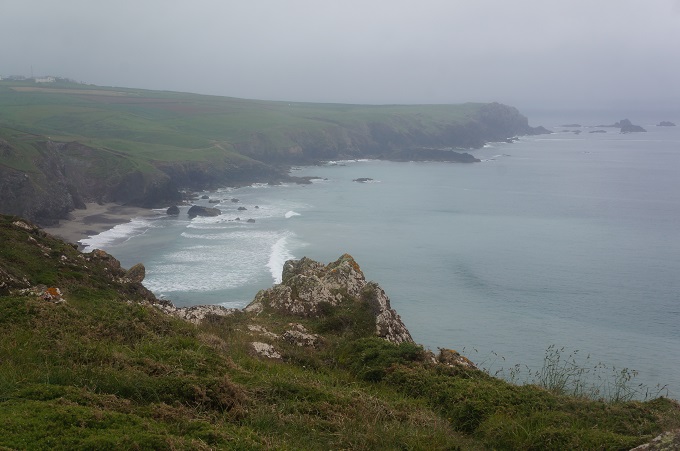
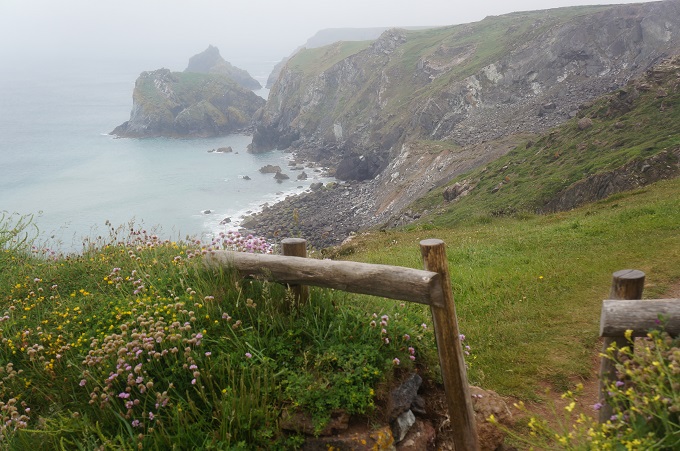
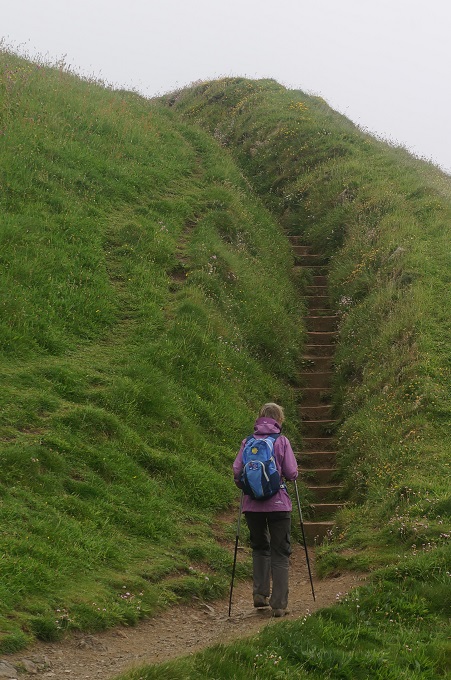
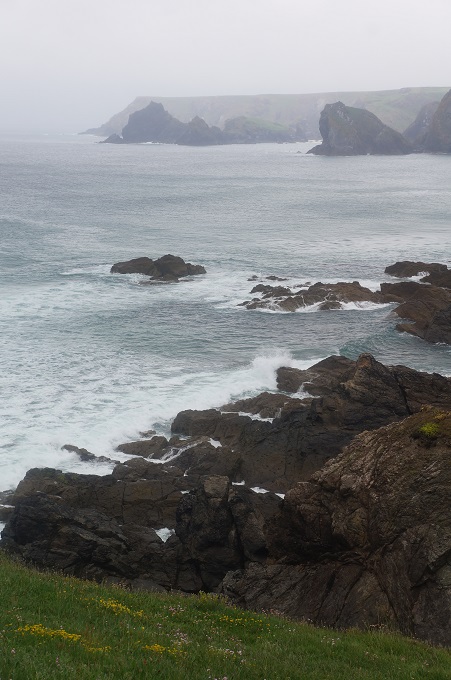
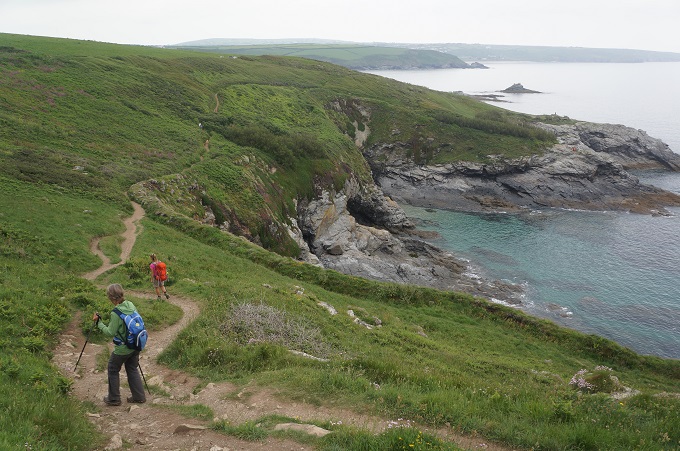
From Pentewan the path did get decidedly more dramatic with a series of sharp ascents and descents leading to Black Head. Whoever set out the route seems to have taken a perverse pleasure in seeking out gradients to climb rather than easier crossings of cliff top fields. Black head is the location of another iron age hill fort and is probably one of the easiest to imagine as being a fort. Another few ups and downs including two with 90 very high steps and we were entering Charlestown.

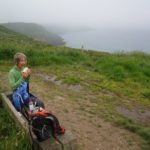
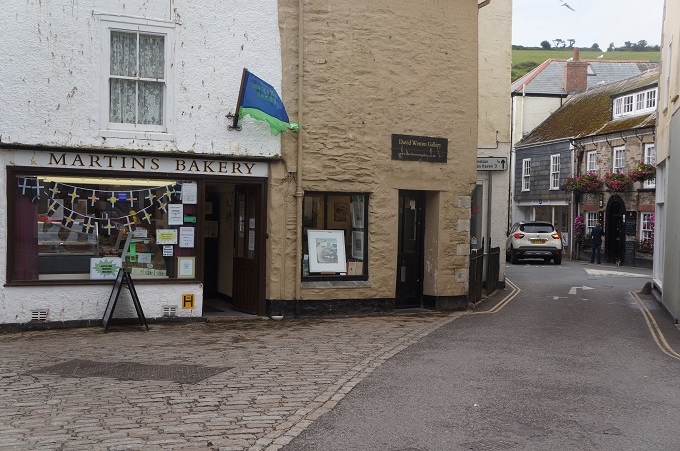
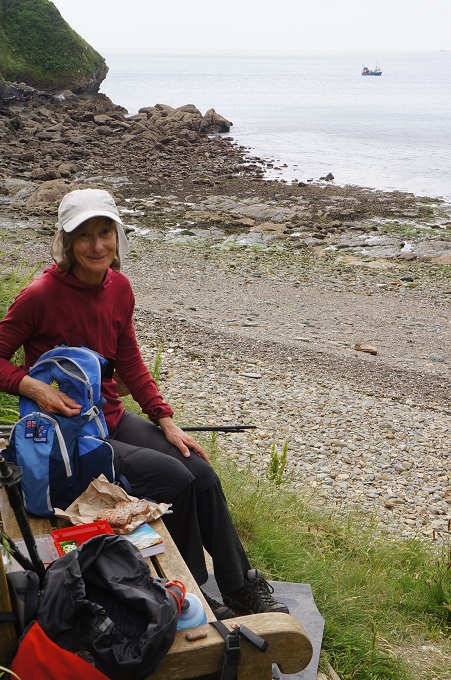
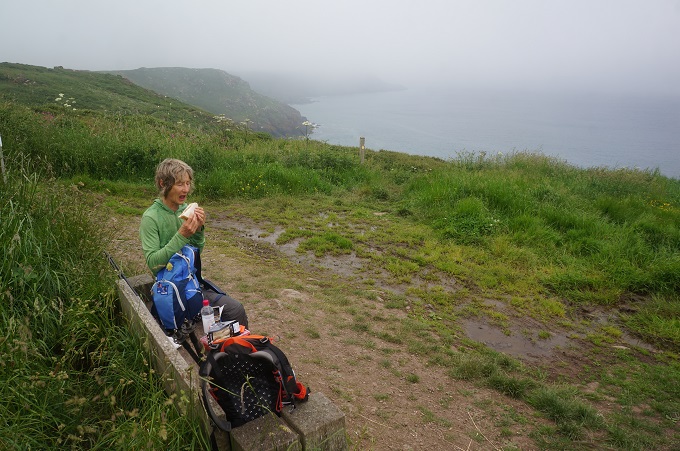
On our way out of Mevagissey this morning we stopped at Martins Bakery (no apostrophe?) and bought two pieces of bread pudding. This is not to be confused with bread and butter pudding which is an almost soufflé-like dessert. Bread pudding is more like a dense, soft cake or slice and can be picked up by hand. Bread and butter pudding is soft and custardy. They both have basically the same ingredients: stale bread, spices, sultanas, milk, egg, sugar and other fruit, sherry, brandy etc as you like. You can’t eat too much bread pudding – it is pure stodge – a great comfort food. We had to eat our two slices in two sittings about 2 hours walking apart.

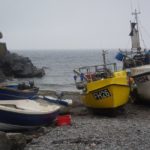
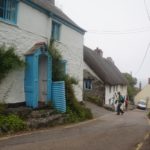
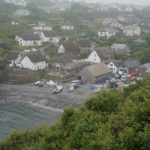
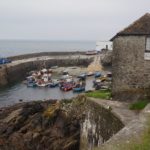
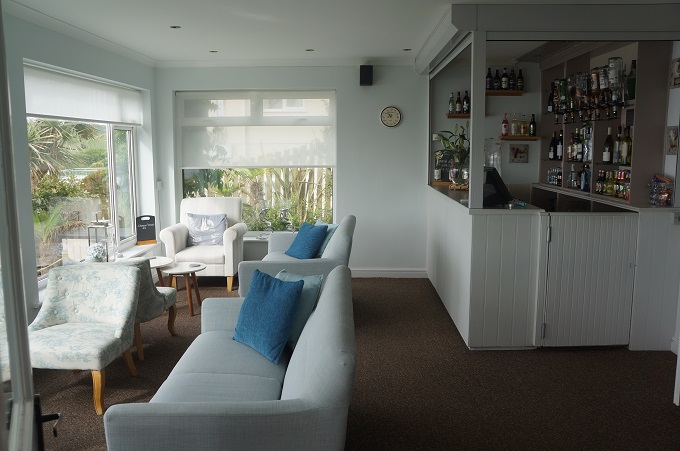
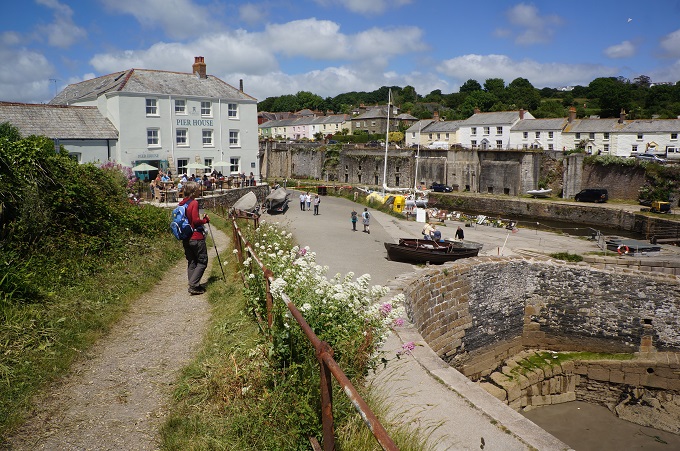
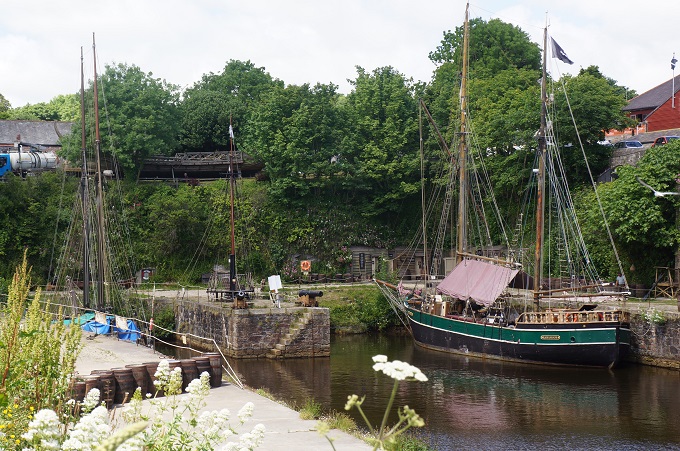
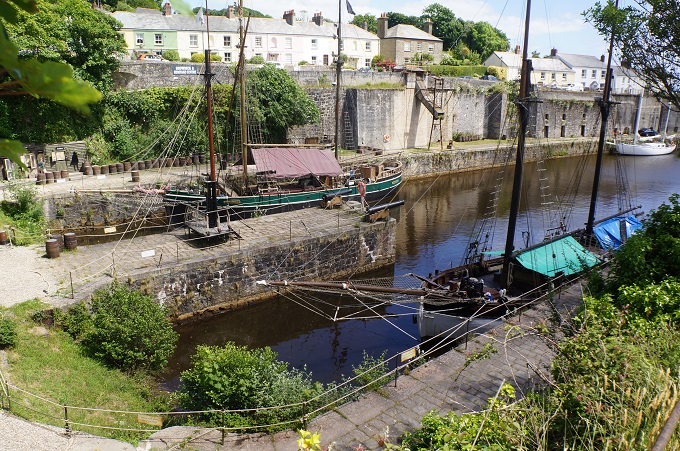
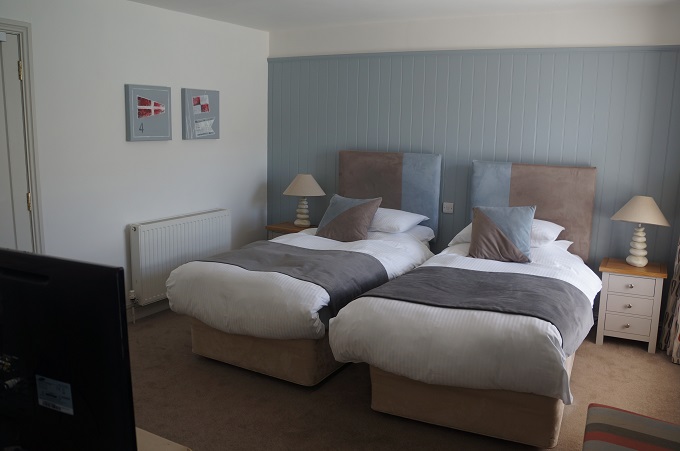
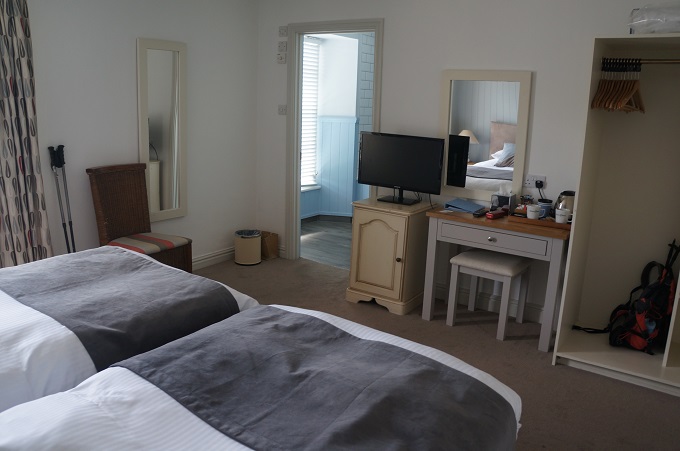
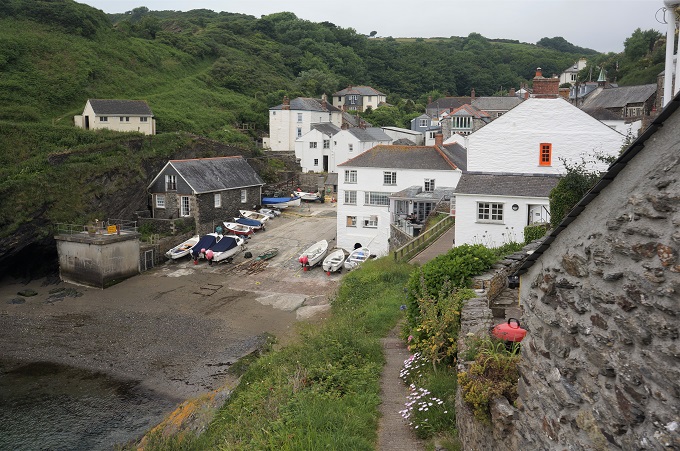
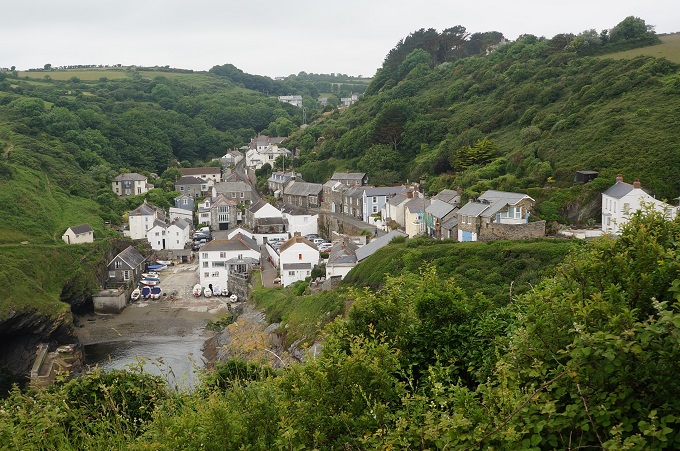
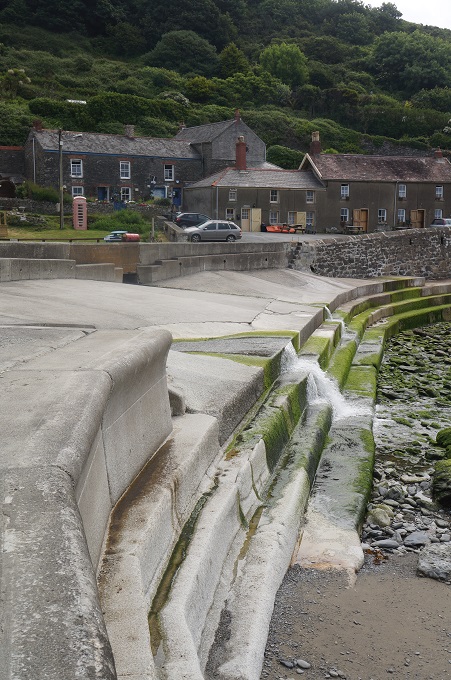
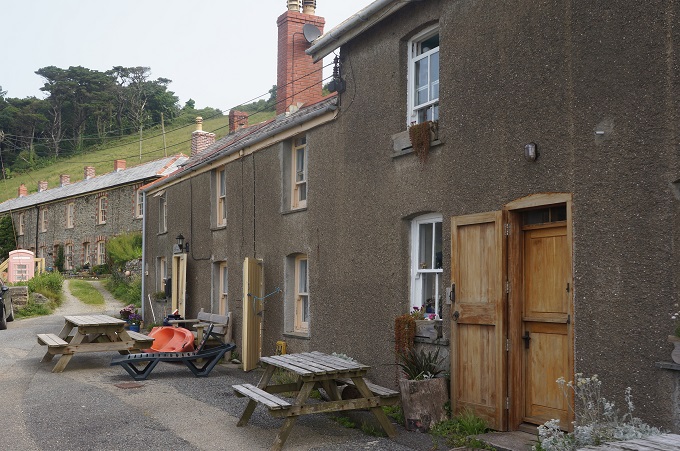
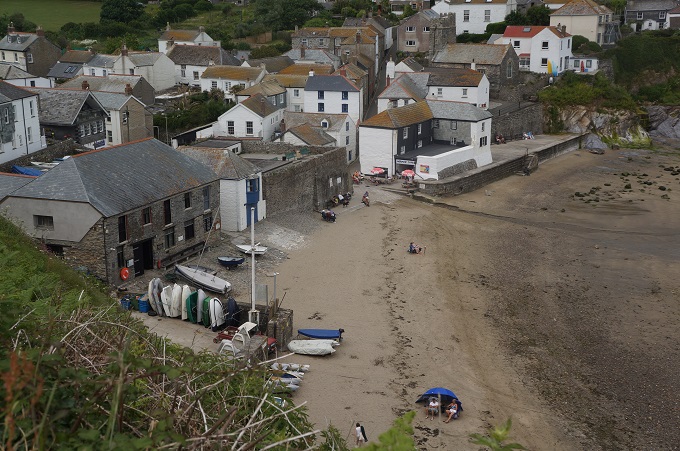
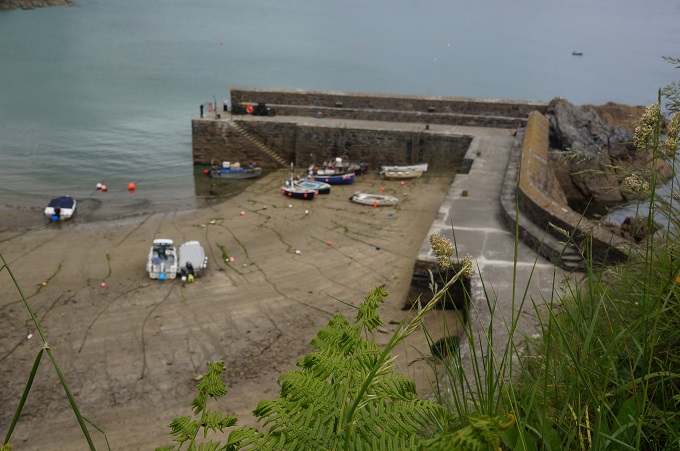
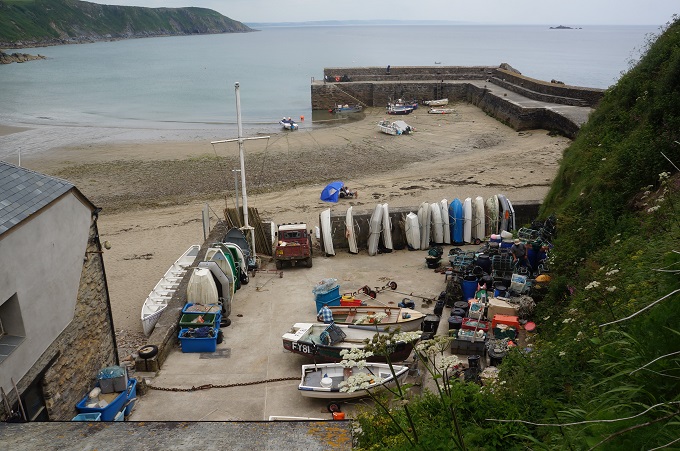
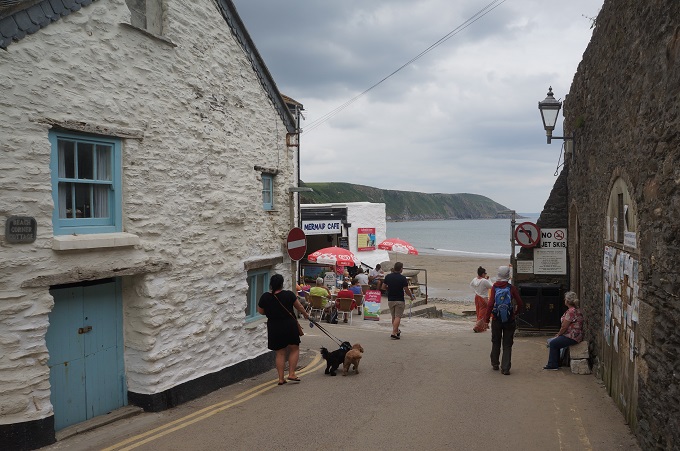
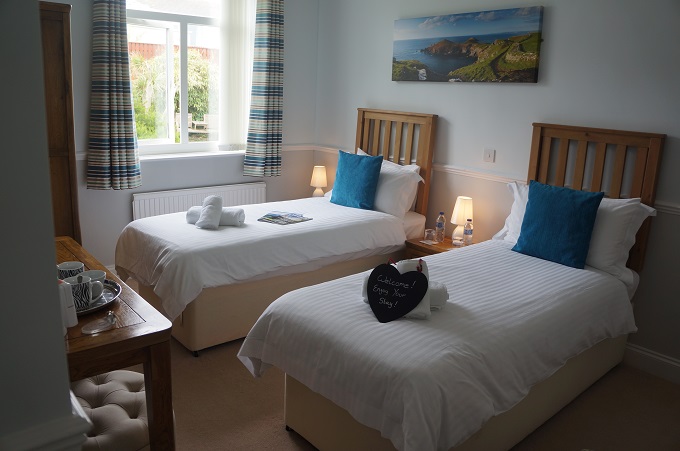
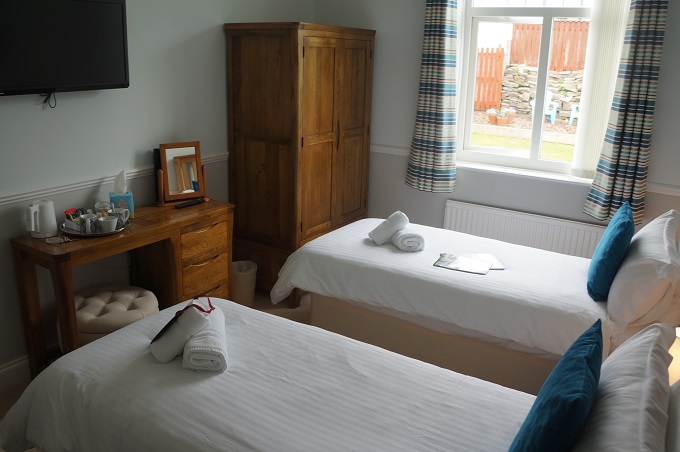
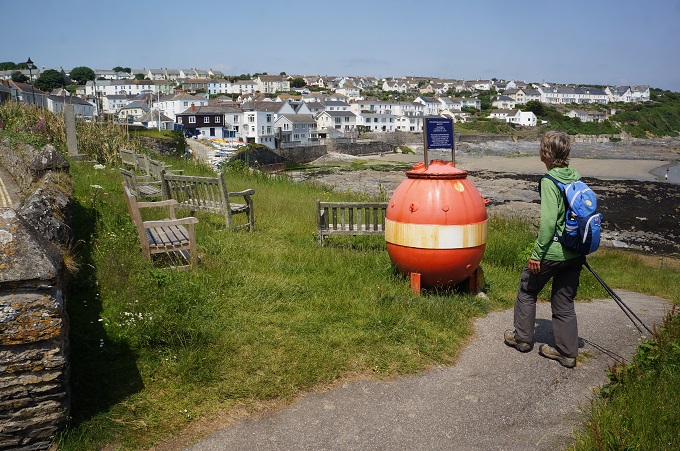
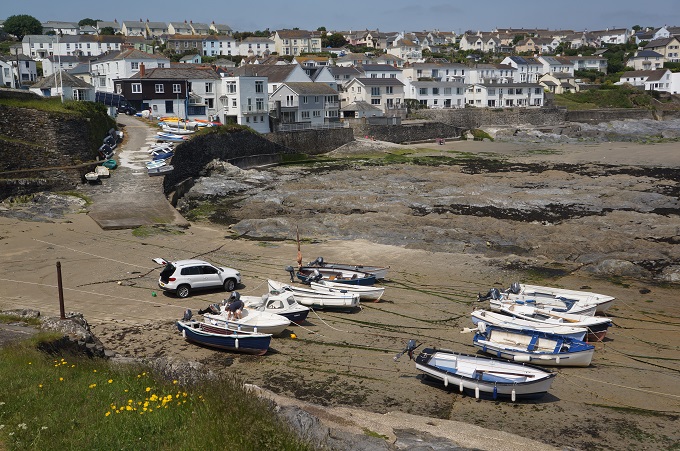
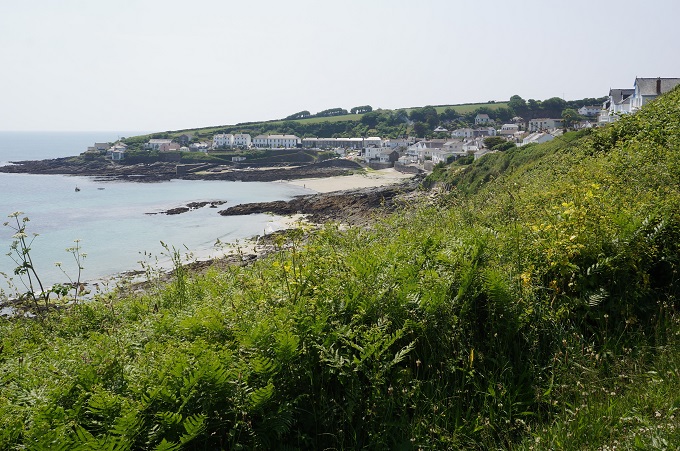
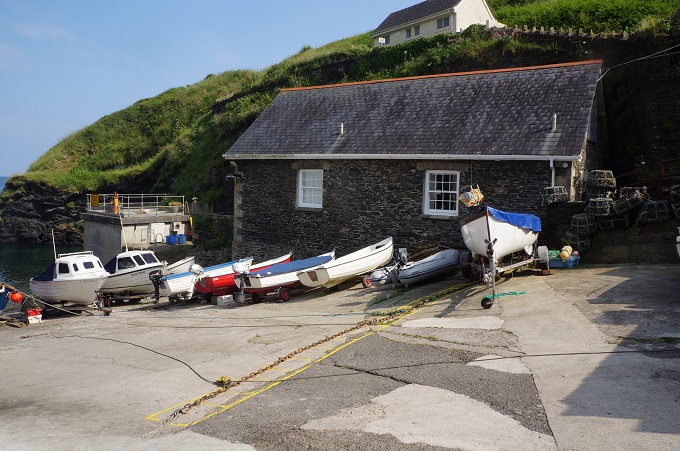
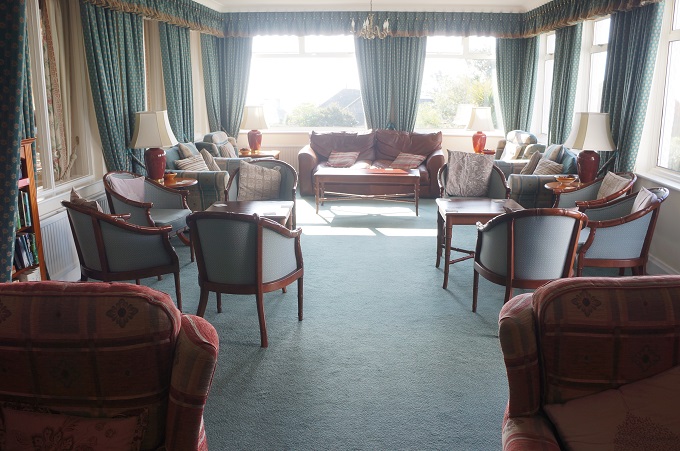
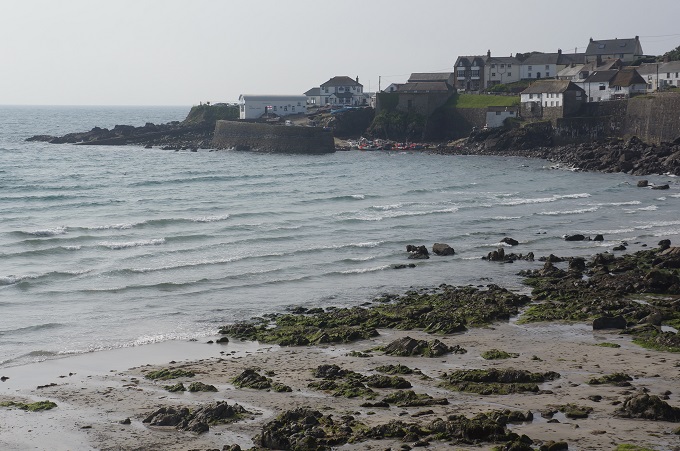
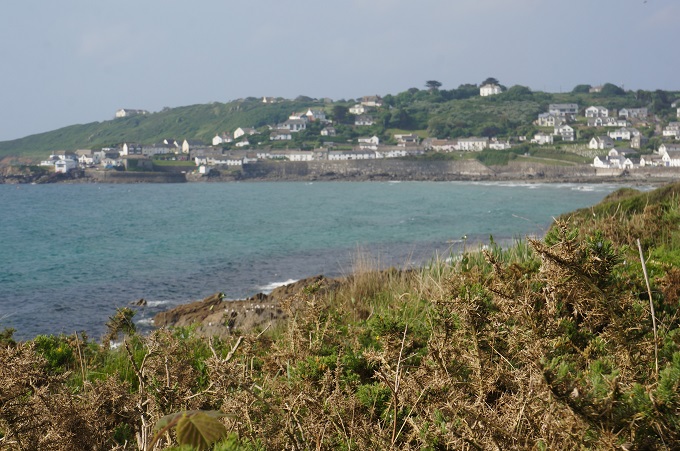
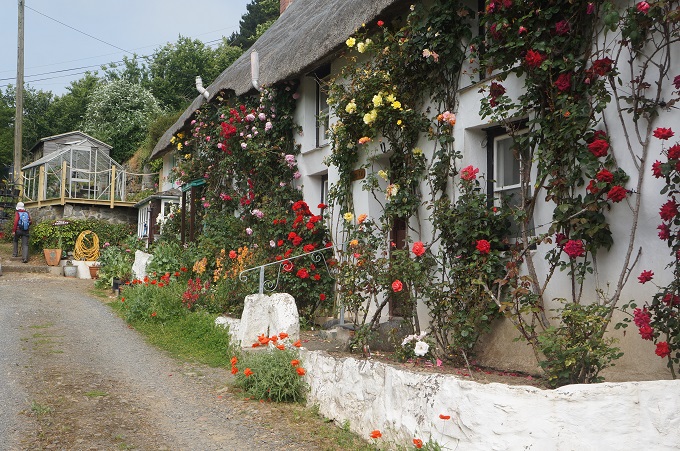
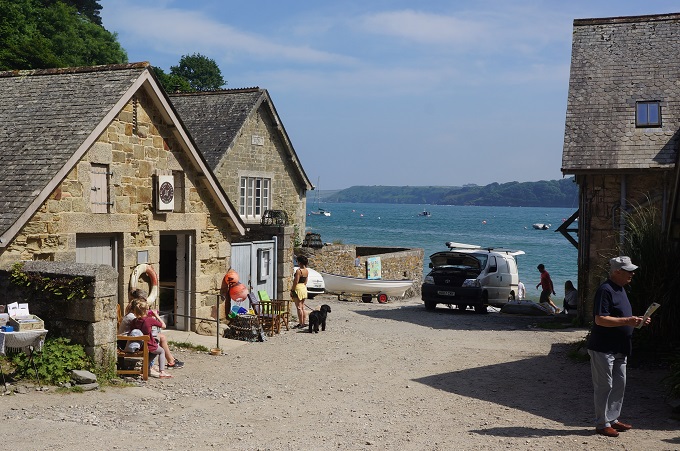
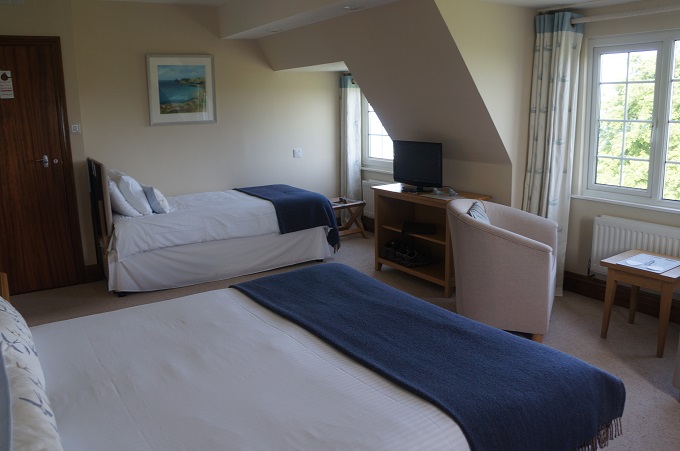
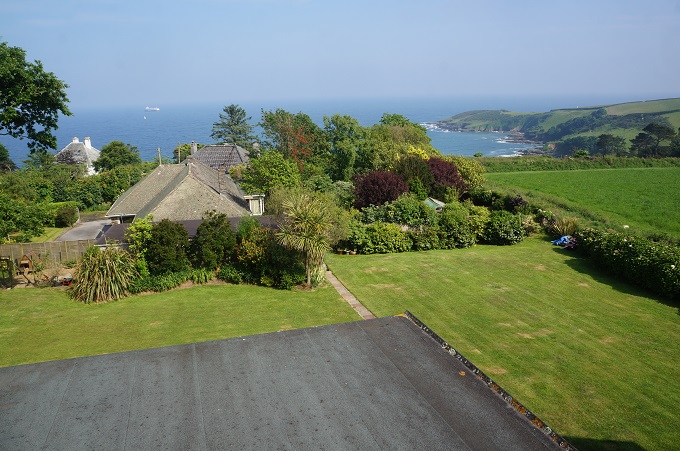
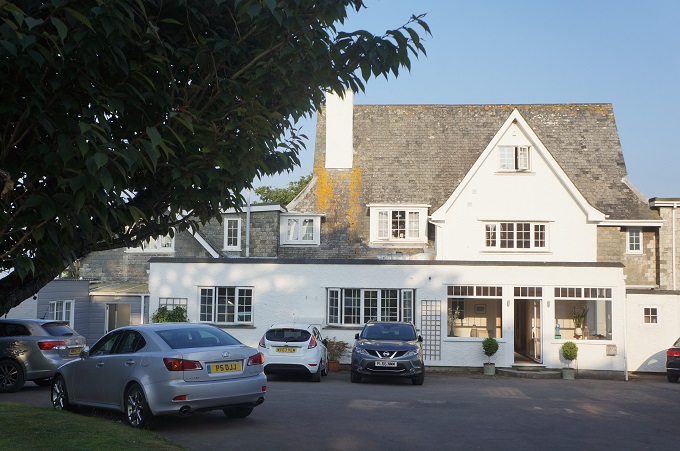
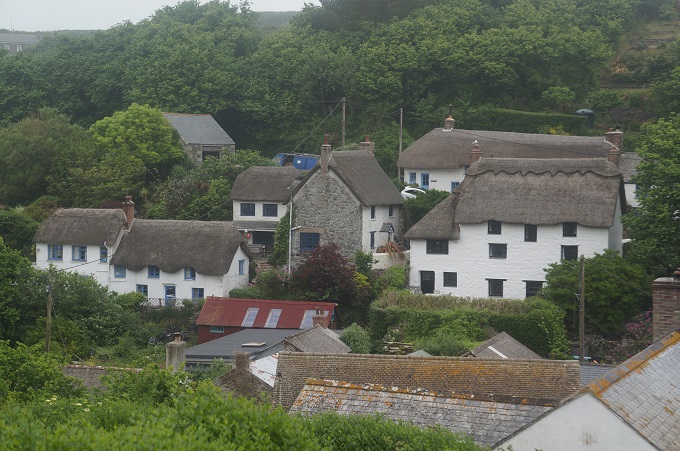
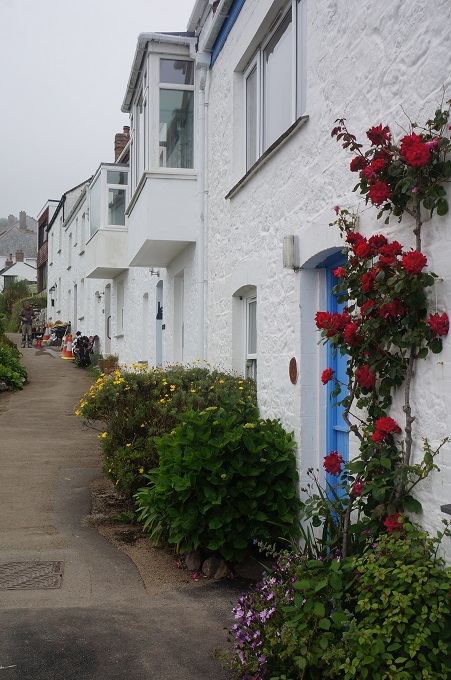
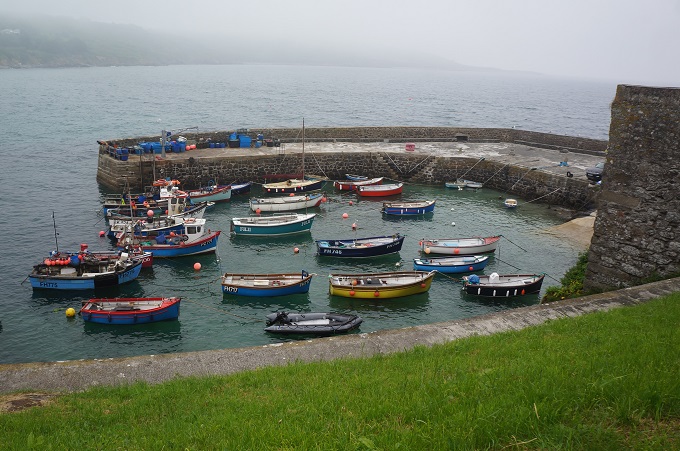
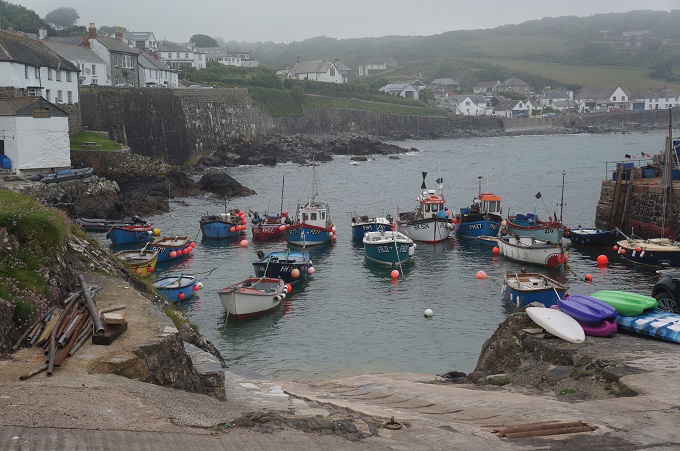
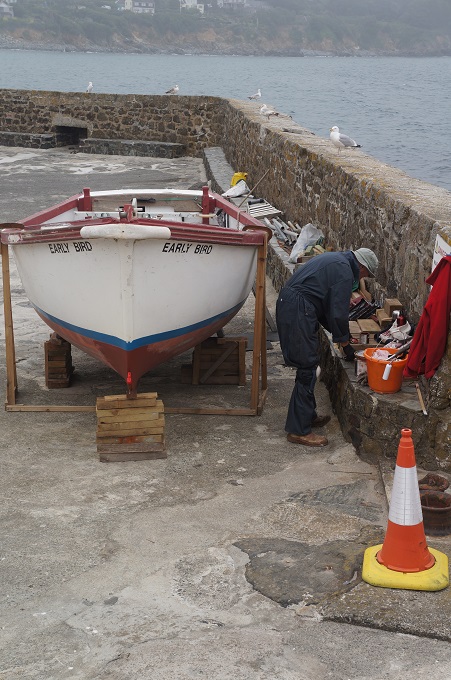
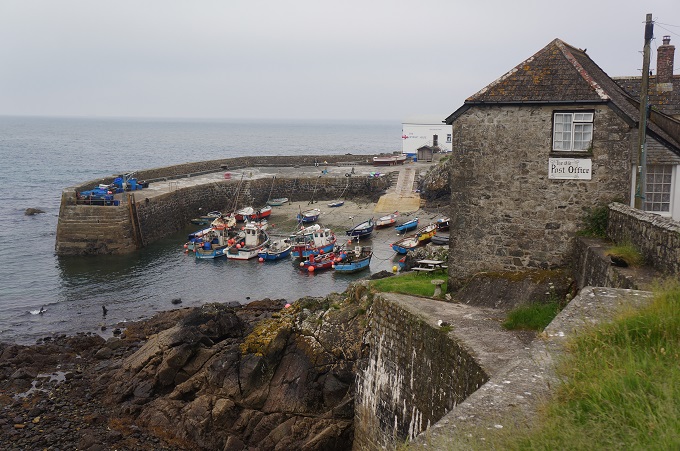
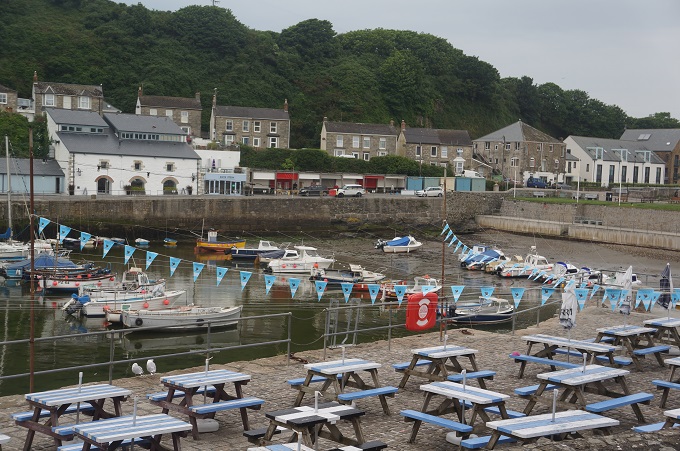
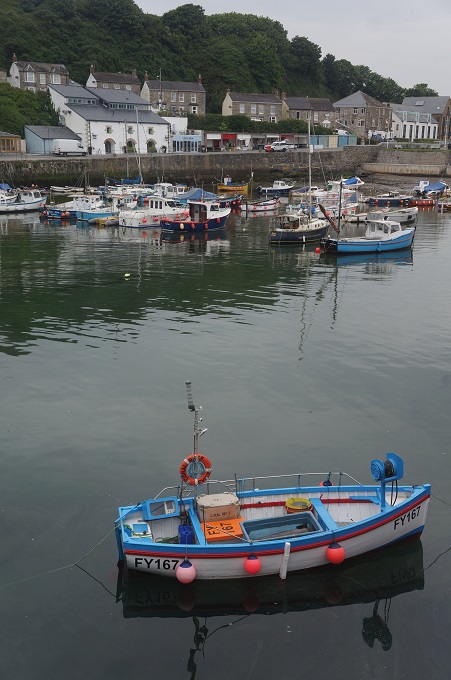
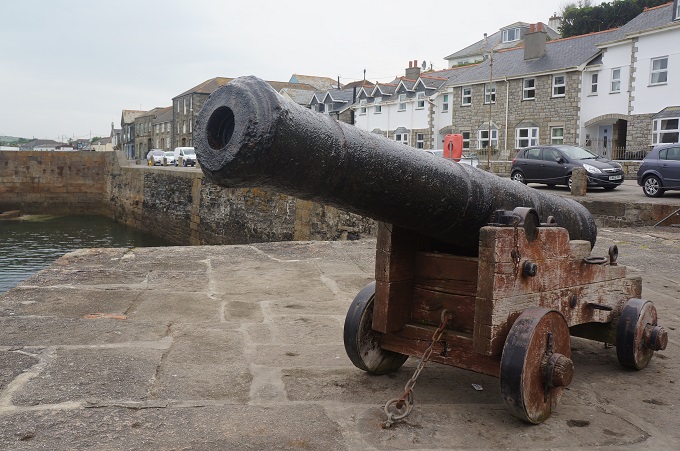
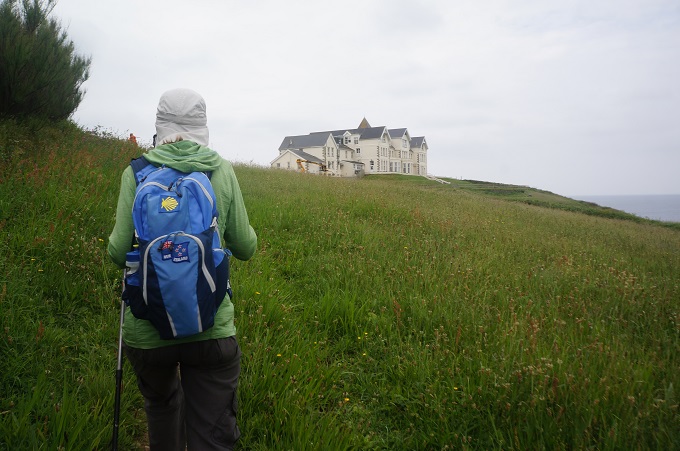
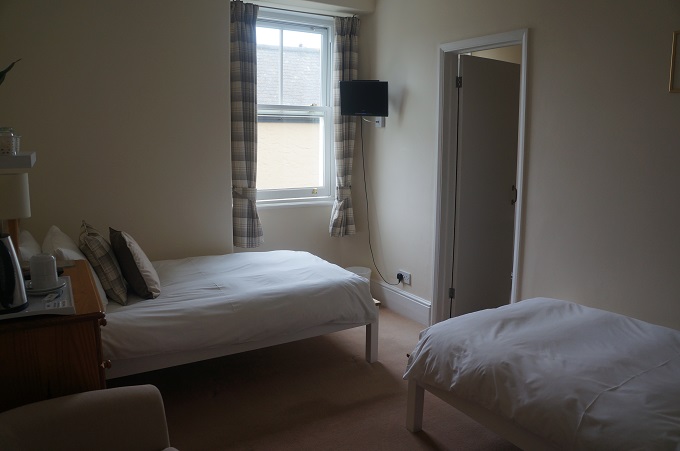
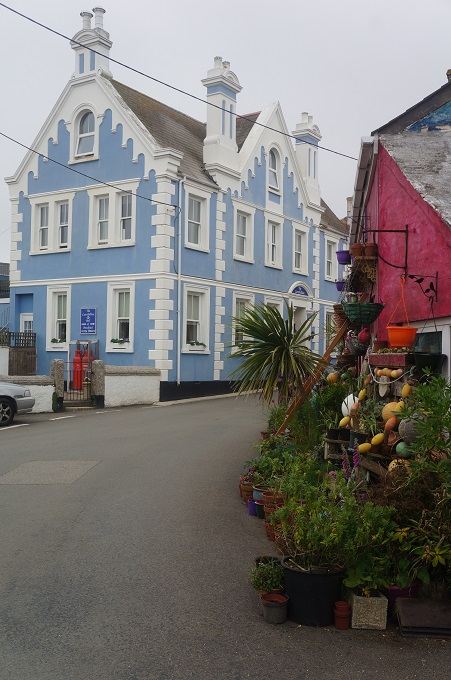
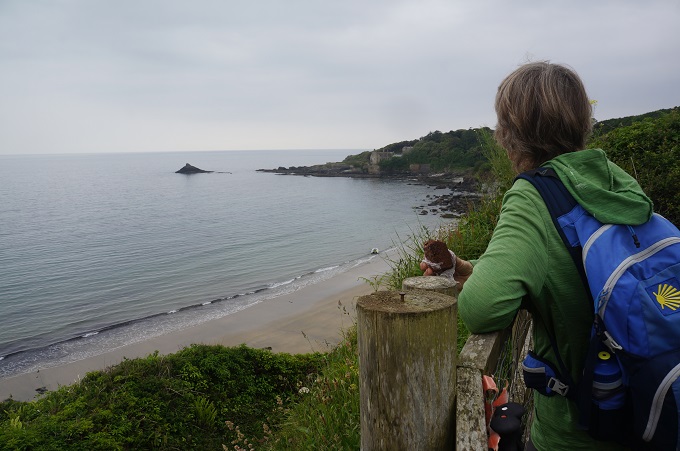
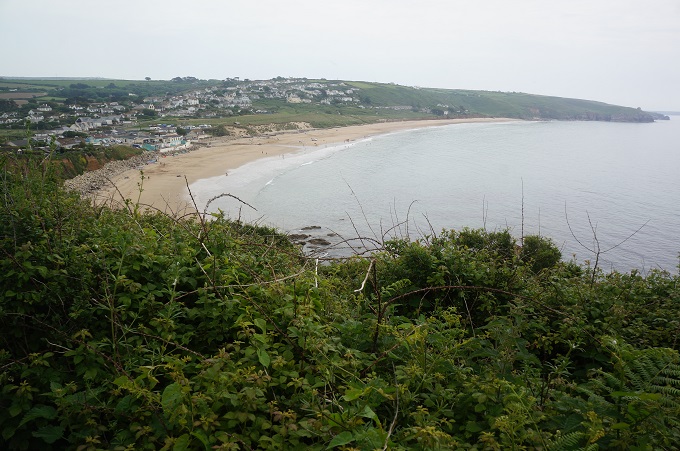
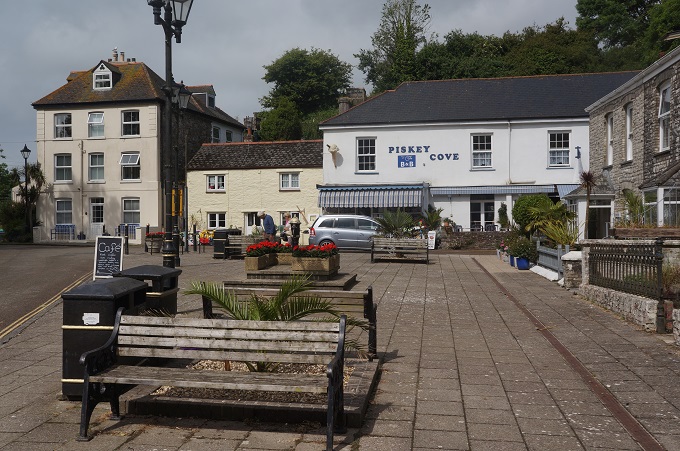
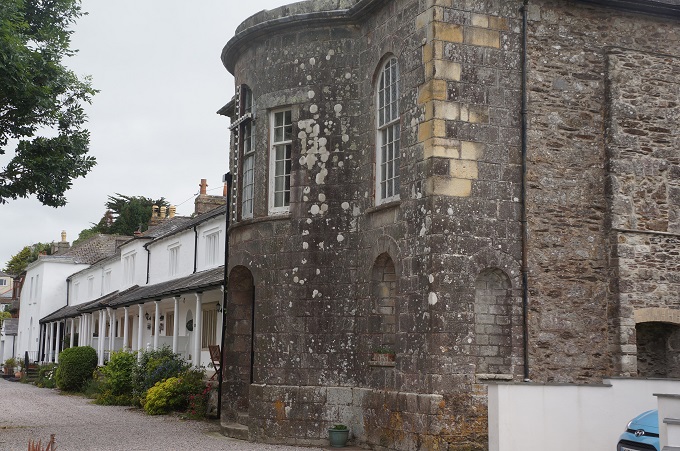
We are now in the unspoilt harbour town of Charlestown and staying for two nights in the Rashleigh Arms Hotel. The town is named after a local landowner, Charles Rashleigh, who partly developed it in the late 18th century as a port for the booming china clay industry. Its once thriving dock is now a Shipwreck, Rescue and Heritage Centre. Upon completion, Charlestown was a model Georgian ‘new town’ and to this day the town retains much of this character and is a popular for film and television locations eg Poldark. Charlestown capitalises on its past by harbouring a few square rigger sailing ships.

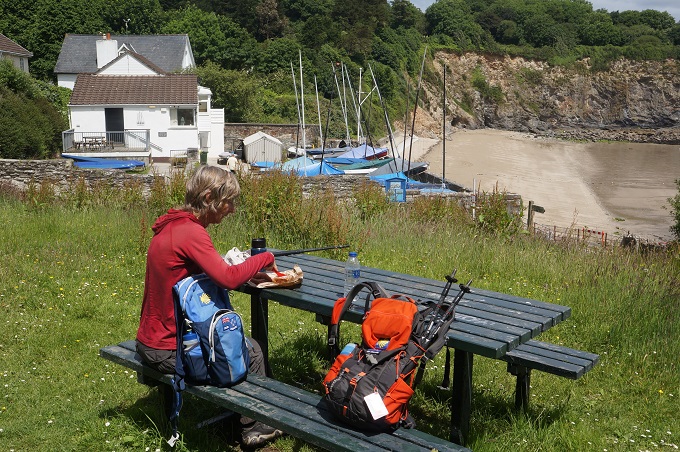
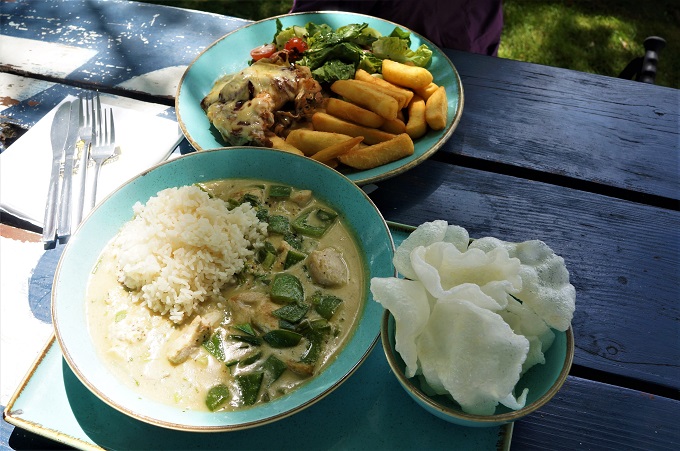
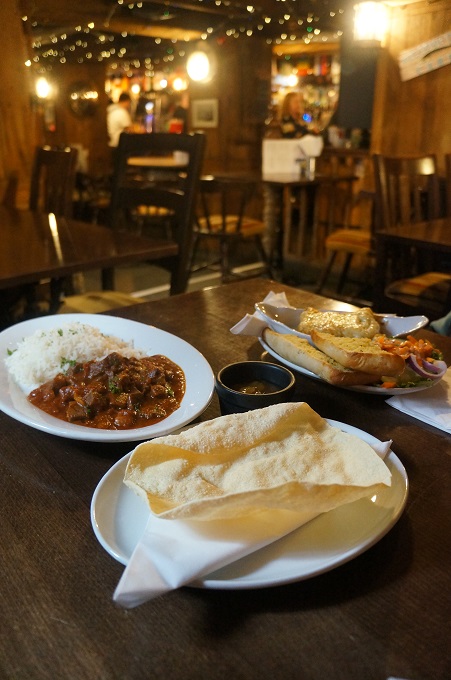
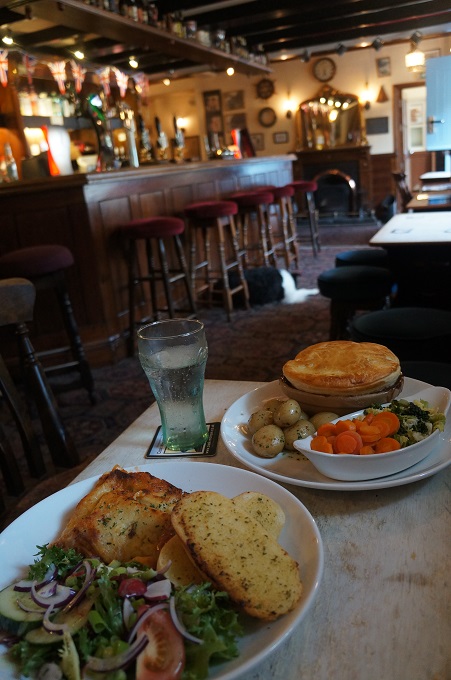
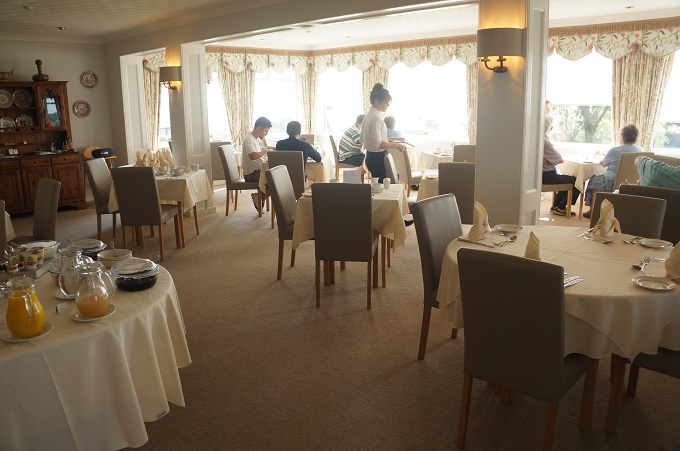
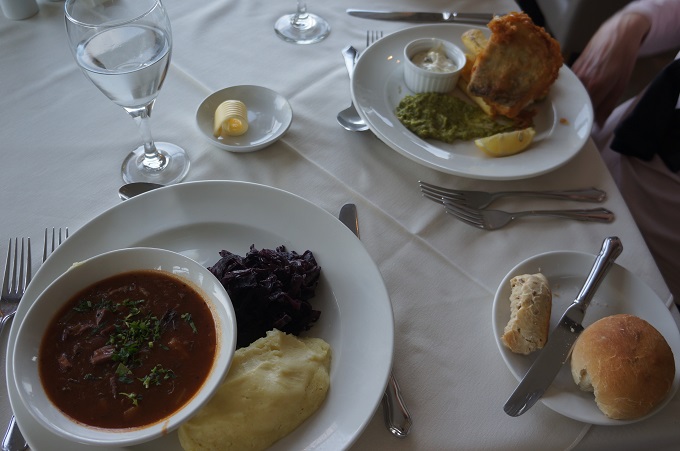
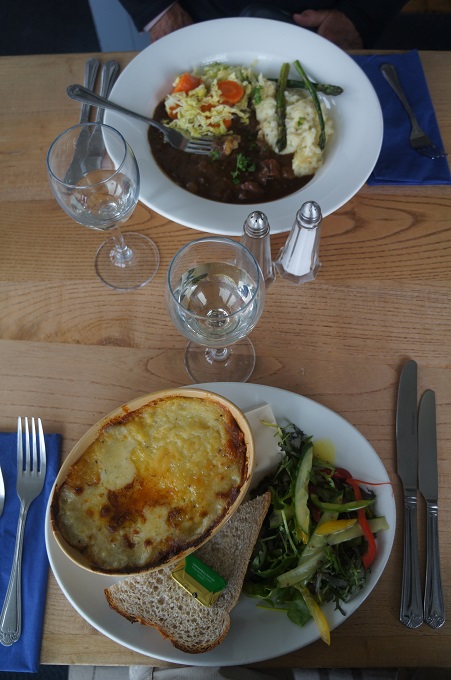
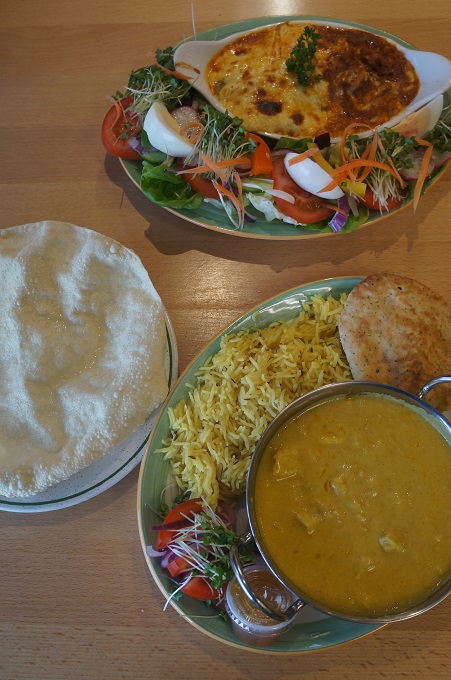
We arrived in Charlestown about an hour before check-in time so had a late lunch (Hunter’s Chicken for B, green Thai curry for P) under the trees in the Rashleigh Arms garden. A very nice end to the day. The only down side is our hands and legs are still tingling from all the nettles we pushed through today. Not painful but just a strange sensation.

Tomorrow we go to see the nearby Eden Project.


Day 25 of 30

Portloe to Mevagissey, 19 km, 866m climbing

‘The person who dances with you in the rain will most likely walk with you in the storm.’

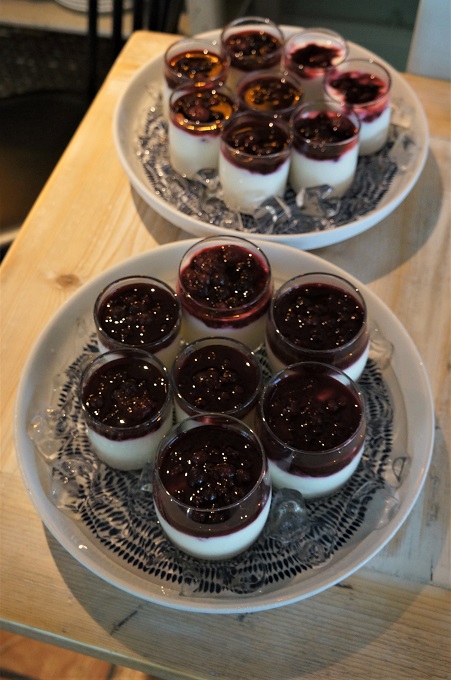
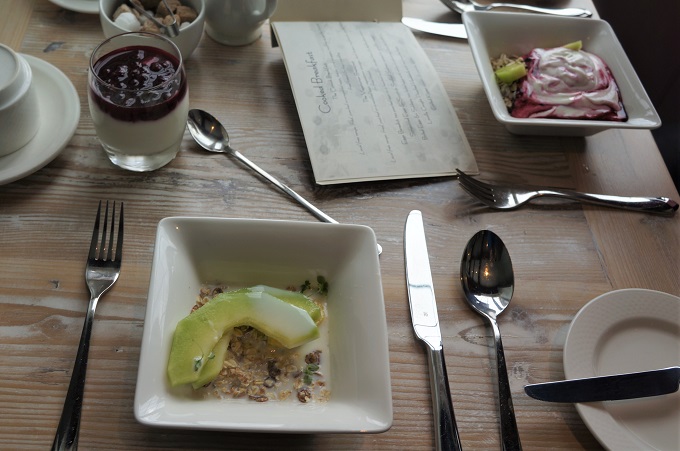
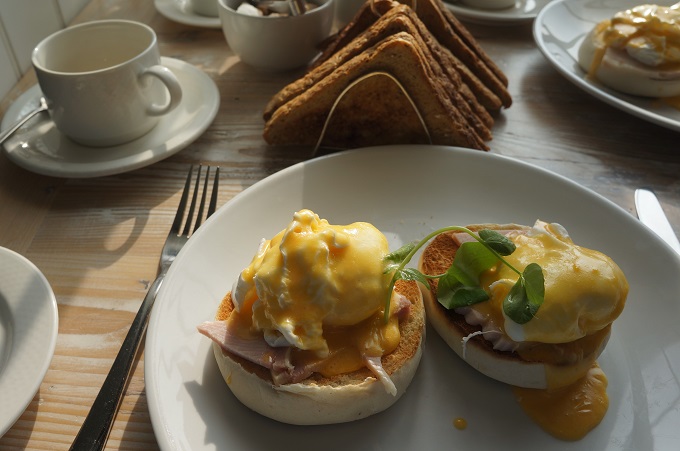
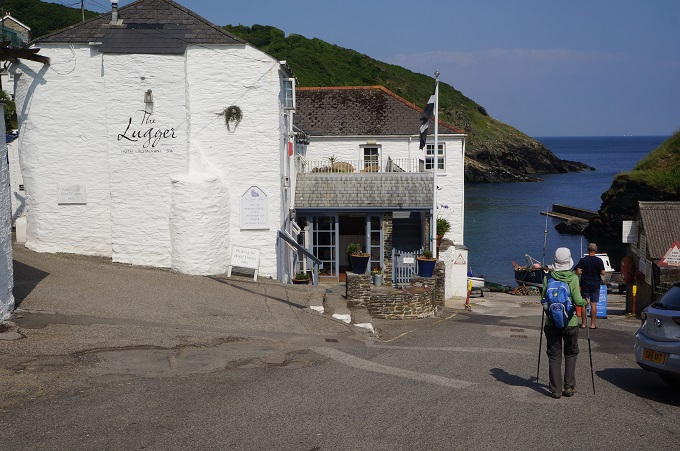
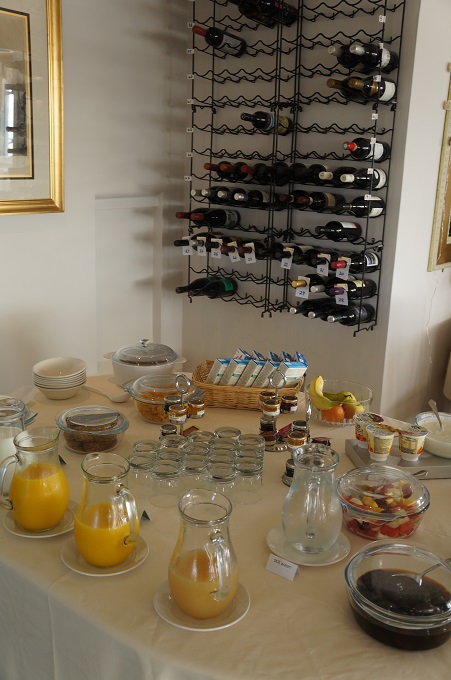
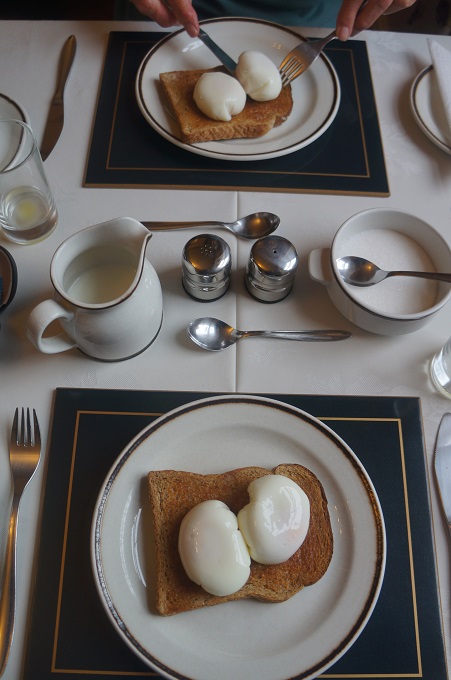
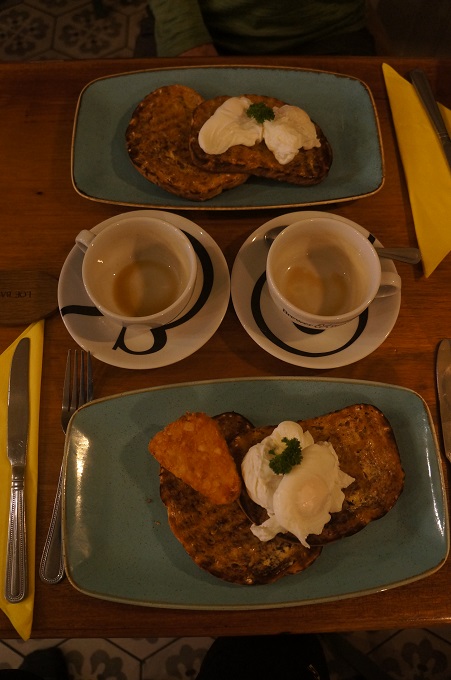
We both had good, long sleeps last night in a room that was cool and quiet, so we set off feeling much more refreshed. The Lugger put on an excellent breakfast with freshly squeezed orange juice, Cornish yoghurt with berry compote and divine eggs benedict.

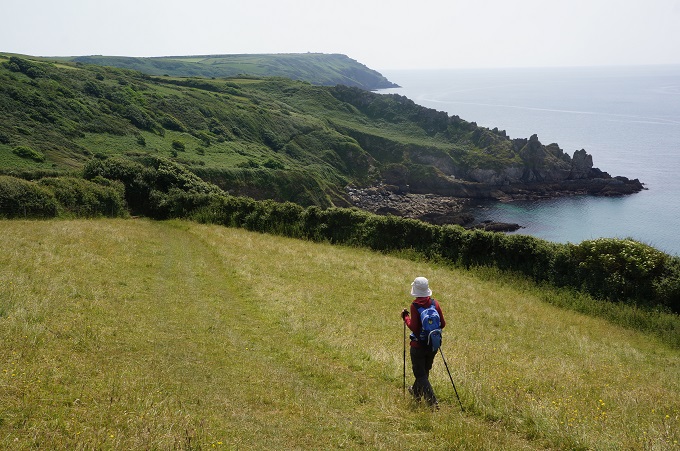
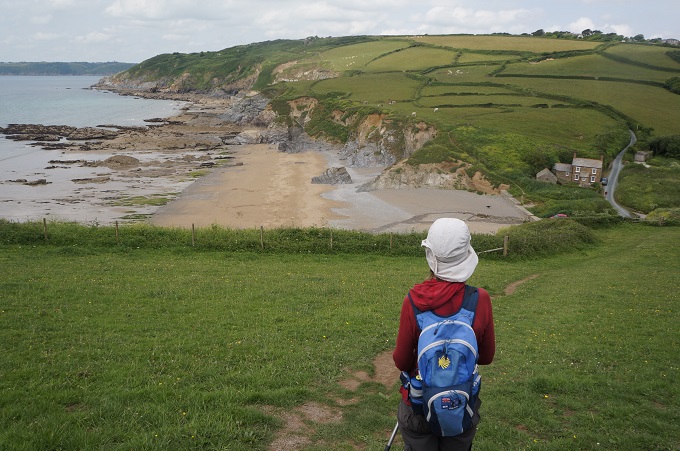
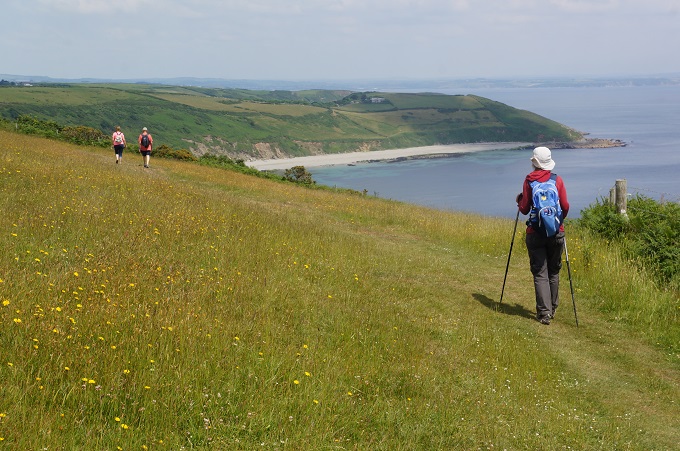
Straight out of Portloe the path was a bit nasty. Three stiff climbs before we had warmed up and got into the rhythm of the day. From there it was a fairly uneventful stretch along cliff tops on a lovely grass track to the twin hamlets of West and East Portholland both facing a sheltered beach.

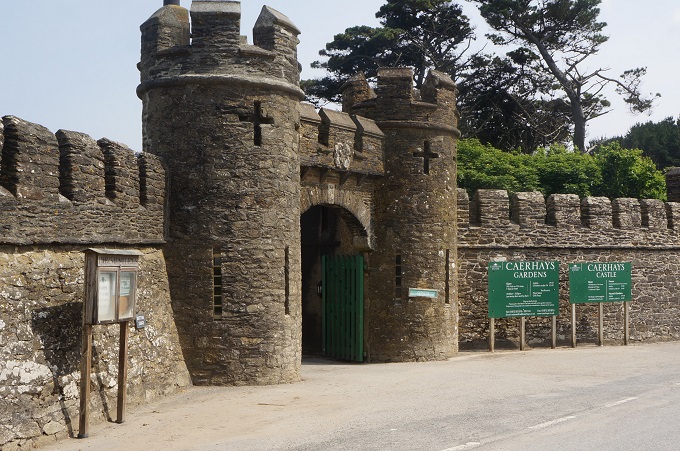
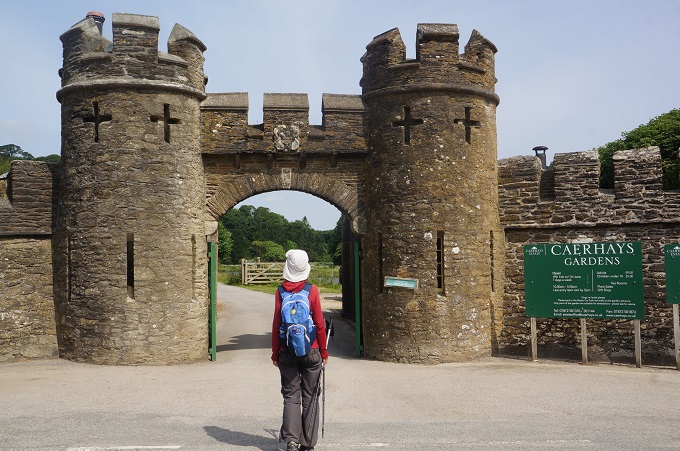
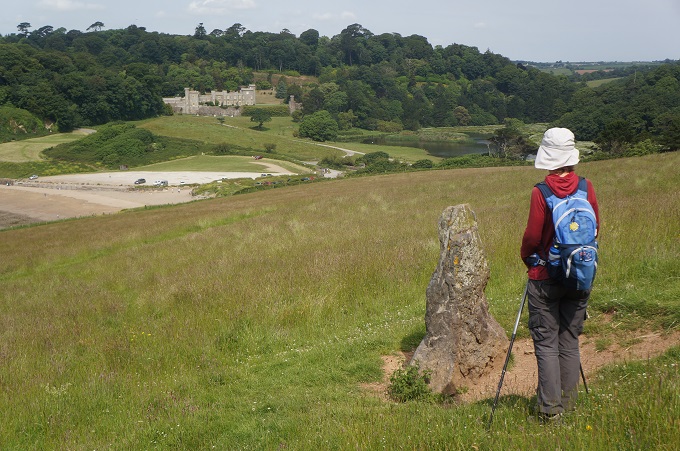
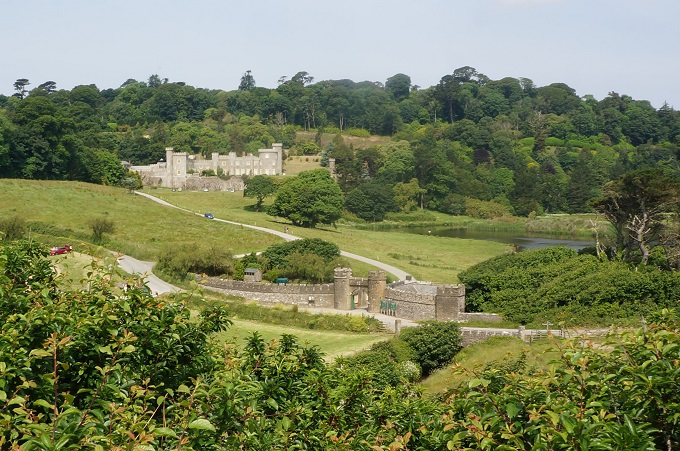
Just past East Portholland we came across Caerhay’s Castle. This is in fact a castellated manor house dating from 1810. The design was by Georgian architect John Nash, most famous as the architect of Buckingham Palace, Marble Arch and much of Regency London. The castle is well known and visited for its 120 acres of gardens. Apparently it has the largest collection of magnolias in England.

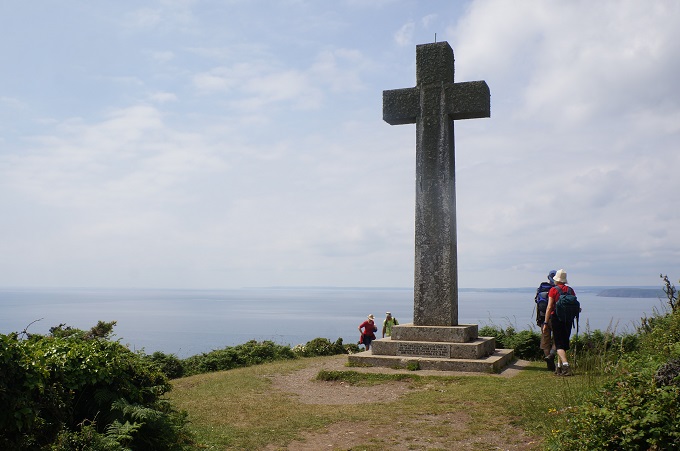
Next up was the main challenge of the day, ascending Dodman Point from sea level to the cross 114 metres above at the top. This is the highest headland in southeast Cornwall but we had climbed headlands twice this height a couple of weeks ago. The cross was built in the 19th century as a navigation aid. From the point, far to the west in the haze we could make out The Lizard. Four and a half days walk away.

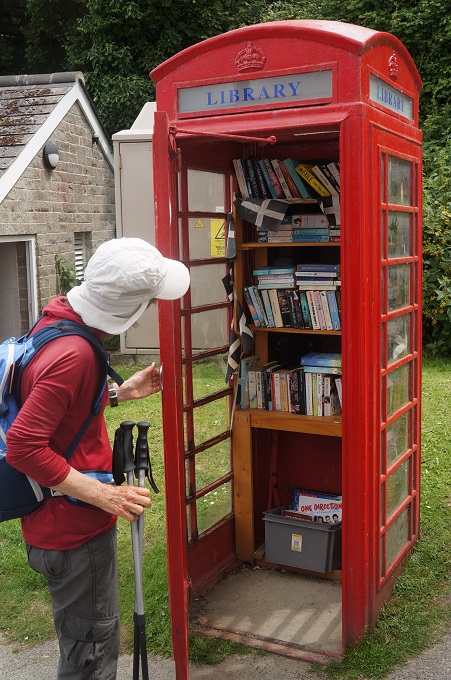
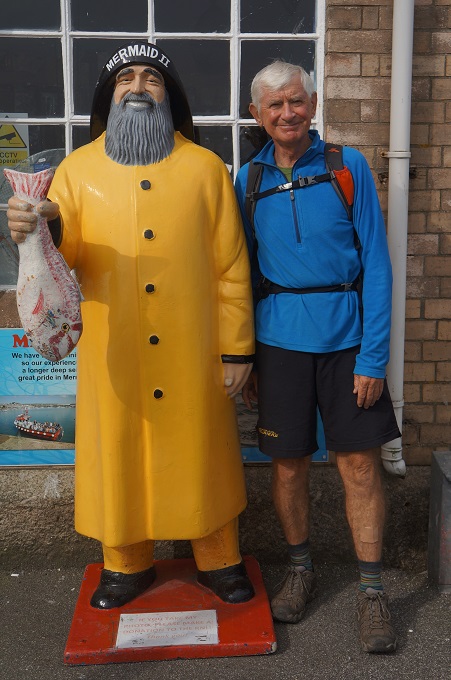
From there it was a gentle descent to the peaceful village of Gorran Haven for lunch at the Mermaid Café. Gorran Haven had a classic telephone booth housing the local library! Then some ambling along clifftop to Bodrugan’s Leap. This a cliff edge named after Sir Henry Bodgrun who is said to have successfully leapt off the cliff to a waiting boat in the cove below in his efforts to evade his pursuer, Sir Richard Edgcumbe, during the War of the Roses in the 15th century.

An easy downhill walk and we arrived at Mevagissey.

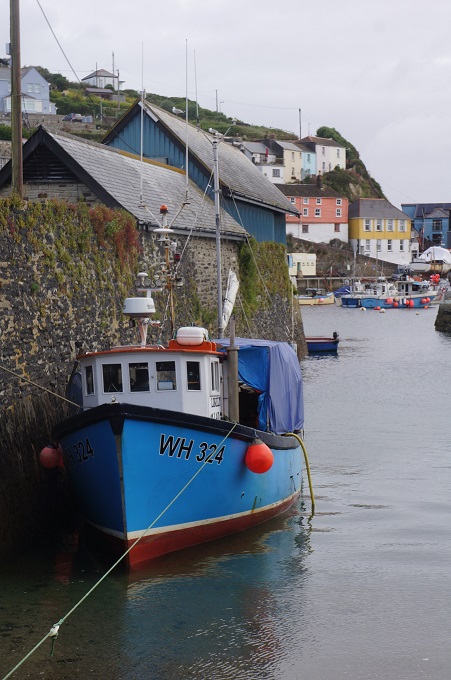
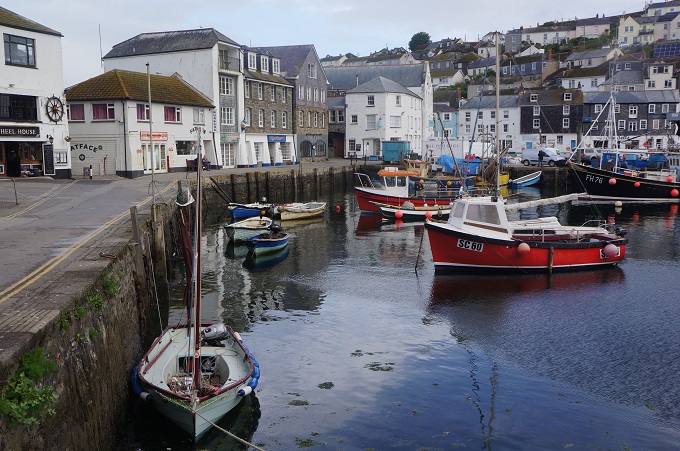
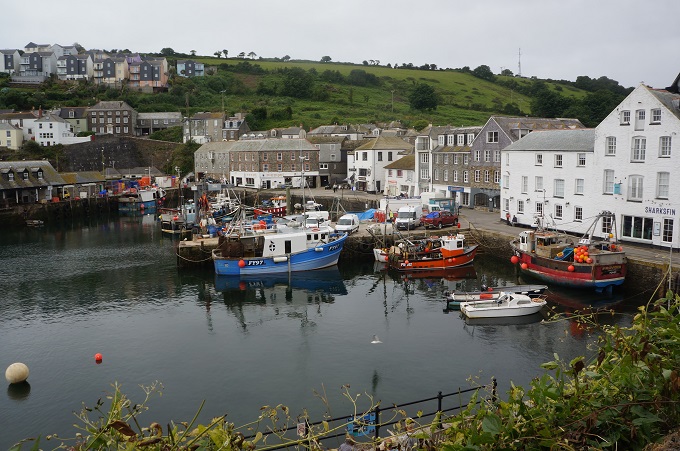
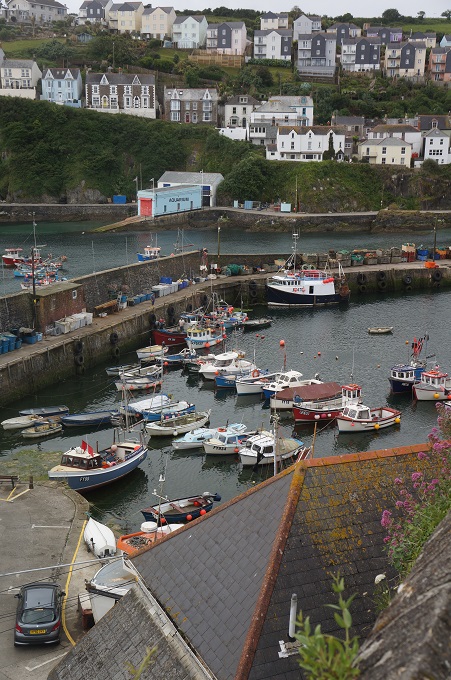
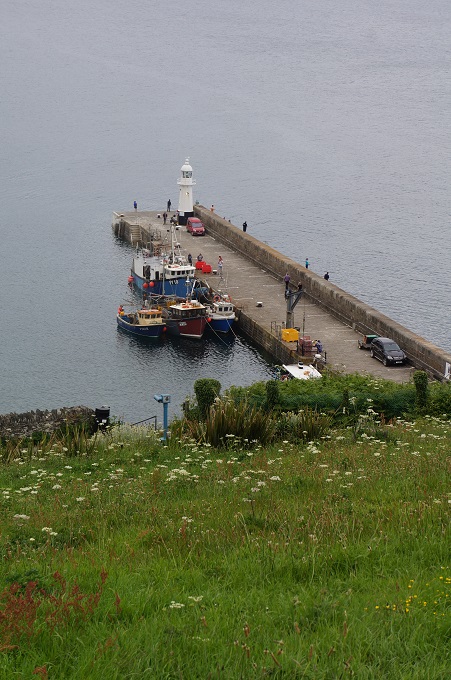
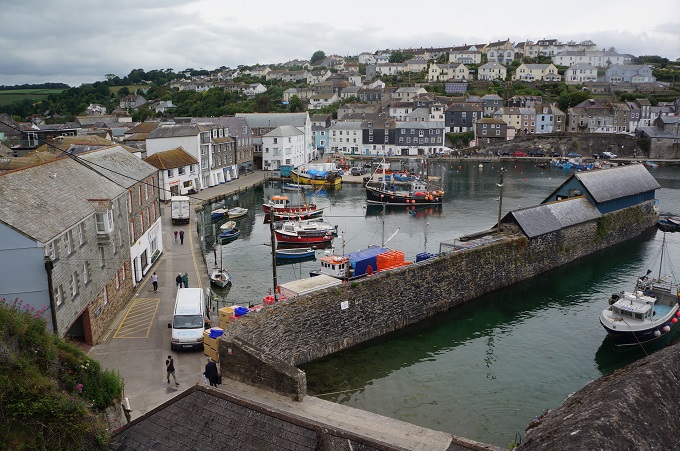
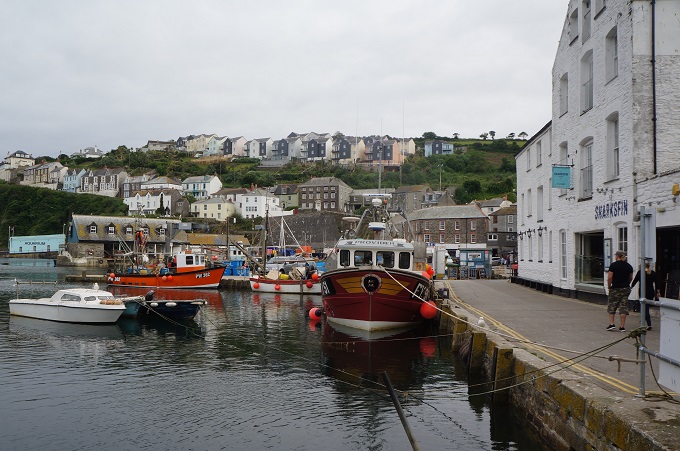
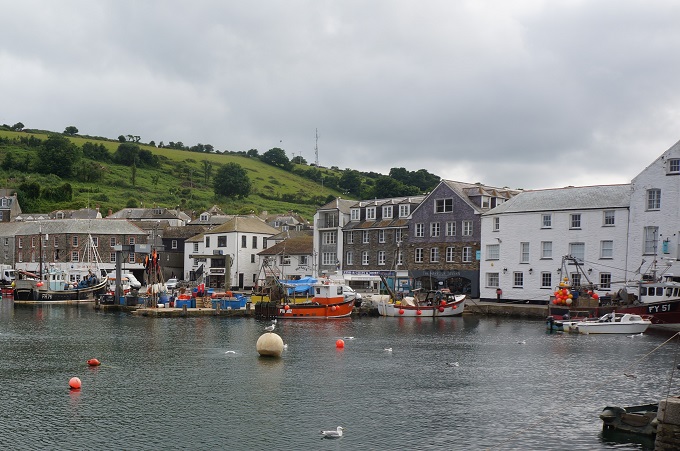
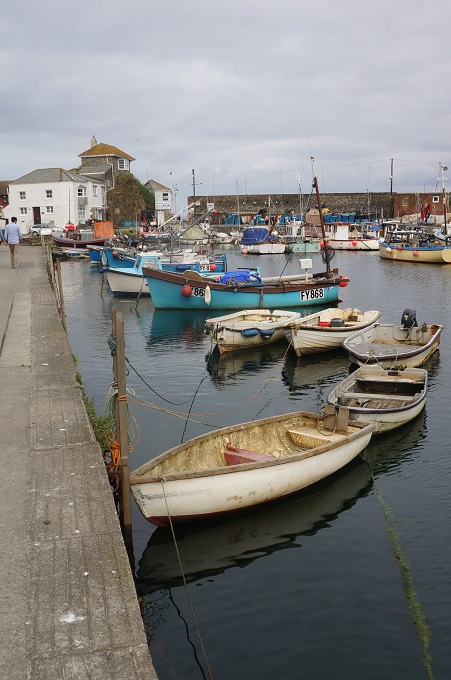
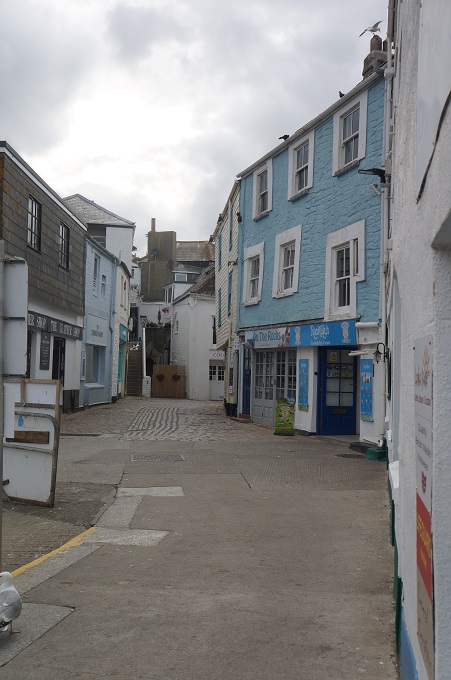
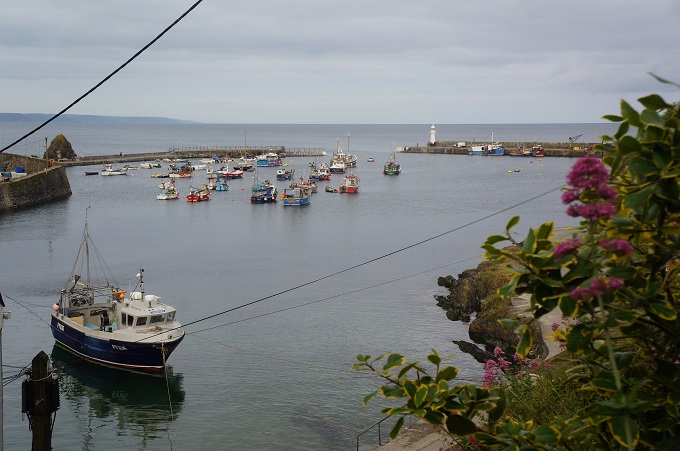
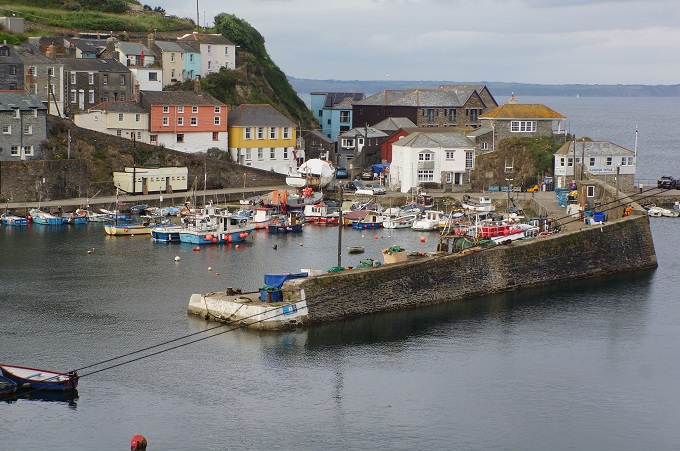
This is a busy, bustling, working harbour and one of the highlights of the south Cornish Coast. It is named after two saints, Meva and Issey. The town thrived with the rise of the pilchard industry. The fish provided both a source of nutrition and a source of power, a power station having been built in 1895 that ran on pilchard oil. As a result, Mevagissey claims to be the first village in England to have electric street lighting.

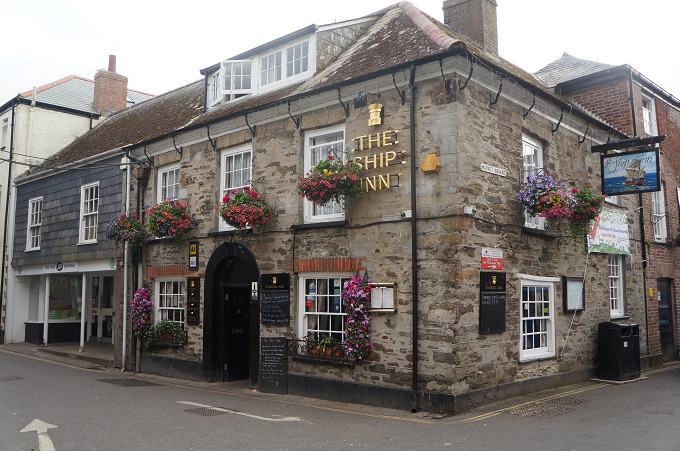
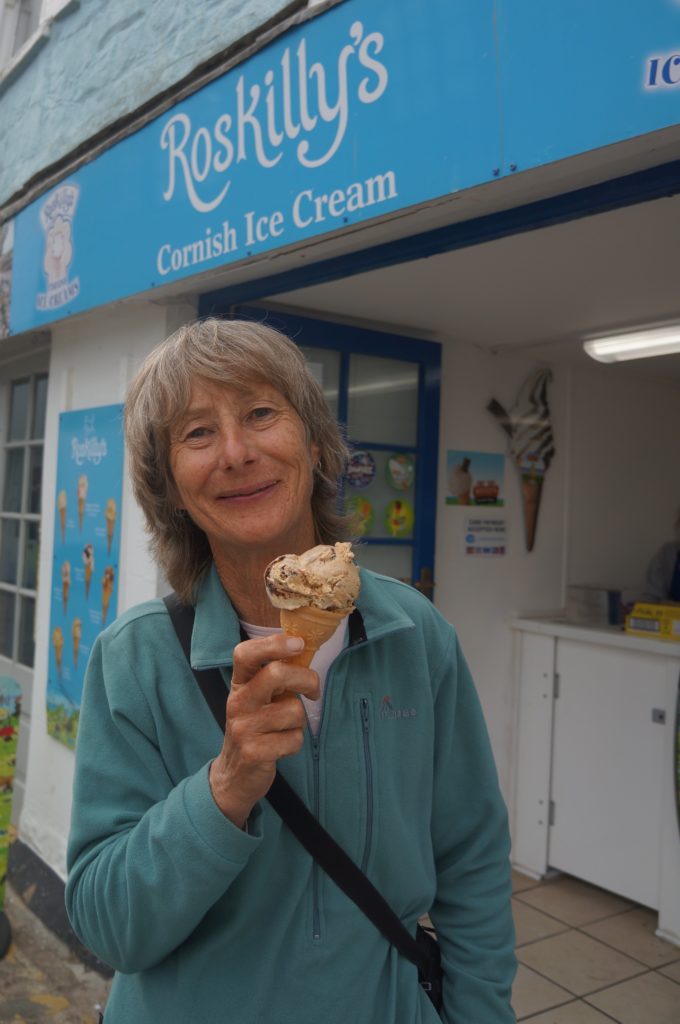
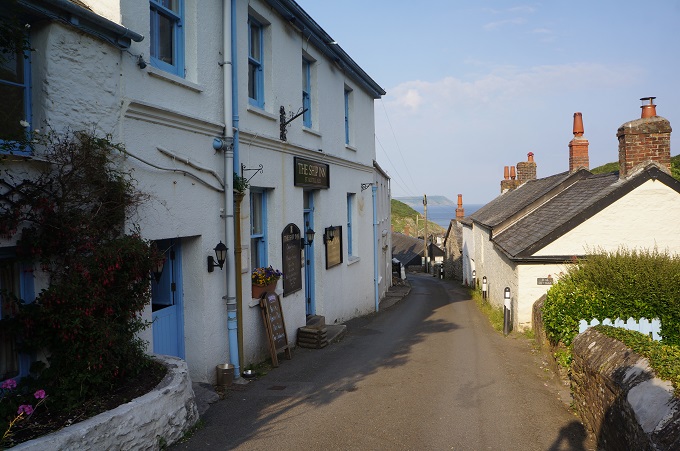
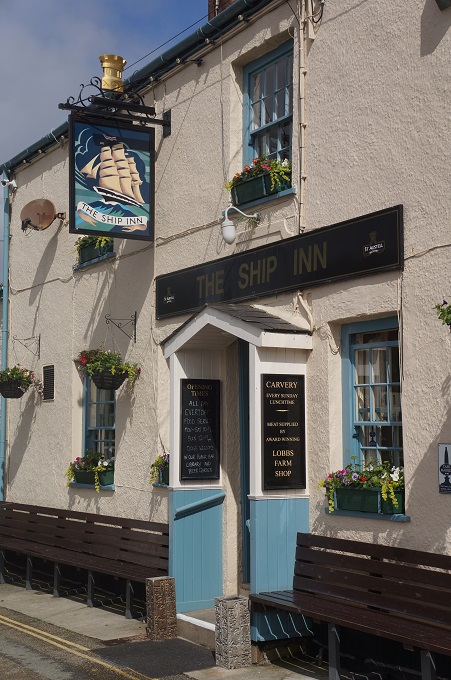
We arrived in good shape, much better than yesterday. We really like having accommodation on the path and not about a kilometre away. For the second night in a row we ate at a pub named The Ship Inn. I wonder if we can make it a trifecta in Charlestown tomorrow night. We also had our first Cornish ice cream tonight. We won’t bother again, NZ makes ice cream as well as anyone in the world.


Green Slime

Falmouth to Portloe, 22 km,807 m climbing

‘It’s your road and yours alone, others may walk it with you, but no one can walk if for you’. Rumi

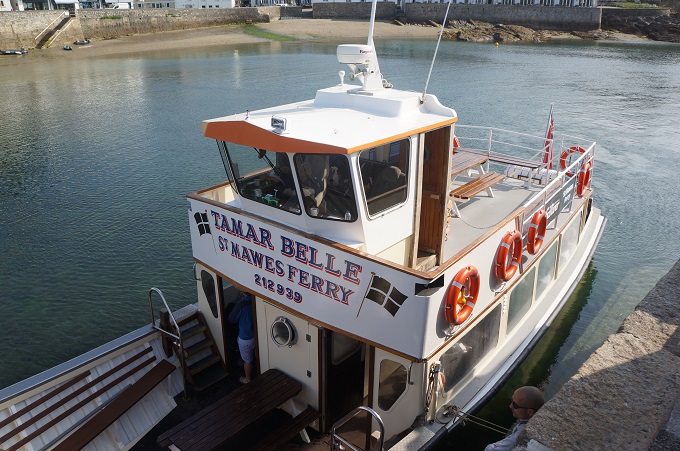
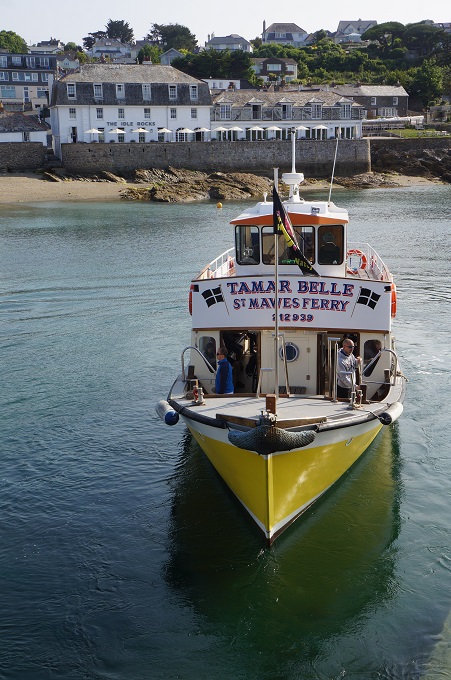
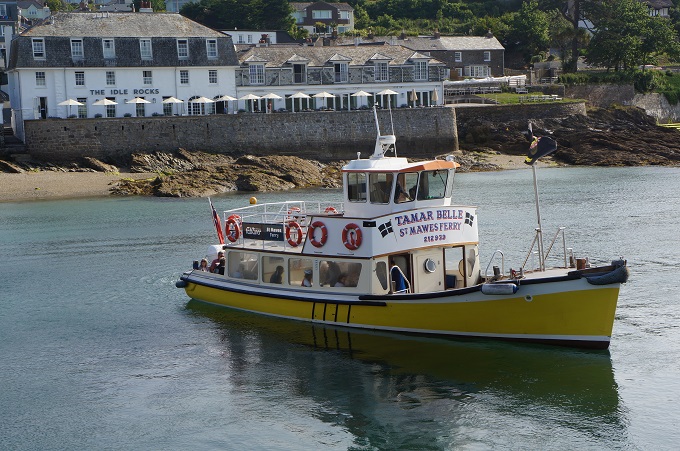
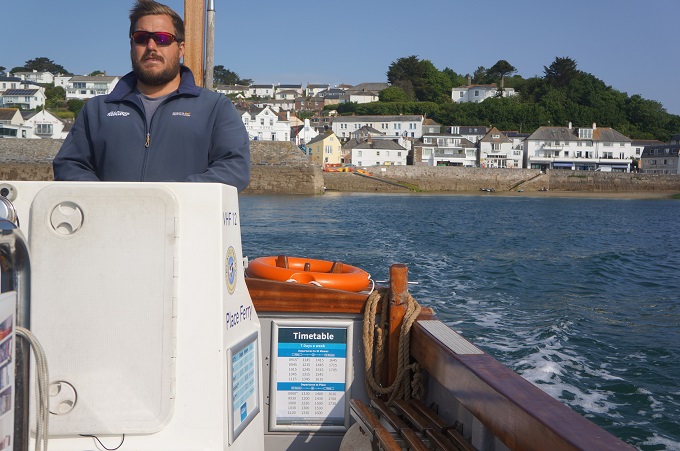
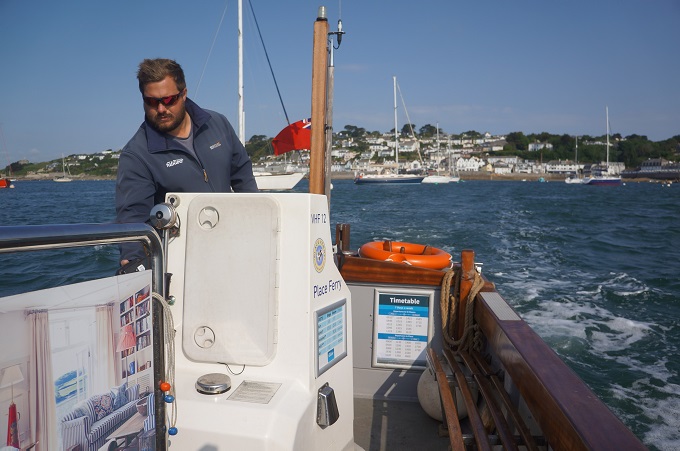
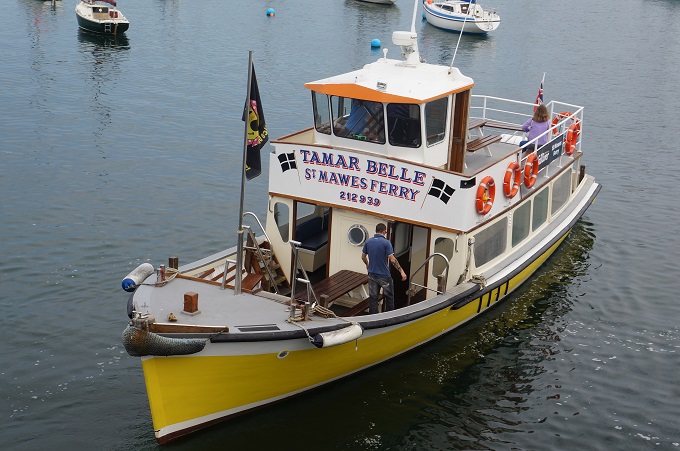
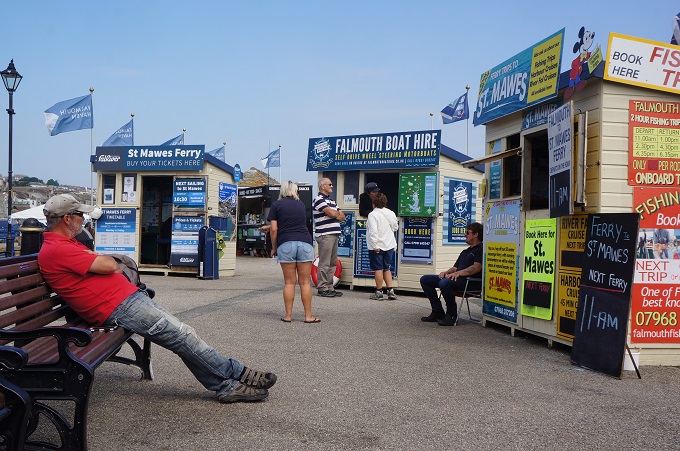
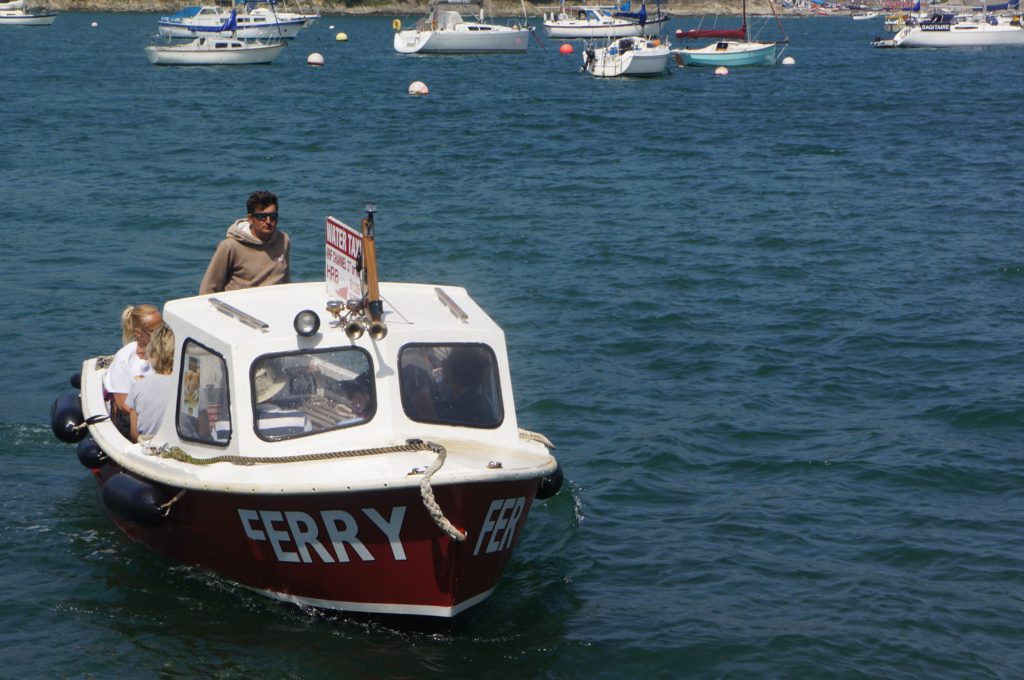
This morning we wanted to make sure we were on the first ferry over to St Mawes so we were down to the dining room at 7 am for breakfast. There were already ten people eating! No matter, we had plenty of time and in true Barbara style we were waiting on the wharf at 8.05 for an 8.30 sailing. It was an exciting start to the day, a 20 minute crossing of the Fal River estuary to the little village of St Mawes, on a passenger only ferry that would take maybe 50 people. There were eight of us on the first sailing. The ferry went incredibly slowly and I’m sure in my prime I could have kept up with it in my kayak.

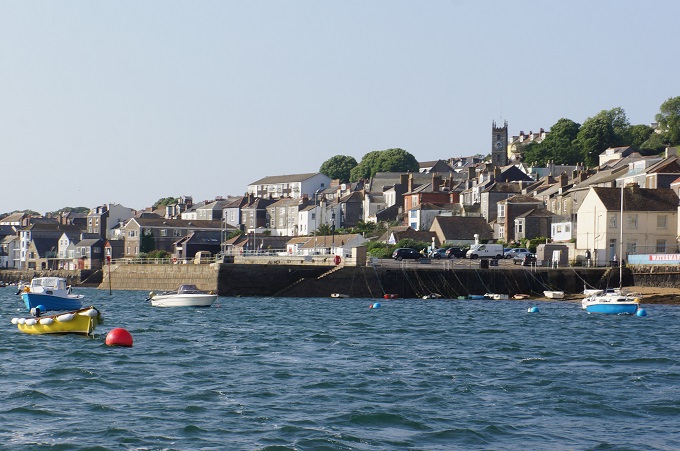
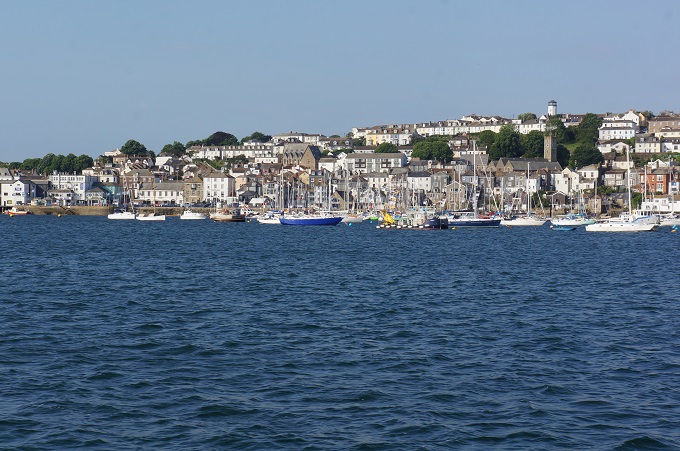
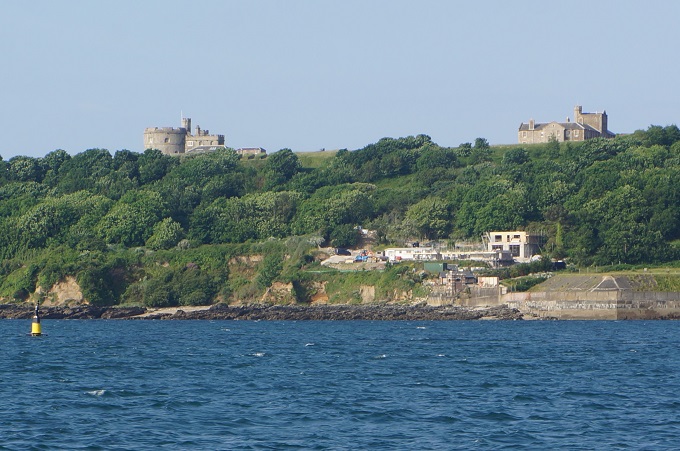
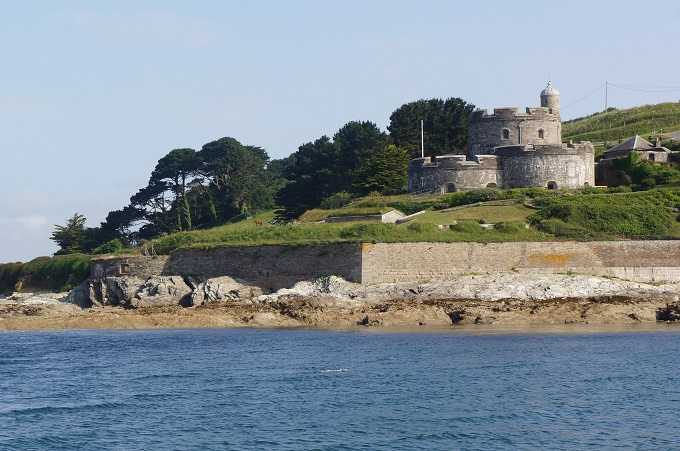
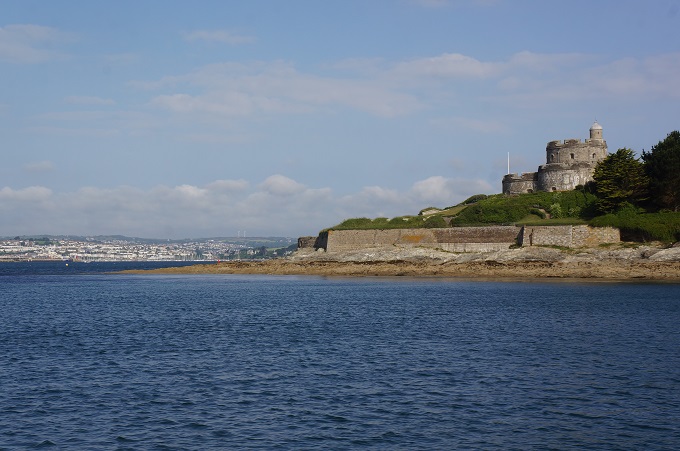
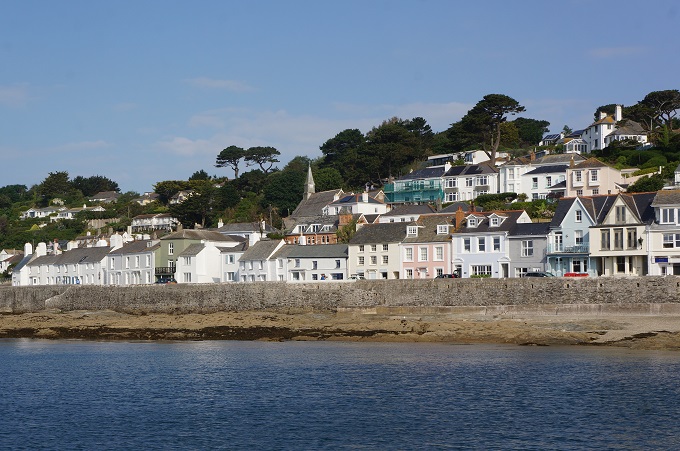
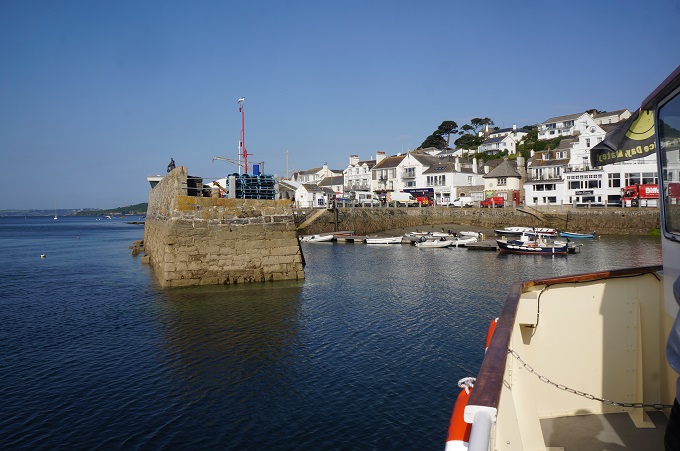
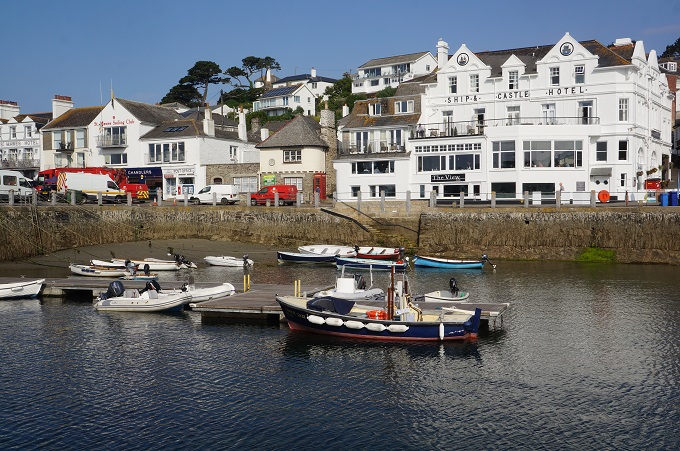
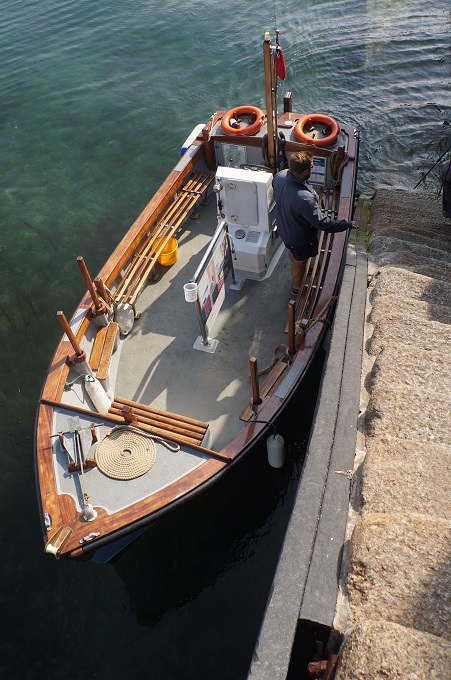
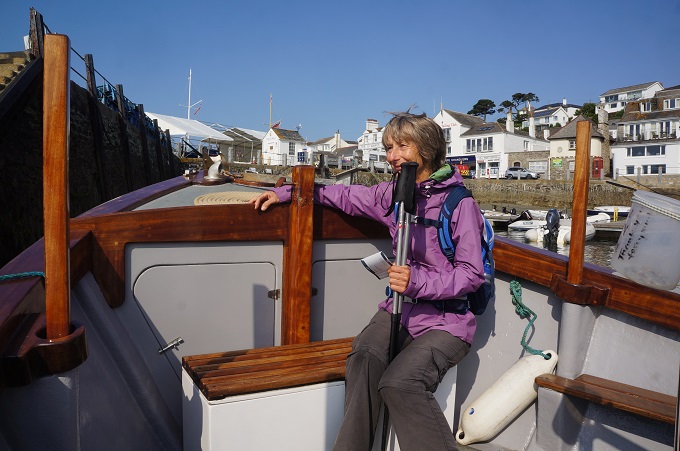
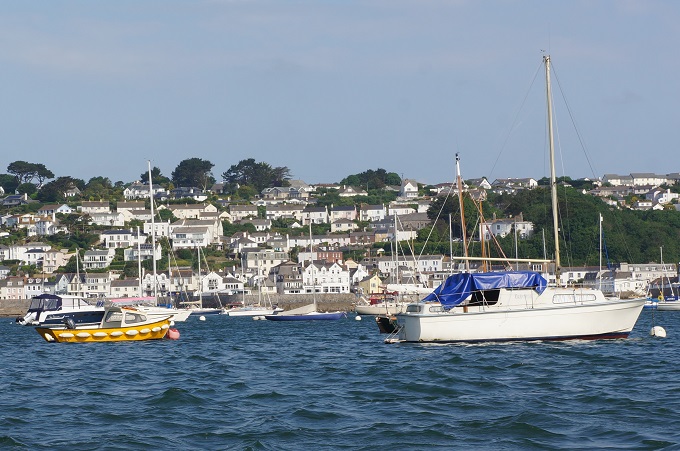
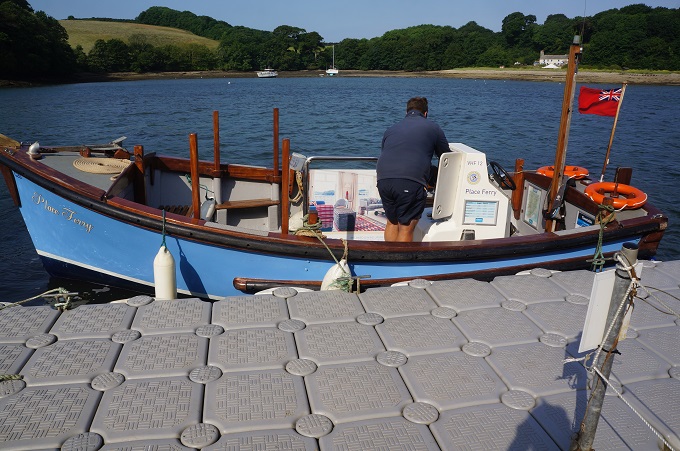
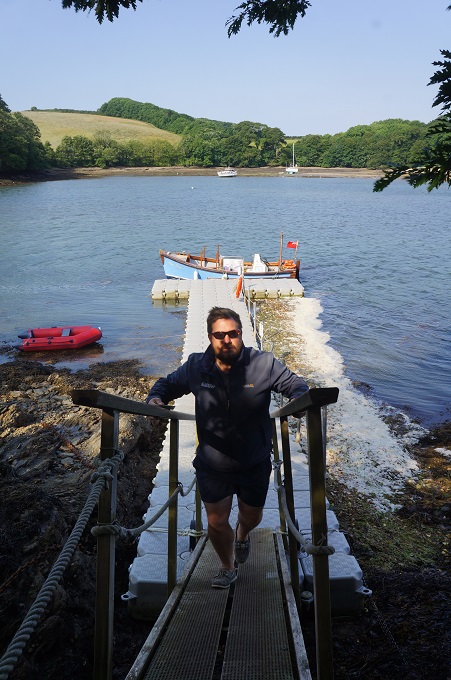
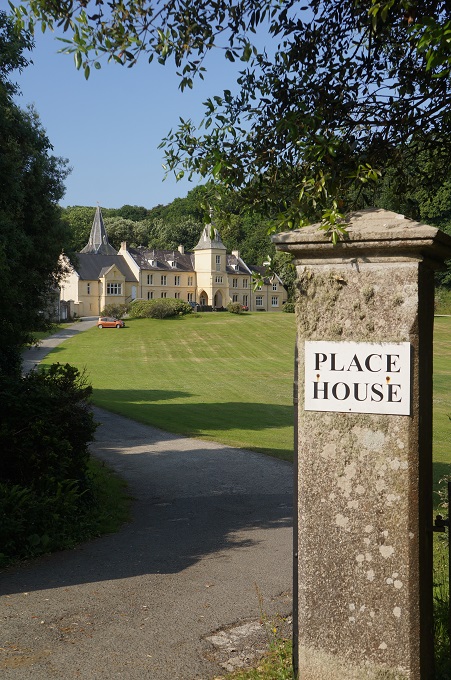
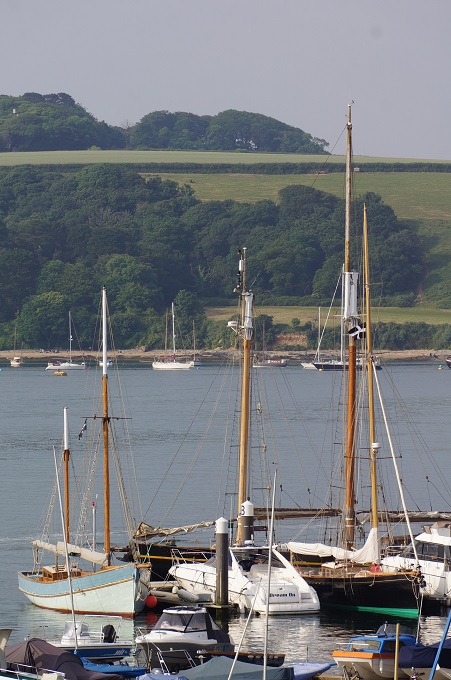
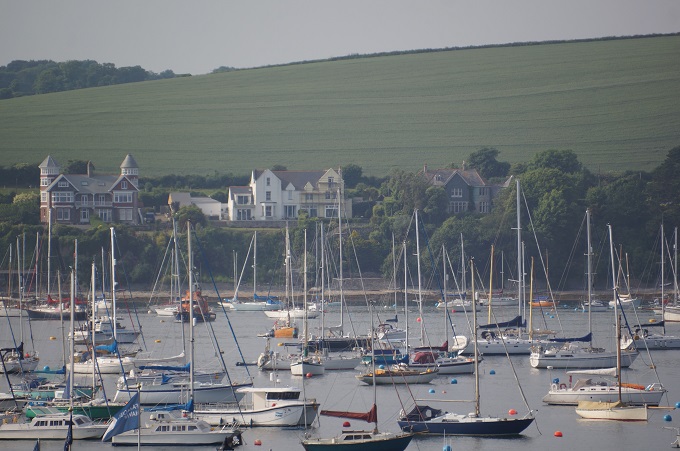
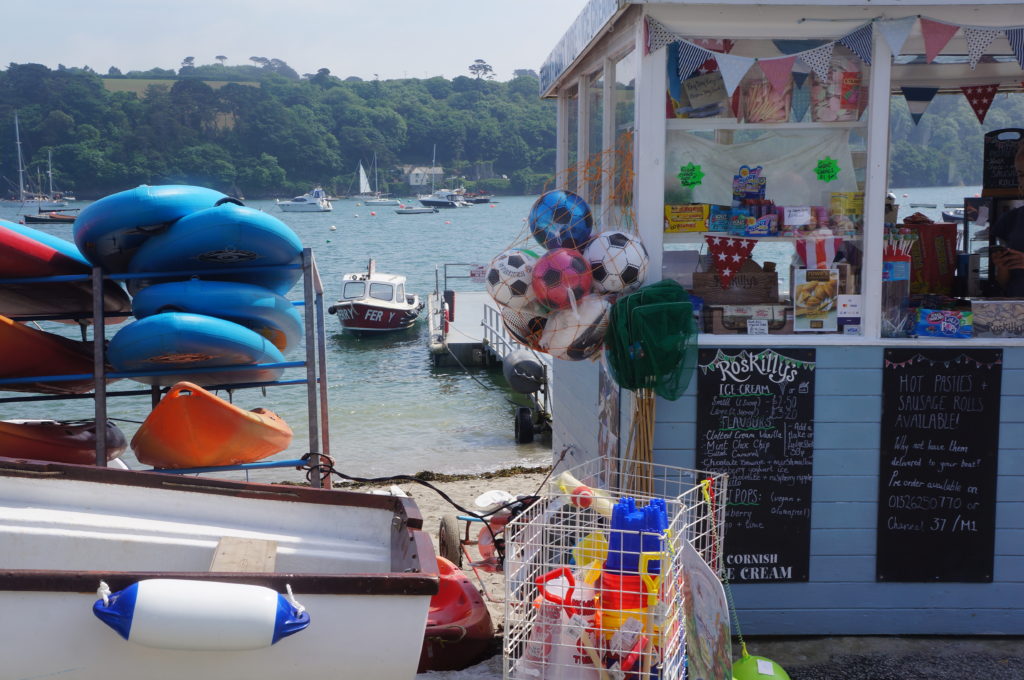
The crossing was interesting, looking back on Falmouth and threading our way through hundreds of anchored pleasure boats. We had good views of the castle on Pendennis Point and the castle on St Mawes. The ferry entered a tiny stone wall lined harbour and let us off at a very slippery set of stone steps that seemed to reach up to the sky. There was a 10 minute wait for the summer time only ferry to take us to Place,which turned up at the same steps. This was a tiny boat, open, ie no cabin, and could take maybe 12 passengers if everyone was very friendly. It was less than 10 minutes to Place, which is not really a place. Place has a pontoon jetty, a large house and a church. That’s it. It is however the place that the South West Coast Path starts again on the north side of the Fal estuary.

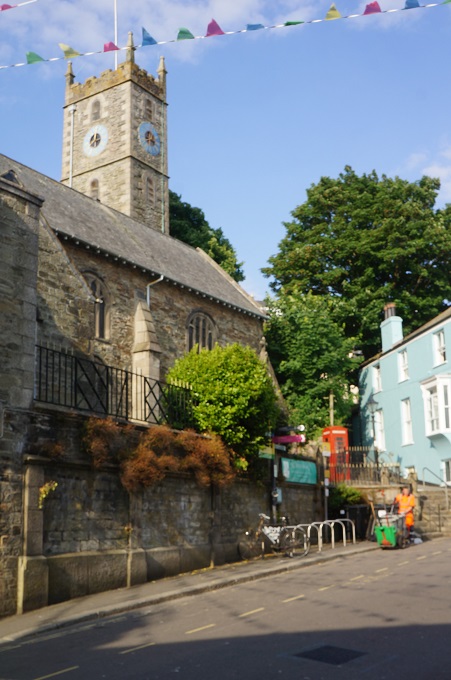
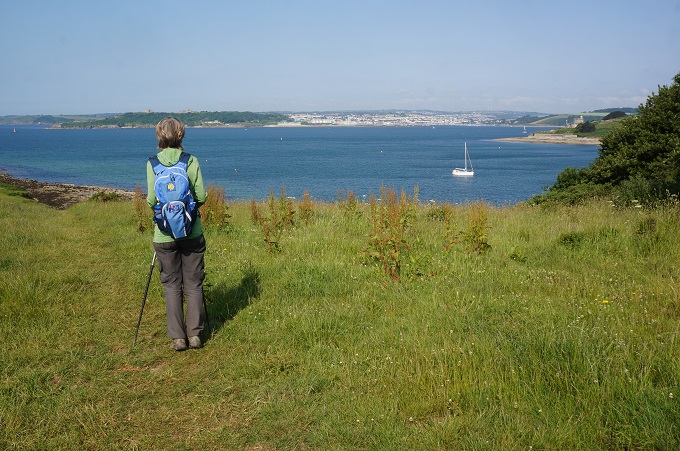
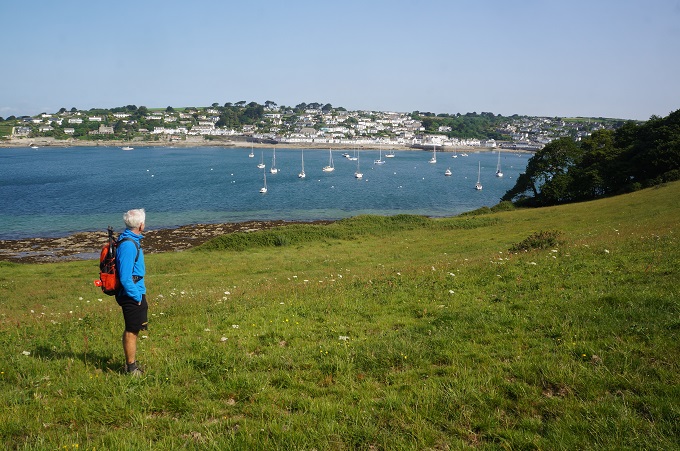
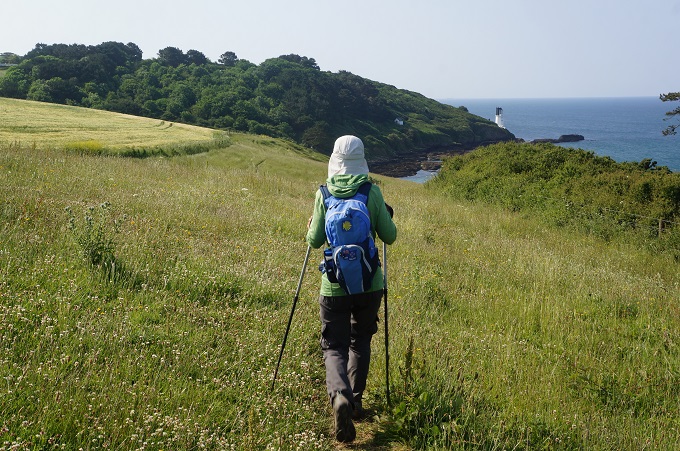
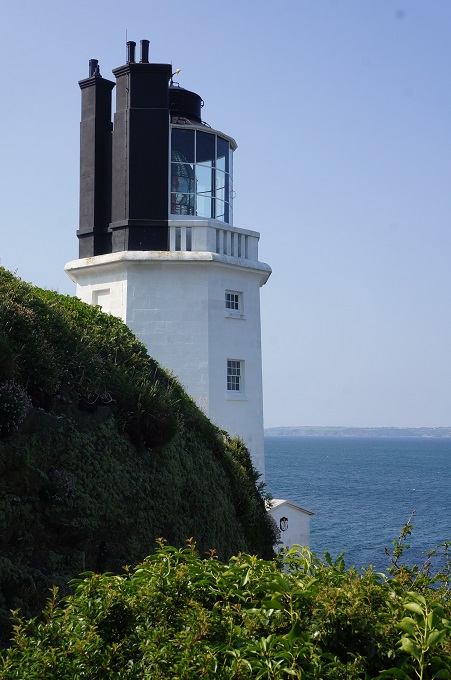
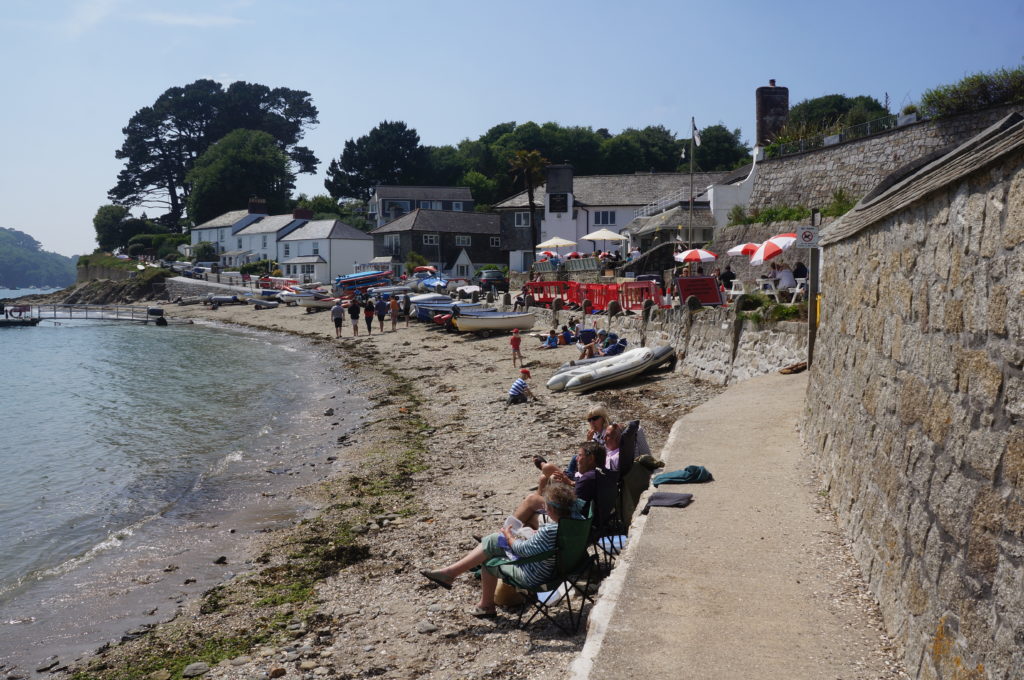
We had a quick look in St Anthony’s Church. It is unusual in that it has a medieval cruciform plan. It is probably from the 12th century but has been ‘restored’ a few times since then. The path took us around the estuary which was a beautiful way to start the day. It then went around St Anthony Head which has old gun emplacements, a lighthouse and views back to Pendennis Point and Falmouth. The rest of the morning was easy walking on a charming path over low cliffs with small sandy beaches and excellent views up and down the coast. There was one village, Portscatho, typical of this part of Cornwall. Once a fishing village that survived on the seemingly endless supplies of pilchard but now dependant on tourism.

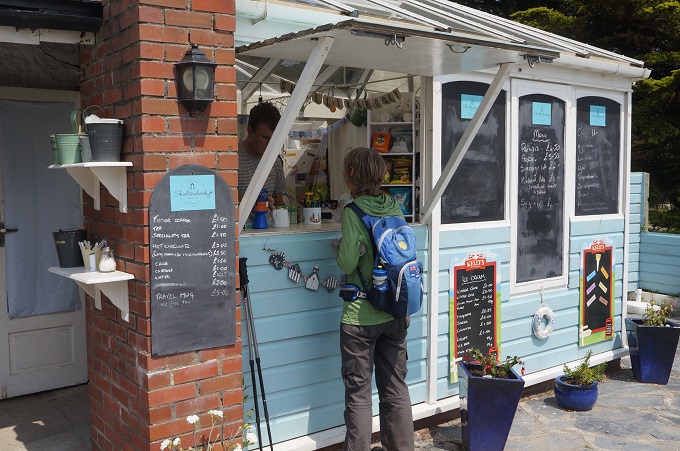
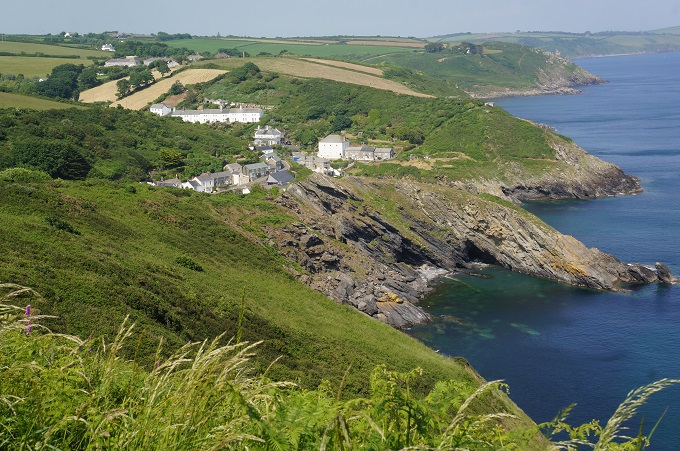
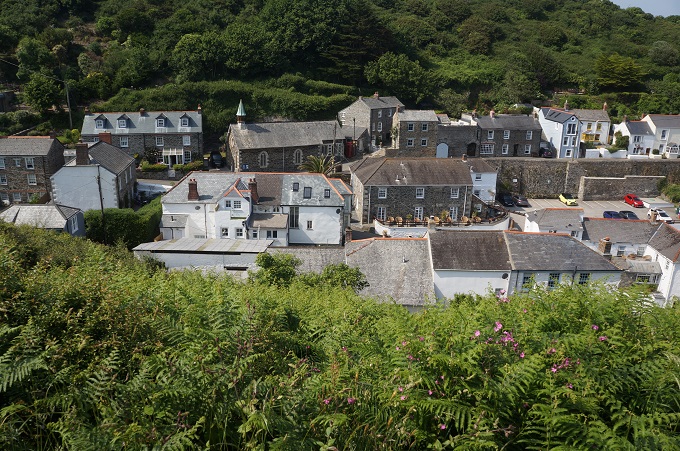
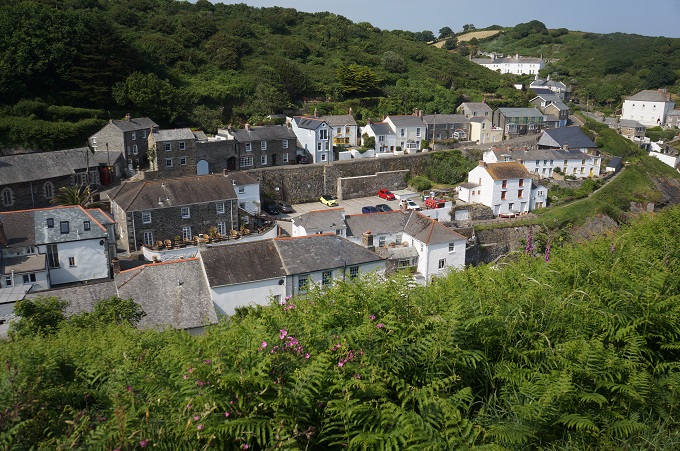
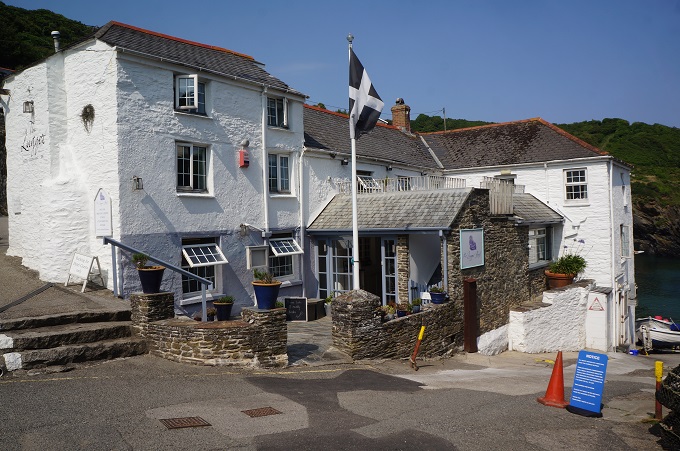
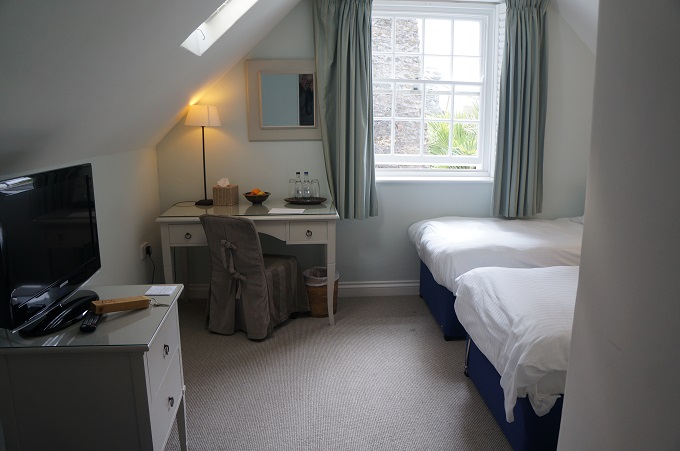
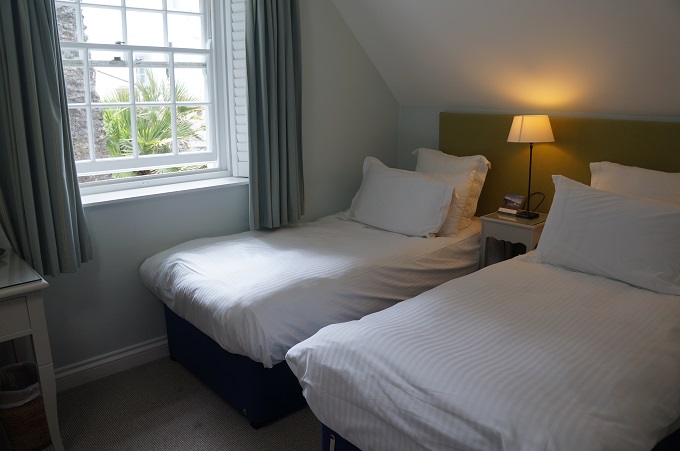
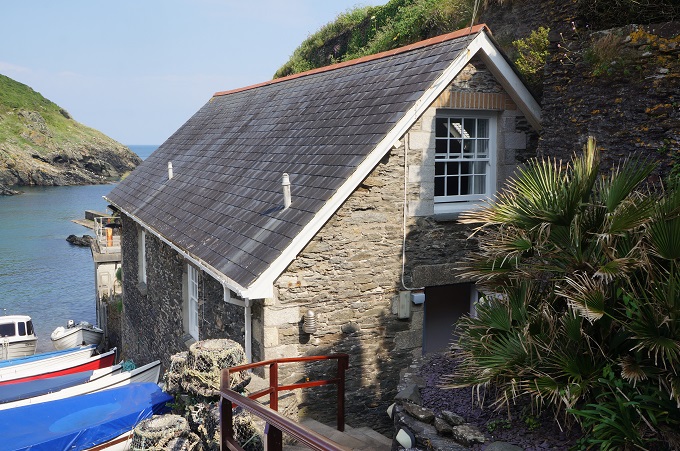
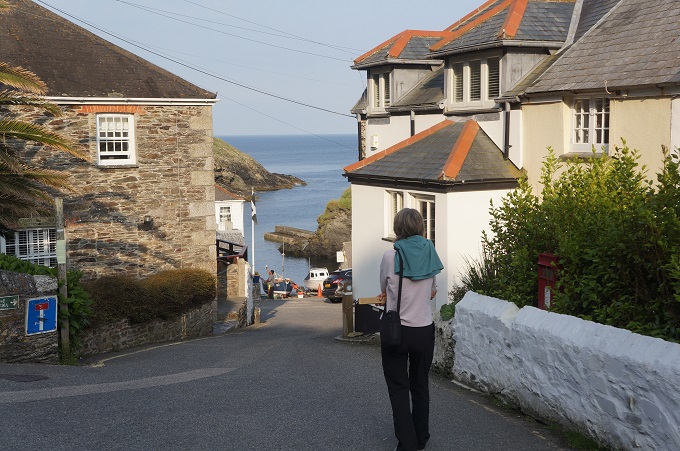
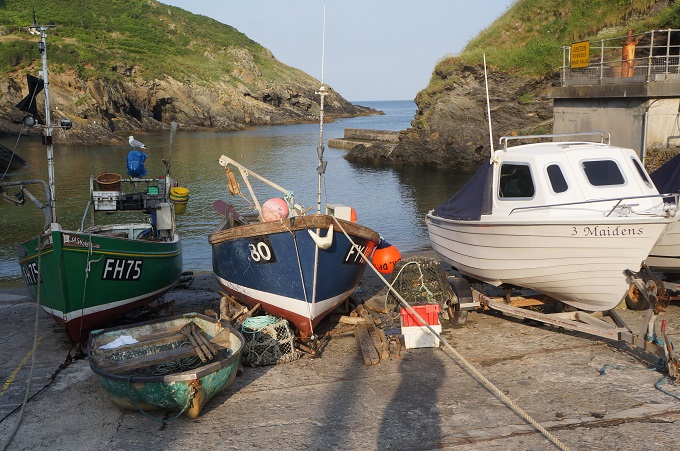
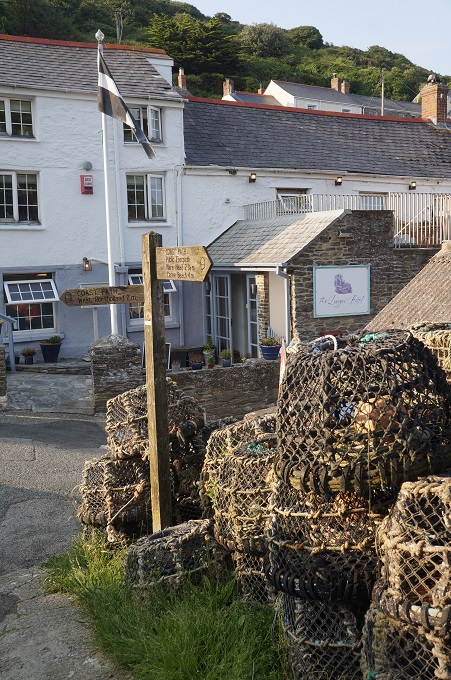
It was sunny today and possibly the hottest we have experienced here. At Pendower Beach we found a shed being used as a small summer café and bought out the entire stock of apple juice, ie  four little 200 ml boxes. From here things got a little trickier. The low cliffs grew and grew until we had to climb the great promontory of Nare Head. The long sandy beaches were replaced by isolated and inaccessible rocky coves. From here the path became a bit kinder, not too severe ups and downs until we came to yet another pretty little fishing harbour, Portloe, which is where we are tonight. This village is tinier and even more tranquil than most. We are staying at the upmarket Lugger Hotel which has a lovely location on the water’s edge. We are not actually in the main hotel building but in a next door renovated boat house. This is very comfortable.

A maid has just knocked on the door and asked us if we wanted to have our beds turned down – I said no as Barbara was asleep on one – but she did leave us tomorrow’s weather forecast and two hot chocolates in tall glasses. We couldn’t afford to eat in the hotel restaurant (and didn’t have the appropriate clothes) so walked up the road to the village’s only pub, The Ship Inn. This is in fact the centre of life in Portloe and we had a great meal in there.

It was a slow 100 metre walk up the road, we are suffering from the effects of the high, steep cliffs this afternoon, and the heat. More of both are forecast for tomorrow.


Reloading

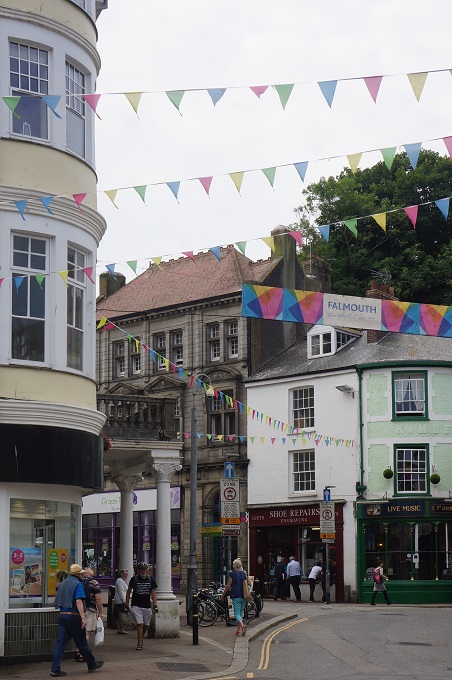
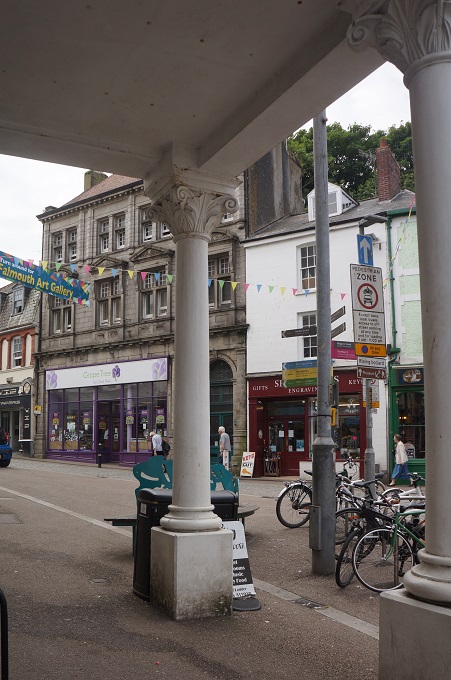
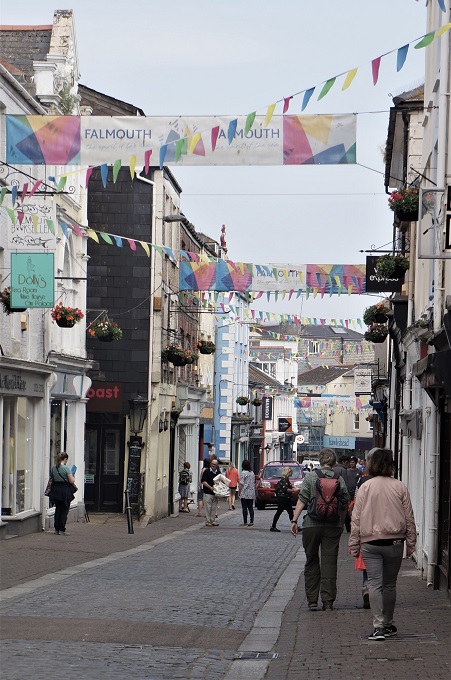
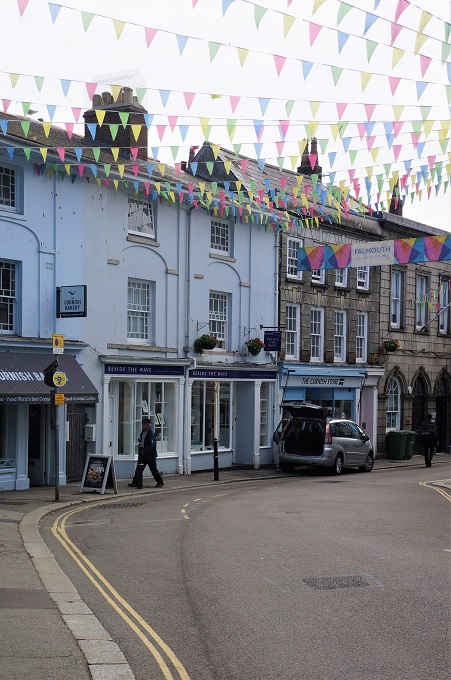
Falmouth

Today was a rest day so we rested, and we needed it. I think we are getting quite weary. Even after a short day yesterday there wasn’t much in the tank this morning. I guess after 23 days and about 380 km of often strenuous walking we are getting a bit worn out.

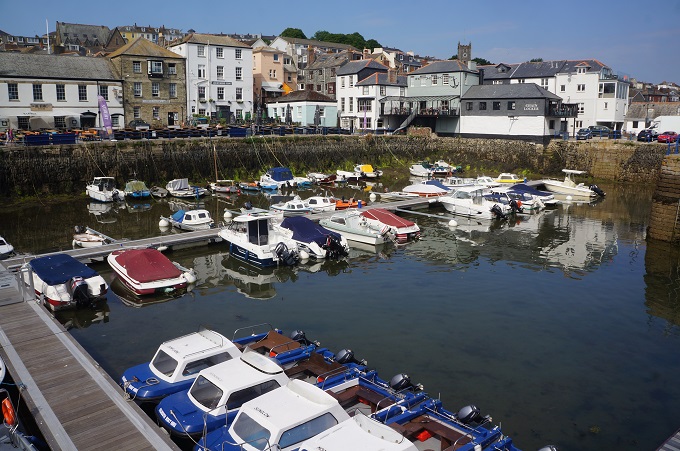
We walked through the old town of Falmouth to check out the ferry for tomorrow. We get two ferries in the morning, a twenty minute trip from Falmouth across the harbour to St Mawes and then a short ride from St Mawes across Percuil creek to Place. It was a very casual walk that involved quite a bit of sitting on benches just looking at the boats.

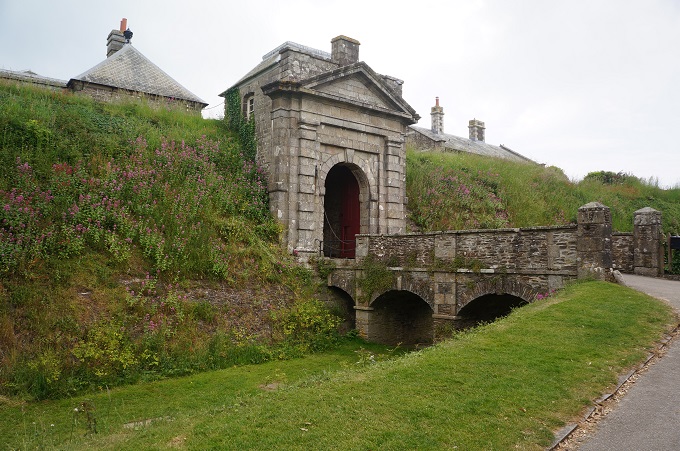
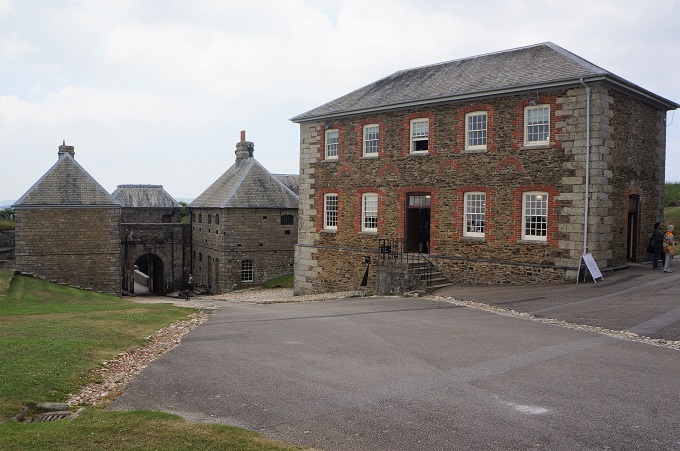
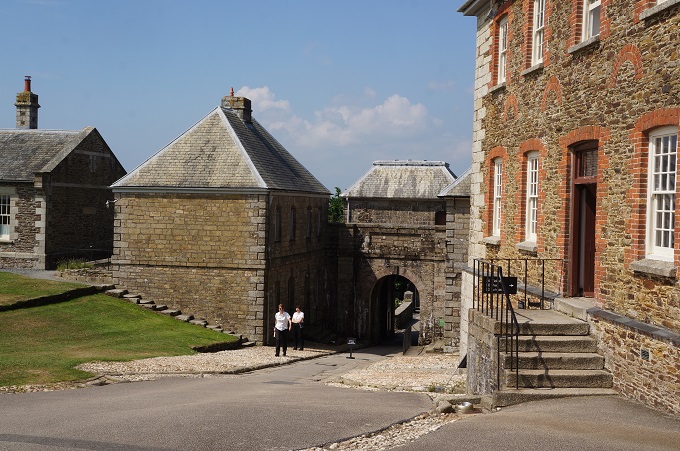
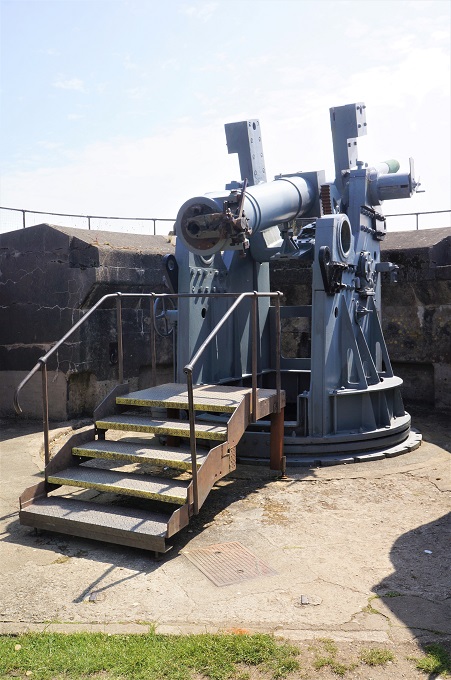
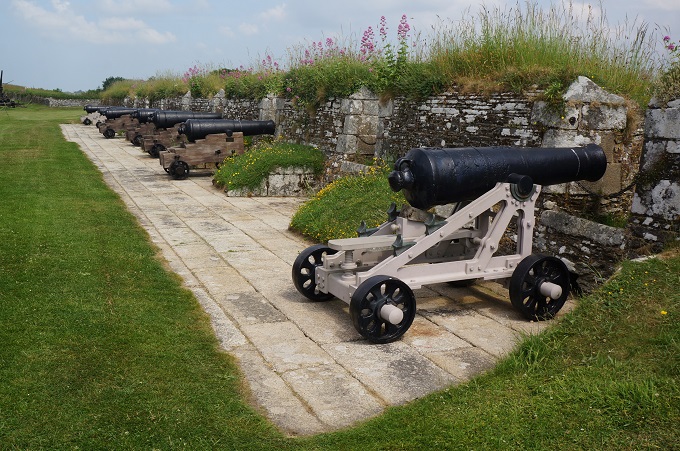
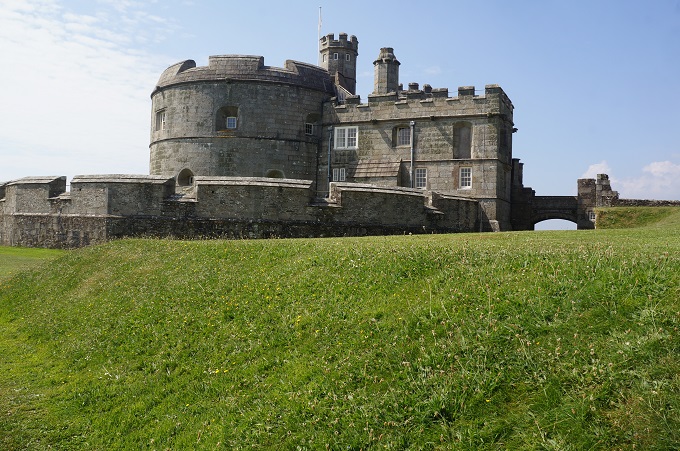
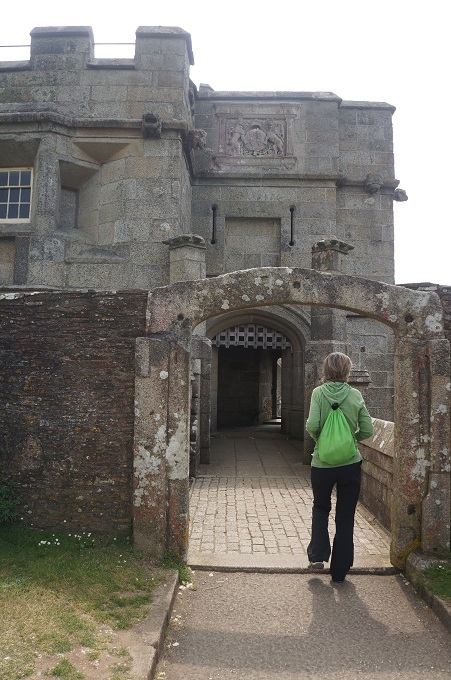
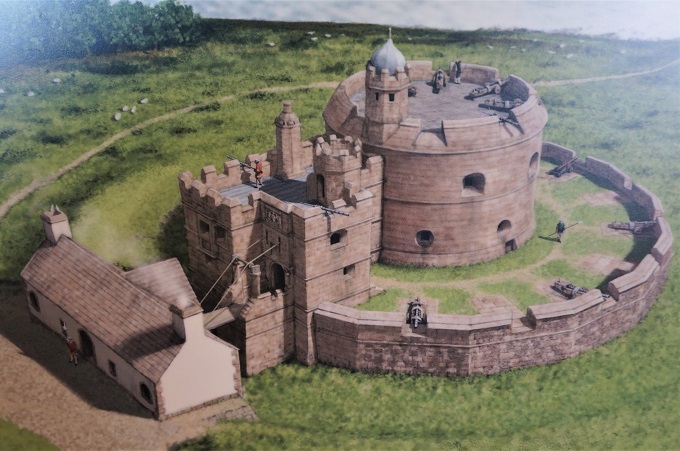
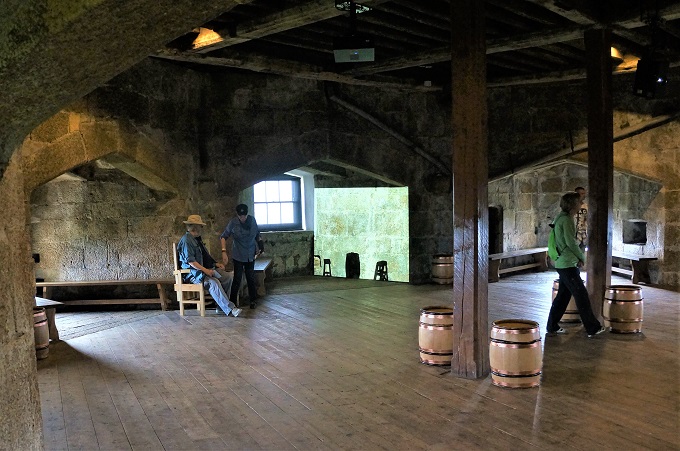
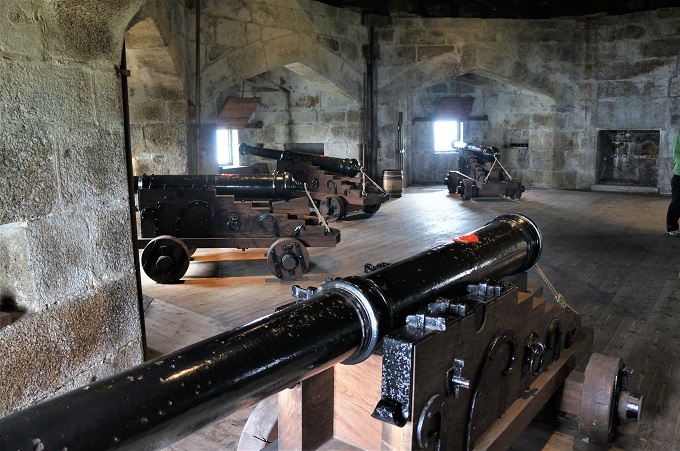
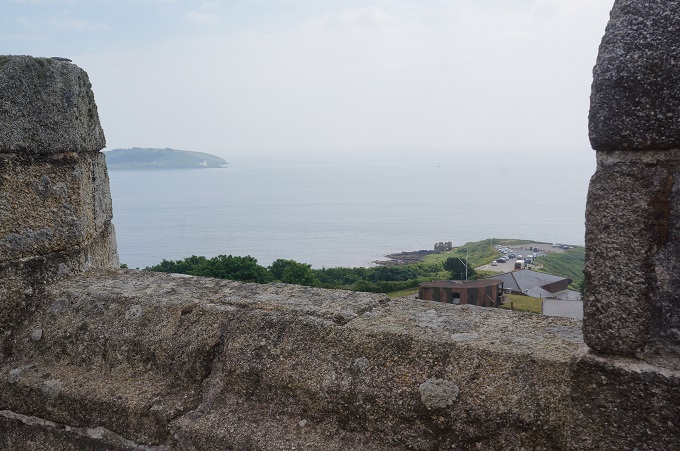
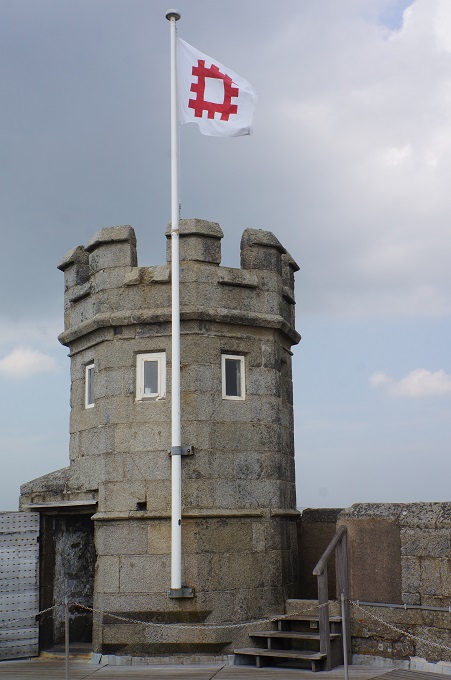
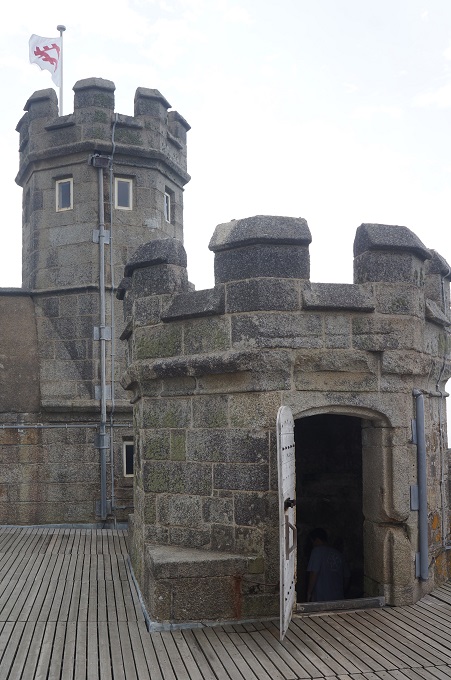
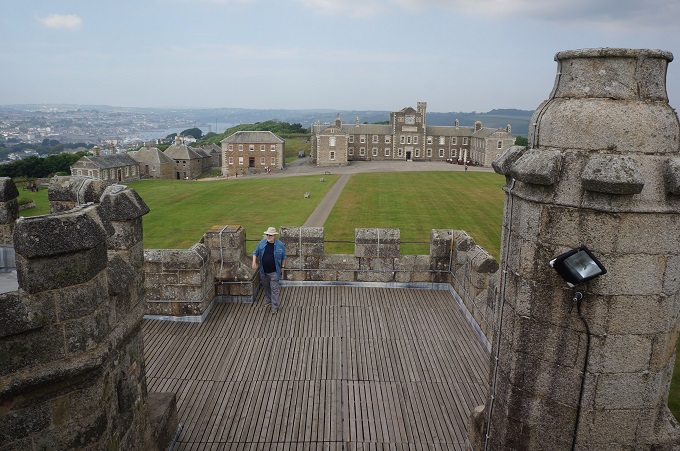
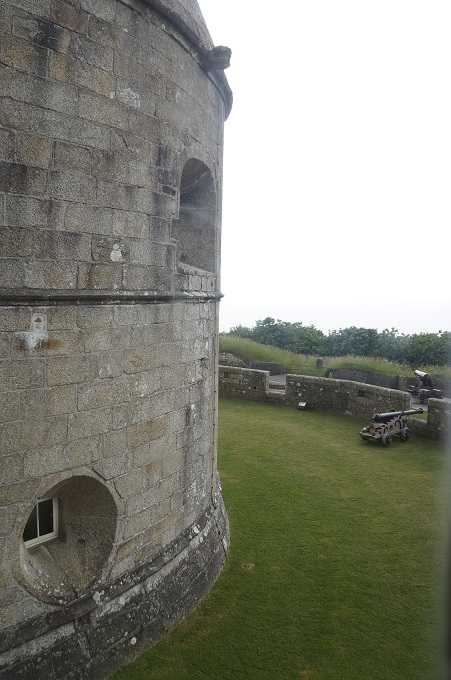
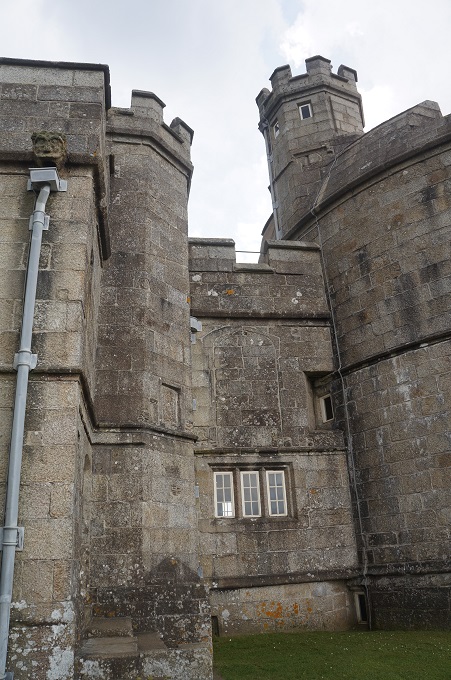
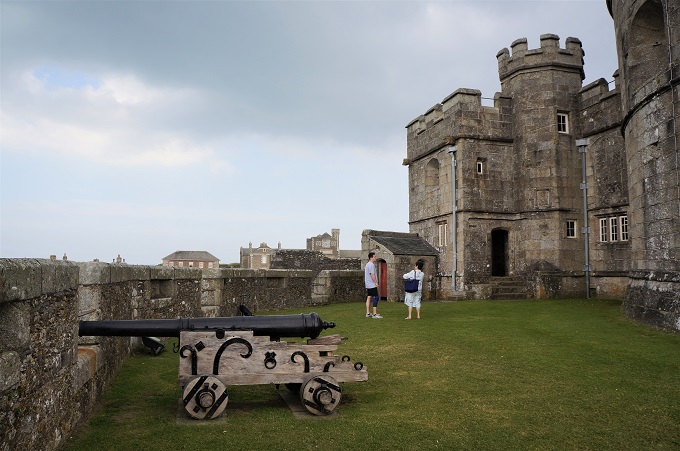
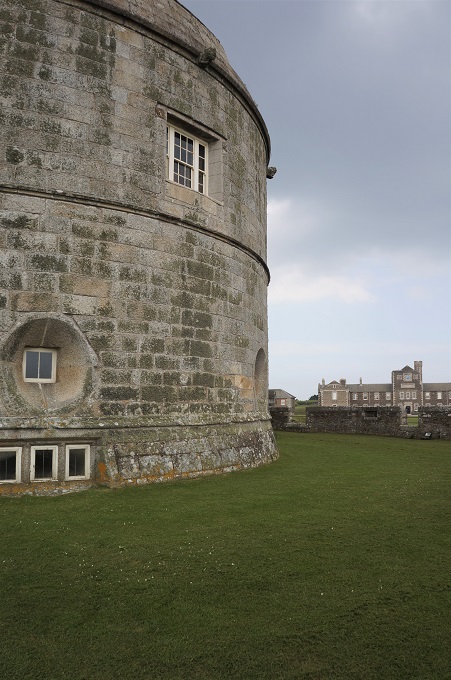
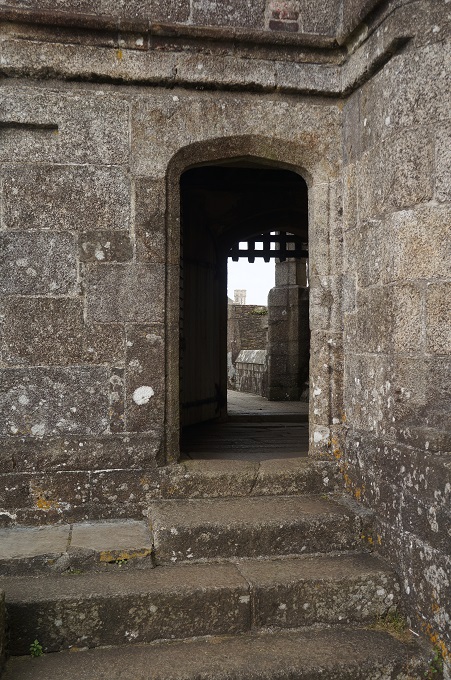
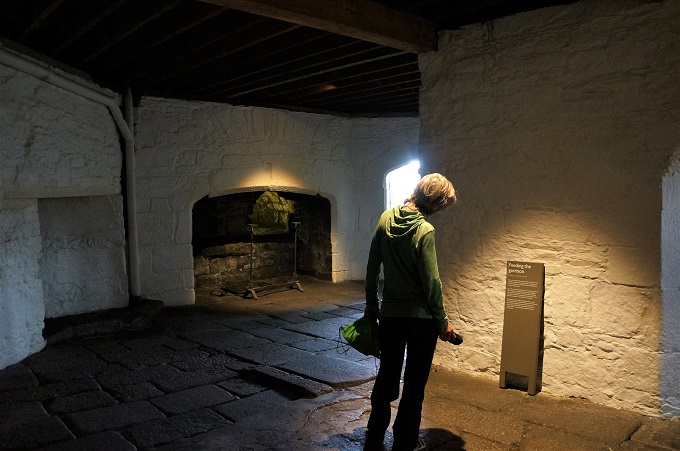
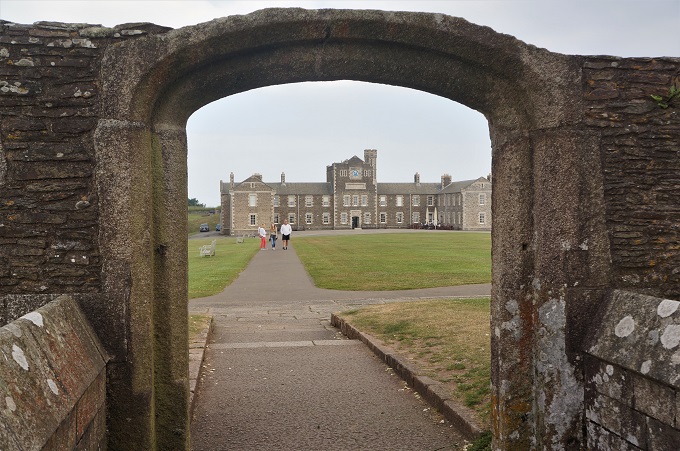
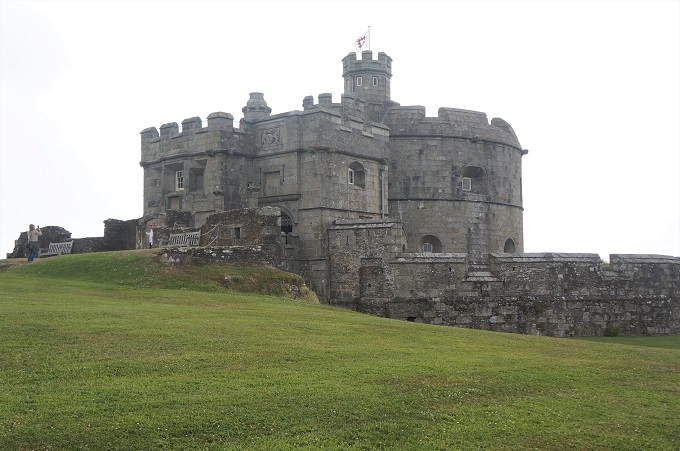
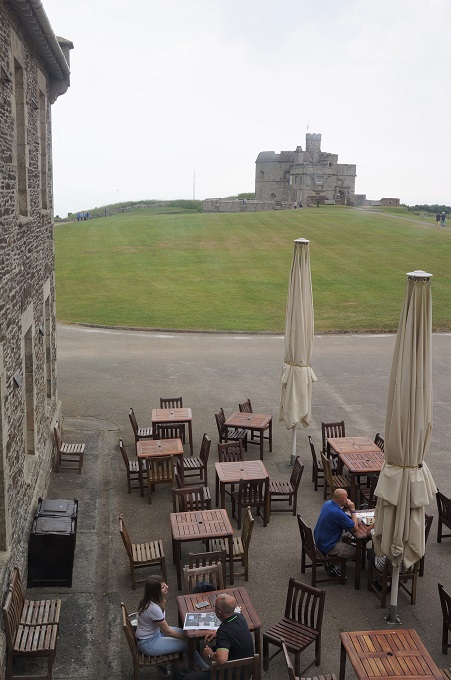
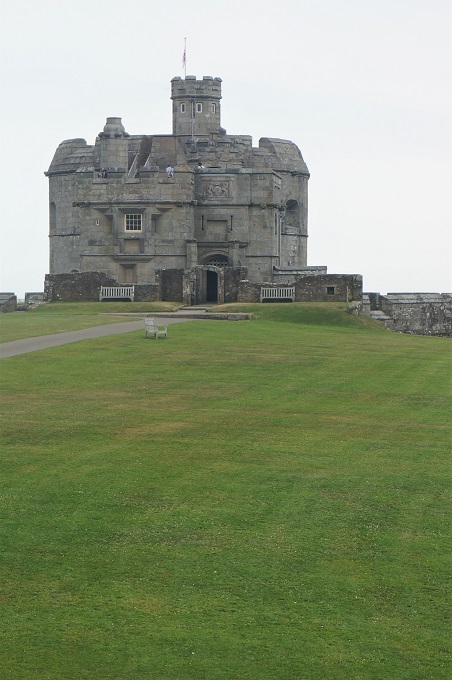
From there we climbed the hill to Pendennis Point to have a look at Pendennis Castle. This was quite a surprise. It was constructed in 1540 and is one of Henry VIII’s finest coastal fortresses. The Tudor Gun Tower is a circular keep with four levels of gun platforms (one on the roof, two inside, one on the ground) enabling artillery fire in any direction. There is a sister gun tower on the other side of the harbour. The defences were regularly upgraded and expanded during Elizabethan times, the Civil War, the Anglo-French Wars, The Napoleonic Wars, WW1 and WW2.

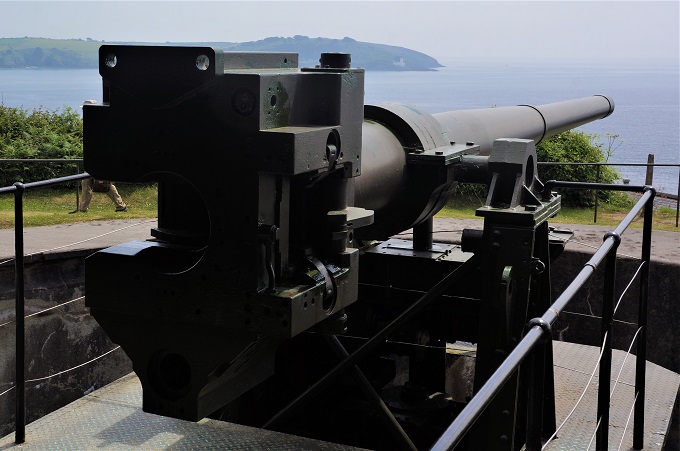
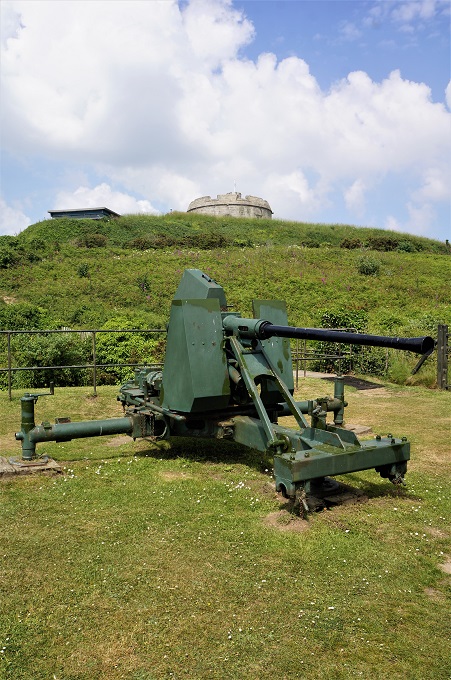
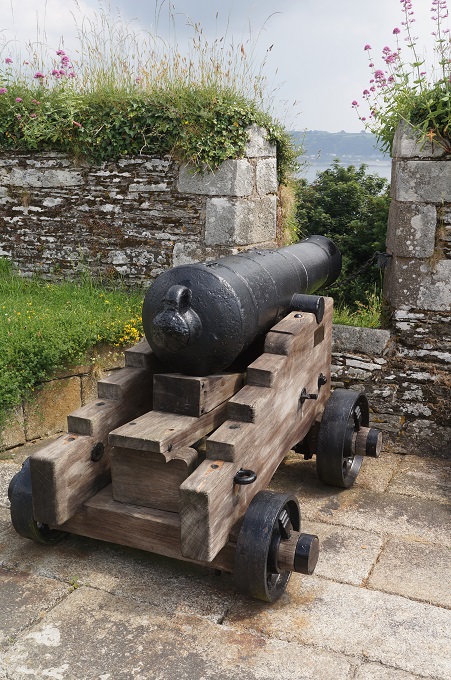
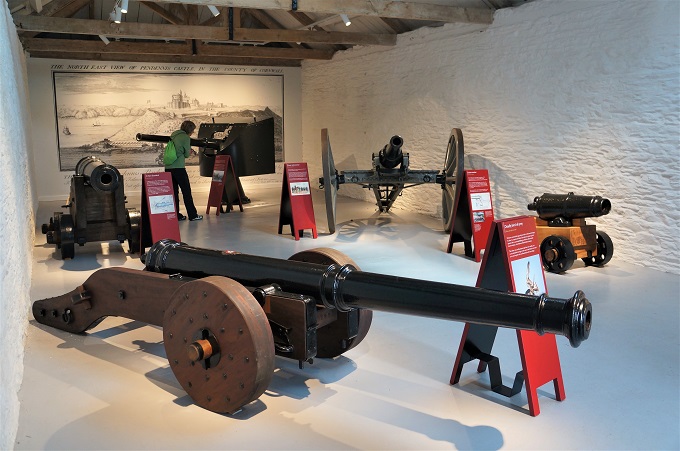
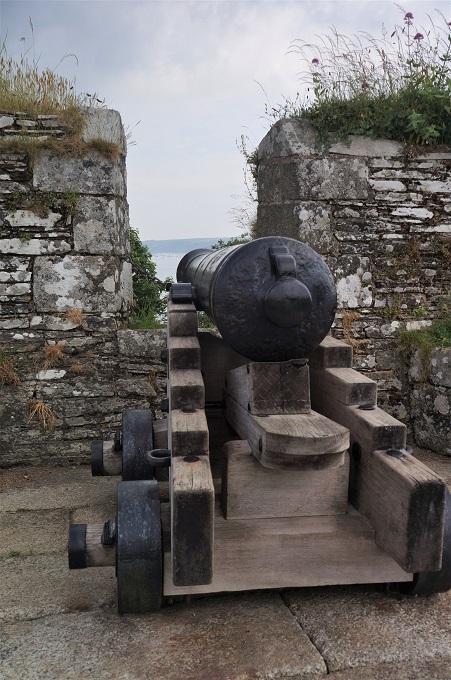
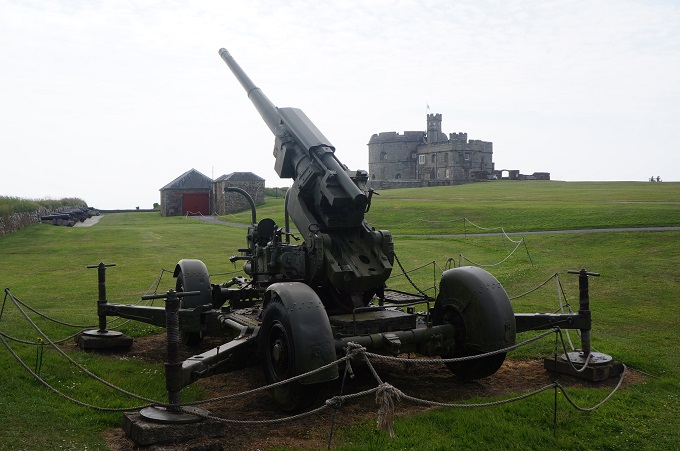
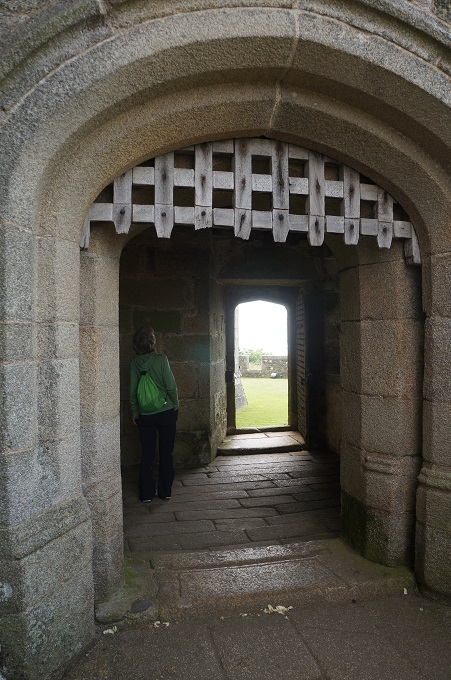
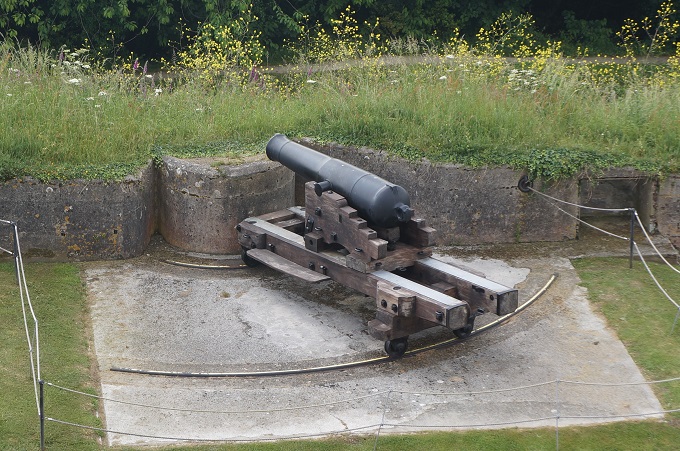
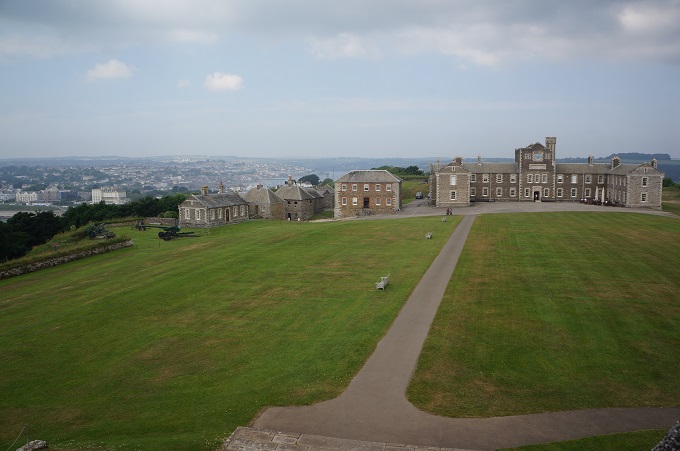
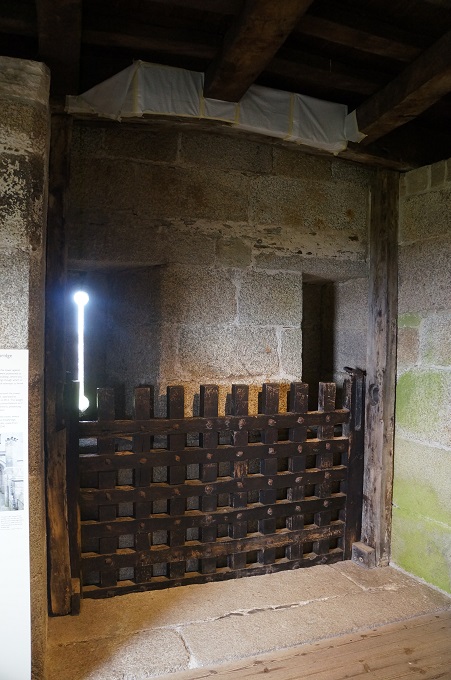
It was continuously used to defend Cornwall for 400 years up until the end of WW2. Consequently it has good examples of moats, ramparts, tunnels, underground bunkers and magazines, barracks, guard houses and a large collection of artillery from very old to WW2. It is all amazingly well preserved and in good condition. At 2 pm each day they fire a canon and at festival times have jousting tournaments etc.

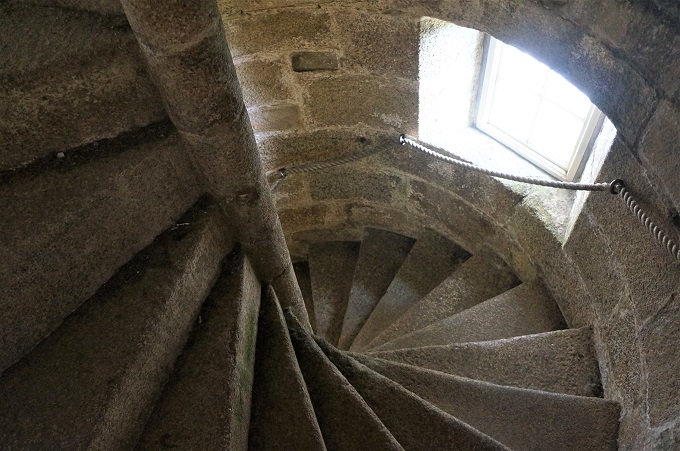
For me the two best parts were the Tudor Gun Tower and Half Moon Battery. In the Gun Tower you can crawl over every inch, up and down narrow stone spiral stairs from the kitchen in the cellar up to the gun platform on the roof. The roof has great views out to the English Channel and all around Falmouth Harbour. There are also audio/visual presentations on the firing of guns in Tudor times.

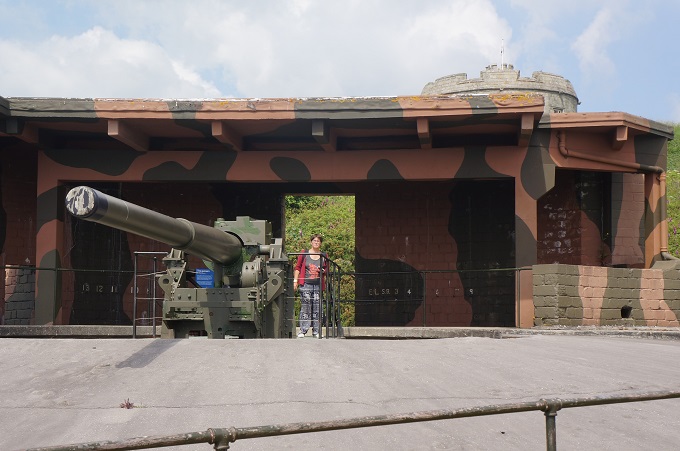
The Half Moon Battery (because the guns are set out in a half crescent) was built for WW2 and is approached through a tunnel under the Elizabethan ramparts. Here we were lucky to catch a guided tour. Underground there are the magazines where cordite cartridges and the shells were stored. Of course while down there the lights went out (regular generator problems during WW2 apparently) and they simulated the firing of the guns overhead, which was deafening. Outside it had been warm and muggy but down there under 3 metres of concrete it was refreshingly cool.

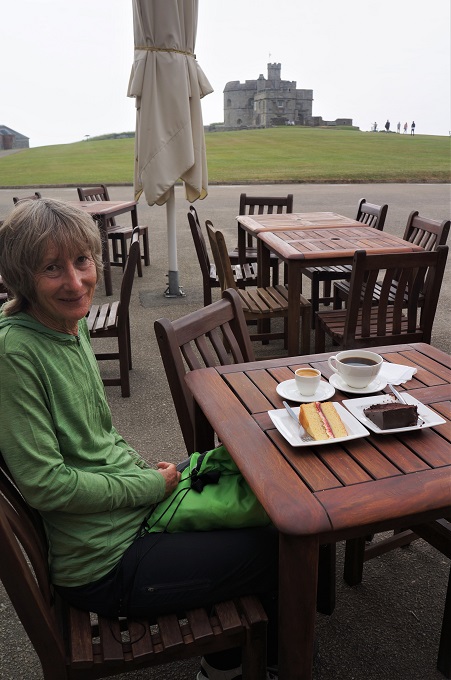
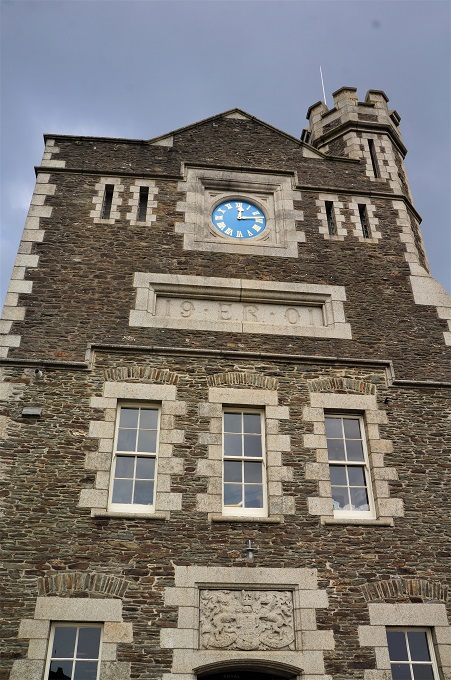
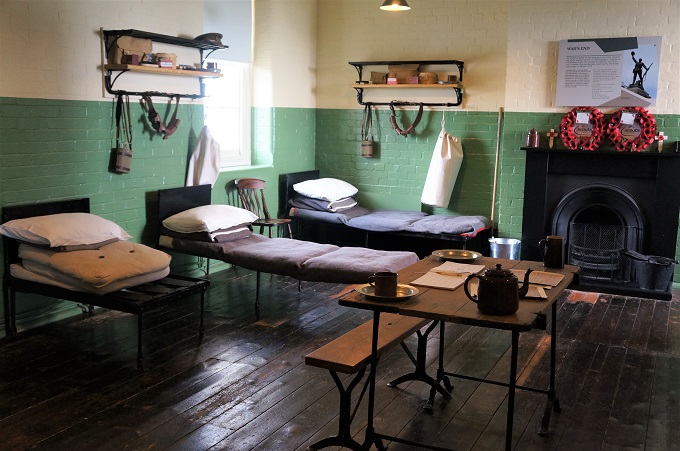
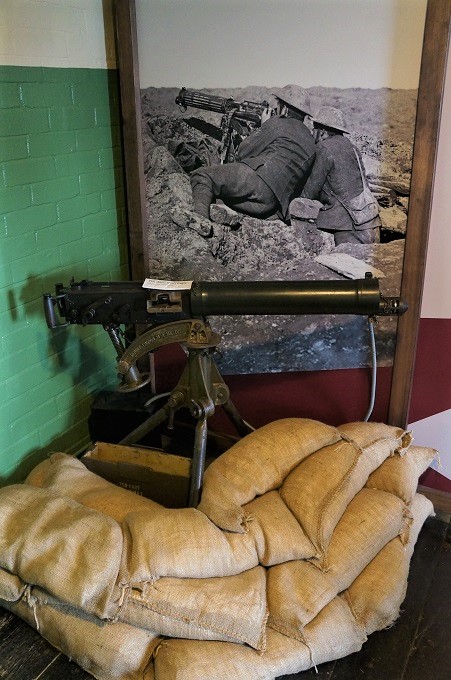
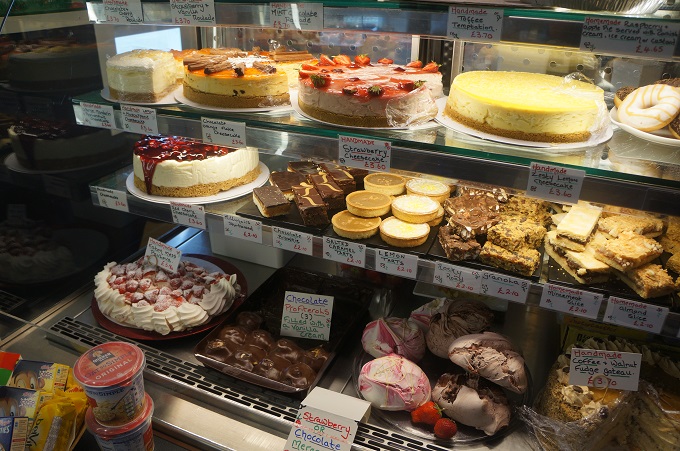
There is also the Royal Artillery Barracks, built in 1901, that has displays concentrating mainly on WW1. We didn’t spend a lot of time there as we have seen a lot of WW1 100 years commemorative stuff over the last four years. The Barracks had a very good tea rooms where we reloaded with some high calibre coffee and cake.

In the ticket office/ souvenir shop there was an exhibition of the war time (1939 – 1945) newspaper cartoons of George Butterworth. His political cartoons during this time were so successful both nationally and internationally that he was put on the ‘death list’ of both Adolf Hitler and Benito Mussolini. It did seem appropriate to have this permanent exhibition in a place that has had such a significant military function for so long. In WW2 Pendennis Castle itself was never attacked or bombed but Falmouth town and its harbour installations were bombed many times.

We were at the castle about three hours and then just came back to the hotel and had a very lazy afternoon.


Slow Walking

Mawnan Smith to Falmouth, 8 km, 158 m climbing

‘I’m a slow walker but I never walk back’. Abraham Lincoln

Today was our shortest day yet. 6 km! 6 hours to walk 6 km! Slow walking was the order of the day. We did manage to lengthen the distance another 2 km by walking the long route around Pendennis Head. After 22 days of walking we have a natural rhythm of walking, much nearer 4 km/hr than 1 km/hr. When you’re fit and healthy and the path is easy, slow walking is difficult. You almost have to stop and smell every flower.

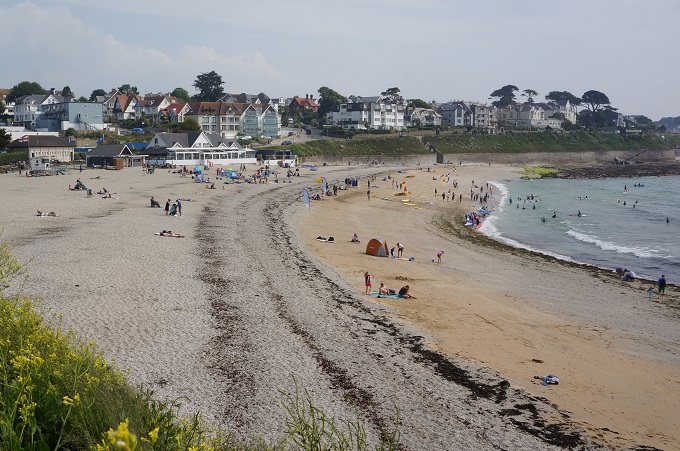
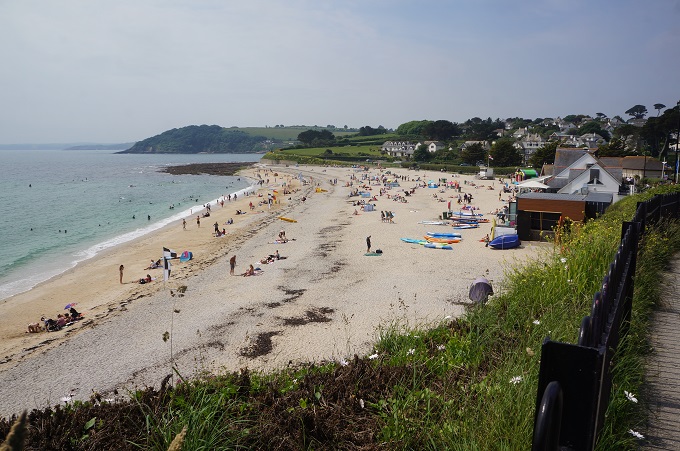
Falmouth has two good beaches and we knew we would be passing both of them today so we packed bathing costumes and towels to carry with us. The first beach was Swanpool but it didn’t look very inviting. Few people on the beach, only two people swimming, murky water and a stiff on shore breeze. We pressed on to Gyllyngvase which was much better. A much larger beach, sheltered from the wind, lots of people in the water, the sun was out and the water sparkled. After a bit of dithering about, Barbara decided, yes this was the day, we had to have a swim. We didn’t expect 26 degree water like the pool at home, and 13 degree water is pretty bracing, but it was very refreshing, even enjoyable in retrospect.

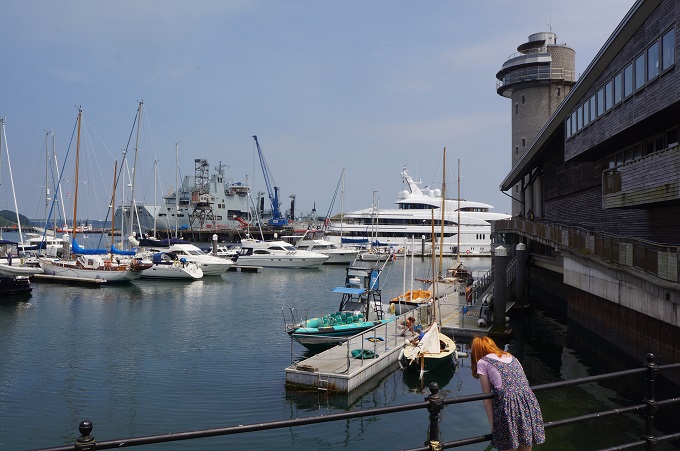
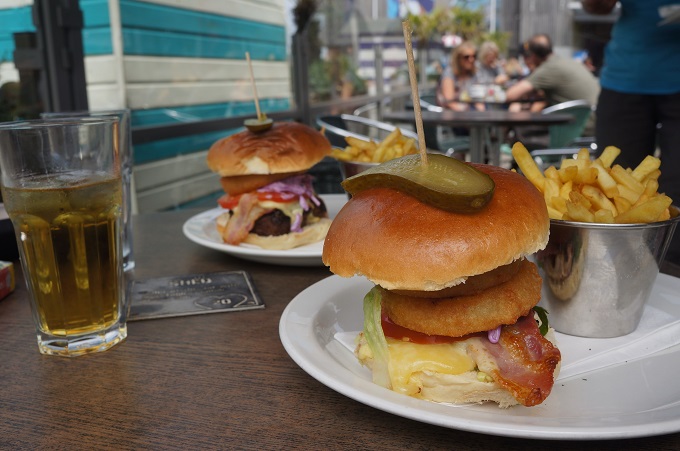
So we dawdled along, patted every dog, smelt every flower and still got to Falmouth with two hours to fill in before check-in time at 3pm. An extended lunch at The Shed on the waterfront boat harbour filled most of the time. Our latest resolution: no more hamburgers.

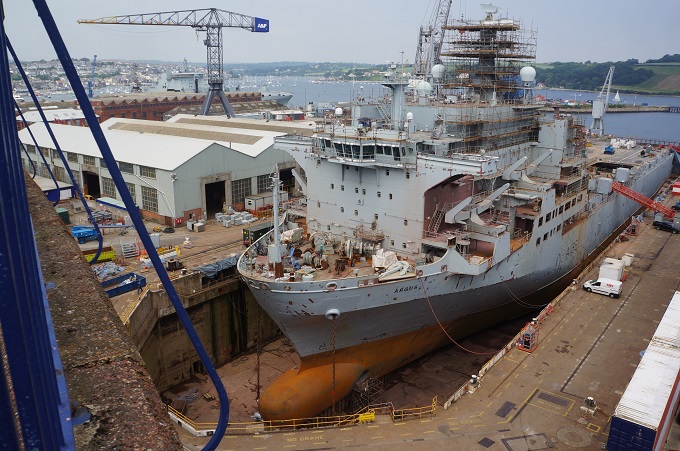
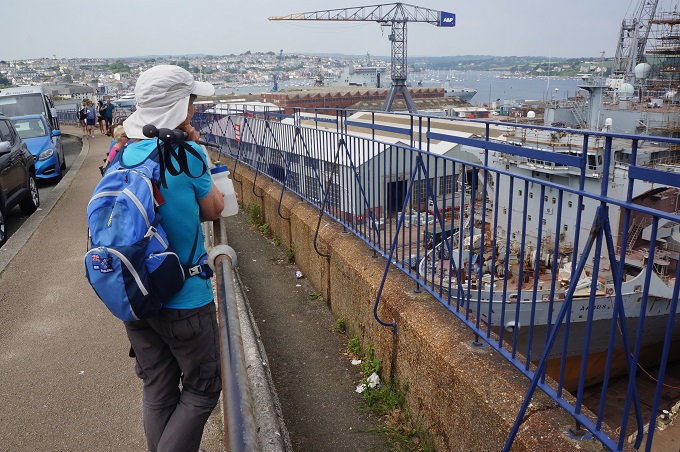
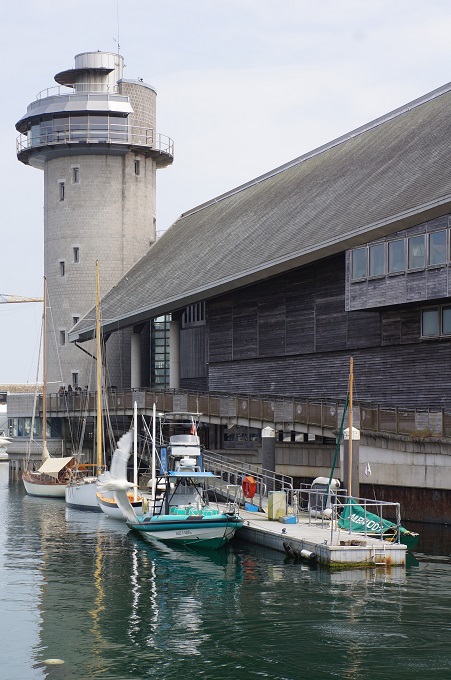
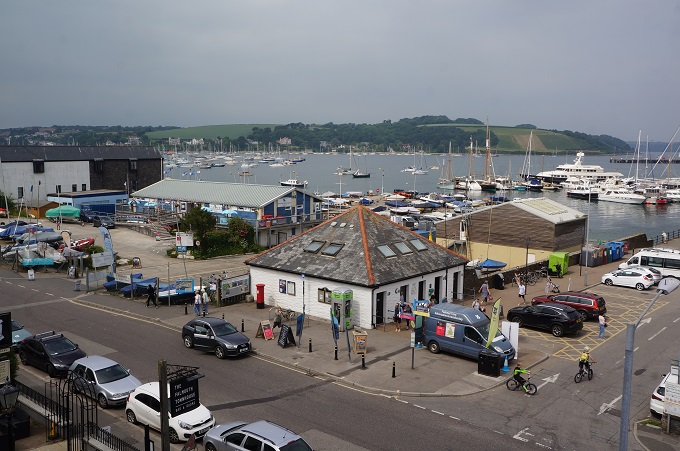
Although Falmouth is now primarily a tourist destination it has a long maritime history and still has an active docklands area with dry docks and heavy industry. It is located in the estuary of the River Fal and is the third largest deep water port in the world. The deep water port makes it popular with cruise ship companies. In 1540 King Henry VIII built Pendennis Castle on Pendennis Point at the entrance to Falmouth Harbour (called Carrick Roads) and a matching castle on the other side at St Mawes. These were built as protection from invasion by the French and Spanish.

Falmouth was just a small fishing village until the 17th century when it was developed by the Killigrew family who made their money from privateering and piracy, a lucrative trade in those days. For over 160 years between 1689 and 1851 almost all mail going to and from Britain’s expanding empire went through Falmouth using ‘packet’ ships. As the most south-westerly good harbour in Great Britain it was often the last departure point and first return point for ships going elsewhere in the world. It was faster to travel overland from here by coach than to sail on.

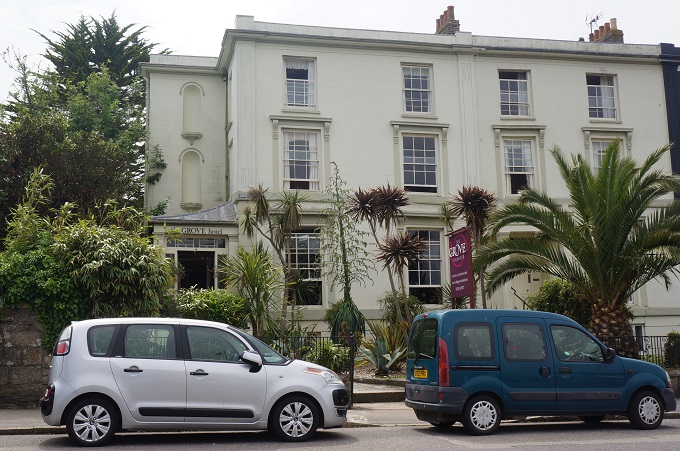
We are staying in The Grove Hotel located on the waterfront in the old part of town and we will be here two nights. No plans are in place for tomorrow but there seems to be a lot to see and do.


Two Ferries, Two Churches, Two Mishaps

Coverack to Mawnan Smith, 26 km, 468 m climbing
‘Thoughts come clearly while one walks’. Thomas Mann

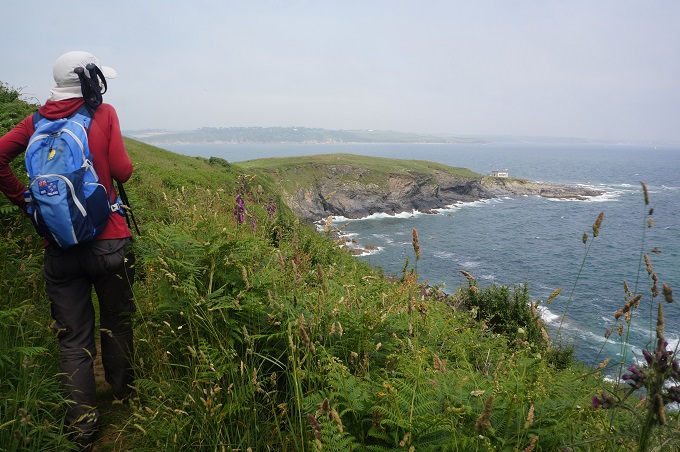
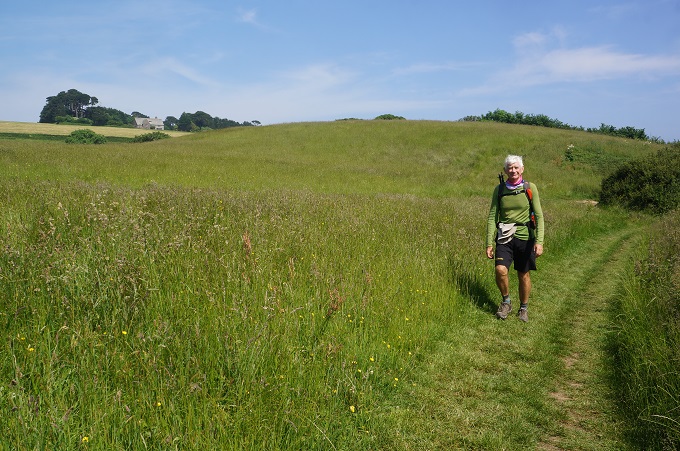
Today was not a day for dramatic coastline scenery, but it was a pretty day. The path included low cliffs (Lowland Point was only about 5 metres above sea level) facing away from the prevailing wind. There are two working quarries on the coast that the path has been diverted from so we went inland across pleasant rural fields of soft, soft grass, through woodland and along very quiet country roads.

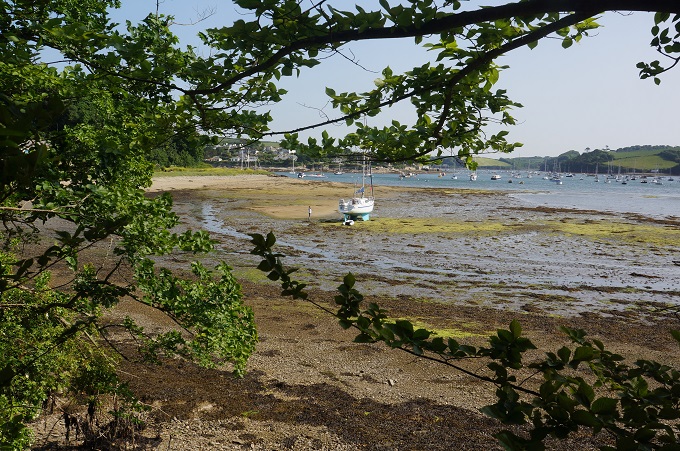
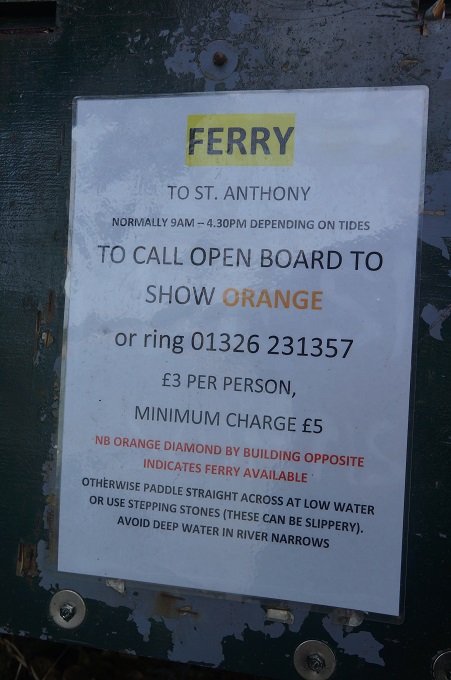
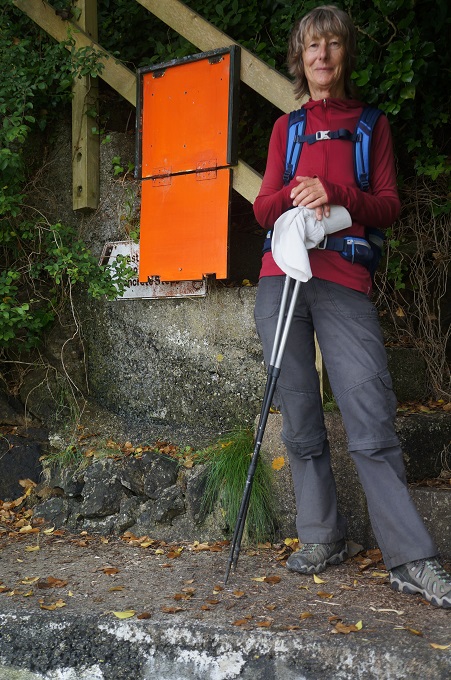
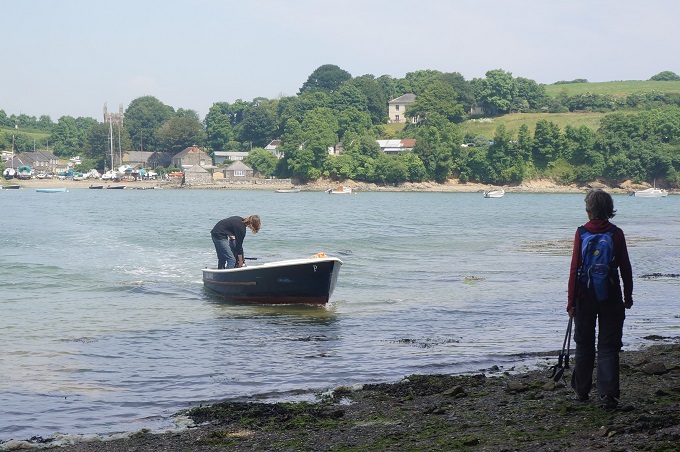
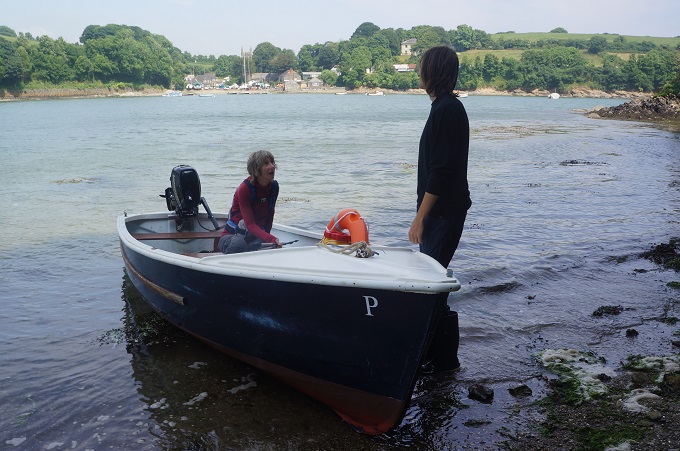
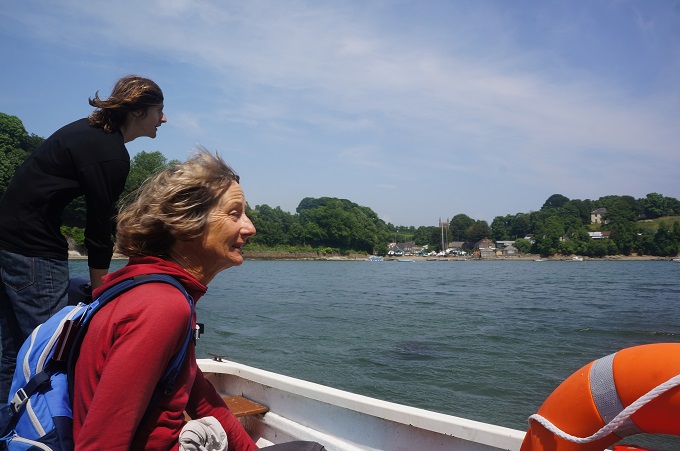
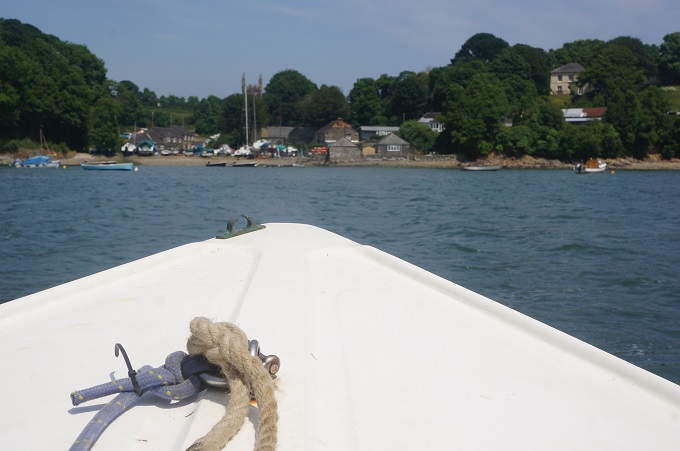
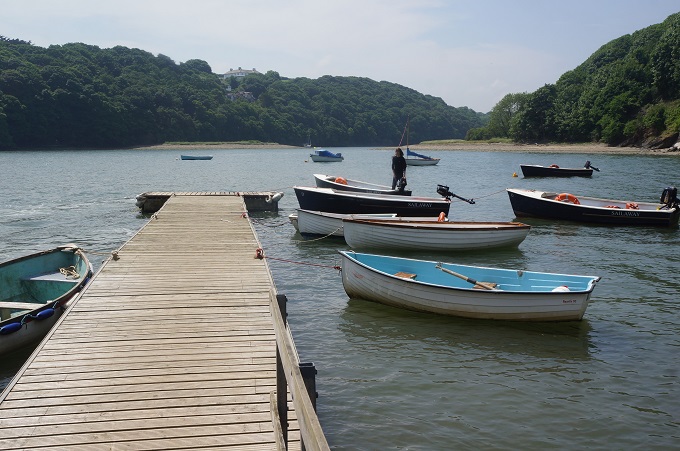
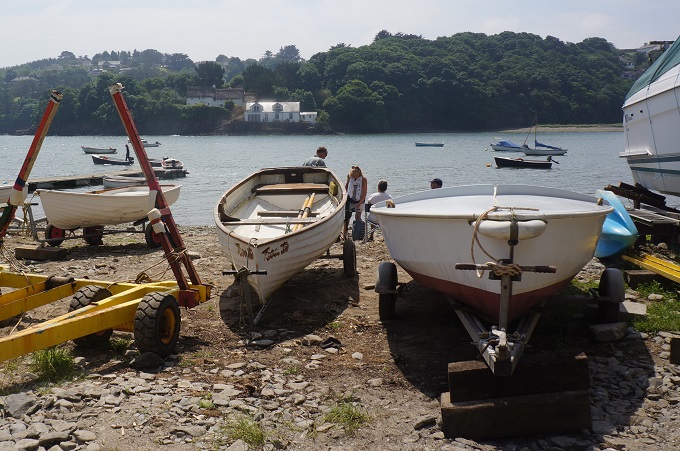
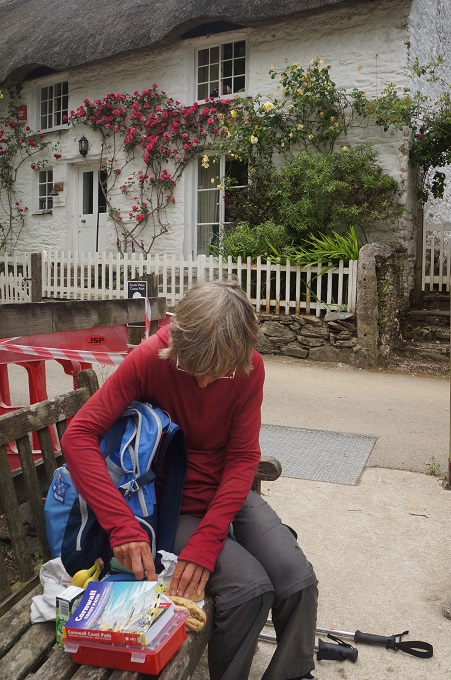
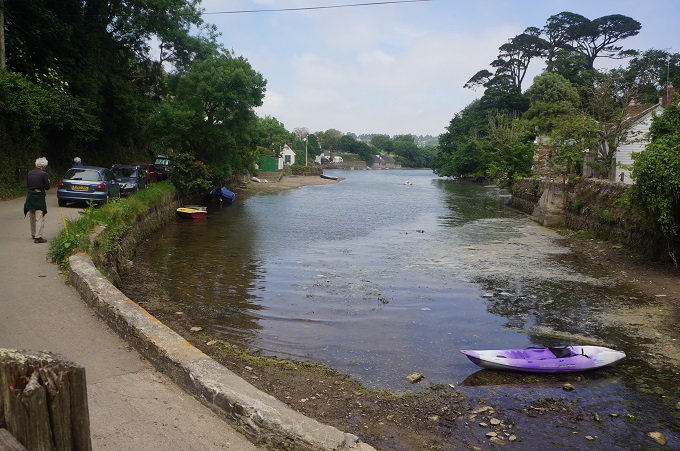
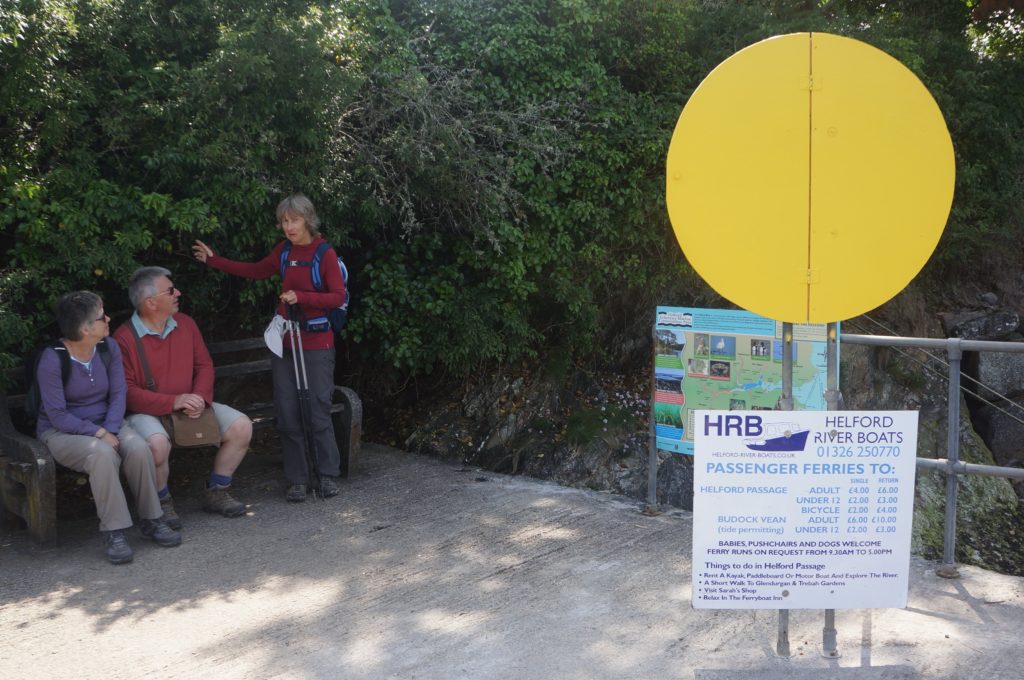
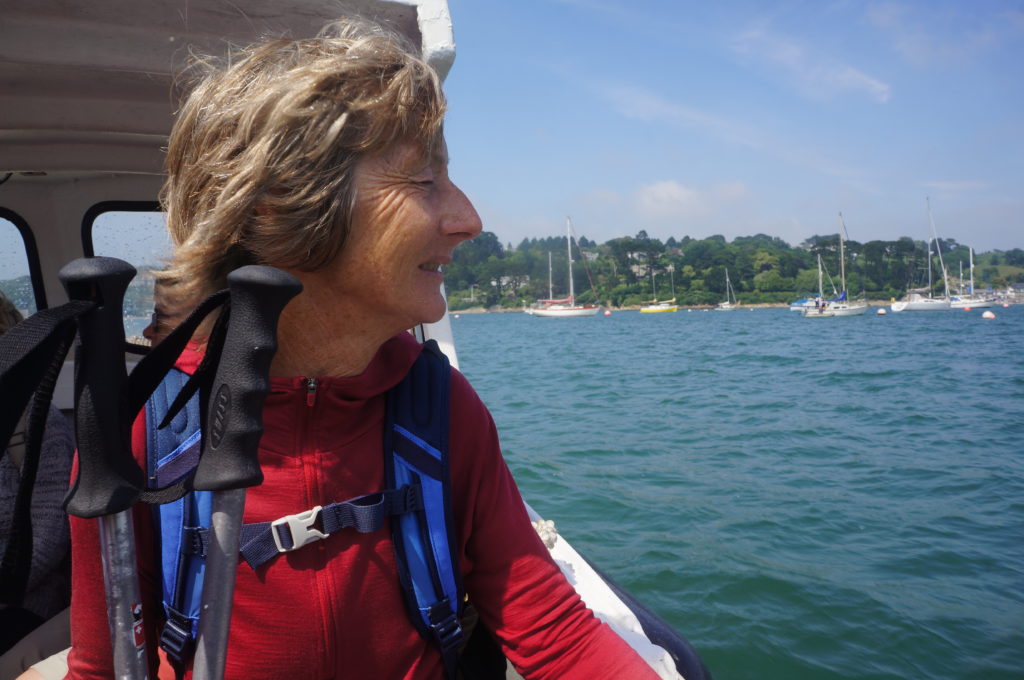
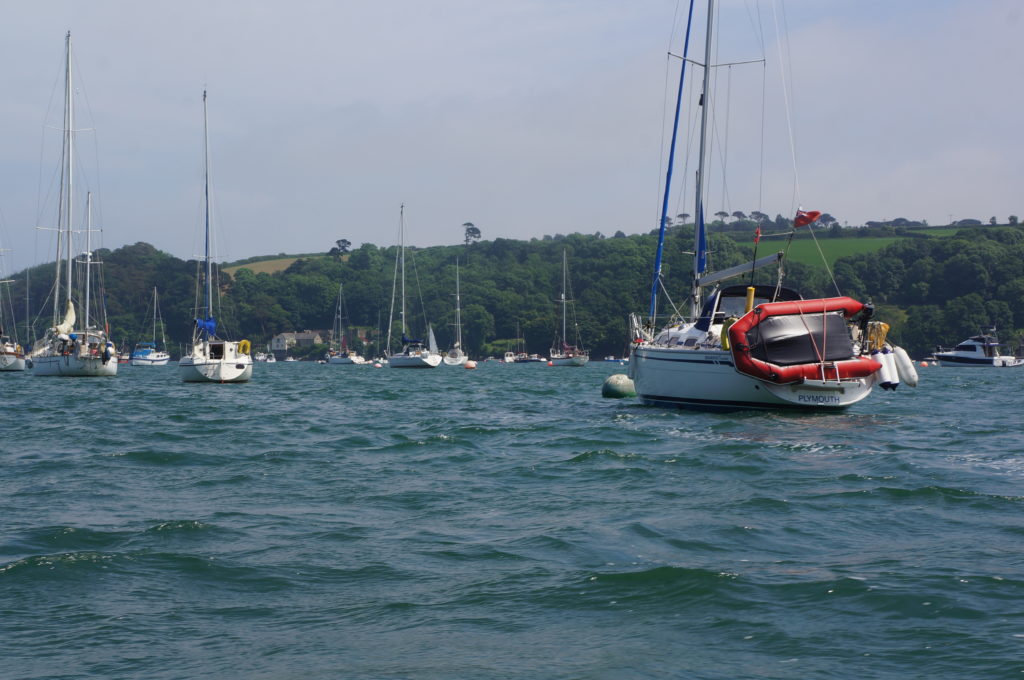
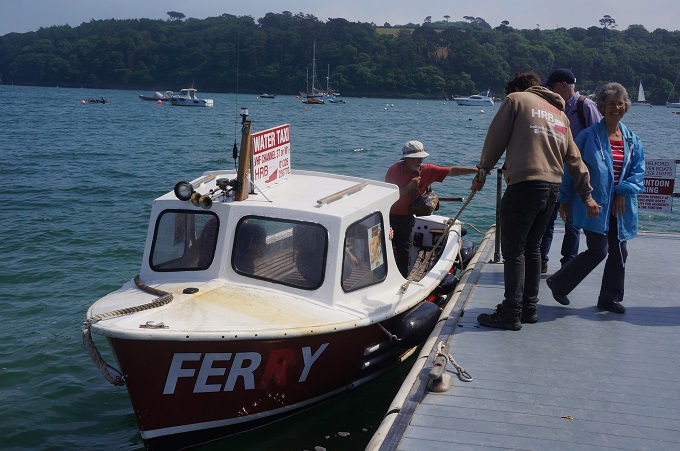
There were two rivers to cross. The Gillan Creek which can be crossed with wet feet at low tide and the larger Helford River. Both have ferries which you call for service. The system at each ferry is a large board – an orange square at Gillan, and a yellow circle at Helford, which you uncover and the ferryman can see from the other side of the river. He then knows someone needs to be picked up. At Gillan Creek it is a fairly casual operation; seasonal, tide and weather dependant, and the whim of the ferryman. At Gillan Creek the ferry saves a 4 km trek further up the river to cross by a bridge. Helford River ferry is a more commercial operation; operates every day, to a time table and is also a water taxi for transferring people to shore from the hundreds of yachts moored in the river. It saves a trek up the river of about 50 km. Both ferries were perfect for us today. £2.50 and £4 each well spent.

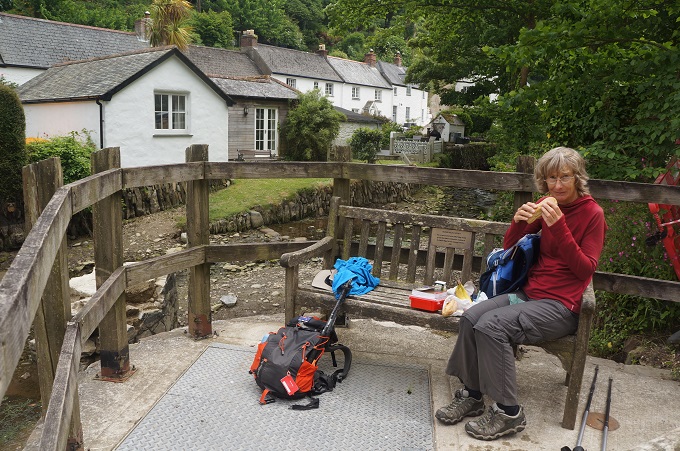
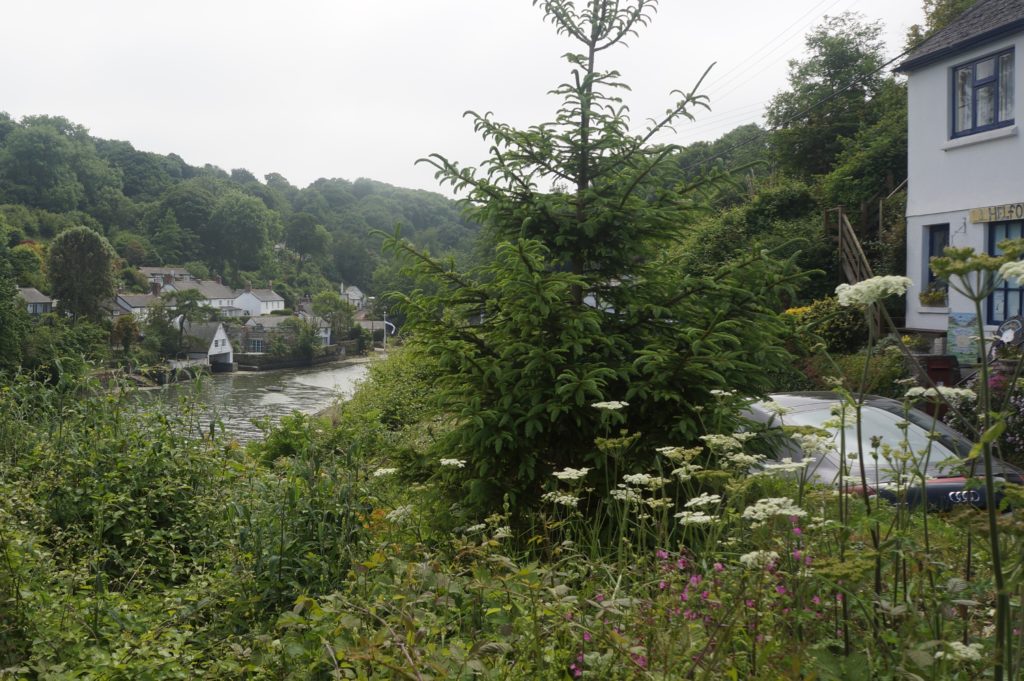
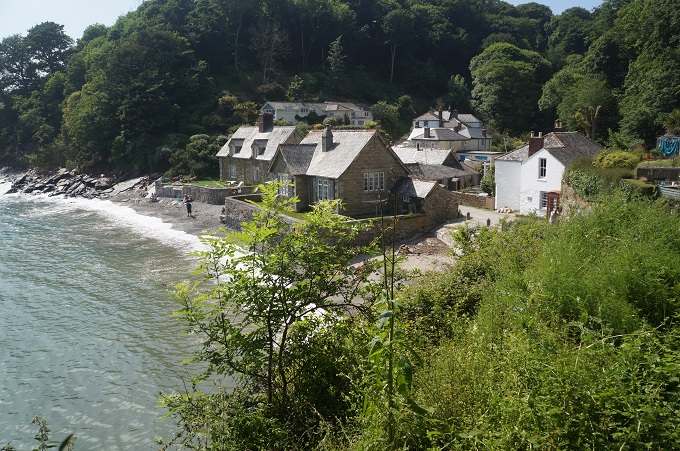
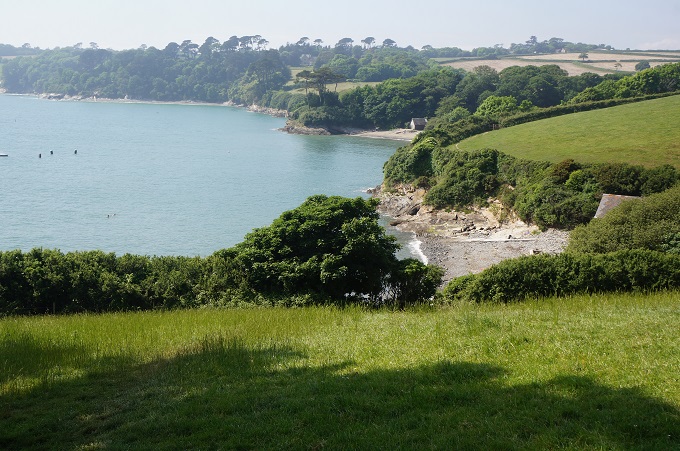
The ferries are located some way up each creek/river in narrow, sheltered locations, so in each case we had a walk up the side of the estuary. This part of the day was quite beautiful as the banks of the estuaries are wooded and you pass pretty beaches. The walking was also easy with no big climbs. There were quaint little villages at each of the ferry landings, mainly holiday lets, an ice cream shop and a pub. It was a sunny, hot day so walking in the shade of the wood for long periods was a blessing.

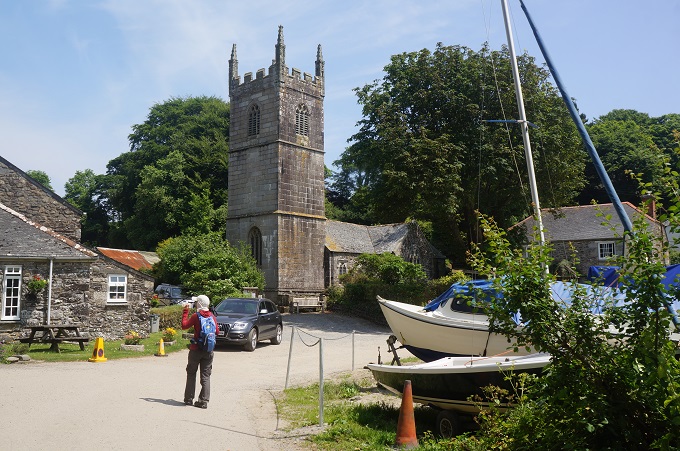
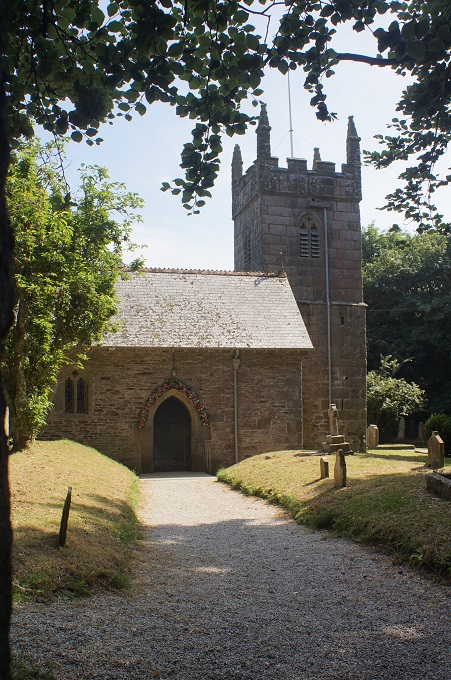
We stopped in at two little churches. The first was St Anthony-in-Meneage on the north side of Gillan Creek. The 15th century tower of the church is what you aim for if you are crossing the estuary on foot at low tide. It is a pretty mediaeval parish church in a lovely setting.

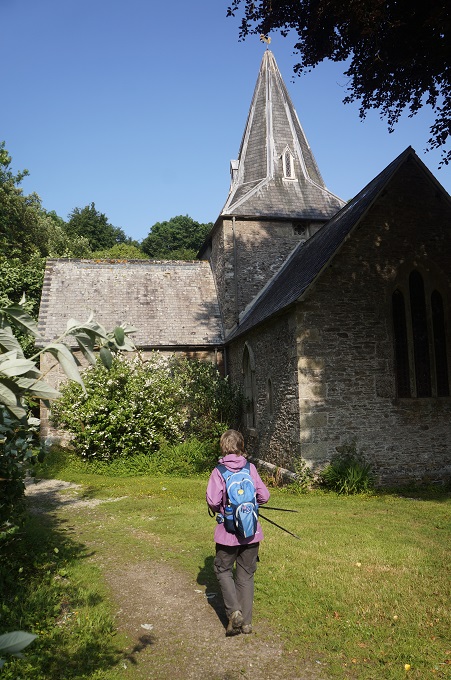
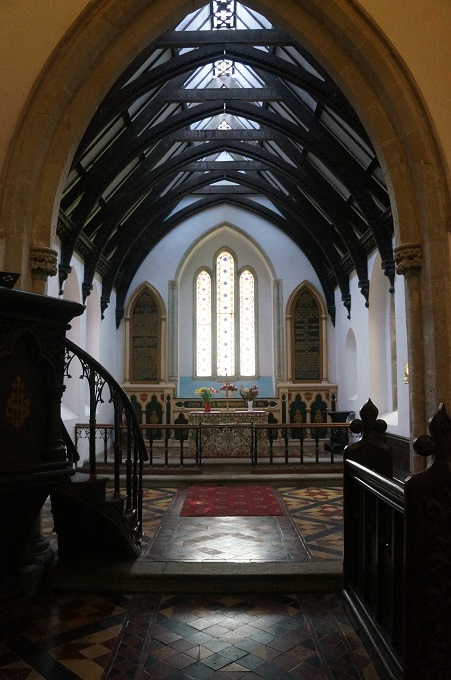
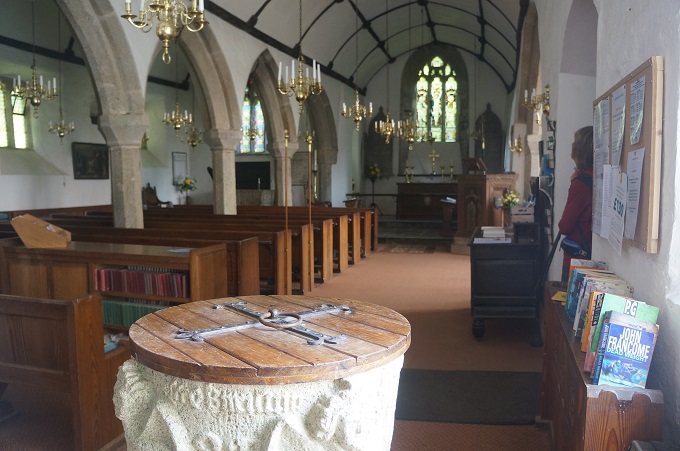
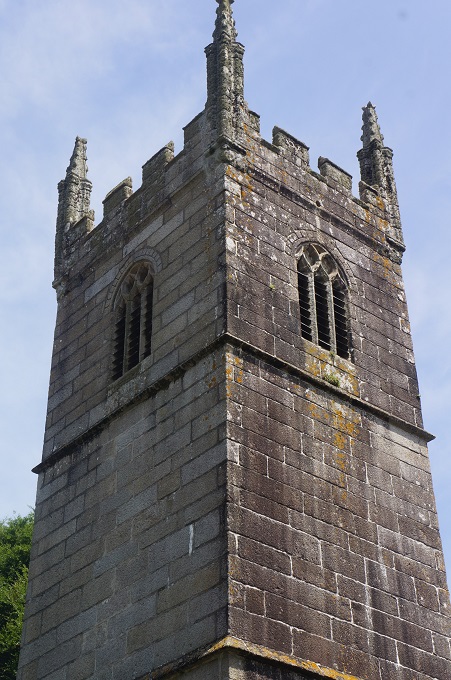
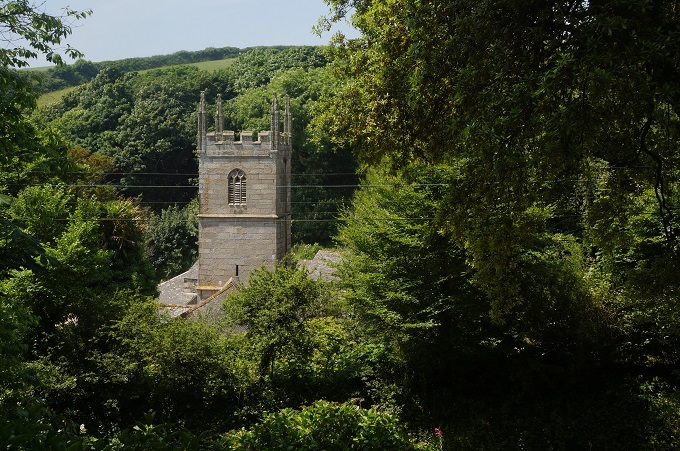
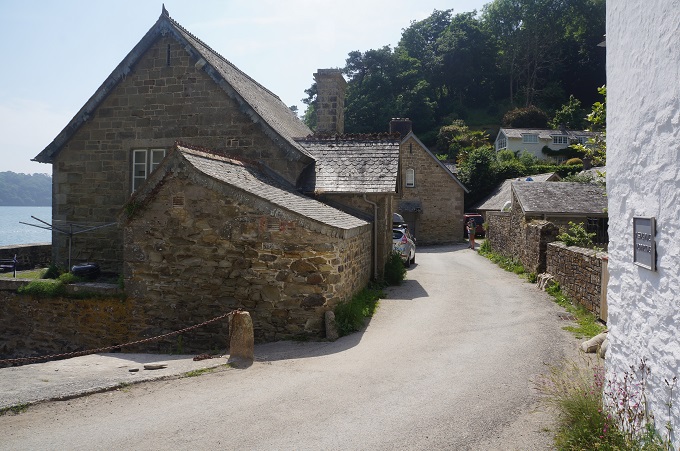
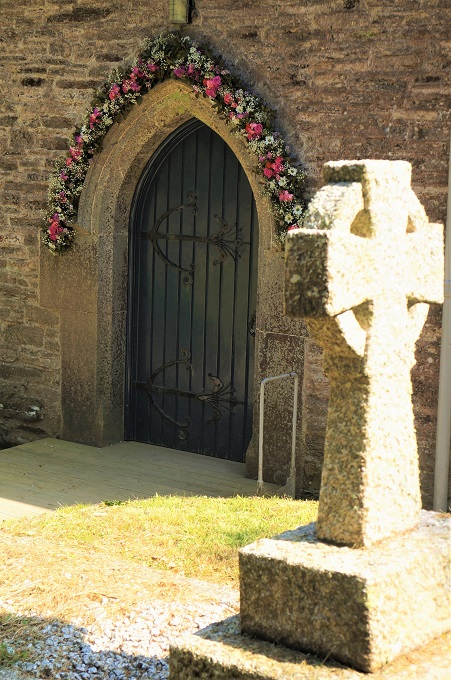
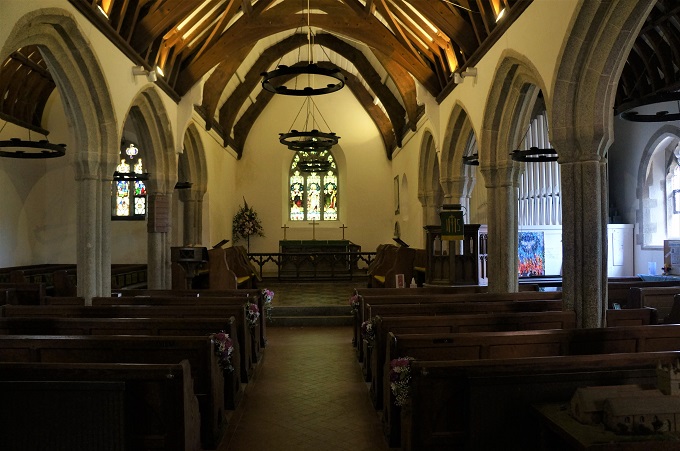
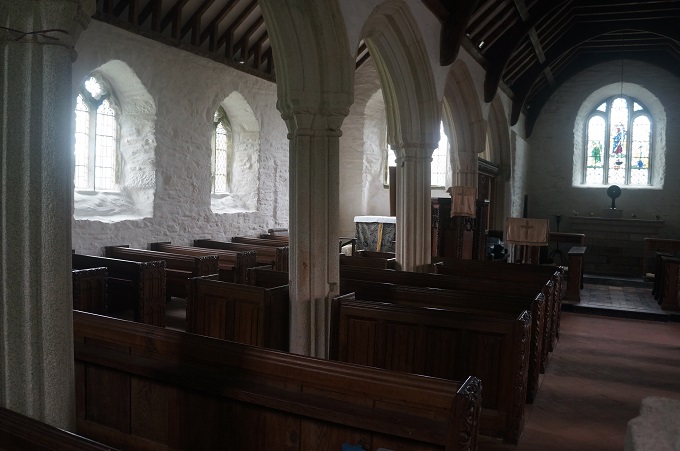
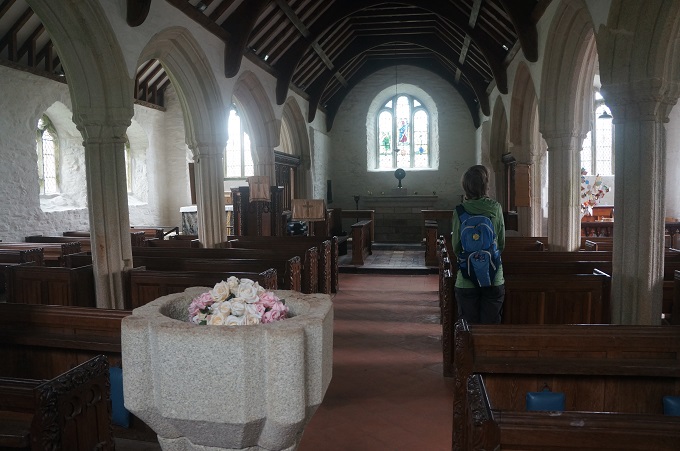
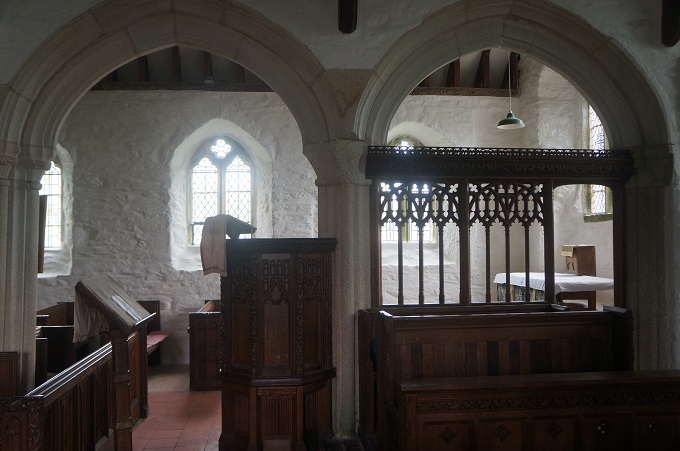
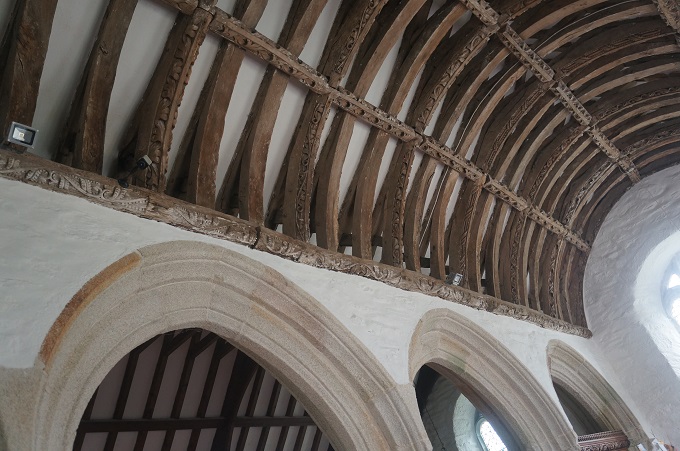
The second was the Church of St Mawnan and St Stephen located between the coast and our location tonight, Mawnan Smith. The 13th century church occupies a prime position overlooking the mouth of the Helford River. It is probably named after St Mauanus a Breton monk who landed here in the 6th century. The tower has been a navigation aid for sailors for centuries. A request from coastguards, in 1842, to paint the tower white was never followed up (thank God). The arch over the entrance and the ends of the pews were decorated in pink and white flowers – there had been a wedding here earlier in the afternoon.

Two mishaps today. The first at the very beginning of the day. We had stopped at a shop in Coverack to buy bread and cheese for lunch. Outside we put our purchases on a wall to stow them in our bags. We discovered we had chosen a place with great dolops of bird poop. Our lunch was now covered in it – yuk!
The second mishap was near the end of the day while crossing a field. I stepped and slid in a huge cow pat concealed in the long grass. While regaining my balance I managed to step in another cow pat – double yuk!


Not too day

Lizard to Coverack, 18 km, 699 m climbing

‘Truth walks bare feet, lies keep switching shoes’

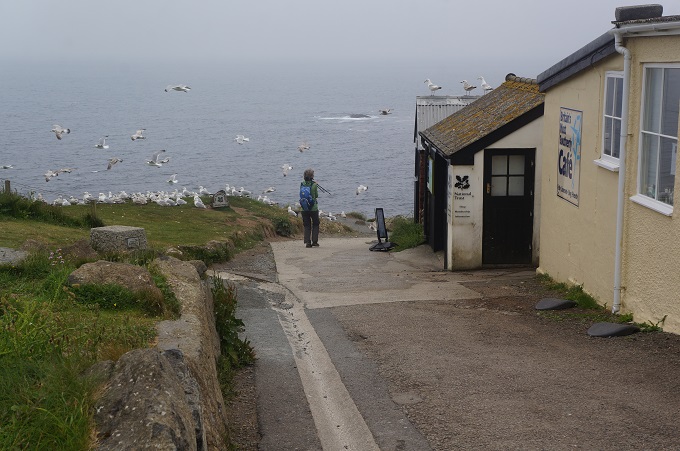
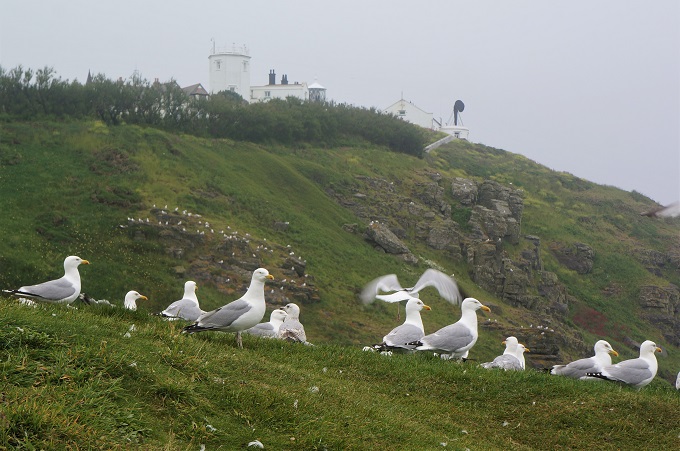
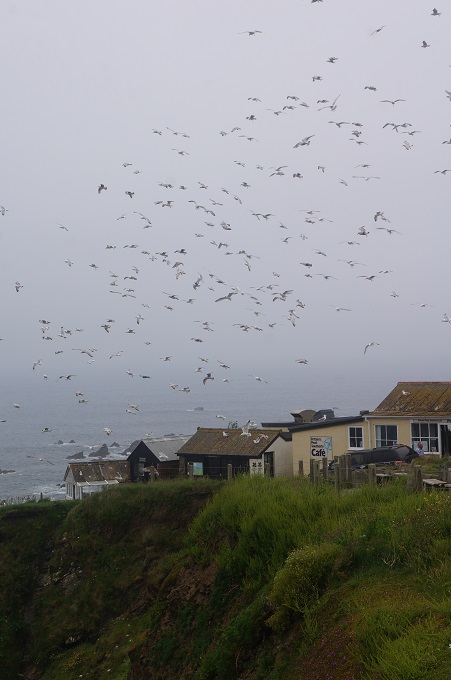
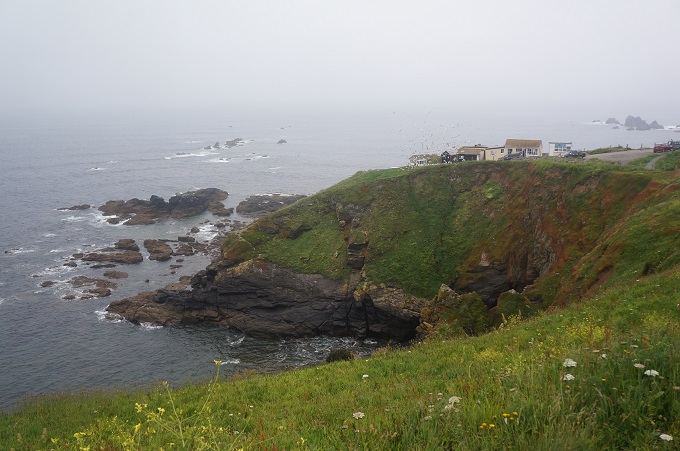
After buying some lunch (sandwiches, drinks and Reese’s peanut butter cups – yum yum) we went back down to Lizard Point. It was just us and the gulls as the coaches and cars bringing the hoards hadn’t arrived yet. Lizard Point is famed as the most southerly point of mainland Britain. There are a lot of offshore islands and these are 500 million years old, leftover crumbs of the collision between the super-continents Gondwanaland and Euramerica.

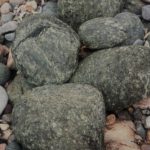
Lizard is named after the colourful serpentine rock found in this area. This gives the cliffs great streaks of green, reminiscent of a snake’s or lizard’s skin. Local sculptors carve ash trays and lighthouse ornaments from the serpentine rock, although they would be a bit heavy for us to carry. The rock is actually part of the earth’s mantle, which is normally about 20 km below the surface.

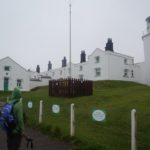
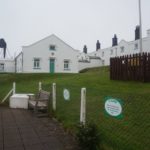
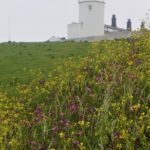
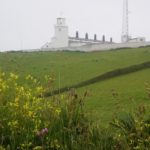
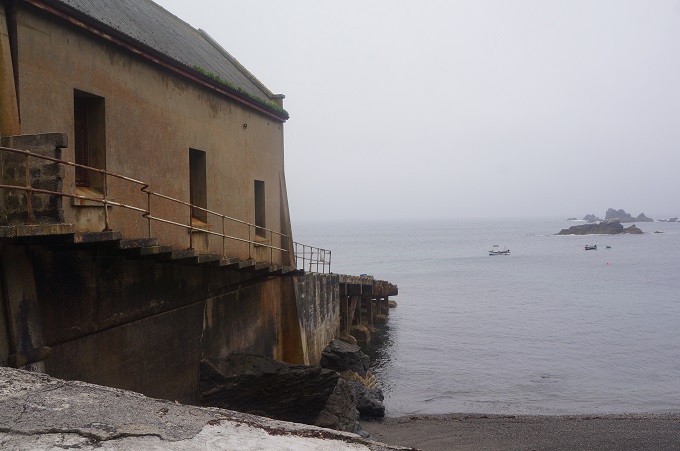
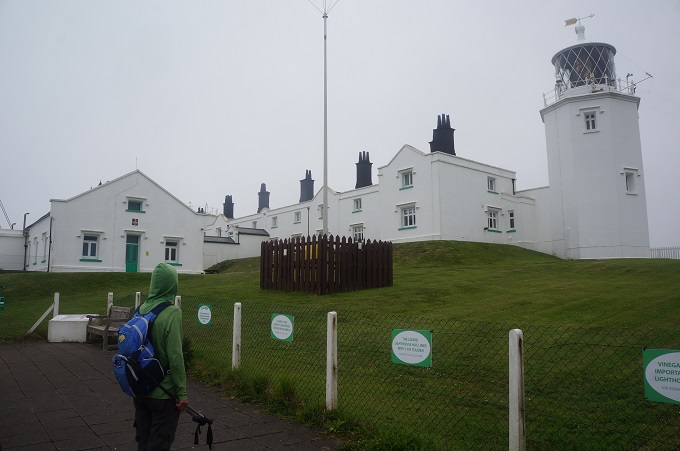
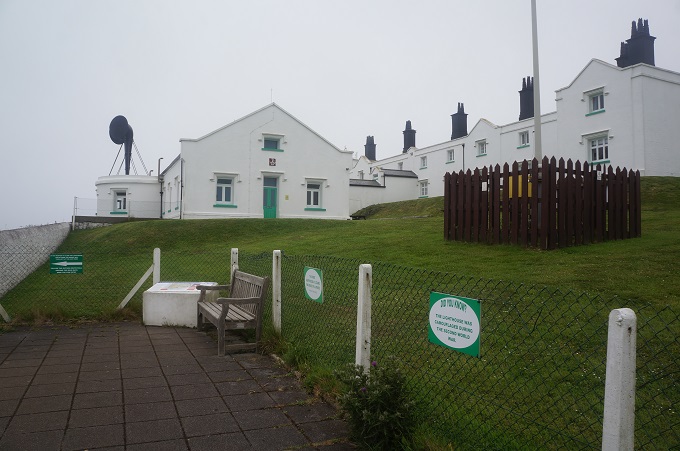
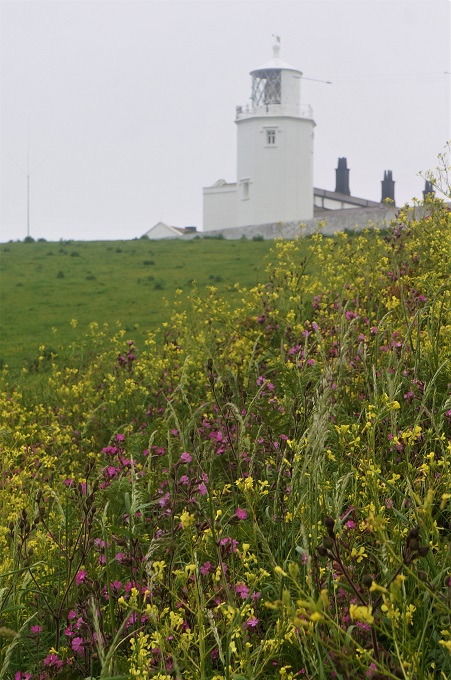
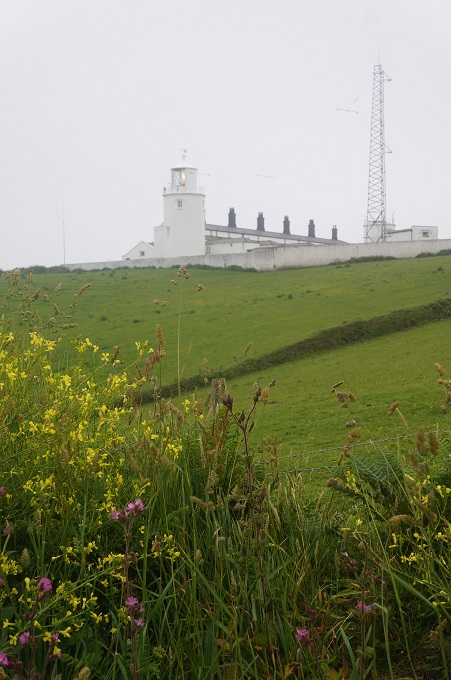
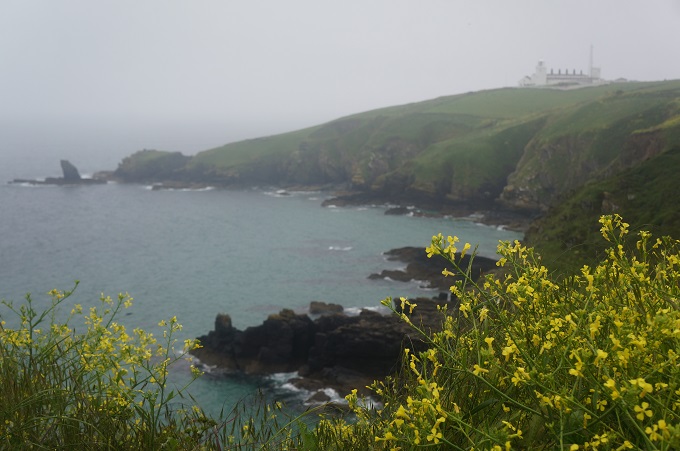
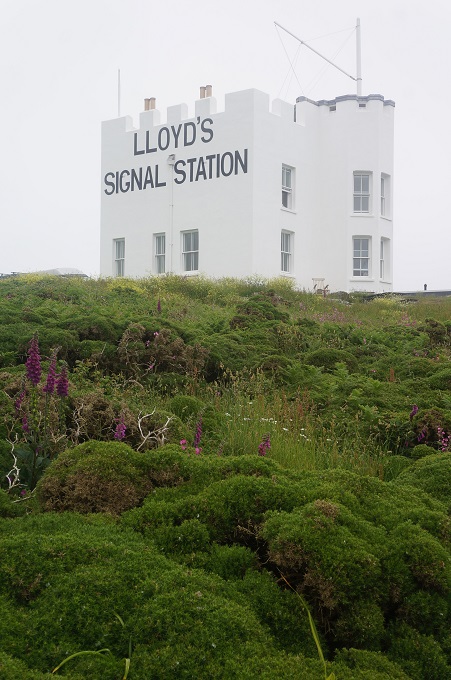
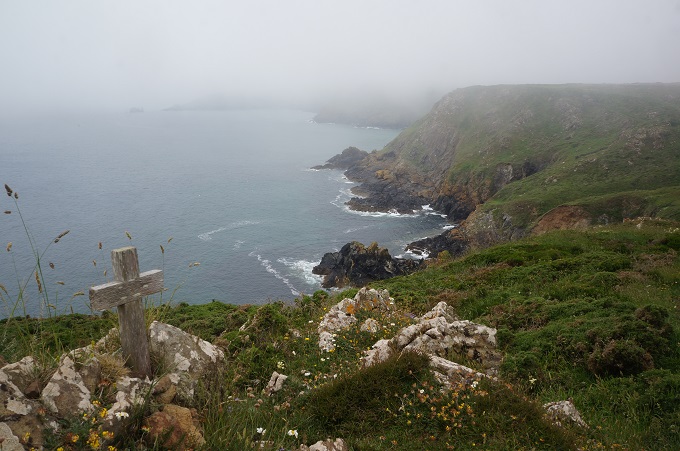
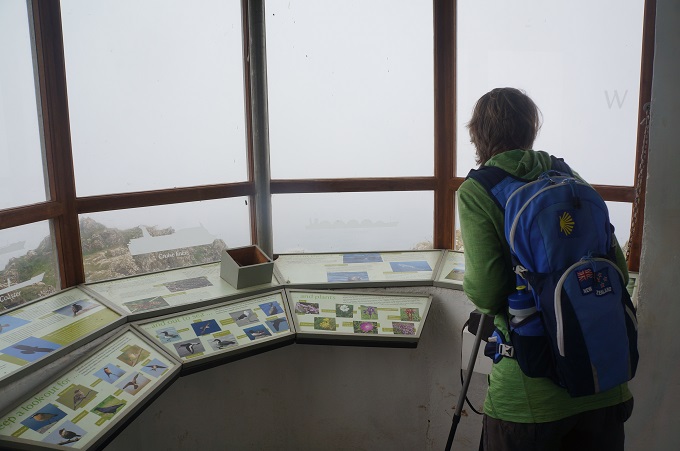
Lizard Point also has a lighthouse. The first light here was built in 1619, although it was opposed by locals as parts of their houses were made from material salvaged from wrecks. The current lighthouse was built in 1751 and has two towers (only one still used today) with cottages built between them. While still operating, the lighthouse is also a museum and interactive learning centre and you can climb to the top of the tower. Unfortunately we were much too early to wait and do this. The light on the tower was flashing and the fog horn blasted about every 25 seconds. Two hours later we could still hear it in the distance, long after the light had faded in the mist

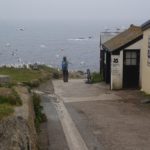
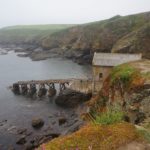
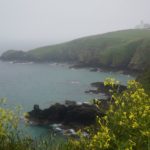
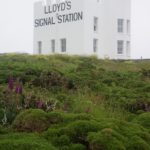
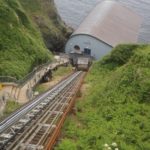
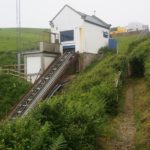
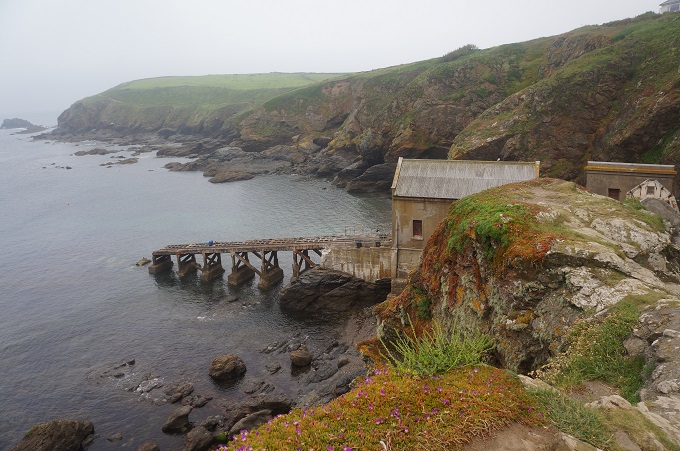
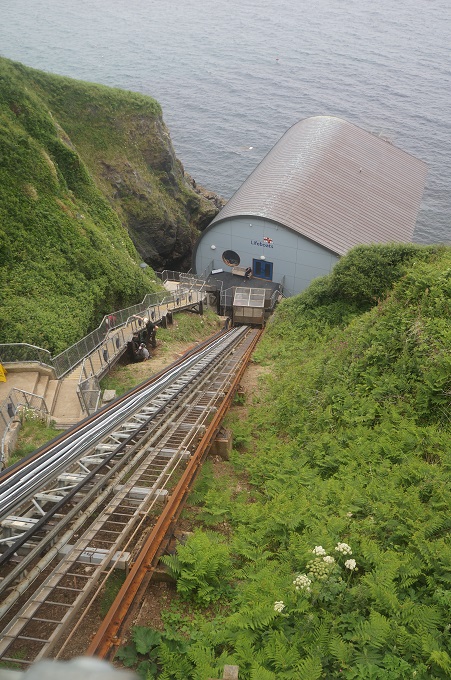
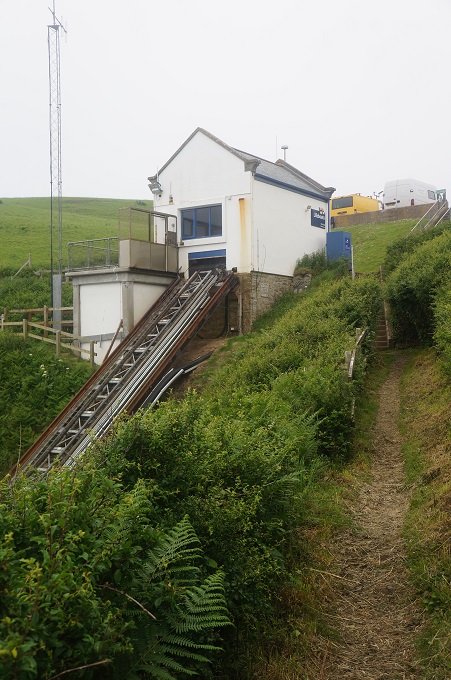
There have been three life boat stations in a cove at Lizard Point, the first in 1859. We had a quick look at the third edition, built in 1914 and closed in 1961. A little later in the morning we came to the location of the present station at Kilcobben Cove. This was edition number two at this site, built in 2010. There is a cable car on a steep track that takes crew and supplies down to the boathouse and then another steep ramp that the life boat runs down to the sea. It’s a pity we didn’t see it in action, it would be a spectacular sight.
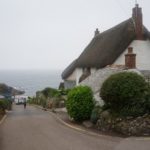
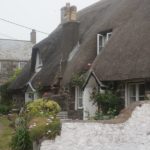
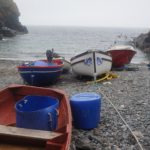
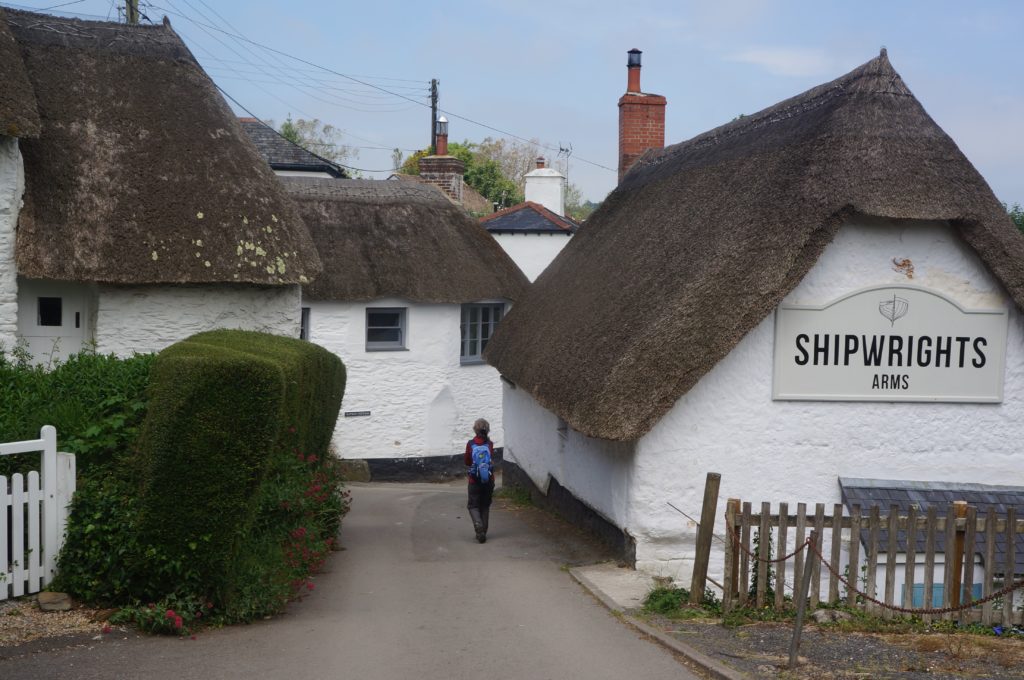
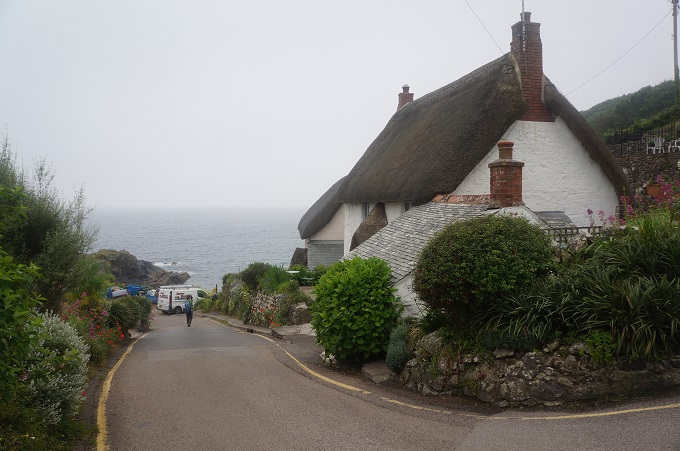
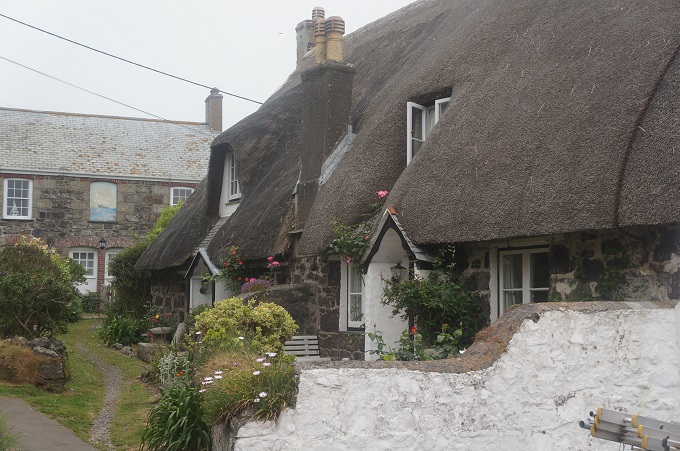
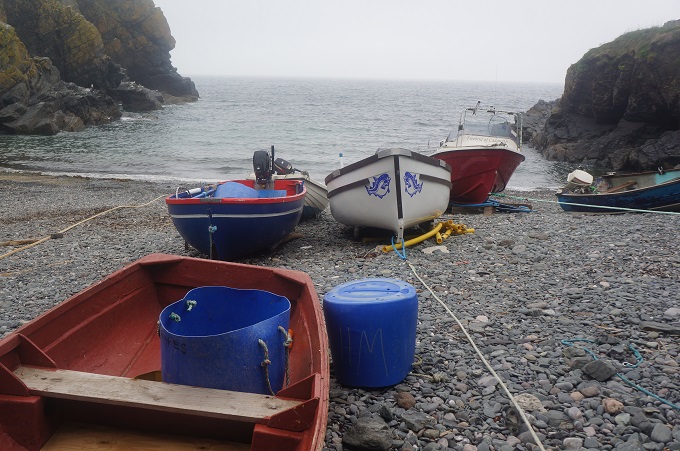
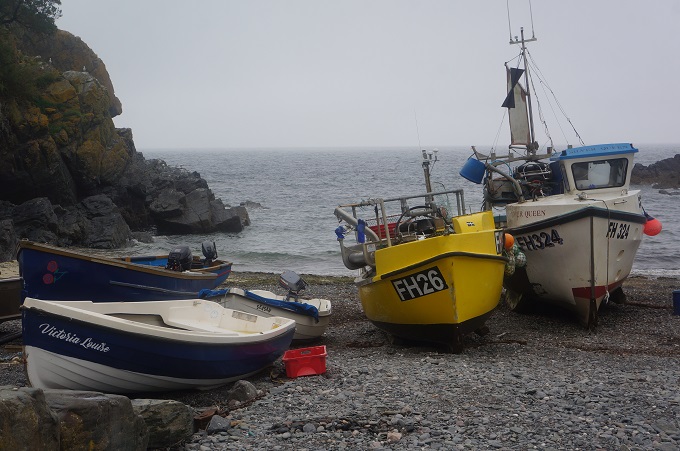
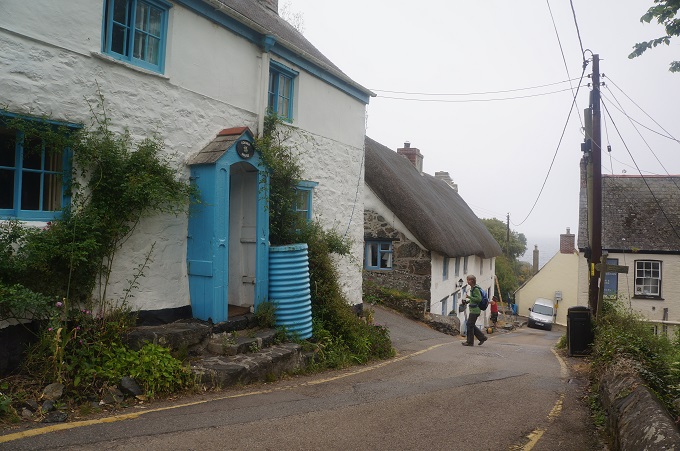
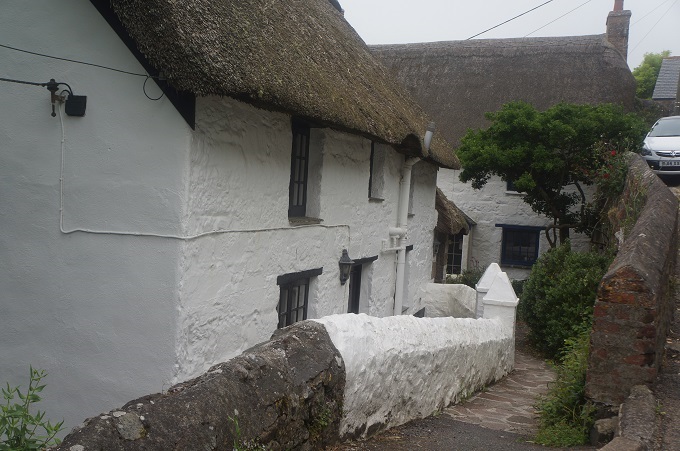
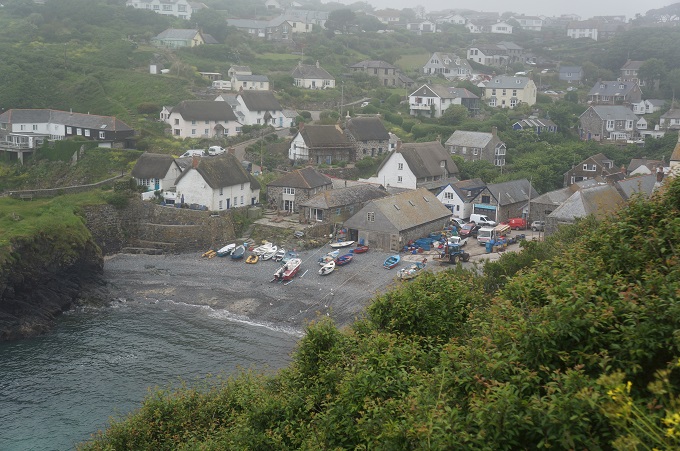
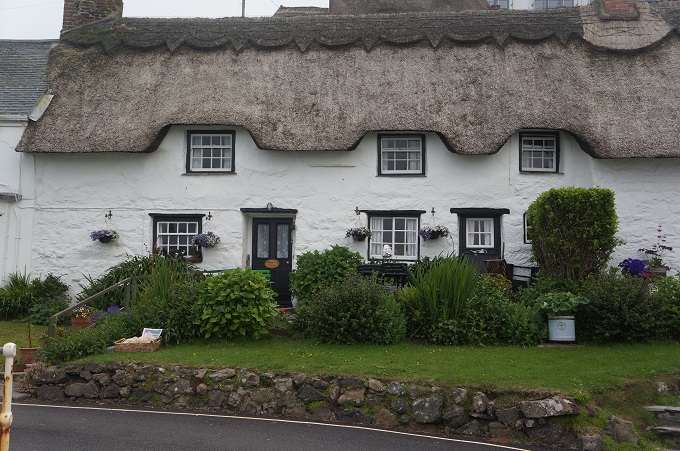
The only village we passed through today was Cadgwith, a collection of lobster pots, fishing floats and boats clustered around the one pub. On Fridays the Cadgwith Singers gather to work on their sea shanties but we didn’t hear a sound from the pub as we went by. At least half the houses in the village have thatched roofs and this looks like an un-touristy working fishing village.

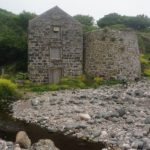
We also passed a few sandy beaches, the biggest of which was Kennack Sands another beach popular with surfers. It had the usual ice cream shop, surf school and life guards. Nearby we came to the ruins of a serpentine works. There was once a thriving Victorian factory making mantlepieces, grave stones, shop fronts and polished ornaments from serpentine stone quarried on the site. 20 men and 3 boys were employed in the factory in 1883, which gained its power from a water wheel.
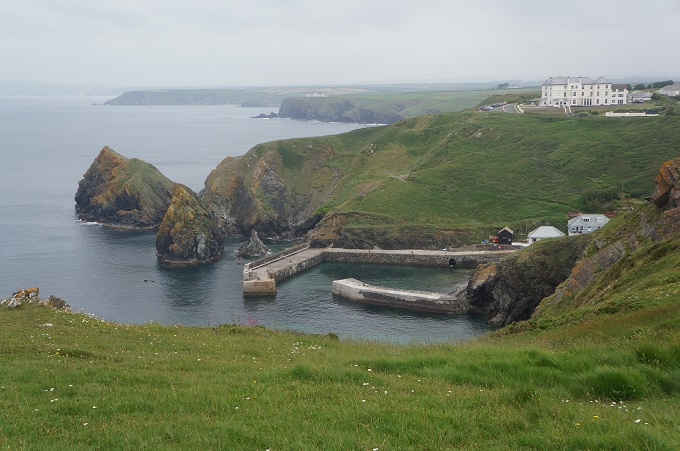
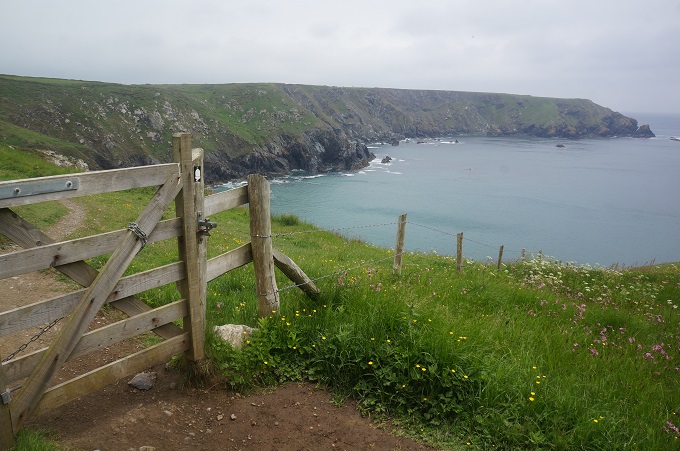
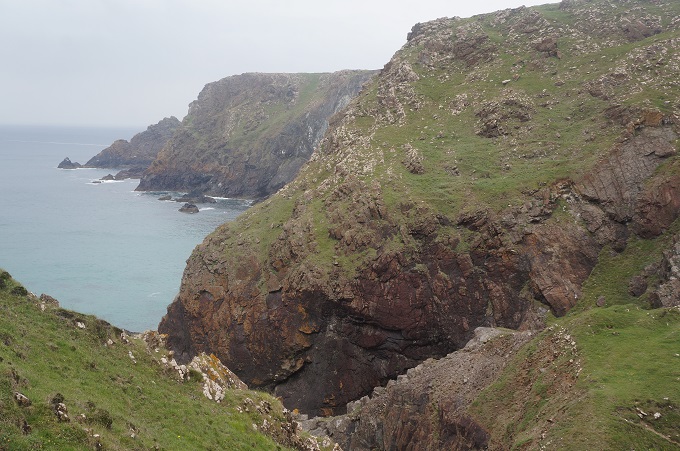
Today was again all about cliffs and coves, punctuated by headlands. If it had been clearer we would have had excellent views along the coastline. This part of the coast is largely sheltered from the worst of the prevailing winds and so it has a lush, well vegetated character. It also doesn’t have roads or car parks nearby so is relatively unfrequented by casual walkers and long stretches were quiet and remote.

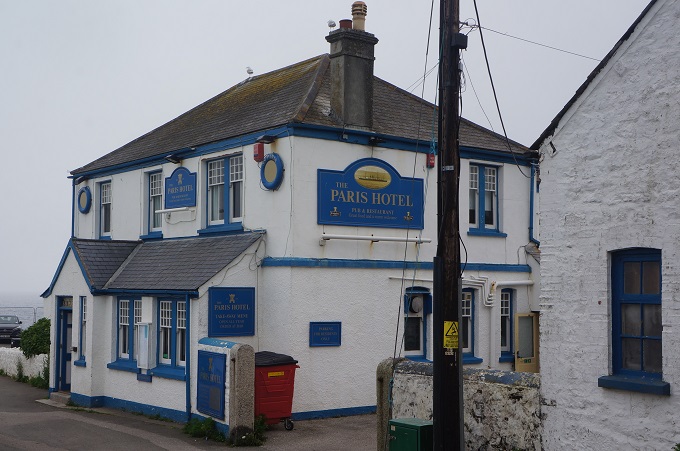
Tonight we are at the Paris Hotel. It is named after the S.S Paris that was wrecked off the point here in  1899. At dinner we were treated to a pod of dolphins passing in front of the dining room windows.

While walking along we decided today was a ‘not too’ day. Not too hot, not too much glare, not too difficult, not too far, not too short, not too much wind, not too many people, not too much mud, not too many steep climbs, not too many precipitous descents, not too much mist, not too cold, not too many diversions, not too many cows. And obviously not too much for us to think about!


Dot Dot Dot, Dot Dot Dot…

Porthleven to the Lizard, 27 km (with diversion), 584 m climbing

‘True rebels always walk alone’

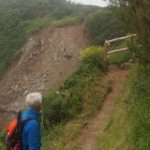
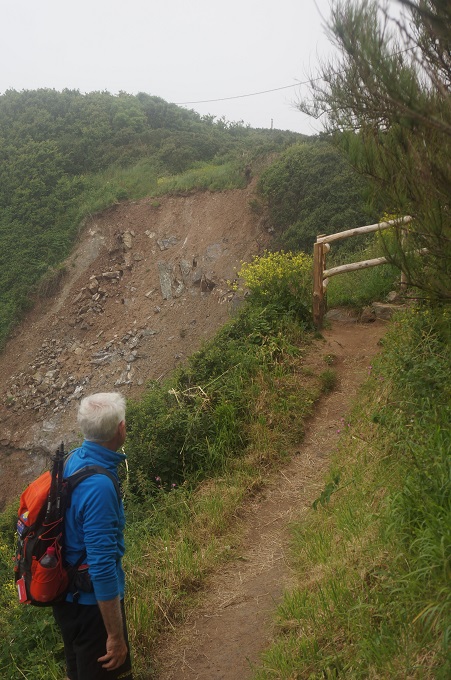
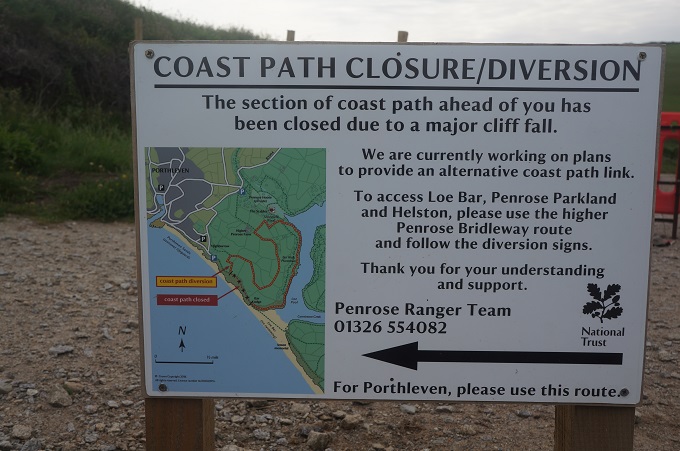
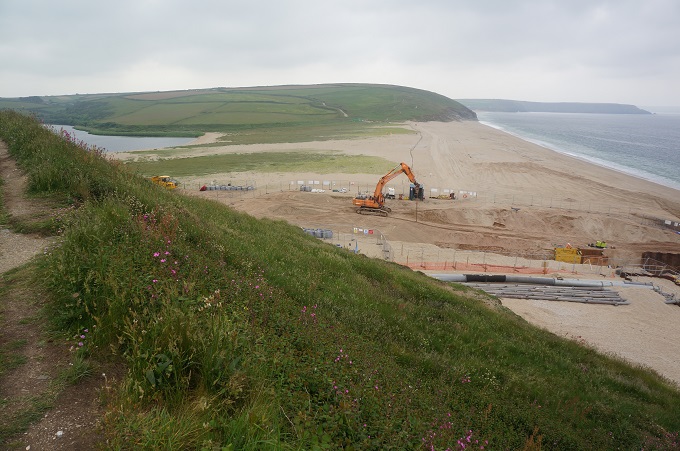
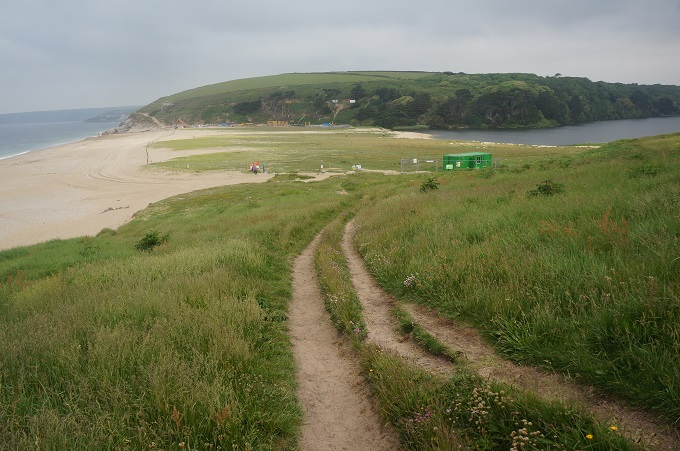
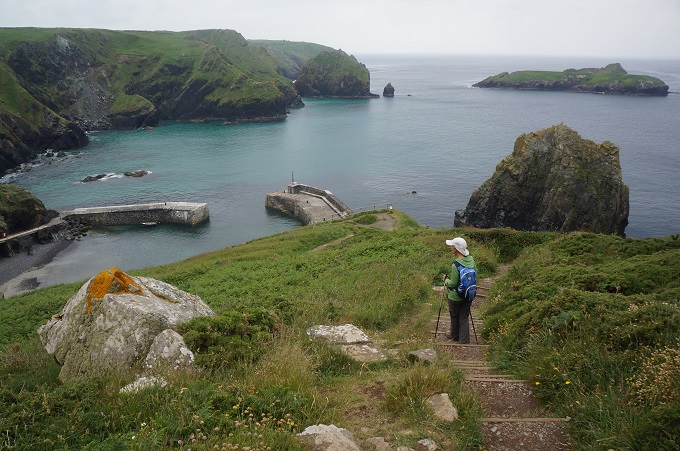
Today started with a diversion. Only about 15 mins out of Porthleven the Coast Path was barricaded off and there was signage pointing to an alternative inland route. About 50 metres of the path had disappeared in a large landslip. What should have been a 400 metre walk along the coast became a 4.5 kilometre walk around potato fields and then one bank of Loe Pool. This added about 50 minutes to the day but it was a beautiful walk partly through forest. Loe Pool is a freshwater lagoon and is separated from the ocean by a shingle bar, Loe Bar.

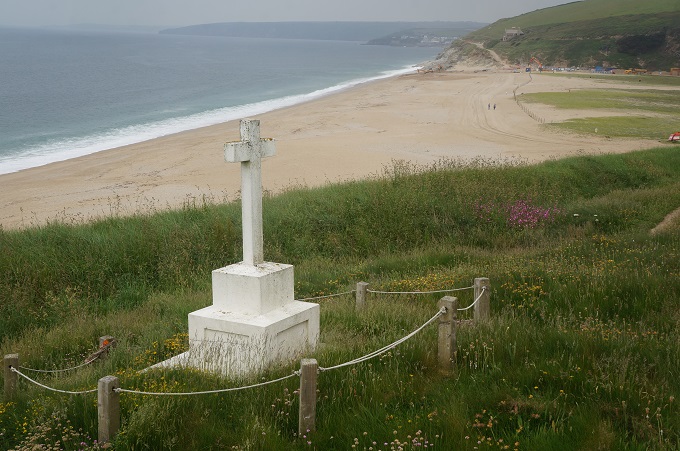
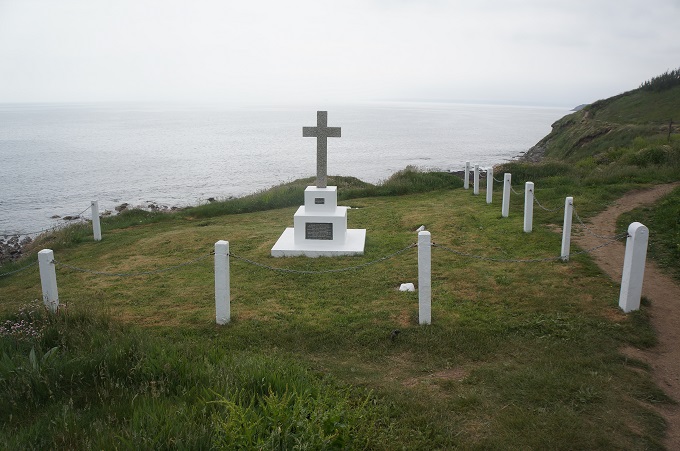
Just beyond Loe Bar we came to a large white painted cross. This commemorates the 100 officers and men who were drowned when the HMS Anson was wrecked on the bar in 1807. This tragedy had two consequences. Thomas Trengouse was so moved by the tragedy he invented the life saving rocket apparatus that has been instrumental in saving thousands of lives. In 1808 the Gryllis Act, drafted by the local solicitor Thomas Gryllis, was passed. This allowed bodies washed up from the sea to be buried in the nearest consecrated ground. Before this all bodies were buried on the cliff tops as it was not possible to distinguish between Christians and non-Christians.

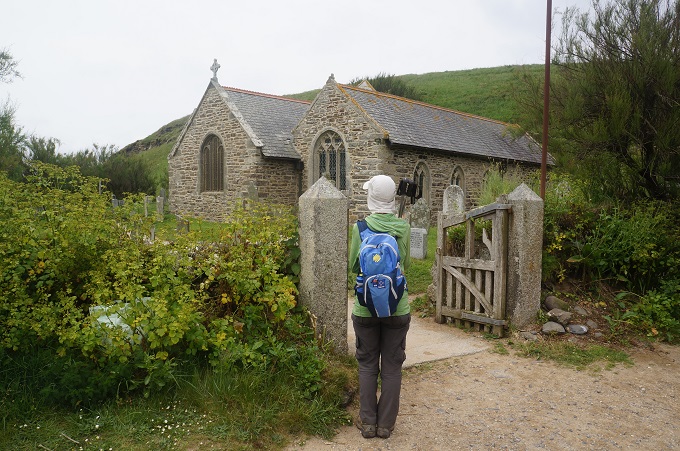
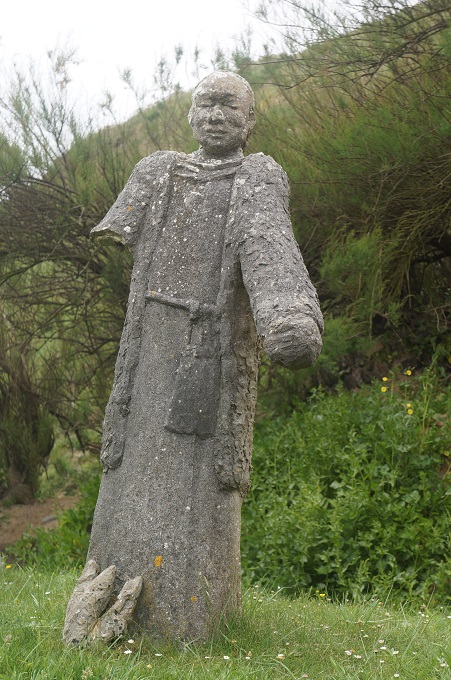
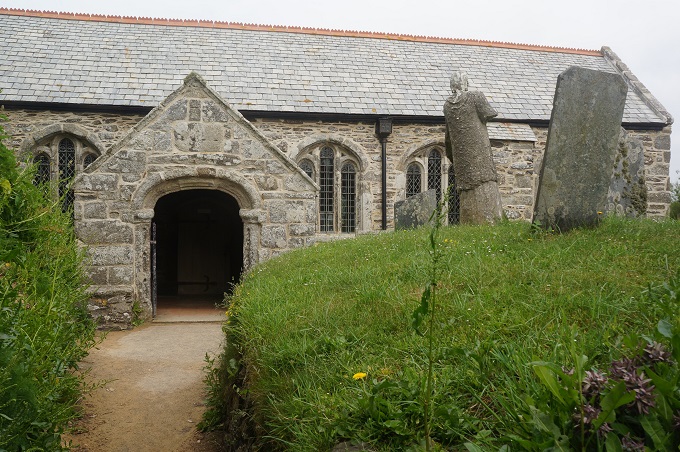
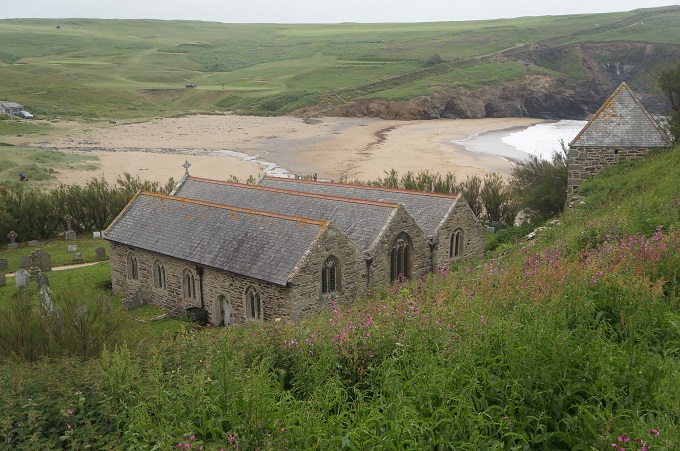
A little further on we came to the tiny beach of Gunwalloe. Huddled in the sand dunes is the small church of St Winwaloe. A statue of St Winwaloe greats you in the church grave yard. He was an abbot who came from Brittany in France in the 6th century, to found the first sacred place on this site. The present church dates from the 13th and 14th centuries and has been restored many times since then. It is also called the Church of The Storms.

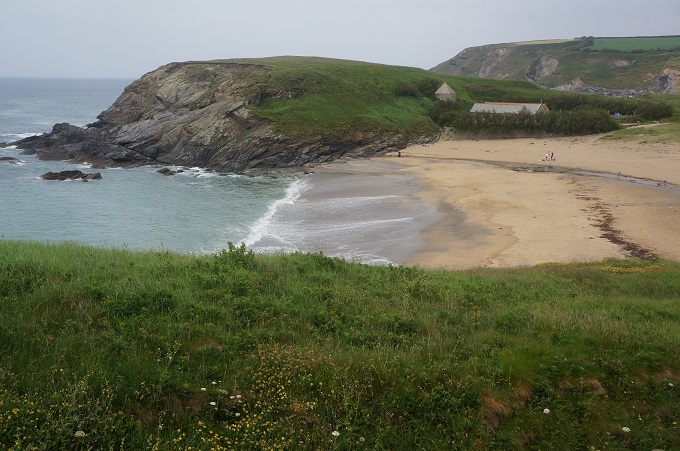
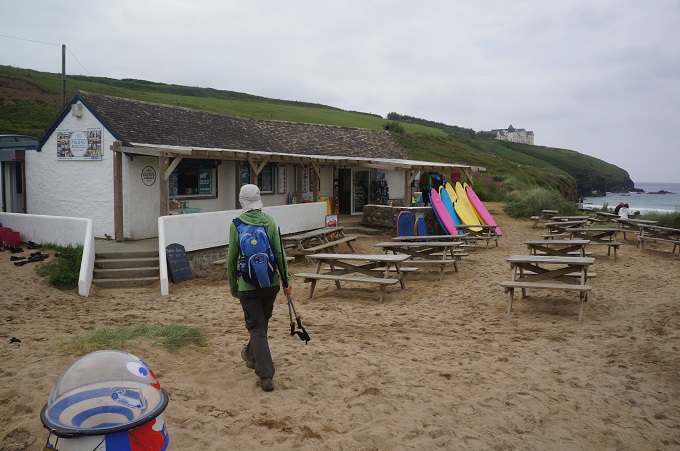
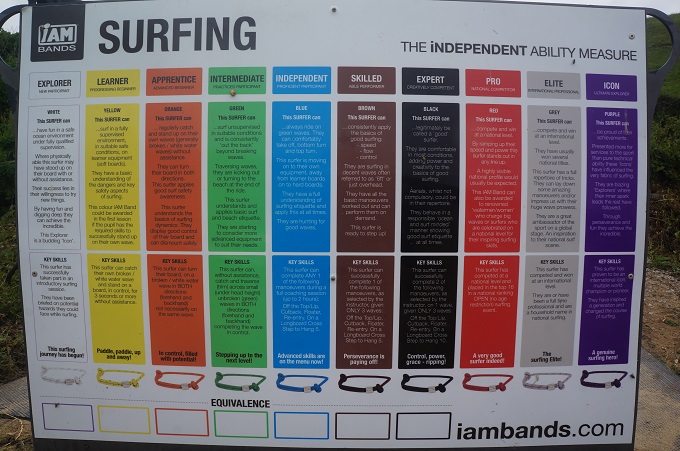
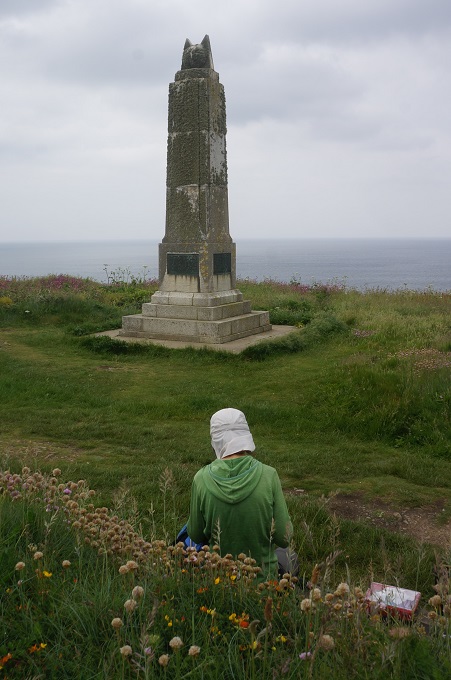
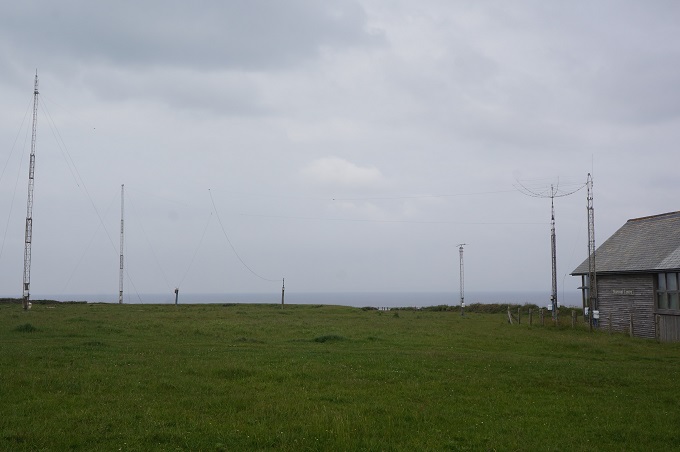
Next up was another little sandy cove complete with the obligatory surf shop. There was an interesting ‘Independent Surfing Ability’ poster where you could rate yourself as: explorer, learner, apprentice, intermediate, independent, skilled, expert, pro, elite or icon. Above the cove was an enormous nursing home dominating the skyline. Behind this were the Marconi Centre and the Marconi Monument. It was at this spot that Guglielmo Marconi transmitted the very first message ever to cross the Atlantic by wireless. A Morse signal sent from here was received by Marconi in Newfoundland. The signal was a repetition of the Morse code for ‘S’ which if I remember correctly from scouts is three dots. We had our lunch sitting at a bench by the Marconi Monument.

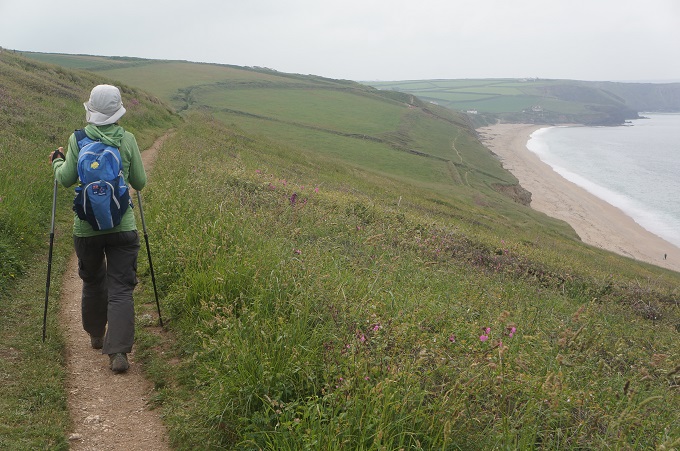
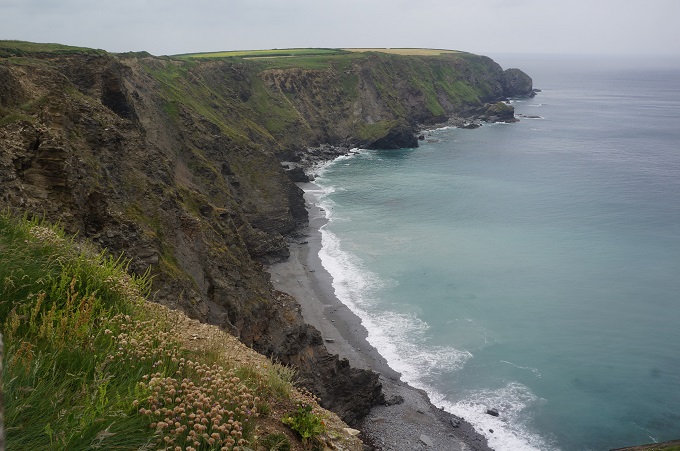
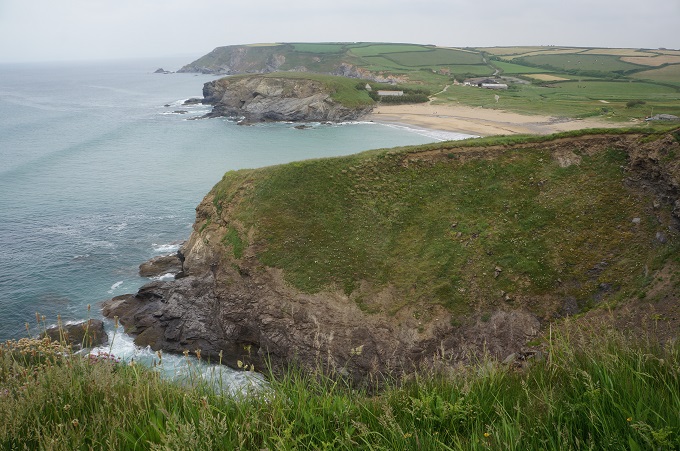
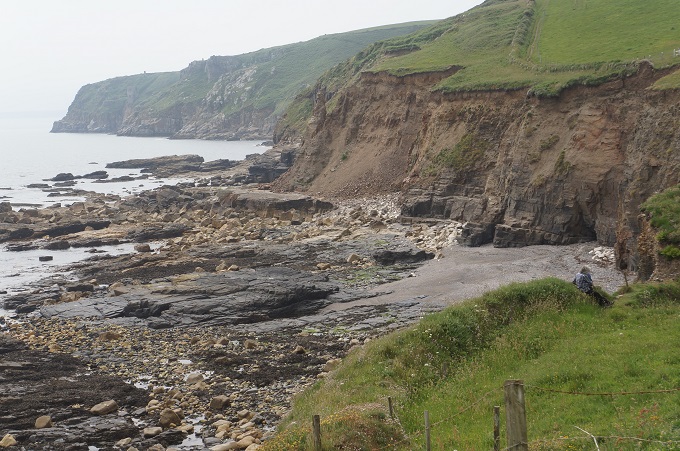
The morning had been mostly of low cliffs with cliff-face paths, long stretches above extensive beaches and the diversion through woodland beside a lake. The afternoon by contrast was on exposed, high, flat-topped cliffs with spectacular coves and bays, some unusual geology and fauna, and long stretches of almost dead flat walking. Looking down on the treacherous rocks you could see why so many ships have been wrecked here. In the afternoon a light drizzle set in so we didn’t get the full drama of the coast and the flat stretches across the high cliffs just became a tedious slog into the wind.

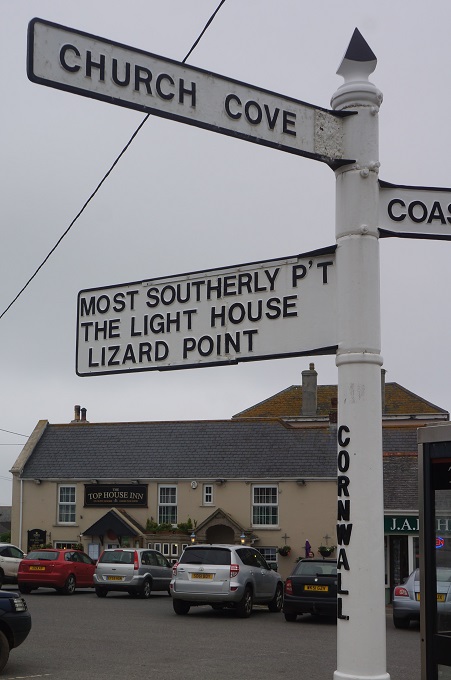
Just short of Lizard Point we decided to go straight to our accommodation in Lizard Village and come back in the morning to look at the point and the lighthouse when we are fresh and hopefully in better weather. Lizard Point is England’s most southerly point.
 

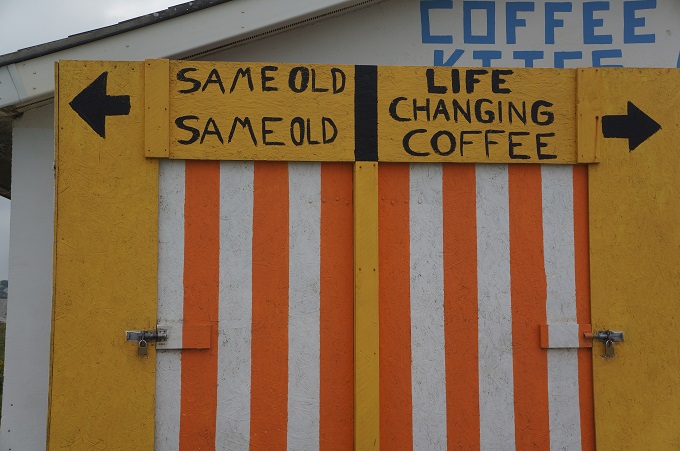
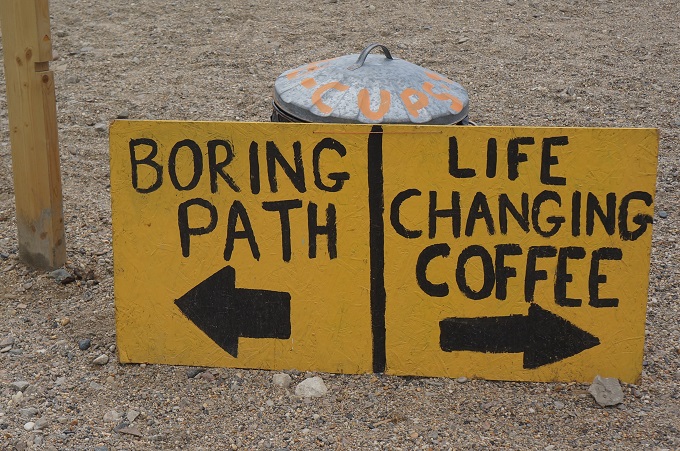
Life Changing Coffee

Penzance to Porthleven, 23 km, 584 m climbing

‘Walk as if you are kissing the earth with your feet’

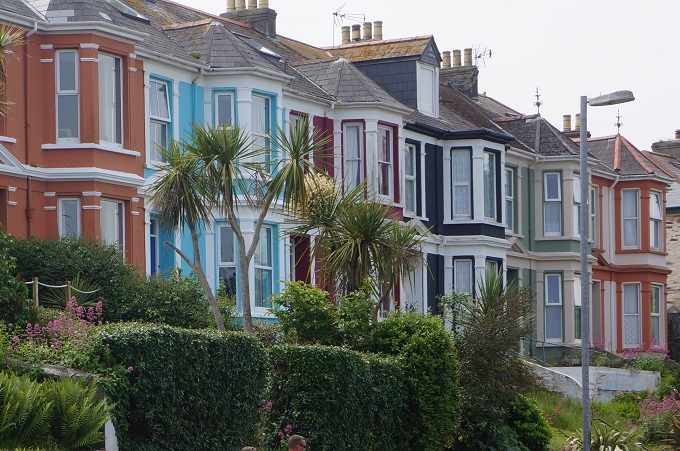
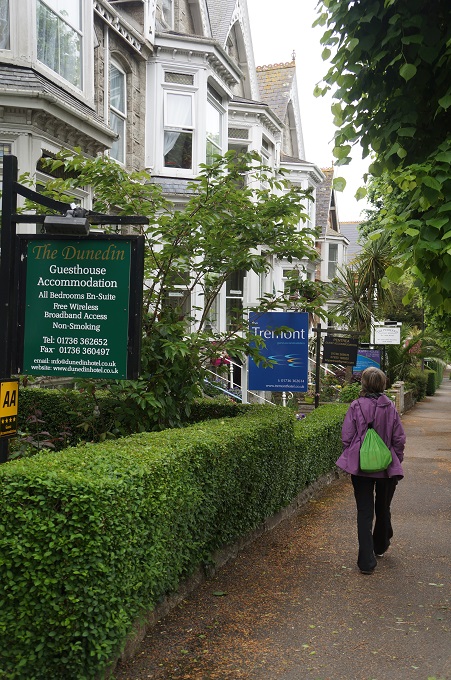
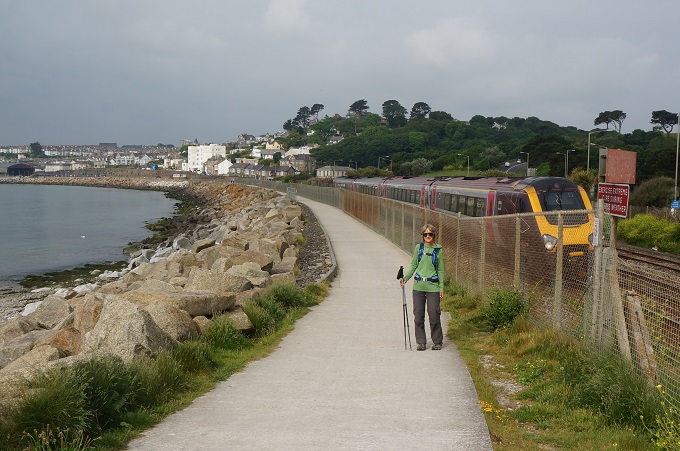
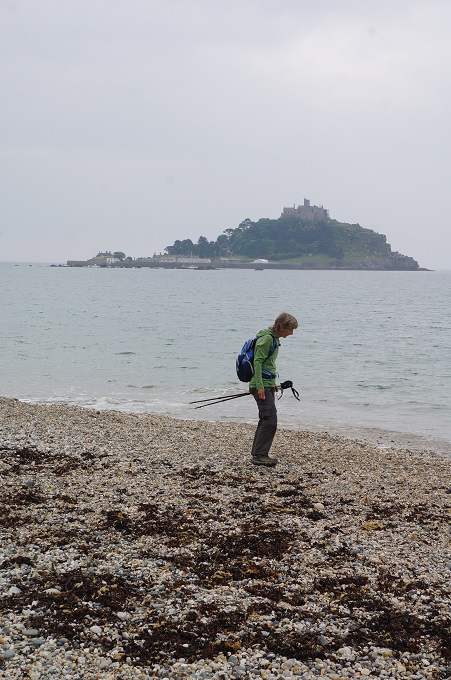
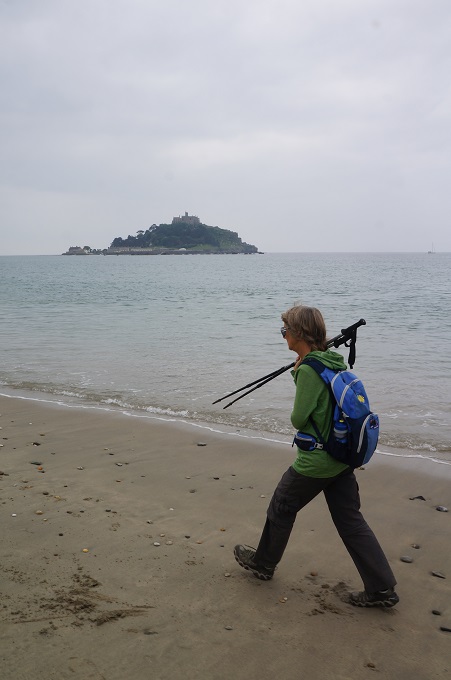
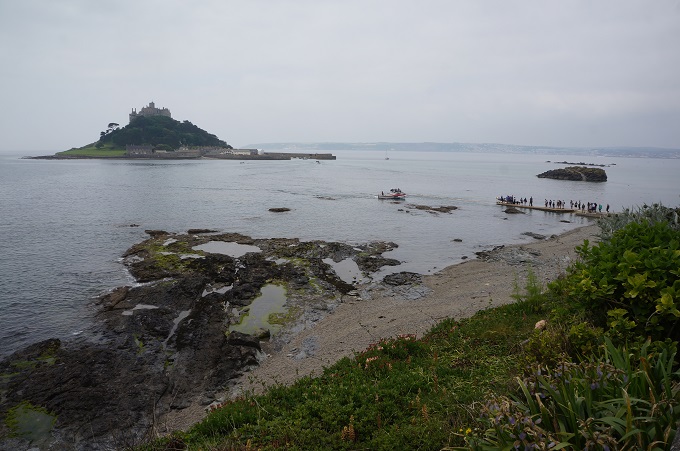
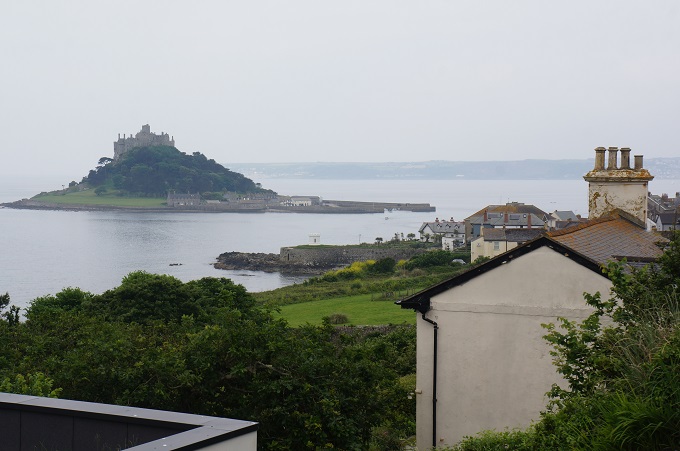
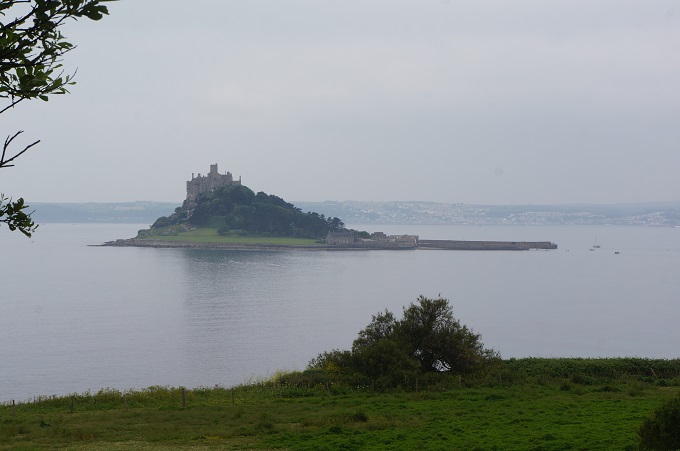
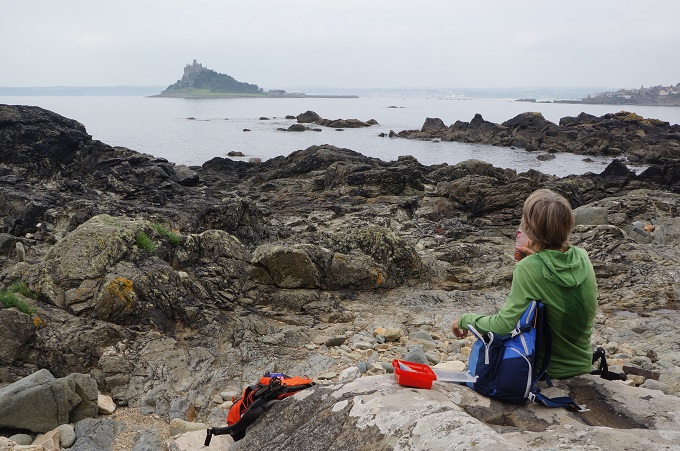
 We enjoyed our day on St Michael’s Mount but this morning we were itching to get going again. Our accommodation was at the eastern entrance to Penzance in an upmarket tree lined street full of very elegant three and four storey Victorian houses. Almost every house was now some form of accommodation. This morning we had to walk right through Penzance and out the other side to Marazion. 15 minutes in a bus yesterday, nearly two hours walking today. The walk was along Mounts Bay on a shared cycle/walk path on the water’s edge and separated from the town and traffic by a railway line. It was hot and frankly the worst part of the day.

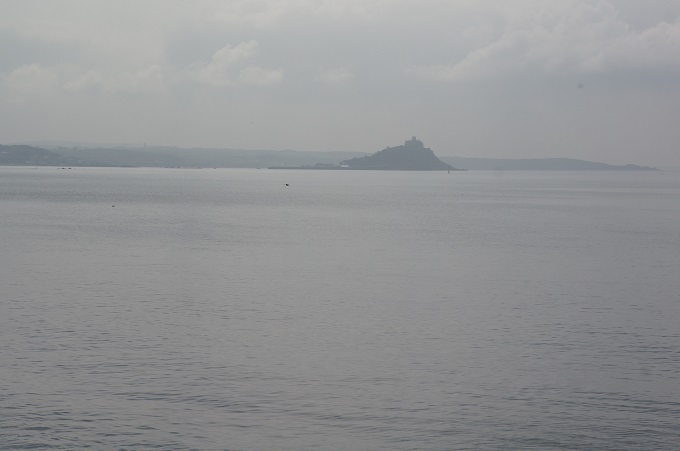
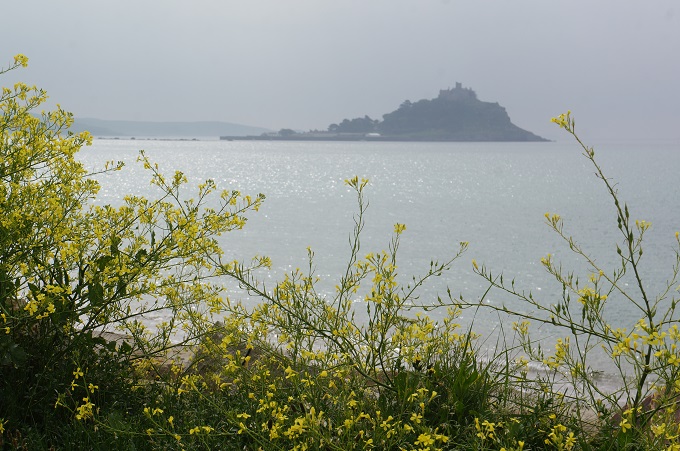
From Penzance to Marazion, and long past, the view is dominated by St Michael’s Mount. Only when we turned the corner at Cudden Point after 16 km did it disappear from view.  This section was of low cliffs and small fields of market gardens. After Cudden Point the landscape became craggy headlands, long sandy beaches and inaccessible coves. The biggest of the beaches, and the one we walked the length of to avoid the sand dunes, is Praa Sands – pronounced ‘Pray’ by the locals.

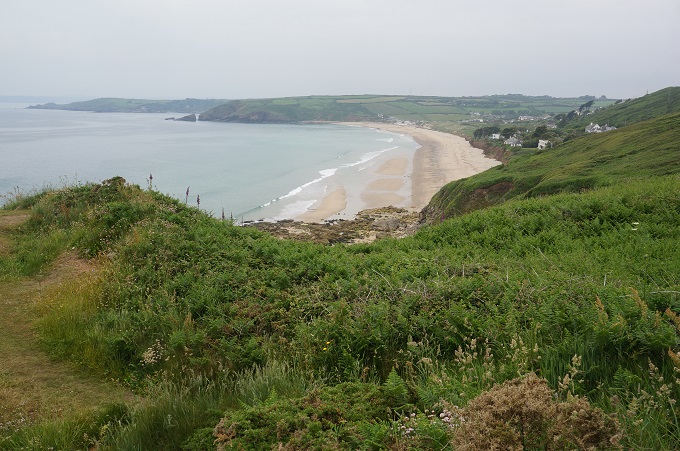
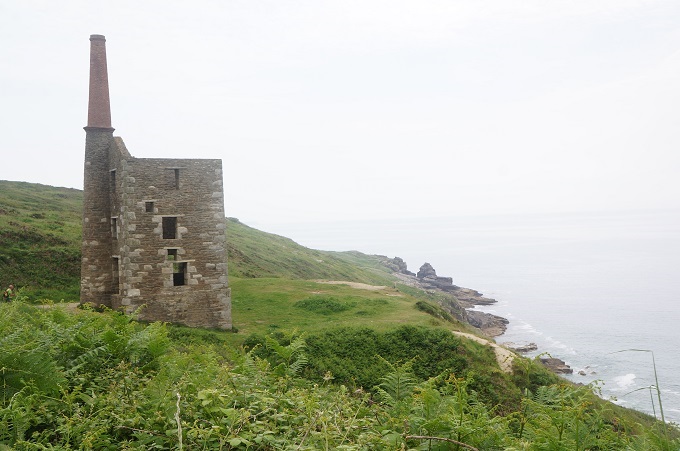
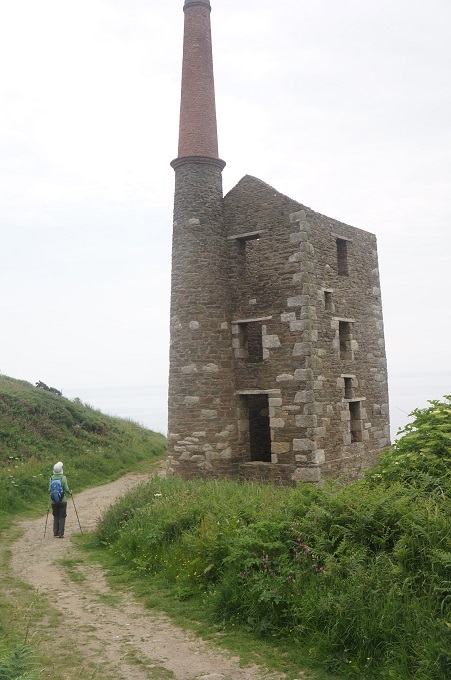
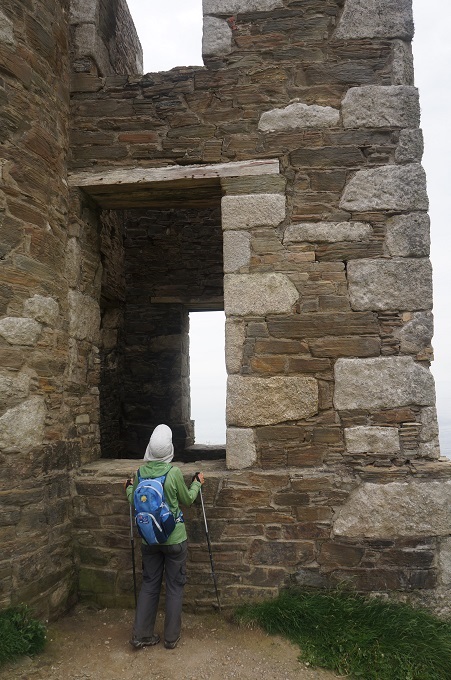
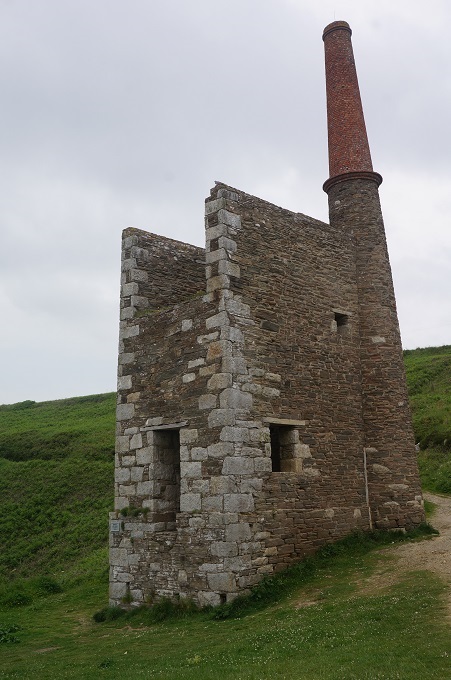
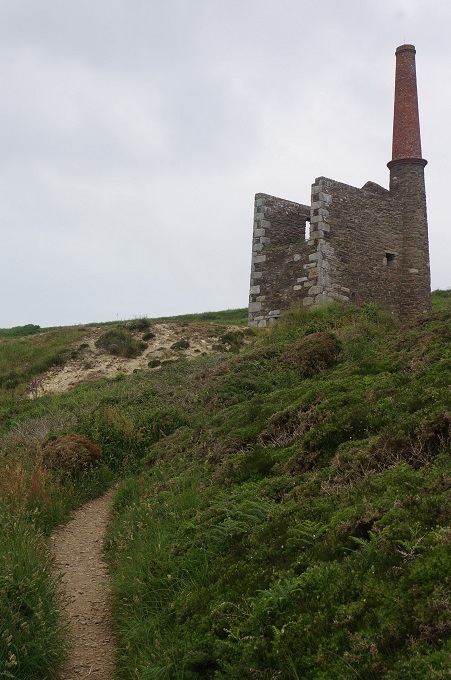
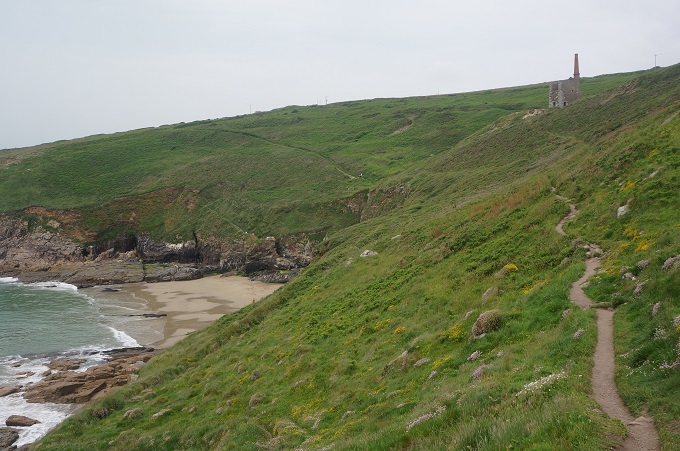
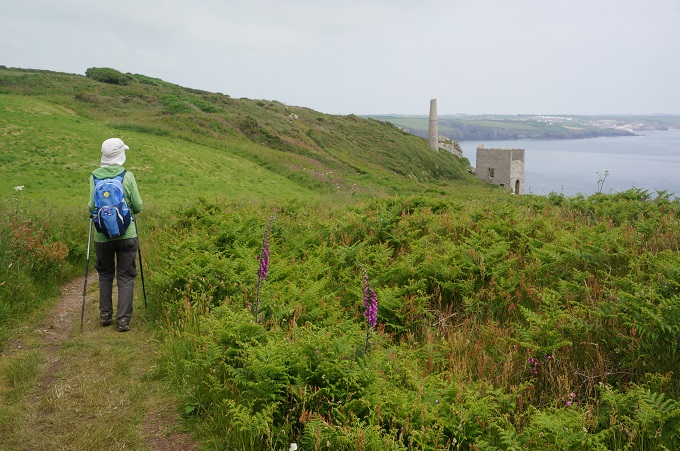
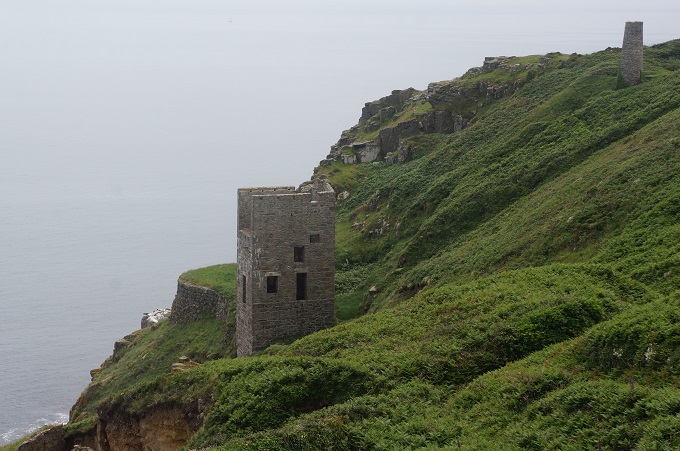
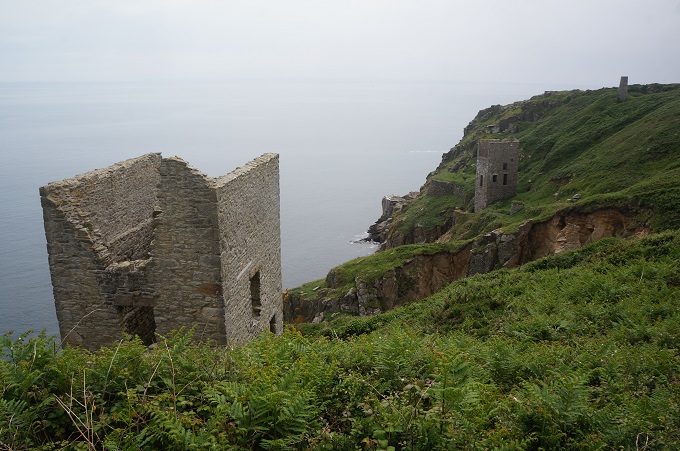
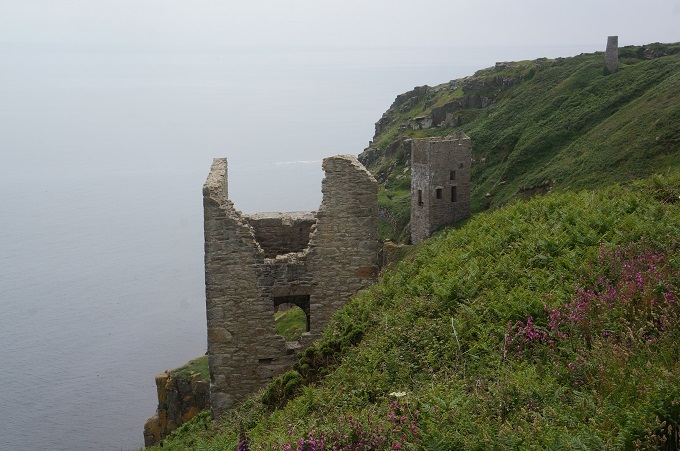
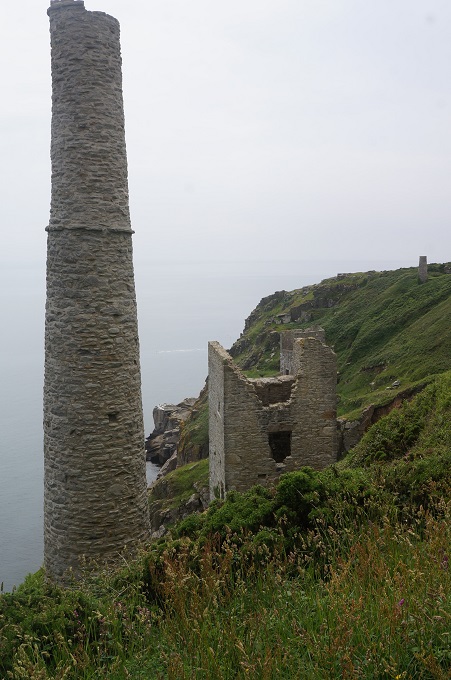
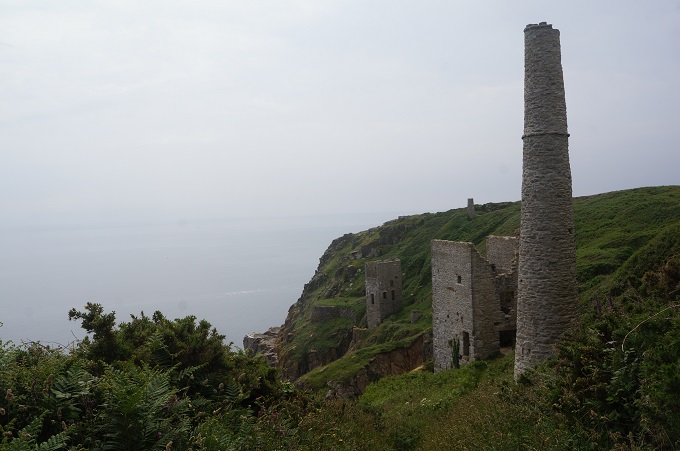
The last 5 km of the day was through another area of tin and copper mining with picturesque cliff-top engine houses. Some of the ruins are right on the cliff edge and shafts were up to 140 metres deep and extended far out under the sea. From the mines to Portleven we often had to make detours on temporary paths as the cliffs are subsiding and the original coast path has been fenced off.

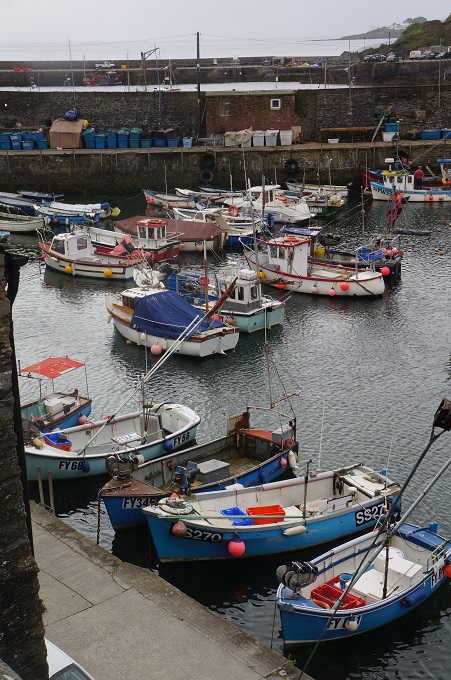
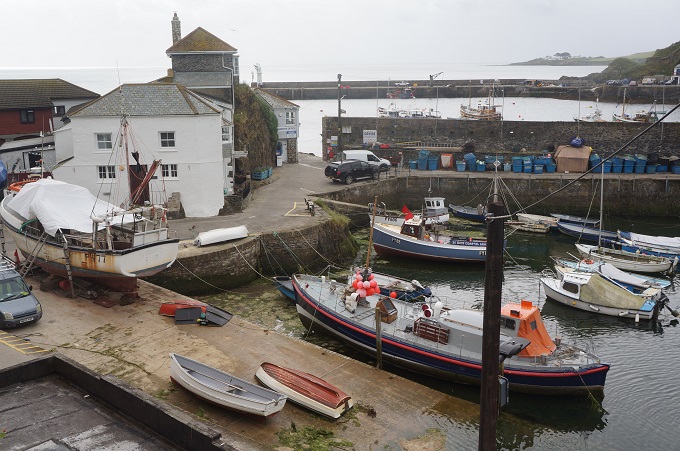
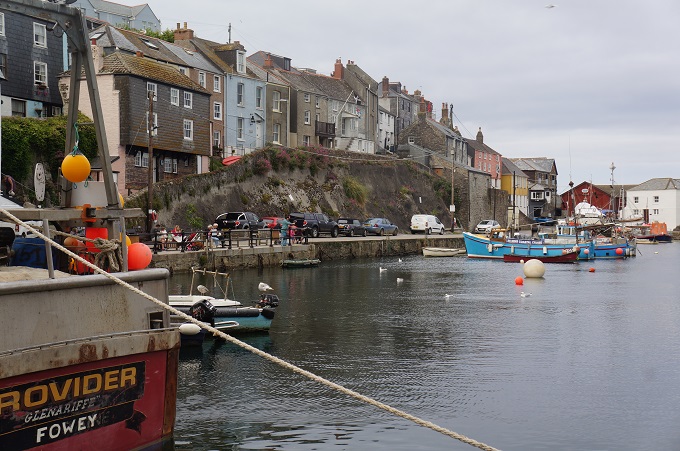
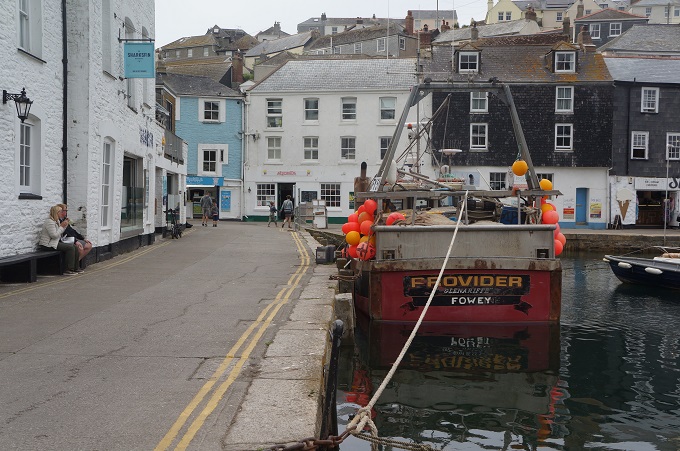
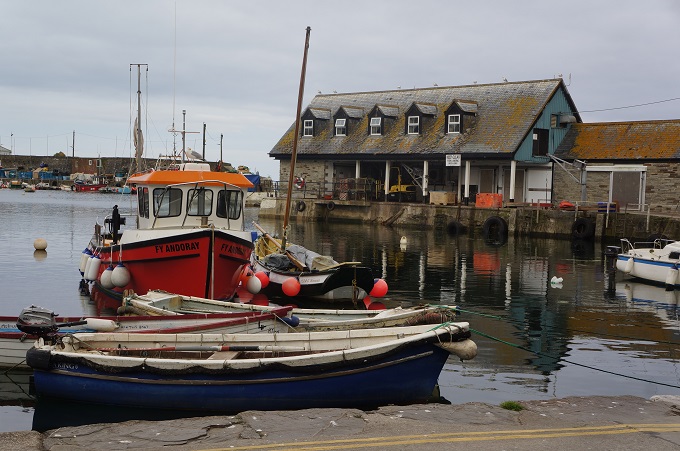
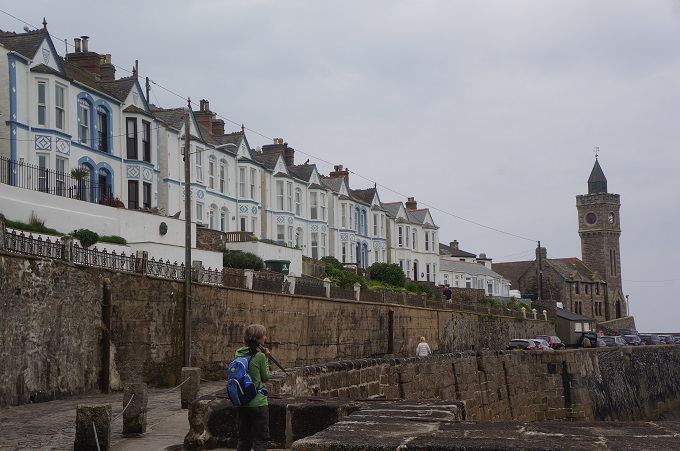
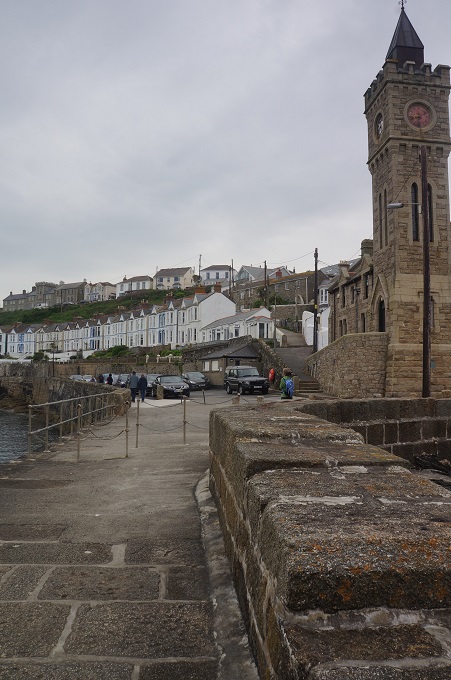
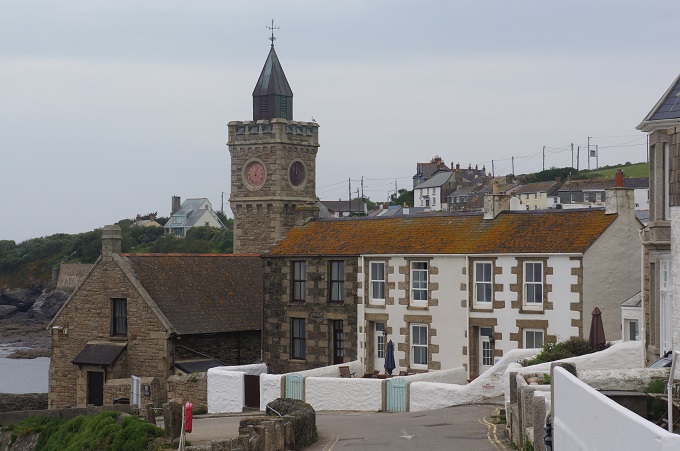
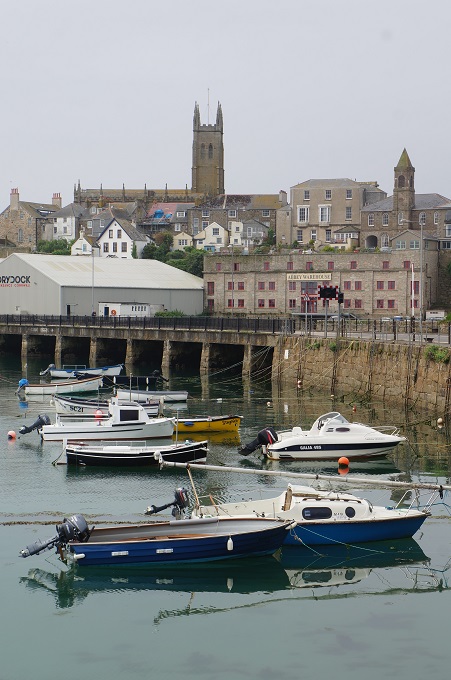
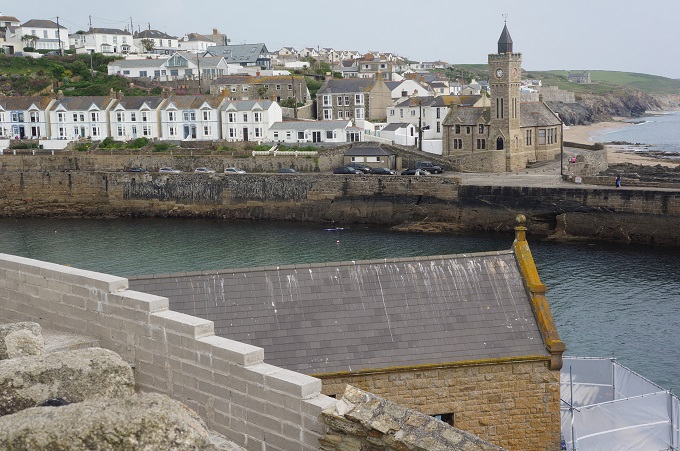
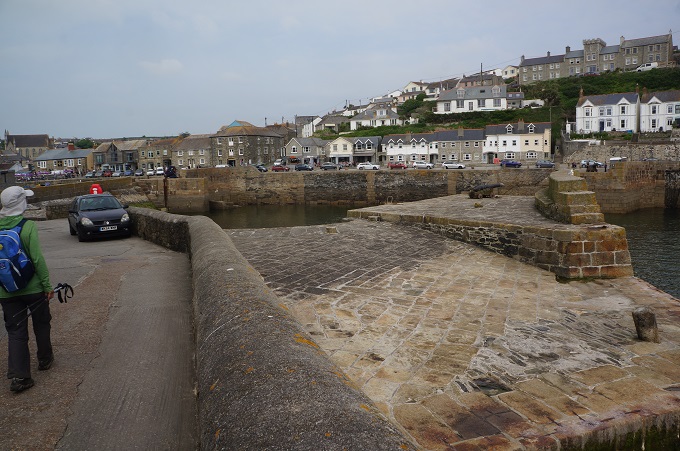
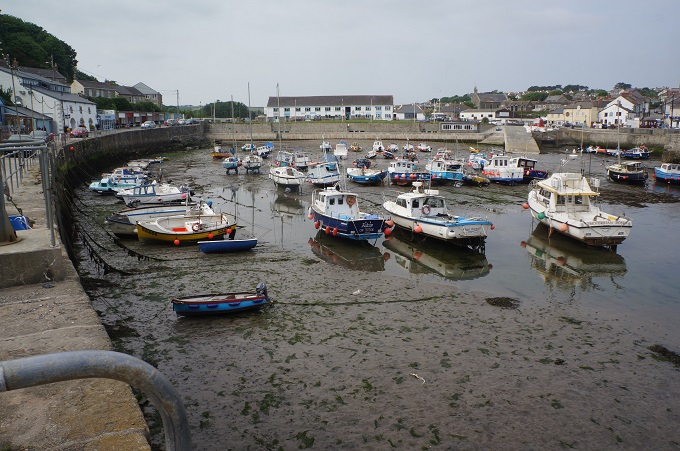
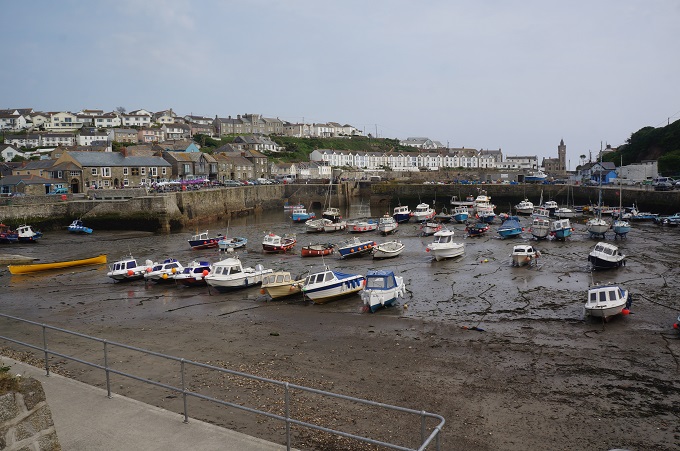
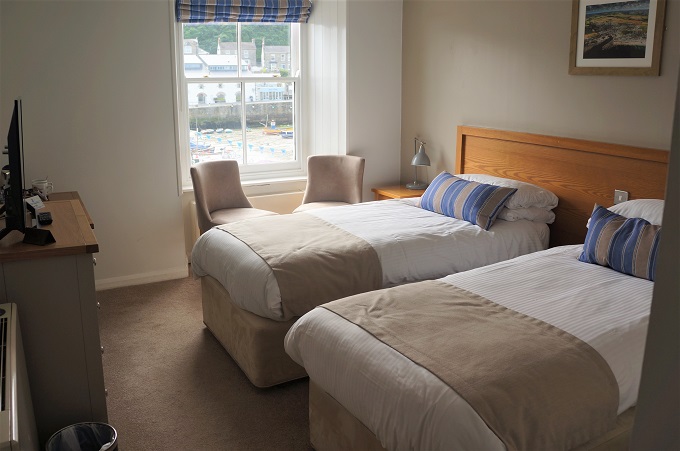
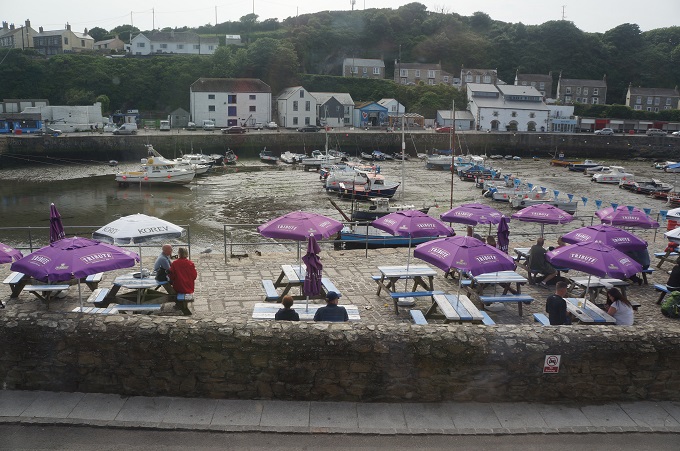
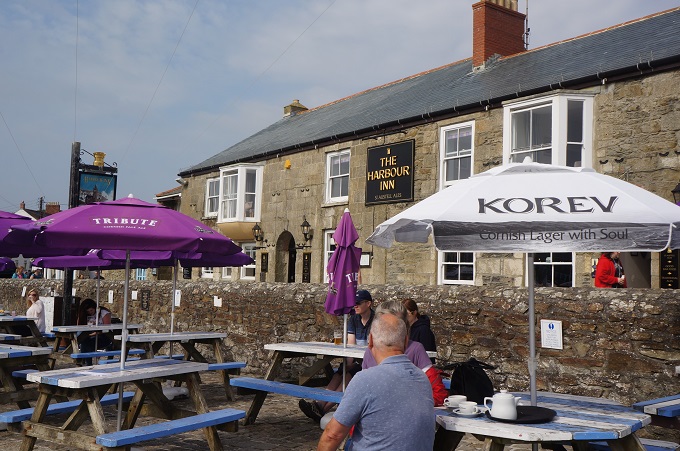
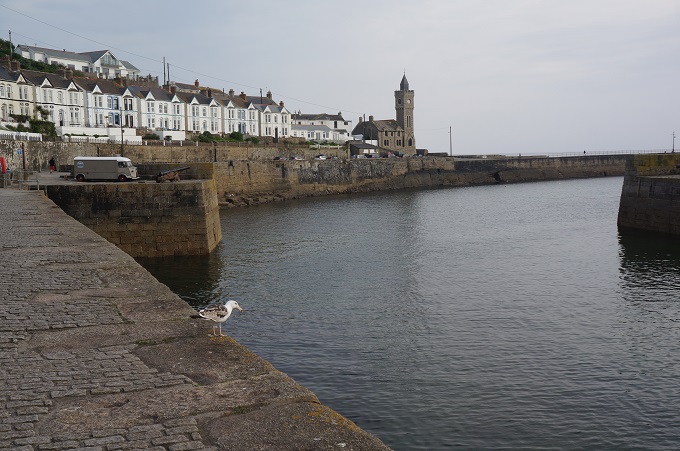
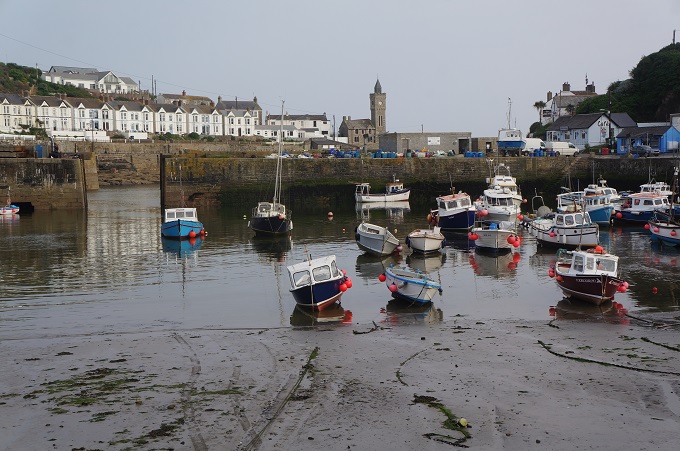
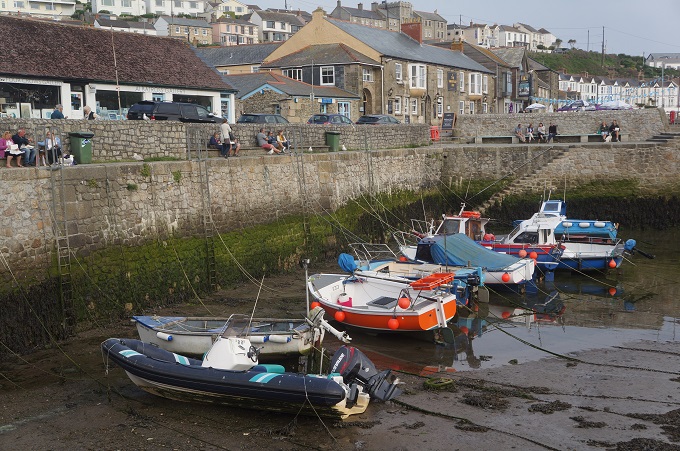
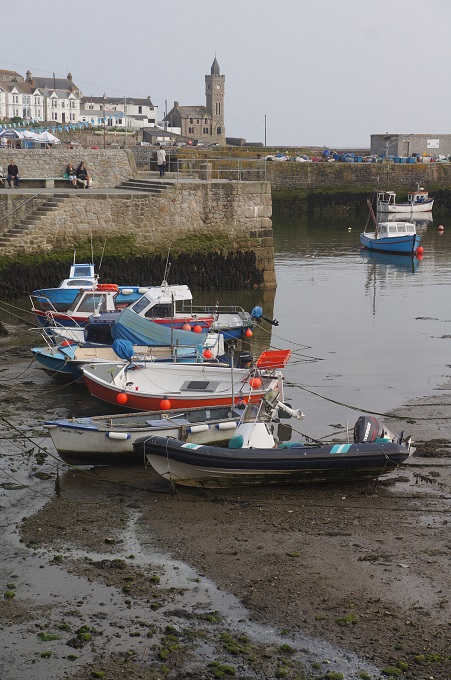
Tonight we are at The Harbour Inn which is right on the quay at Porthleven and from our window we look over the boats in the harbour. Porthleven Harbour was built using prisoners from the Napoleonic wars for manpower. It used to house a fishing fleet which harvested the huge shoals of pilchards and mackerel out in the bay. The few fishing boats that remain today work the local reefs for crab and lobster in the summer months. This part of the coast is subject to ferocious storms and waves have been known to crash right over the harbour wall to wreck the boats sheltering inside. Today the water is like a mirror.