All posts by Paul Lenihan

Itinerary

Camino Portuguese 2024
The Coastal Way

Day 1 Monday September 2nd
Airport Express bus Vivian St to Wellington Airport
Fly Wellington (WLG) to Sydney (SYD), Boeing 737-800, 3hr 45mins
Qantas 0164, depart 3.50pm, arrive 5:35pm
Layover 2hr 35mins
Fly Sydney (SYD) to Dubai (DXB), Airbus Industrie A380-800, 14hr 20mins
Emirates 0417, depart Sydney 8.10pm, arrive 4.30am local time (Tuesday Sept 3rd)
Layover 2hrs 55mins

Day 2 Tuesday September 3rd
Fly Dubai (DXB) to Lisbon (LIS), Boeing 777-300ER, 8hrs 10mins
Emirates 0191, depart Dubai 7.25am, arrive Lisbon 12.35pm local time
Shuttle from Humberto Delgado Airport Lisbon to Ramada by Wyndham Hotel by Talixo Services GmbH
Ramada by Wyndham Hotel Avenida Engenheiro Arantes E Oliveira 9, 1900 221, Lisbon
www.wyndamhotels.com/ramada/lisbon-portugal.com
 
Day 3 Wednesday September 4th
Day in Lisbon
Ramada by Wyndham Hotel, Lisbon
 
Day 4 Thursday September 5th
Day trip to Sintra.
Local train from Lisbon to Sintra
Visit Park and National Palace of Pena, The Moorish Castle, Quinta da Regaleira
Ramada by Wyndham Hotel, Lisbon

Day 5 Friday September 6th
Day in Lisbon
Ramada by Wyndham Hotel, Lisbon

Day 6 Saturday September 7th
Train Lisbon to Porto
Hotel Doura Porto (Breakfast)
www.hoteldoura.pt

Day 7 Sunday September 8th
Day in Porto
Hotel Doura Porto (Breakfast)
www.hoteldoura.pt

Day 8 Monday September 9th
Day in Porto
Hotel Doura Porto (Breakfast)
www.hoteldoura.pt

Day 9 Tuesday September 10th
Walk Porto to Matosinhos 11km
Tram Matosinhos back to Porto
Hotel: Doura Porto (Breakfast)
www.hoteldoura.pt

Day 10 Wednesday September 11th
Tram Porto to Matosinhos
Walk Matosinhos to Povoa de Varzim 25km
Hotel: Costa Verde (Dinner & breakfast)
www.hotelcostaverde.pt

Day 11 Thursday September 12th
Walk Povoa de Varzim to Esposende 22km
Hotel: Suave Mar (Dinner @ breakfast)
www.suavemar.com

Day12 Friday September 13th
Walk Esposende to Viana do Castelo 24km
Hotel: Pension O Laranjeira (Dinner & breakfast)
www.olaranjeira.com

Day 13 Saturday September 14th
Day in Viana do Castelo
Hotel: Pension O Larajeira (Dinner & breakfast)
www.olaranjeira.com

Day 14 Sunday September 15th
Walk Viana do Castelo to Vila Praia de Ancora 19km
Hotel: Hotel Meira (Dinner & breakfast)
www.hotelmeira.com

Day 15 Monday September 16th
Walk Vila Praia de Ancora to A Guarda 13km
Hotel: Vila Da Guarda (Dinner & breakfast)
www.hotelvilladaguarda.com

Day 16 Tuesday September 17th
Walk A Guarda to Oia 12km
Hotel: Glasgow Hotel (Dinner & breakfast)
www.hglasgow.com

Day 17 Wednesday September 18th
Walk Oia to Baino 18km
Hotel: Pension El Mosquito (Breakfast)
www.pensionelmosquito.com

Day 18 Thursday September 19th
Day in Baino
Hotel: Pension El Mosquito (Breakfast)
www.pensionelmosquito.com

Day 19 Friday September 20th
Walk Baino to Nigran 6km
Hotel: Vinotel 7 Uvas Nigran (Dinner & breakfast)
www.7uvas.es

Day 20 Saturday September 21st
Walk Nigran to Vigo 20km
Hotel: Hotel Junquera Vigo (Breakfast)
www.hoteljunquera.com

Day 21 Sunday September 22nd
Walk Vigo to Redondela 15km
Hotel: Rua do Medio (Breakfast)
www.ruadomedio.com

Day 22 Monday September 23rd
Walk Redondela to Arcade 8km
Hotel: Hotel Restaurante Isape (Dinner & breakfast)
www.gbchostel.com

Day 23 Tuesday September 24th
Walk Arcade to Pontevedra 12km
Hotel: Hotel Avenida (Breakfast)
www.hotelavenidapontevedra.com

Day 24 Wednesday September 25th
Day in Pontevedra
Hotel: Hotel Avenida (Breakfast)
www.hotelavenidapontevedra.com

Day 25 Thursday September 26th
Walk Pontevedra to Caldas de Reis 22km
Hotel: O Cruceiro Center (Dinner & breakfast)
www.hotelcruceiro.com

Day 26 Friday September 27th
Walk Caldas de Reis to Padron 18km
Hotel: Hotel Rosalia (Dinner & breakfast)
www.hotelrosalia.es

Day 27 Saturday September 28th
Walk Padron to Teo 12km
Hotel: Parada de Francos (Dinner & breakfast)
www.paradadefrancos.com

Day 28 Sunday September 29th
Walk Teo to Santiago de Compostela 13km
Hotel: Alameda Rooms (Breakfast)
www.gescahotels.com/alameda-rooms-santiago/

Day 29 Monday September 30th
Day trip to Finisterre with Camino Ways
Hotel: Alameda Rooms (Breakfast)
www.gescahotels.com/alameda-rooms-santiago/

Day 30 Tuesday October 1st
Train Santiago de Compostela to Lisbon
Hotel: Ramada by Wyndham Hotel, Lisbon

Day 31 Wednesday October 2nd
Shuttle from Ramada by Wyndham Hotel to Humberto Delgado Airport Lisbon by Talixo Services GmbH

Fly Lisbon (LIS) to Dubai (DXB), Boeing 777-300ER, 7hrs 50mins
Emirates 0194, depart 9.15pm, arrive 8.05am Thurs October 3rd (local time)
Layover 2hr 10mins

Day 32 Thursday October 3rd
Fly Dubai (DXB) to Sydney (SYD) Airbus Industrie A380-300, 13hrs 50mins
Emirates 0412 Depart 10.15am, arrive 6.05am Friday October 4th
Layover 3hrs 30mins

Day 33 Friday October 4th
Fly Sydney (SYD) to Wellington (WGN), Boeing 737-800, 3hrs 10mins
Emirates 5047 (Code share Qantas), depart 9.35am, arrive 3.45pm
Airport Express bus Wellington Airport to Vivian Street
On the road again

On the road again.
Just can’t wait to get on the road again.

Last year while we were walking around the Isle of Portland section of the South West Coast Path, we met a lady from Nova Scotia, Canada who was also walking some of the path. As usual we compared notes on the different places we had walked. She had walked the Dingle and Kerry Peninsulas which we had done in 2017. In 2022 she walked the Camino Portugués and the way she talked of it piqued our interest.
After walking the Camino Frances in 2016 we always had in the back of our minds going back and repeating some of it as we had enjoyed it so much. We were aware of the Camino Portugués but had not looked at it in any detail. After talking with the lady from Nova Scotia we researched it a lot more and looked at dozens of You Tube videos.

It looked like an interesting and manageable walk. Fairly flat – much less climbing than the Camino Frances, Ireland or the South West Coast Path. If we started in Porto the distance of 270km was about right for us these days. The journey could be split up into walking day lengths of about 20km interspersed with “rest” days. We have never been to Portugal before and I like going to new places. Lisbon and Porto look like beautiful historic cities. The food and wine in Portugal are renowned. Also in contrast to the Camino Frances which was 100% inland, 70% of the Coastal Way follows the shoreline with lots of pristine beaches and opportunities for swimming.

So that was that, we decided to do it.

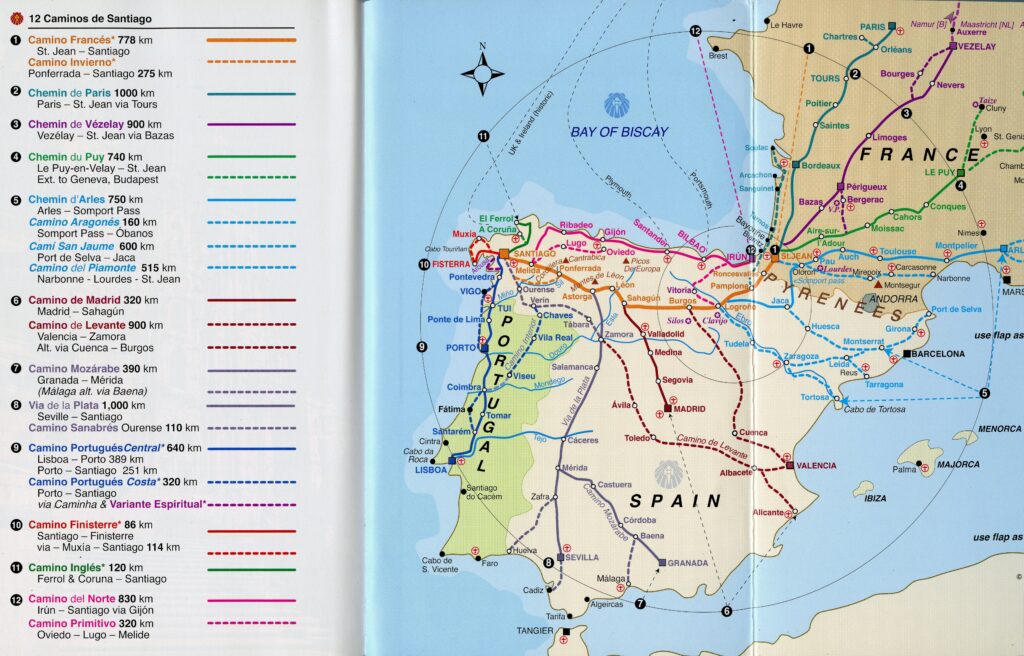
There are at least 14 Caminos that I am aware of, starting in different parts of France, Spain and Portugal but all ending in Santiago de Compostela Spain. Last year 442,073 pilgrims successfully completed a Camino route. 219,785 did the Camino Frances, 88,717 the Camino Portuguese Central, and 52,746 the Portuguese Coastal route.

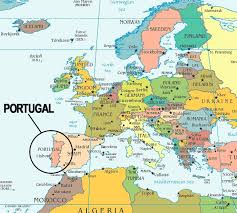
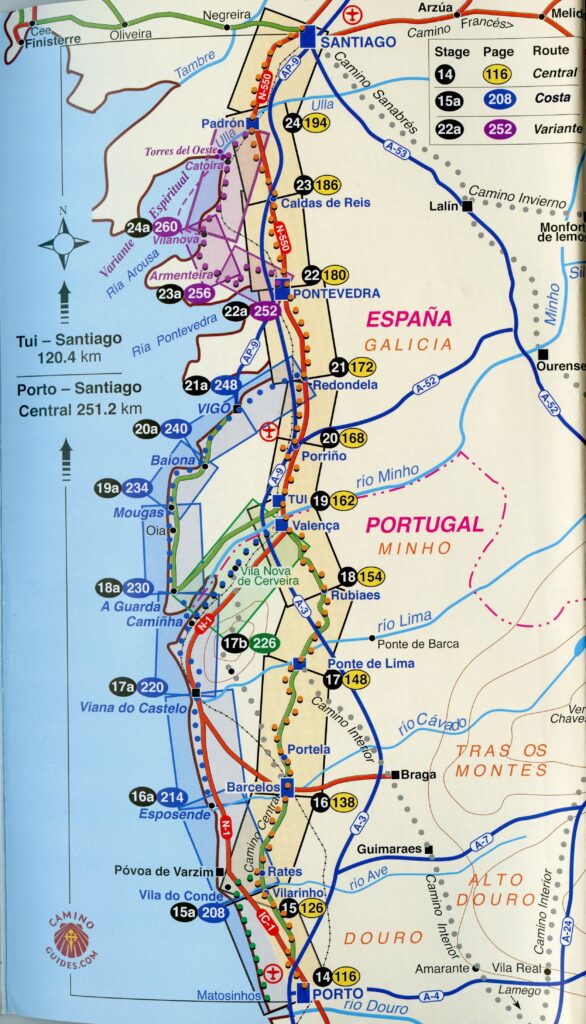
The full Camino Portugués starts in the capital of Portugal, Lisbon, and finishes in Santiago de Compostela, Spain. It is about 640kms. We are walking from Portugal’s second largest city Porto to Santiago de Compostela, about 270kms.

The Camino Portugués, O Caminhos Portugueses, is a general heading with at least four alternate routes: the Central Way (Caminho Central), Coastal Way (Caminho da Costa), Seashore Path (Senda Litoral), and Spiritual Variant (Variante Espiritual).

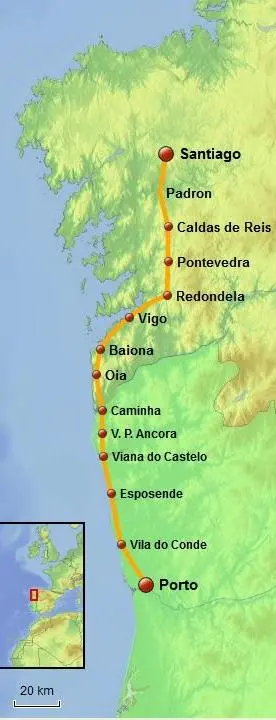
In Portugal the main historical route is the Central Way, an inland route, and is the most popular and busiest. The Coastal Way follows the coast from Porto before joining the Central Way at Redondela and going on to Santiago de Compostela. The Senda Litoral and Spiritual Variant are variations of the Coastal Way. You can see the routes in the map above. The Coastal Way, while not the traditional route for purists, is becoming more popular and is promoted by Portuguese Tourism to get better wayfinding and infrastructure (accommodation, food, transport, medical facilities etc).

We are walking the Coastal Way from Porto to Santiago de Compostella by way of Matosinhos, Villa do Condo, Povoa de Varzim, Esposende, Viana do Castelo, Caminha, A Guarda, Oia, Baiona, Vigo, Redondela, Pontevedra, Caldas de Reis and Padron.


We are using a tour company, Caminoways, to book our accommodation and transport our bags eash day. We have  previously used Caminoways when we walked the Camino Frances in 2016, and the Dingle, Kerry and Beara Peninsulars in Ireland in 2017.  In those days you used to get paper maps but now they have an app for your phone which shows the exact route and you can follow your progress by way of your blue dot on the path. It is pretty much impossible to get lost if you are using the app. When we used Macs Adventures on the South West Coast Path they also had an app of the route and many times it saved us from taking a wrong turn and getting lost, or walking a lot of unnecessary kilometres.


Lies, Dam Lies and Statistics

A survey in 2000 found at that time The South West Coast Path had 2,473 signposts, 302 bridges, 18 ferry crossings, 921 stiles, 26,719 steps and a total height climbed of 35,031 metres (nearly four times Mt Everest).

This trip: Brixham to South Haven Poole

Number of walking days: 13
Number of rest days: 3 – Exmouth, Lyme Regis, Weymouth
Number of kilometres walked: over 265 (not including rest days)
Number of steps taken: 378,5710+
Number of SWCP signs we saw: 936
Number of SWCP signs we missed: unknown but far too many
Number of bridges crossed: 71
Number of ferries: 3
Number of taxis: 1 Kimmeridge to Corfe Castle and return
Number of gates opened and closed: 187
Number of stiles climbed: 21
Number of steps climbed: 1,600
Number of swims: 5
Number of metres climbed: 6,764 m
Highest cliff climbed: Golden Cap 197m
Most metres climbed in a day: 874 Lyme Regis to Bridport
Least metres climbed in a day: 51m Bridport to Abbotsbury
Number of times chased by cows: 0 (they are better behaved in Dorset)
Cutest animals we saw: Grey squirrels
Best breakfast: Ranscombe House Brixham
Best dinner: Bull Hotel Bridport, gnocchi
Smallest breakfast: Otterton, only continental
The Bed & Breakfast that didn’t  do breakfast: Quayside B & B Poole
Number of poached eggs eaten: 19 each
Prettiest town: Beer
Ugliest town: Paignton
Longest day: 25 km Abbotsbury to Weymouth
Shortest day: Swanage to Poole 12 km
Place I’d like most to go back to: Corfe Castle
Place I will never go back to: Paignton
Number of beds slept in: 15
Most comfortable bed: the one at the end of a tiring day
Least comfortable bed: the ones on rest days
Number of times we really got lost: getting out of Babbacombe
Number of times we couldn’t find our B & B: 3 (tired brain fade at the end of the day)
Number of times our bags left before us: 0
Number of places with no wi-fi: 1 Quayside B & B Poole
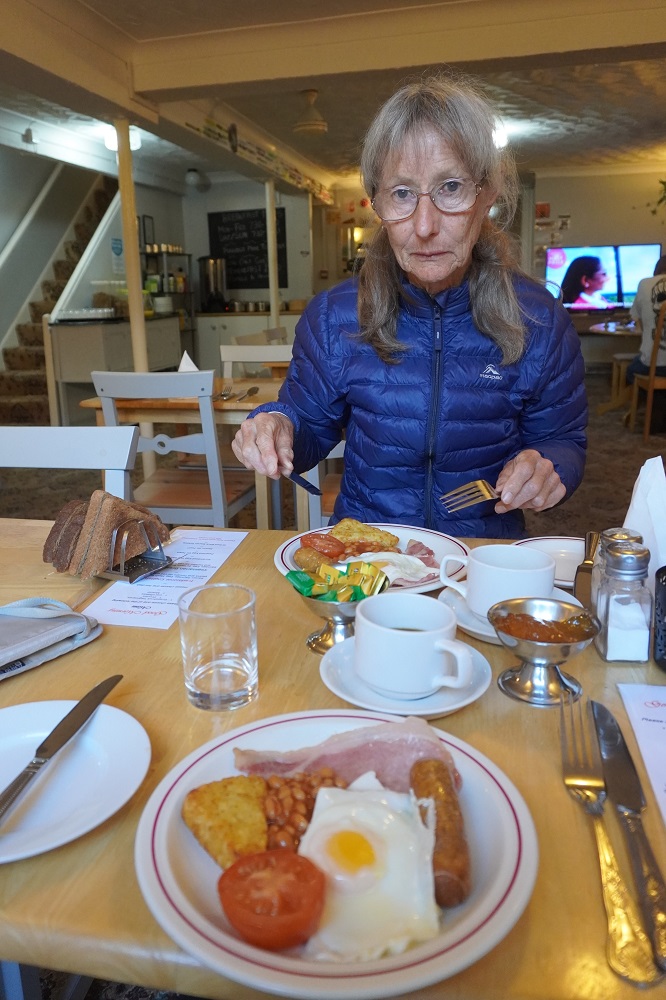
Number of days until we got sick of Full English Breakfast: 3
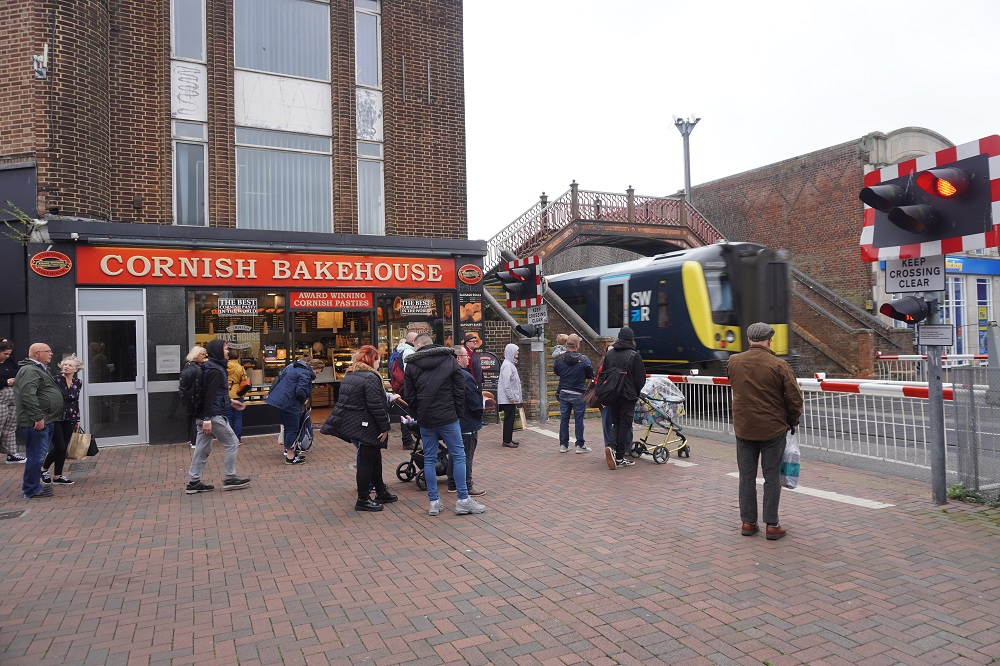
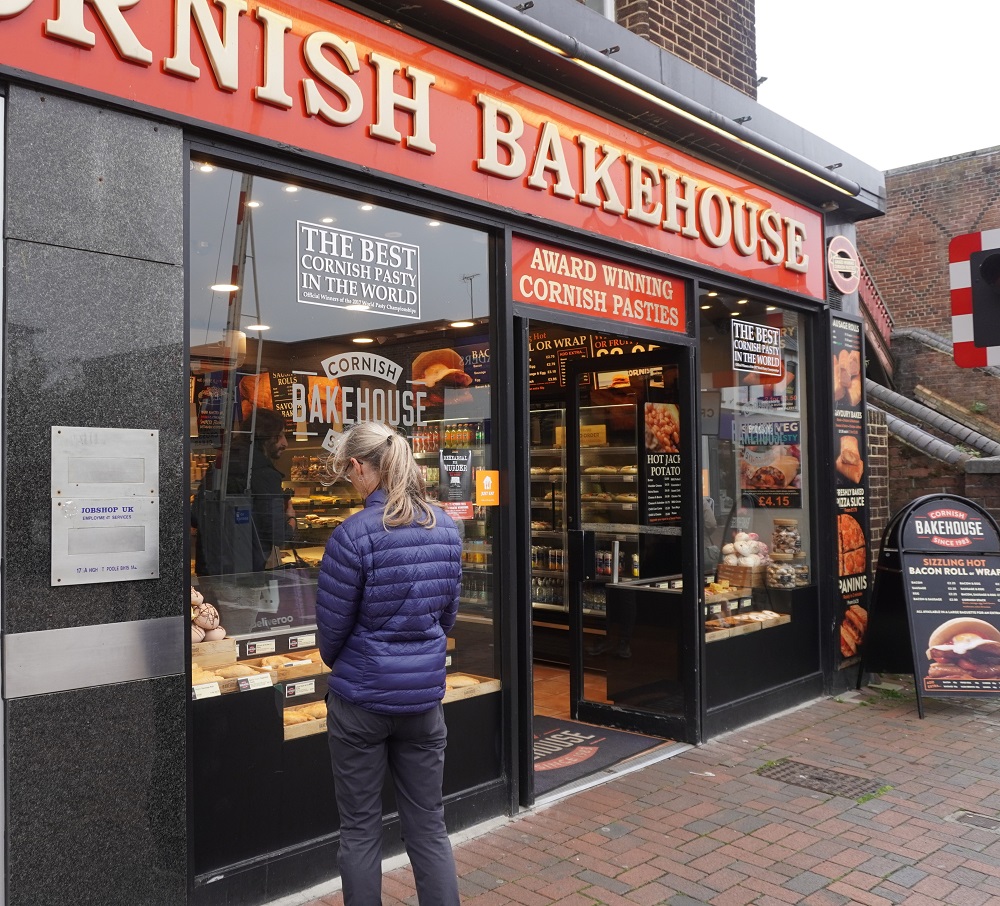
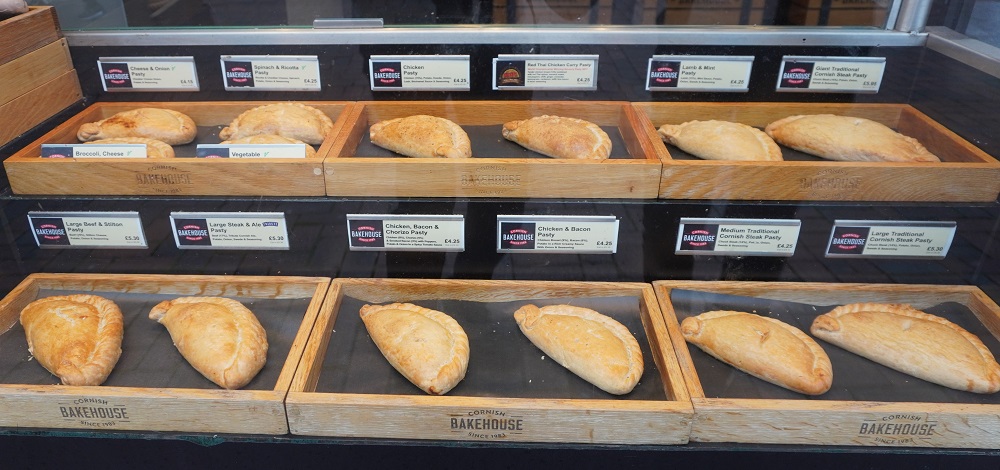
Number of Cornish Pasties eaten: 4,
Number of Cream Teas: 0,
Number of glasses of wine/beer/cider: 4 each (a very dry walk!)
Number of desserts eaten: 0 (gained too much weight last year)
Number of times a dog wanted our lunch: 4
Number of things we lost: drink bottle
Number of things we left behind in hotel rooms: 1 – Paul at Swanage (towel and socks)
The most luxurious accom: Ranscombe Hse Brixham & The Swallows Guest Hse Exmouth
The least luxurious accom: Quayside B & B Poole
Number of nettle stings: dozens for Paul wearing shorts, Barbara one on hand
Number of photographs taken by Paul 3954
Number of photographs taken by Barbara: 24
Articles of clothing not worn: 40%
Number of times we got absolutely saturated: 1 – Lulworth Cove to Kimmeridge
Most favourite drink during the day: fruit smoothie (Paul)
Most favourite drink during the day: Kleen Kanteen coffee (Barbara)
Number of times we ran out of water: Paul 2, Barbara 0

Stressed

London to Shanghai

We have arrived in Auckland and have 6 hours until our flight to Wellington.

It was a very stressful 24 hours until we had been PROCESSED at Shanghai Airport.

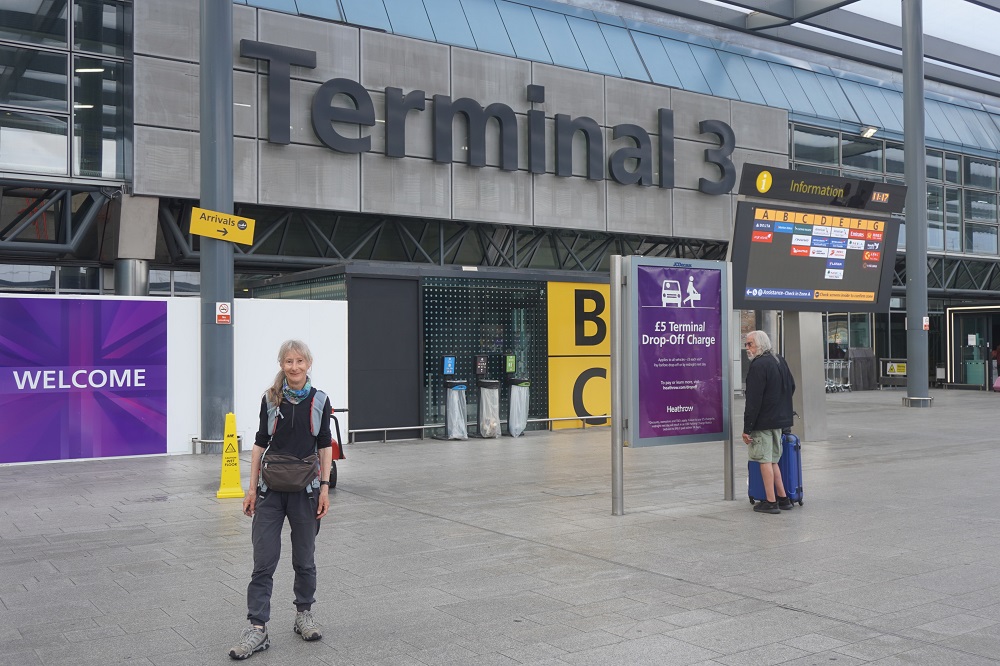
Got all organised at the hotel to do our online health declaration, filled out all the required fields and verified and submitted it. We had even arranged with the hotel to get a paper copy printed as a back-up. A QR code should have come back immediately. We waited, and we waited. We had to be at Heathrow 4 hours before departure so thought we could sort it out at the airport. The very unhelpful Virgin Atlantic desk staff said to try again and keep trying until departure. Did it about ten times using both our email addresses and on my laptop and phone. Nothing. Spoke with four different people all with a slightly different take on it. They said they would let us on the plane and email China Customs that we didn’t have the code. Another said because we were in transit and flying to New Zealand we did not need the code and that we would need to pick up our bags at Shanghai Airport.

Feeling discombobulated we boarded the plane. At Shanghai we passed through border control with e-passport, Barbara had her fingerprints taken, I was exempt being over 70, and had our photo taken and our temperature taken. Then went to the transfer desk where we got new boarding passes and were asked for our QR code which of course we didn’t have. Not a problem. A very nice lady took us aside did the application on our behalf on her phone which instantly came up with the codes. I photographed them onto my phone and we were taken to another border control area where they were scanned and we were all okay. About 30 people were on our Virgin flight from Heathrow and were transferring to Air NZ and we were not the only ones without a QR Code. This whole business is a Covid requirement and they are obviously well used to people not having the code. Didn’t have to collect and recheck our bags, and after another security screening we were released to the departure lounge.

PHEW!

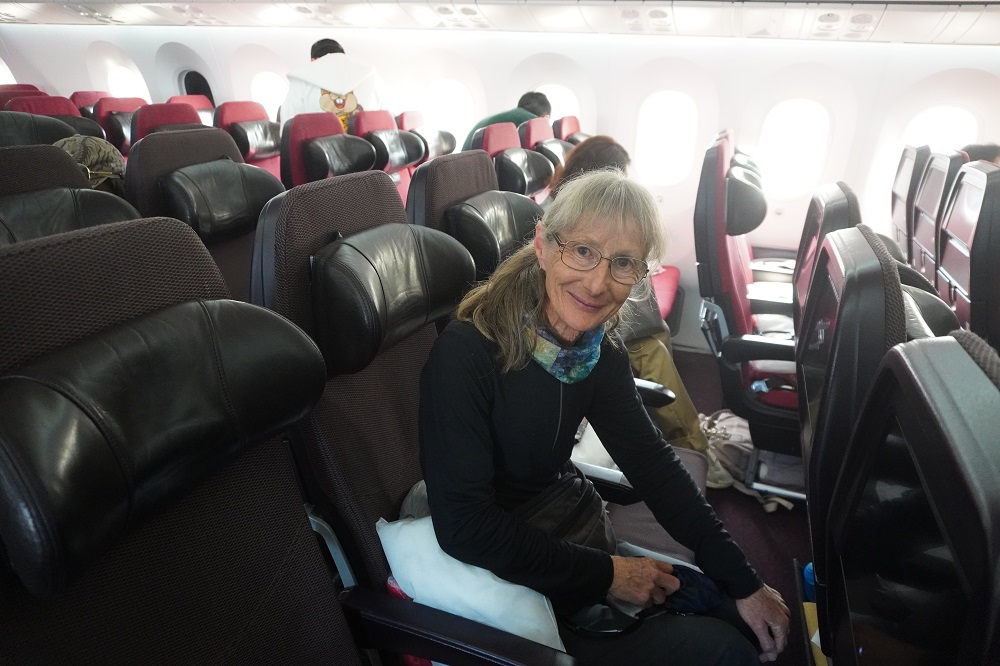
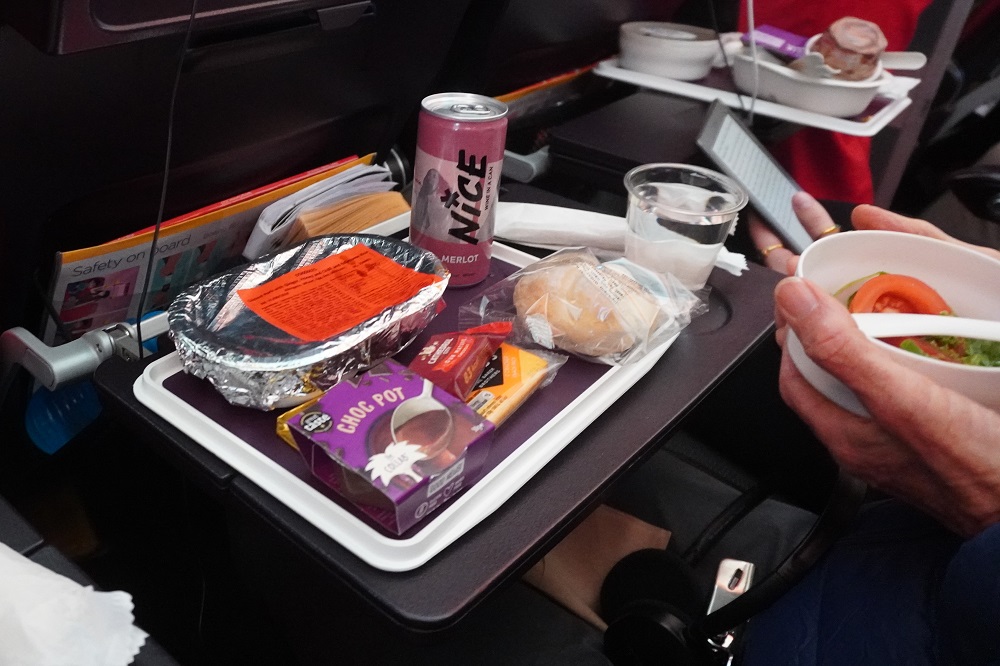
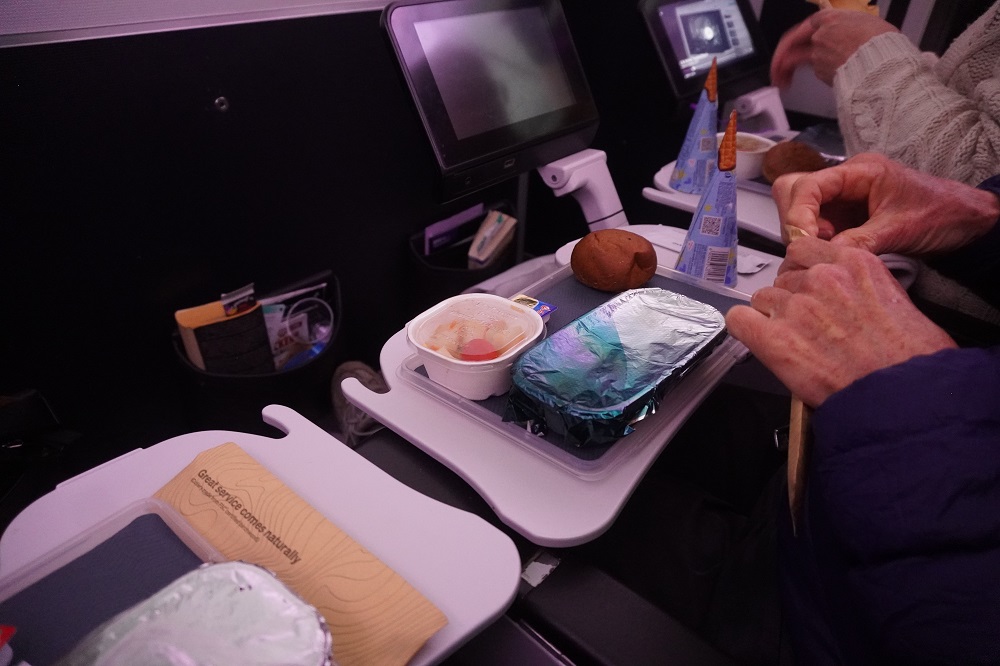
Left Heathrow 45 minutes late and a 12 hour 18 minute flight to Shanghai OU Dong. The stop over should have been almost 5 hours but with the delay and very slow processing only 2 hours. Then 11 hours 30 minutes to Auckland. Both flights were pretty good, better than we expected. Even got some sleep for a few hours off and on. The food was good too. The coffee tasted good after UK coffee.


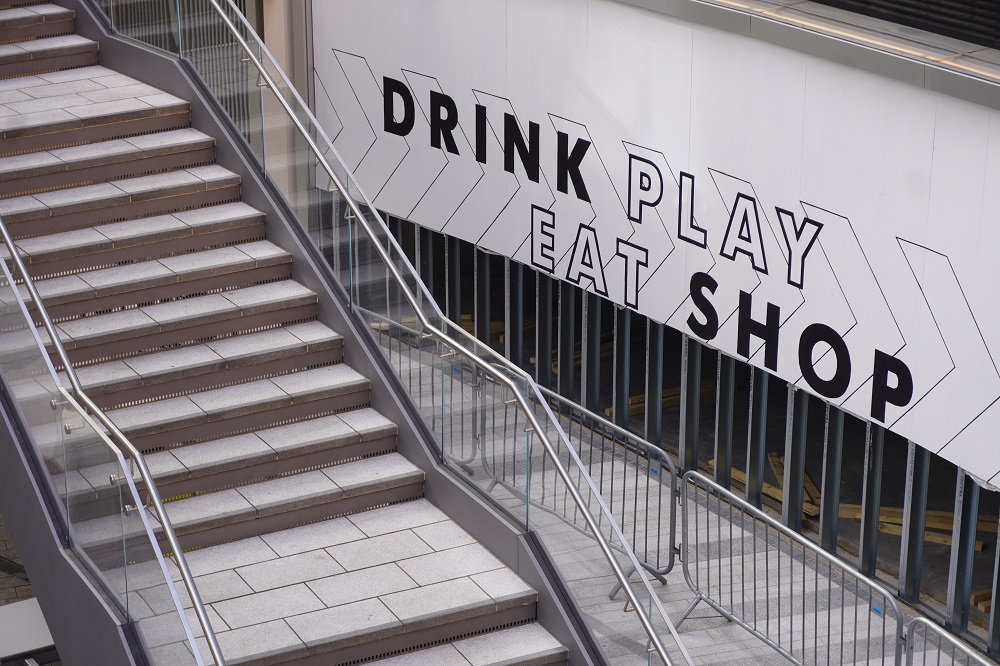
Drink Play Eat Shop

London

The hotel room was nice and cool and the air conditioning whisper quiet, so we both had a good night’s sleep last night. Today was a beautiful autumn day, sunny, warm, no wind, a nice last day in London for we may never come to this city again.

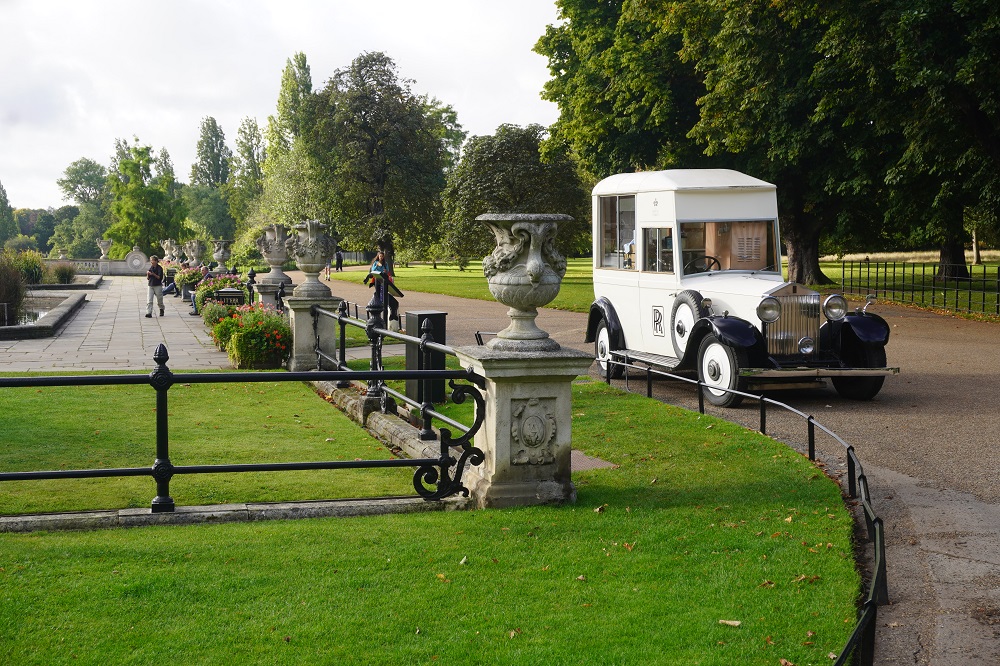
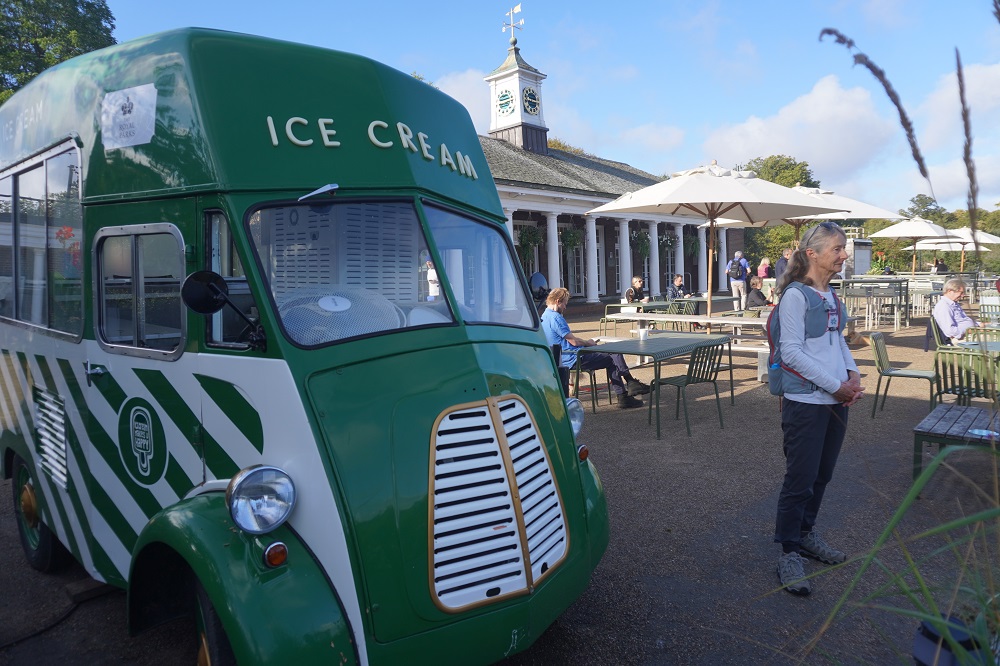
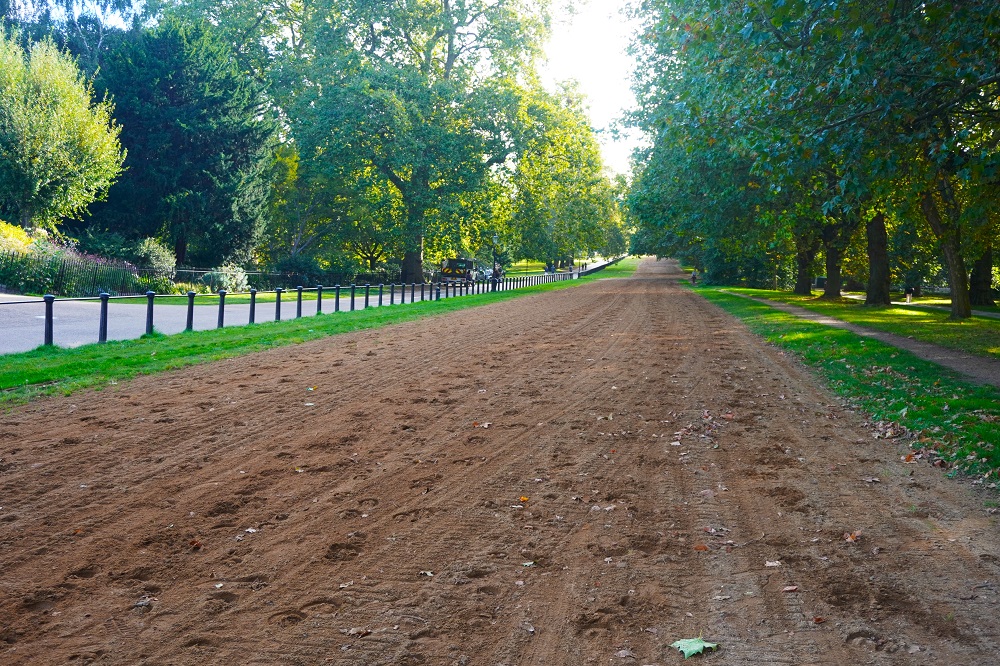
A walk across Hyde Park, through Kensington and Chelsea, across Chelsea Bridge to Battersea. Fortunately it was early and all the very upmarket clothes and jewellery shops in Kensington hadn’t opened yet, otherwise we may have been tempted to blow all the inheritance on a handbag or a suit. In Hyde Park you can buy ice cream from an immaculate Rolls Royce or a Morris J type van.

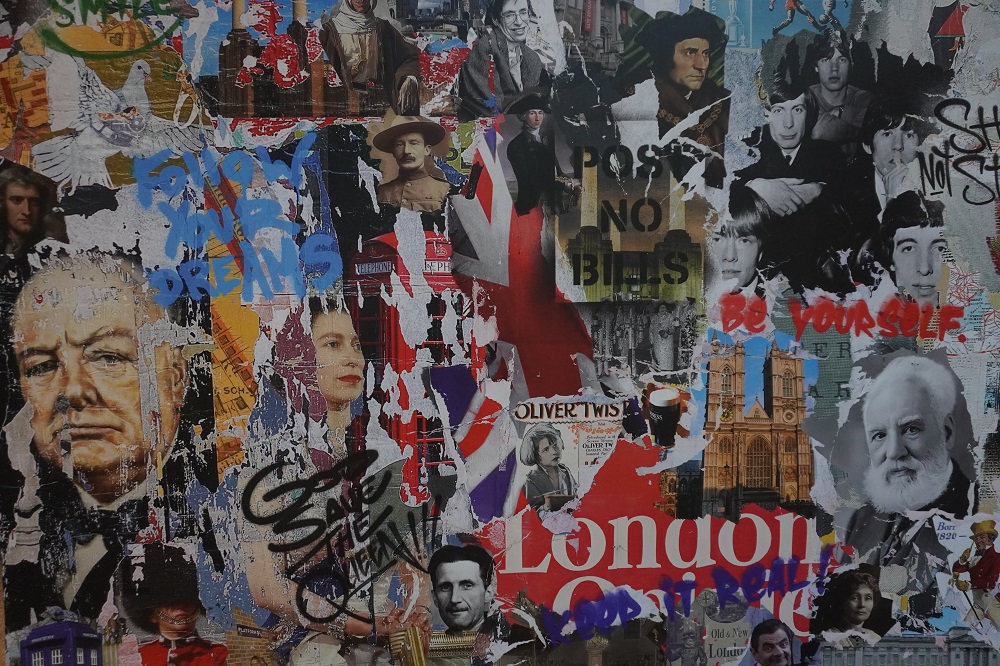
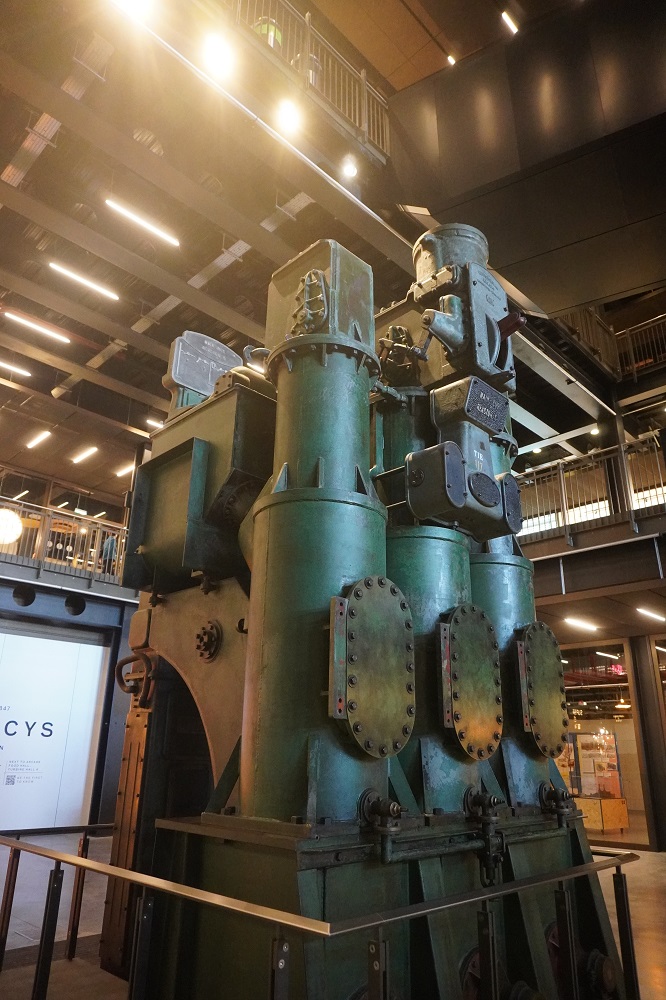
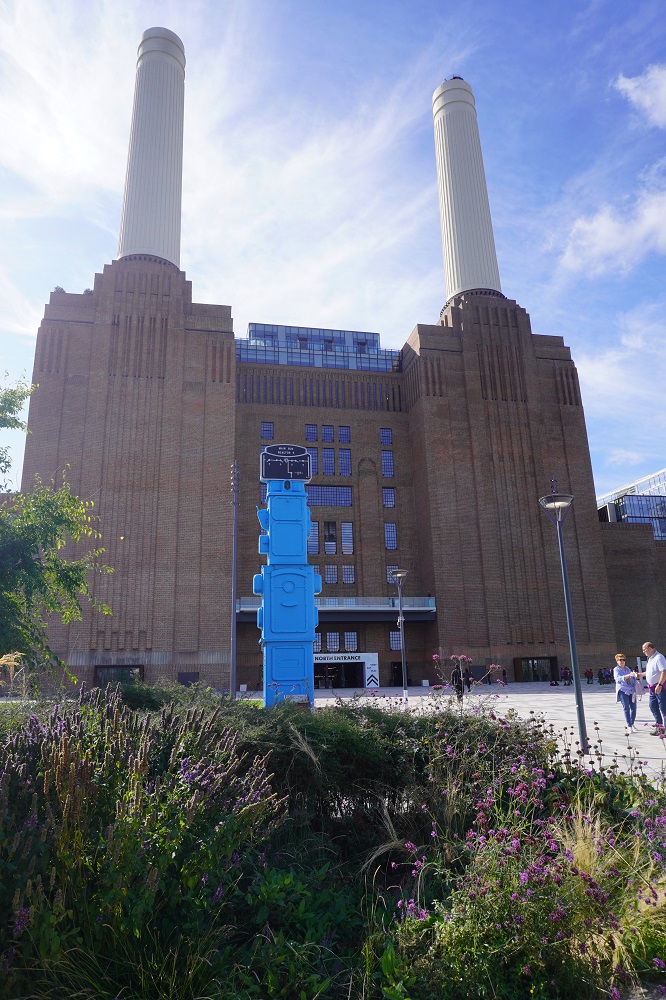
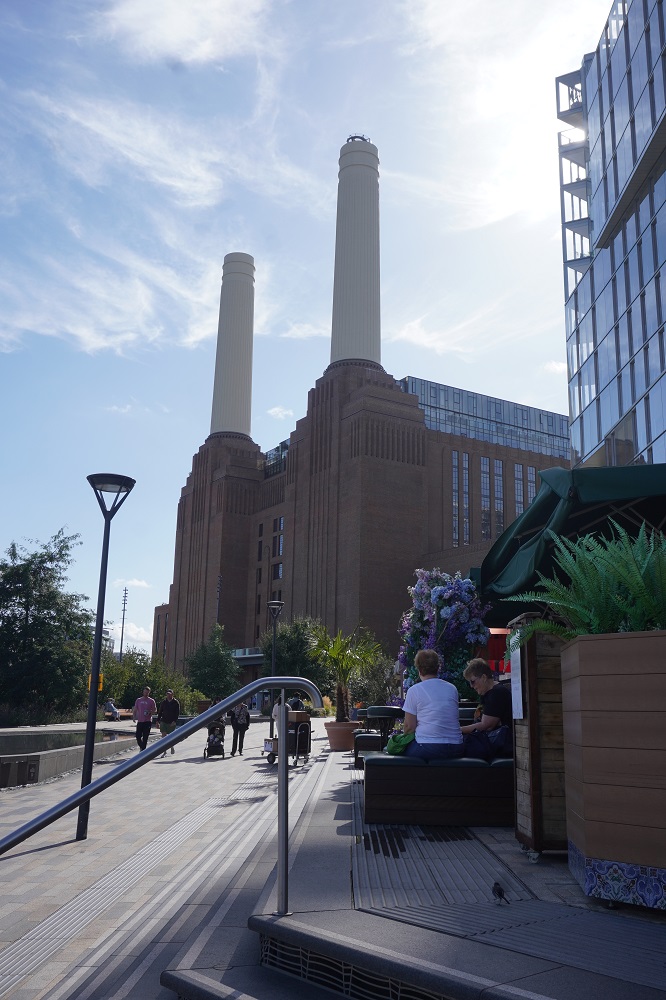
Our mission was the Battersea Power Station. This is in fact two coal powered power stations, the first built 1925 – 30 and the second to an identical design in 1937 – 41. Battersea “A” was decommissioned in 1975 and Battersea “B” in 1978. Over a million tons of South Welsh coal were consumed annually. The power station was heritage listed in 1980 and since then there were all sorts of proposals to use the building, including theme parks, offices, shops and restaurants. The building remained empty until 2014 while it fell into ruin. Ownership changed hands several times until in 2014 a Malaysian Consortium of property companies bought the building and started work on the redevelopment of the site.

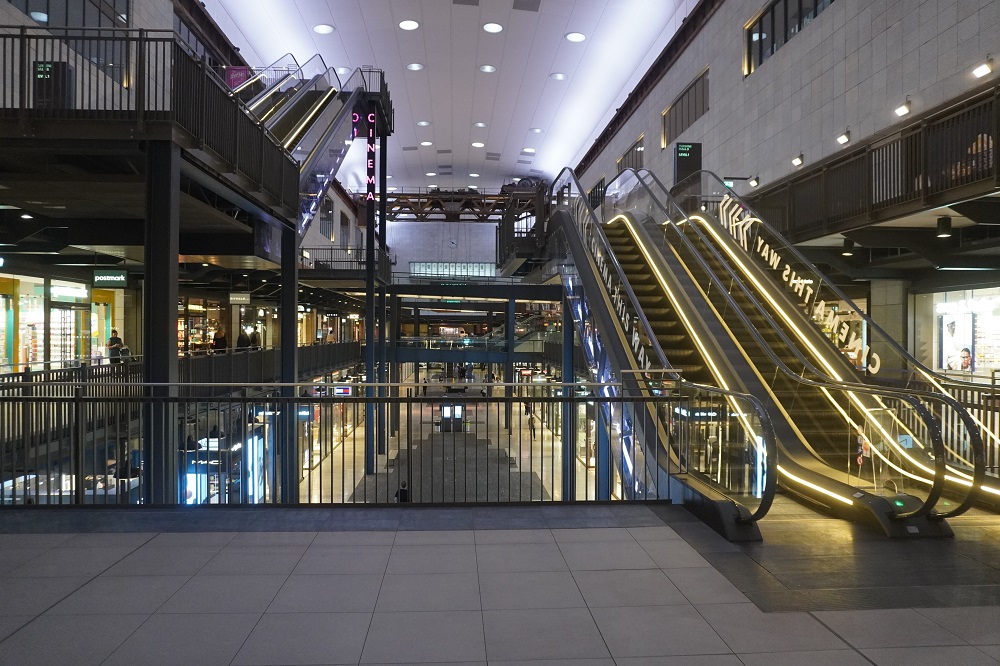
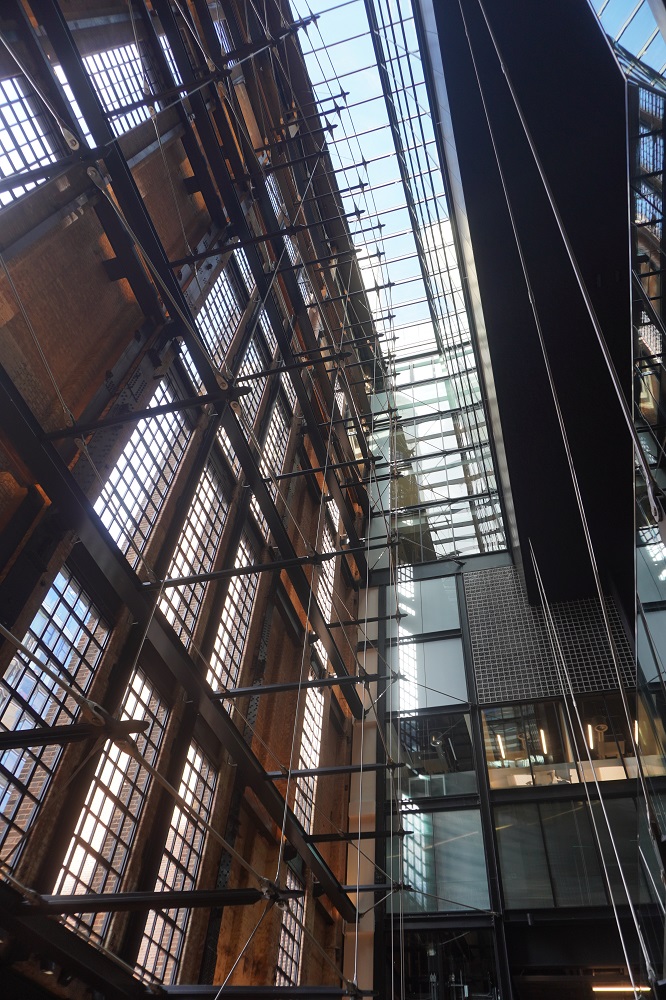
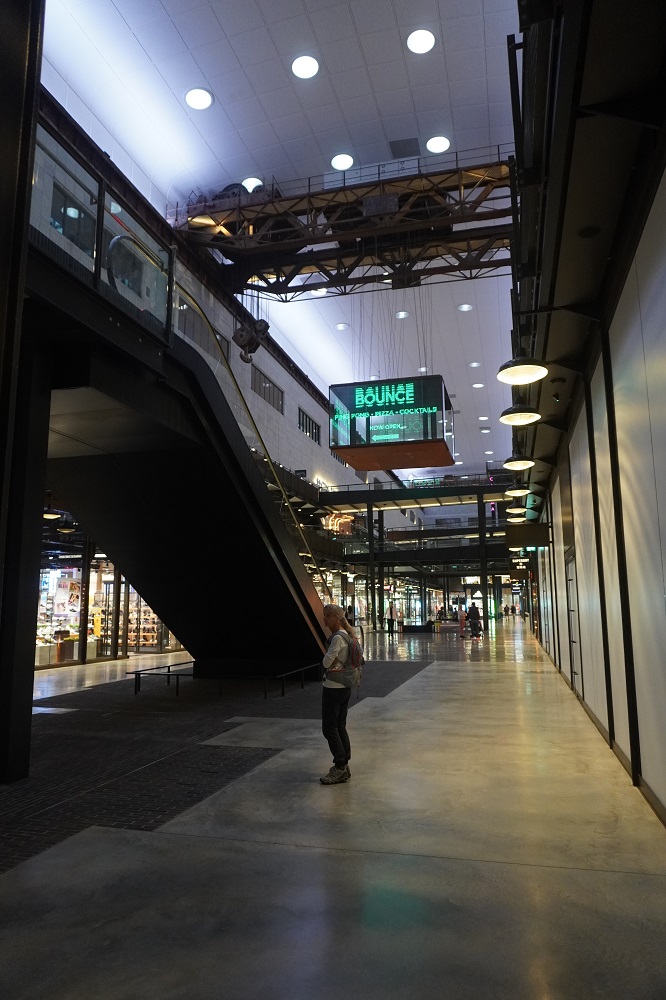
The restored power station is the central focus of the regenerated site, housing a blend of shops, cafes, restaurants, art and leisure facilities, office space and residential accommodation, and a new riverside park. Full redevelopment was in eight main phases and included over 800 homes of varying sizes. The underground northern line was extended and the site now has its own tube station. Nearly forty years after it shut down the lights were switched on again as the Battersea Power Station opened its doors to the public in October 2022.

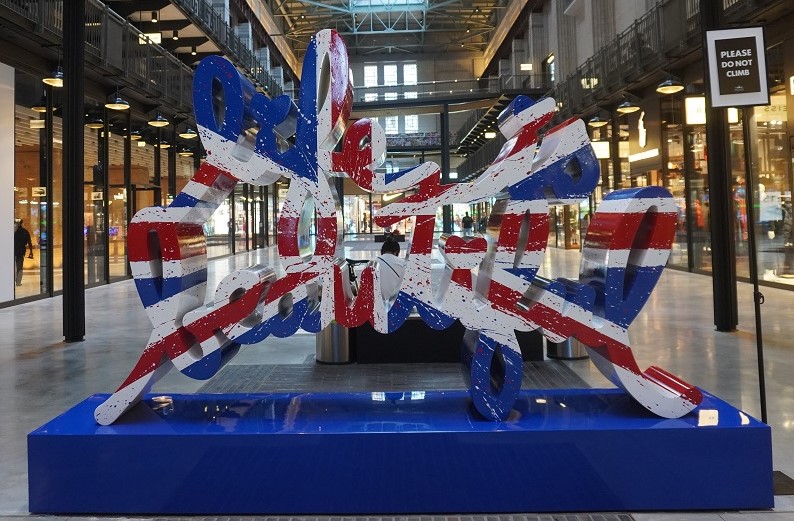
It is an amazing complex with the two huge turbine halls opened up and lined with retail and restaurants/cafes on several mezzanine levels. There is an elevator to the top of one of the four 109 metre chimneys, but at £50 we decide to give it a miss. So the Bankside Power Station is now the fabulous Tate Modern Gallery (see an earlier post) and the Battersea Power Station an upmarket shopping complex. Two buildings that were for decades considered ugly and a blot on the London landscape being given new lives and are now much used and loved.

We got caught out again trying to use “real” money at the power station. Much of the UK is becoming a cashless society. Several times when we have tried to buy coffee or a meal at cafes, restaurants and pubs we are kindly informed they don’t take cash, card only.

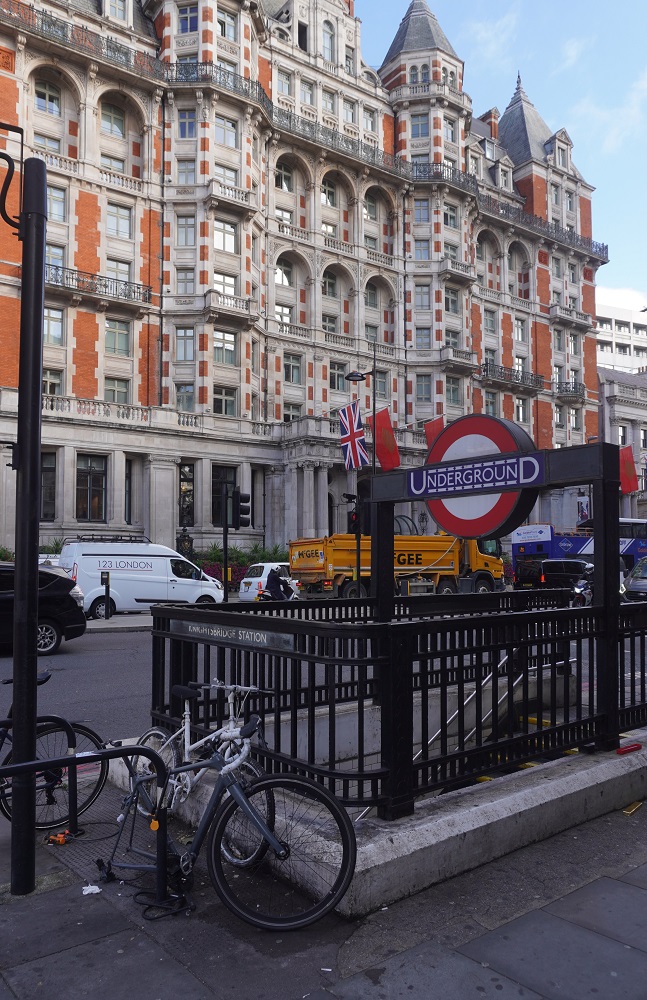
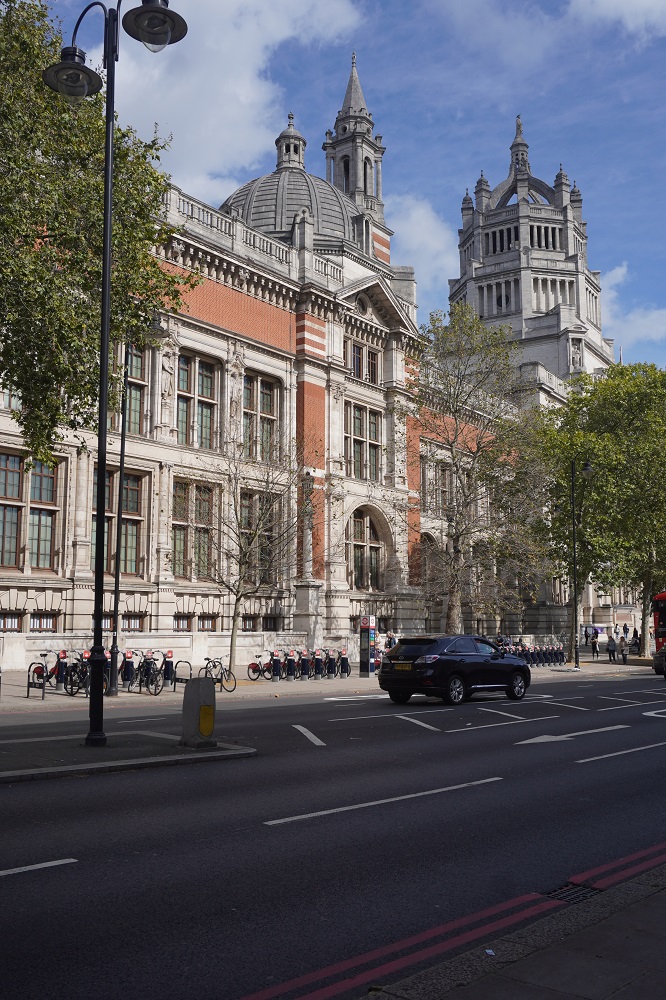
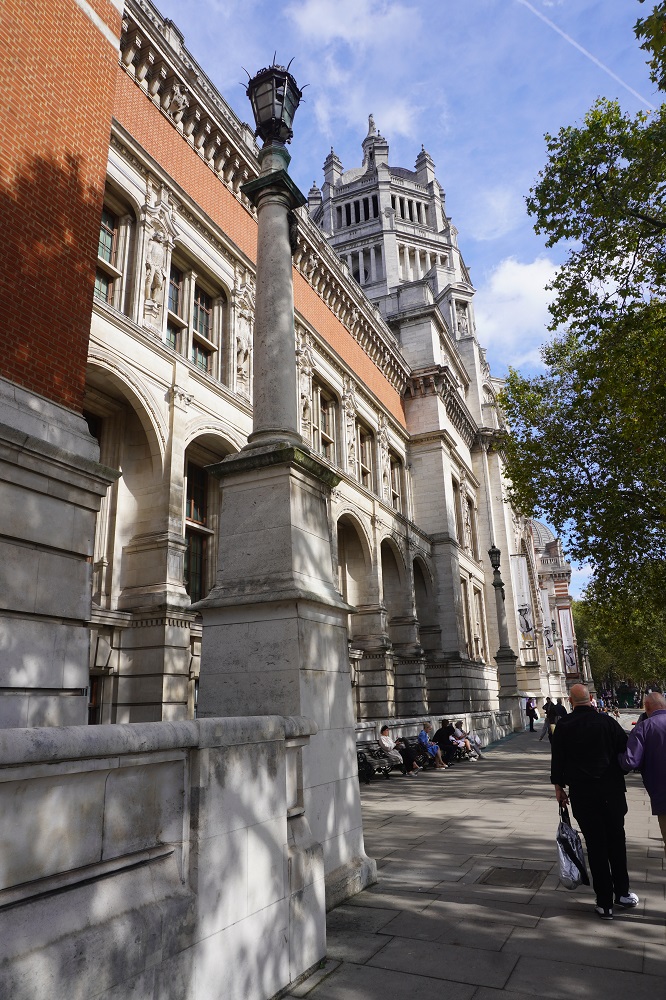
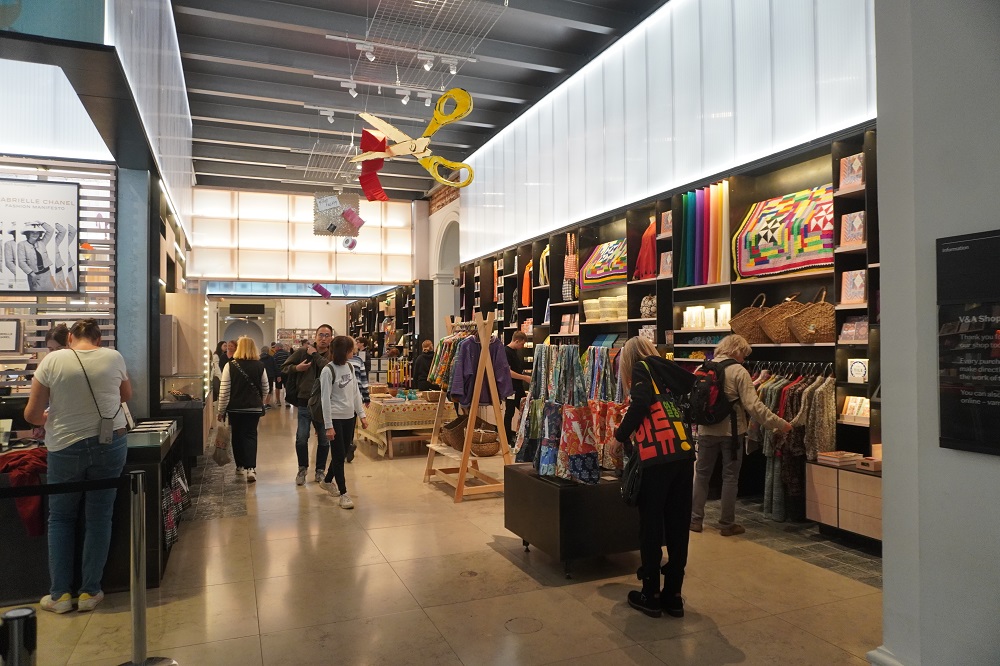
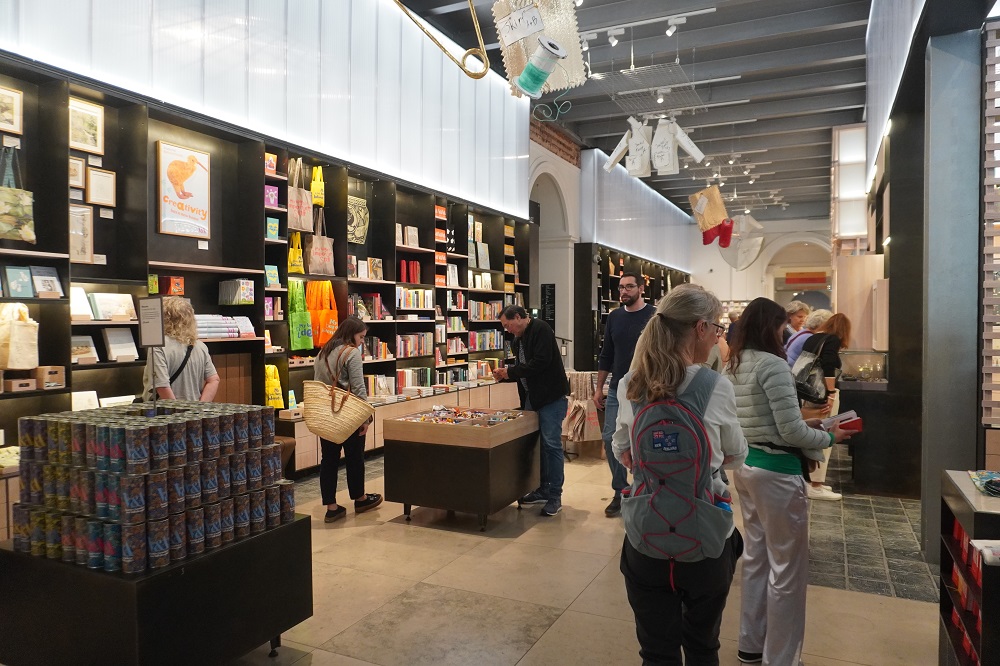
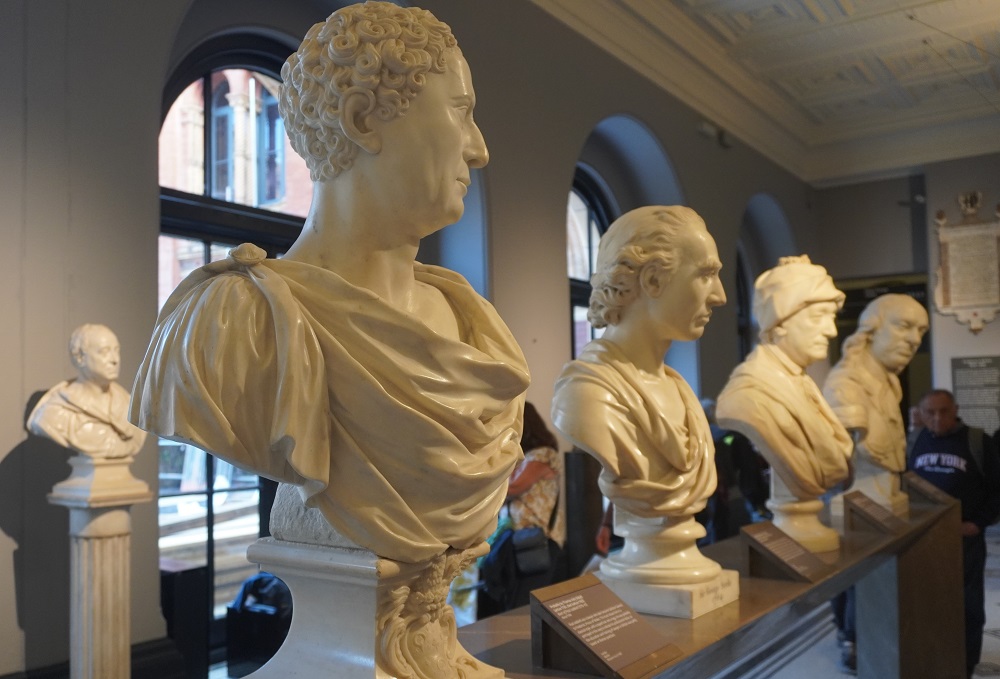
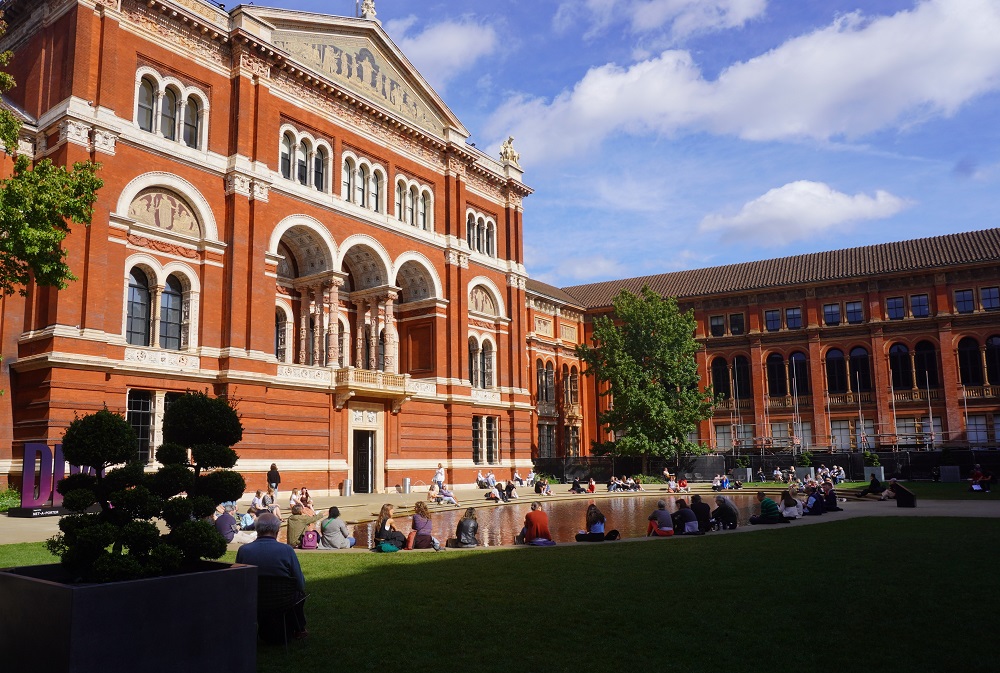
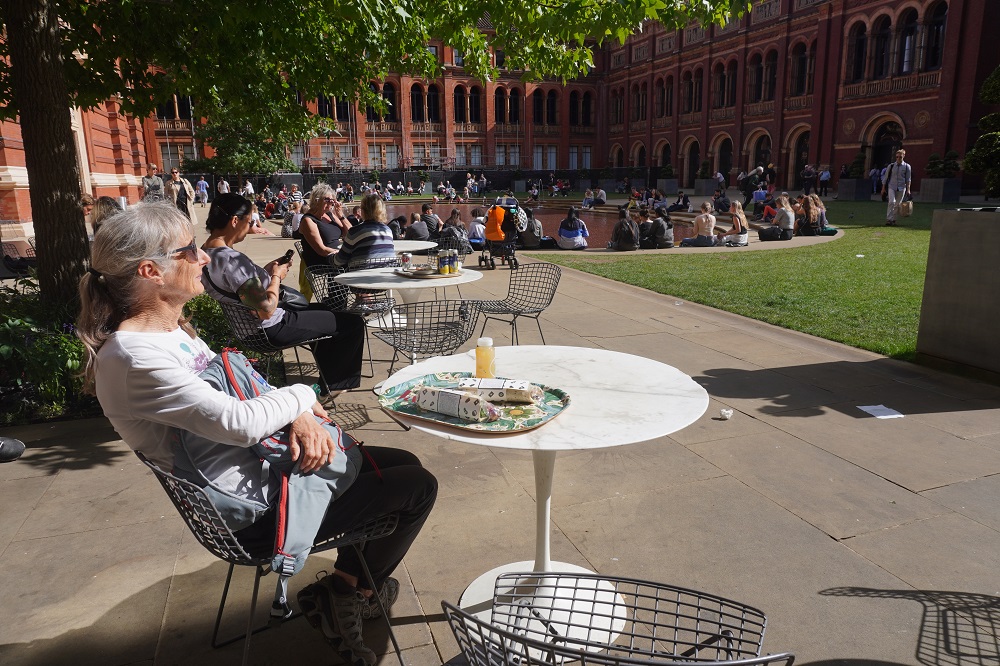
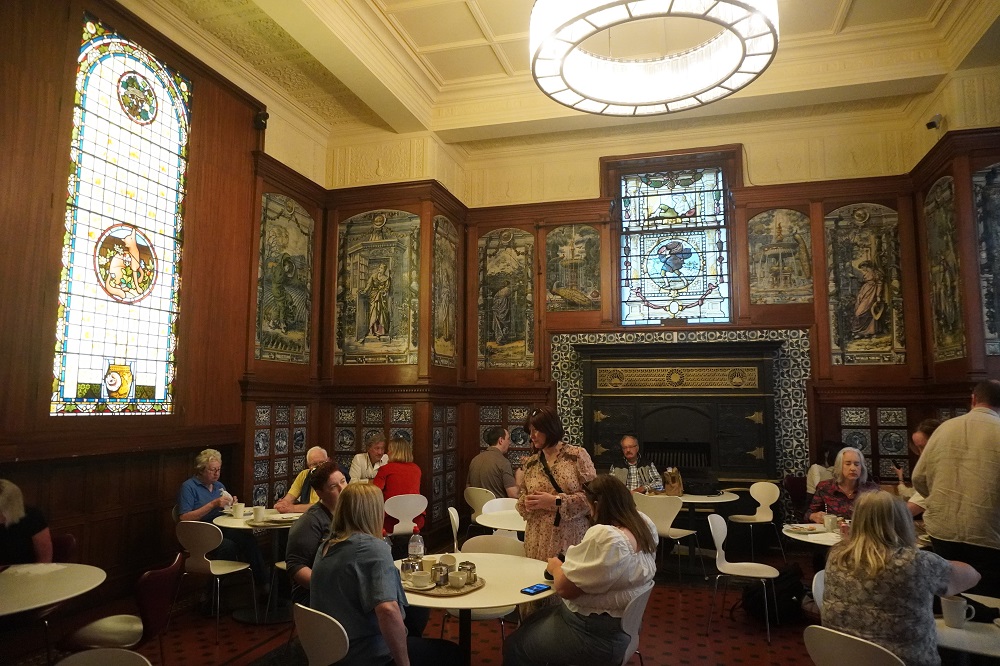
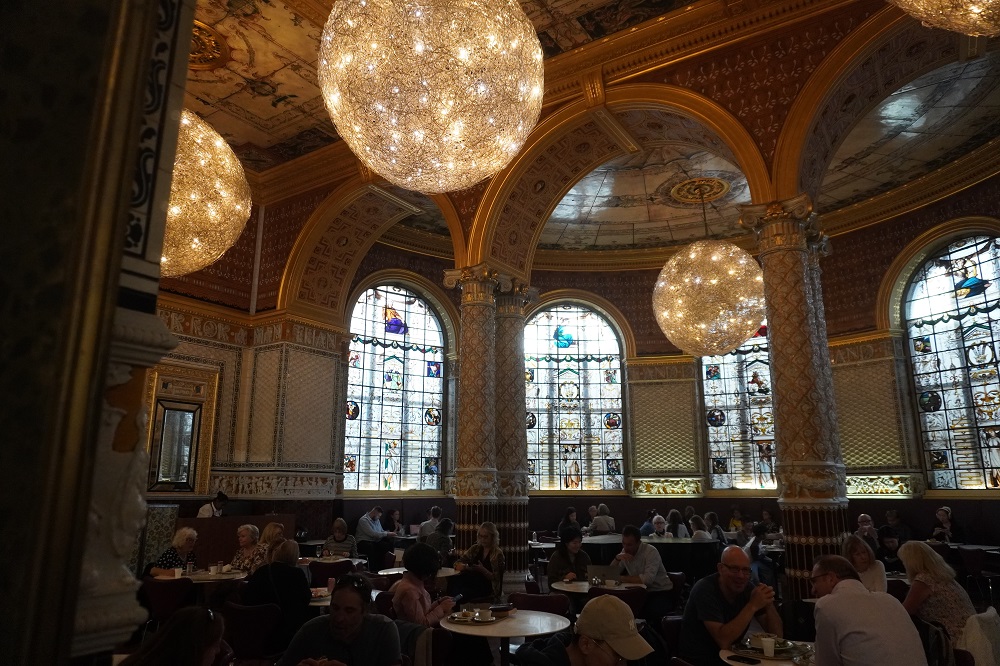
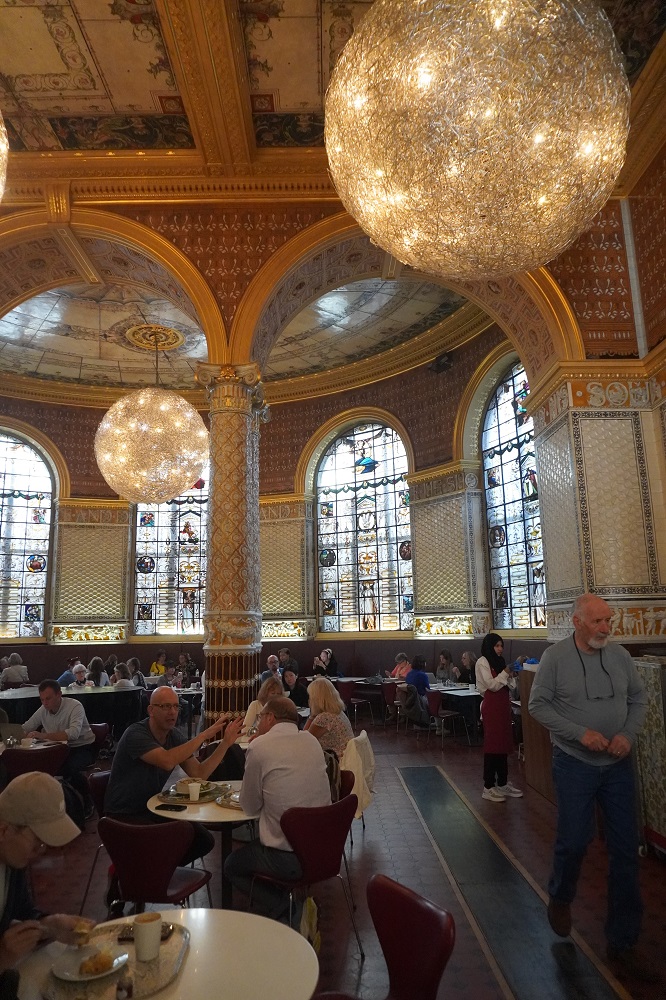
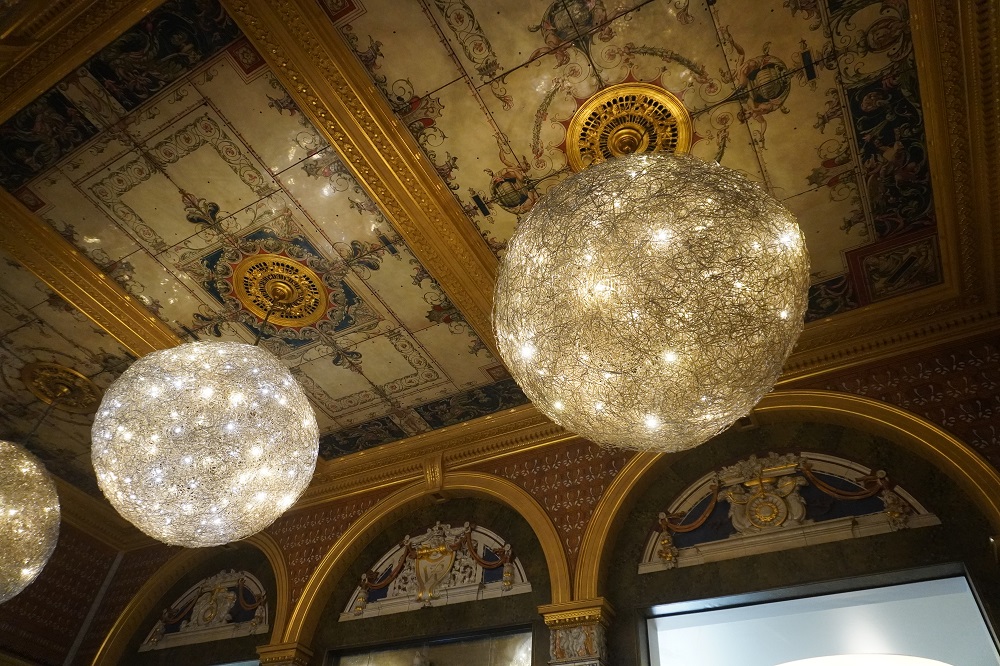
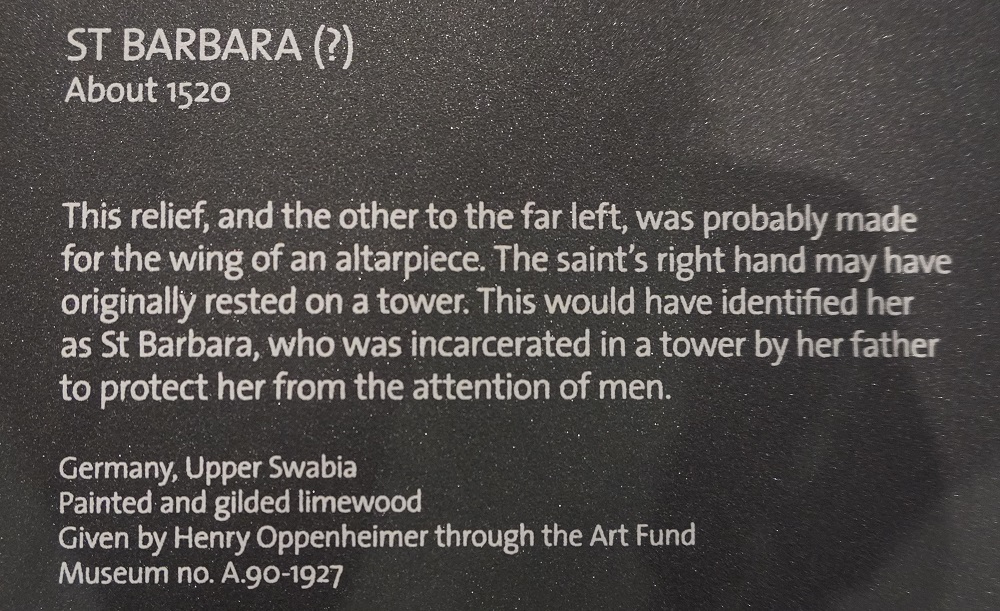
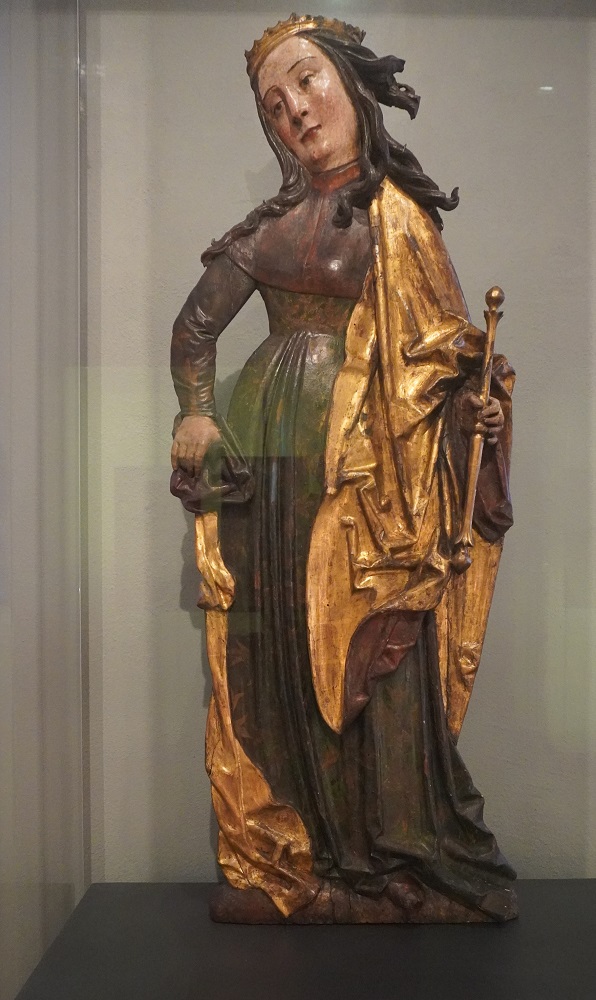
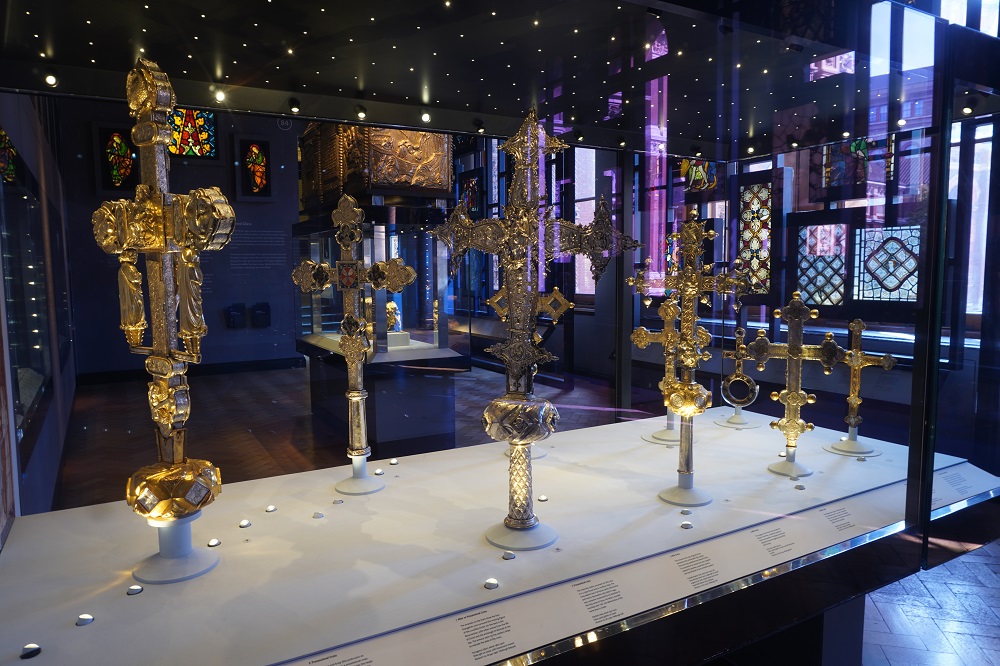
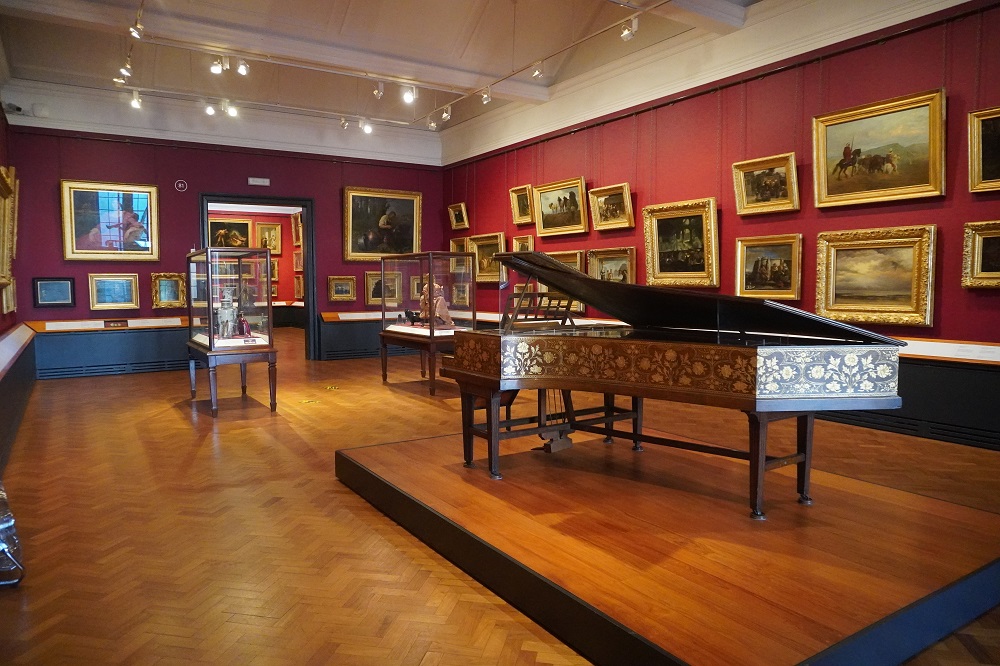
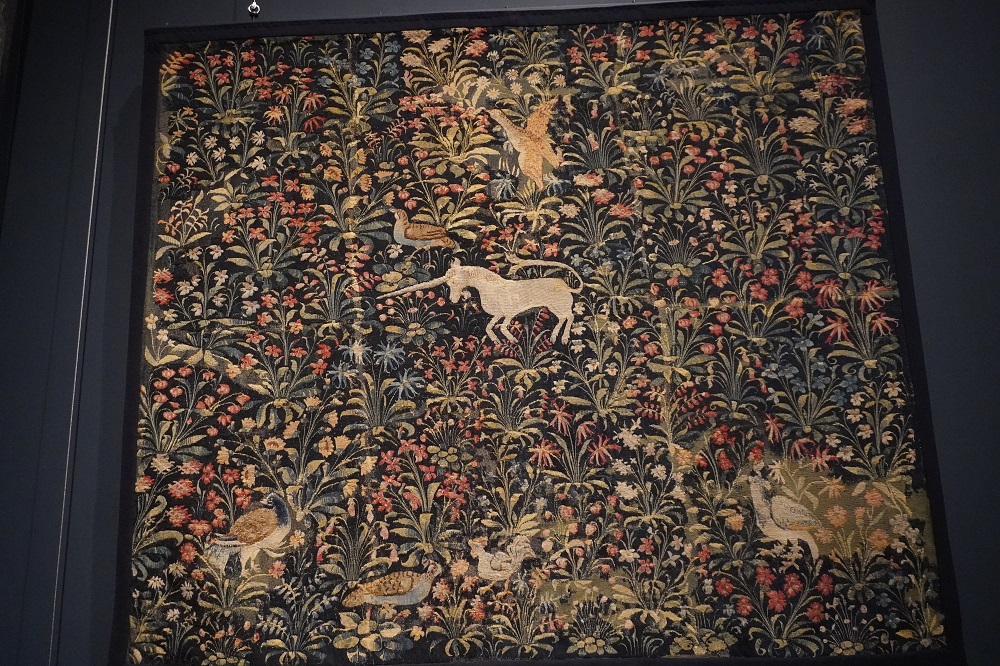
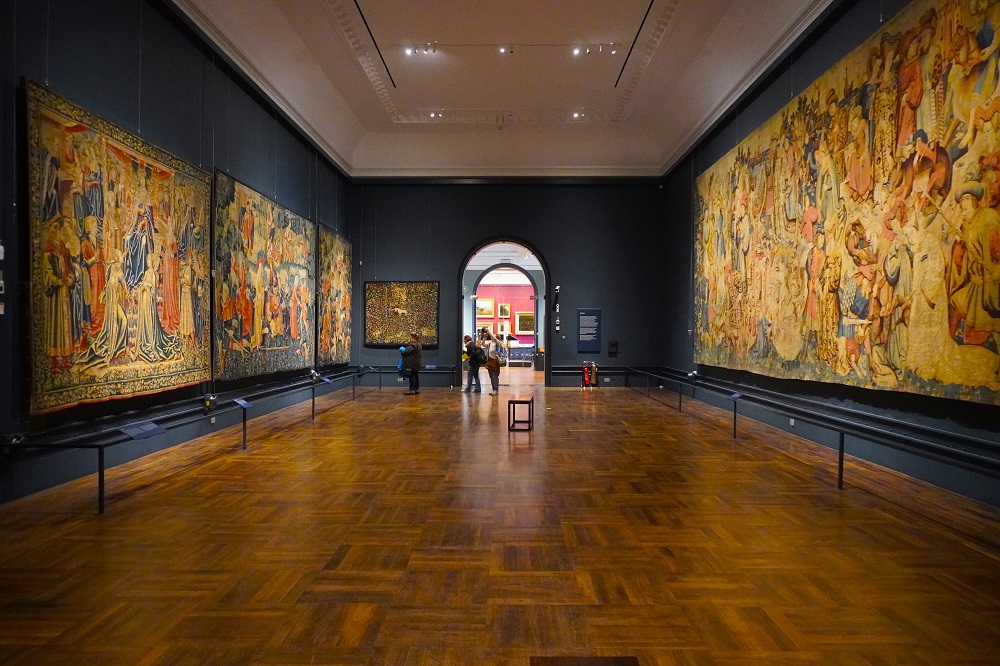
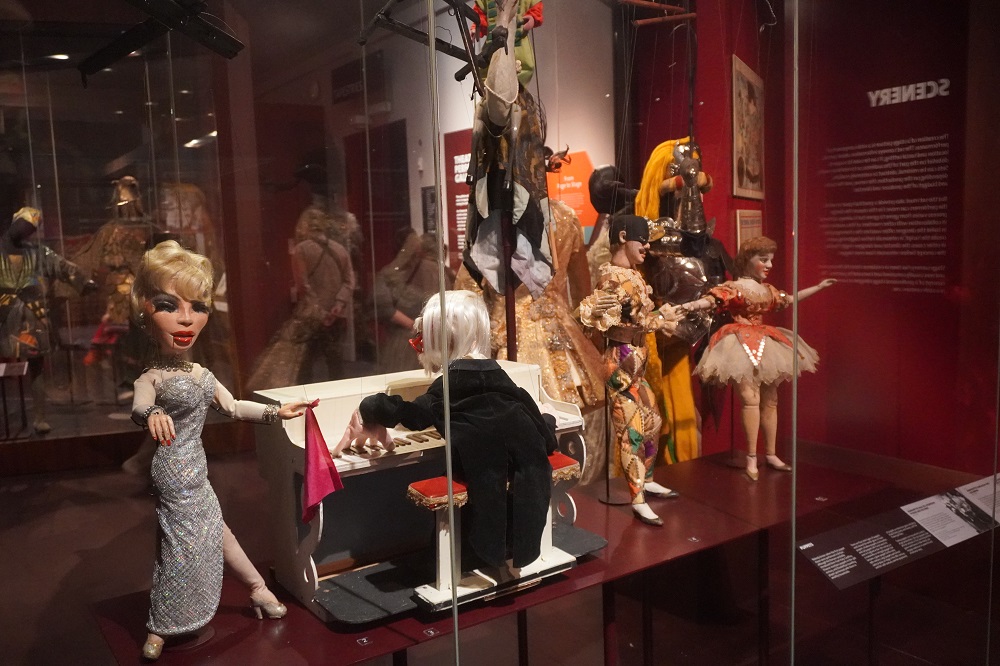
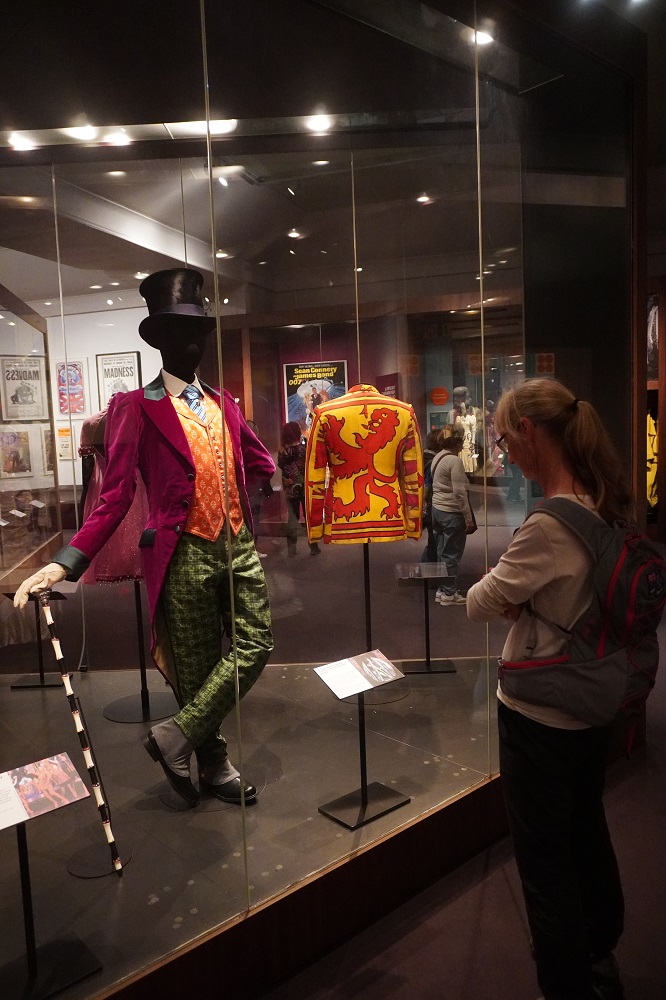
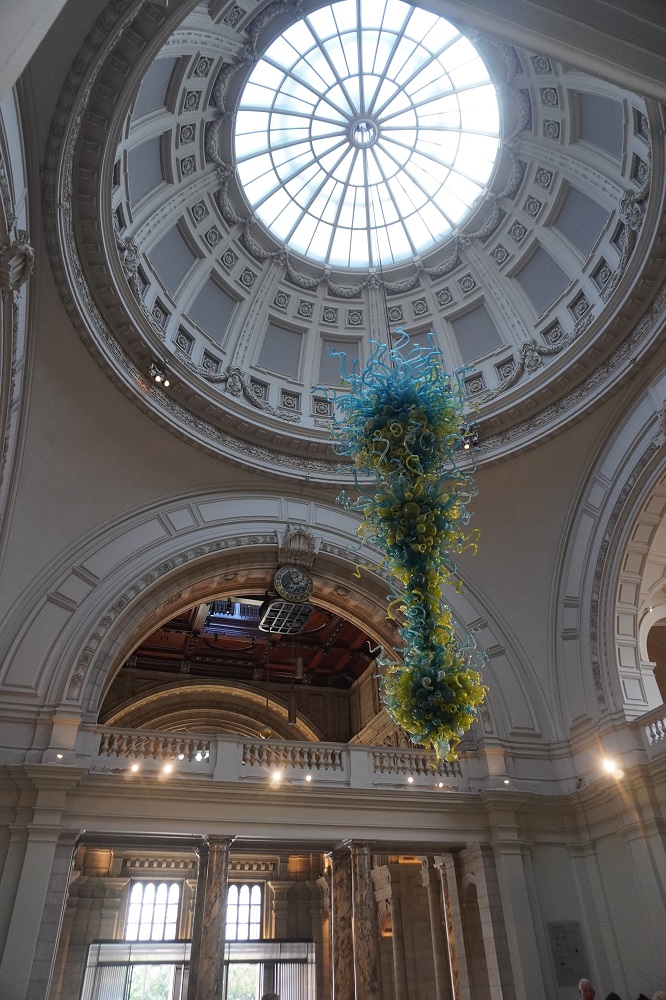
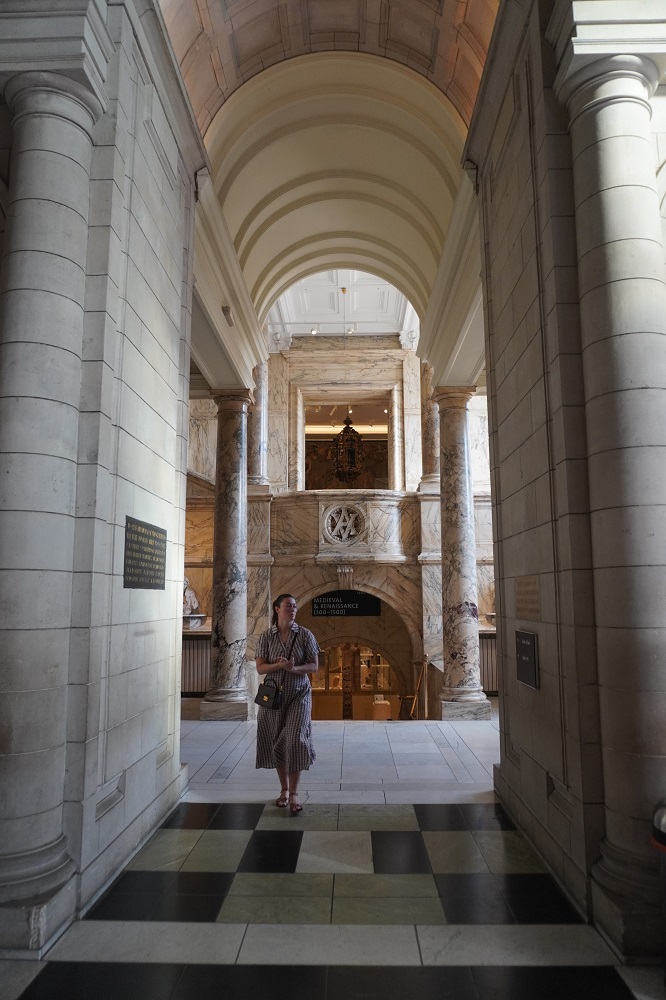
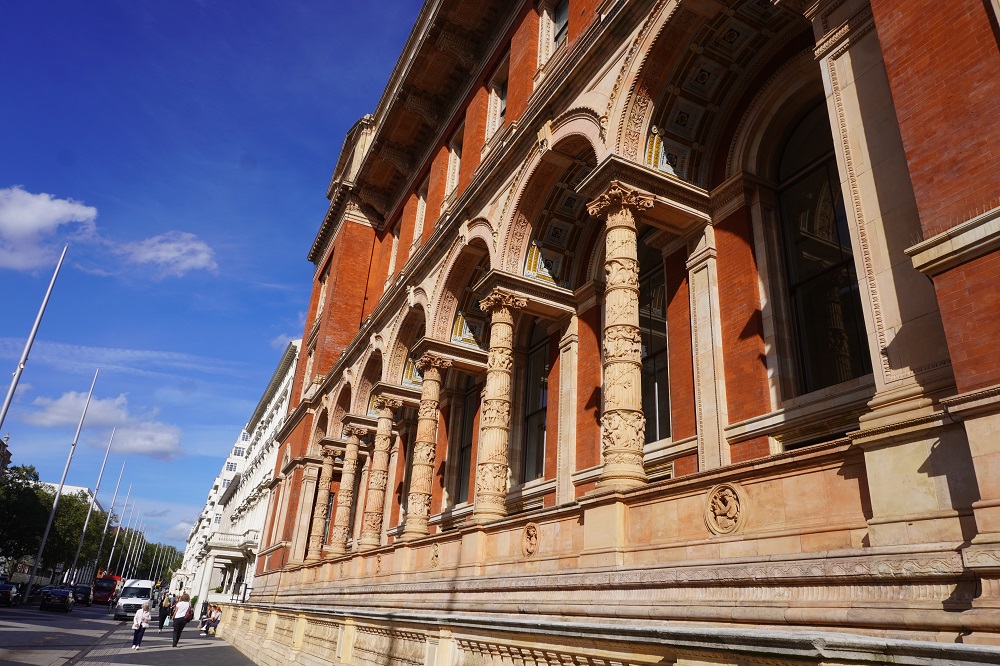
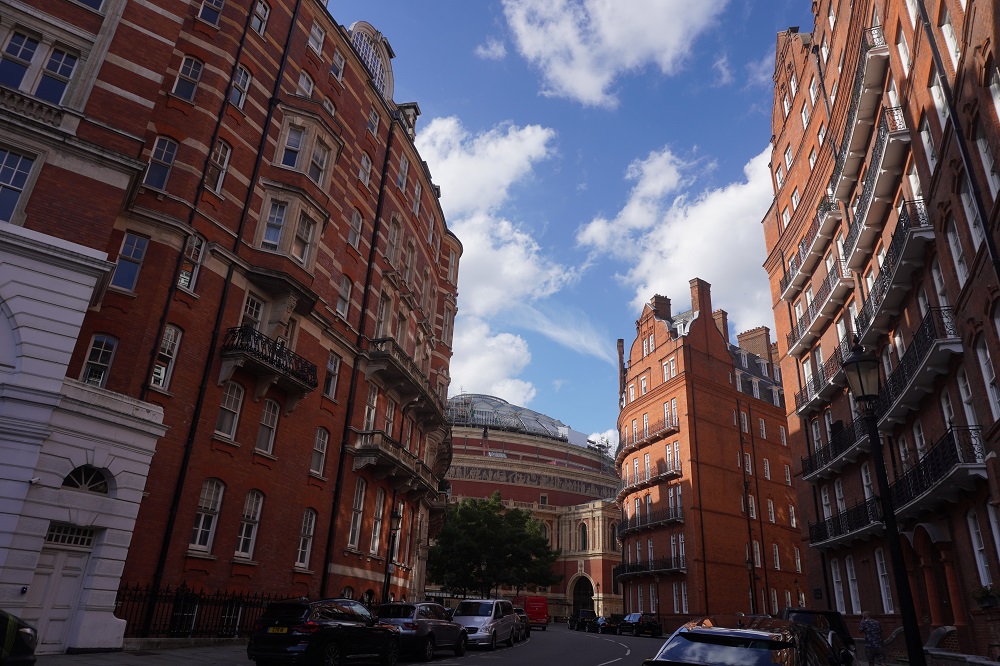
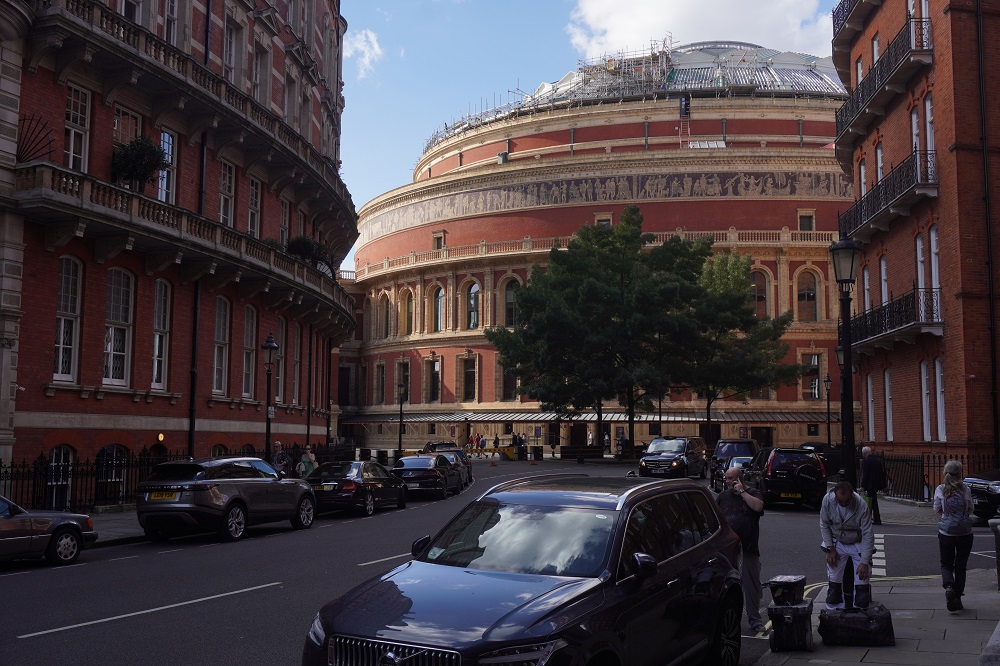
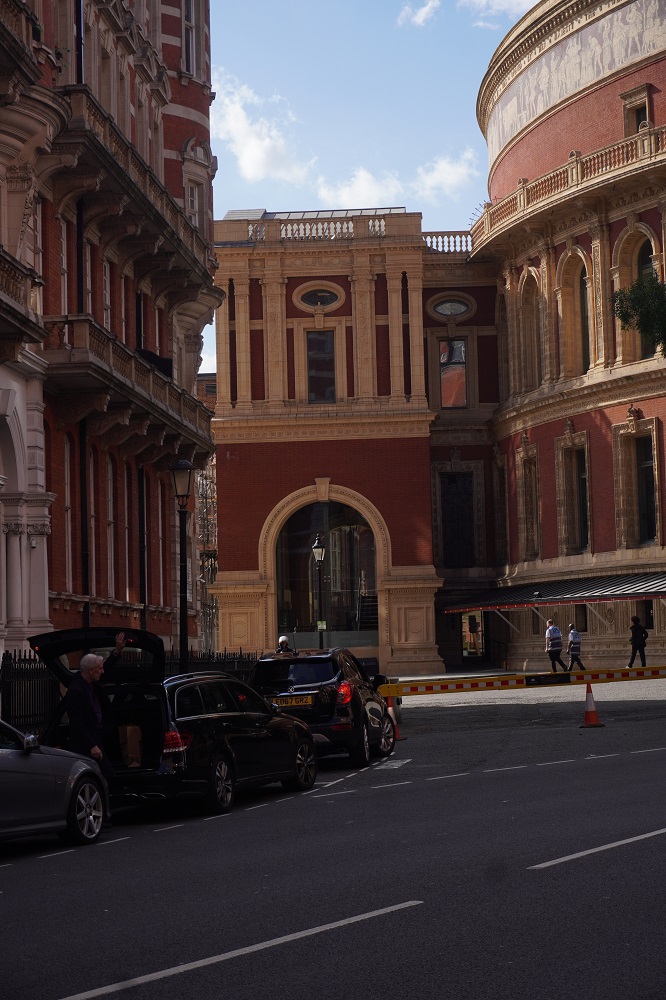
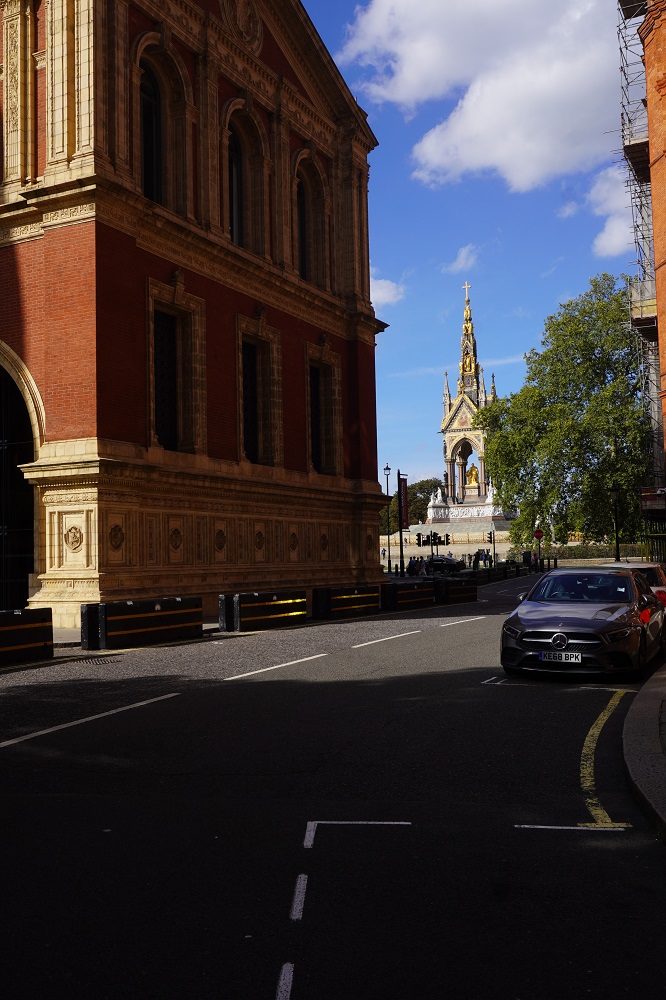
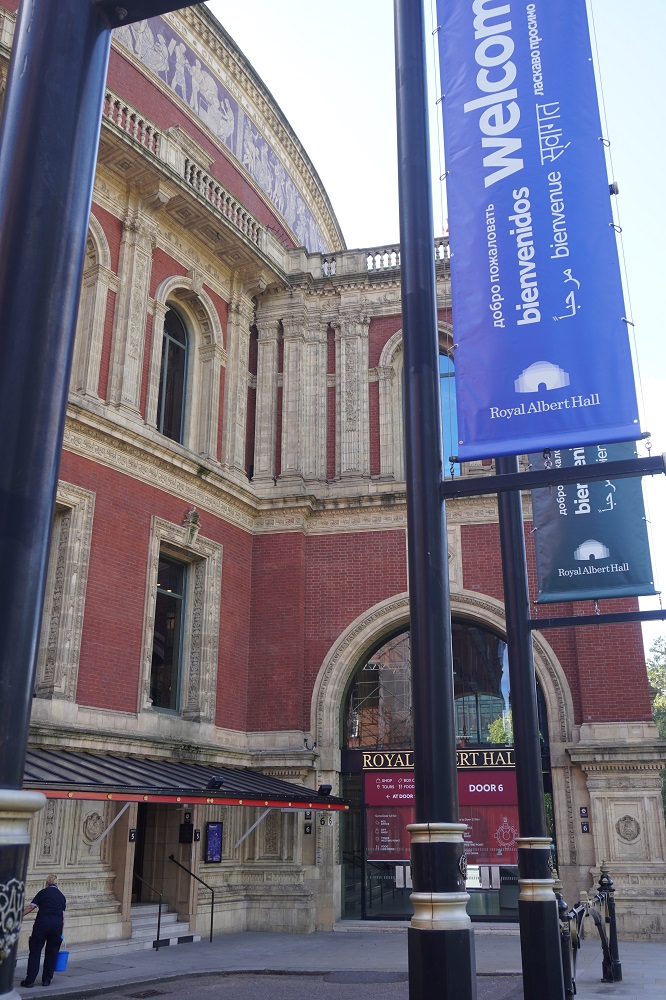
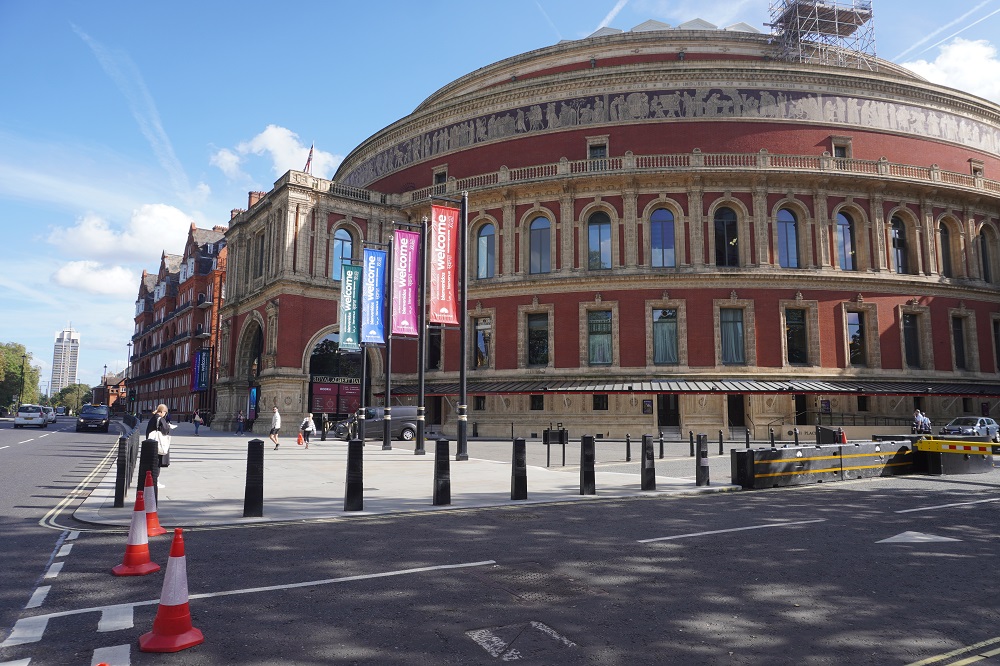
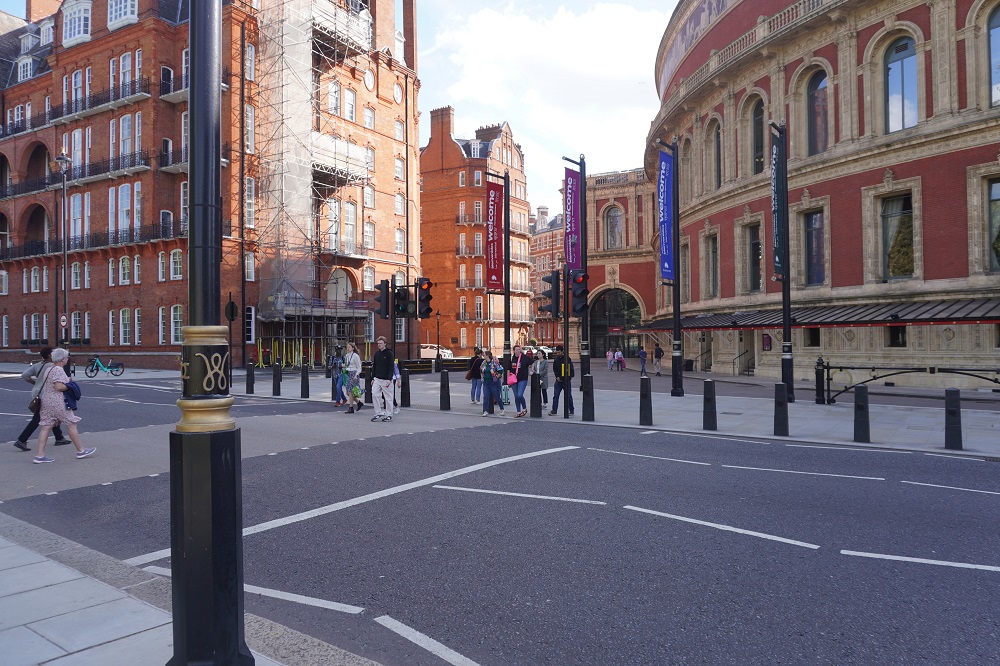
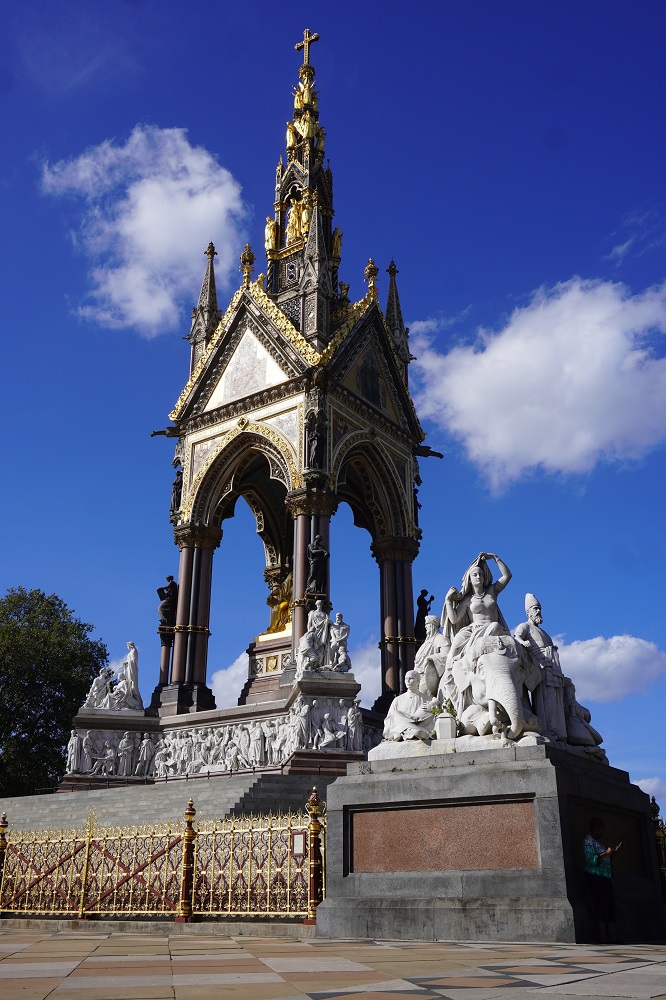
From Battersea we caught a tube one stop (but a long one) to South Kensington to go to one of my favourite places in London, The Victoria and Albert Museum and its café. In the cafe there are three beautifully designed period rooms by Gamble, Pointer and Morris dating from 1868. I did a post on these in 2019 so I won’t bore you by raving on about them again. We didn’t actually eat in any of the rooms, we ate lunch outside in the courtyard with the ornamental pool, under the trees enjoying the sunshine. We spent a couple of hours in the V and A but these museums are vast and overwhelming so we just picked a few things to look at. First some carved, painted and gilded wooden religious figures from the 1500s including one of St Barbara, then continuing the religious theme, gilded silver religious objects from the middle ages: chalices, crucifixes, communion plates etc. Then tapestries from the 14 and 1500s. Tapestries woven on a loom, not embroidered. A skilled person working from a full size template could do 1 square metre in a month and some were 40 square metres. King Henry VIII had a collection of 2700 tapestries. From tapestries to theatre and movie costumes from the last hundred years. A wide ranging collection from Fred Astair, the 60s rock band The Who, Charlie and the Chocolate Factory, Dame Ena’s breakfast dress, Mick Jagger, Richard Burton and about 3500  others (only some on display). Finally we found a Turner painting of the Royal Yacht Club racing at the Isle of Wight – just because we came from there yesterday. We were now culturally overwhelmed so made our way back to the hotel via The Royal Albert Hall, The Albert Memorial and Hyde Park.

We are flying home via Shanghai and a couple of days ago we received an email from Virgin Atlantic advising us we are no longer required to take a PCR or antigen test within 48 hours of travel. Also that the wearing of masks is our own personal choice. We must complete a health declaration form from the China Customs Website no earlier than 24 hours before our arrival in China. We will be required to show the QR code we receive when we complete the Health Declaration form to Virgin Atlantic staff. So we will do all this before checking out of the hotel tomorrow morning.

What a difference a day makes

Isle of Wight to London

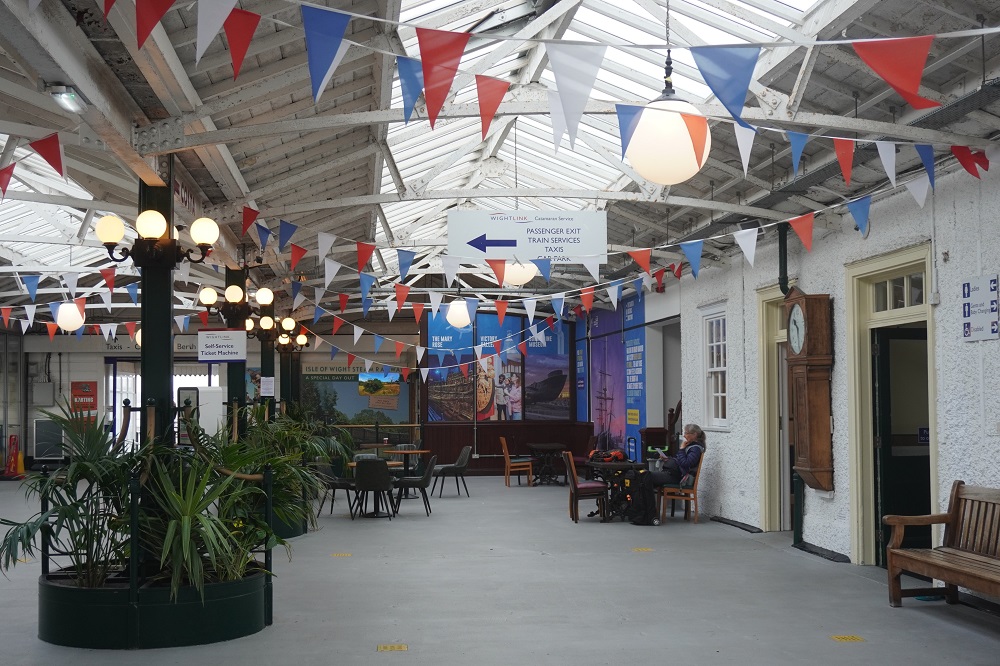
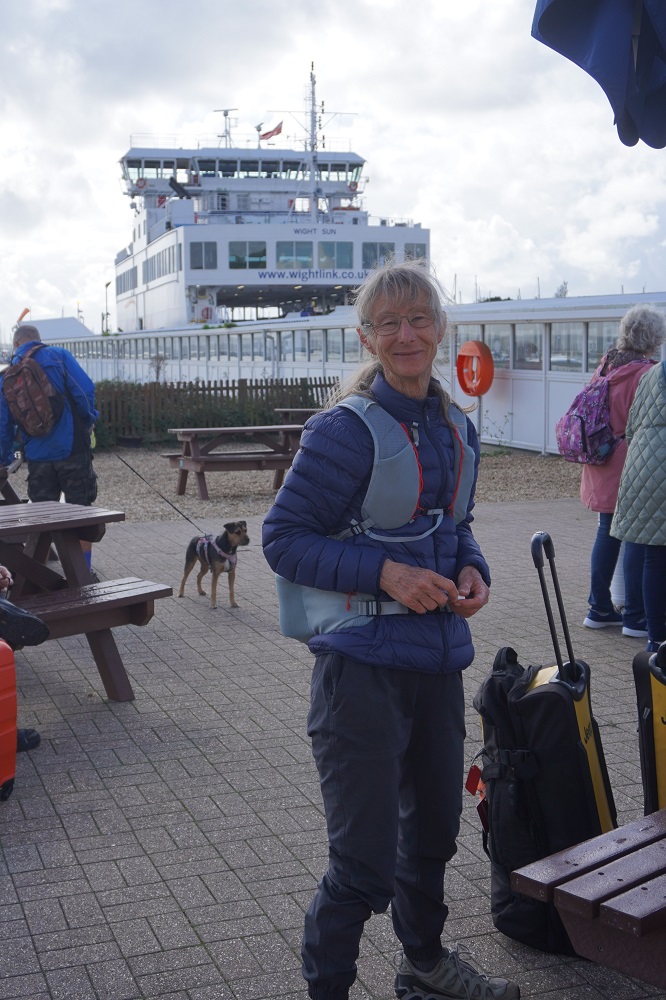
Twenty minutes walk Dorset Hotel to Wightlink Terminal Ryde
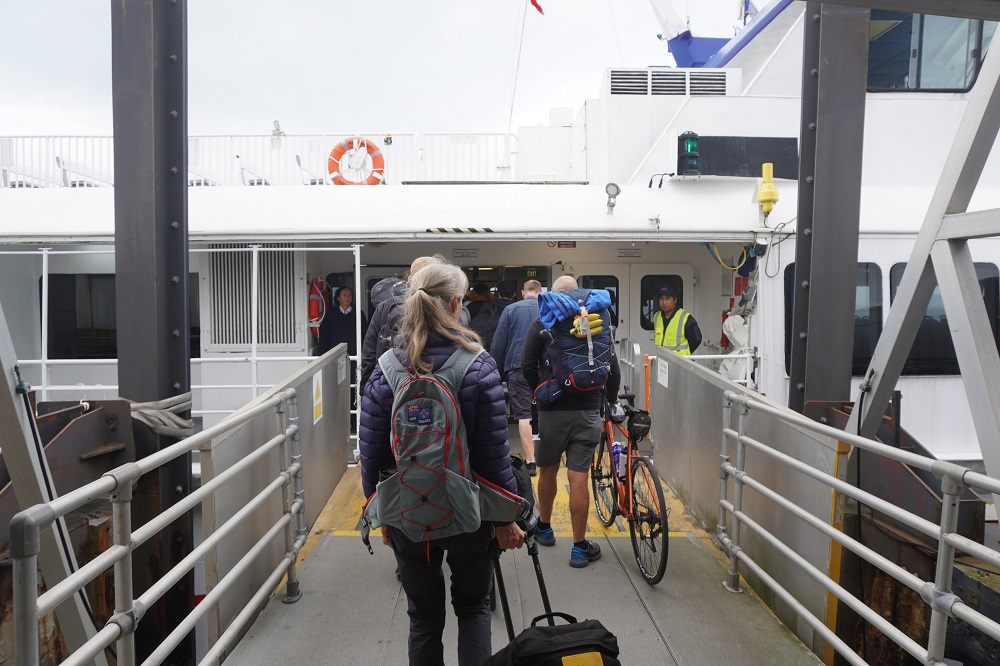
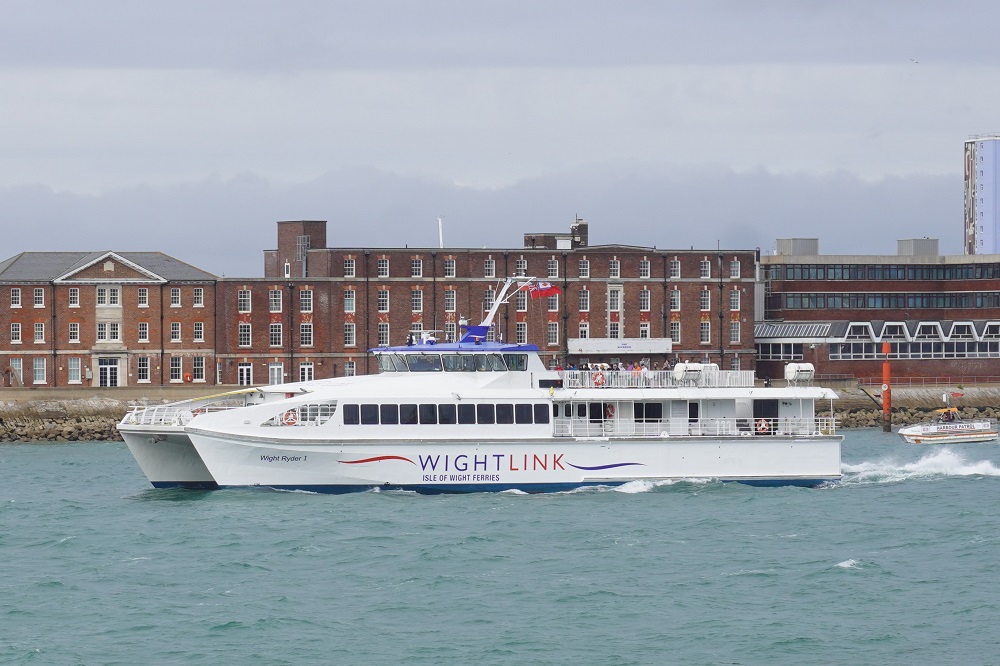
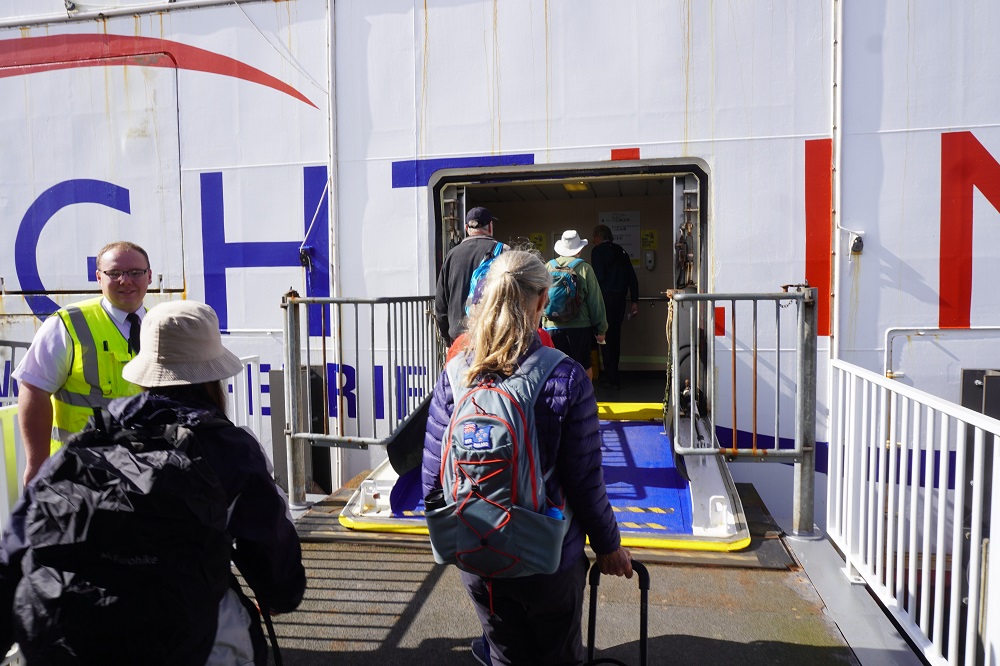
Twenty minutes ferry Ryde to Portsmouth
Three hours walking around Portsmouth
Three hours thirty minutes South Western Railway Portsmouth to London Waterloo
Thirty minutes on tube London Waterloo/ Bond Street/Lancaster Gate
Five minutes walk tube station to Lancaster Gate Hotel

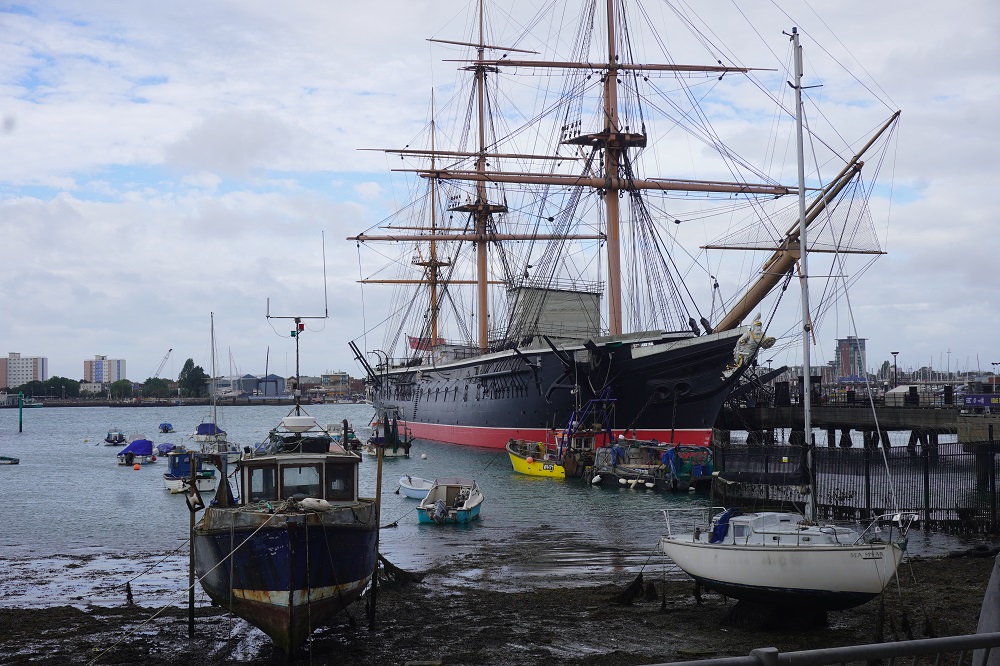
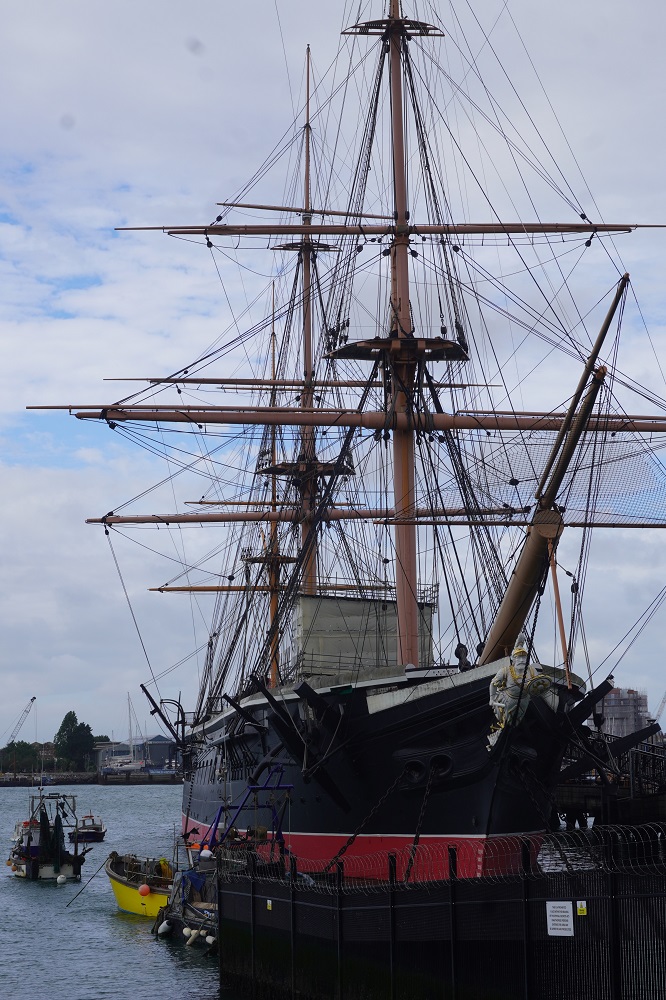
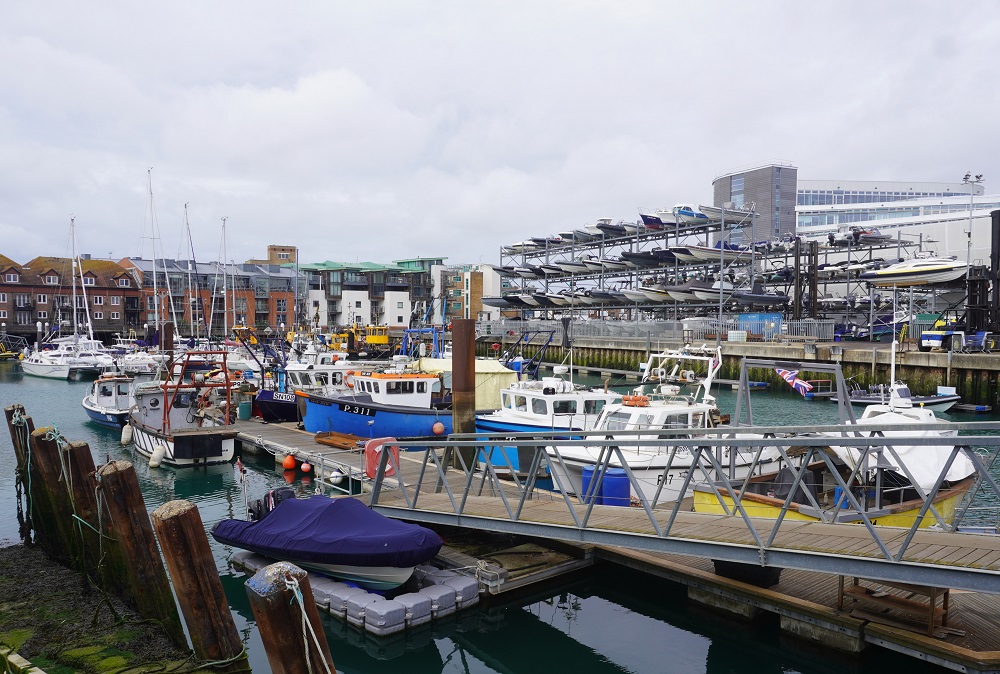
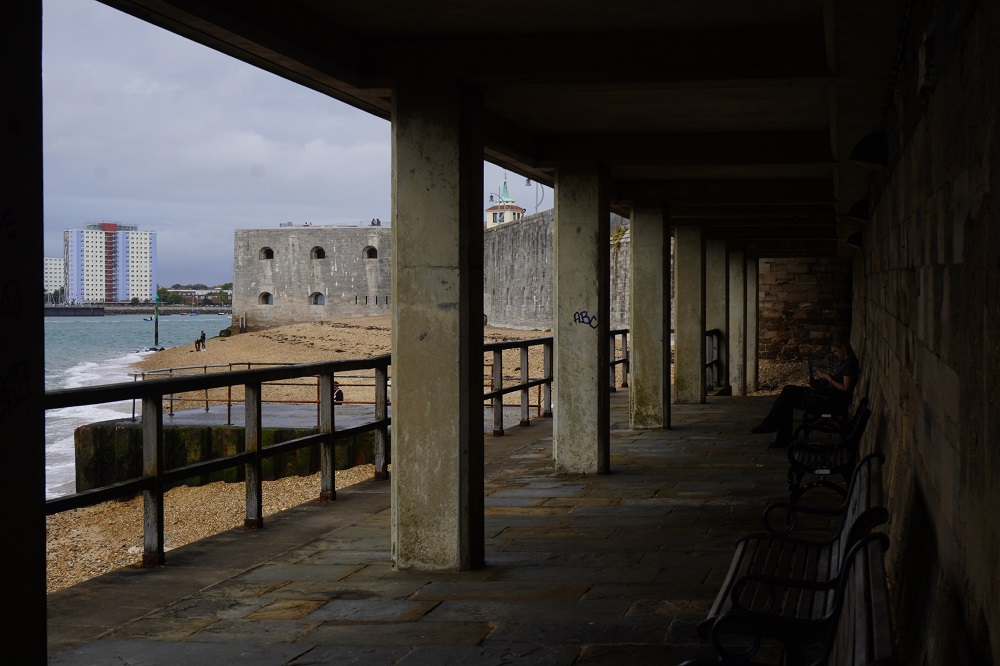
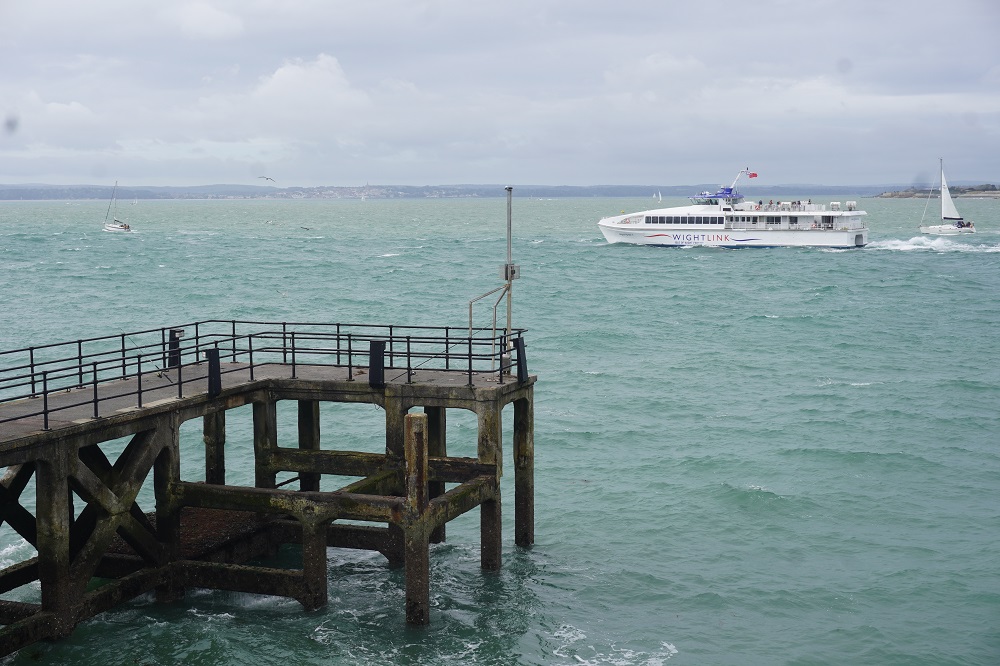
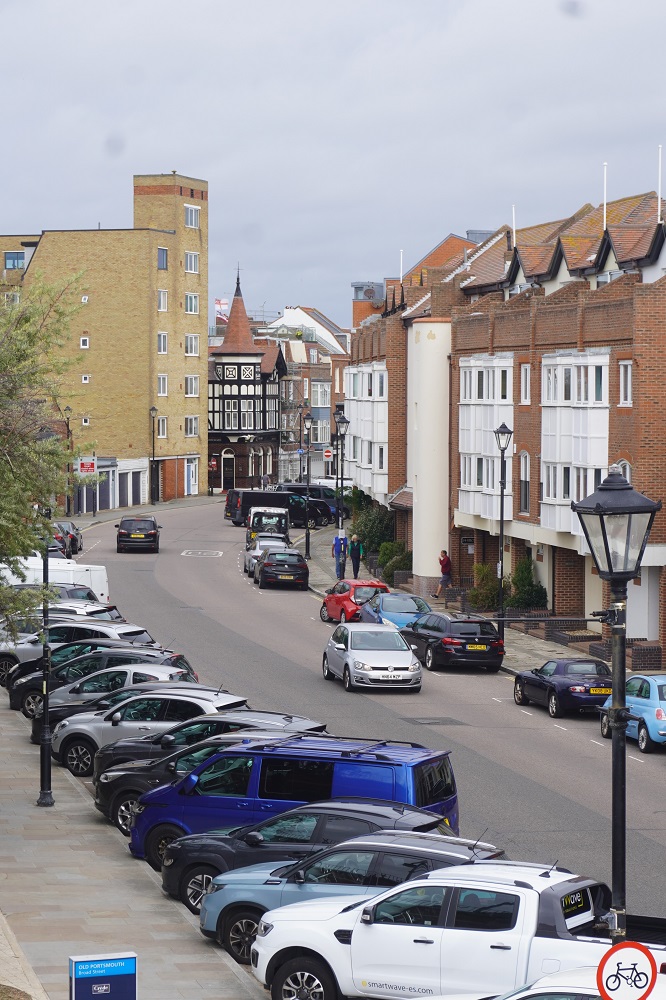
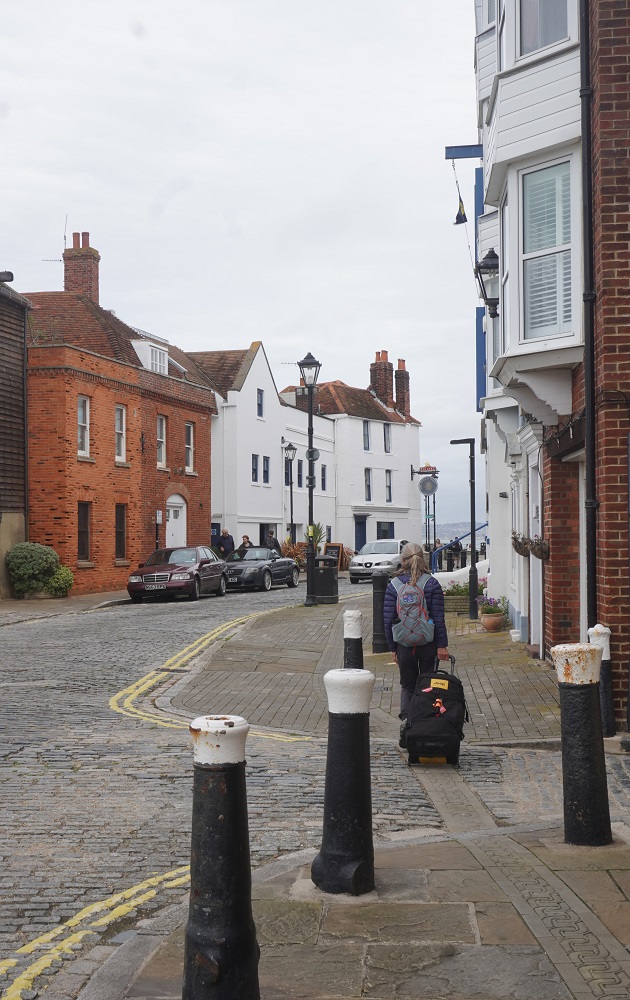
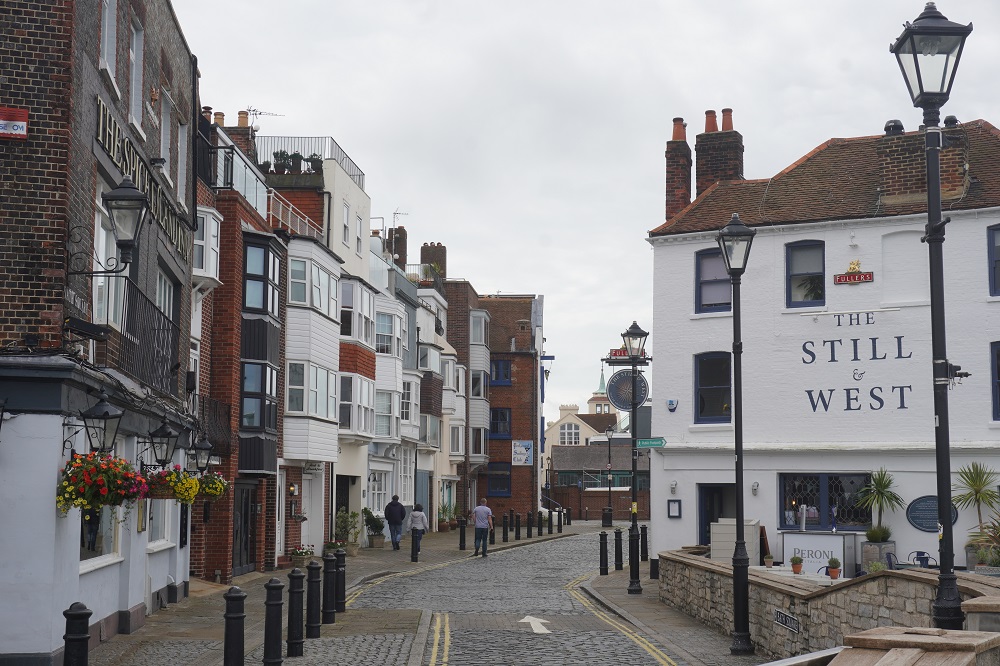
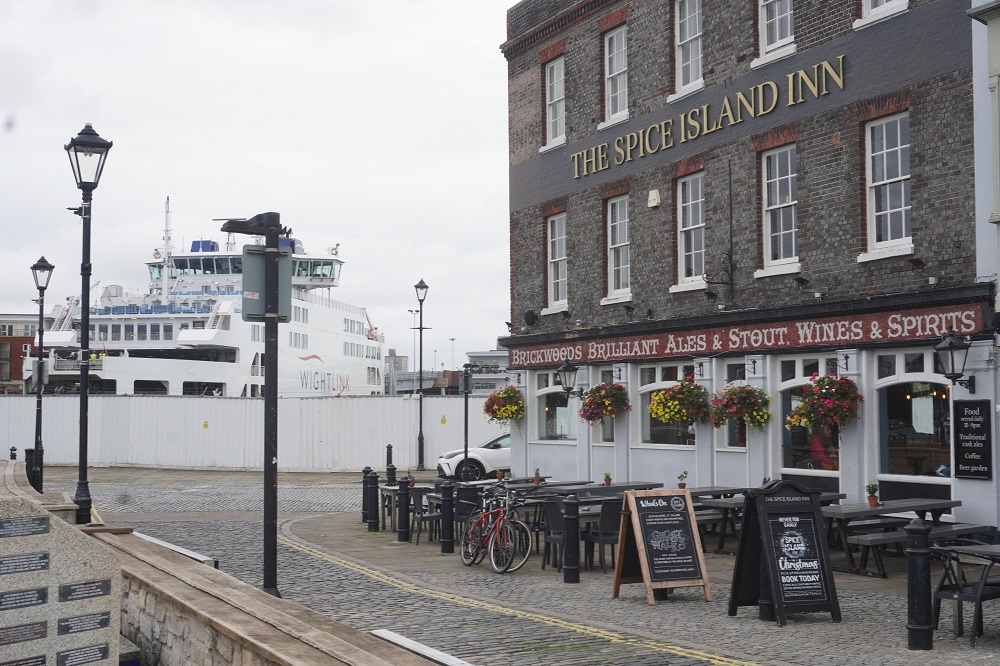
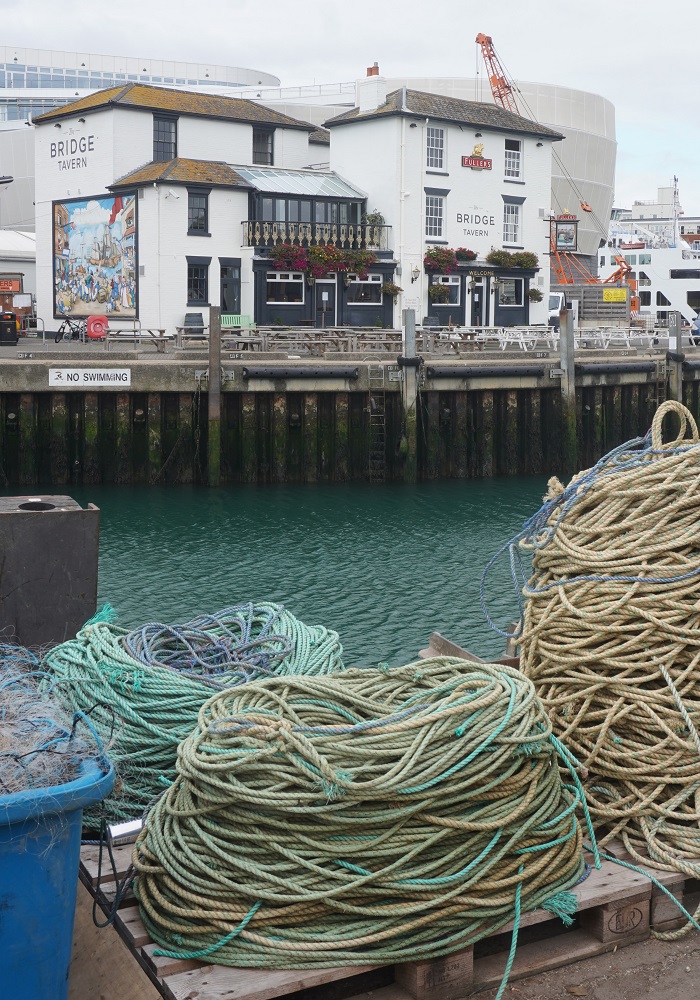
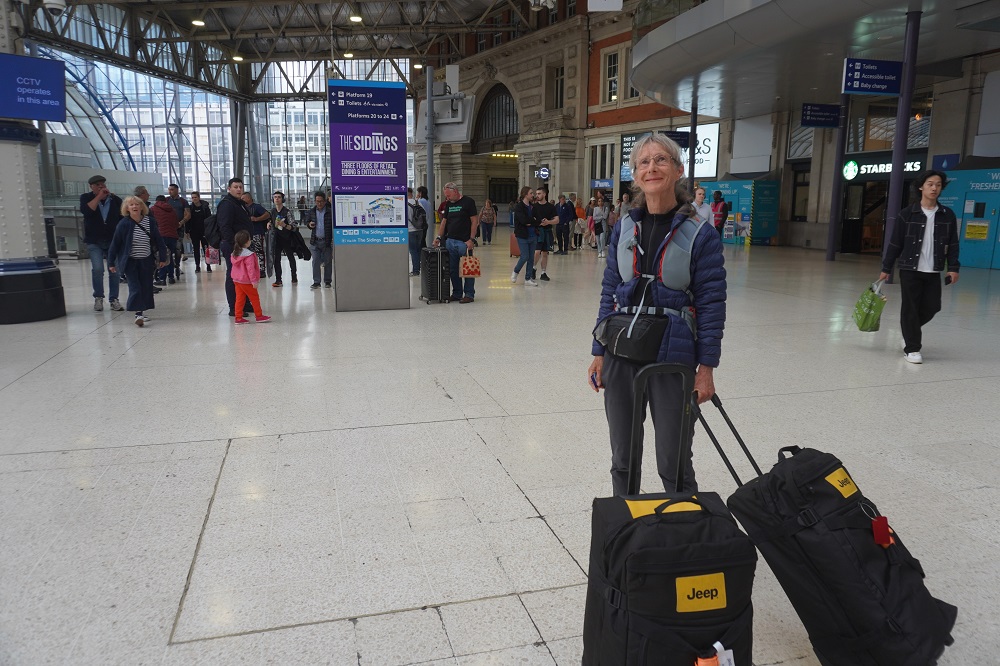
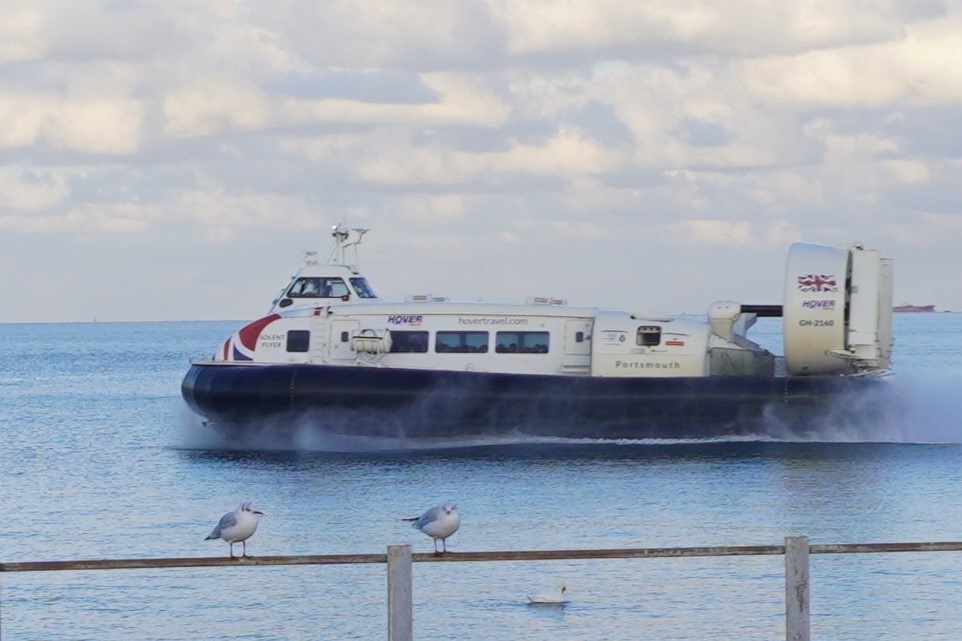
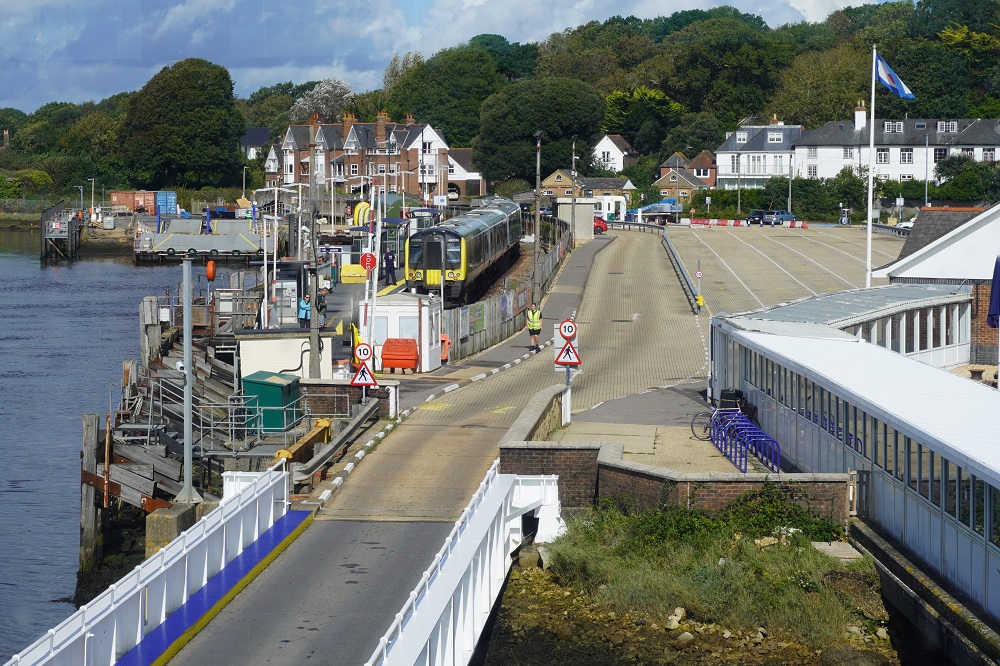
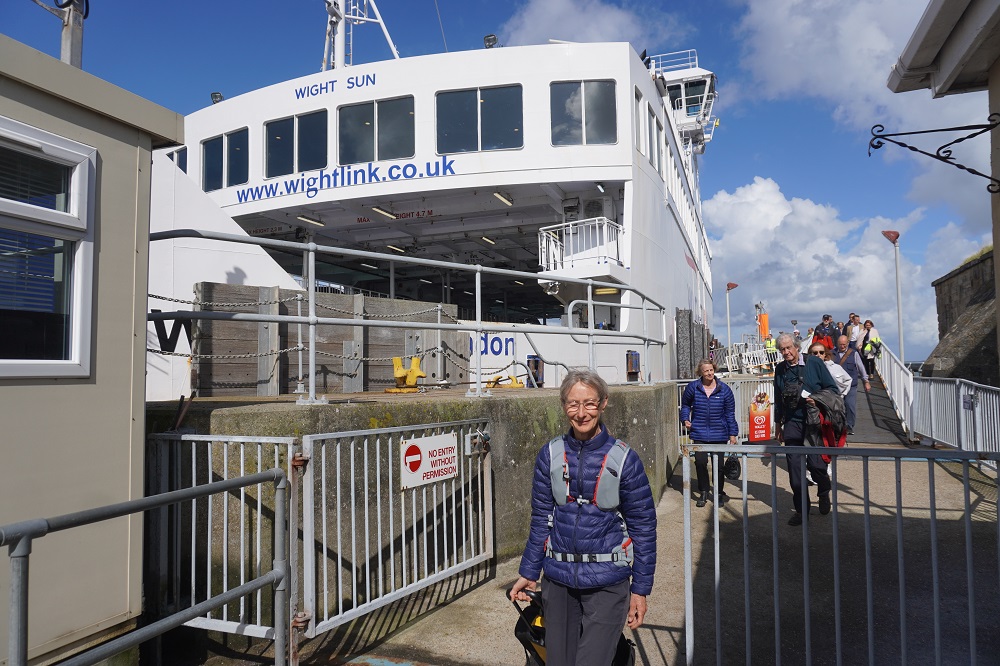
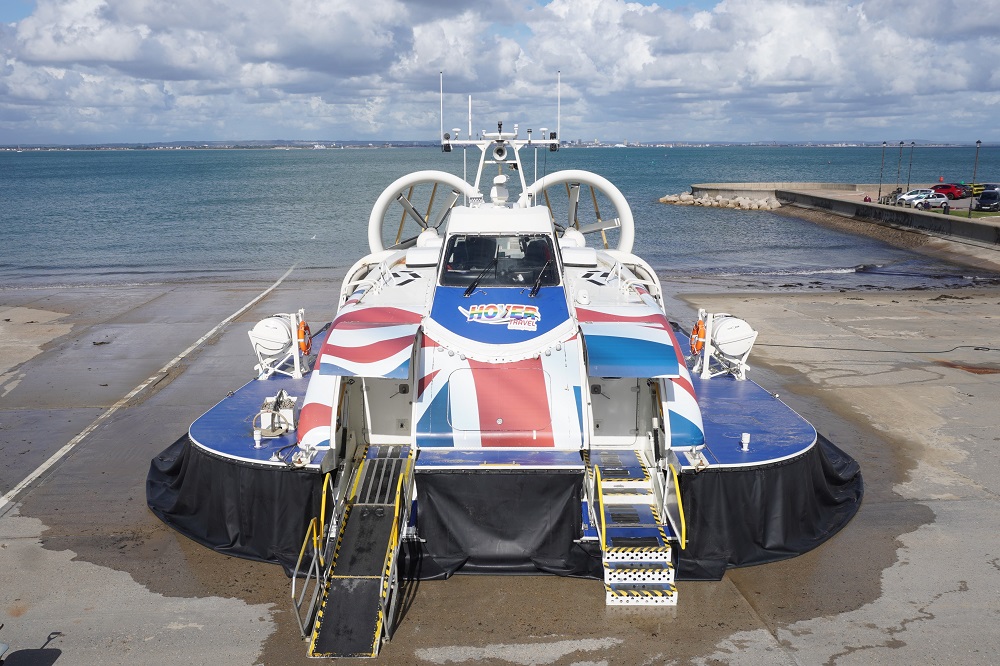
What a difference a day makes. From the peace and tranquillity of the Isle of Wight to the noise and frenziness of London via the historic port of Portsmouth. The ferry was a very quick pedestrian only catamaran to Portsmouth. The ferry arrives right at the railway station so you can step off the boat and on to the train in just a few metres. We had three hours to fill in so went to explore the Old Portsmouth. Portsmouth has many museums mainly relating to the sea, boats and the Royal Navy. There is Nelson’s HMS Victory, Henry VIII’s Mary Rose, The Royal Navy submarine museum, The National Museum of the Royal Navy, Portsmouth Historic Dockyard, The D-Day Story, The Charles Dickins Birthplace Museum. In fact there are 85 museums and art galleries.

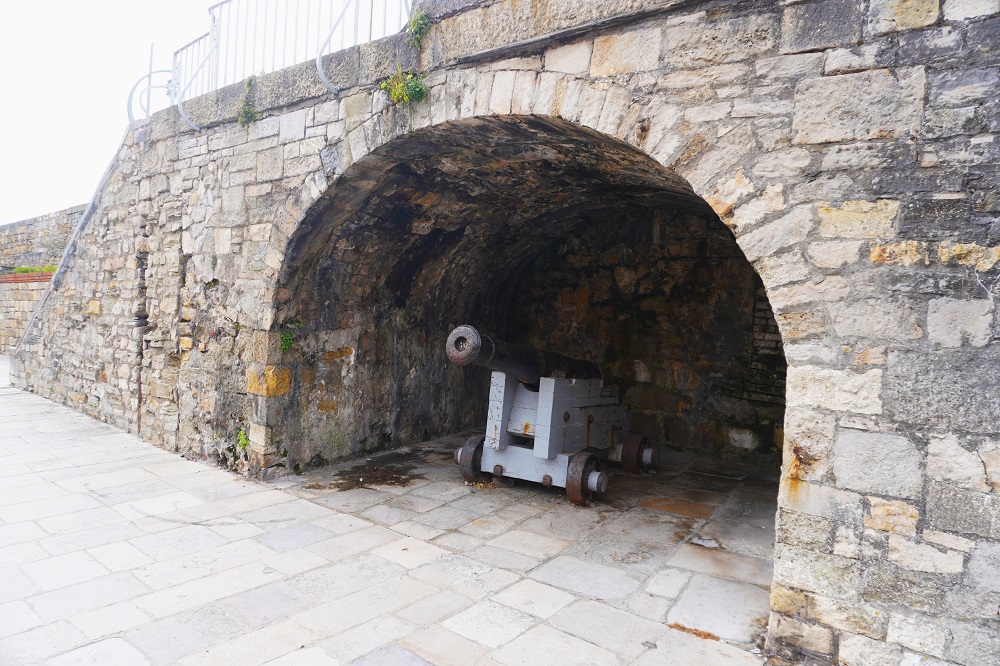
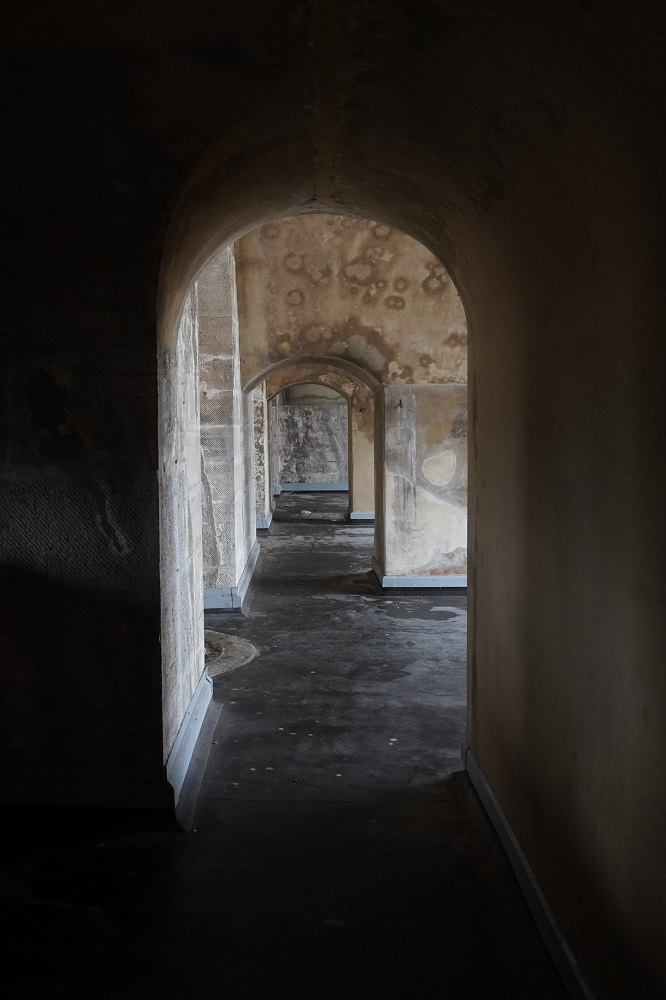
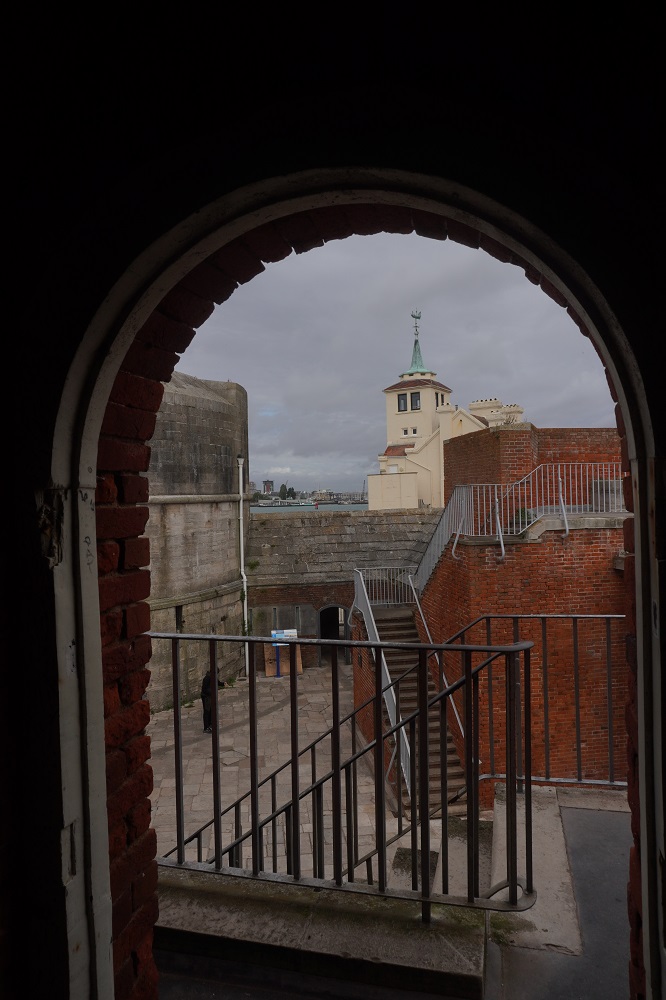
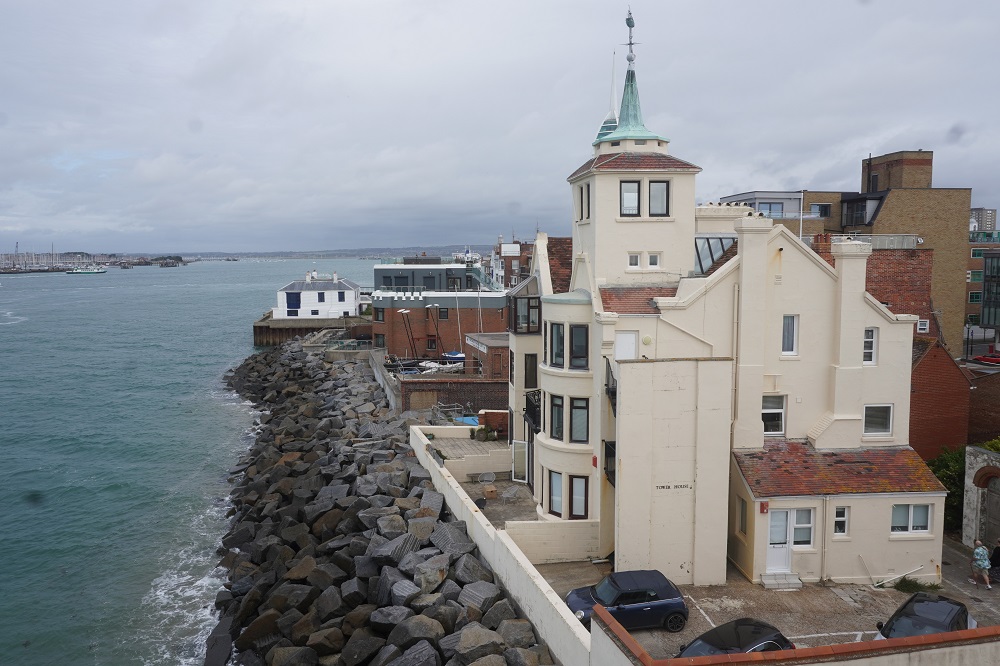
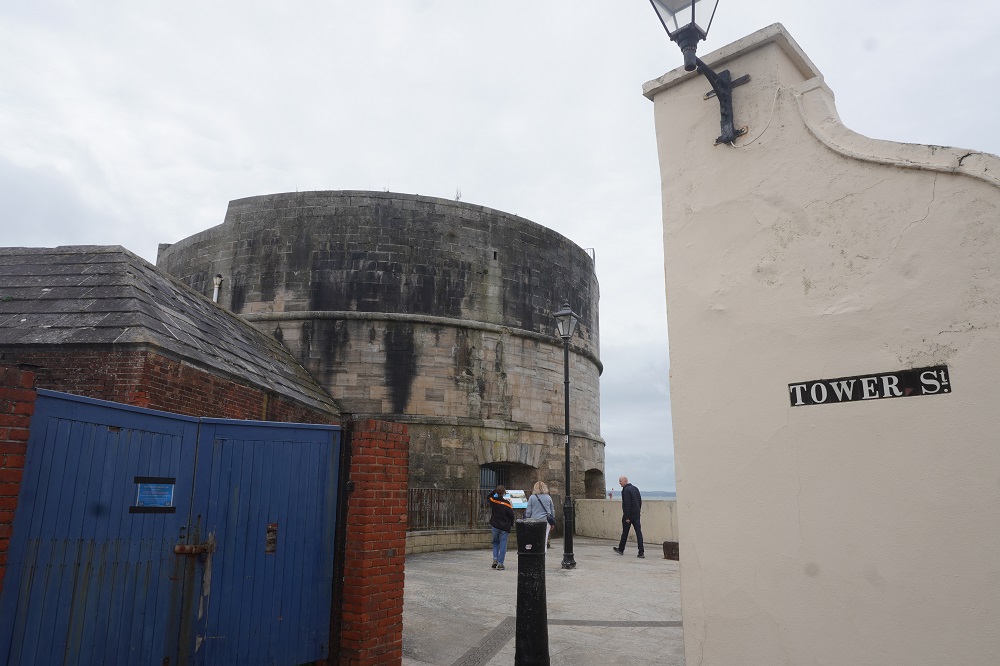
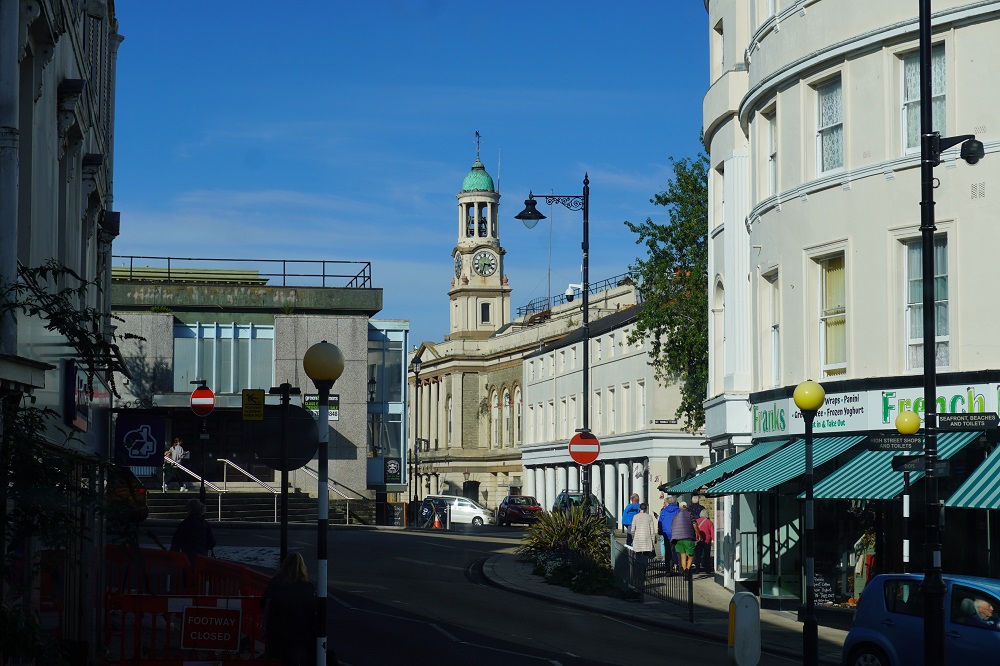
We were trundling our bags with us so it wasn’t really practical to go to most of the museums, as they had bag searches.  I would have liked to have visited the Victory and the Mary Rose but we didn’t have the time to do either of them justice. Instead we walked the Millenium Promenade which takes you round the historic Portsmouth waterfront including the Round Tower and the Square Tower.  The Round Tower was built about 1418 to defend the entrance to Portsmouth Harbour and prevent raids on the city by French ships. The Square tower was built in 1494 as part of the fortifications and served as a home to the Governor of Portsmouth and when he moved elsewhere it was a gunpowder store.

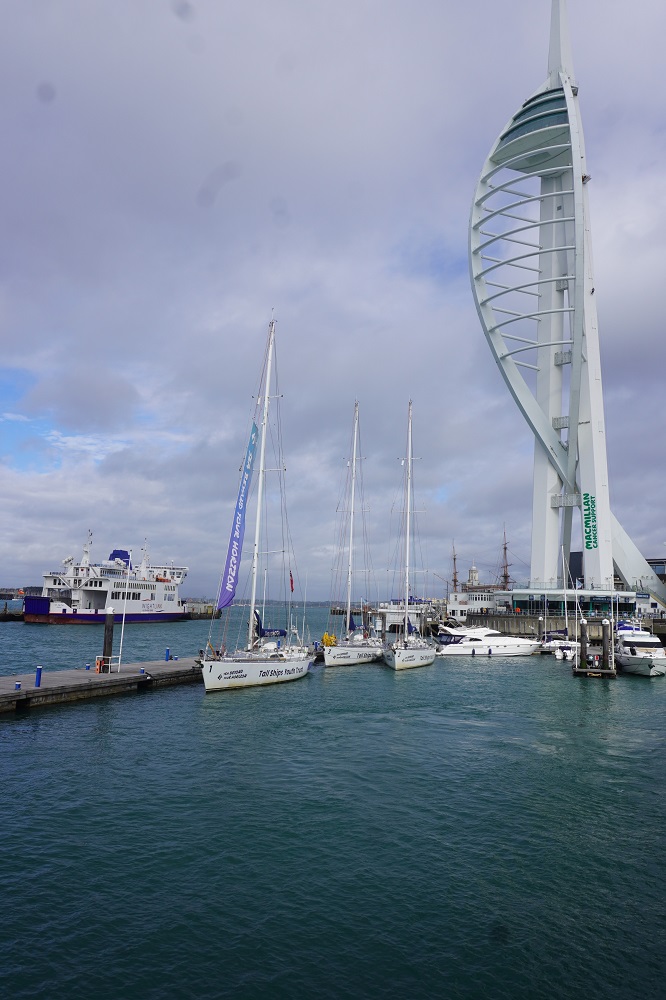
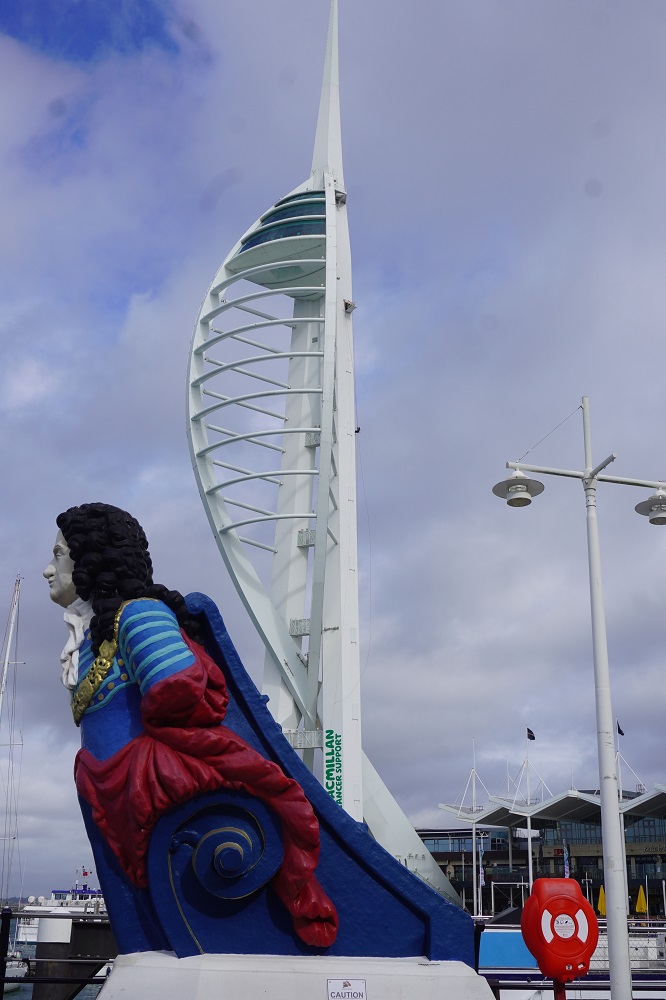
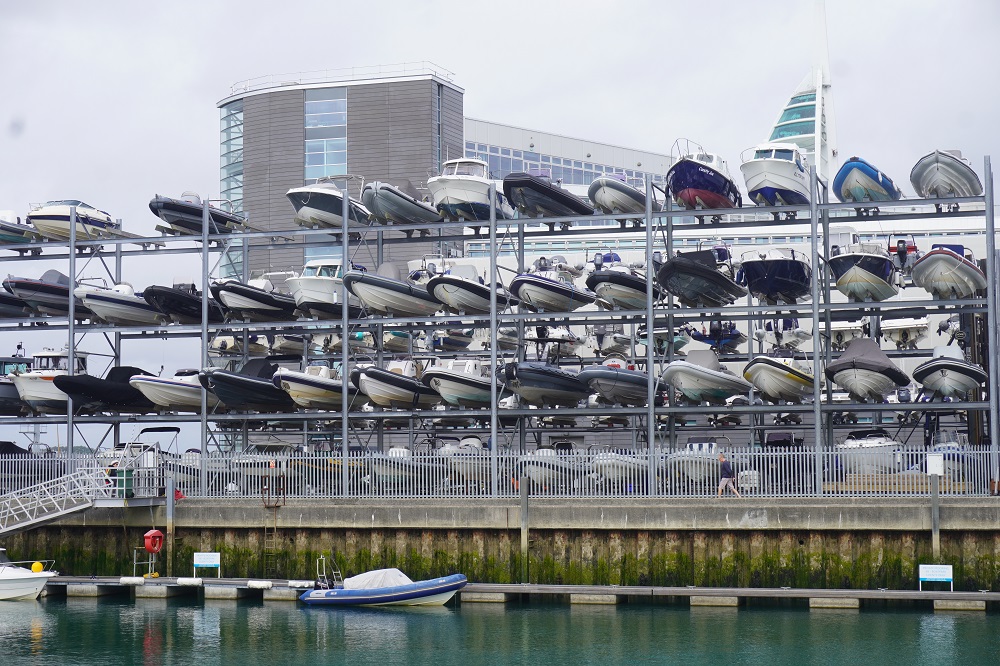
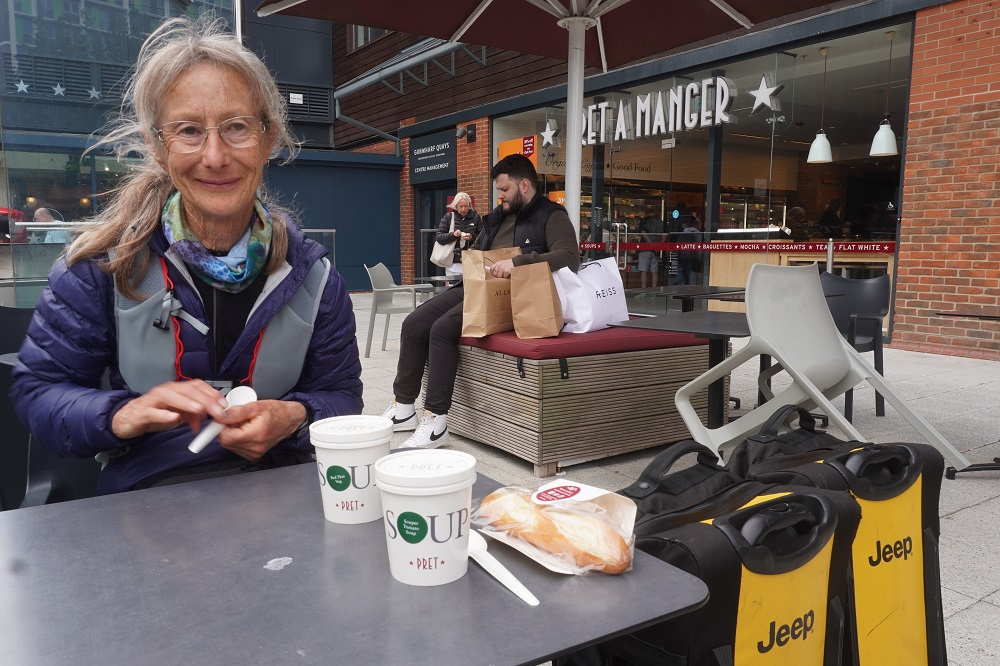
The waterfront also has the Spinnaker Tower, a 170 metre high observation tour with three observation levels. The tower reflects Portsmouth’s maritime history through its design and is named after a spinnaker, a type of sail that balloons outward. It was opened in 2005. From the tower you can do a freefall bungee jump into a crash net. Not for us. At the base of the tower and adjacent to the train/ferry/bus station is a huge new shopping centre, Gunwharf Quays, where we had lunch.

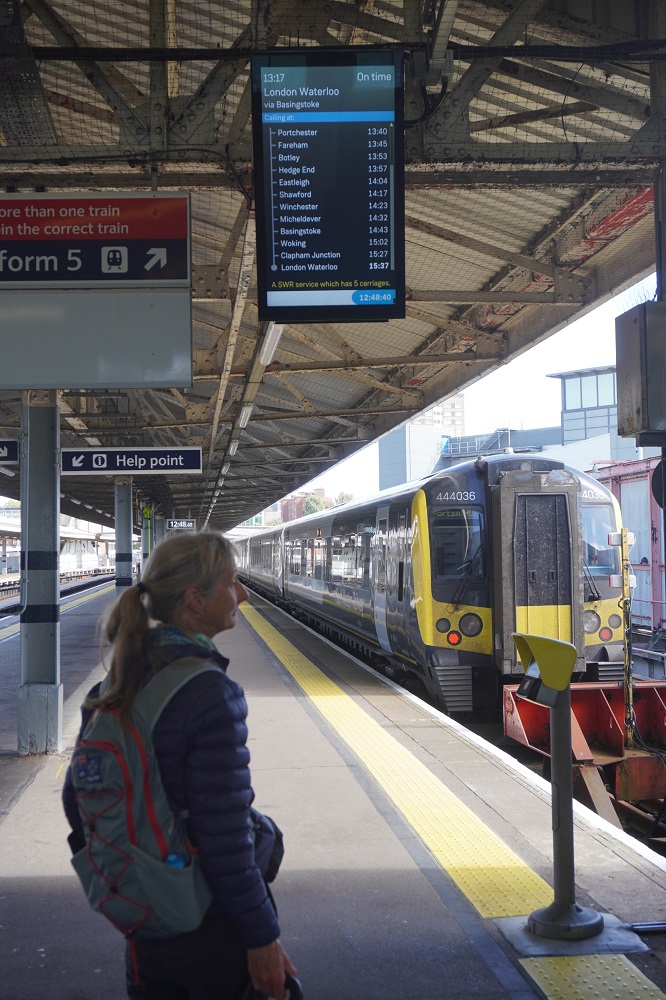
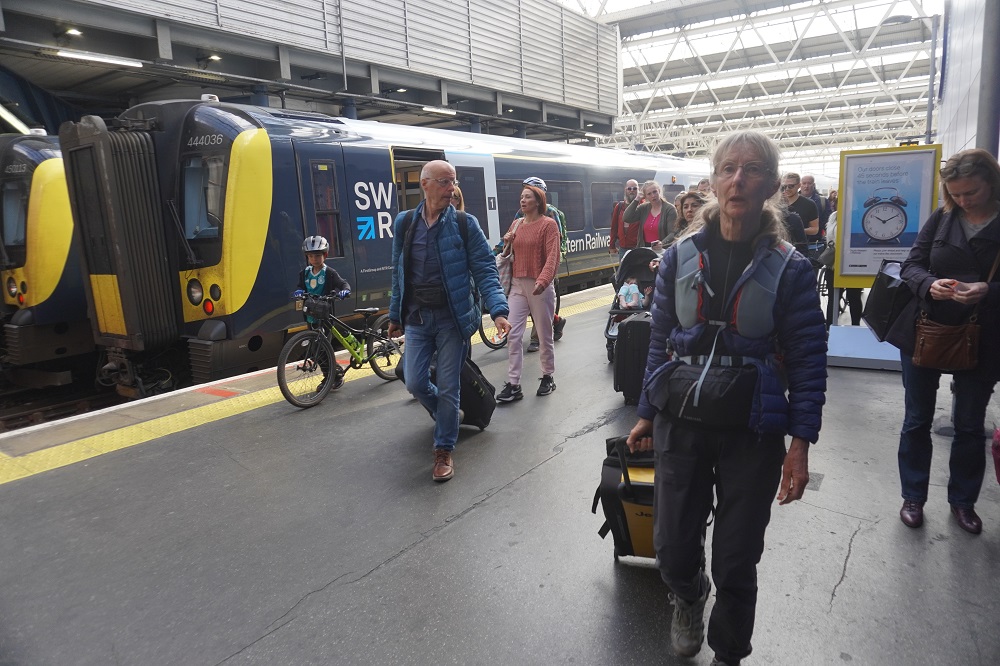
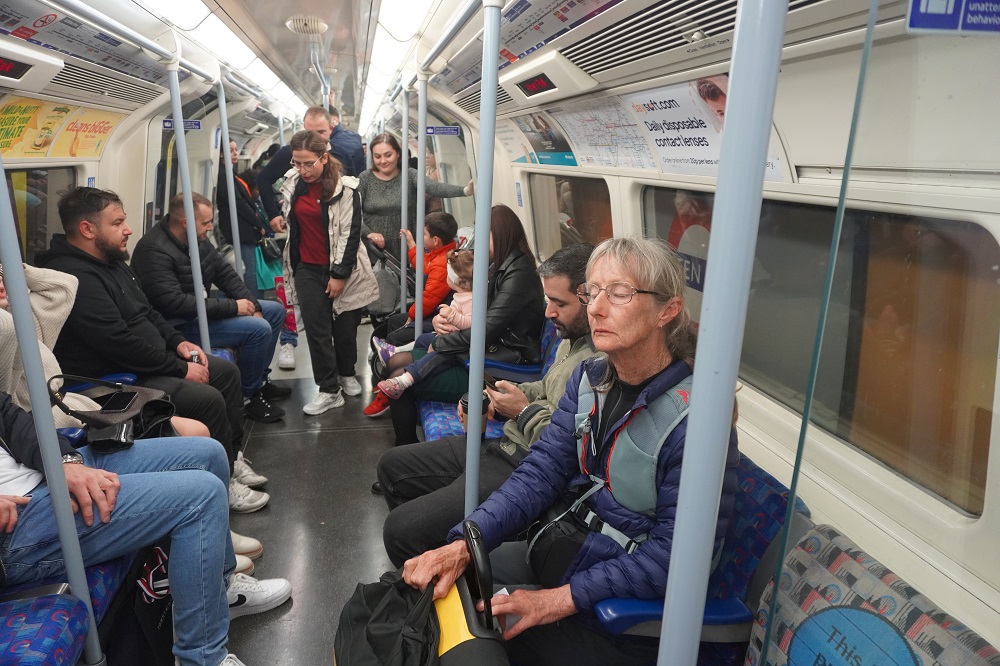
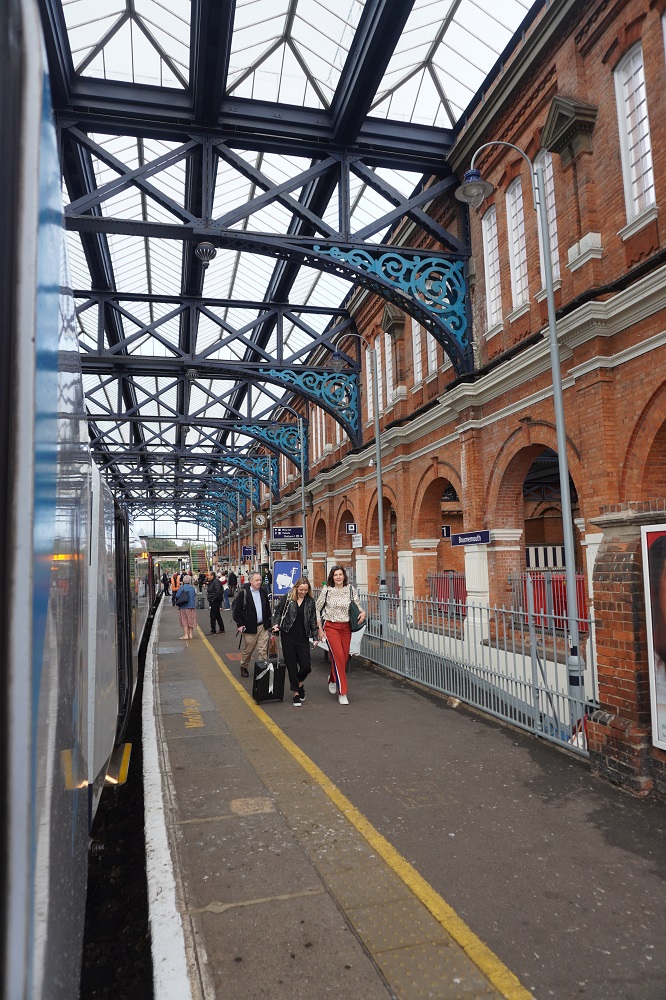
The train started out from Portsmouth as a five carriage train and was virtually empty. There were 16 stops and the train slowly filled up. At the half way point five more carriages were added and by Clapham Junction the train was packed. We were glad to get off at London Waterloo one of London’s large railway stations. We had been here in 2019 going to Kew Gardens so remembered the layout and how to get from the overground to the underground trains. It was a two tube line, six stop trip to Lancaster Gate and our hotel. Being a Sunday afternoon the tubes were also packed, and the usual noisy rattly swaying ride.

It was all a shock after Ryde and the Isle of Wight. Three weeks ago at the Lancaster Gate Hotel we had a nice enough room out the back at ground floor level, looking into a light well and with a very noisy air conditioning unit that switched on and off all day and night. We were hoping this time for a room on the front and at a higher level. No such luck. We are down a level in the basement with a lower view of the same light well. The air conditioner seems very quiet though.

One more day in London and then we start the long journey home.

In the Windmills of your mind

Isle of Wight Day 2

We woke up this morning to probably the most perfect conditions on the whole trip. Min 9°, max 17°, no wind, no rain, bright sunshine. Ideal for a walk.

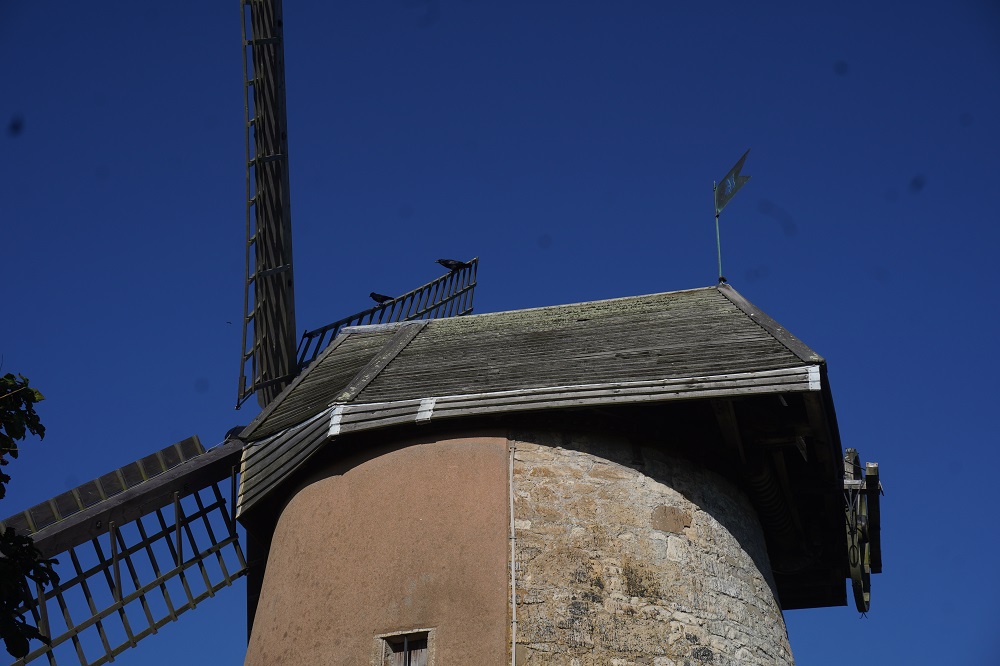
Our bus pass was good until 9.38am so we decided to use it to bus to Bembridge and walk back to Ryde. The buses ran at 40 min past the hour so the 9.40 was two minutes too late and we had to get the 8.40. Bembridge is the easternmost point of the island with quite a large tidal harbour. Getting off the bus there we walked about a kilometre inland to the Bembridge Mill. This is the only surviving mill on the Isle of Wight and was built in the early 1700s using local limestone. The weather side of the tower is faced with cement rendering. The whole wooden cap, complete with the windshaft, interior driving wheels, and the sweeps were turned to face into the wind. The mill was in continuous use until the 1890s grinding flour, bran and cattle feed. The mill ceased work in 1913 after which it decayed and became infested with deathwatch beetle. The mill was used as a cowshed and store until it was taken over by the Army and Home Guard in WWII and used as an observation post. In the 1950s it was gifted to the Island National Trust and restored.

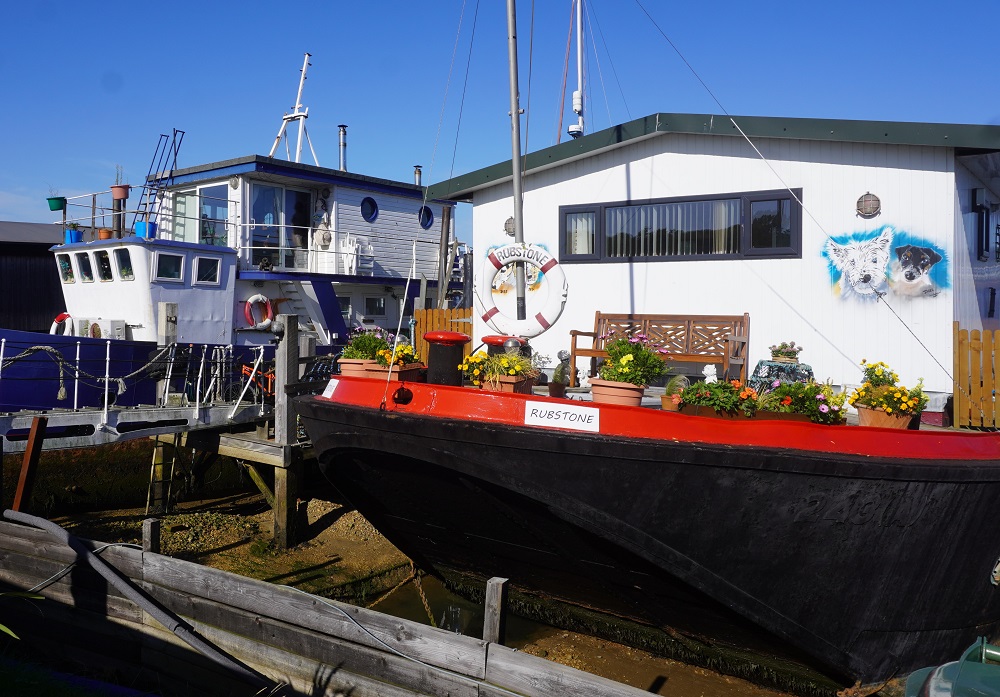
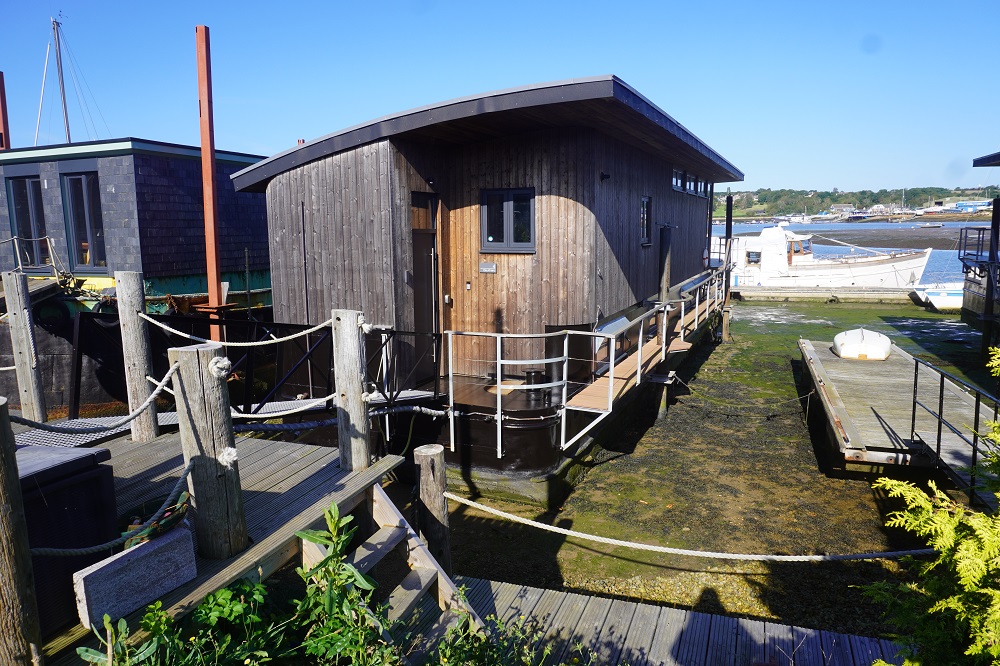
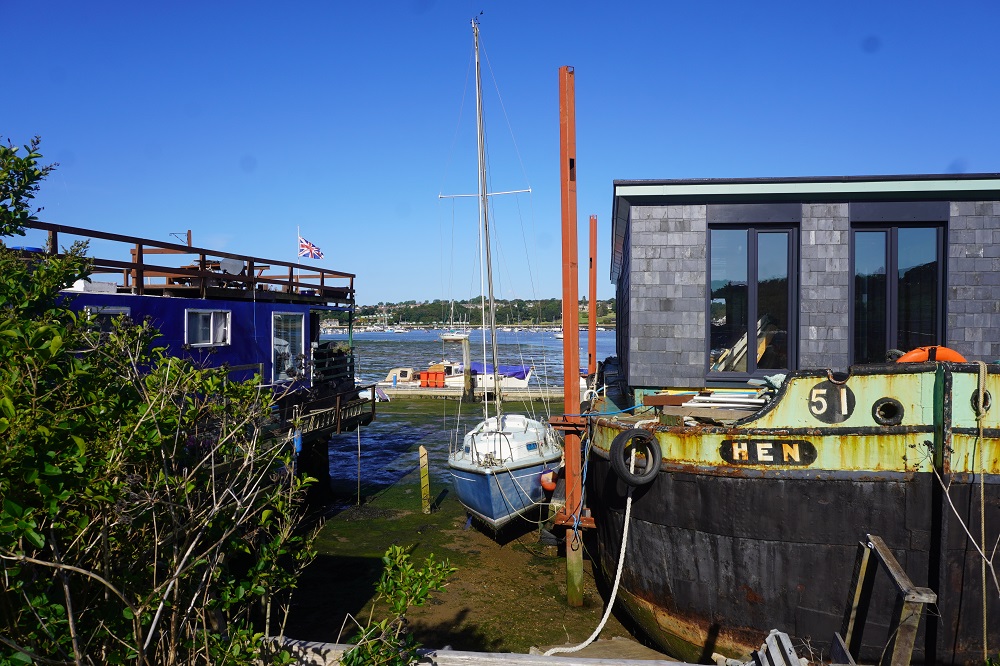
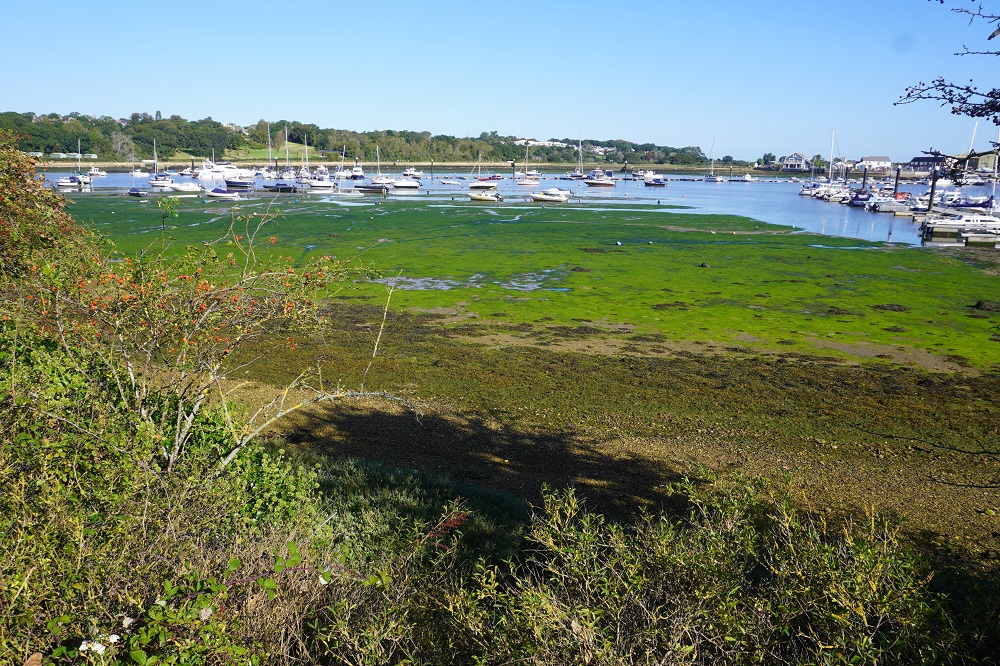
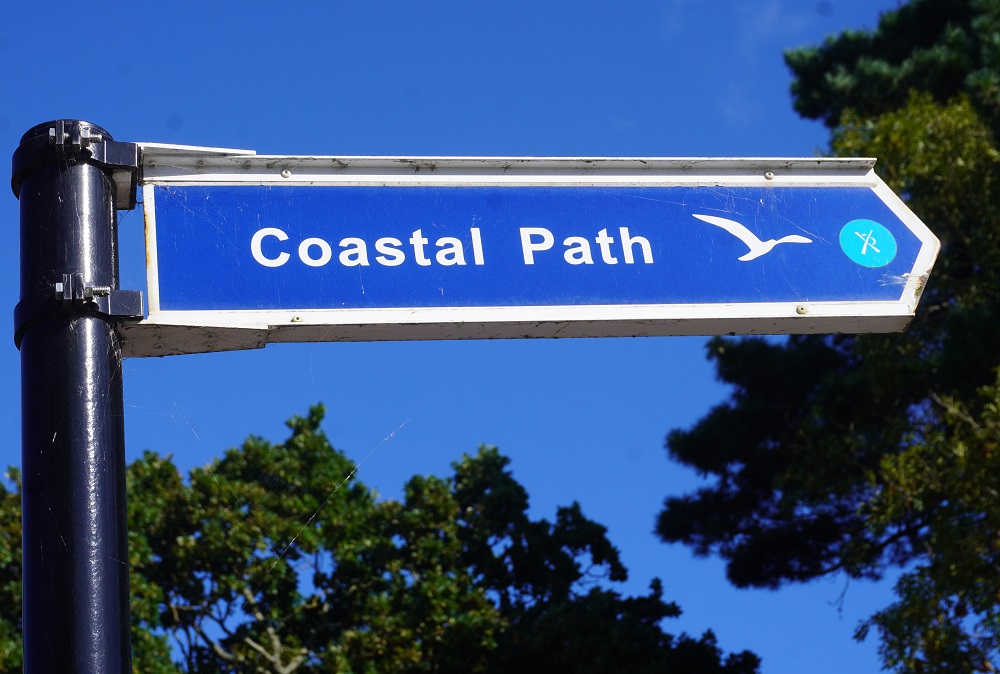
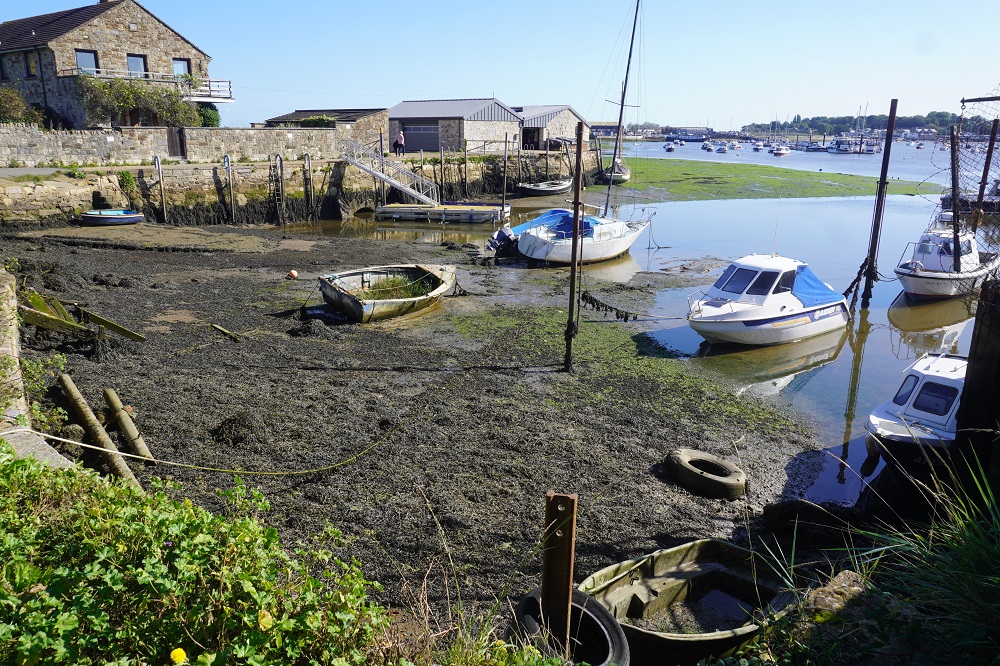
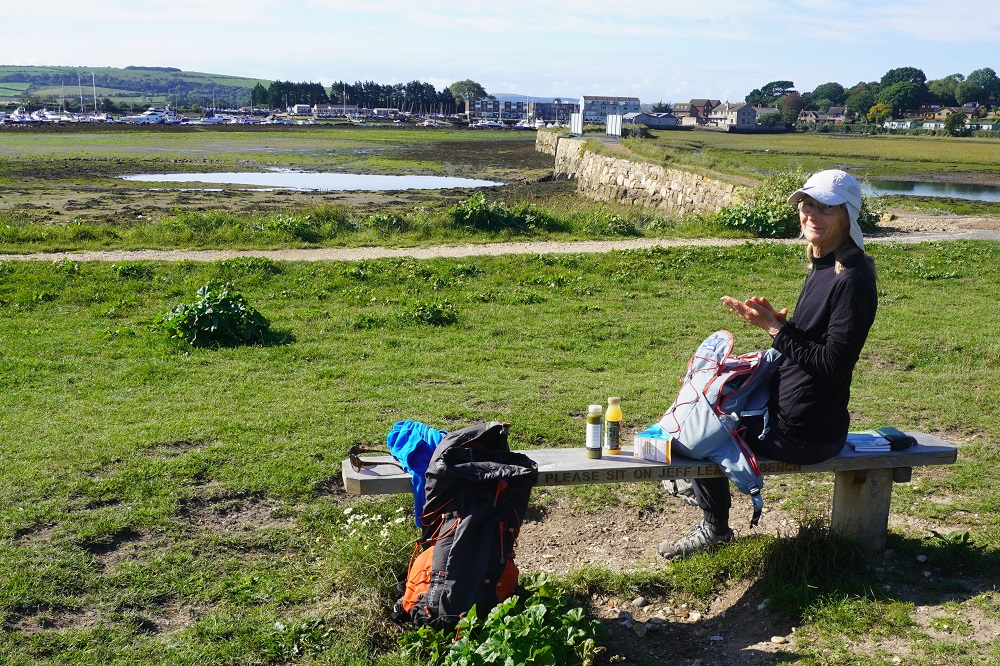
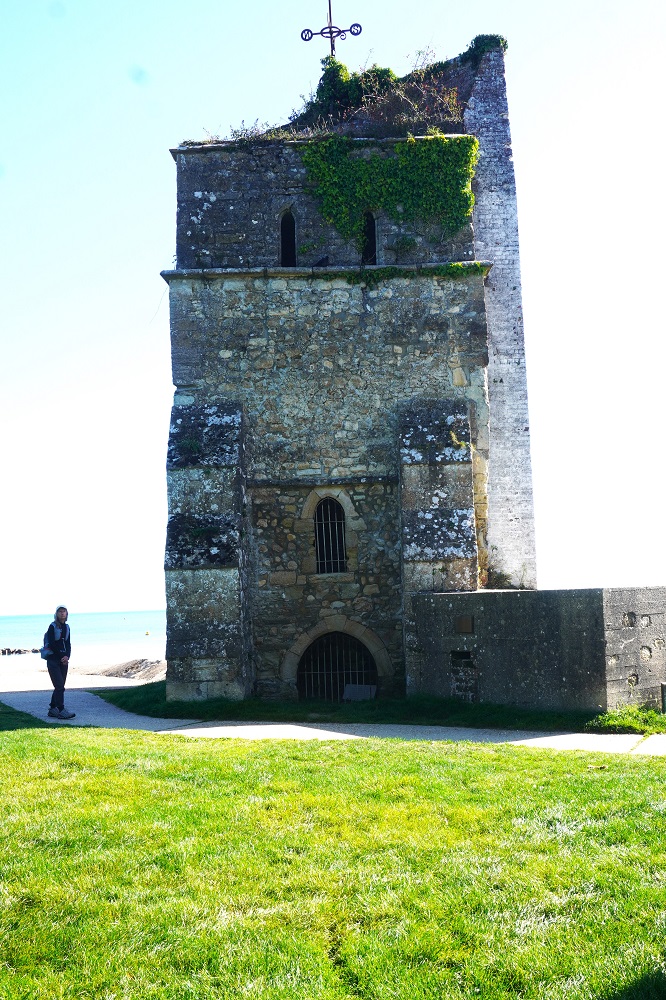
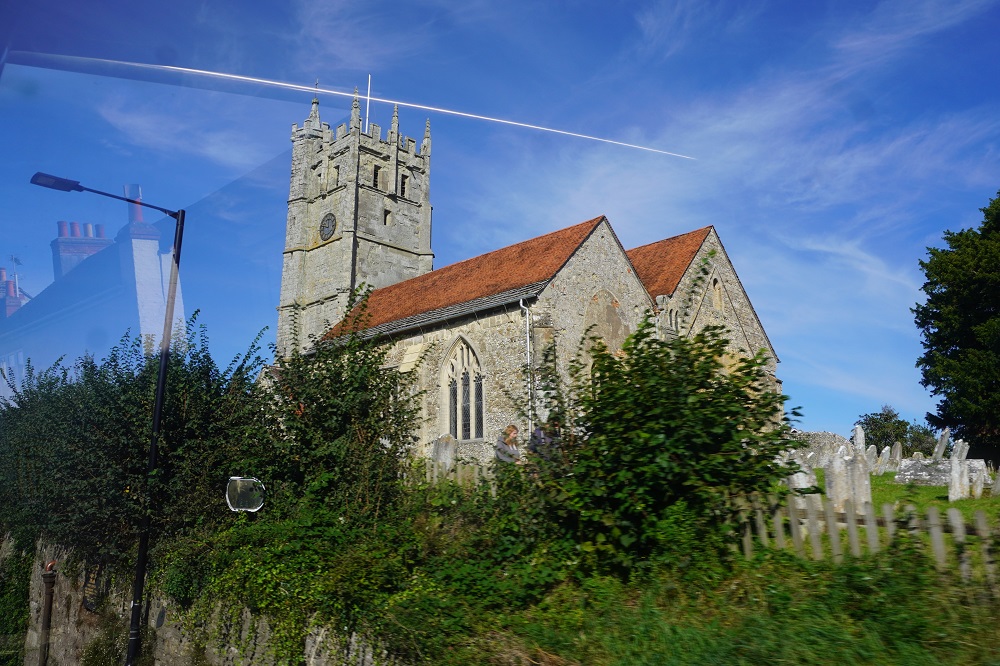
From the mill we walked back down to Bembridge Harbour and joined the Coastal Path. Bembridge Harbour was empty of water, the tide being out and all the boats were sitting with their bottoms in the sand. There were many house boats some as large as a bungalow. It was from this harbour that Edward III set sail to invade Normandy in 1346, and it is said that this was the last port of call for Nelson and his crew en route to the Battle of Trafalgar in 1805. Part of the harbour was drained in 1358 creating mudflats and what is now a marshes nature reserve. There is a delightful stone causeway to walk across the mud flats. At the end of the causeway when you reach the coast again there is St Helen’s Old Church and the beach. The tower, that dates from 1220, is all that remains of a 13th century church. The church ceased to be used in 1703 when the tower was bricked up and used as a sea mark. The derelict church became a source of Holy Stones which were taken by sailors to scrub down the decks of wooden ships.

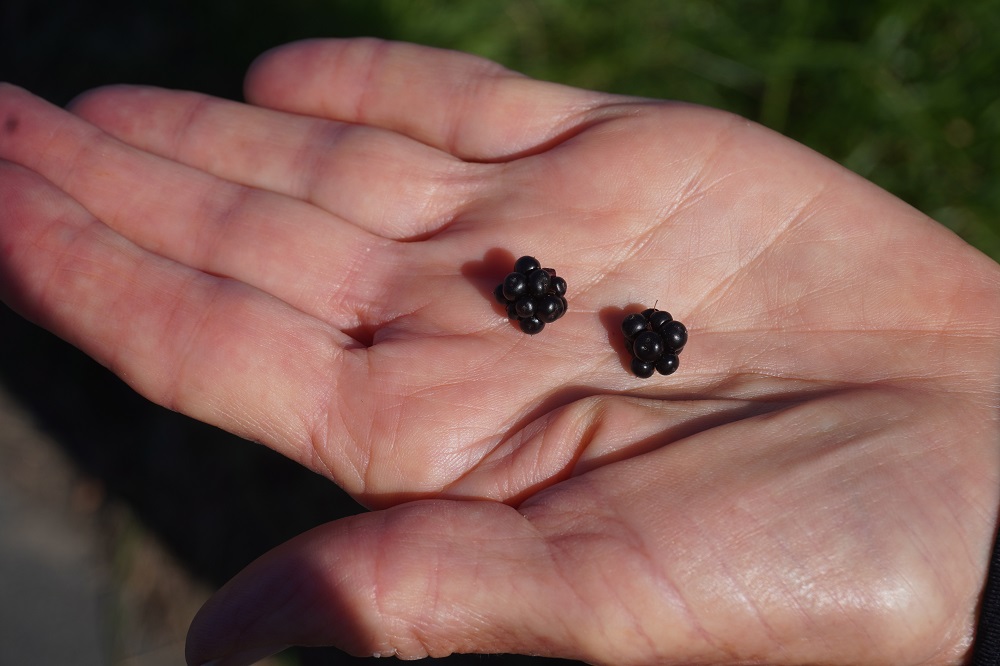
At this point the path went inland around a golf course and holiday park, through some woodland and along quiet farm lanes. It was here we had our last blackberries for this holiday. We have feasted on them everyday but now their season has all but ended. What were large and juicy were now small, hard and shrivelled.

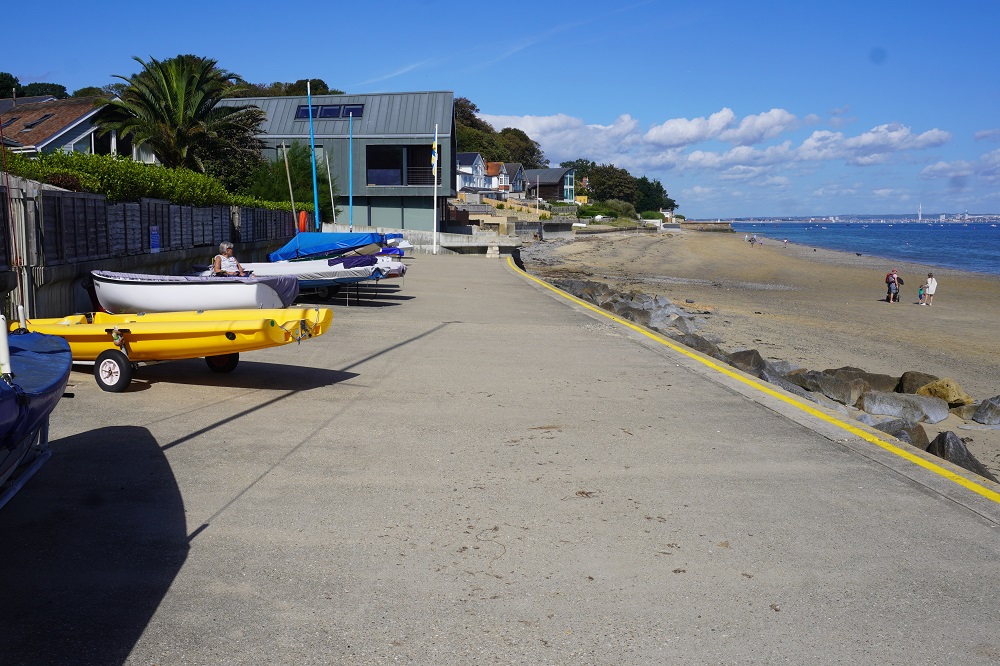
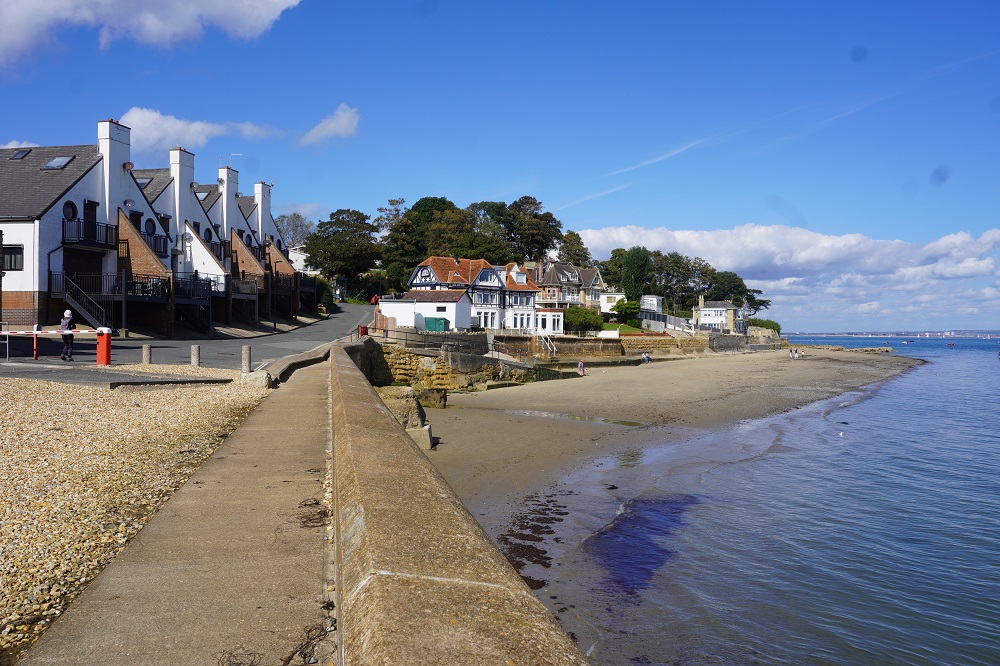
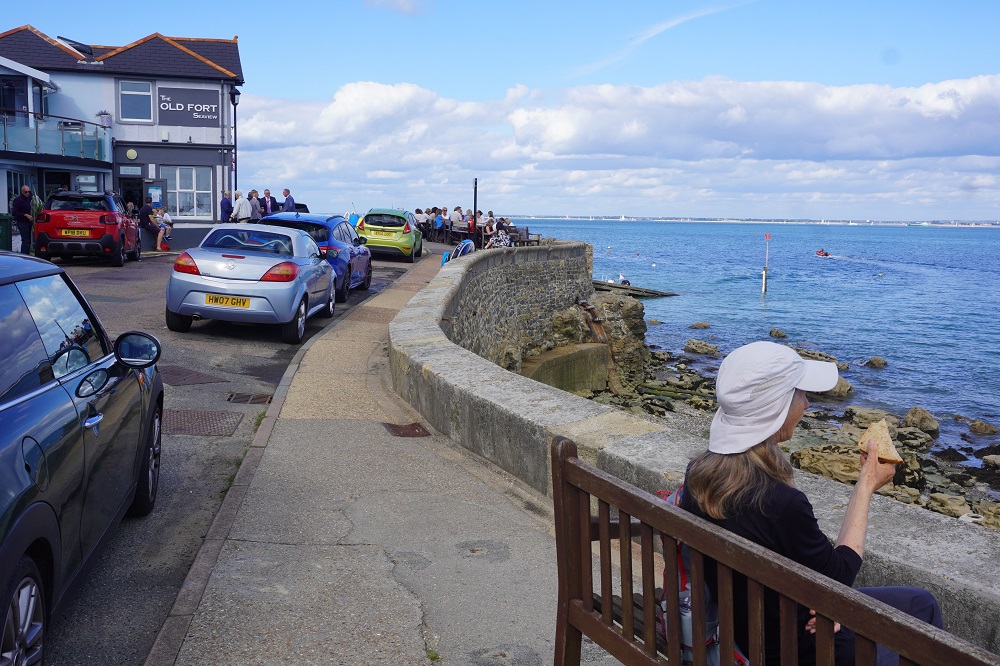
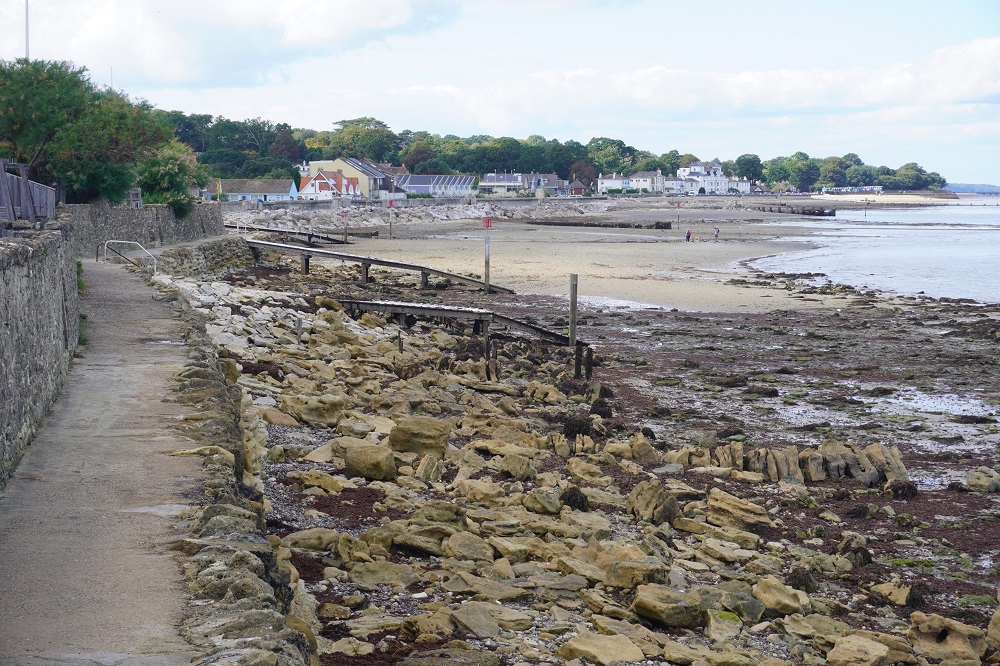
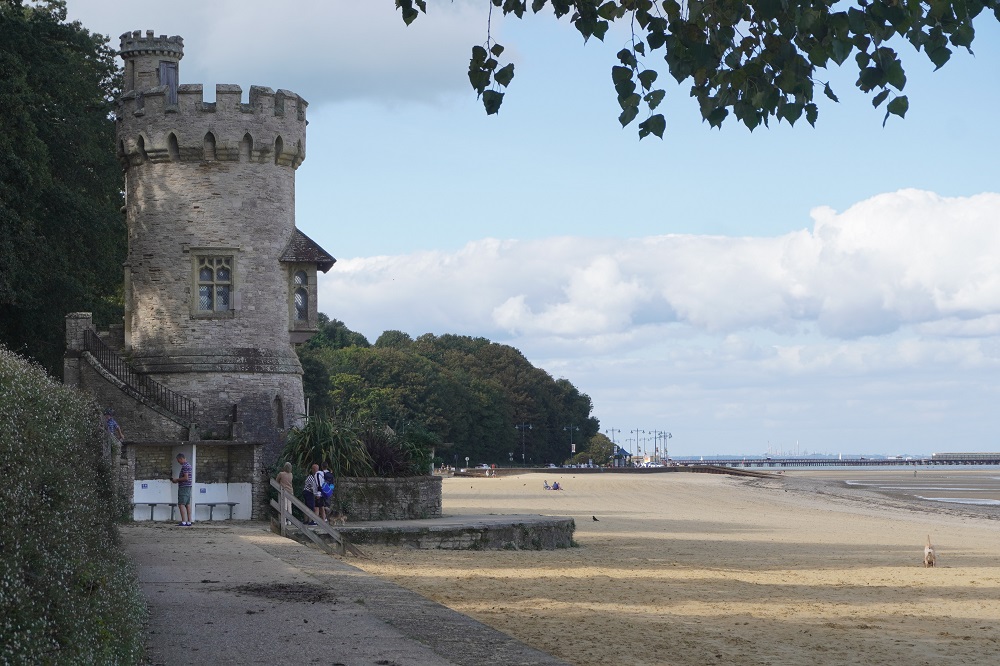
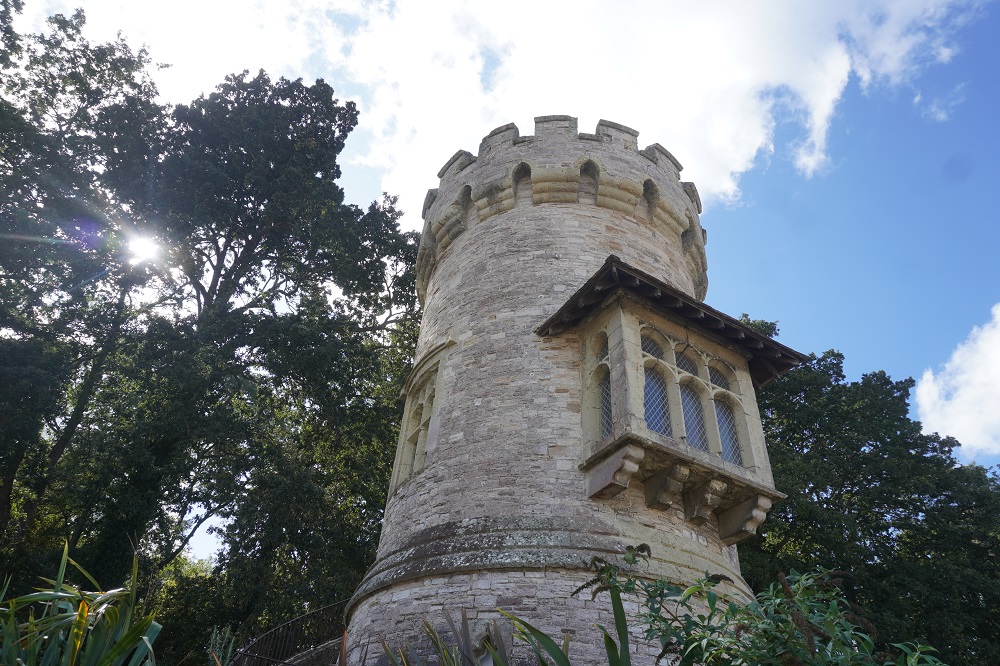
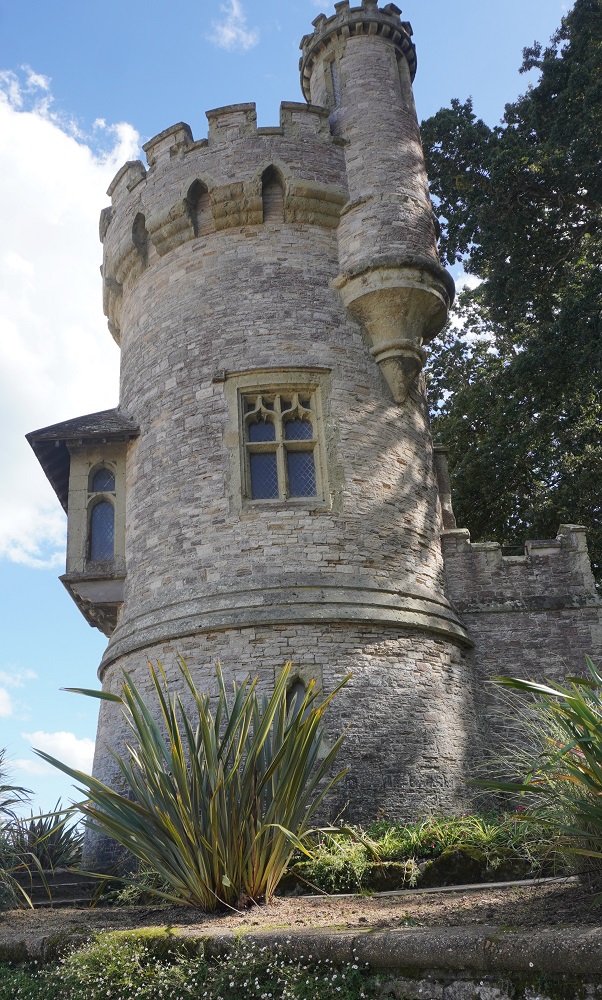
The path came back to the sea shore at Seagrove Bay and we stayed on the coast all the way back to Ryde, sometimes on a promenade and sometimes on the beaches. The beaches were beautiful, protected bays of golden sand, ideal for swimming. On the way into Ryde we came upon Appley Tower, a folly built in 1875 in the form of a Tudor Revival circular tower with battlements, a turret, an oriel window facing the sea and Gothic Revival tracery windows. The estate to which the folly belonged has long gone.

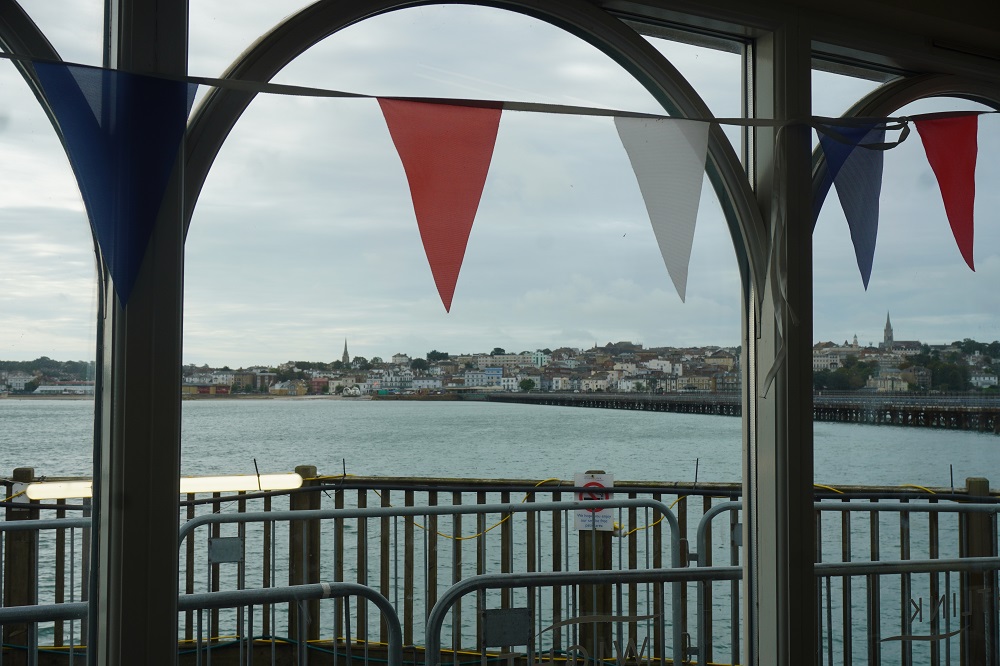
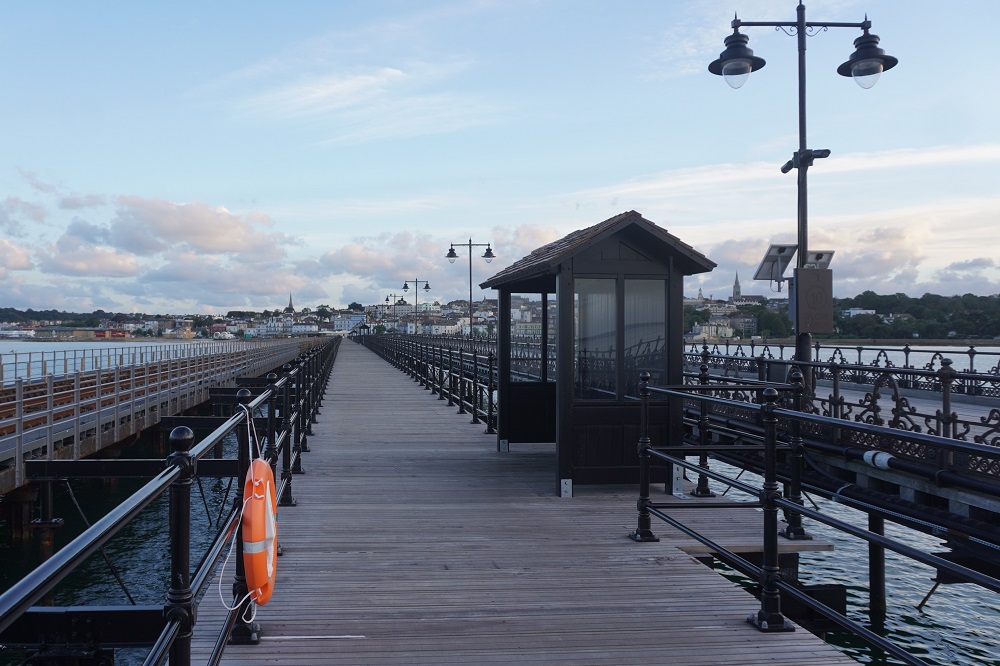
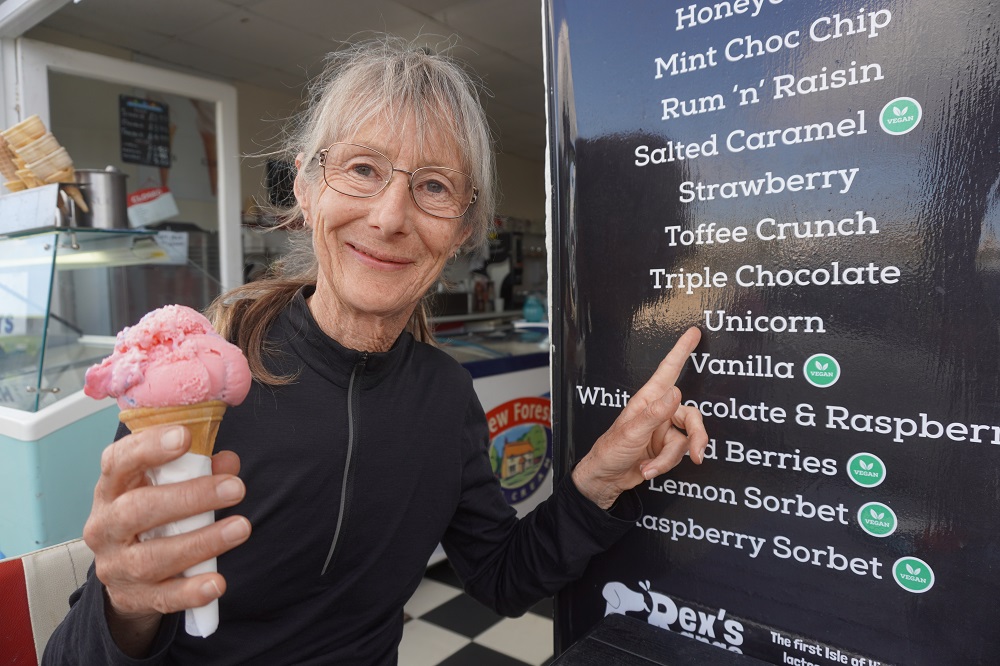
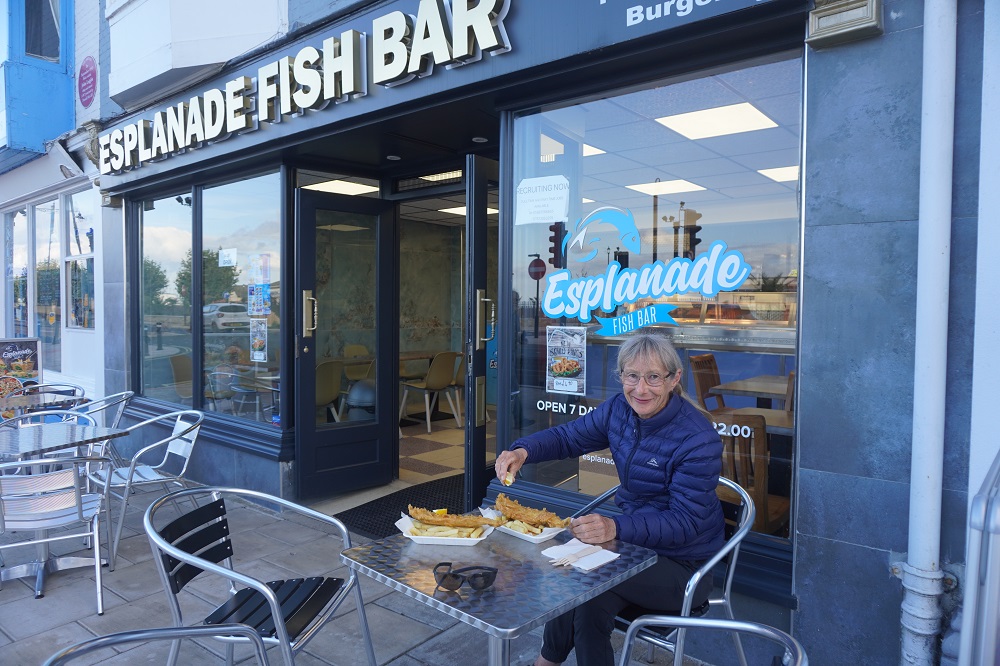
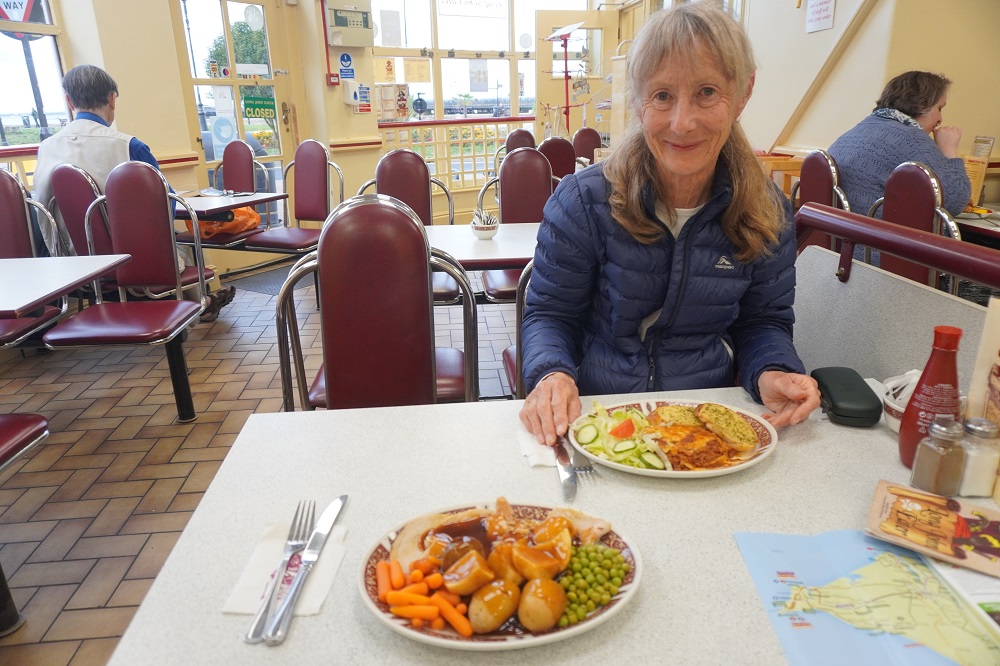
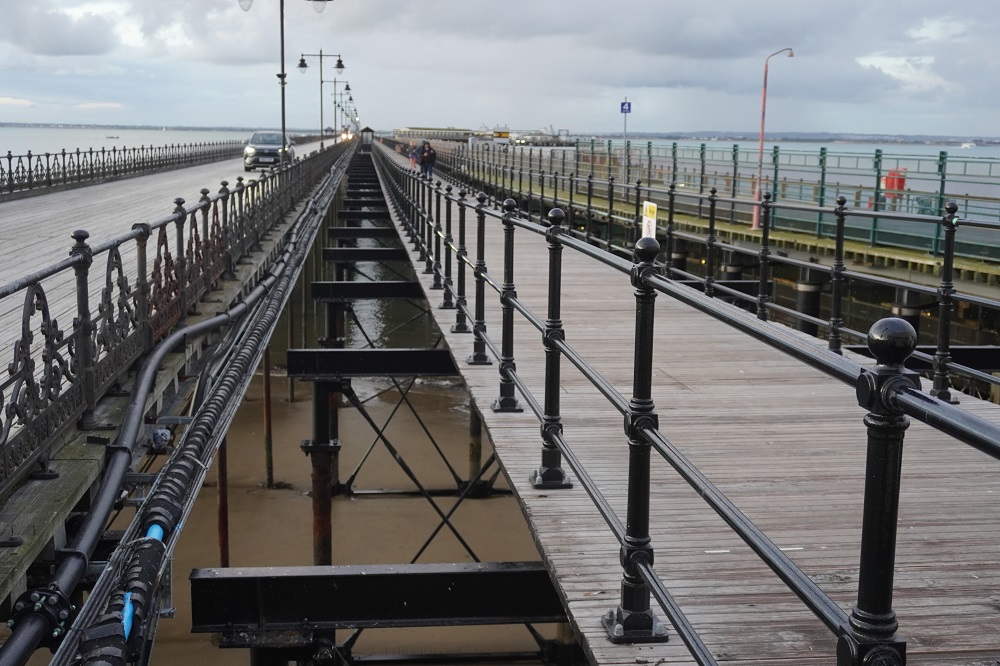
It was a wonderful 12 km walk, ideal conditions, plenty of interesting highlights along the way, mostly flat, just a nice casual way to fill in a Saturday. When we got back to Ryde we had deserved an ice cream. We had seen The Esplanade Ice Cream Parlour advertising “Unicorn” flavour and as our granddaughter Ellie has a special liking for Unicorns we had one of those. This evening we walked to the end of the pier where the ferries leave from. The pier is very long, it took ten minutes to walk its length, and carries, vehicles, pedestrians and a train. This is where we will leave from tomorrow.

So what do we think of the Isle of Wight? Having been here all of two days and seeing about 10% of the island we are of course experts. It is also autumn and the summer peak is over, people are back at work and students are back at school. We really liked it. Interesting and low key with lots of lovely beaches. It is a great place for walking and we have a guide with 24 coastal and countryside walks. Some say it is stuck in the 1950s and it does feel a little like that. It was a very popular holiday destination until the English discovered cheap holidays abroad and the popularity of the Isle of Wight declined. It does seem to have an older population of residents and visitors (like us). 90% of the people on the buses we used were our age. A large number of visitors are older people seeking peace and quiet, and traditional food and attractions. There is none of the buzz and energy of say Paignton and Torquay where the beaches were full of young people and the towns full of dance clubs. The transport system is great, there is lots to see and do and all the kitsch and junk of a lot of tourism is not shoved in your face all day.


Like a circle in a spiral, like a wheel within a wheel
Never ending or beginning on an ever spinning reel
As the images unwind, like the circles that you find
In the windmills of your mind!

Songwriters: Alan Bergman / Marilyn Bergman / Michel Legrand

On the buses

Isle of Wight Day 1

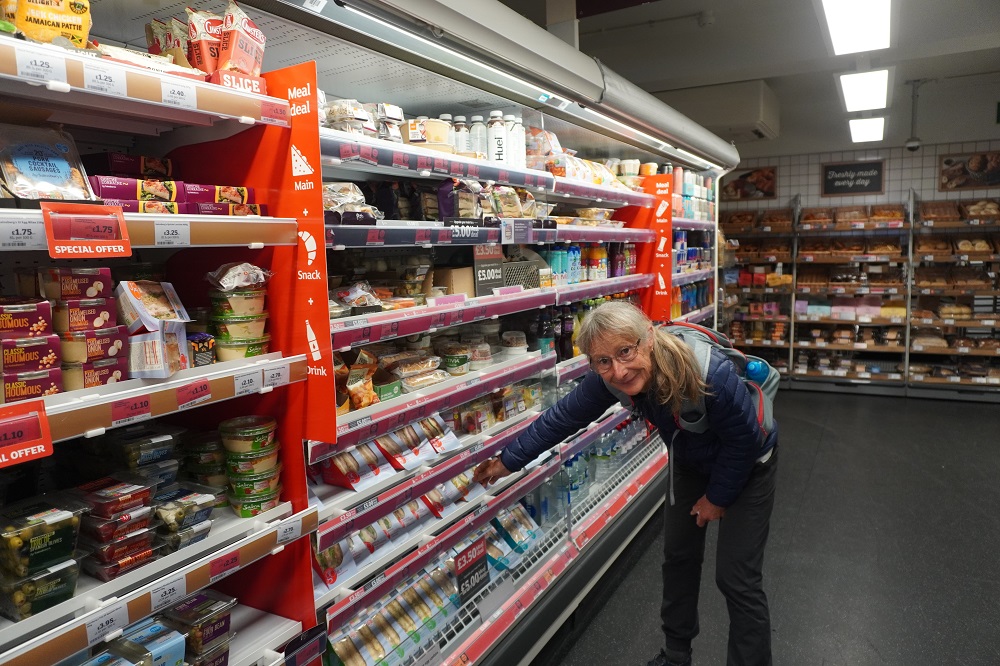
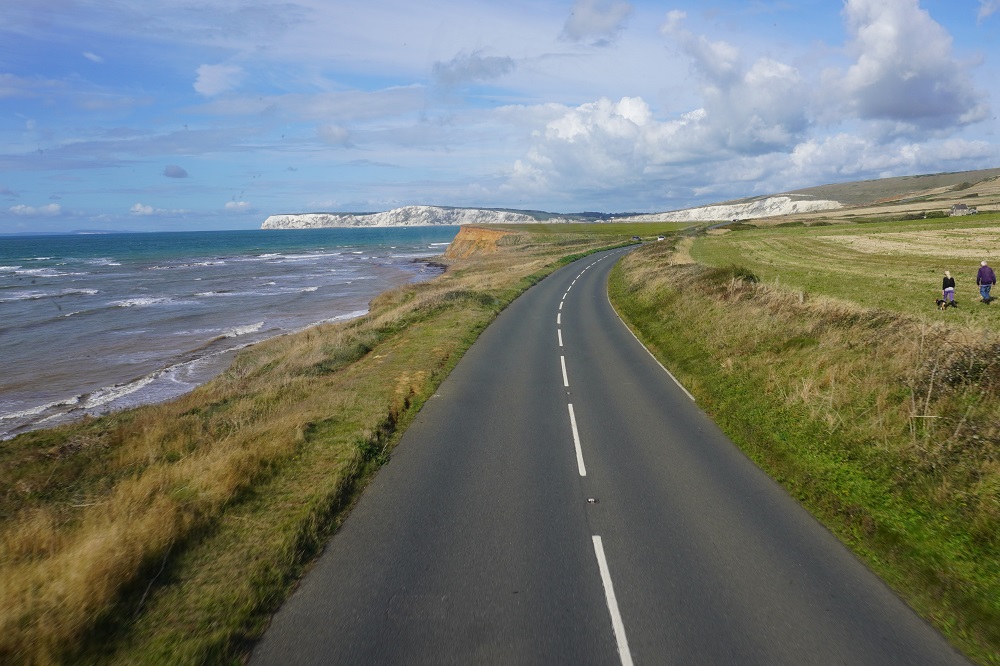
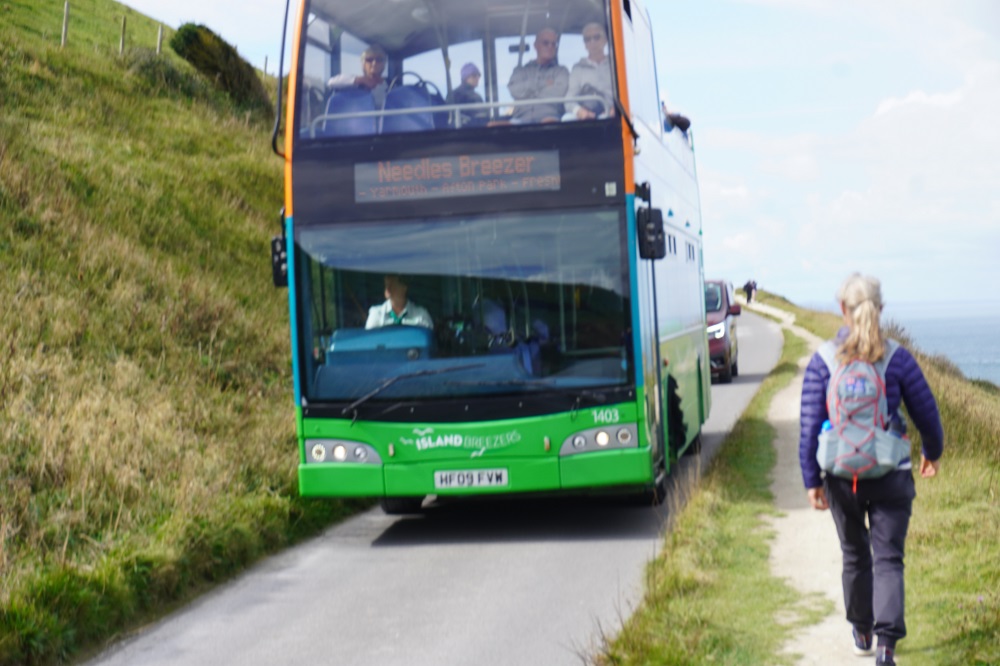
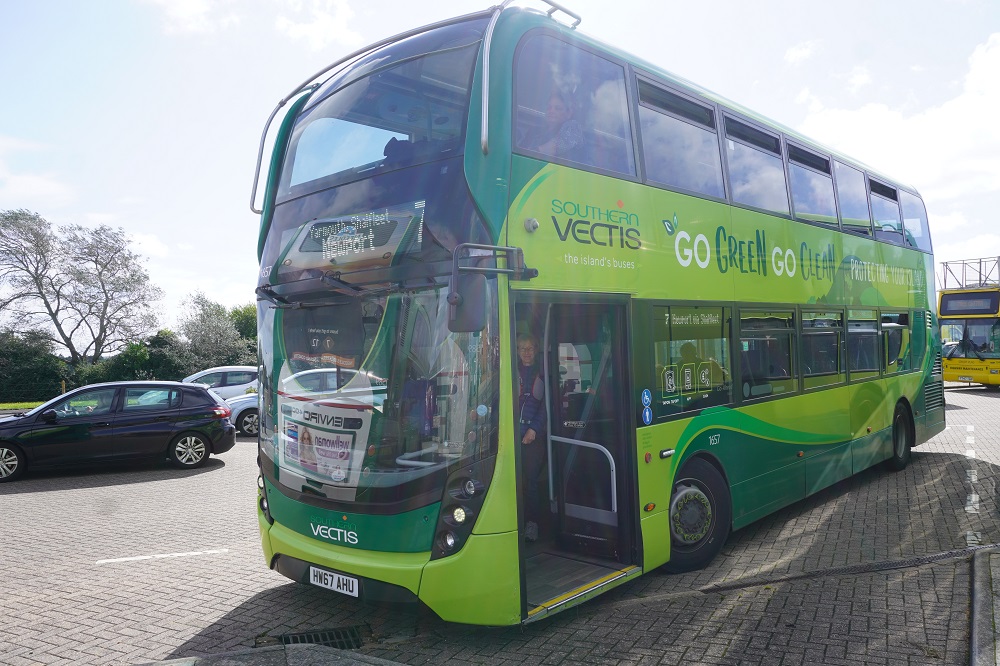
Today we played the typical tourists, After buying some lunch at Sainsbury Food we headed for the bus terminal on the Ryde Esplanade. We bought a 24 hr Rover + Breezer ticket. This allows you to ride any of the regular suburban buses any where on the island plus ride the 5 Breezer buses. The Breezers are open top hop on/hop off buses that do scenic circuits in particular areas of interest. For example the Needles Breezer starts in Yarmouth and takes in the Old and New Battery at the Needles among other sites in that area.

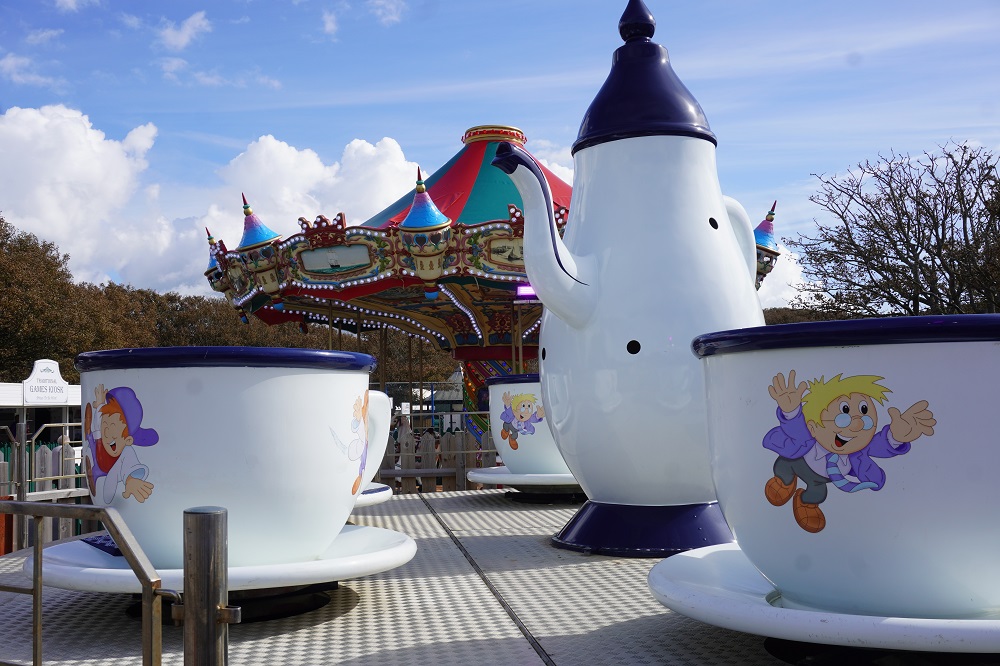
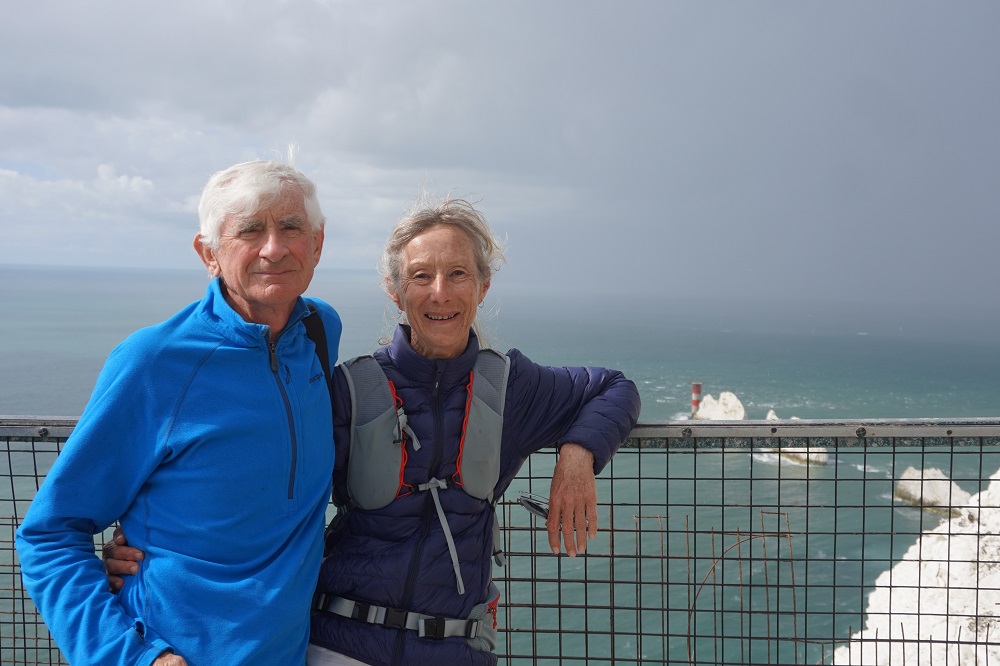
We first caught a regular bus to Newport. Newport is the largest town on the island and is located pretty much at the geographic centre. From there we caught a second bus that took us through many lovely villages to the south coast and along the wild coast westward to Alum Bay. Here there is a rather kitsch tourist “amusement park” with carousel, shooting gallery, cup and saucer ride, games arcade etc. Ignoring all that, there is a half hour walk out to the most westerly point on the island. Here there are two gun batteries. The New low down close to the end of the headland and the Old a little further back but much higher up. The attraction is the Needles Landmark, three white chalk stacks rising out of the water. At the end of the formation is a lighthouse built in 1859.

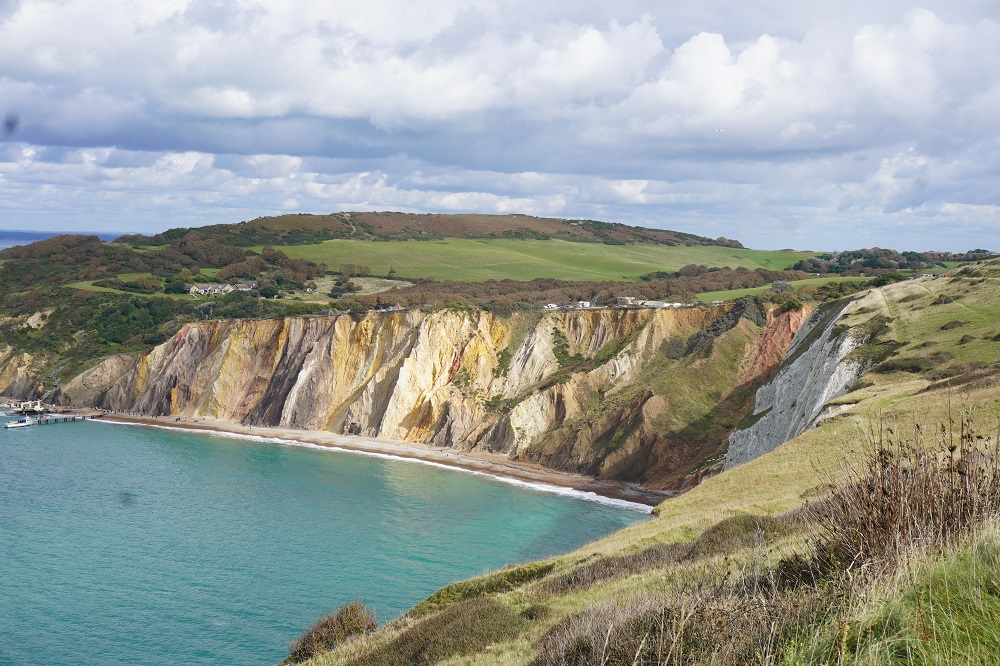
Alum Bay is also known for its multi-coloured sand cliffs. The sands are made of three minerals – quartz, felspar and mica, and in their pure state are white with other colours being produced through contamination by other minerals.

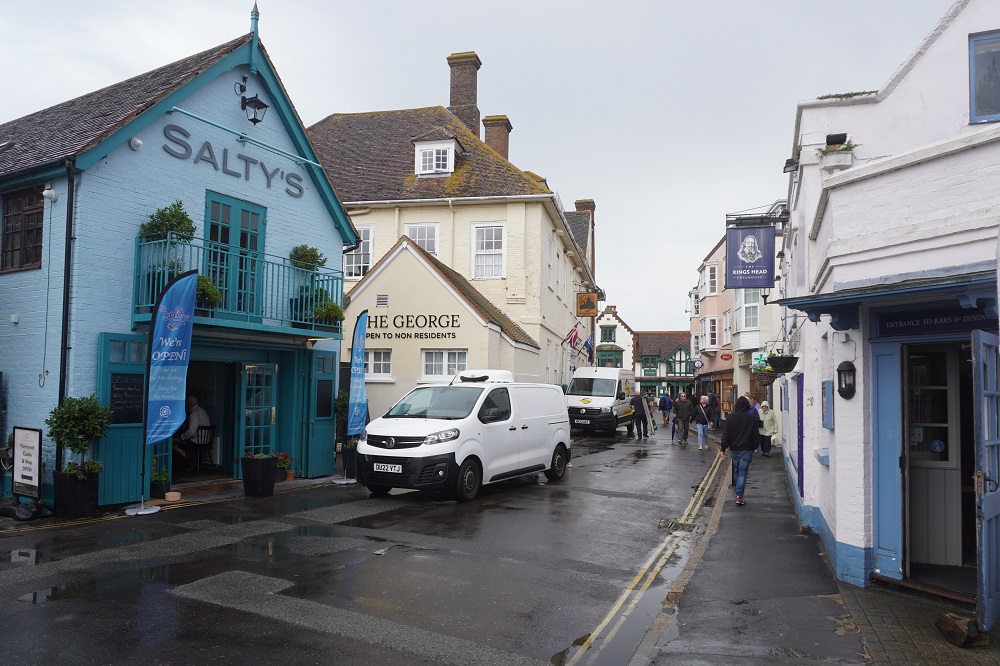
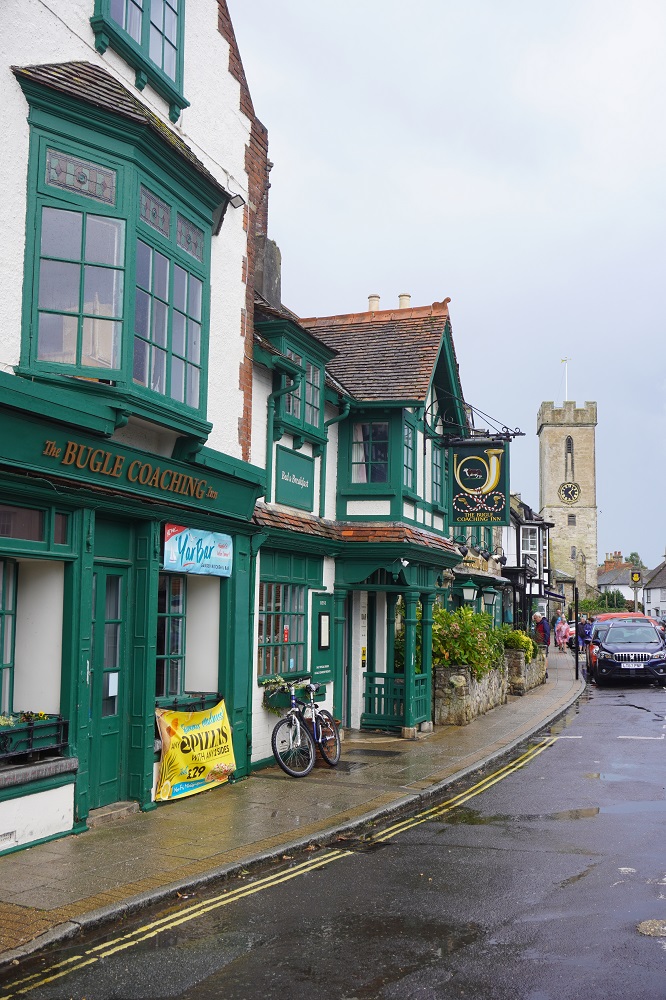
While we were at the Old Battery we could see rain coming from the mainland and within minutes it was very heavy. Lucky for us there was a Needles Breezer bus nearby which we jumped on but were still pretty wet. We didn’t get to see the New Battery. The Breezer took us on a scenic route to Yarmouth when we hopped off to look around. When we had planned to do this trip in 2020 we were booked into The Bugle Coaching Inn in Yarmouth so it was interesting to search it out. It is a charming old pub in the centre of the village. Unfortunately when we tried to book this time they did not seem to be doing accommodation.

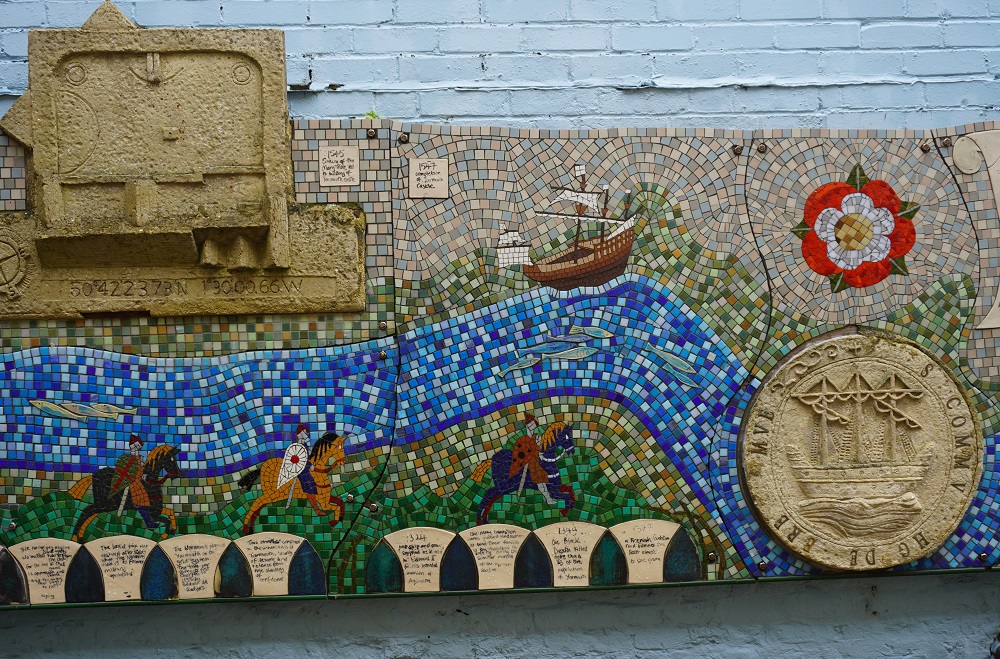
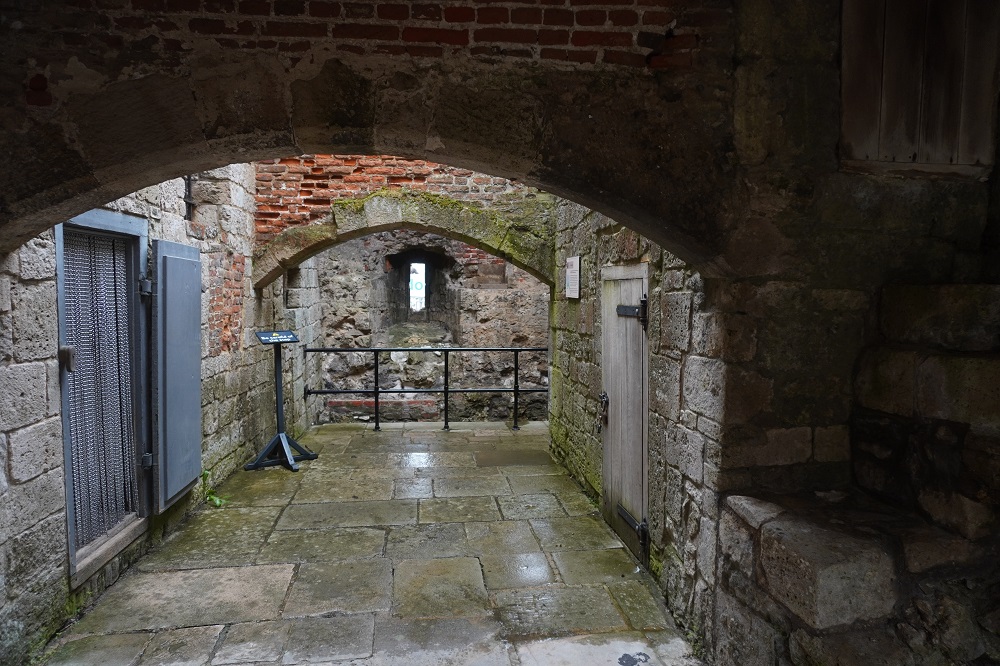
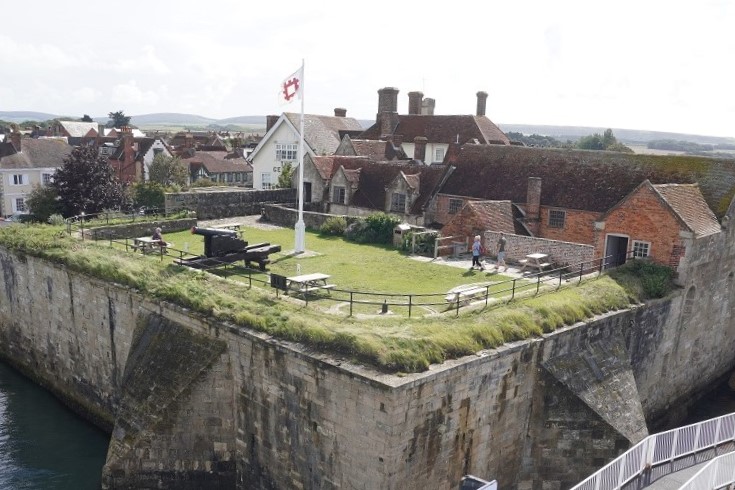
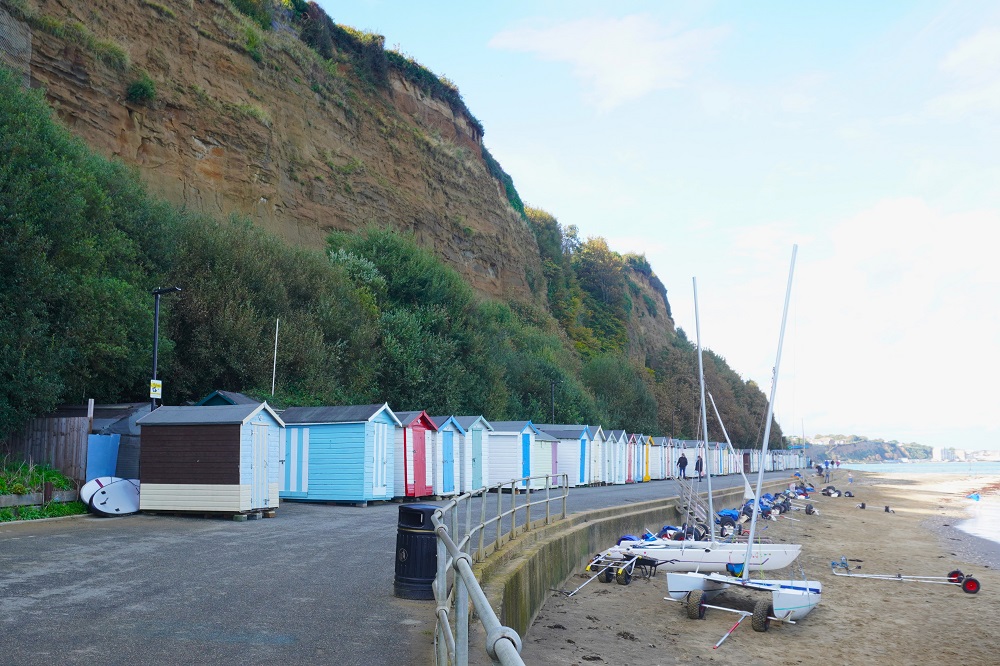
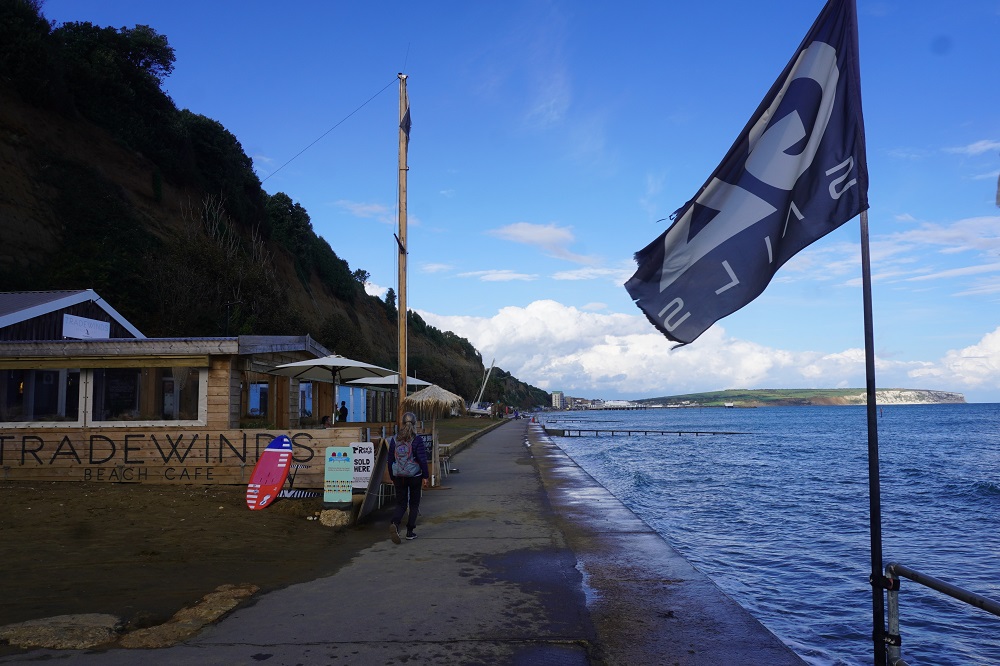
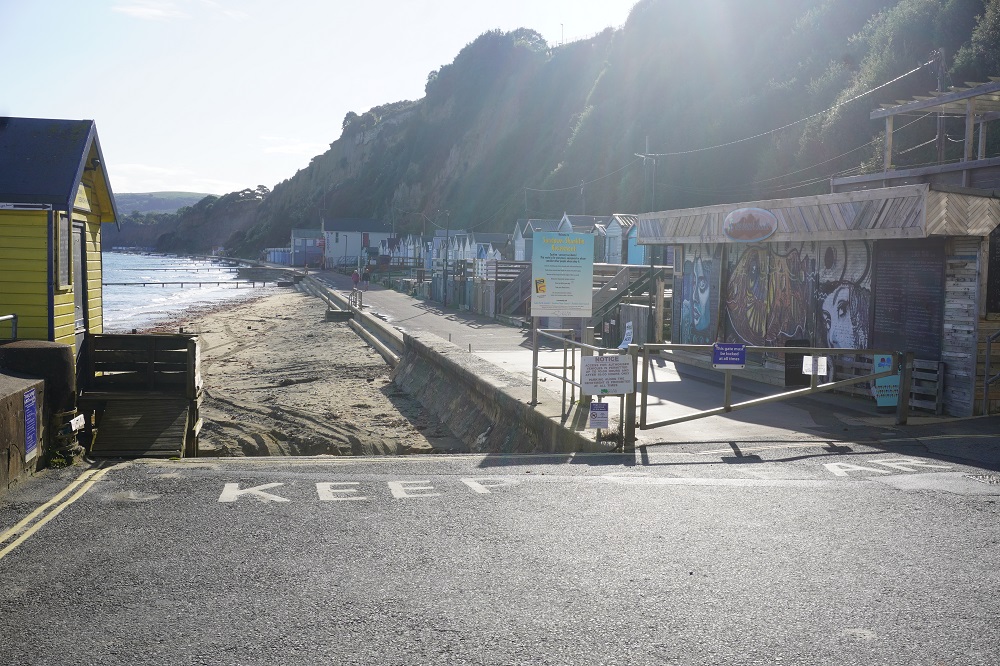
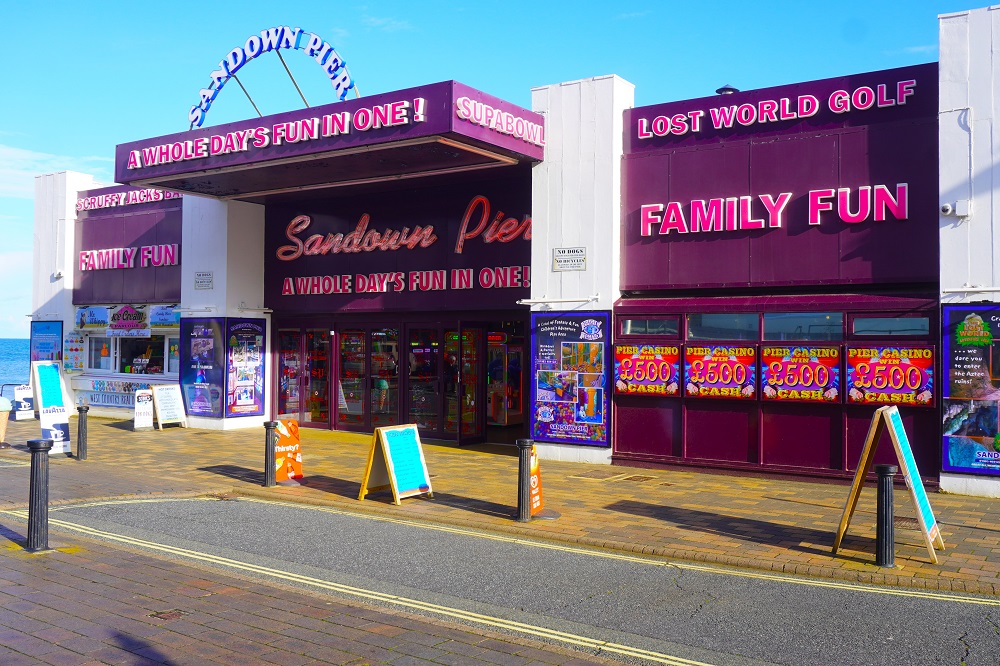
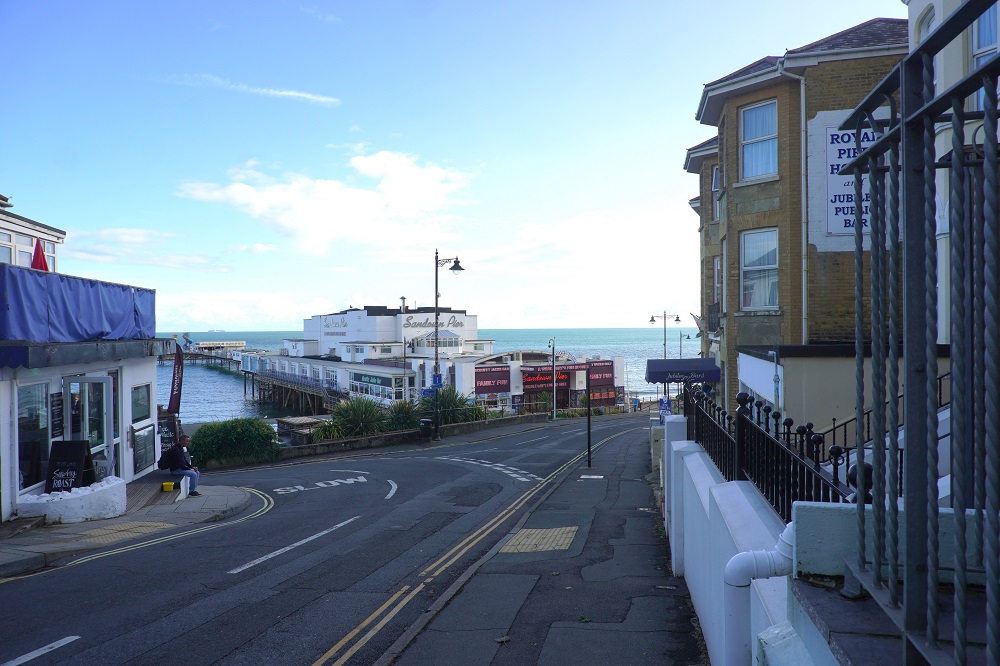
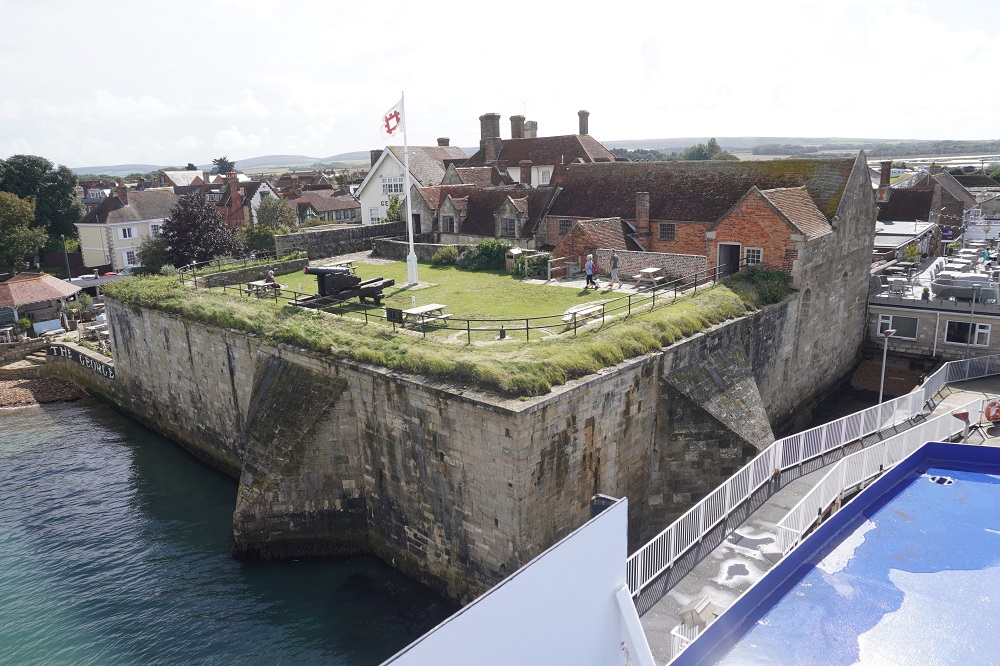
Yarmouth is where we arrived on the ferry yesterday, it is beautiful small village with a huge marina and a castle built by Henry VIII in 1547, really a gun platform to protect the Solent in the event of an invasion of England by the French or Spanish. From Yarmouth another bus back to Newport and a bus that took us to the East of the island, Ventnor and Shanklin. At Shanklin Old Village we left the bus, went down to the sea and walked the Shaklin-Sandown Revetment. This is a 2 mile paved walkway between the two villages with golden sand beaches, brightly painted beach huts, great views out over the English Channel and plenty of outlets for food, drinks and ice creams. Sandown also has a pier.

At Sandown we got on yet another bus and went back to Ryde. Today we spent about five hours on busses, tomorrow it is time to do some walking. Our 24 hour ticket was issued at 9.38am today so first thing tomorrow we can take a bu, before 9.38, somewhere and walk back to the hotel. There is a Coastal Walk right around the island so will do some of that. The full circuit takes about 6 days, maybe an idea for another time.

She’s got a ticket to Ryde, but she don’t care

Poole to Ryde

Walk to Poole Railway Station
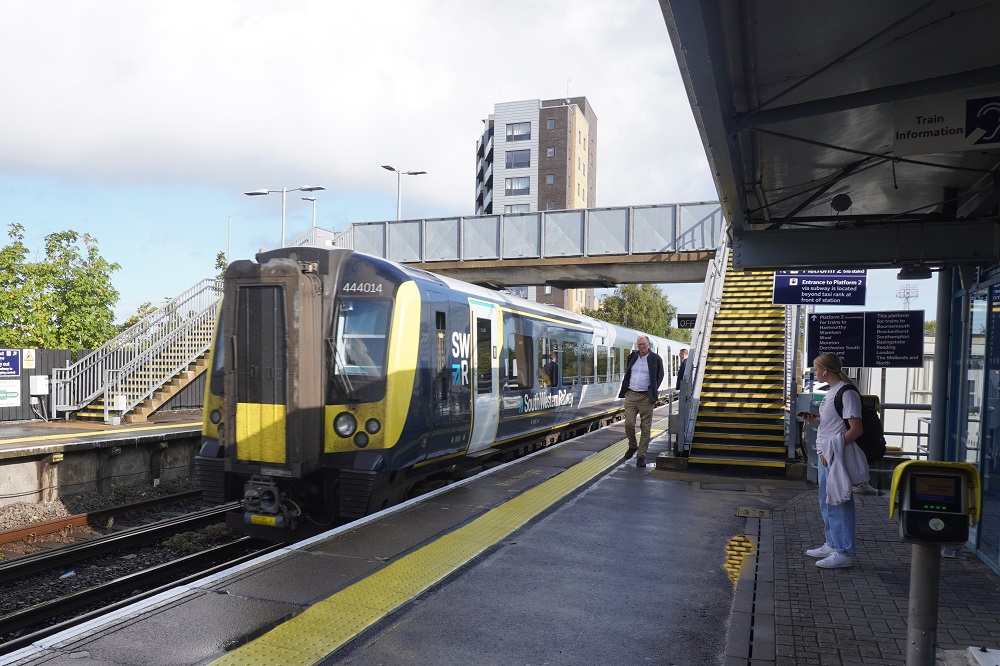
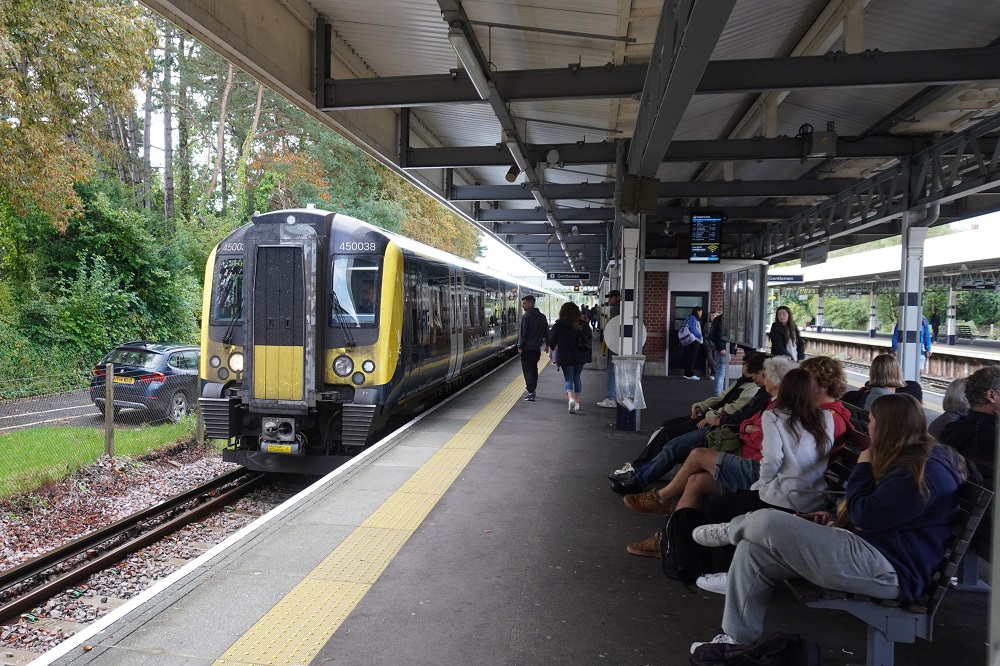
Train Poole to Brockenhurst
Train Brockenhurst to Lymington Pier
Ferry Lymington Pier to Yarmouth, Isle of Wight
Bus Yarmouth to Newport
Bus Newport to Ryde
Walk to Dorset Hotel B & B

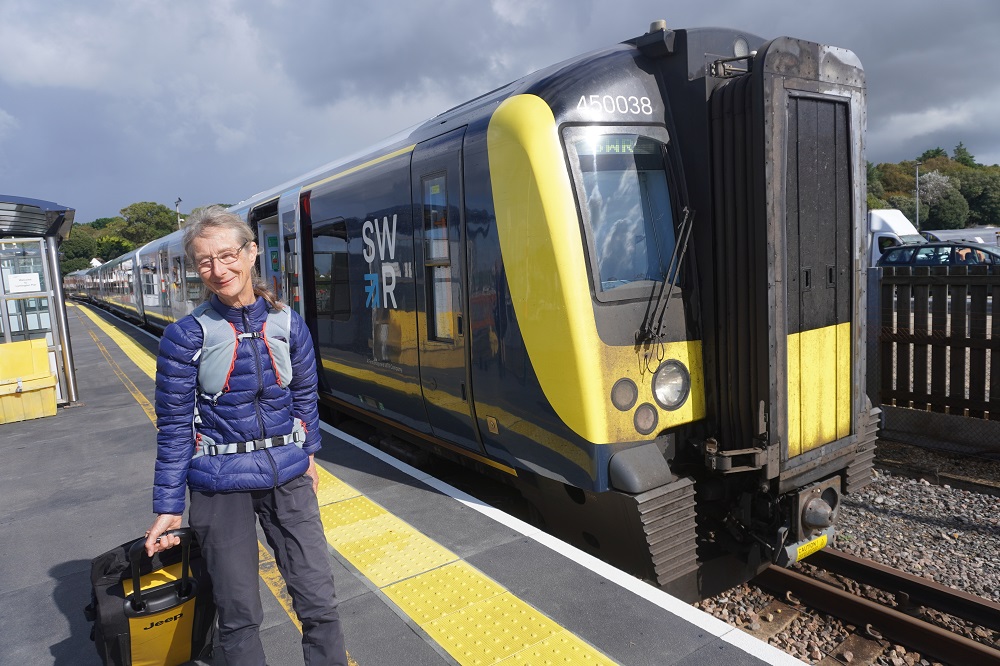
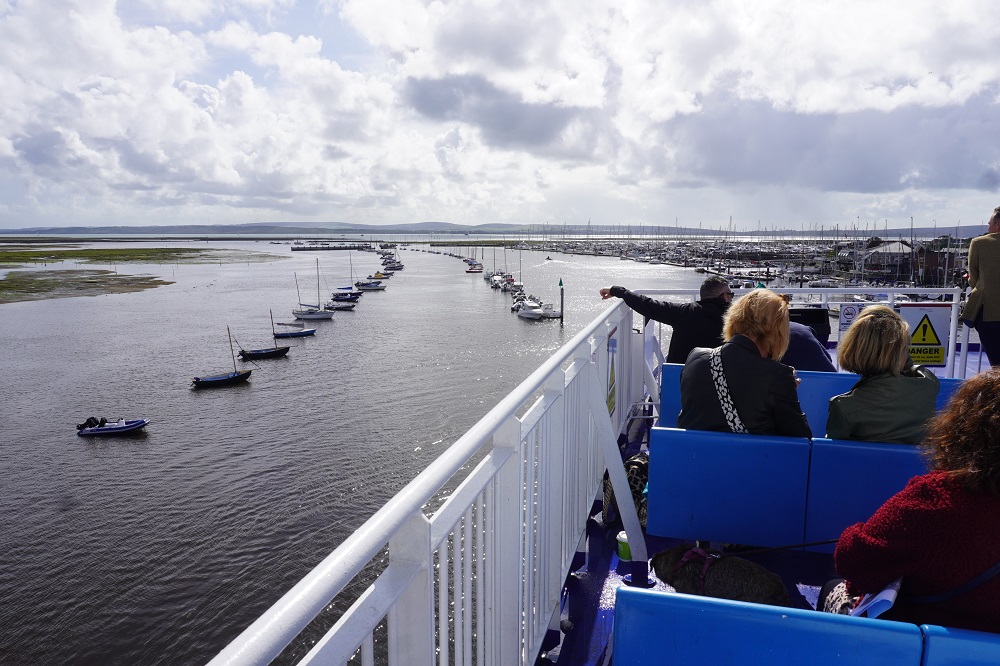
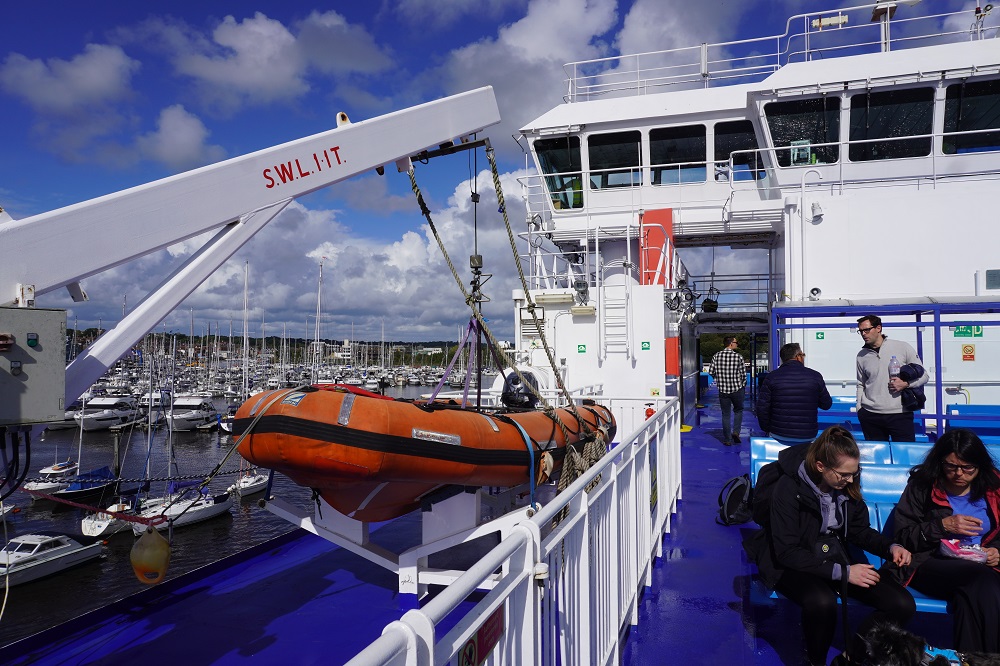
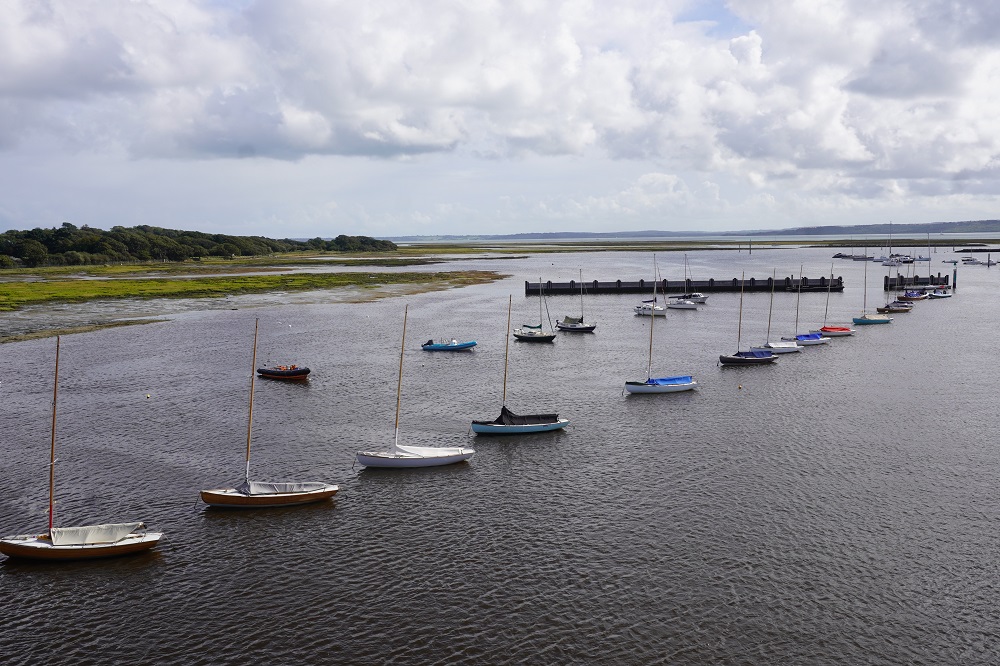
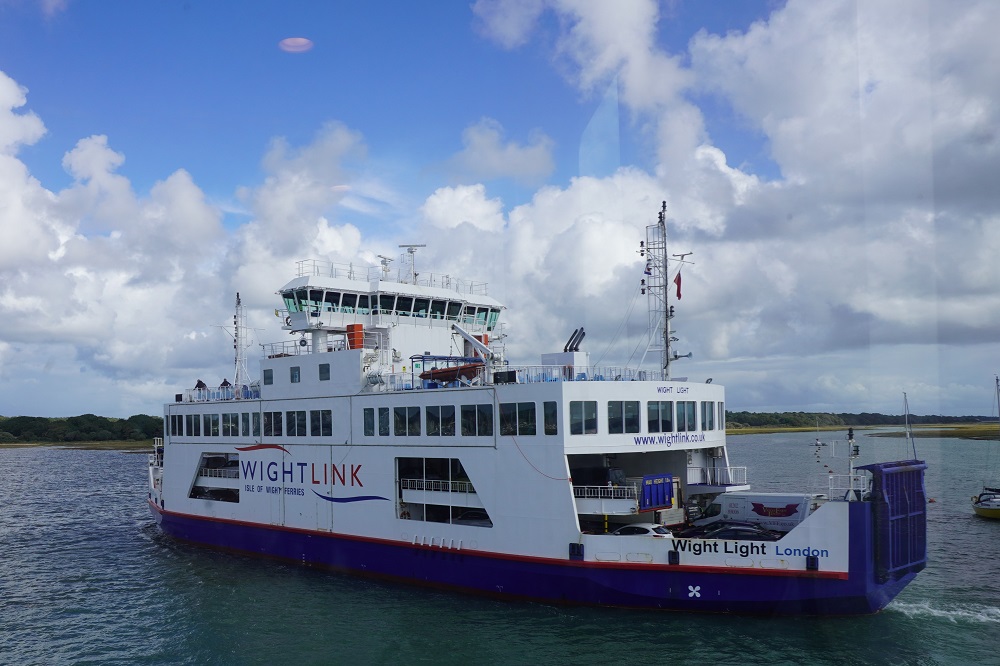
This was just one of those transition days. It is a little complicated getting from Poole to Ryde on the Isle of Wight on public transport but all the connections worked really well. The bonus was the fact that the train ride  from Brockenhurs tto Lymington Pier was free as no one came to collect our fare,

The Isle of Wight is the largest and second-most populous island in England –  after Portsea Island which has most of the city of Portsmouth on it. Referred to as “The Island” by residents, the Isle of Wight has resorts that have been popular holiday destinations since Victorian times and even of Queen Victoria her royal self.

We are now settled into our B & B and sorting out what we might do in the next two days. We don’t know much about the island so we will just have to go out and explore and find out. We had thought of hiring bicycles but I think we have run out of energy so will use their pretty good hop on/hop off tourist buses instead.

This is a sort of holiday within a hoilday for us. Just chilling out and relaxing.

My apopologies to The Beatles for for misquoting the name of their song.


Poole

Our room is on the top floor of a quaint three storey building and the wi-fi is non-existent up here. You have to go down to the ground floor lounge where it is pretty good. This had the advantage this morning of being able to talk with the former owner of the B and B and one of the staff. The lady owner, Theresa, has run the place for twenty years, with her husband until he died seven years ago. She is older than us, maybe approaching 80, and has recently sold to new owners. The new owners stopped providing breakfast. As of next Monday the place will be closed for 3 months and the new owners are gutting it and doing a complete makeover. The existing 6 rooms will turn into 10 and it will become a boutique hotel with no on-site staff. The lady was a bit sad about selling and a bit nervous about what to do with her days. Her family have been urging her to retire since her husband died.

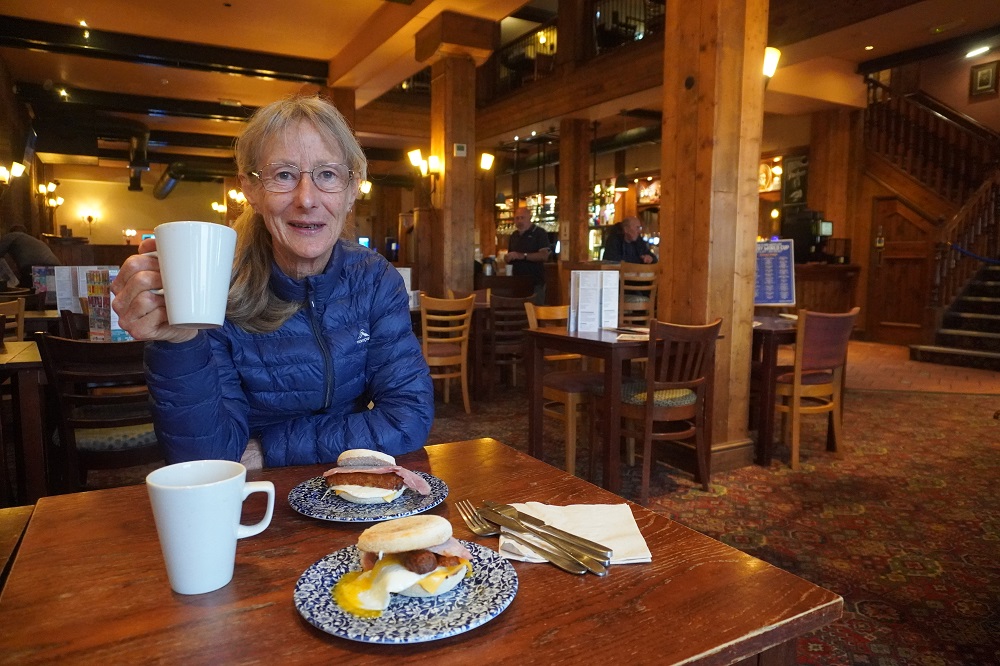
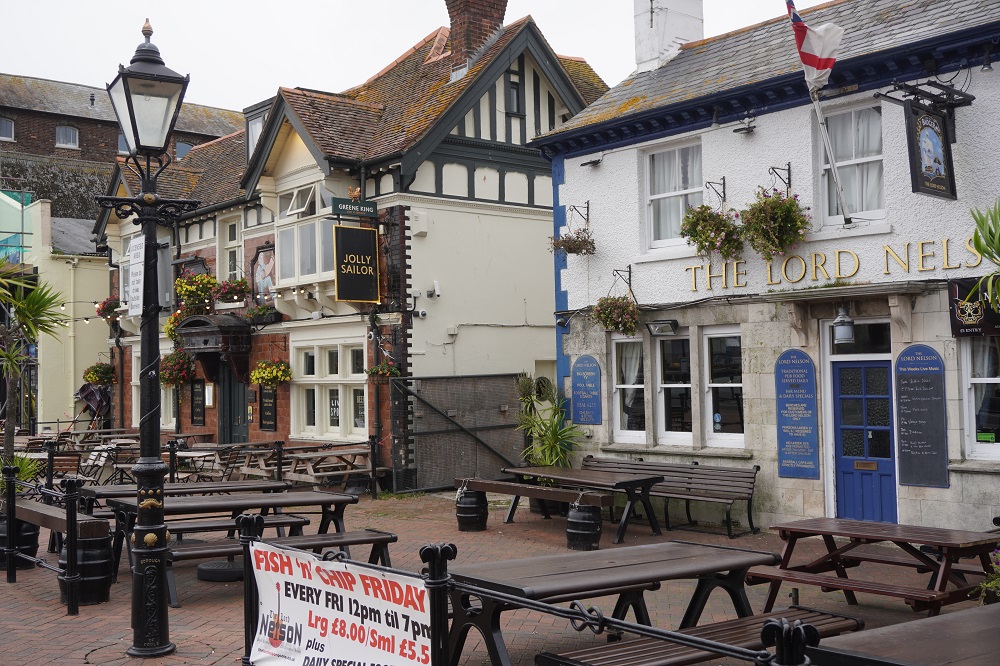
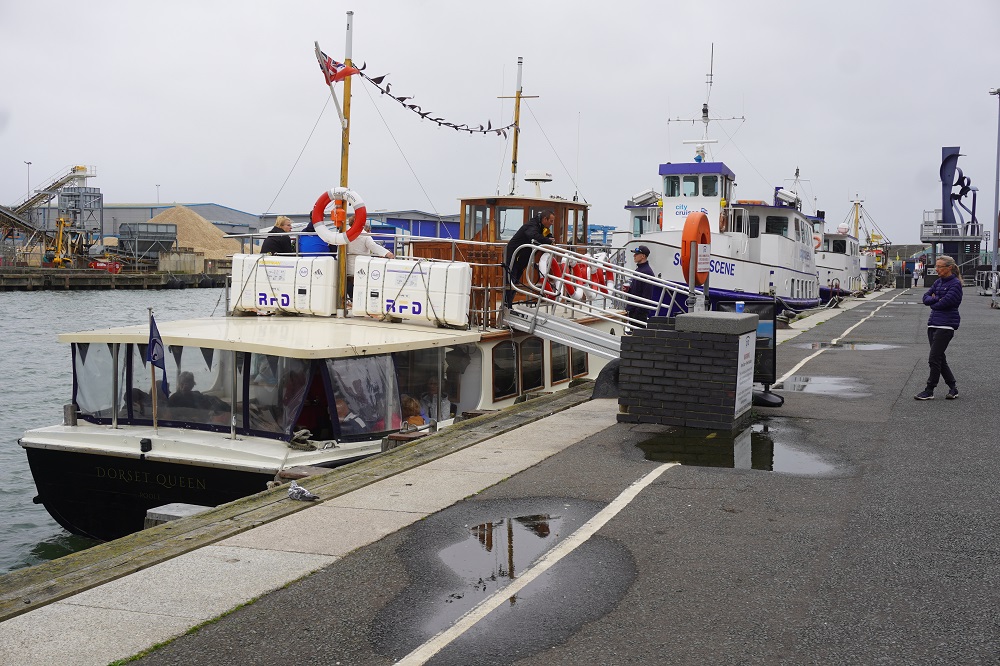
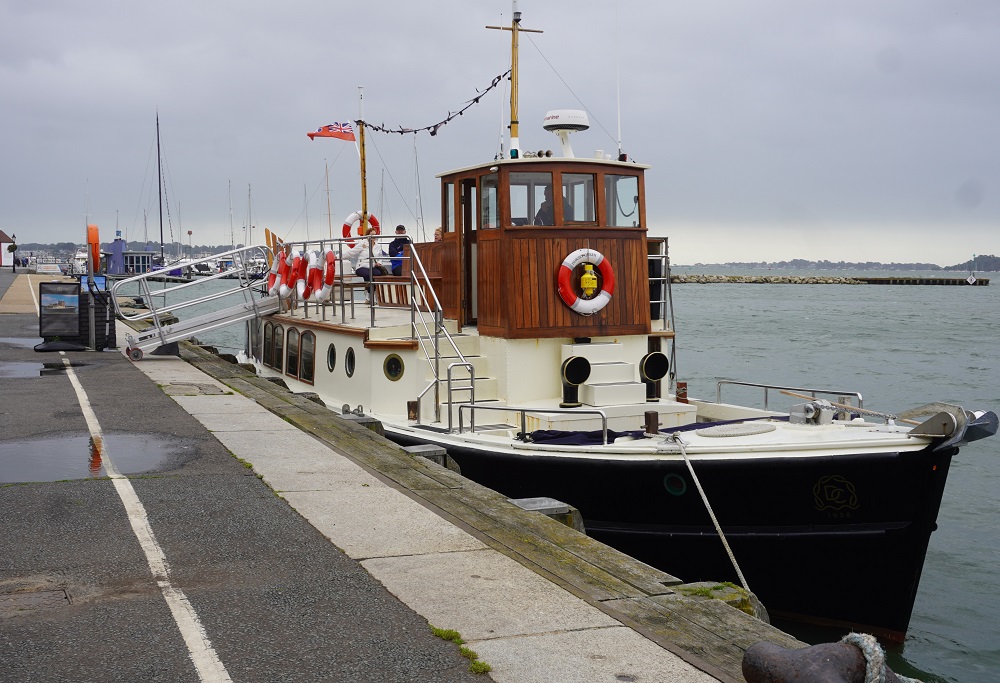
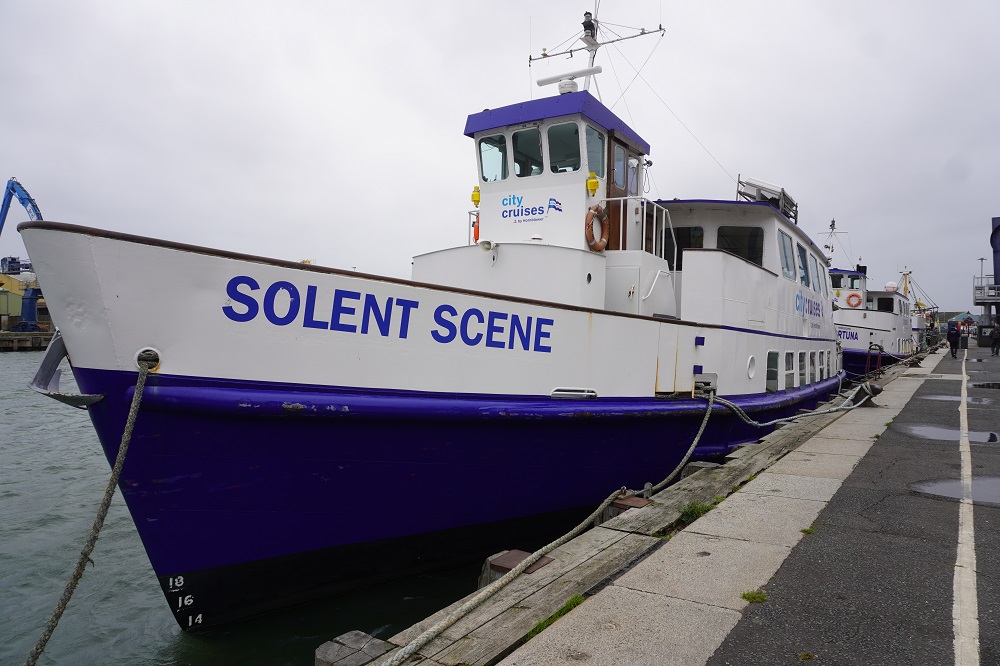
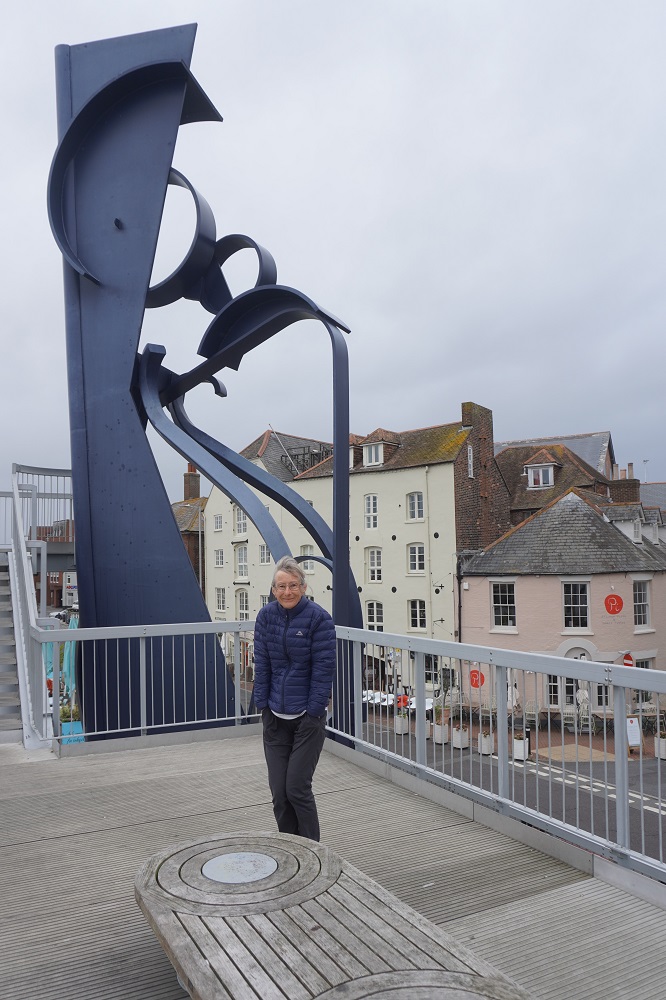
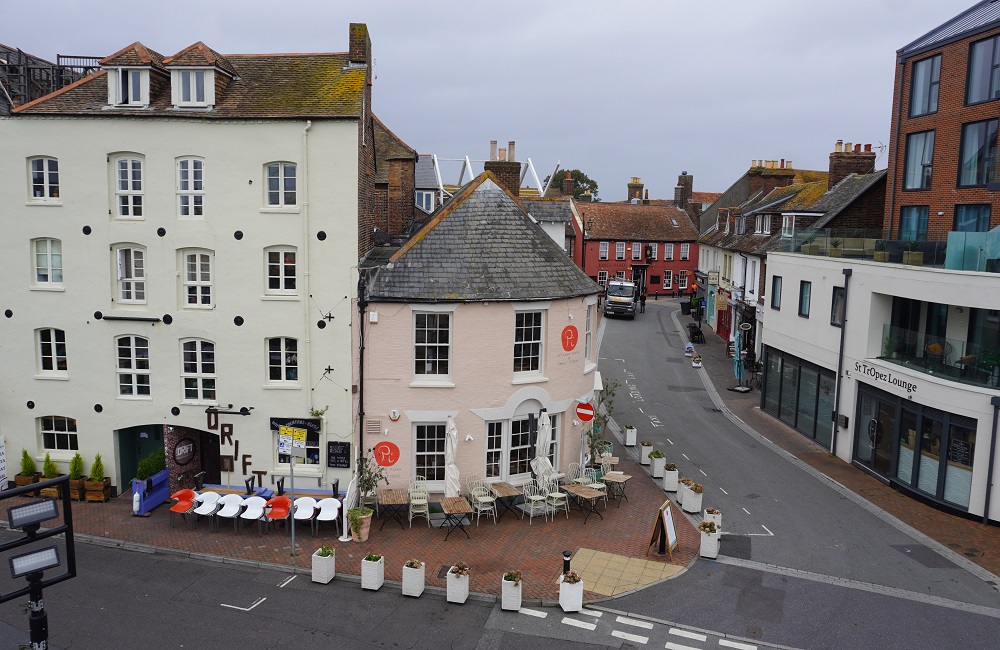
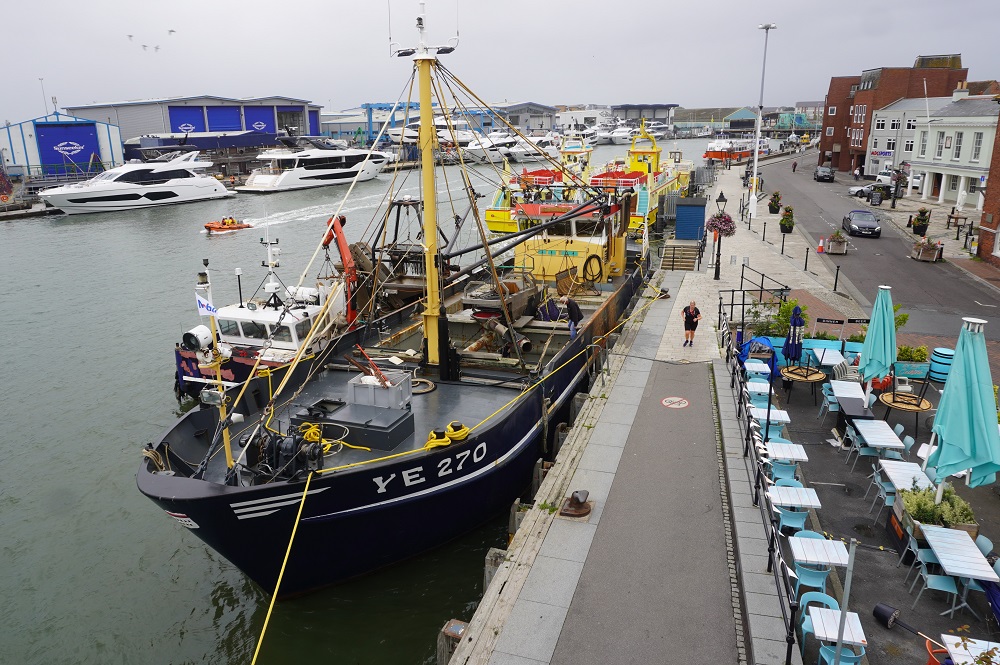
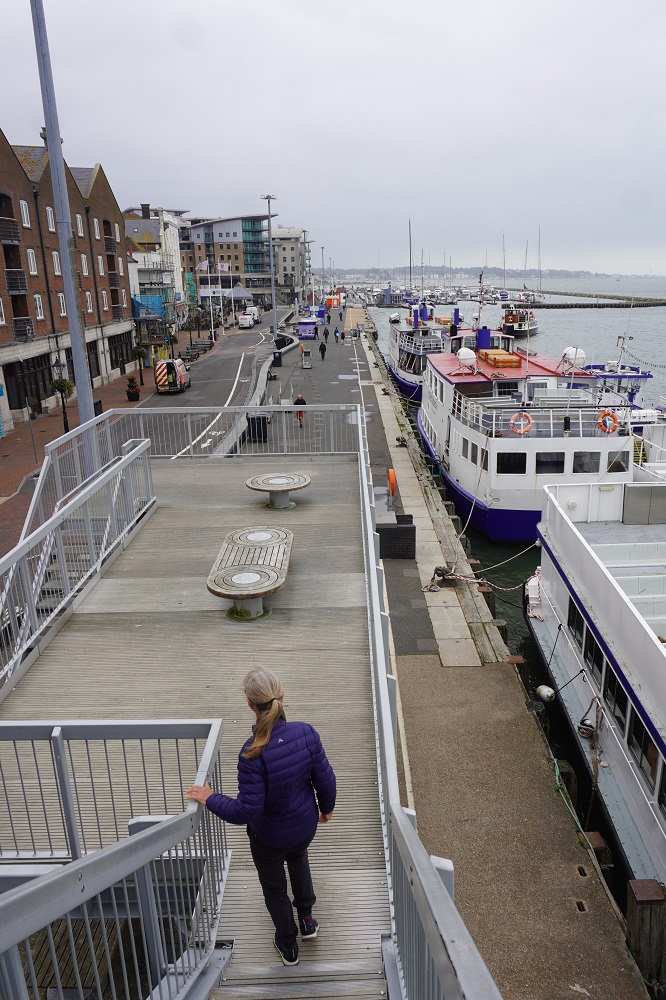
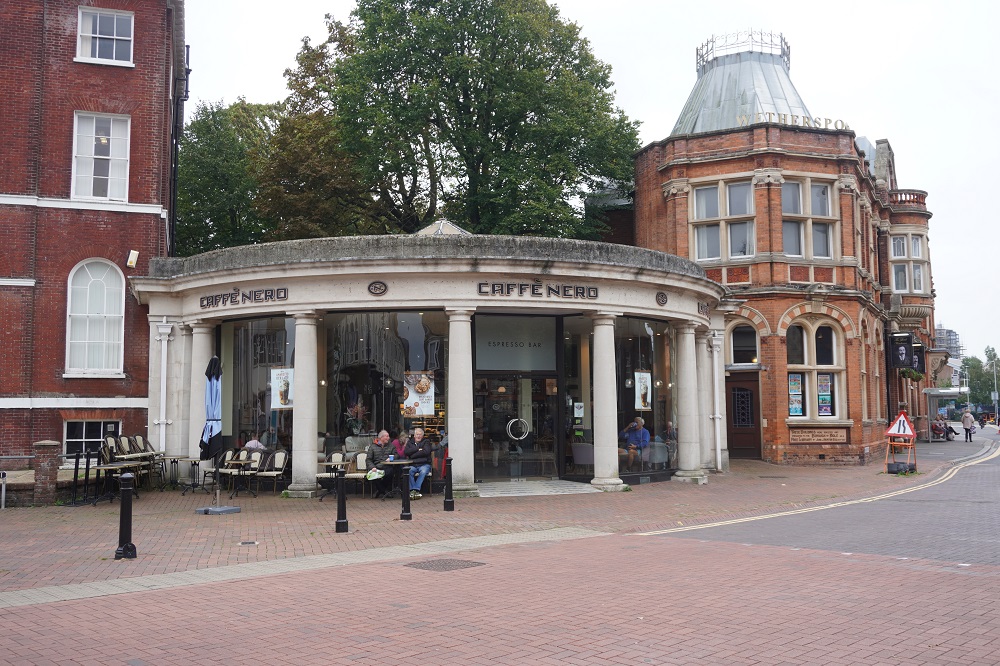
For breakfast we went out onto the Quay and found a place with a good breakfast deal. A breakfast muffin (egg, cheese, sausage and bacon) and unlimited coffee refills for £4.00. The coffee was probably the best we have had in England so far. From there we walked around the Old Town down around The Quay which is the historic quarter of Poole. Lots of cruise and fishing trips are available from Poole. You can get a ferry to the Channel Islands and to France. Poole is the second largest natural harbour in the world after Sydney. It was an overcast and very windy day again so going out in a boat wasn’t very appealing.

We also checked out the route to the railway station and from which platform to get our train tomorrow. Moving day tomorrow: train Poole to Brockenhurst, train to Lymmington, ferry to Yarmouth, bus to Ryde.

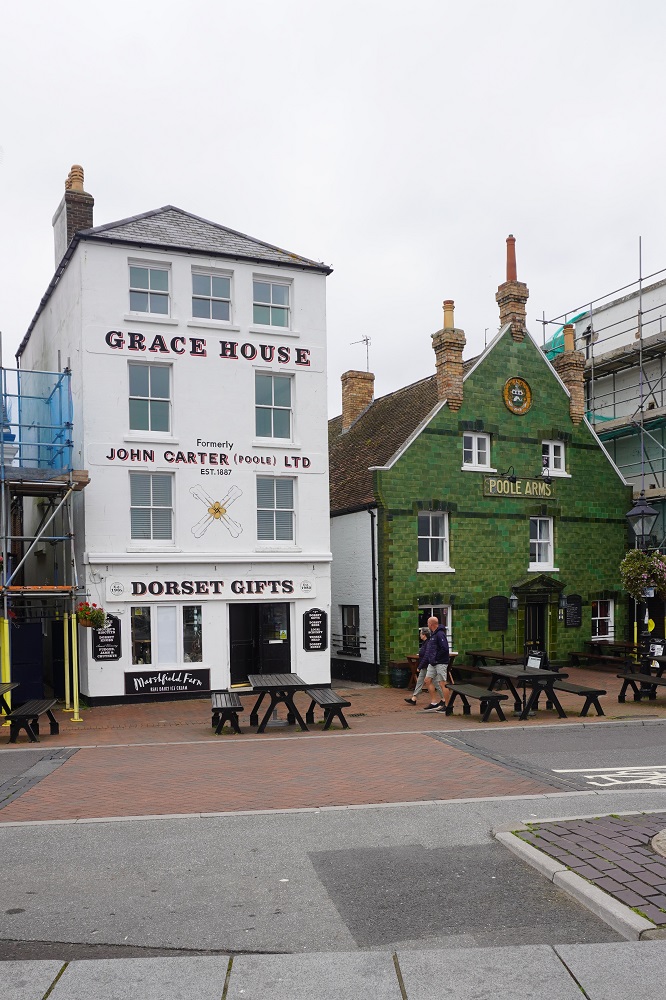
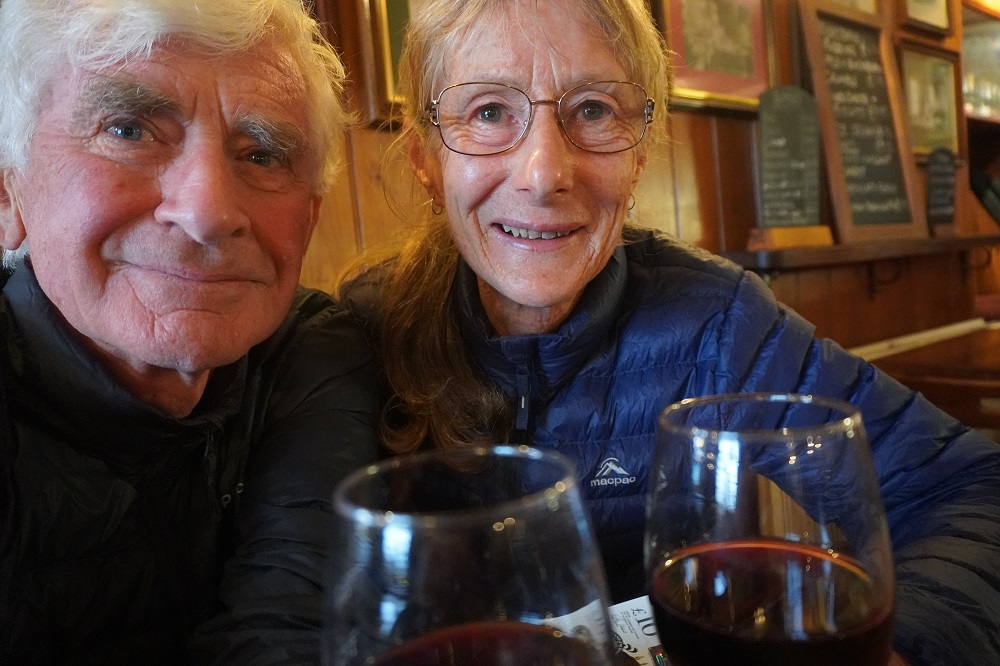
In the afternoon the weather turned to custard, the strong winds continued and there was persistent rain. So glad we didn’t go out to Brownsea Island on a ferry to see the spiritual home of the scouting movement. The island was the location of an experimental camp in 1907 that led to the formation of the Scout movement the following year.  Eventually we retired to a cosy pub, The Poole Arms, for a celebratory “end of walk” glass of smooth Spanish red wine. It was very nice. There is something very, very comfortable about old English pubs.

One of the good things about walking the Coast path is that there are no mosquitoes, sand flies, flies or ants. The only pesky things are sandwich and chip stealing sea gulls. There are nettles and brambles though. Not such a problem for Barbara as she wore long walking trousers but in my shorts I had stinging legs on most days. The majority of the time the path is well trimmed but sometimes it is overgrown and you have to push your way through. The brambles I accepted because they provided a constant source of blackberries to eat as you went along. Barbara did get a thorn in her finger from picking blackberries and that hurt for a few days.

An update on the refund of our train ticket from London to Paignton. Because we had bought our tickets on line and chose the paper ticket option (not Q code or e-ticket) we had to go to a ticket machine and collect printed tickets. Then cut them in half vertically and scan or photograph them with a gap between the two halves to show they had been cut, and upload this to our refund application. The sensor on my camera was way too big so at first the jpeg would not be accepted, so I  had to resize it to a very small file size. Finally our refund application was accepted and we were told it would take up to 28 days to process and there may be a £10 administration fee. A further complication was that they were having problems with Mastercard and could we provide a UK bank account as back-up!! Just a day later we got an email to advise our claim was approved, there was no admin fee and a refund would be on my credit card in 7 days. Yippee!