All posts by Paul Lenihan

Where have all the flowers gone?

Perranporth to Portreath, 18km, 686 metres of climbing
‘I can walk the line if it ain’t too straight’
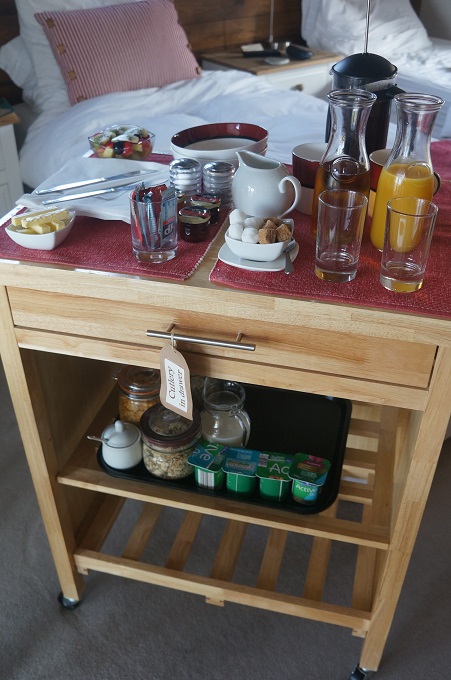
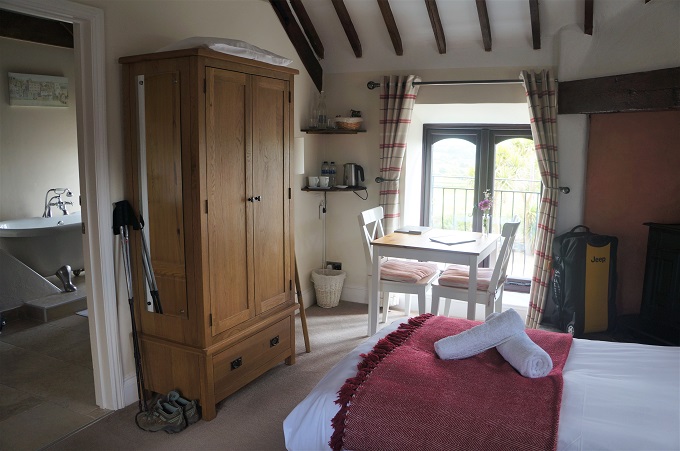
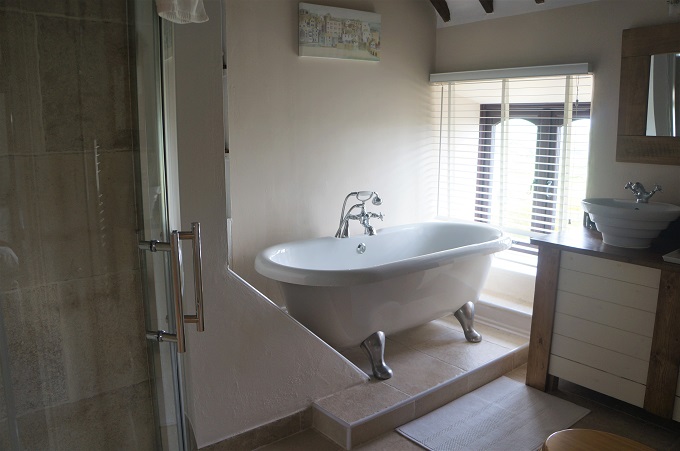
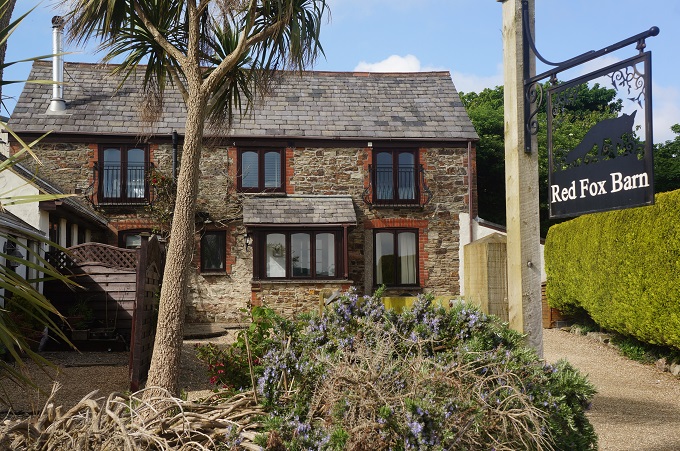
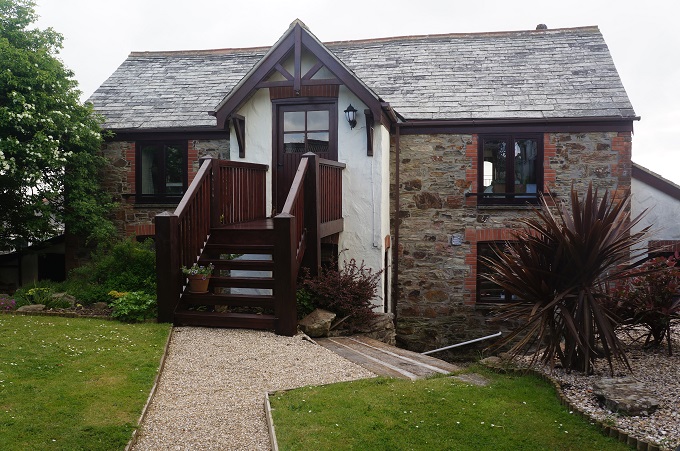
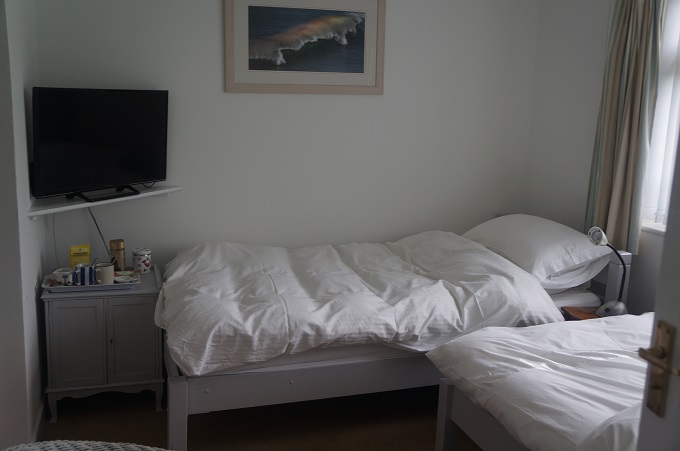
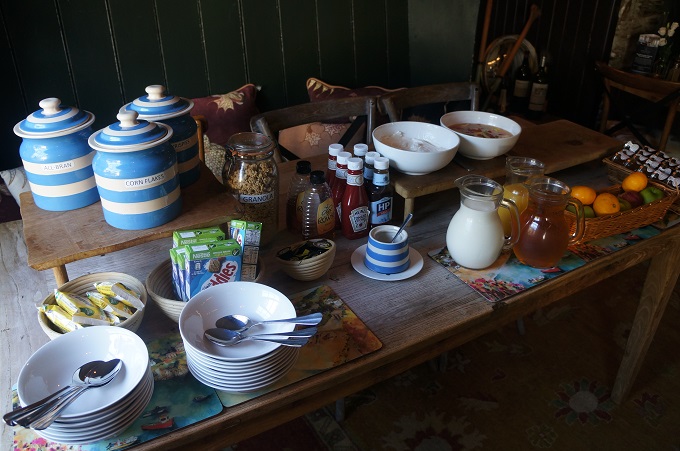
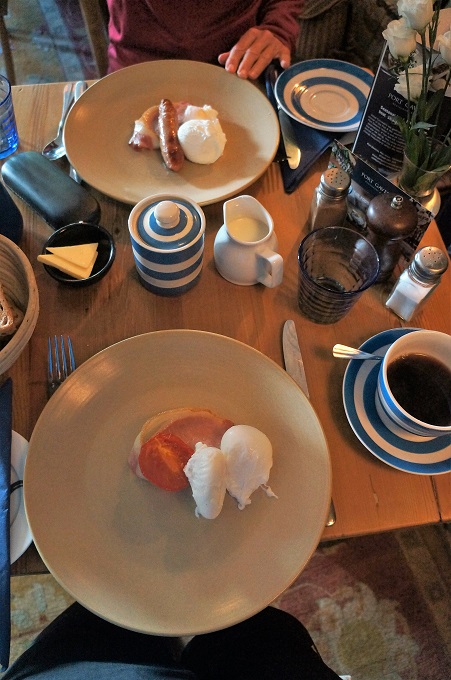
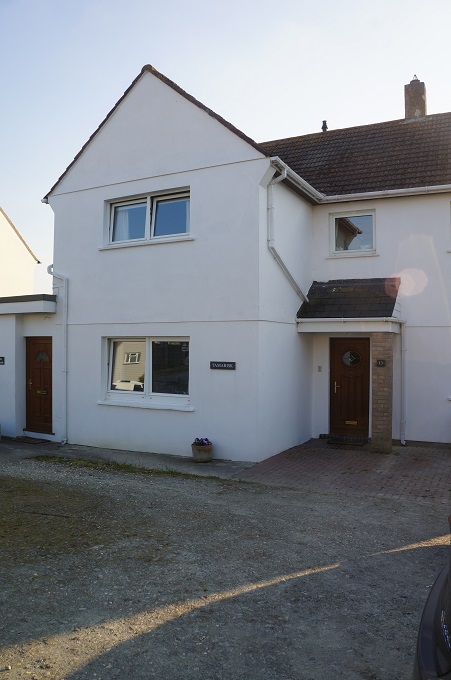
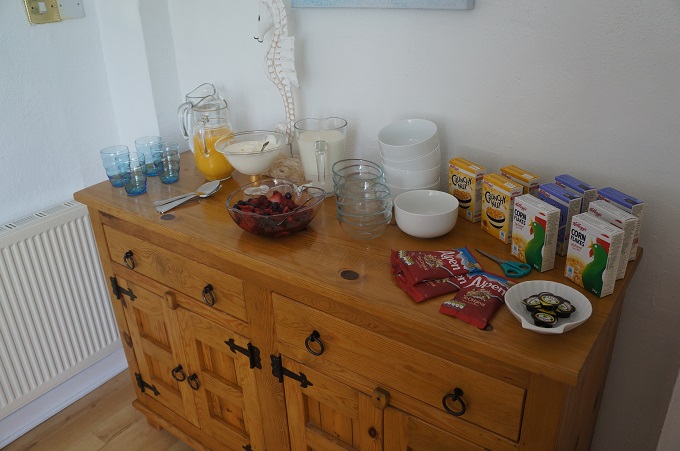
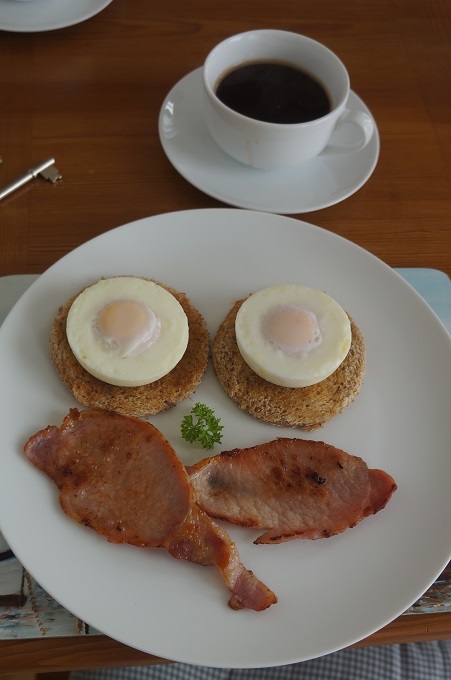
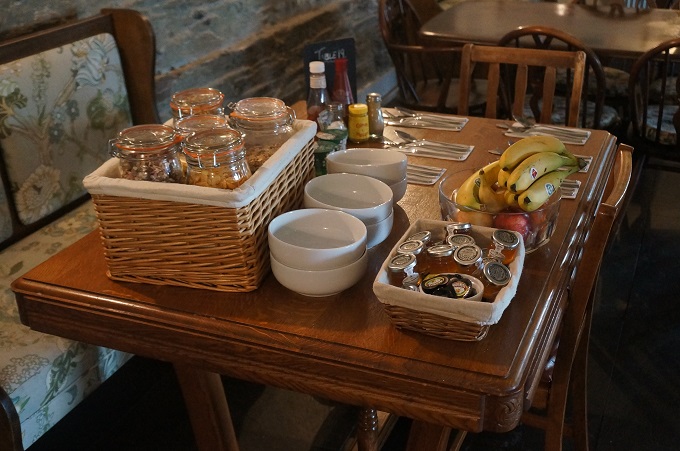
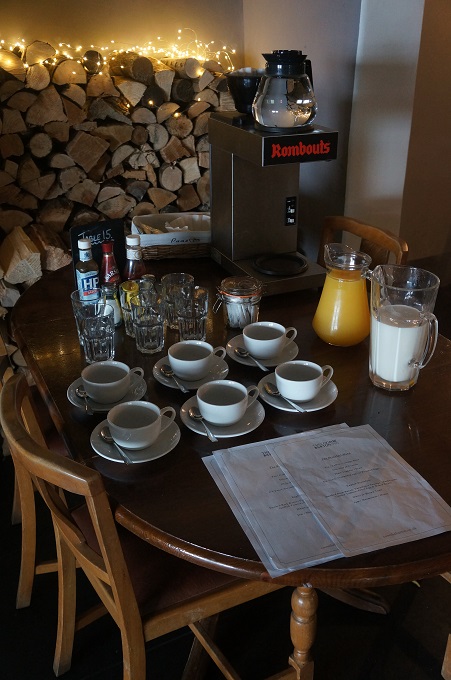
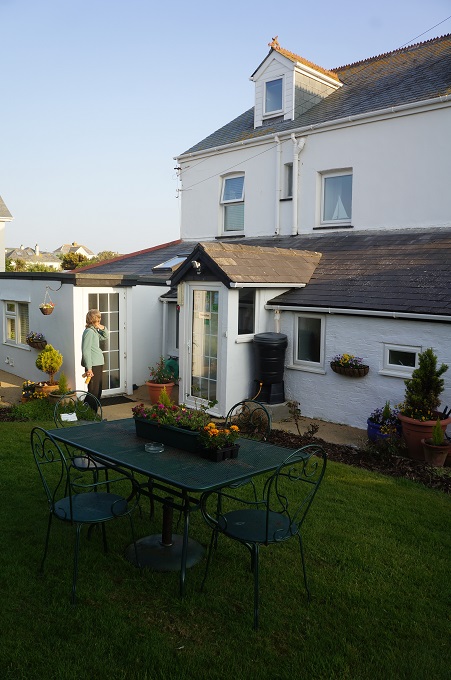
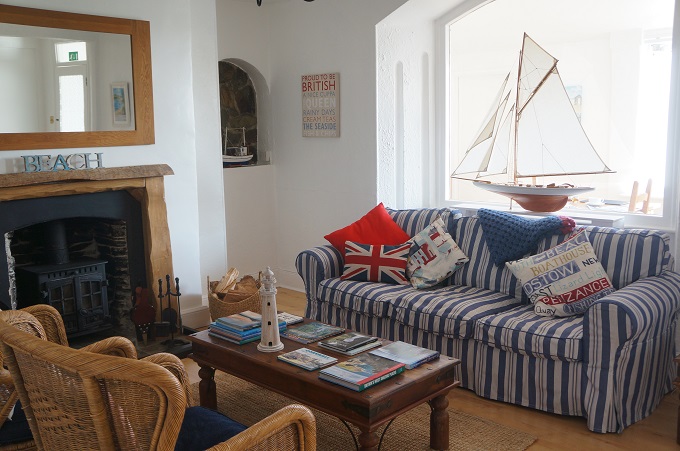
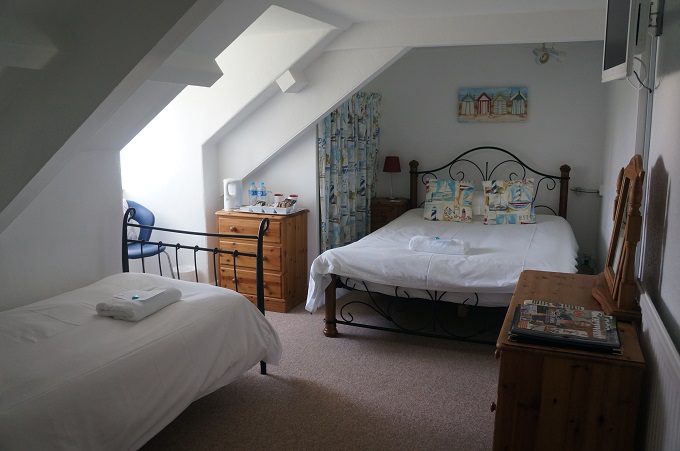
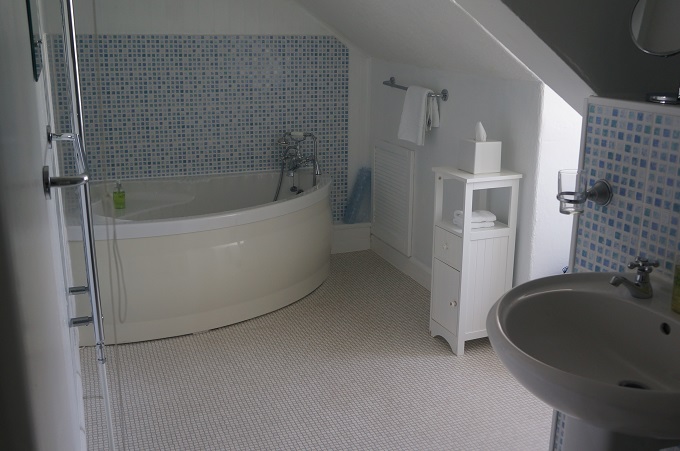
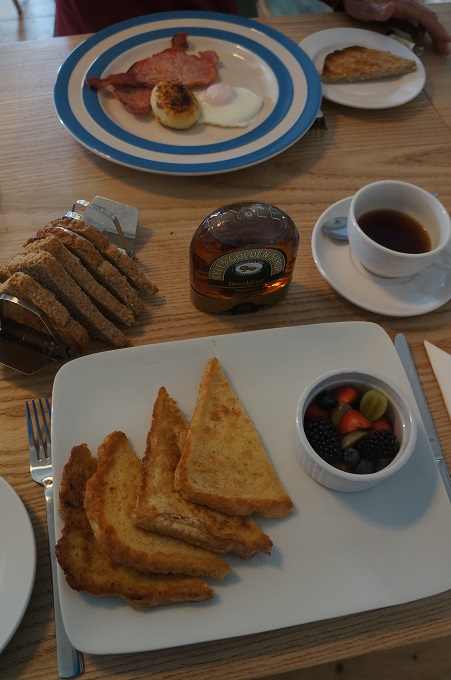
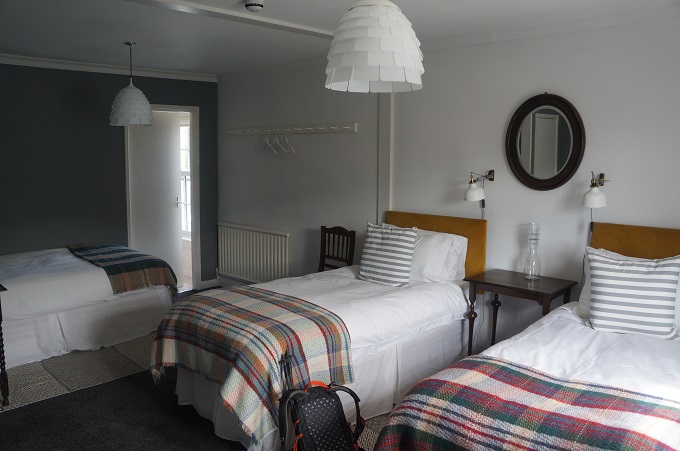
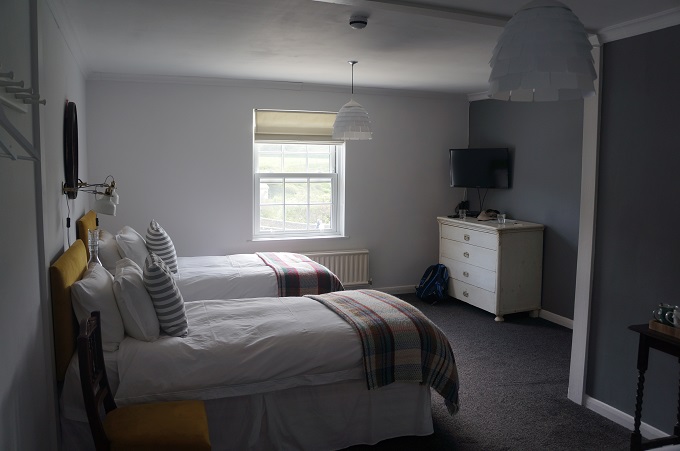
This morning was the next best thing to breakfast in bed. Red Fox Barn is quite luxurious and has just two hotel rooms and no dining room. Mike (from Seth Evrika) takes your breakfast order the night before and in the morning at your preferred time brings a trolley to your room, laden with tea, coffee, juice, yoghurt, cereals, fruit, milk, etc. Precisely 10 minutes later he arrives with your cooked breakfast, toast, more coffee etc. The only down side of this is you feel you should tidy up the room before he arrives. Our room usually becomes a tip about 10 minutes after we arrive and a Chinese laundry when we have showered and washed our clothes. Mike also gave us a ride in his car for the two miles back down to the path. Mike and his wife have a shop downtown and he was going down anyway to open up.
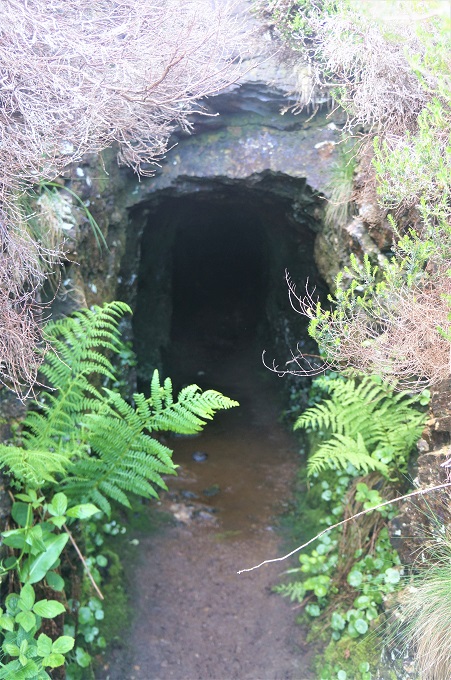
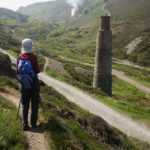
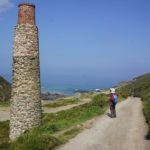
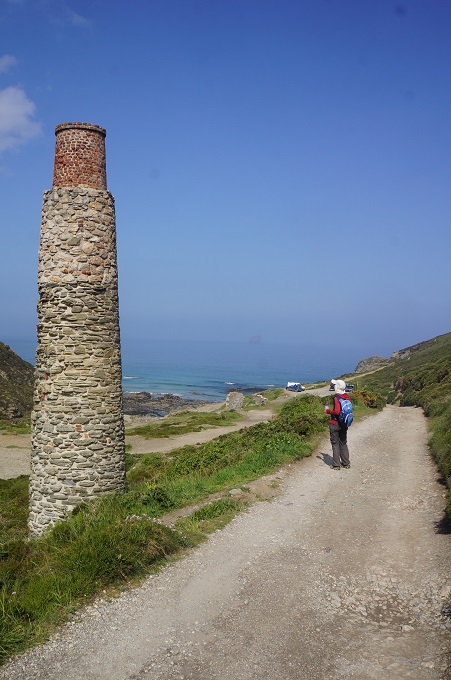
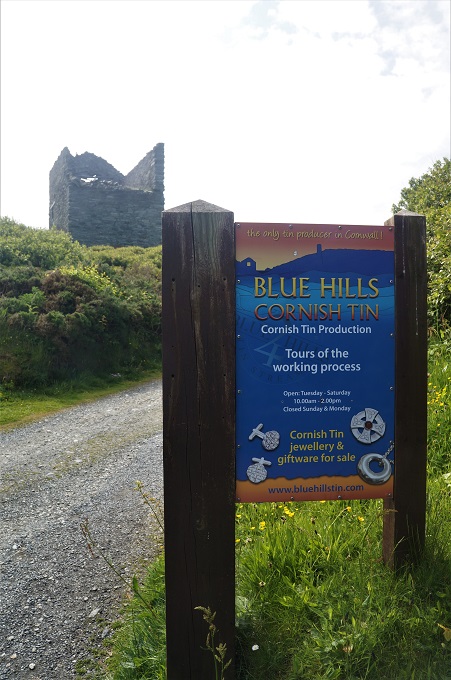
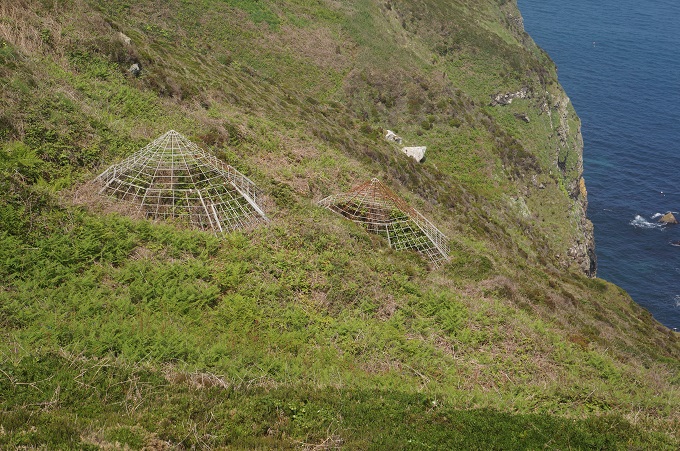
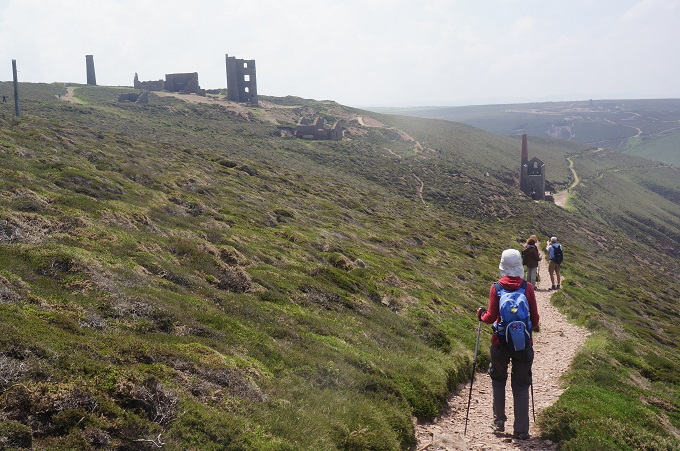
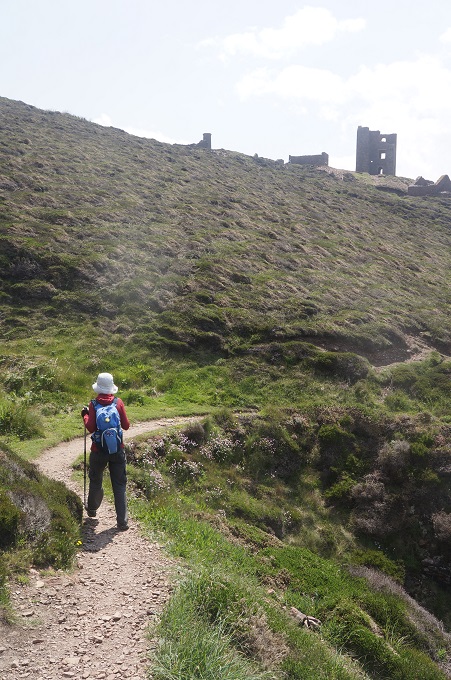
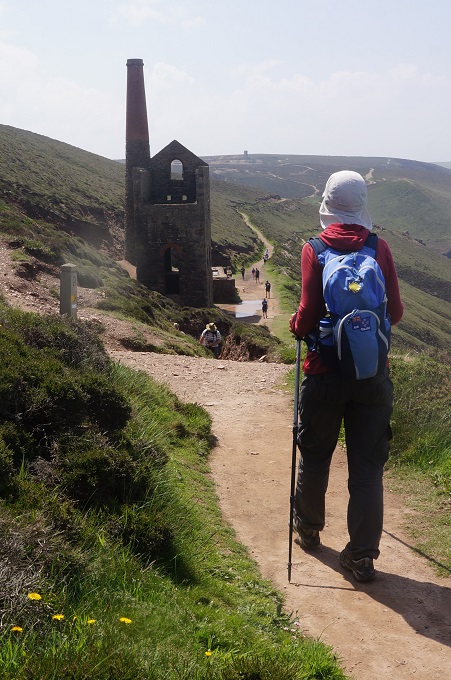
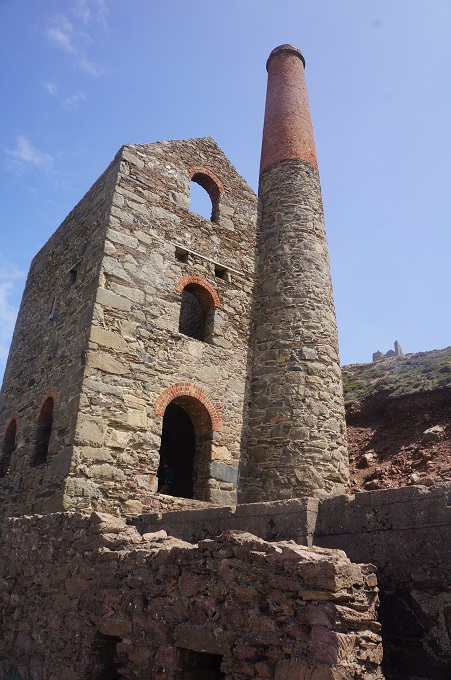
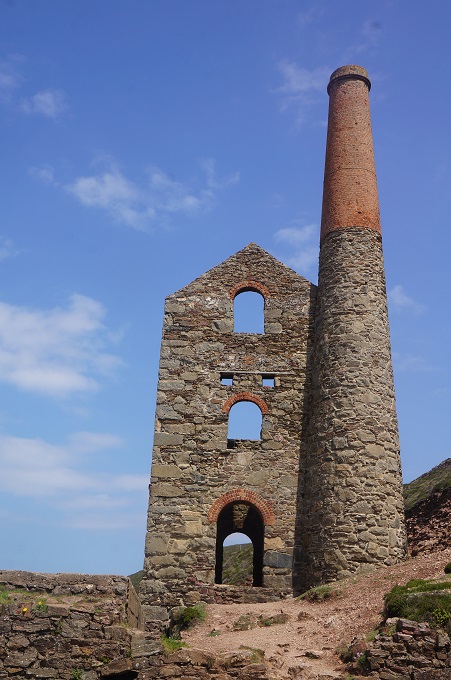
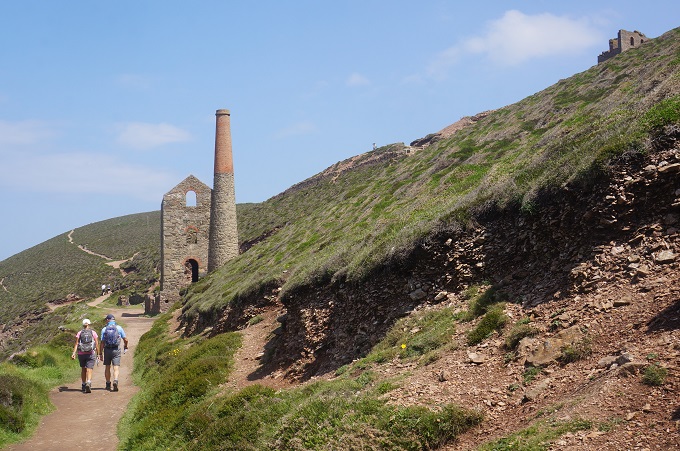
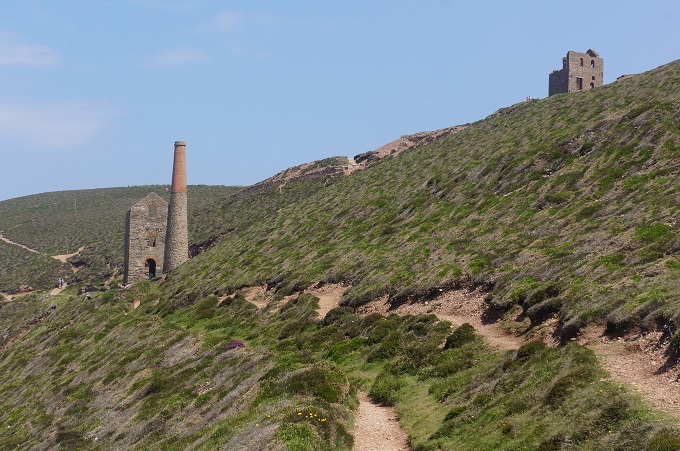
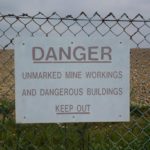
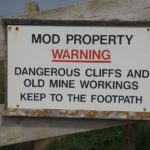
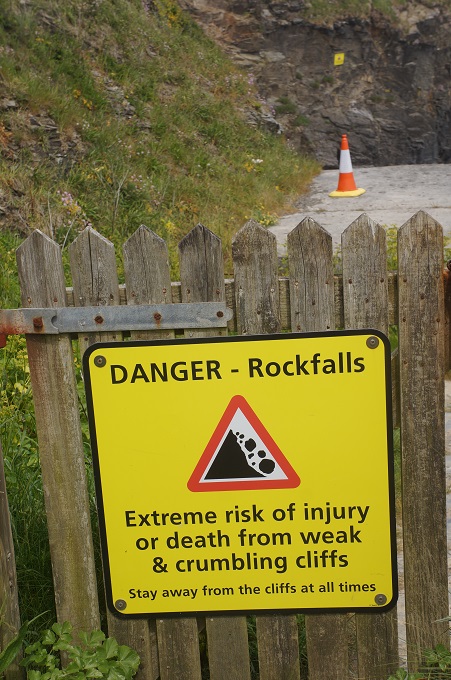
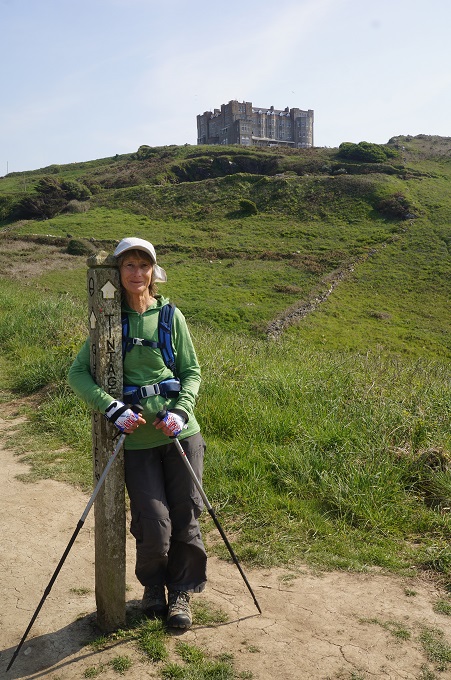
The walk today was all about Cornwall’s coastal mining heritage. There was a lot of evidence of former mining activity including stark moonscape areas of old quarries and spoil and slightly sad building relics. But there were also grand and imposing engine houses and large, lonely chimneys, sometimes almost perched on the edge of cliffs. Close to the path were the heads of many shafts, most of them fenced and in some cases topped with a steel wire cone shaped cage for safety. The shafts have become colonised by the endangered greater horseshoe bat but we didn’t wait for dusk to see these.

There has been mining in Cornwall since the bronze age (about 2150 BC) and the last mine closed in 1998. The most commonly extracted metals were tin and copper, but also a little silver, zinc and arsenic. The most obvious signs that we saw of the mining industry were at Wheel Coates on the cliff tops between Porthtowan and St Agnes. The buildings most visible are engine houses dating from the 1870s. This was when deep underground mining was carried out far under the sea and steam driven machinery was required to bring ore to the surface and to pump the shafts dry.

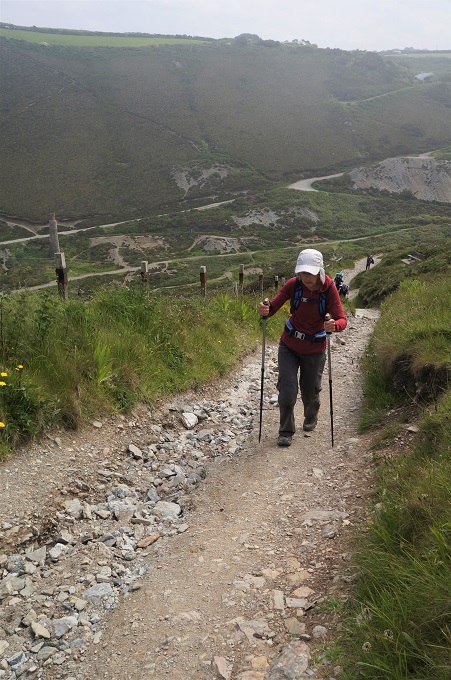
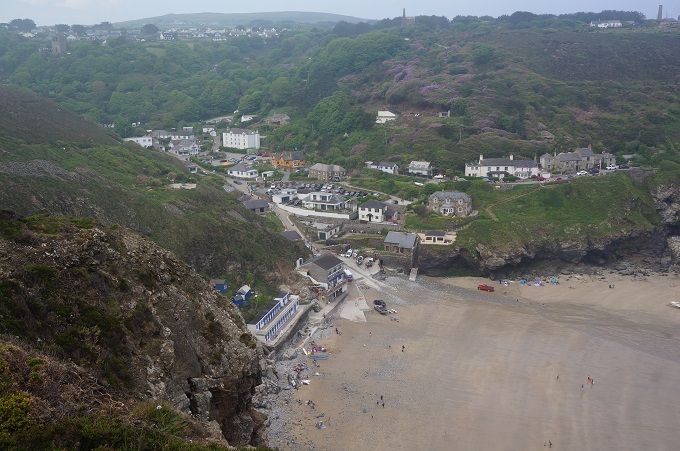
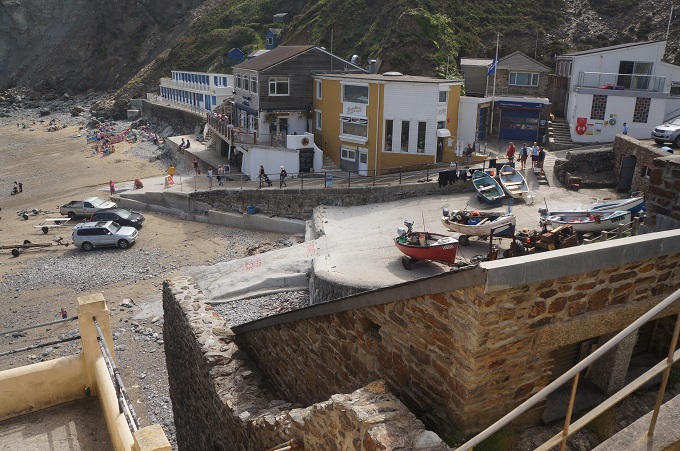
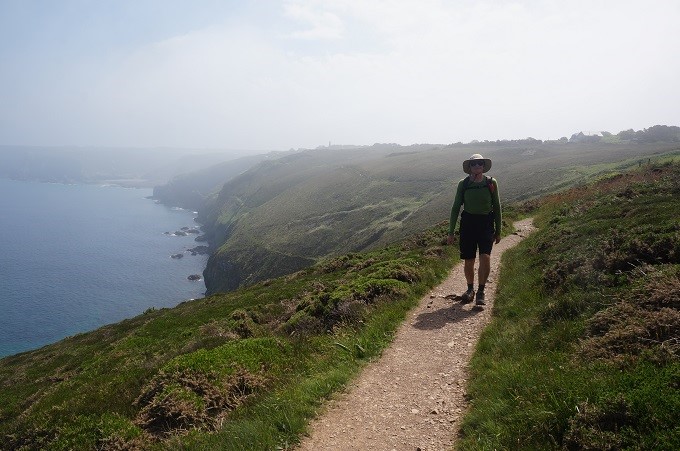
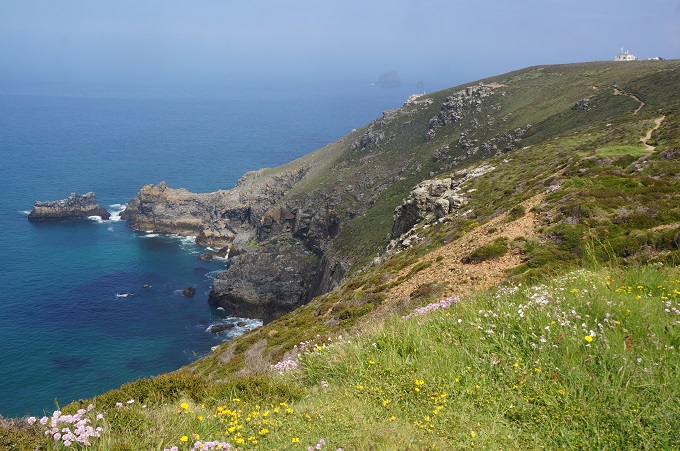
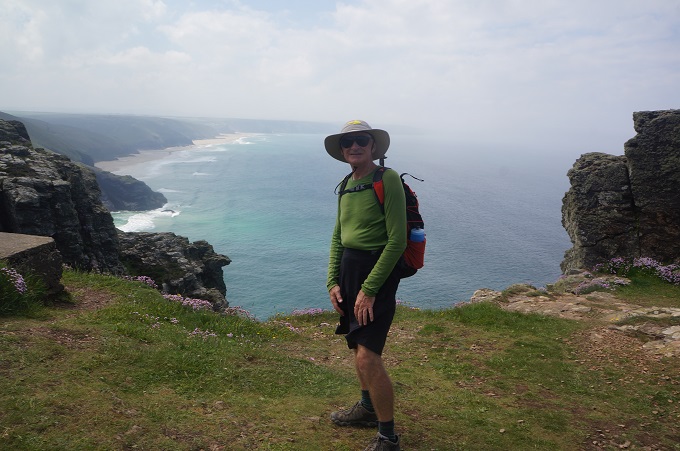
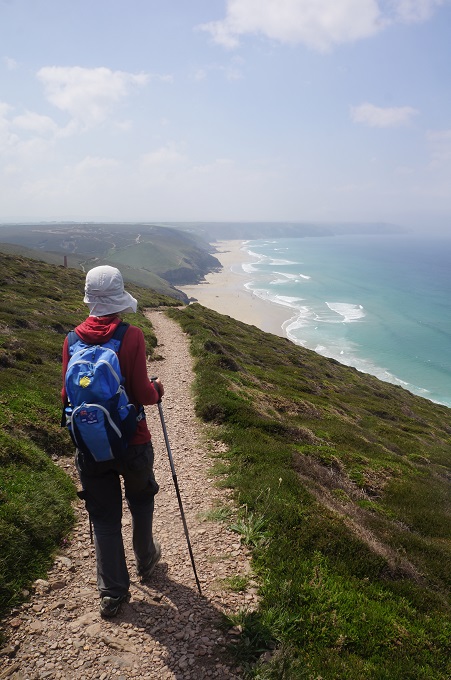
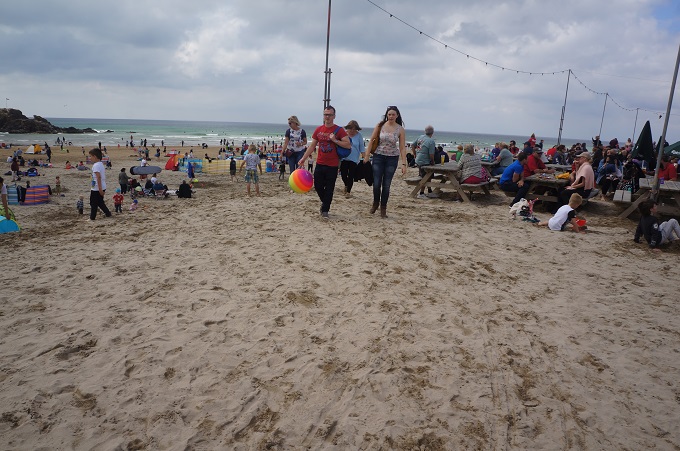
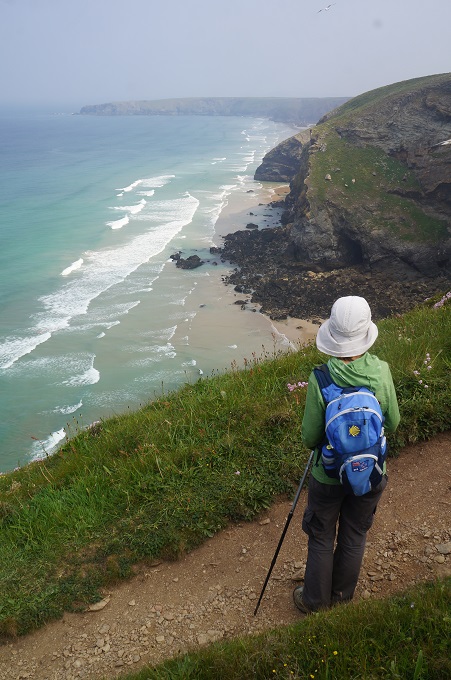
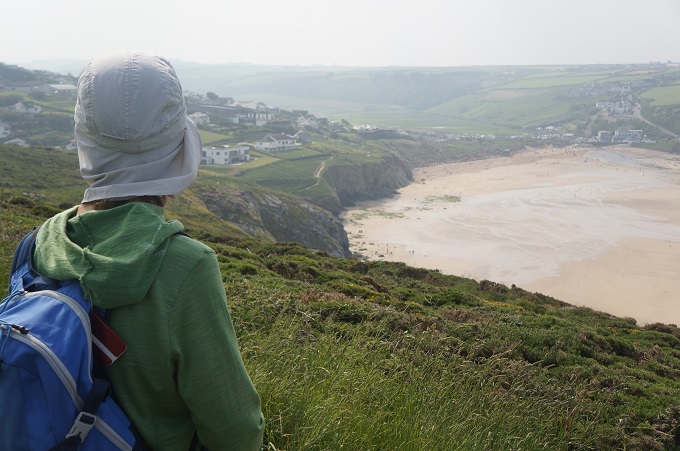
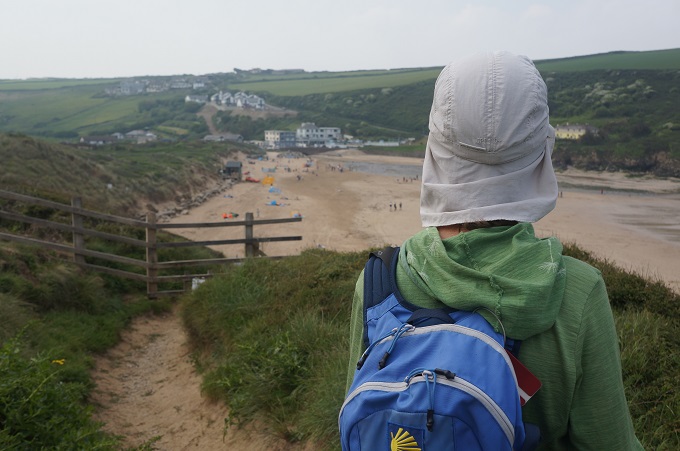
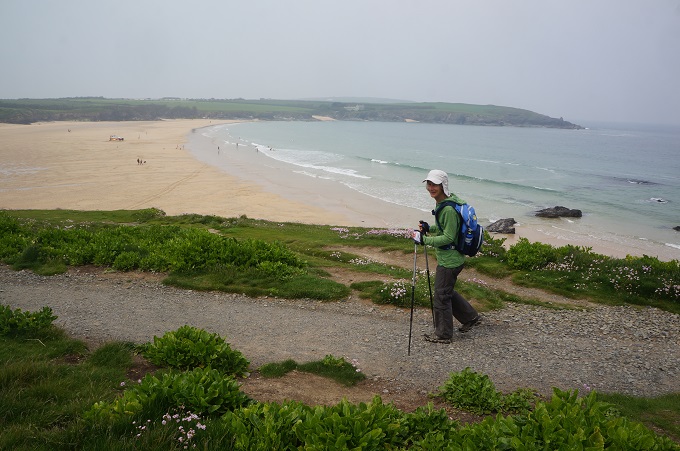
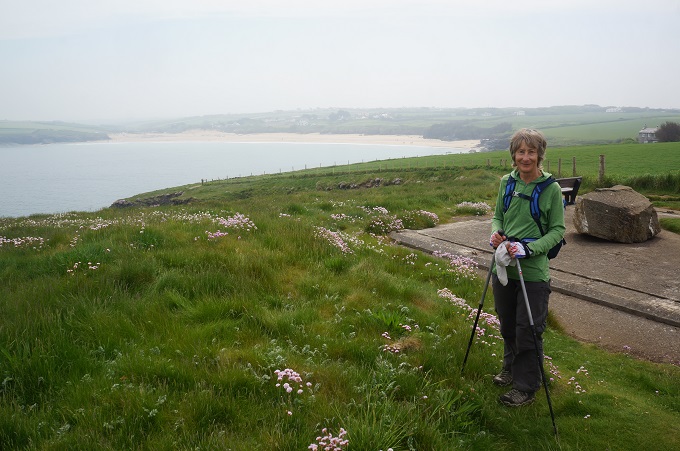
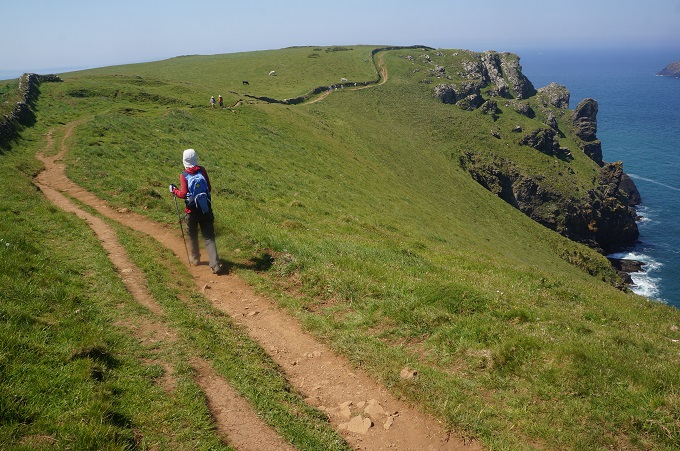
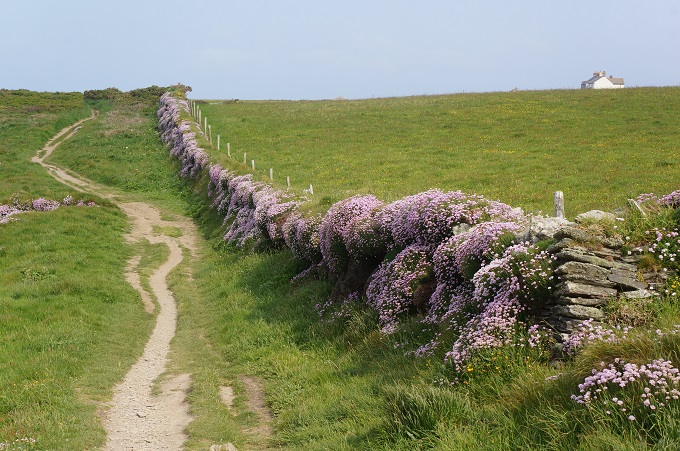
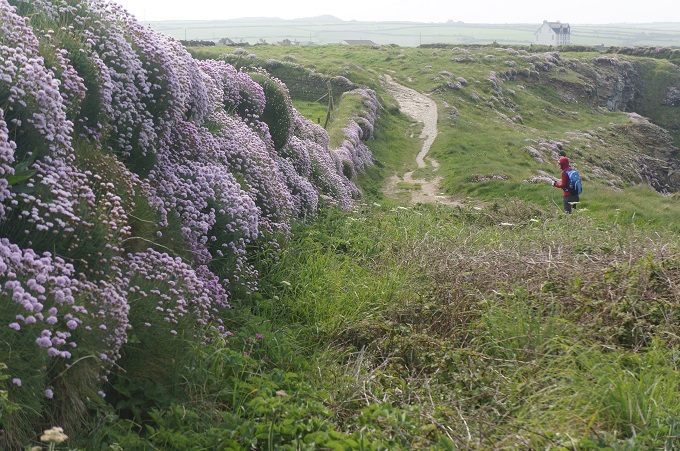
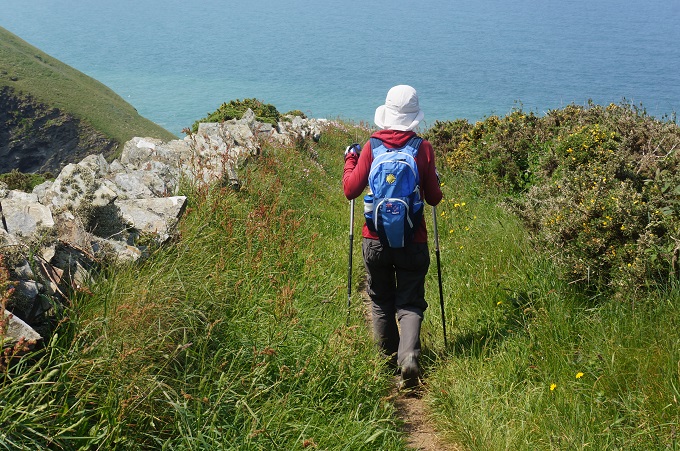
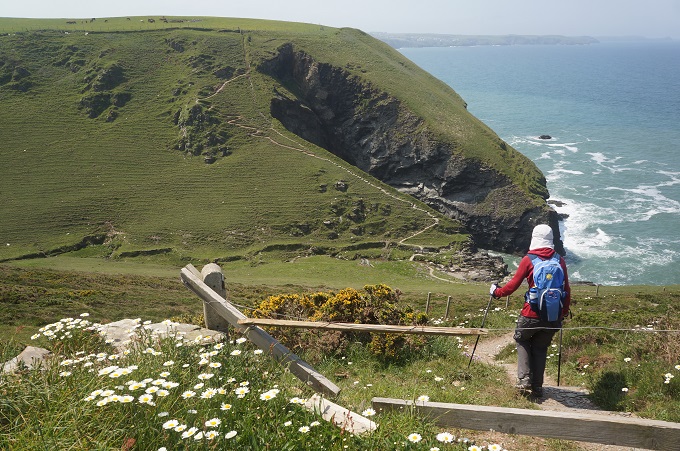
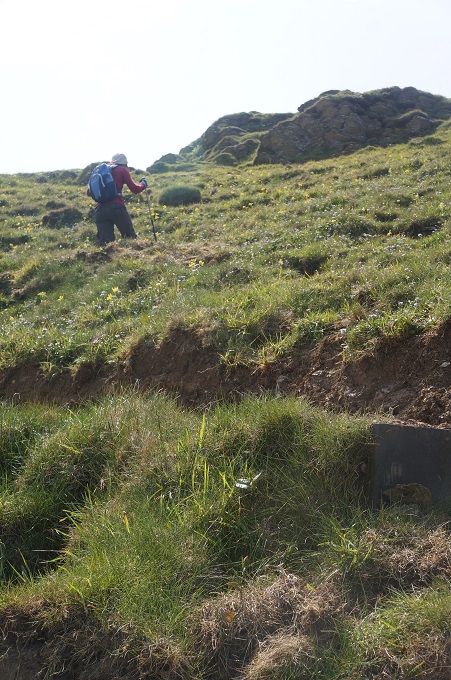
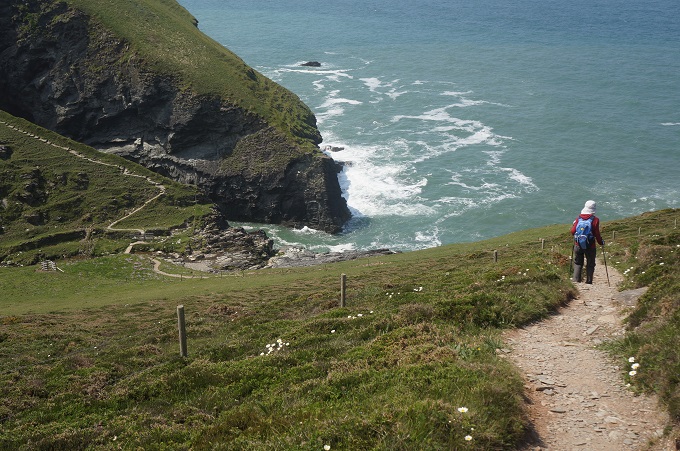
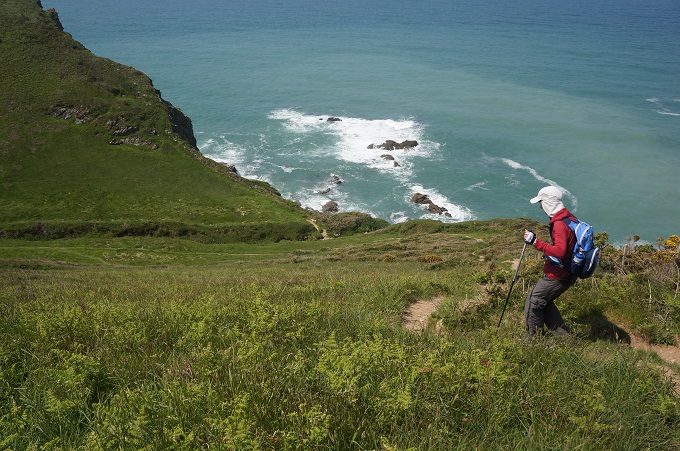
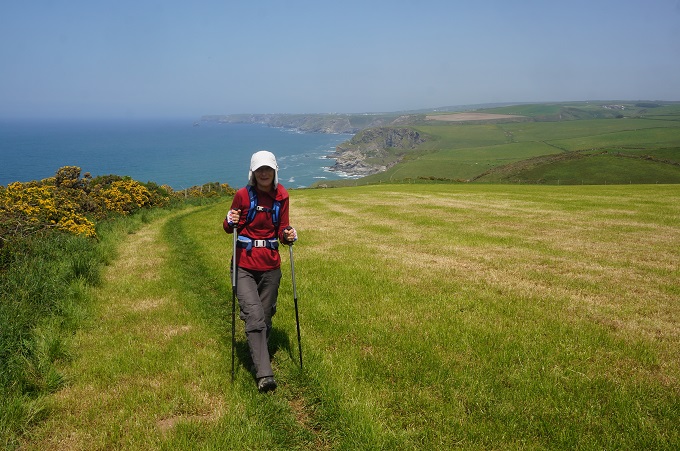
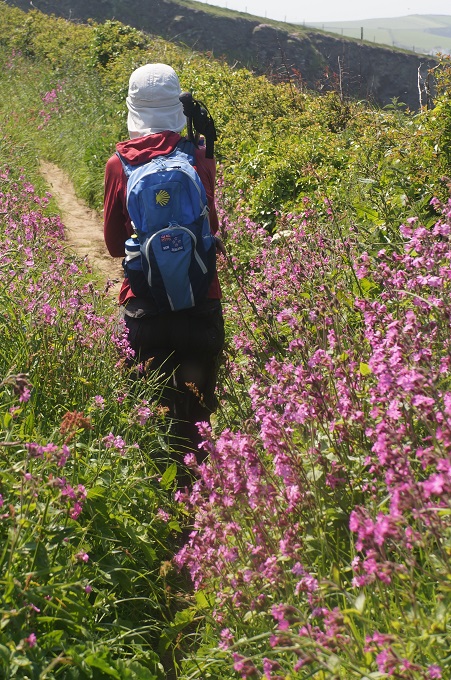
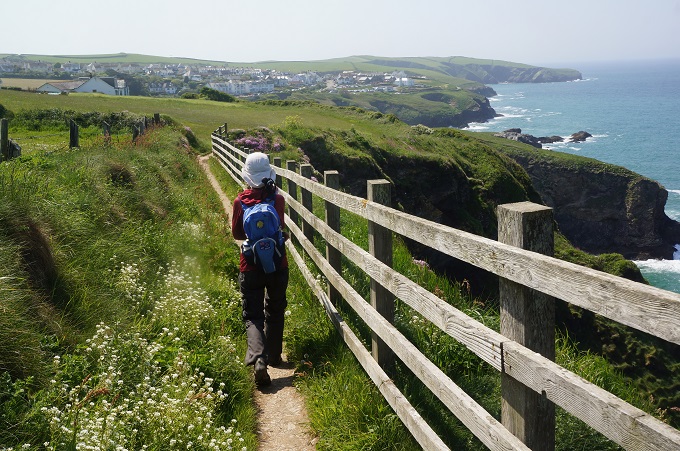
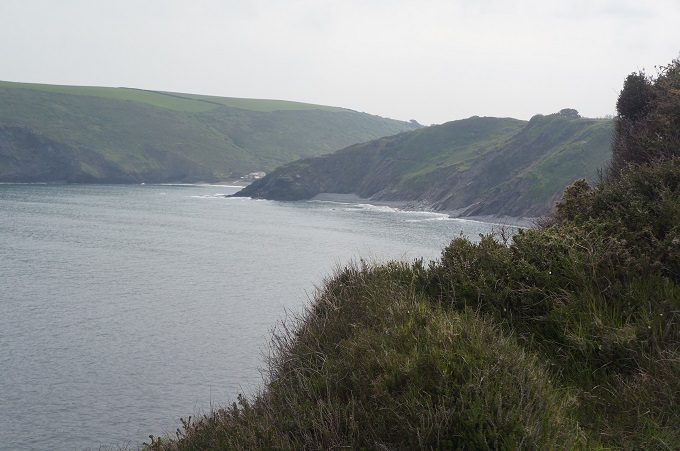
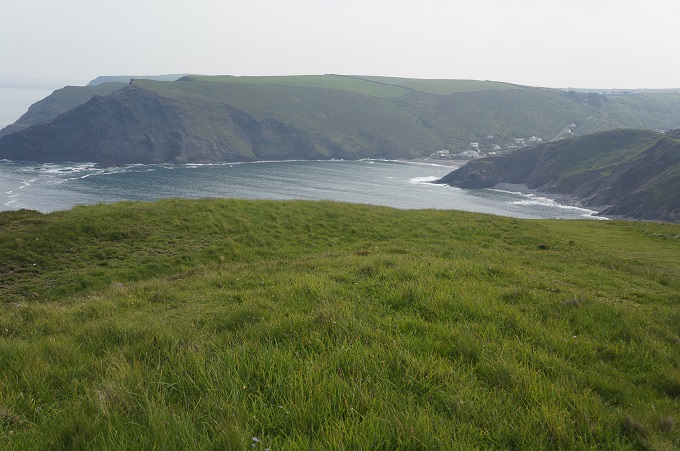
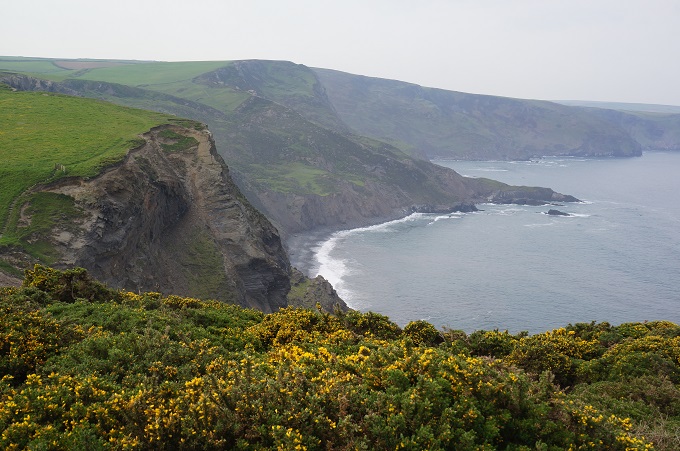
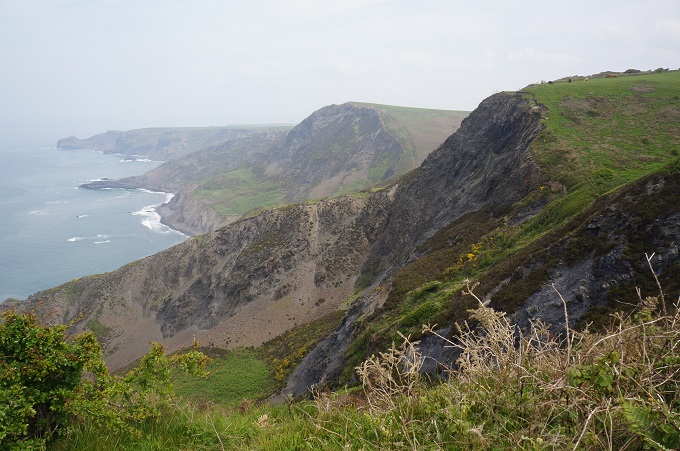
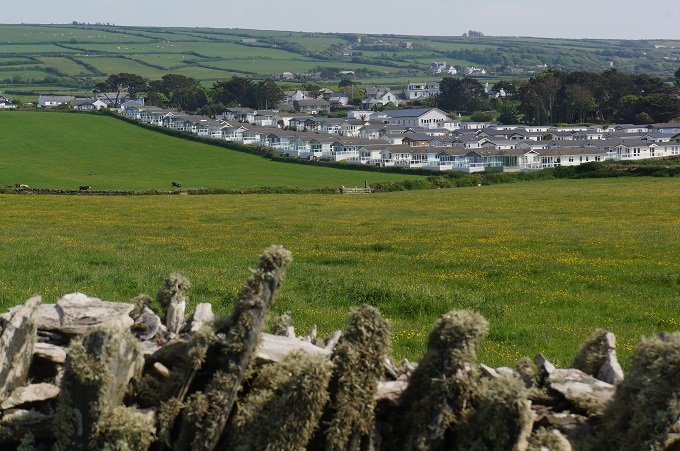
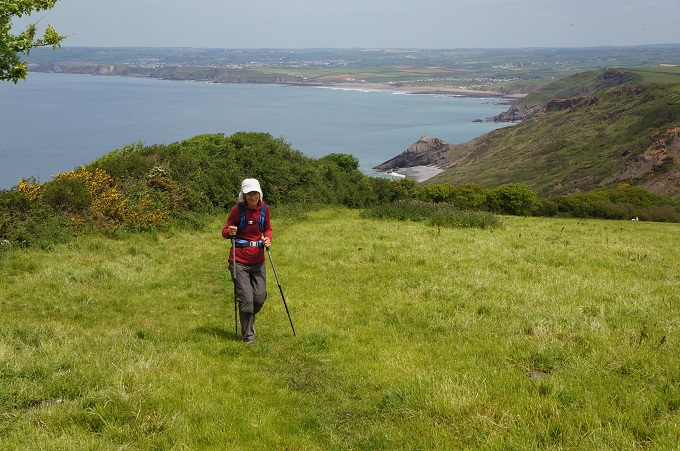
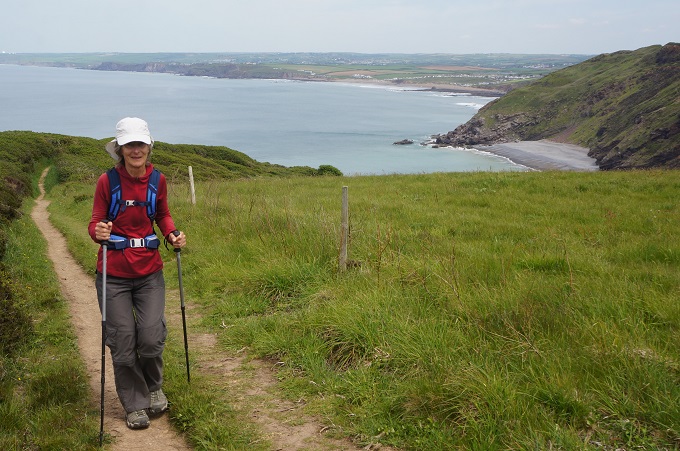
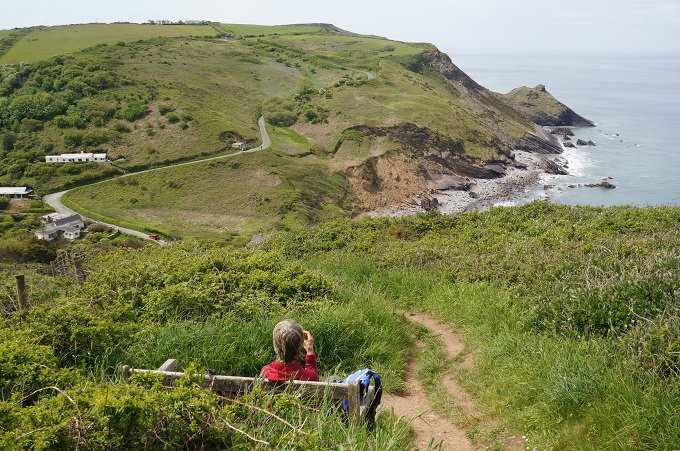
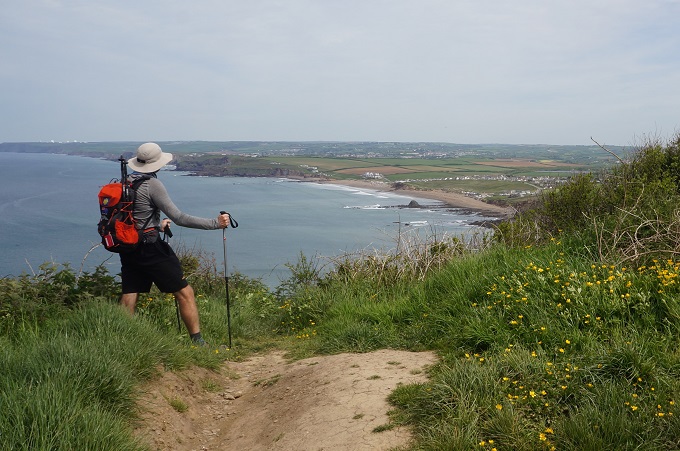
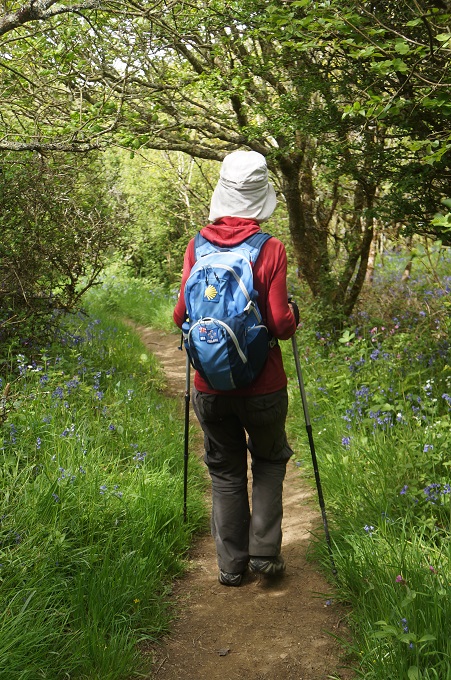
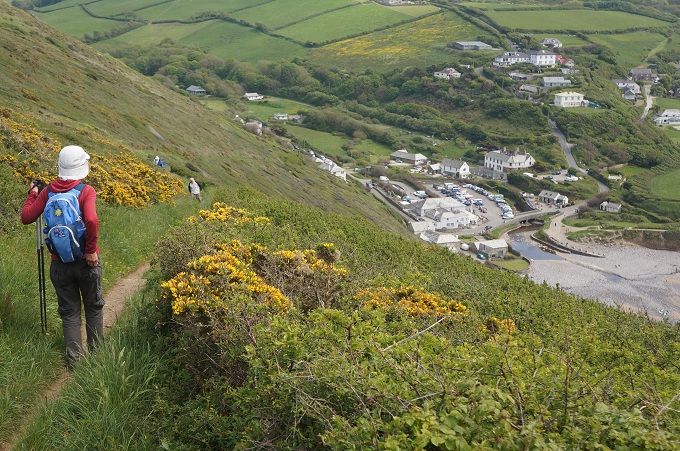
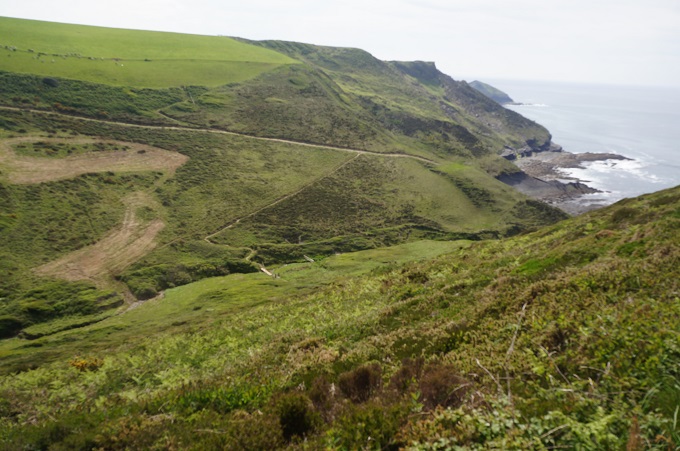
The walking today was fairly easy, mostly on heath covered cliff tops. There are now few of the wild flowers we used to see. There were descents to small settlements and beaches at St Agnes, Chapel Porth, Porthtowan and our destination today Portreath. All of them busy as today is a public holiday.

Early in the day we had a stretch of level walking past the Perranporth Aerodrome which seemed about the size of Paraparaumu Aerodrome and was having a busy day with microlights taking off and landing. These things never go very high and make an awful lot of noise for something that seems to fly so slowly. Late in the day we passed the Nancekuke Military area which is an RAF air defence radar station. All was quiet here but for about 5 km we walked beside a high fence. Luckily it was a nice stretch of coastline looking out the other side.

There are lots of walkers about, all of them day walkers or less. We haven’t met up with any new friends. It would be nice to see a few regular faces day after day.

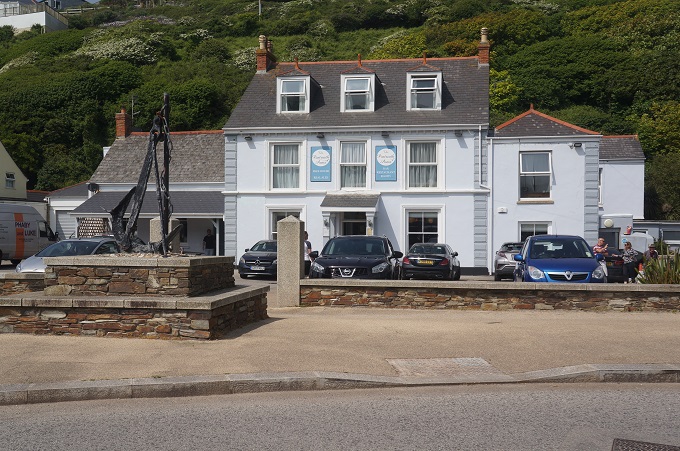
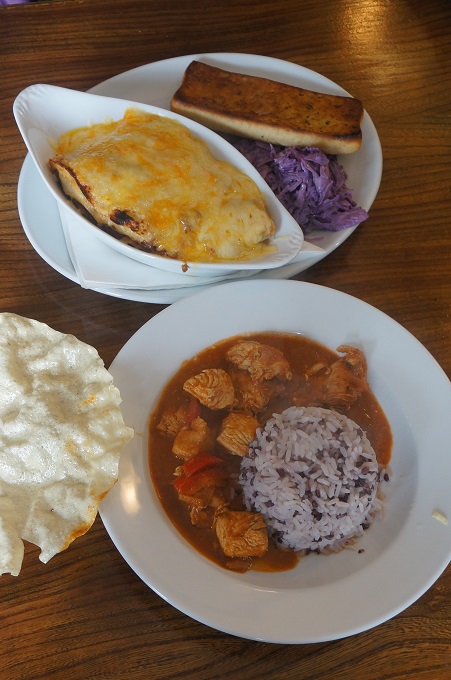
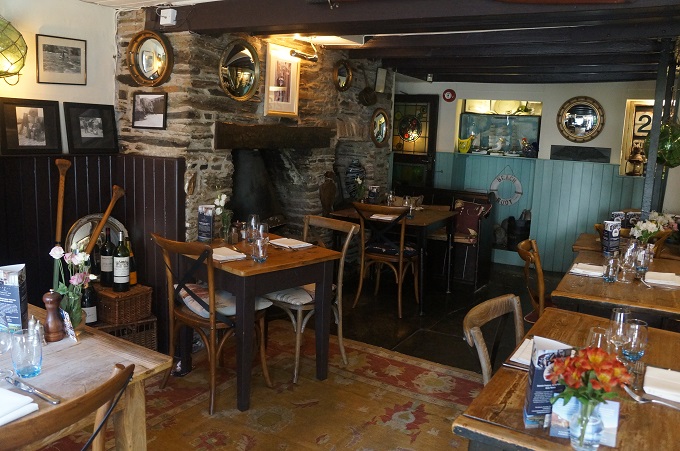
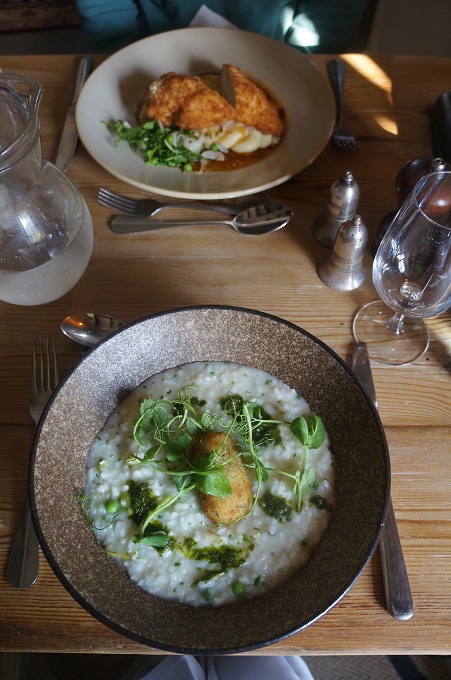
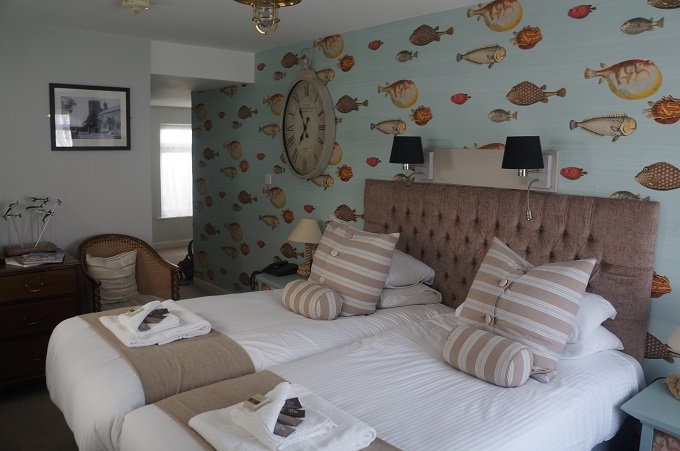
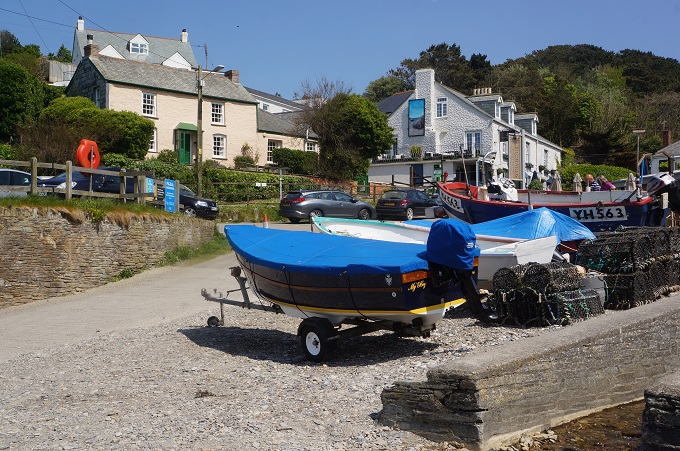
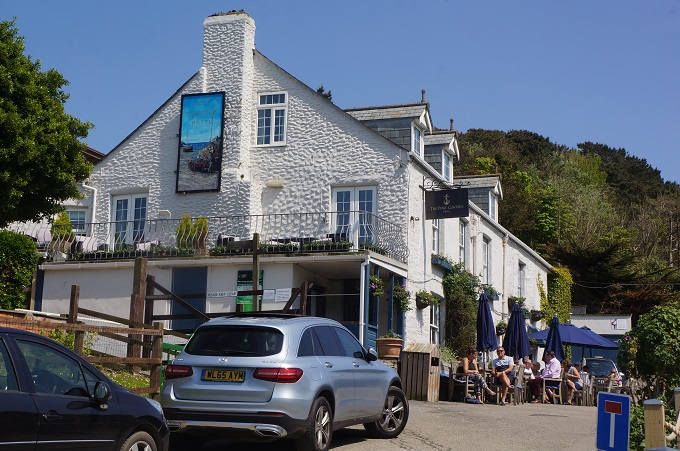
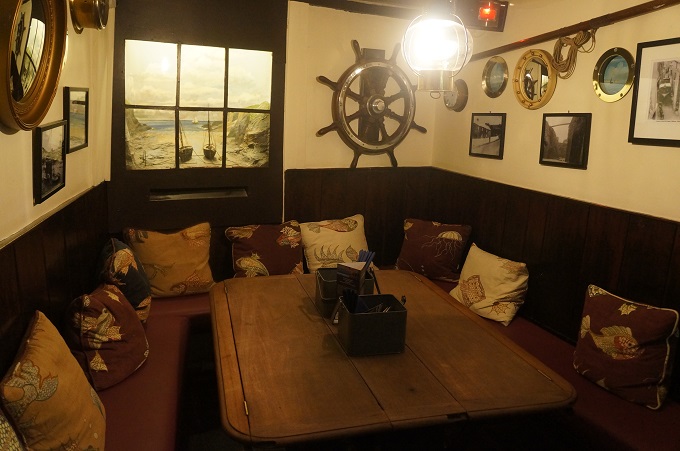
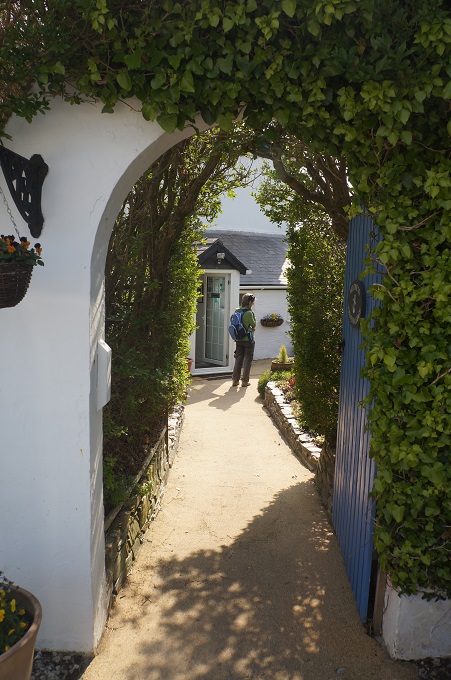
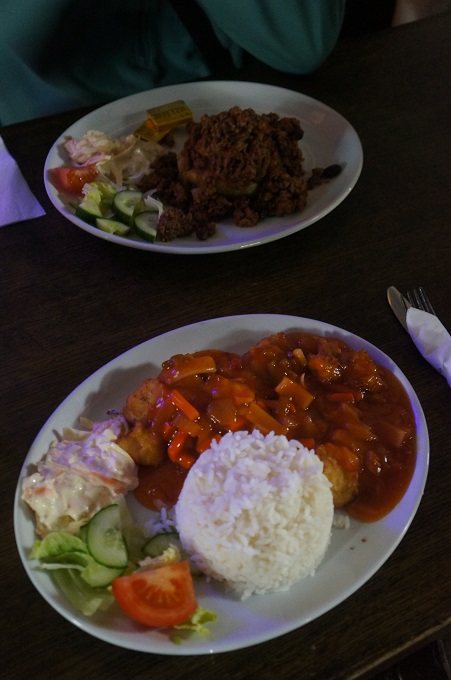
We are staying in a small family run hotel, five rooms above a bar and restaurant. It is right on the coast path and the food is excellent.


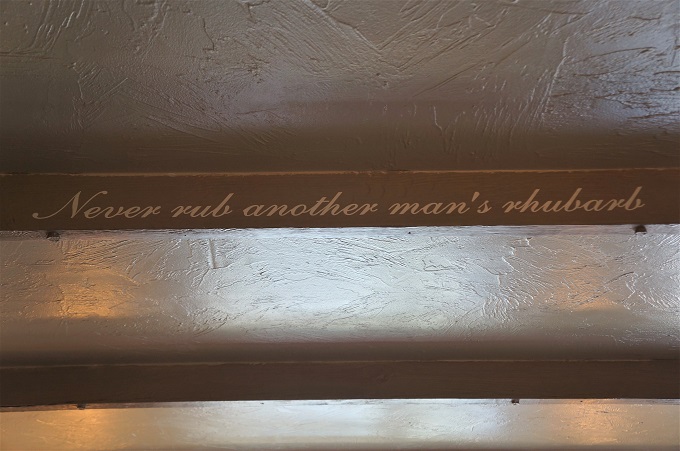
Never rub another man’s rhubarb

Newquay to Perranporth, 17.5 km, 579 metres of climbing

‘If we are facing in the right direction all we have to do is keep walking’. Buddhist proverb

The thunder and lightning and rain continued last night but by this morning it was long gone.

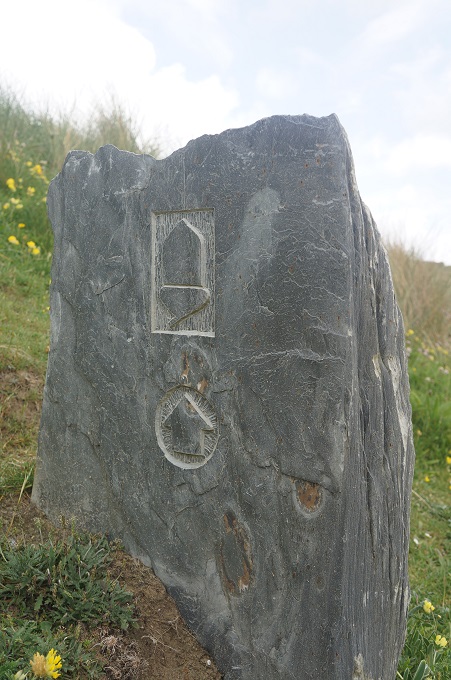
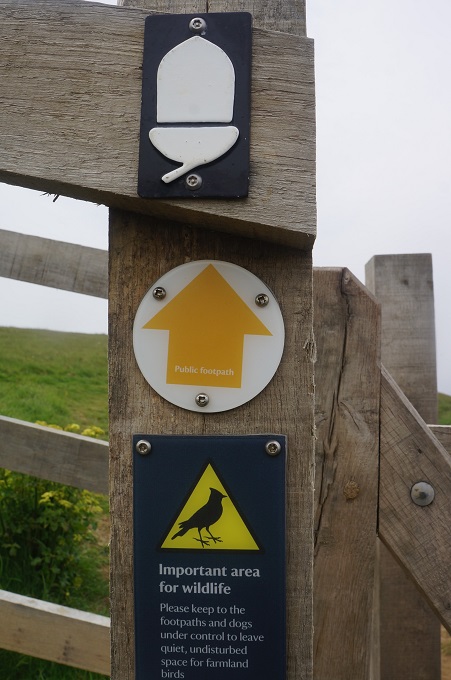
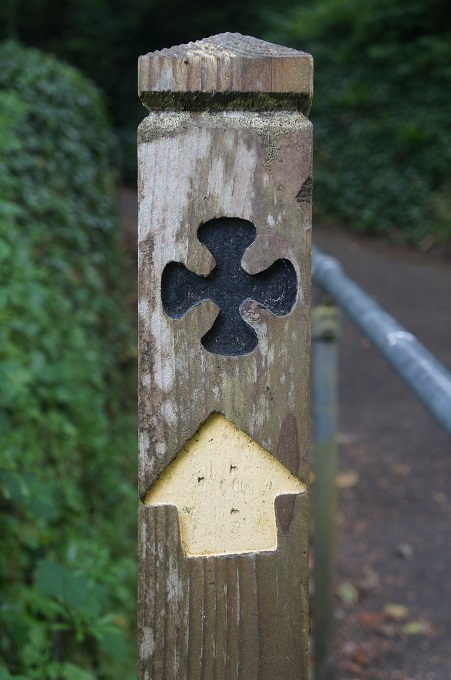
We often find it hard to find our way out of towns and back onto the Coast Path. Newquay was no exception and we wasted a bit of time and did some extra distance getting through the centre of town. The small subtle acorn signs of the Coast Path either just disappear or are overwhelmed by the proliferation of advertising, bill boards, road signs, traffic lights etc. And we are distracted by traffic, crossing roads etc. In Spain they did it much better with scallop camino signs set into the pavement.

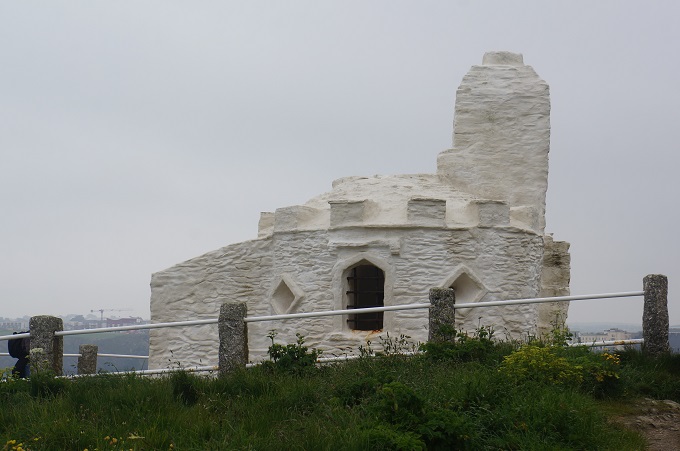
On the way out of town we came to the Huer’s Hut on Towan Head. This is a small white painted stone building with a disproportionately large chimney. Named after the Huer, an important figure in the pilchard fishing industry that once thrived in Newquay. The Huer would watch out from his high vantage point for the shoals of fish to arrive and then call out to the town ‘Heva, Heva’. Immediately the seine boats with their long nets would be launched but they had to rely on the Huer for directions. Holding ‘Furze Bushes’ in his hands the Huer would direct the boats first to locate and then surround the fish. Some sources put the origin of the hut as early as the 14th century but most of the hut today is 19th century.

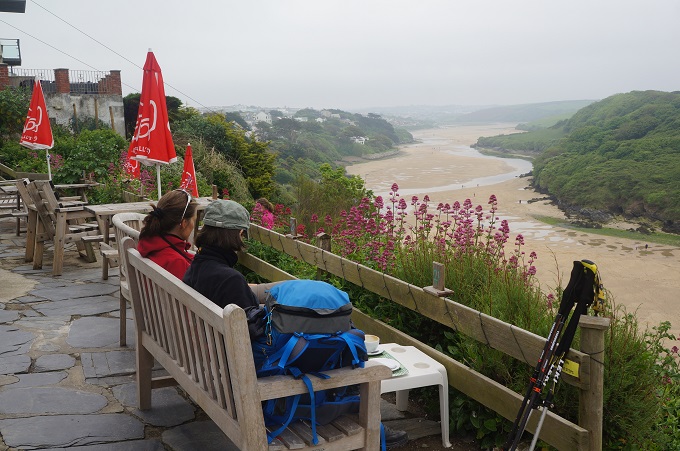
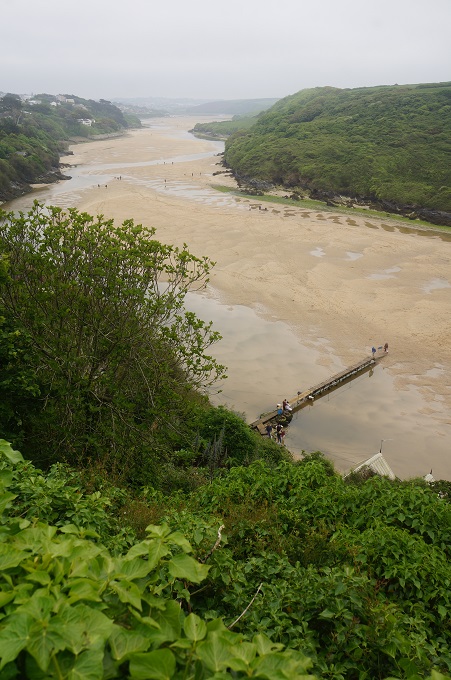
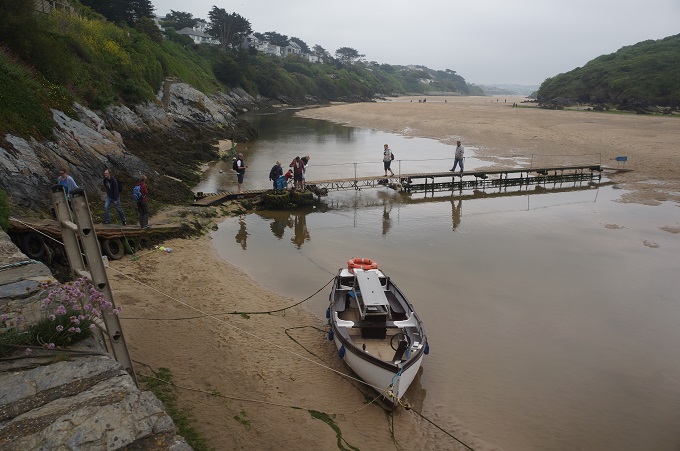
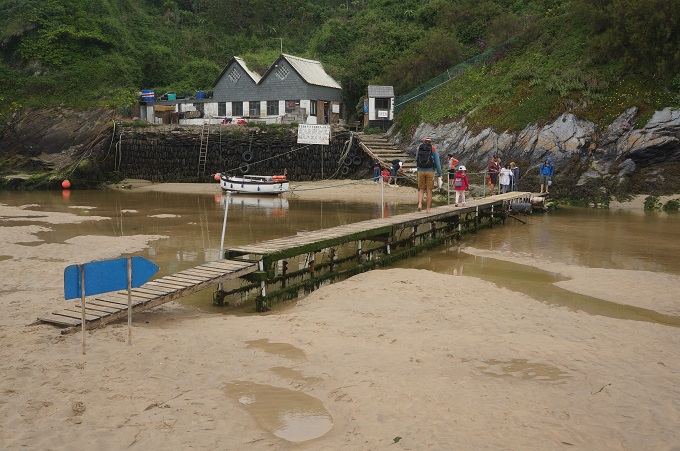
Leaving Newquay we had to cross the Gannel River and wanted to take the shortest route. We knew it would be low tide and the Fern Pit ferry would not be running but at the ferry jetty there was a footbridge just long enough to get you across at low water. From there it was an easy walk across the exposed sand.

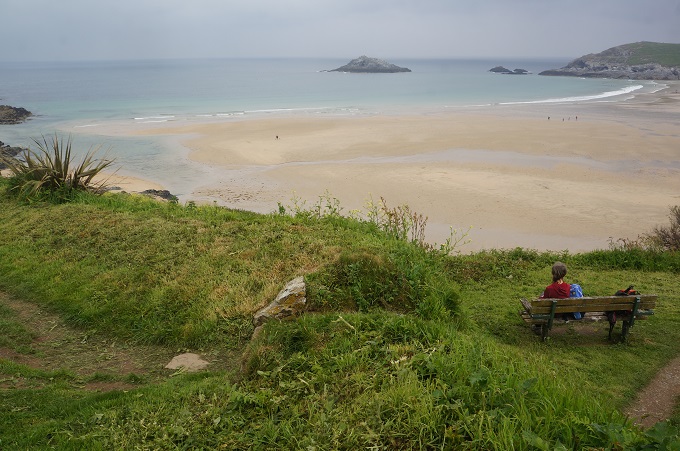
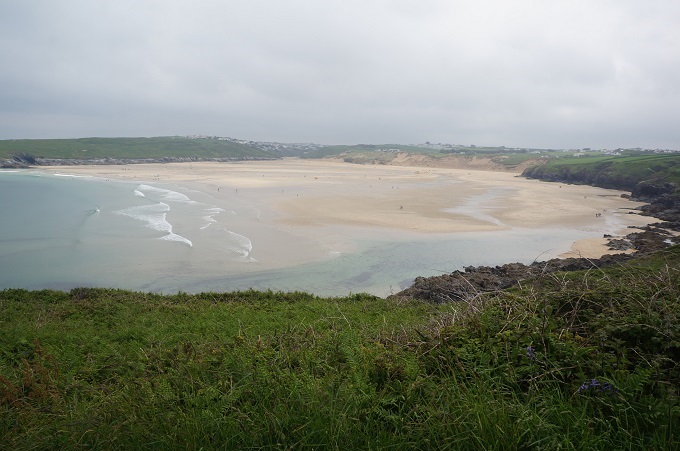
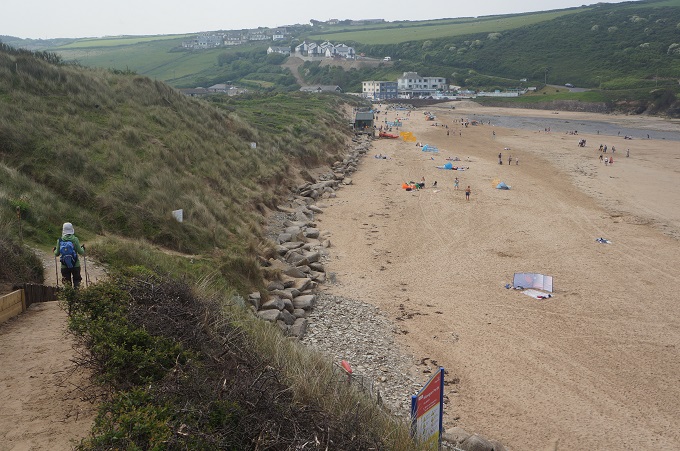
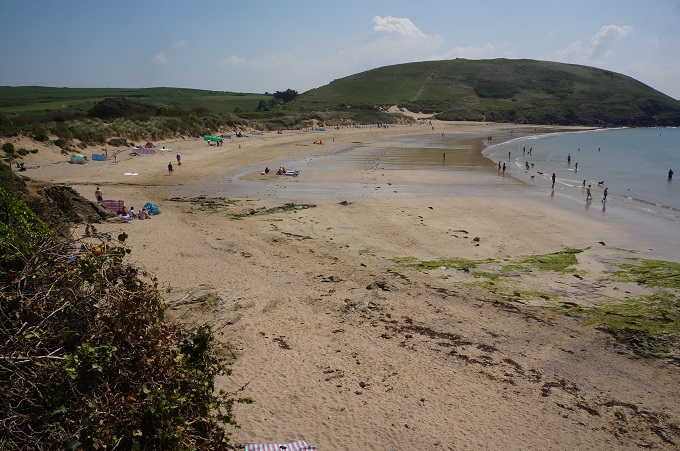
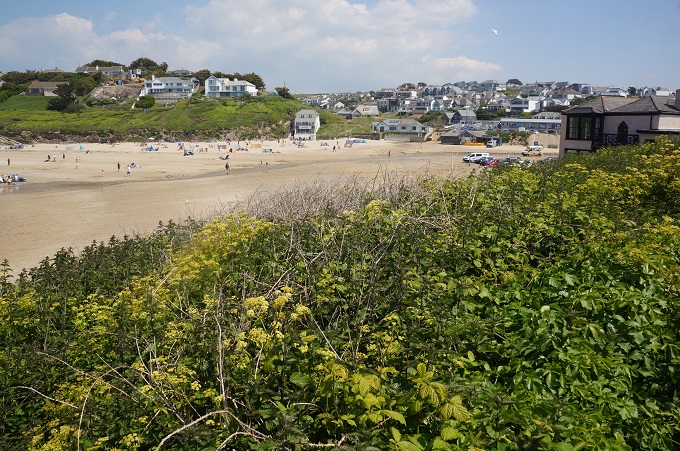
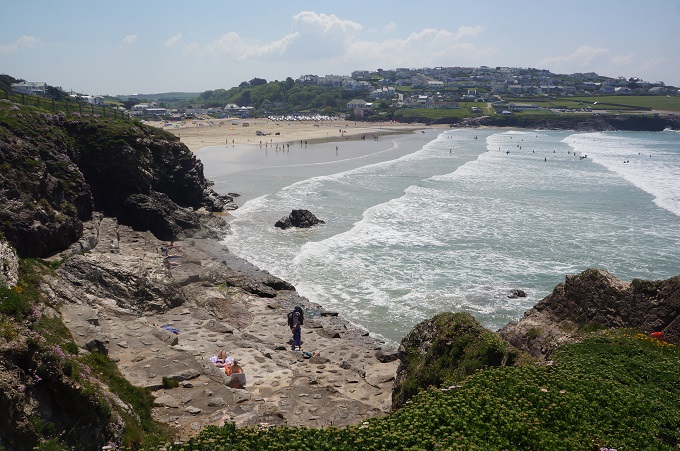
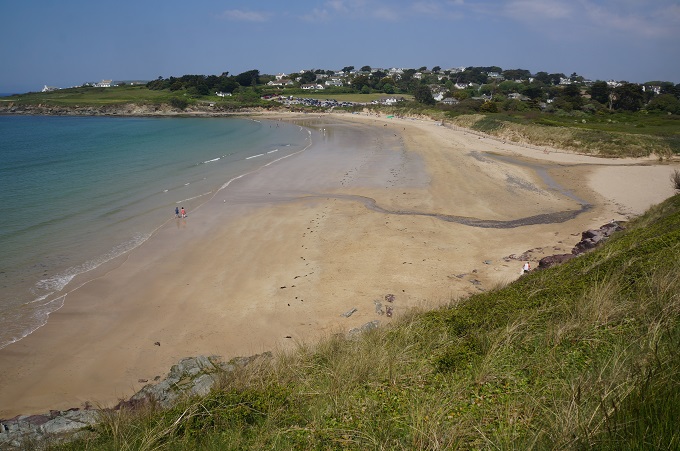
The theme for today’s walk was sand – both in the form of dunes and beaches. There were also headlands with superb views but at the end of the day we were emptying sand from our shoes. There was a succession of beautiful beaches: Fistral Beach, Crantock Beach, Holywell Beach, and the longest of them all Perran Beach. For the first three the path went behind the beaches in sand dunes and as anyone who has walked up and down sand dunes knows, this is hard going as there is nothing solid to put your foot on, just deep, soft sand sliding either forwards or backwards.

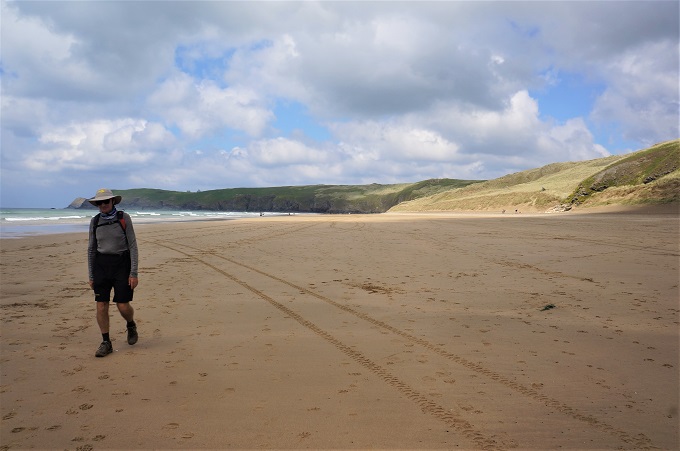
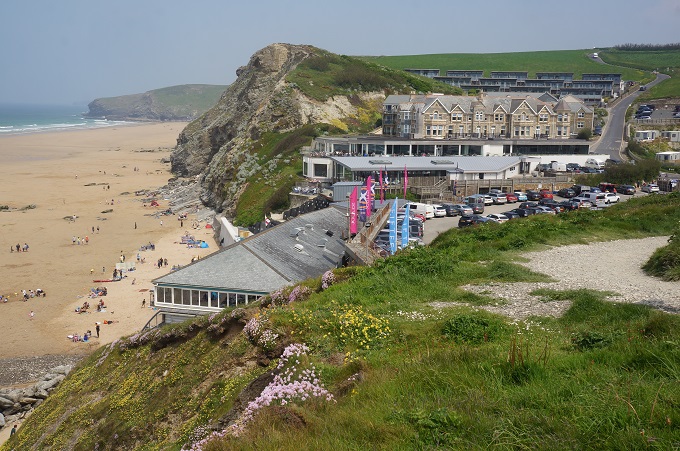
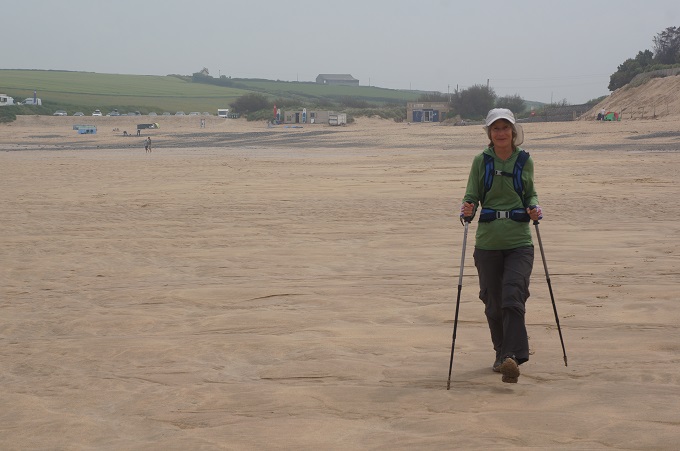
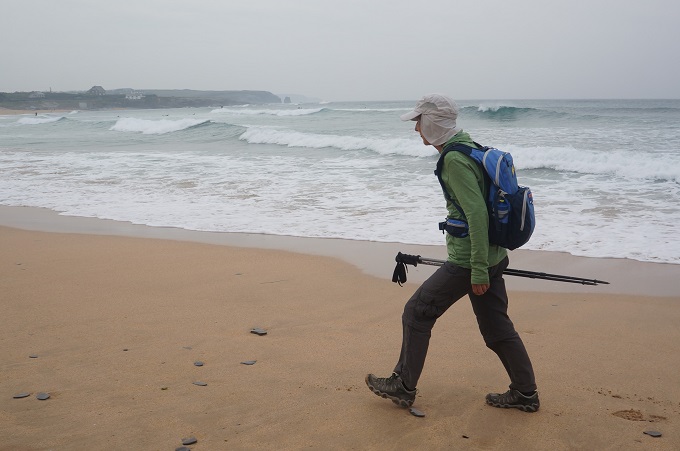
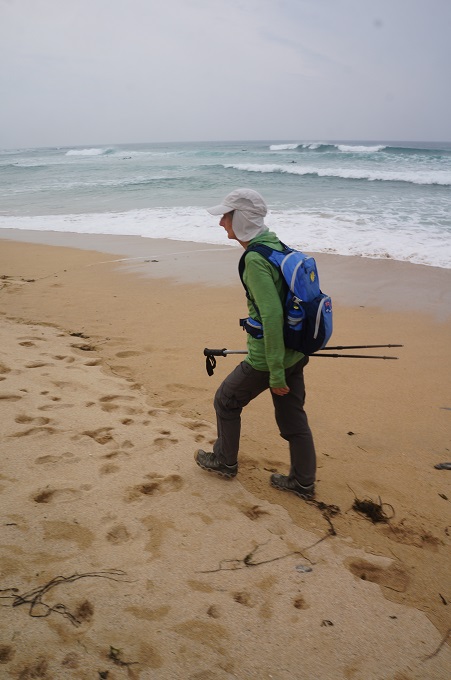
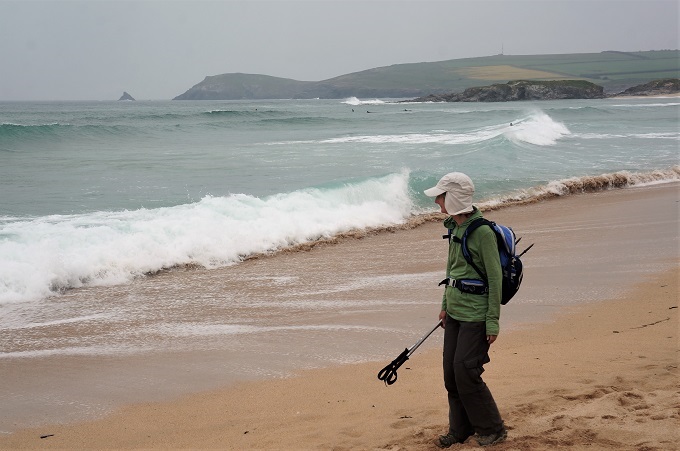
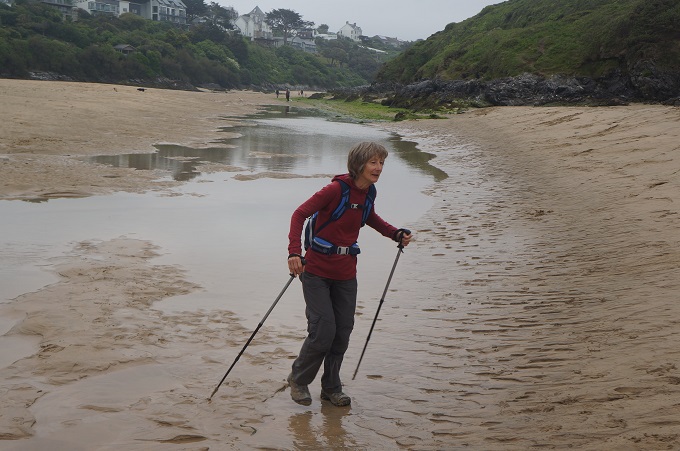
At Perran Beach we could get down on the firm sand and it was very easy going for a couple of miles into Perranporth. Our wonderful accommodation at The Red Fox Inn is about 2 miles inland from the coast and we were a bit confused getting out of a packed Perranporth absolutely teeming with thousands of holiday makers. Once we sorted ourselves out it was a very nice walk along quiet farm lanes among farm houses and meadows, away from the coast.

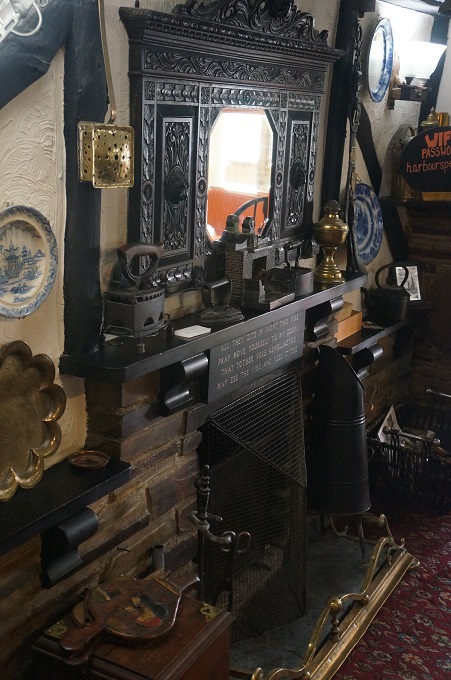
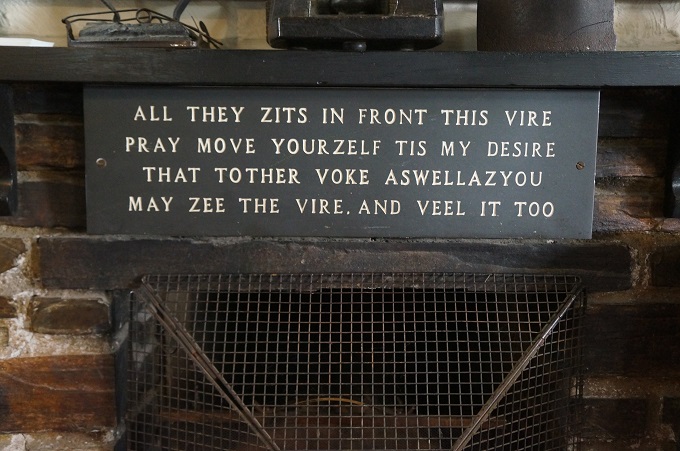
For lunch we stopped at the St Piran’s Inn at Holywell Bay. They had lots of sayings printed on the roof beams. One that caught my eye was ‘Never rub another man’s rhubarb’. I hadn’t heard this before but it comes from the first Batman movie in 1989. The Joker (Jack Nicholson) says to Batman ‘What you took her out last night? Never rub another man’s rhubarb’, I.e. don’t mess with another man’s girl.

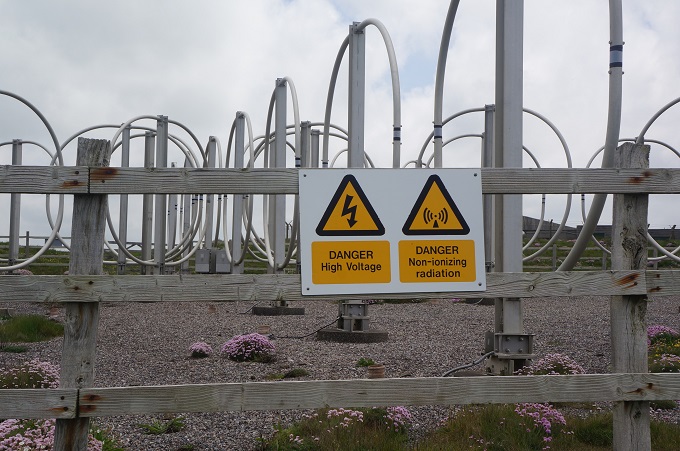
Part of the walk today was past the heavily fenced scattered installations of Penhale Camp, a Ministry of Defence property. You imagine you are being watched as you pass concrete barracks, communication masts and signs saying ‘Do not touch any military debris. It may explode and kill you’. Our trip notes also said don’t go past red flags, they indicate firing practice.


Happiness is watching the rain from inside your warm hotel

Porthcothan to Newquay, 16 km, 441 metres of climbing

‘I am learning to love the sound of my feet walking away from things not meant for me’

Today on reaching Newquay we have completed ⅓ of our walking days and a fraction under ⅓ of our theoretical total walking distance.

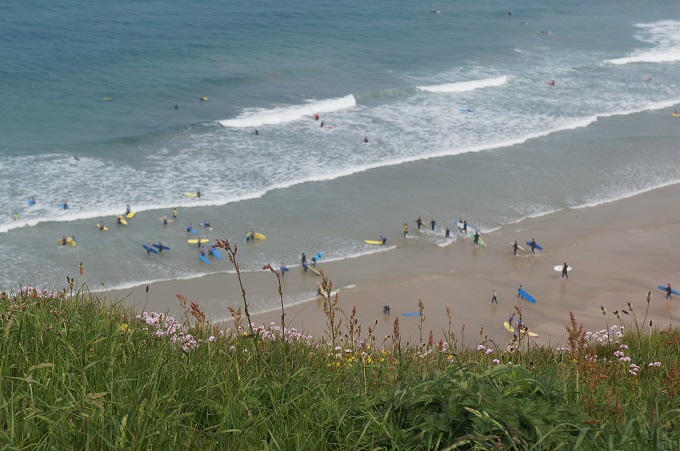
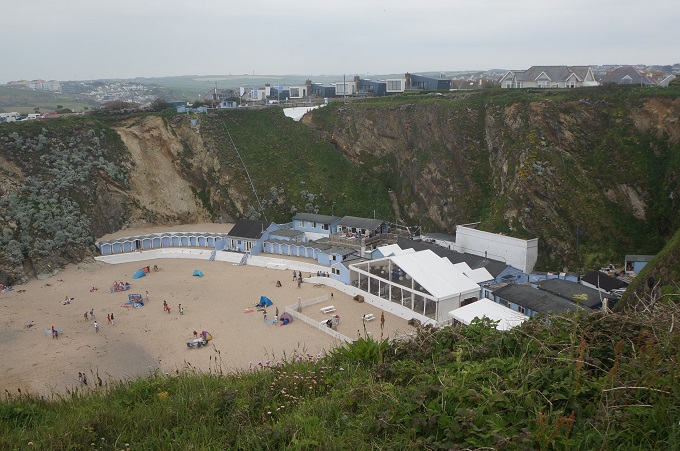
Today was a well walked section, especially as we got closer to Newquay. Almost the whole length was characterised by high, flat topped cliffs, sometimes with prominent headlands, which for long stretches form the back of attractive sandy beaches, many of them popular with surfers. Even though the beaches look so inviting the path sticks to the top of the cliffs as many of the sandy coves are completely cut off at high tide.

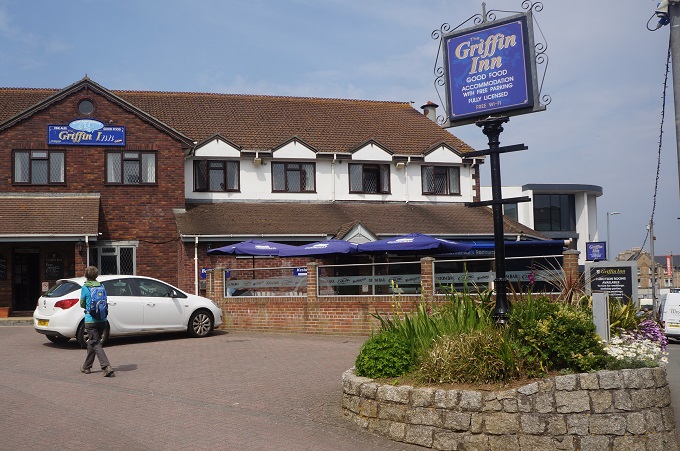
Today was the Saturday of a three day holiday weekend (Spring Bank Holiday) so the path, car parks and beaches were busier than we have previously seen. We made pretty good time today, not mucking around due largely to the weather forecast. It was warm and sunny as we set off but thunderstorms and isolated areas of torrential rain were predicted for the afternoon. We got to Newquay okay but now at 5.50 pm there have been huge claps of thunder and it is now heavily raining. Fortunately we don’t have to go out as the Griffin Inn has a bar and meals down stairs.

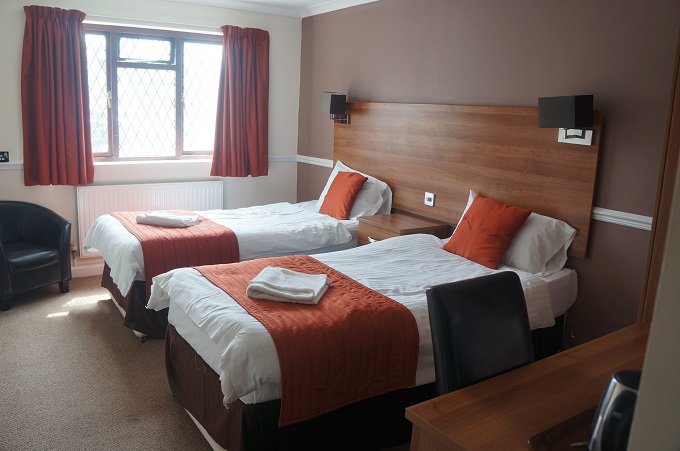
Another good thing about the Inn is that it is right on the path. Often we have to walk an extra couple of kilometres off the path to our accommodation. And of course, back again in the morning. This Inn is a pretty bland, middle of the road place, part of a chain, comfortable, warm, dry and very impersonal. Sometimes being impersonal is good. This morning at breakfast the landlady, Mary, who was very nice, wanted to talk about Brexit and all manner of things. Her son and daughter-in-law had lived in NZ for a year and somehow she had the idea we were a misogynistic society. I wasn’t sure what she was on about so didn’t get to tell her we had a very popular 37 year old woman prime minister who was about to give birth to her first child.

A feature of today were several headlands that had iron age hill forts. Lots of people come to look at these and there was even a National Trust Visitor Centre close to one of the forts. But honestly, if we hadn’t been forewarned by our maps and trip notes, we would have walked right over these without knowing. It was hard to pick which of the grass and flower bumps, lumps and cuts were part of a fort. The forts are very near the cliff edge and large chunks of some forts have disappeared into the sea with the crumbling cliffs.

Newquay is the largest town we have come to on the South West Coast Path, pop. 20,000. It is a fishing port, major tourism centre, and a regional centre for aerospace industries. It has an international airport which we were aware of all day as large passenger planes came low in over the cliffs on their landing approach.

Newquay is the surfing capital of Cornwall and this weekend one of the UK’s biggest surfing competitions is being held here. Newquay is also known as being the party town for graduations, stag parties and hen nights. We have been warned to expect groups of hairy, drunk males dressed as nurses wandering the streets.

We have to do research to get out of town tomorrow – it all depends on how to cross the tidal Gannel River. There are four options and which one to take depends on the time of year and the state of the tide.

The official route (3 km) is via the Fern Pit Ferry but it only operates from late May to mid-September daily 10am to 6pm.

Option 2 (5 km) is to cross the Penpol Footbridge which is tidal and you can cross about 2 hours either side of low tide.

Option 3 (8 km) is the Laurie Bridge which is also a bridleway. You can’t use this 1 hour either side of high tide.

Option 4 (10 km) is to follow the main road right around the channel.


Just a stroll

Padstow to Porthcothan, 21 km, 479 metres of climbing

‘Honestly, my biggest fear about becoming a zombie is all the walking’

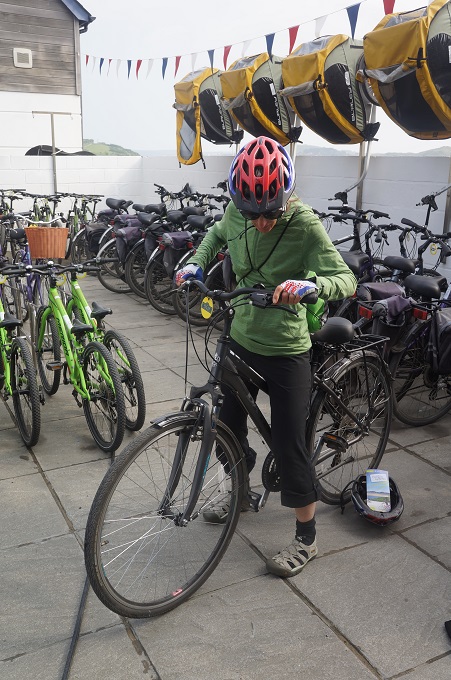
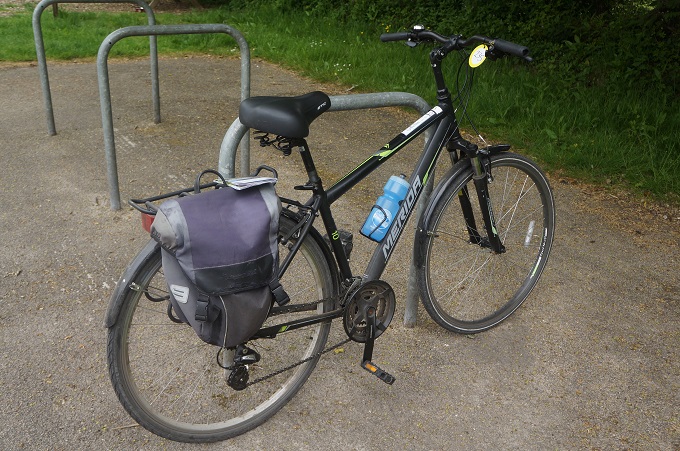
We woke up this morning feeling a bit sore. Not the usual sore toes, feet, ankles, calves, knees, thighs. It was sore butts. The hybrid bikes from yesterday were quite good but typical of most hire bikes they had large, wide, very soft seats. After a while we found them very uncomfortable and by the end of the ride we were a bit sore. Give us our skinny, anatomical, harder seats any day.

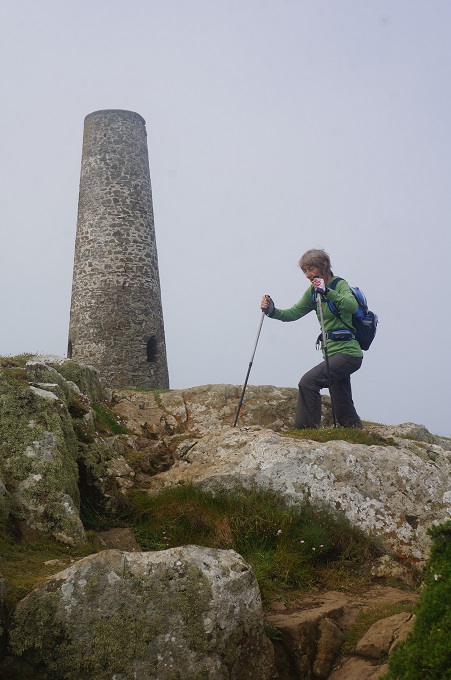
The first section of the path today is a very popular local walk around the Camel estuary with long sandy stretches as it was low tide. There is a very easy climb onto a picturesque length of cliffs with a coastguard look out and the 19th century Daymark Tower, an old stone navigation aid.

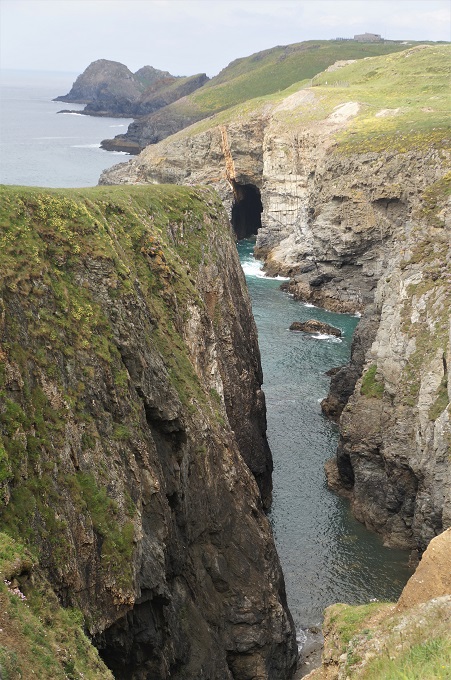
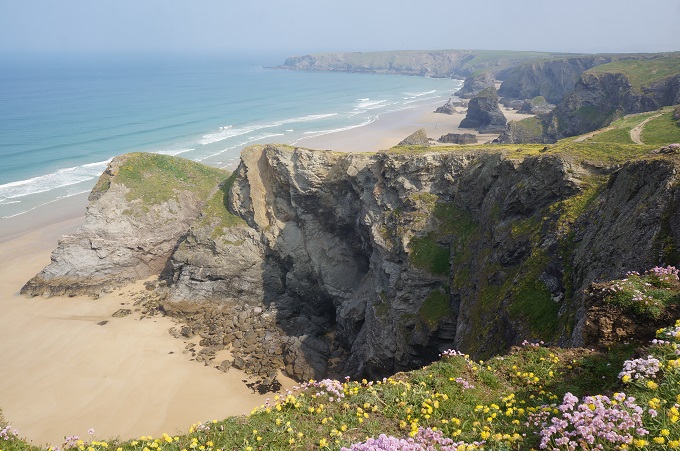
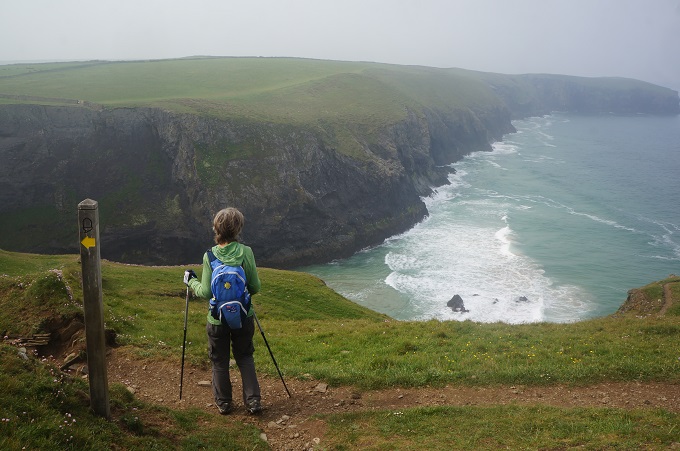
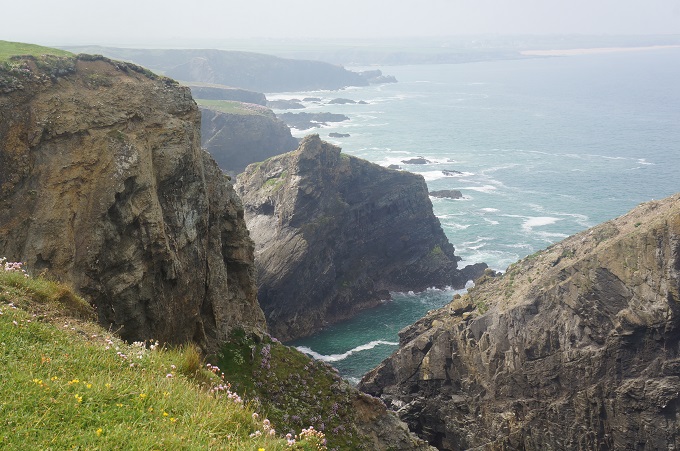
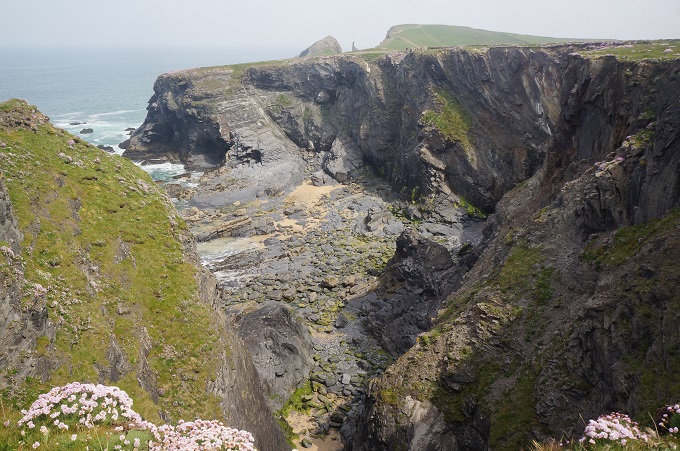
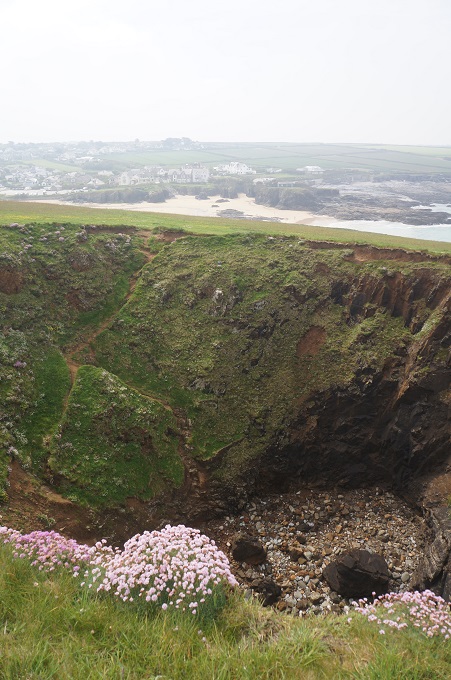
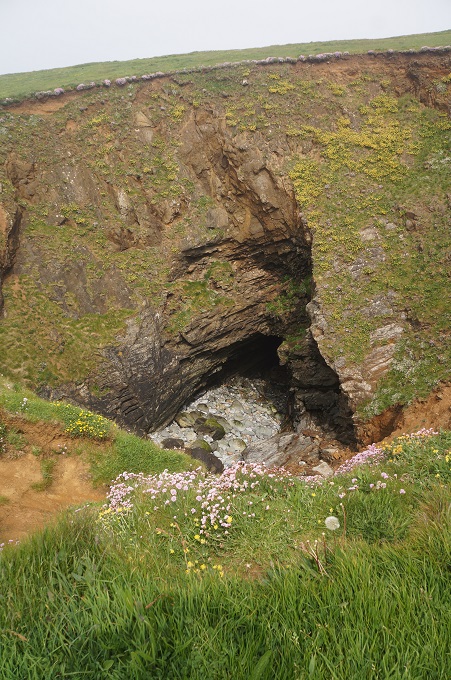
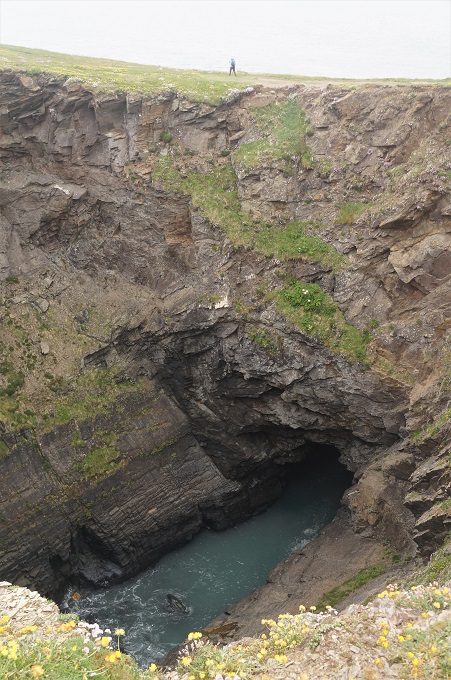
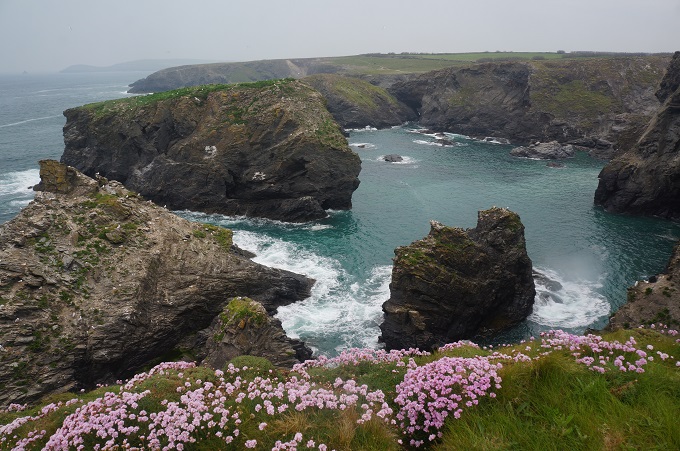
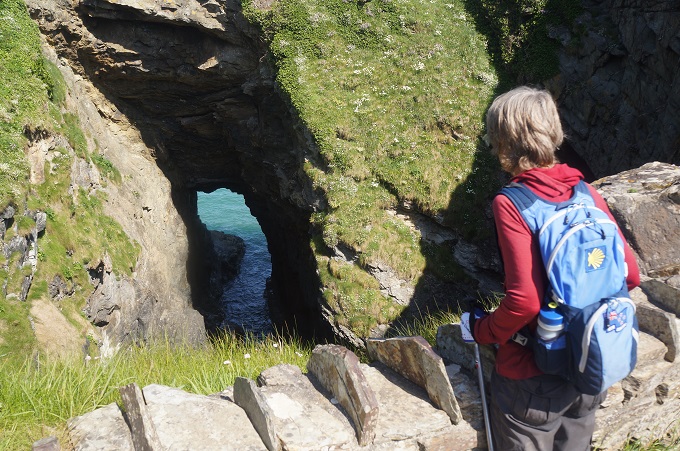
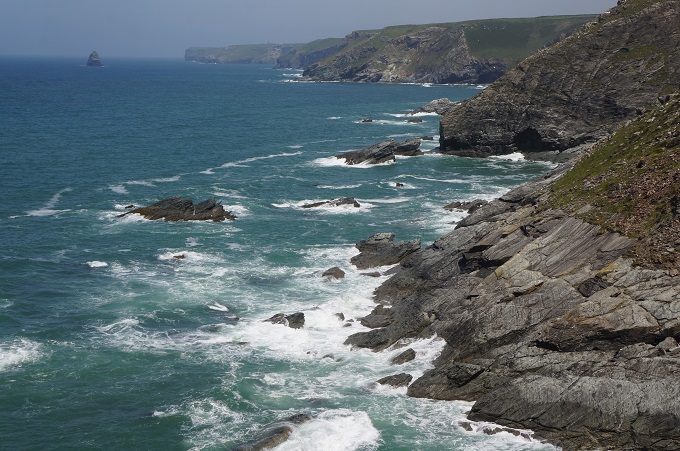
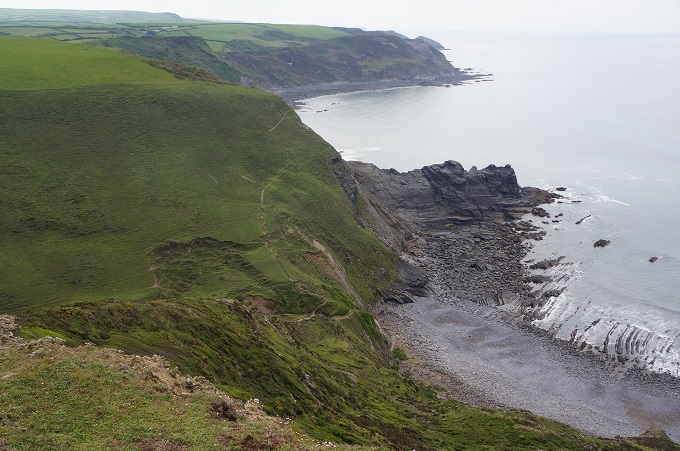
The path is now on the exposed Atlantic coast and there are precipitous cliffs and sheer drops down to the sea. There are huge chunks of rock that have split off from the mainland. Walking along the cliffs there were sudden gaping holes opening up in the turf – collapsed caves perhaps? Today we also noticed an increase of wild flowers, sea pinks, cornflowers, kidney vetch, reaching down the cliffs almost to the sea.

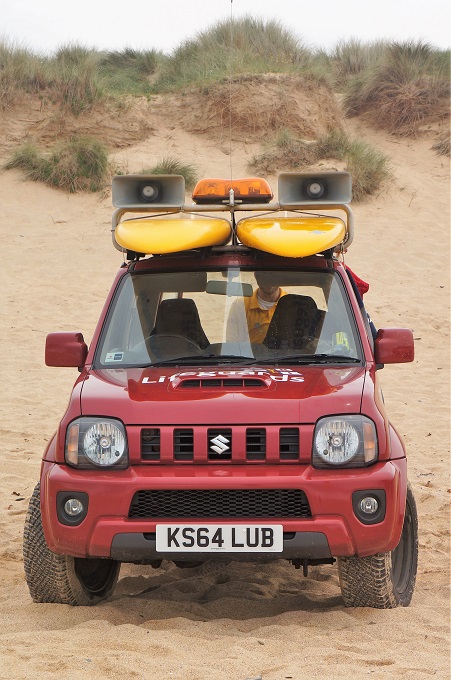
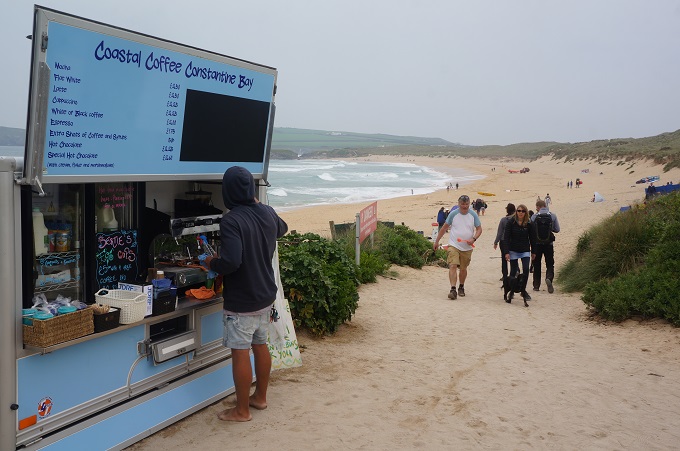
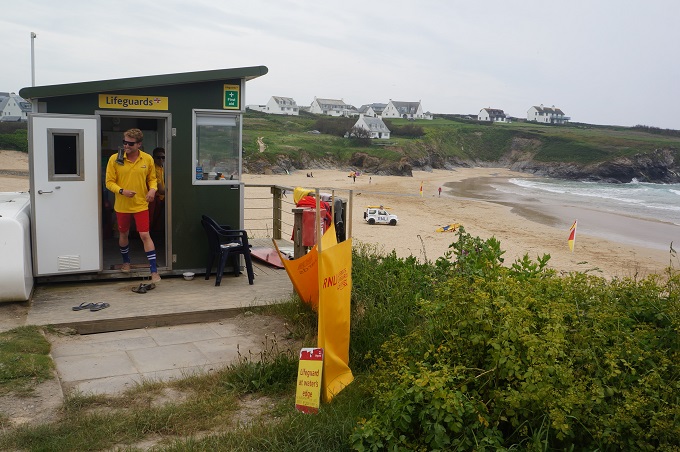
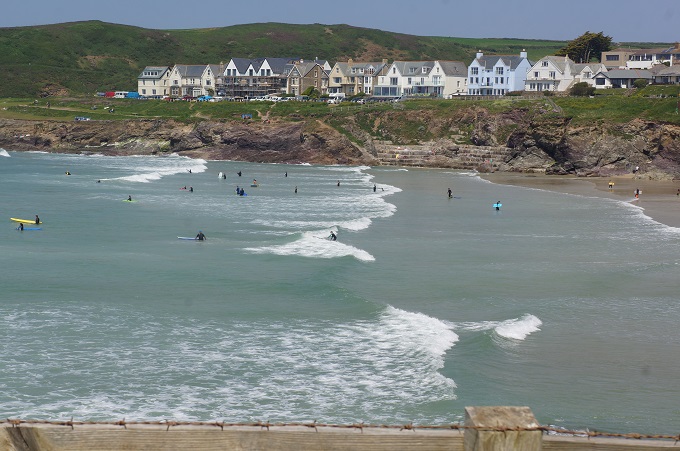
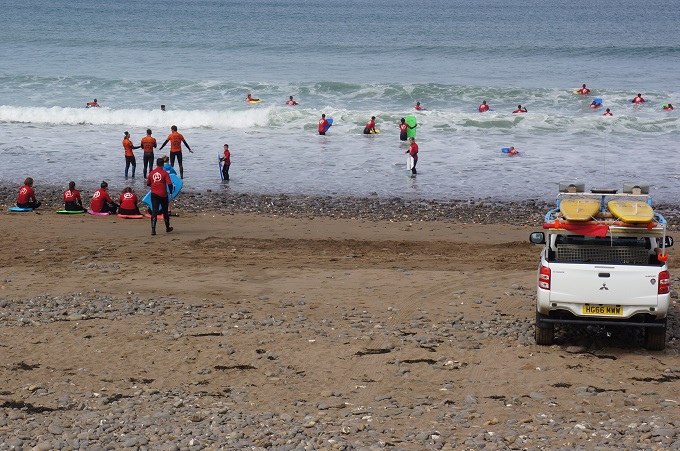
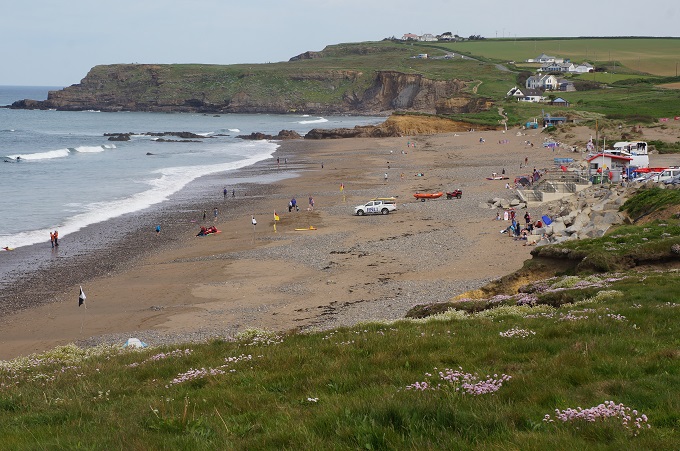
We then came to an easy walking section with golden sandy beaches between headlands. Trevone Bay, Harlyn Bay, Constantine Bay, Treyarnon Beach, are all very popular swimming and surfing beaches. All with life guards on duty, all the facilities, and surf schools and surf board hire. There was a bit of onshore wind today and the surf at most beaches was pretty boisterous. The air temp was 17°C and the water temp 11°C. Just about everybody in the water wore wet suits.

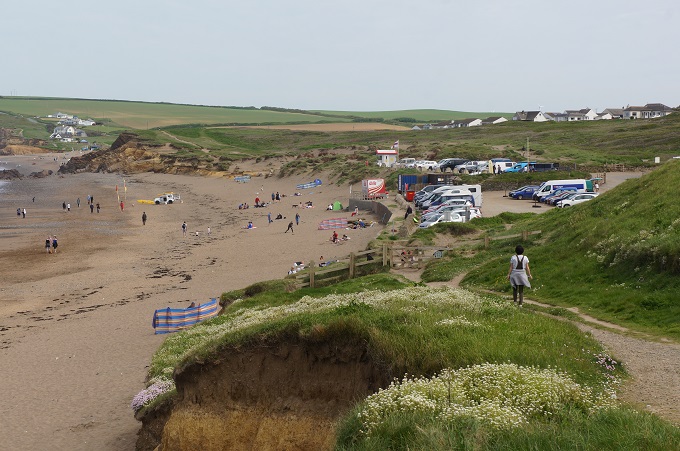
We walked across the sand on most beaches, which was a nice change, but the sand was soft and used up a lot more energy than walking on the clay or grass paths on the cliffs. This section of the path was quite busy, there are holiday parks, camping grounds, roads and car parks at all the beaches. For us this means there are facilities, ie toilets, food and drink. It is great walking on the lonely desolate cliffs but there are no facilities out there.

Today was the first time we came across our destination before we really expected it. Usually the last few kms of the day are a bit of a grind to get to the accommodation. We are staying in a 1930s bungalow with just two guest rooms. It was a 10 min walk to the only pub, the blandest, most characterless pub in all of Cornwall.


Refreshed and Connected

In Padstow, 56 km, 2 metres of climbing

‘There is no wifi in the forest but I promise you will find a better connection’

After eight days of strenuous walking we had a rest day in Padstow – yeah right!

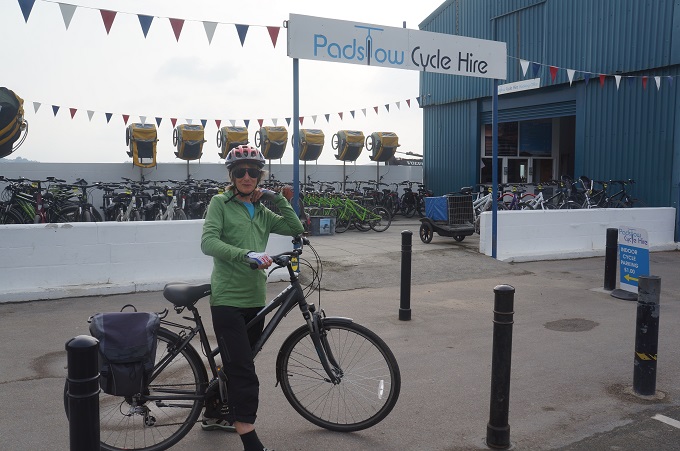
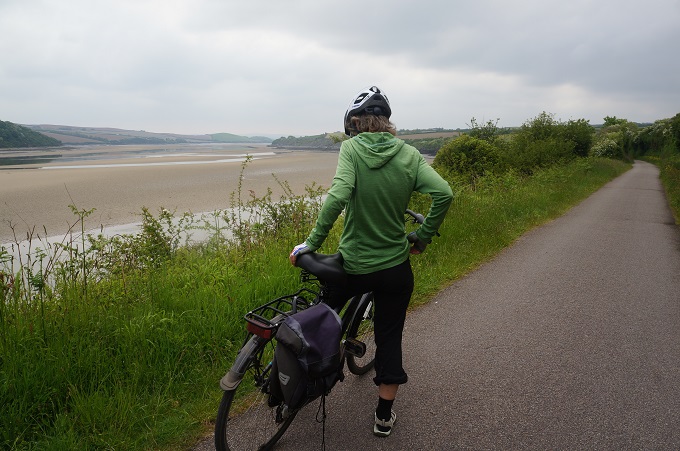
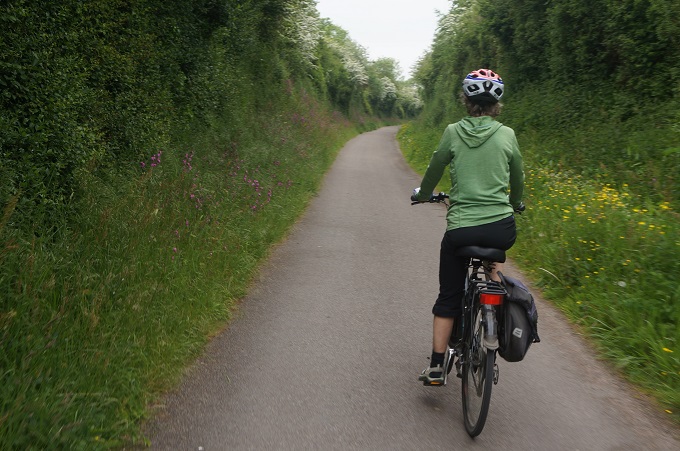
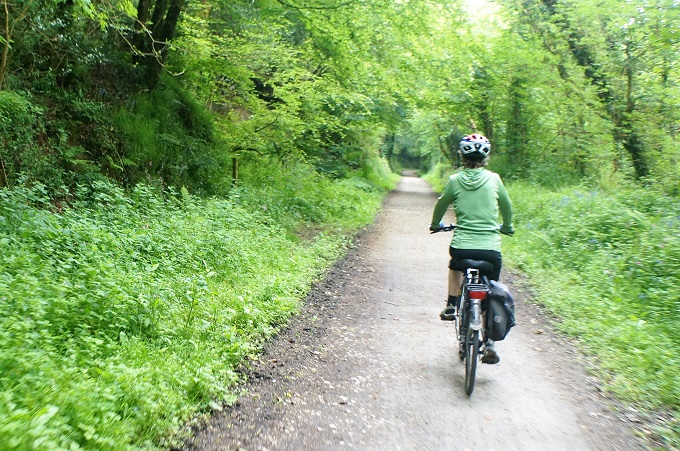
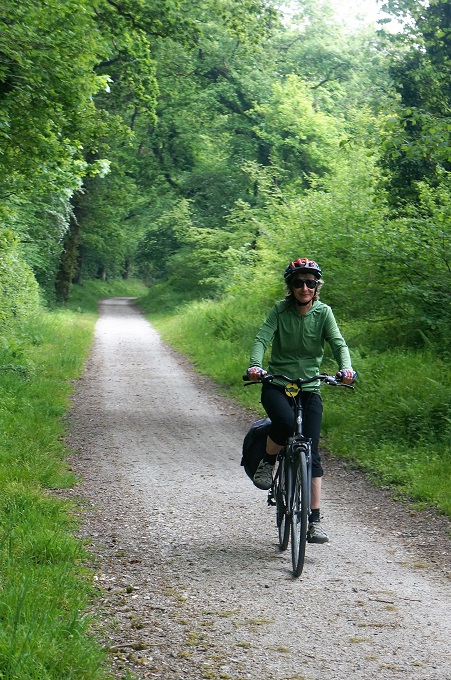
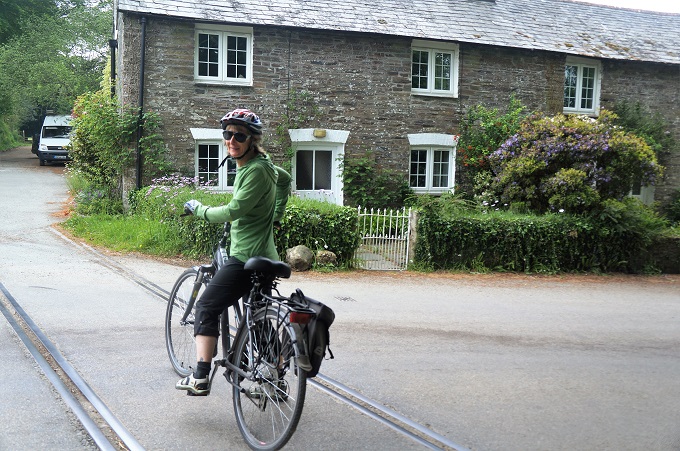
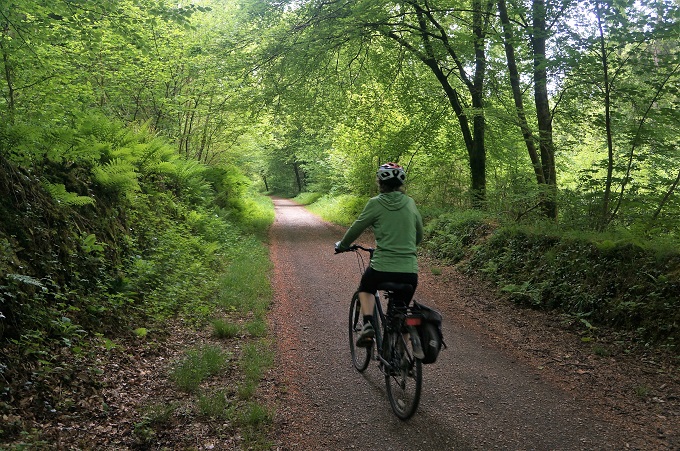
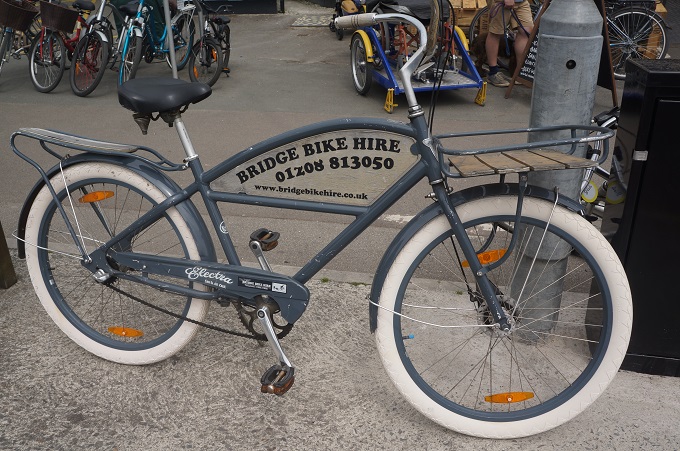
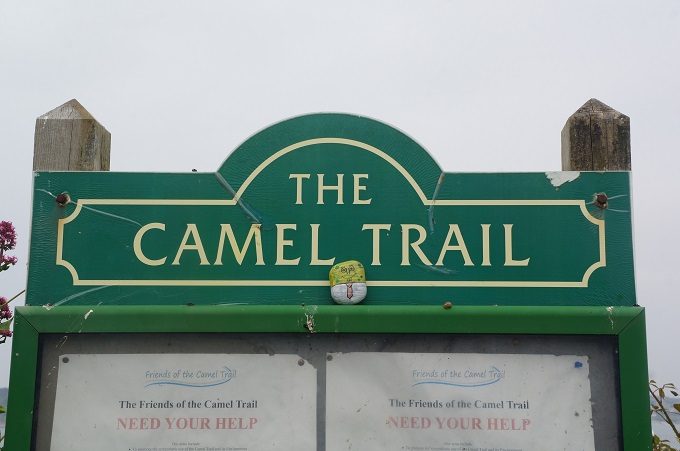
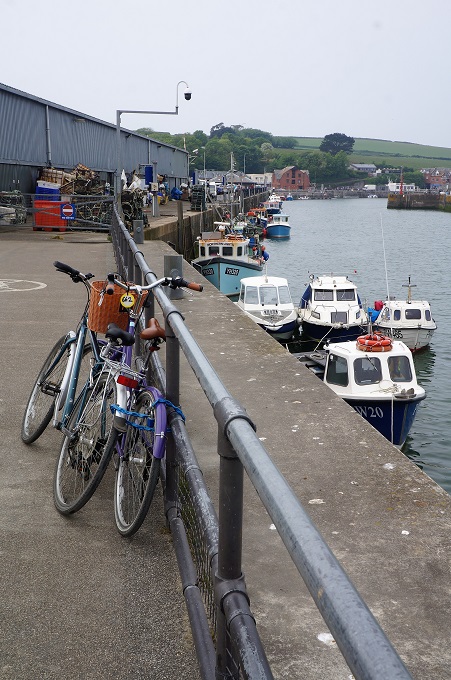
Bright and early we were down at the quay hiring bikes. £17 each for the day. Padstow has a wonderful traffic free cycling/walking/horse riding/dog walking trail called The Camel Trail. This is a former railway line that runs 18 miles from Padstow via Wadebridge and Bodmin to Wenfordbridge and is virtually flat. The first part of the railway was opened in 1834 to carry sand inland to be used on farms as fertiliser. It was later expanded to carry slate and china clay from inland quarries to ships at Padstow. The last passenger trains ran in 1967 and freight trains in 1983. The Cornwall Council bought it for £1 in 1983 and turned the railway line into The Camel Trail.

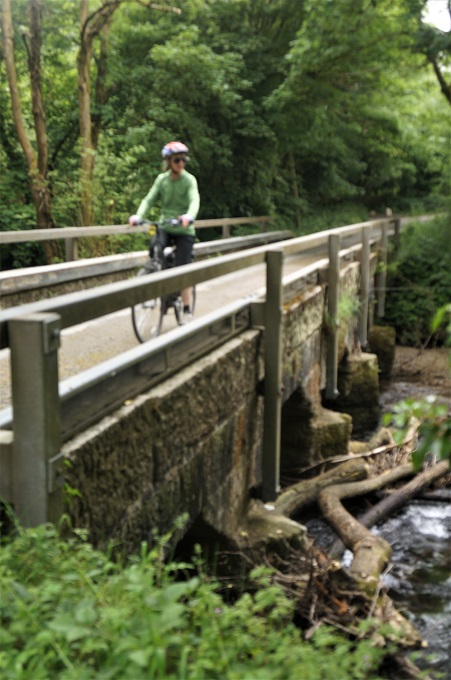
The first part of the trail is out in the open and hugs the edge of the Camel estuary, at low tide a vast area of golden sand. On this section you cross a side estuary on a worryingly named bridge called Weak Bridge. After 5½ miles, at the end of the estuary, you come to the village of Wadebridge and from here the trail follows the Camel River through the deeply incised and beautifully wooded Camel Valley in a delightful green tunnel of trees to Bodmin (at 11¼ miles) and Wenfordbridge (at 17½ miles). There are still signs and platforms for the old stations: Shooting Range, Grogley Halt, Nanstallion Halt and Boscarne Junction. The last is a working station and there is a heritage steam train that runs from there to Bodmin.

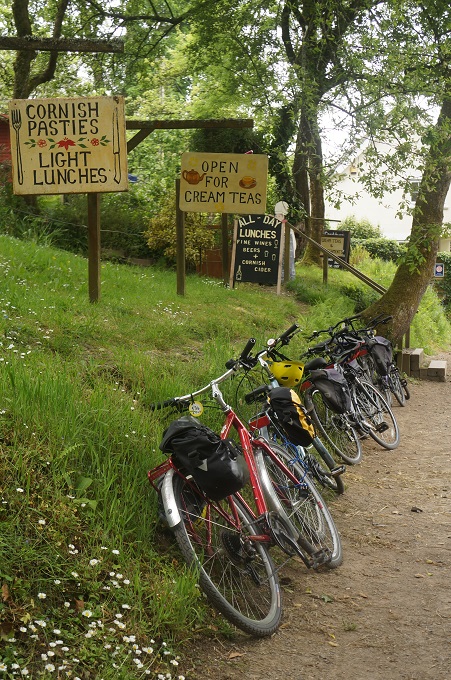
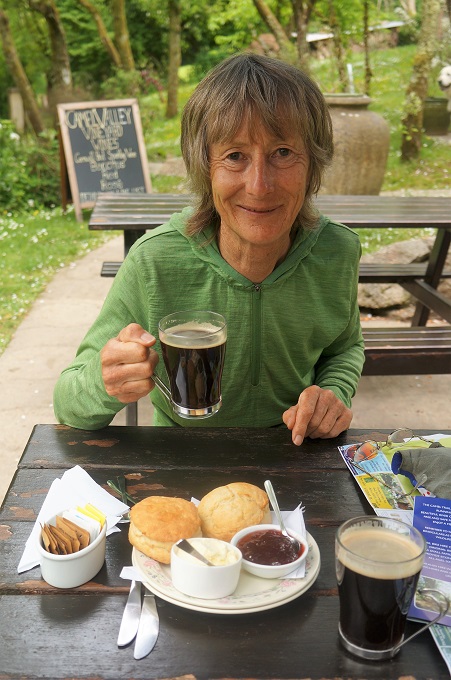
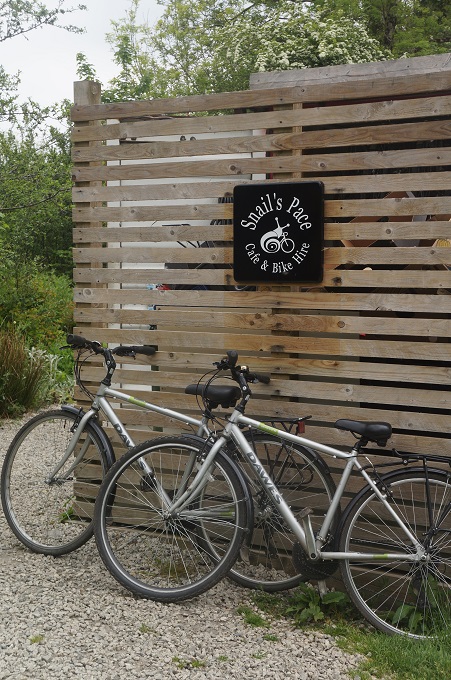
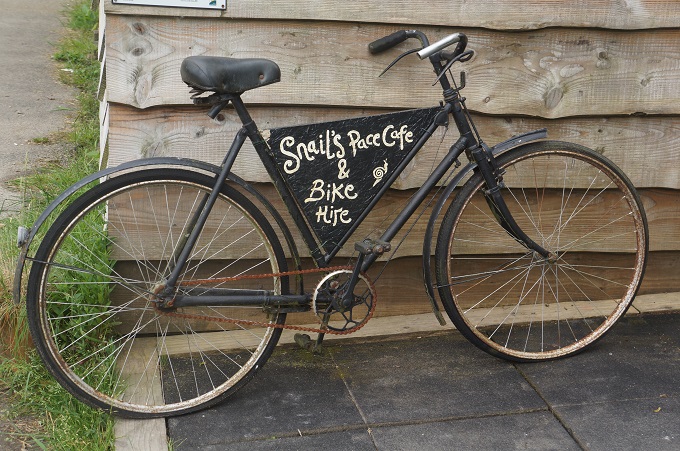
Just short of Bodmin we stopped at The Camel Trail Tea Garden for Cream Tea – actually we had coffee with the scones, jam and clotted cream. On the way out we bypassed Bodmin and went directly to the end of the line where there is a shed and garden cutely called the Snail’s Pace Café and Bike Hire. Also at the end are acres and acres of abandoned warehouses with huge chimneys called the Westford Dries. Clay slurry was piped to this former china clay factory.

On the way back we stopped in at Bodmin, best known for its jail. The jail was built in 1779 and was the first British prison to hold prisoners in individual cells. There were over 50 hangings at the jail and the executioner was paid £10 per hanging. During WWI some of Britain’s national treasures including The Dooms Day Book and the Crown Jewels were kept in the prison. The jail closed in 1927. It is now largely ruins but there is a small museum and tourist office and of course loads of ghost stories.

When we arrived in Padstow yesterday we walked up the very busy and noisy A389 for about a kilometre to our B & B. Betty our hostess showed us a much nicer path through some allotments and the churchyard of St Petroc’s Parish Church down to the quay. We were keen to have a look inside this church, built between 1425 and 1450, as the pulpit is decorated with carved scallop shells to honour pilgrims to the shrine of St James in Santiago, Spain. Another connection with our walking of the Camino Frances.

This church is the start of ‘The Saints Way’, a 27 mile route across Cornwall to Fowey on the south coast. It is the route taken by early Christians from Ireland and Wales to Brittany or Santiago de Compostella in Galicia, Spain. If we took this route we could take about 25 days off our coastal walk.

So we now need a rest day from our rest day, but we are refreshed, and it was great to get out cycling on what really is a magical trail.


Who Pays the Ferryman?

Port Gavern to Padstow, 19 km, 691 metres of climbing

‘My FitBit died. Now all my steps are pointless until it charges’

Today was our easiest day so far. Partly because we are now strong and right into the rhythm of walking but also because the terrain was much gentler with easier undulations. Right at the start there was a rollercoaster of a path, closely following the ups and downs and ins and outs of the energy-sapping coast. But we avoided it by taking an official alternative route which went inland over meadows, still crossing a lot of valleys but just not as vicious.

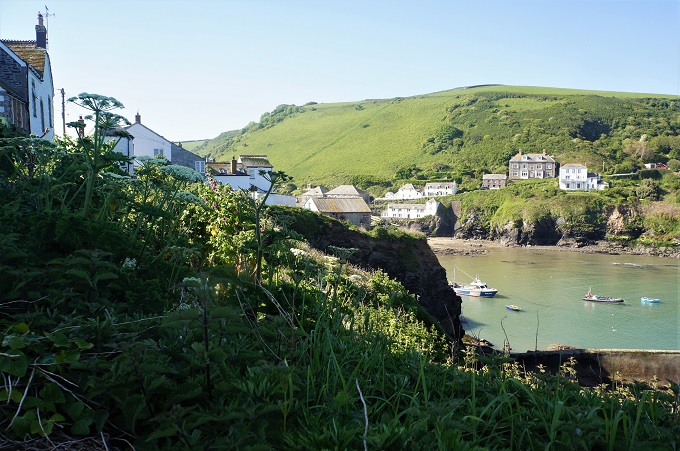
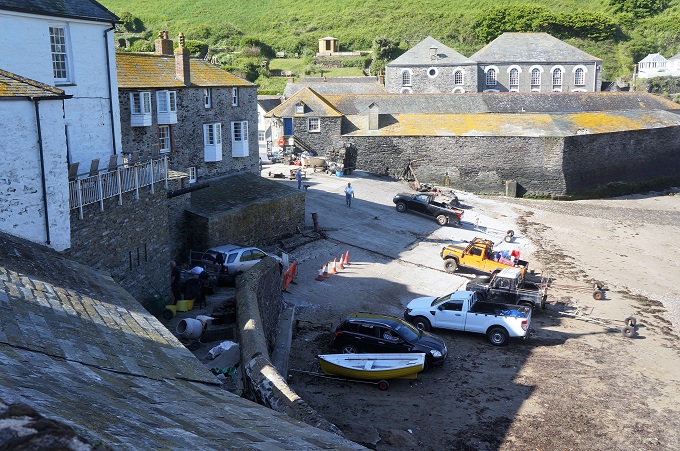
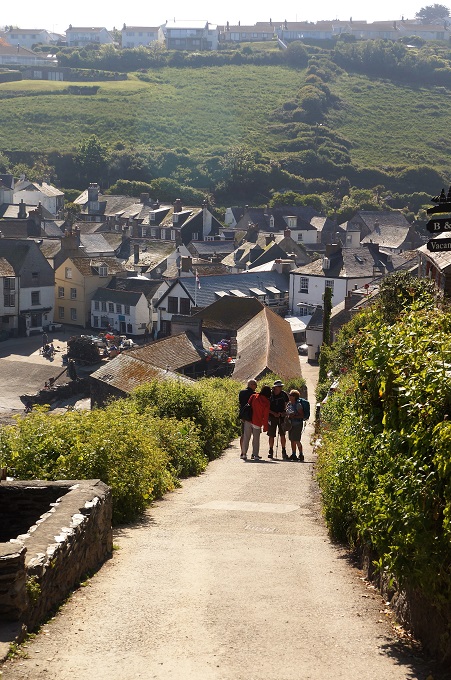
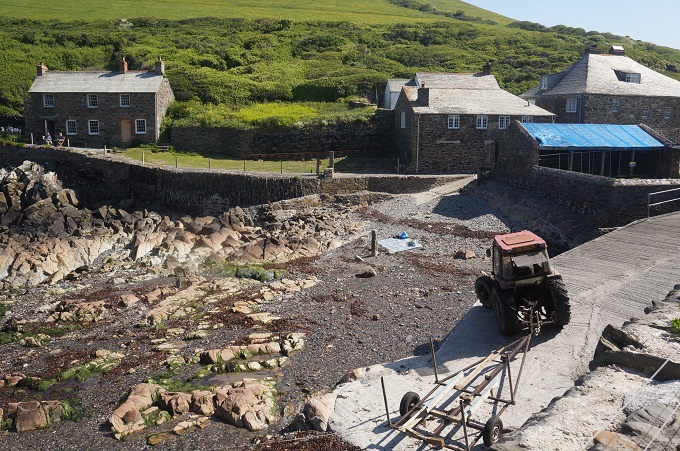
Our first stop this morning was after only 1 km at the very picturesque Port Isaac, a village of cobbled alleyways and white washed houses clustered around a little harbour at the head of a sheltered bay. As I said yesterday it is the setting for the popular tv programme Doc Martin. The programme started in 2004 and is in about its 9th series. Hordes of tourists now visit to see the sets and watch filming. Hoteliers, restaurateurs and shop keepers are making a nice profit and trendy boutiques and smart art galleries have muscled in, but the locals living there have become a bit disgruntled with constant blocked roads and traffic stoppages, film crew basically taking over the town and doing whatever they want. It was all quiet when we passed through at 9 am.

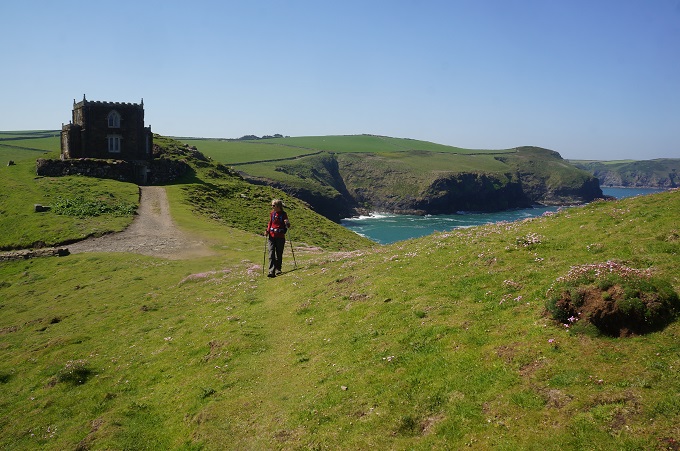
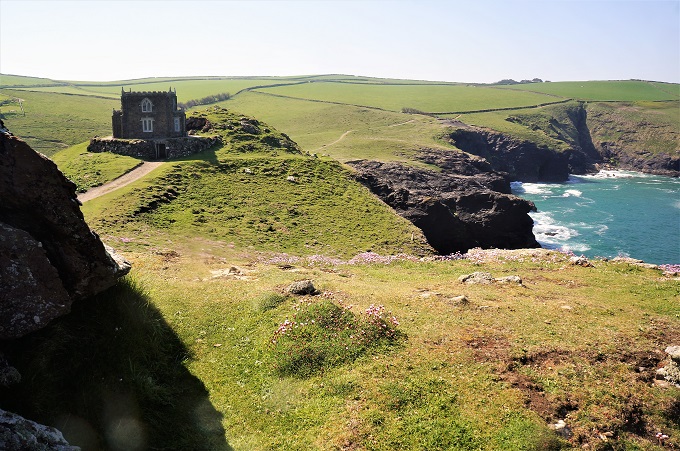
From Port Isaac to Port Quin we went inland over fields of freshly cut hay. This was a nice change from being constantly on the coast with an endless blue horizon off to our right. Port Quin is yet another beautiful little fishing village and was once a busy pilchard port but there are no remains of that industry now. Just after Port Quin we came to the tiny folly of Doyden Castle, perched on a promontory with commanding views up and down the coast. We climbed up to have a closer look and discovered a woman there sitting outside with a cup of coffee. It is now a National Trust holiday let!

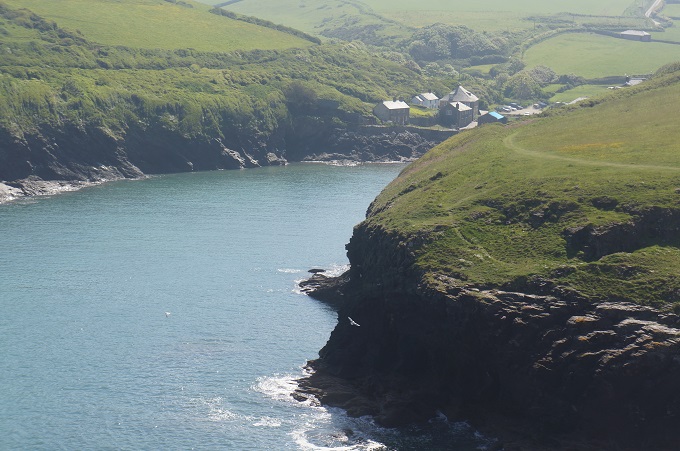
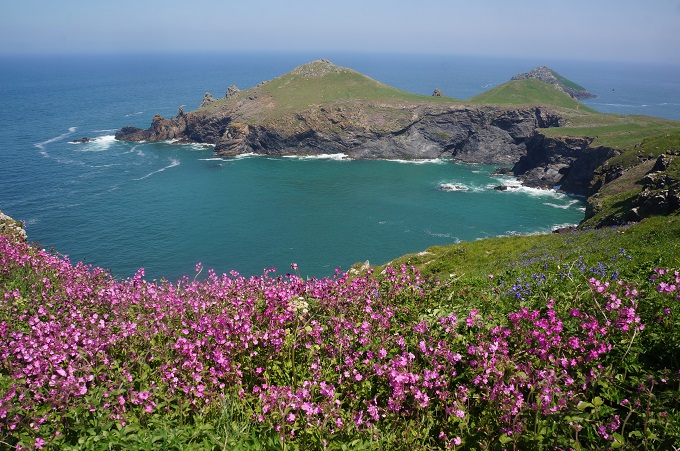
The path continued around cliffs and dramatic headlands (called The Rumps) until at Pentire Point you turn a corner and suddenly in front of you is the holiday town of Polzeath and acres and acres of sand filling the Camel Estuary. Polzeath is your typical holiday town with swimming, surfing, buckets and spades, sun burn, ice cream, and surprisingly busy for a mid-week afternoon.

At Pentire Point there was also a plaque commemorating the moving war poem For the Fallen, written somewhere near there by Lawrence Binyon in 1914 at the start of WWI. We all know the fourth stanza:

They shall not grow old, as we that are left grow old
Age shall not weary them, nor the years condemn
At the going down of the sun and in the morning
We will remember them.

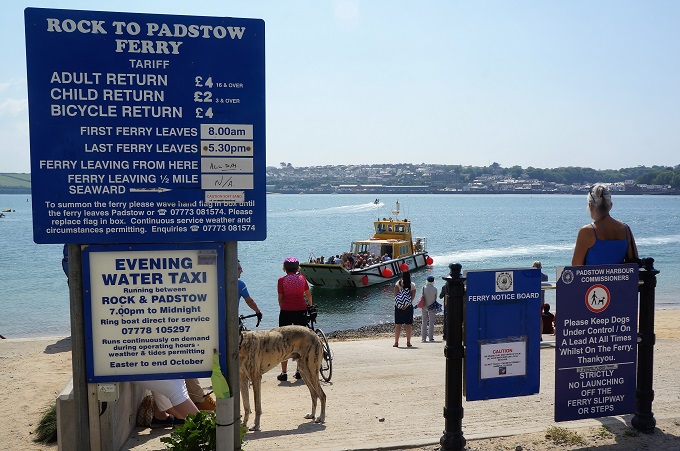
The coast has now changed from dramatic, rugged, steep, dark cliffs to a tamer, sandier, more estuarine landscape. More domesticated with housing and tourist developments. The last part of our walk today was several kilometres over sand dunes. The Camel Estuary is huge and instead of walking about a hundred kilometres around it, there is a 10 minute ferry service (£2) from Rock across to Padstow.

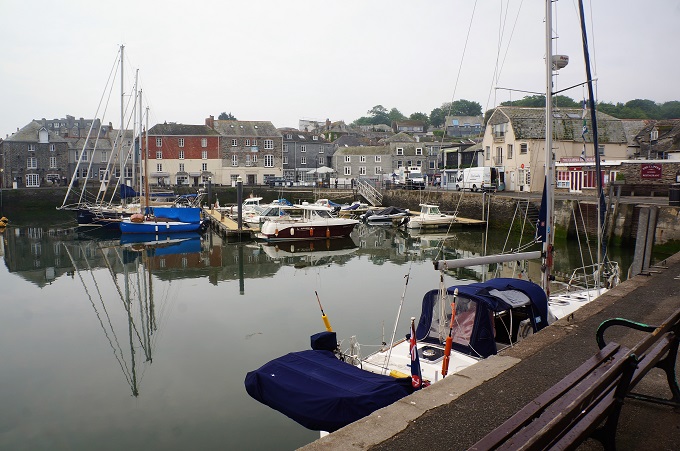
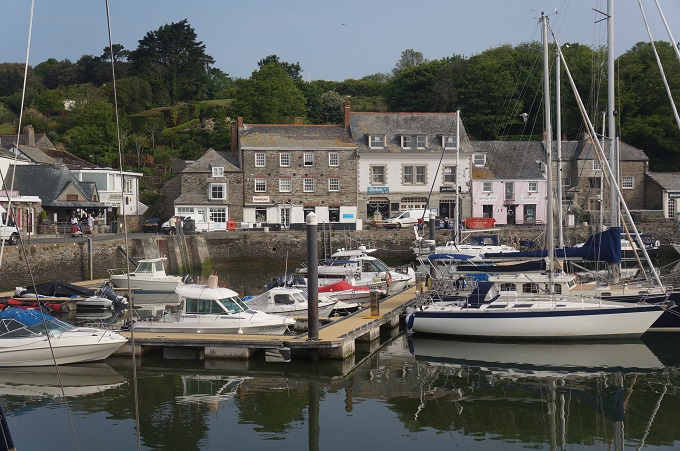
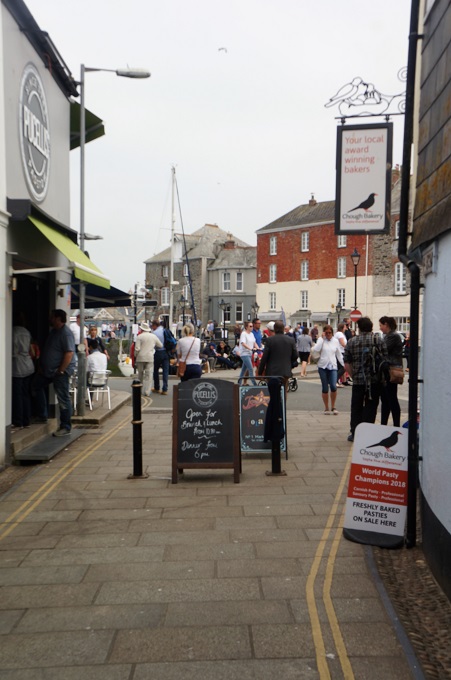
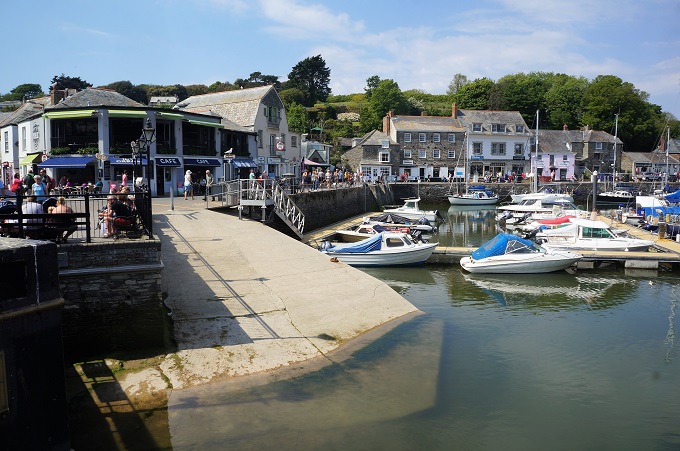
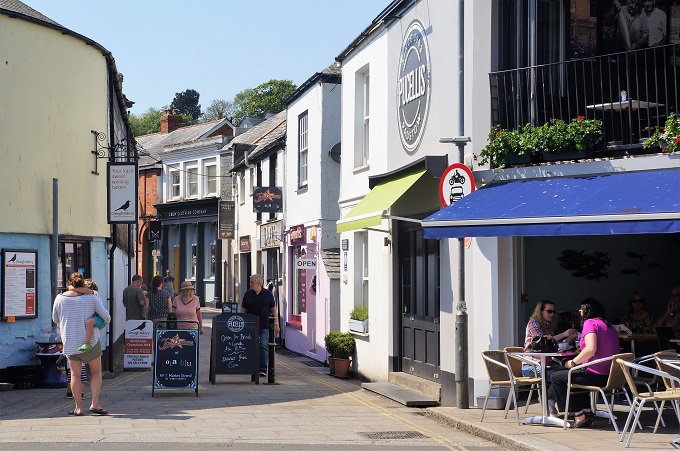
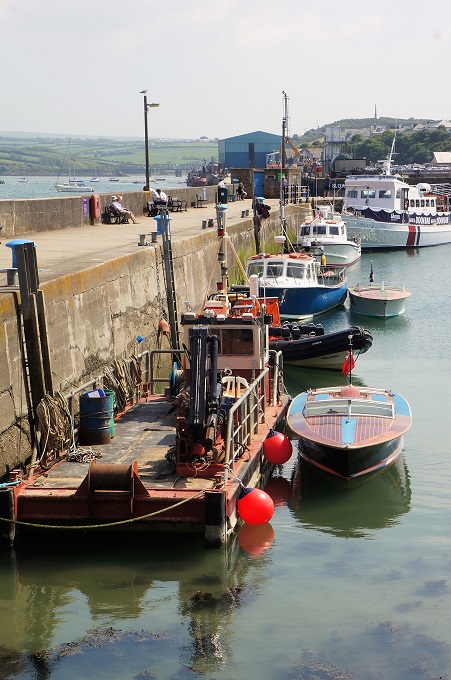
Padstow (pop 3,000) is a working fishing port, popular tourist town and ‘foodie’ destination. After 8 days of walking we have a ‘rest’ day here tomorrow. Think we will go for a bike ride.

Note: ‘Who Pays the Ferryman ‘was a hit TV series 40 years ago when we first came to England.


What’s up Doc?

Tintagel to Port Gavern, 14.7 km, 789 metres of climbing

‘Everything is within walking distance if you have the time’

Another wonderful day of walking with lots of interest along the way. I think we are getting used to the knee wrenching descents and lung bursting ascents.

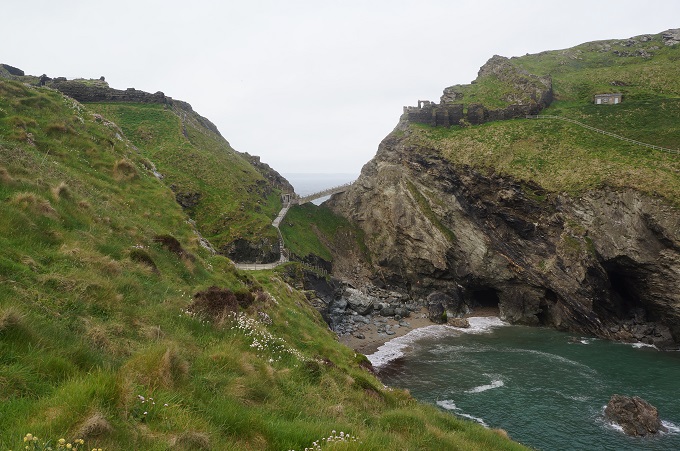
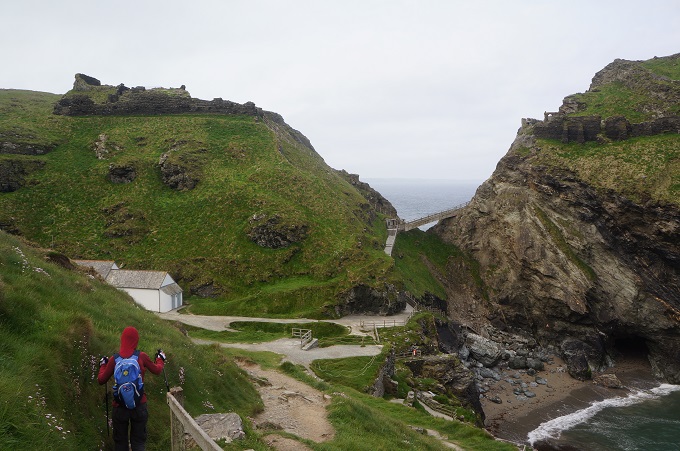
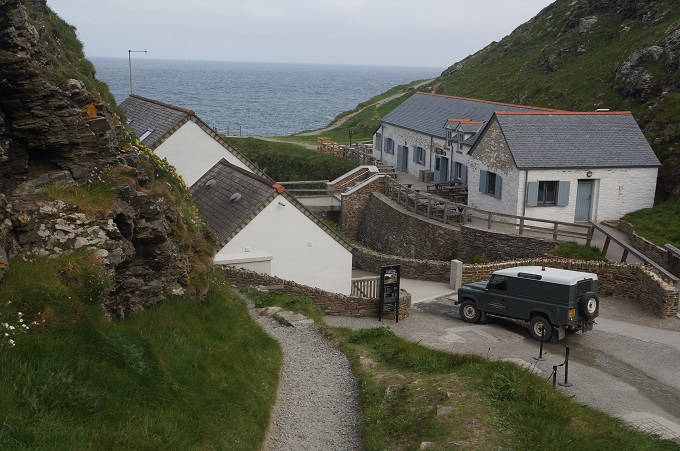
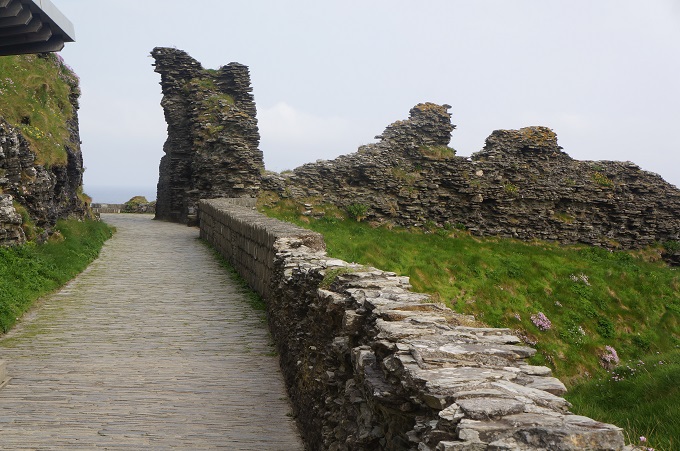
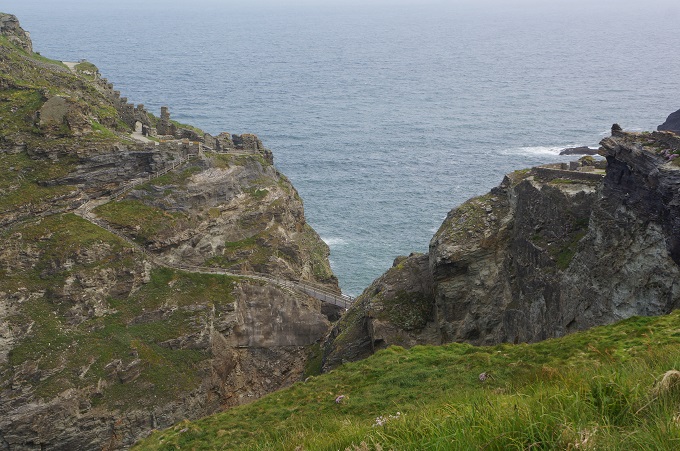
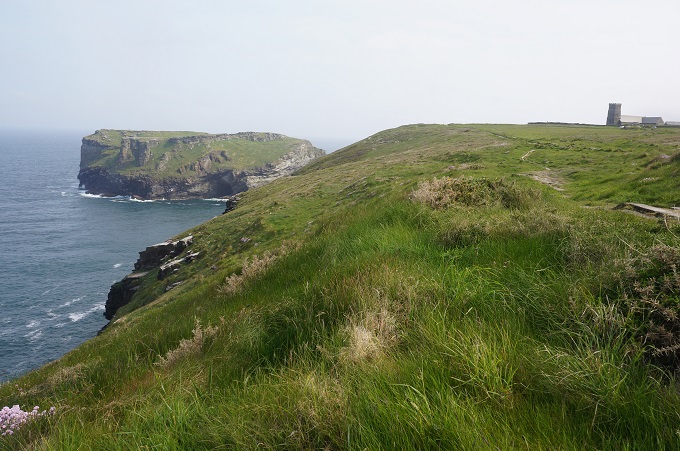
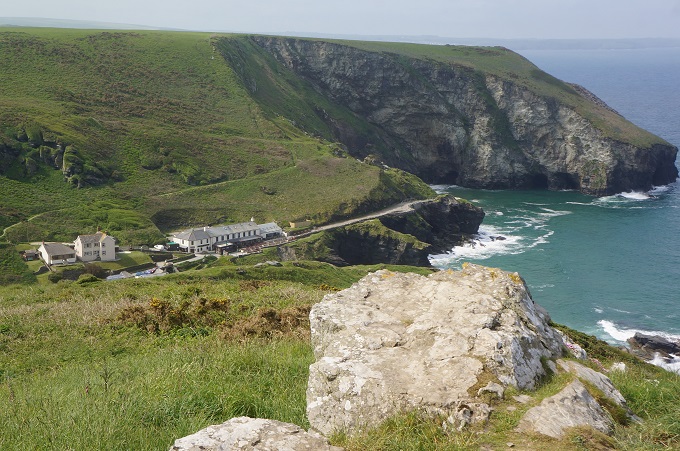
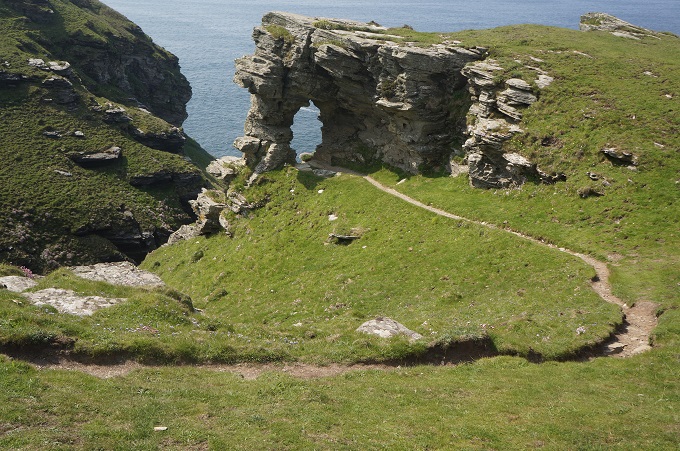
From Tintagel we passed the remains of the medieval castle perched on its isolated headland. Pottery, coins and two inscribed pillars suggest there was Roman activity on this site in the 3rd and 4th centuries. From 450 to 650 AD it was an important trading site. In 1138 Geoffrey of Monmouth writes his History of the Kings of Britain. His legendary King Arthur is said to have been conceived at Tintagel. From 1225-33 Richard 1st Earl of Cornwall builds the castle and buys the land. From this time ‘King Arthur’s Castle’ become a tangled mixture of local folklore and literary legends. Today the site is owned by Charles, Prince of Wales as part of the landholdings of the Duchy of Cornwall.

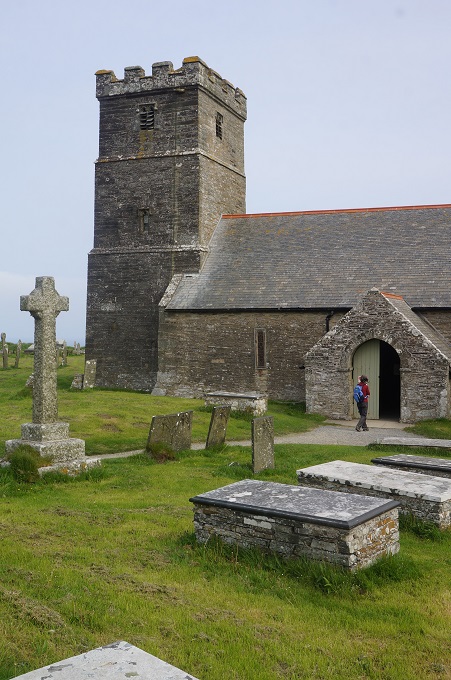
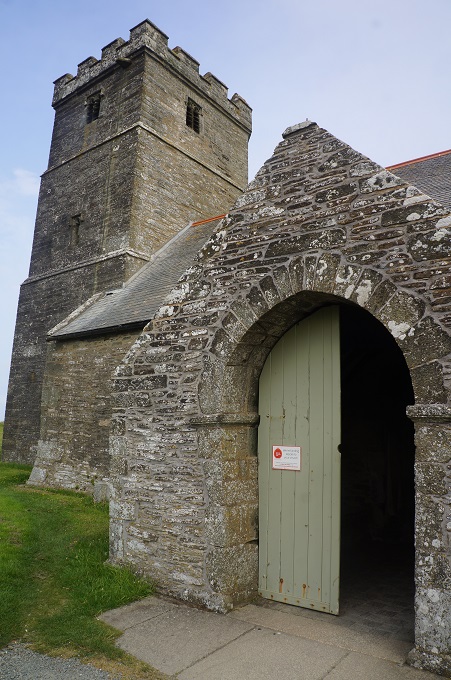
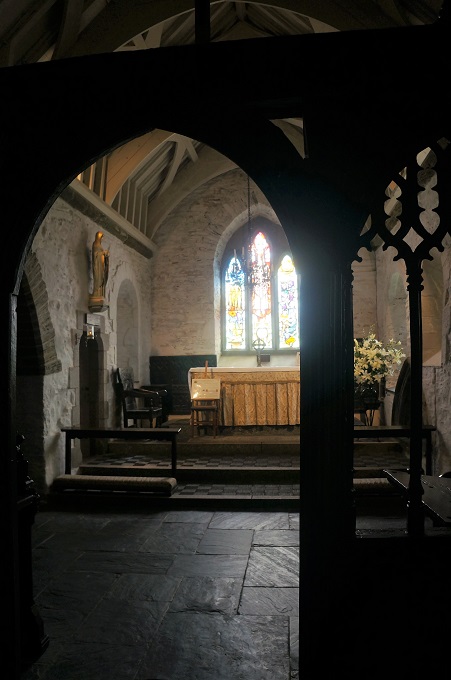
A little further on was the atmospherically located St Materiana’s Church perched on a cliff top. This church may go back to the 11th or 12th century while the tower was added in the 14th century and the battlements on the tower in the 15th century. The parish registers begin for burials in 1546, for baptisms in 1569 and for marriages in 1588.

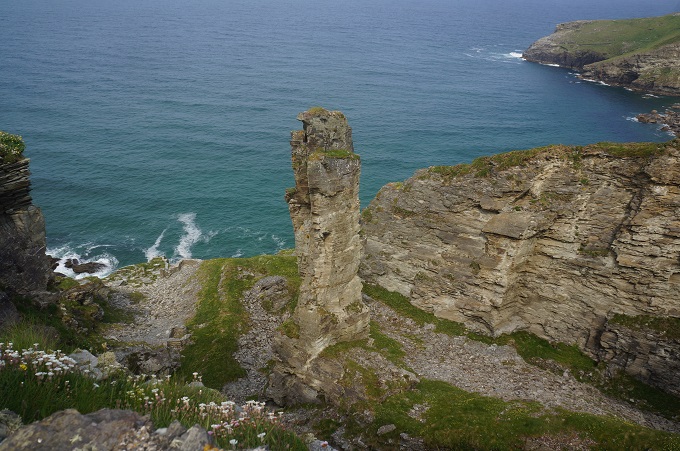
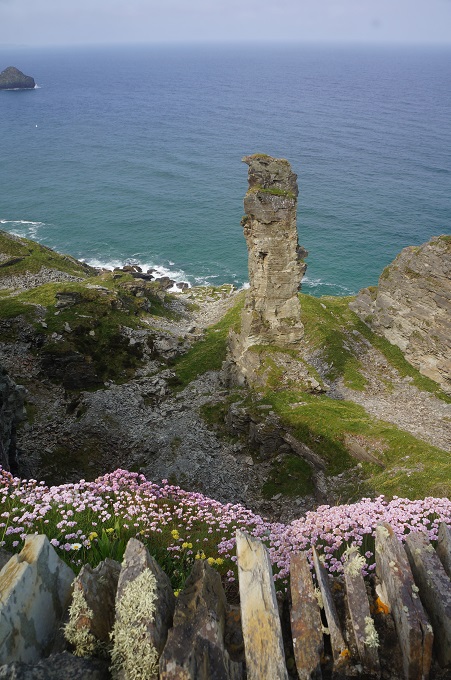
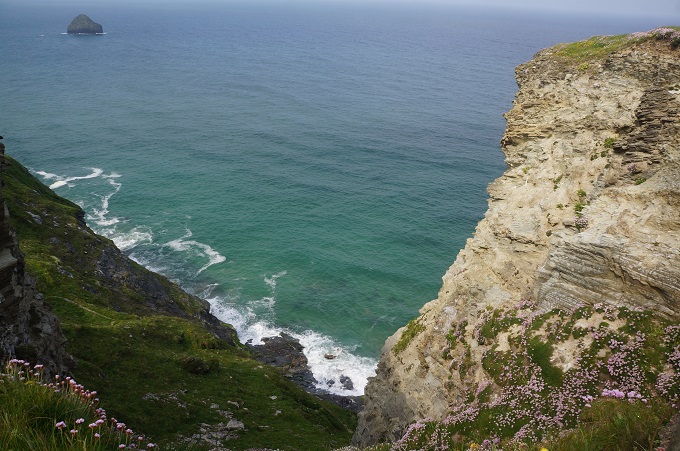
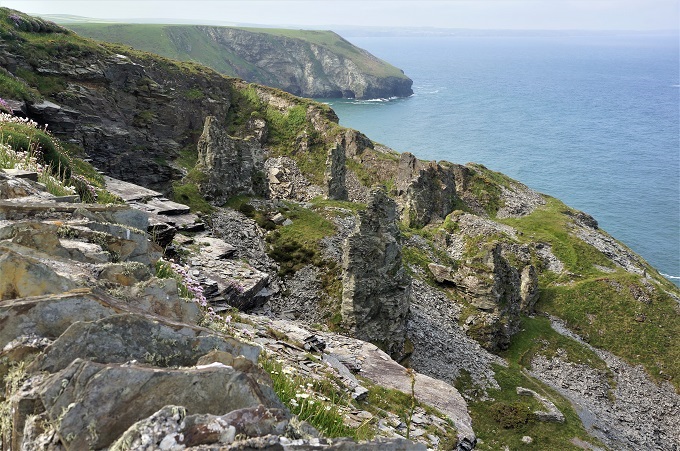
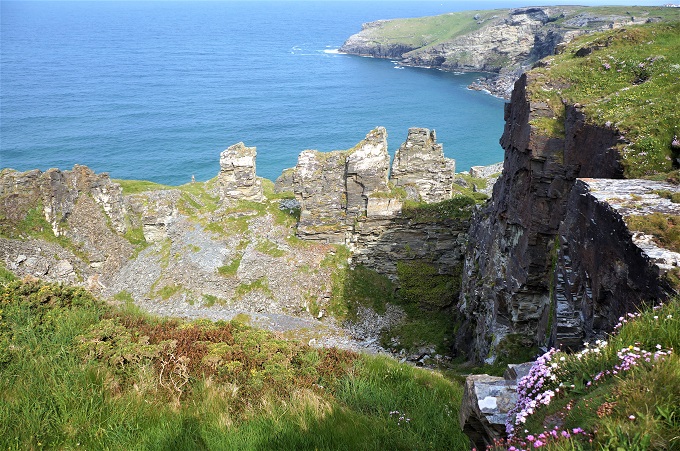
Another point of interest was the remains of slate quarries in the cliffs. Slate was extracted from here for 300 years. There were two ways of getting the slate. The first was by digging a hole in the ground in the area of known deposits and winching it to the surface. The other was by getting at the slate that had been exposed by cliff erosion. There is an isolated pinnacle that is thought to have been left as the fixing point for a cable necessary for winching the slate out of the cliff workings although another explanation is that it contains inferior slate and left as not worth the effort to extract.

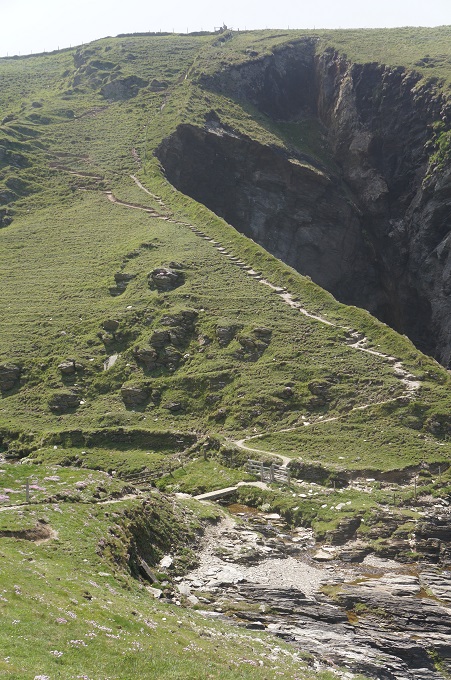
We then came across Trebarwith Strand, a tiny settlement squeezed into a narrow valley, with two life guards tending a very dangerous looking beach. After climbing back out of this valley there was a nice level patch for a mile or so. Our trip notes then innocently said ‘first of four deep valleys signalling the start of punishing ascents and descents’. And they were punishing. By the time we reached our hotel at Port Gaverne we were more than a little tired.

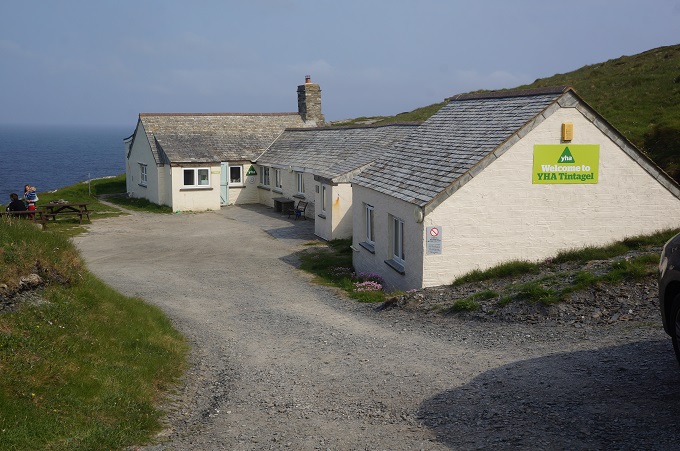
Port Gaverne is a charming spot and the hotel we are staying at dates from the 17th century and although it is fitted out to a very high standard it is still in keeping with the atmosphere of a traditional fishing village. Just half a mile over the hill is the bigger fishing village of Port Isaac where the outside filming of the tv series Doc Martin takes place. In the series Port Isaac is known as Portwenn. We will pass through it first thing tomorrow morning.

We saw very few people on the path today but hundreds of seabirds soaring and diving on the air currents off the cliffs.  Many times we wished we also could soar from cliff top to cliff top and avoid all those deep valleys.


High Cliffs, Myths and Legends

Crackington Haven to Tintagel, 19 km, 1065 metres of climbing

‘One step at a time is good walking’

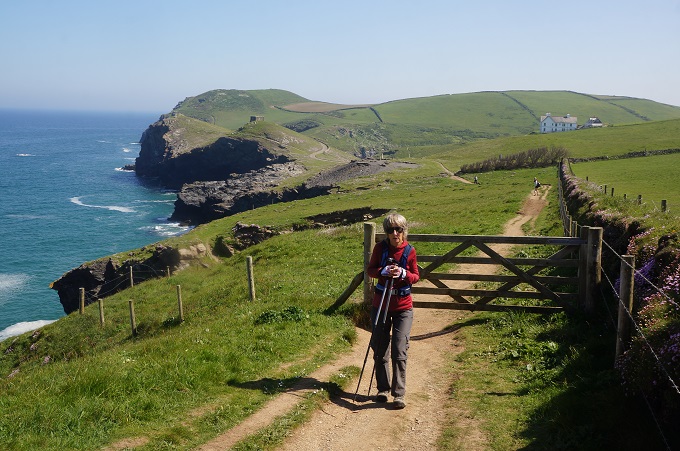
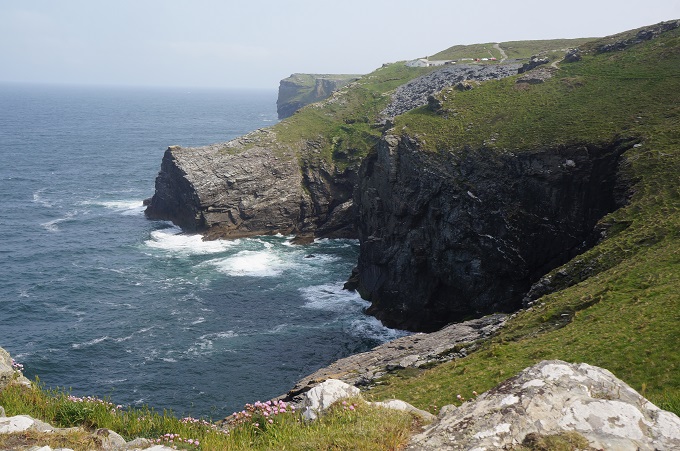
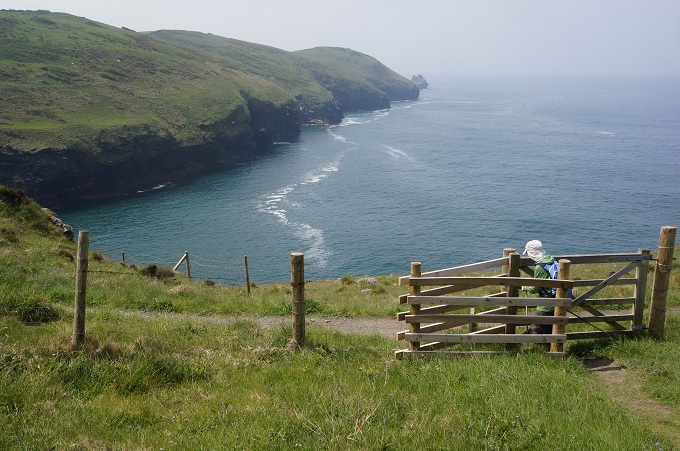
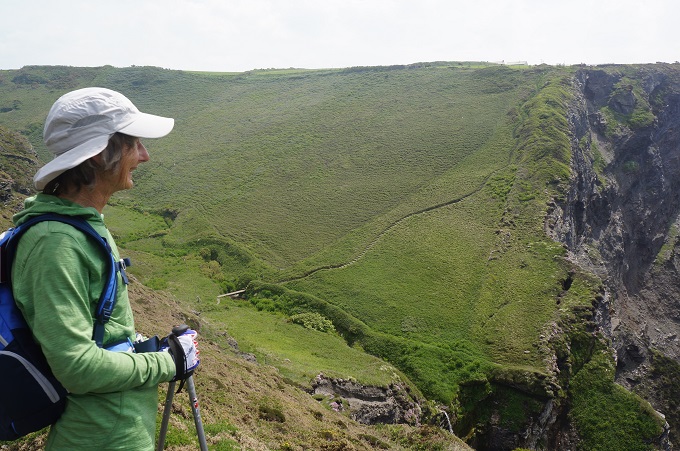
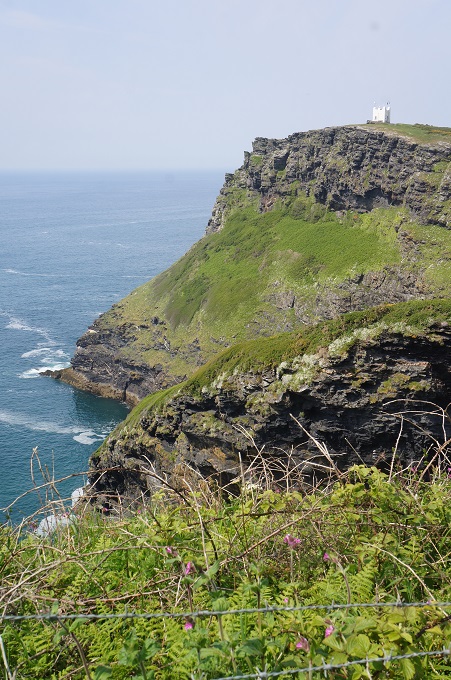
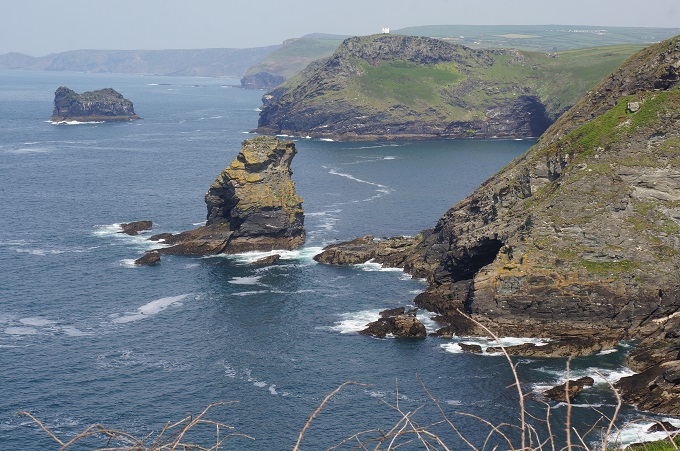
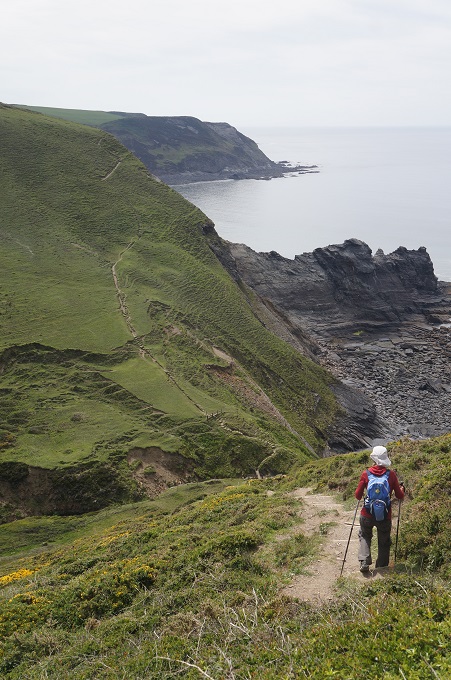
This morning was a section of high cliffs. In fact the highest cliffs in Cornwall and the highest of them all was appropriately named High Cliff. 223 metres above sea level. The approach was the usual up and down, up and down, twisting around the coast. before a final long steady ascent to the top. Almost immediately there was a very steep descent and another climb to Rusey Cliff, only slightly lower than High Cliff. This part of the coast had quite an imposing character as the cliffs seemed really massive and we didn’t see anyone else so it seemed quite lonely.

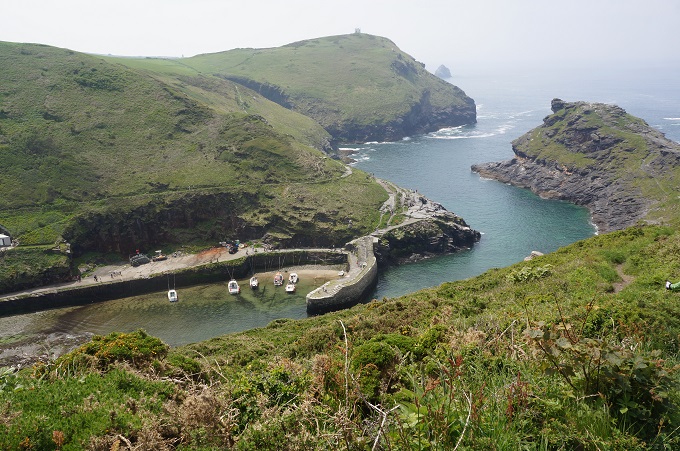
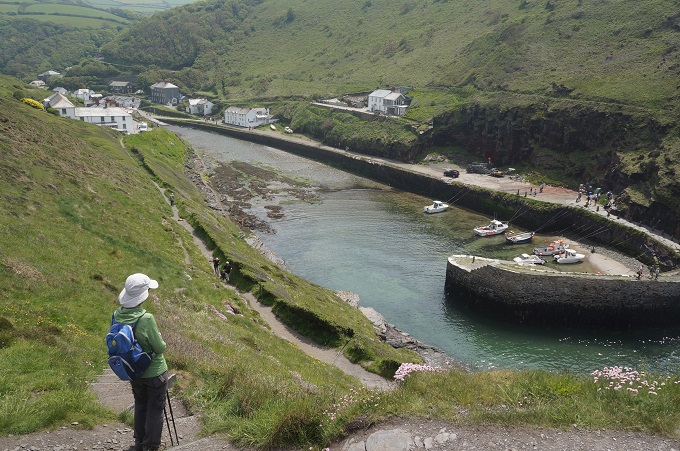
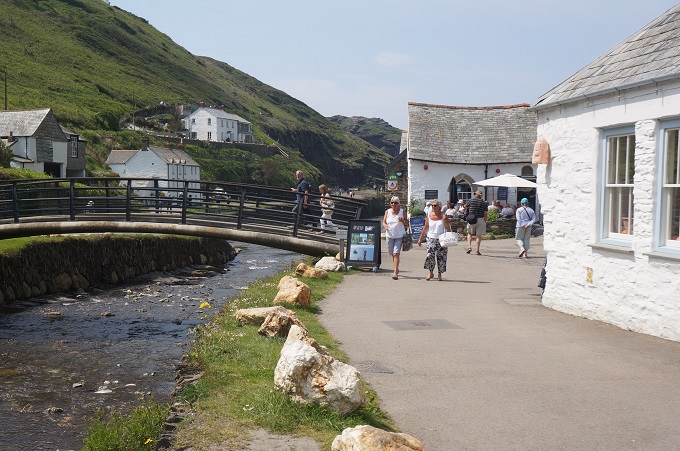
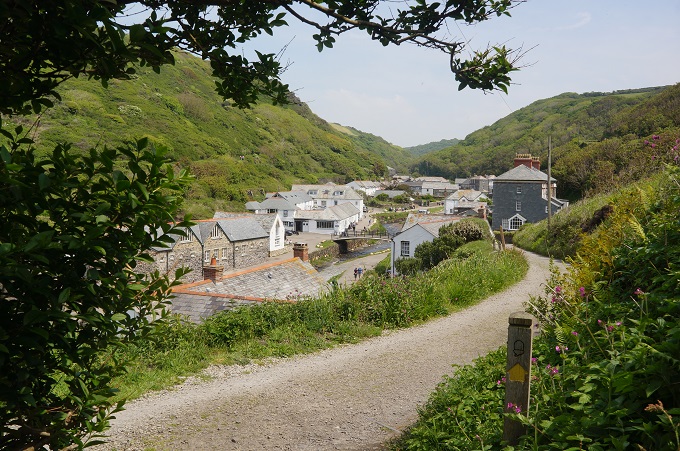
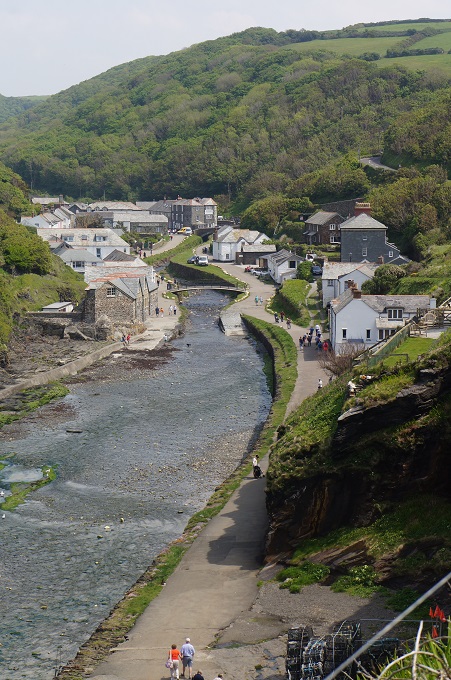
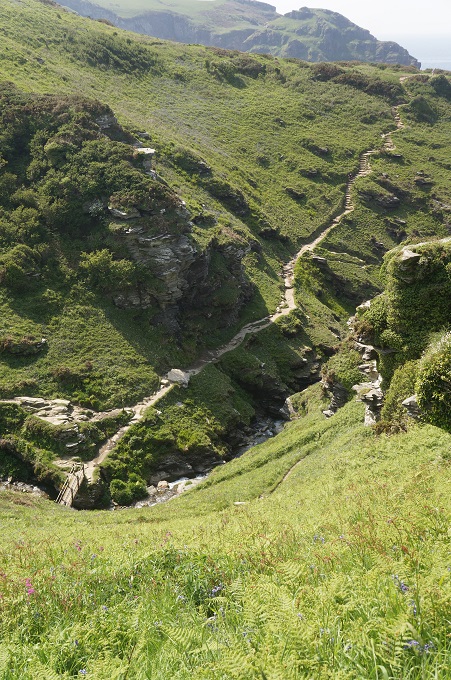
Many more hard climbs and descents before the path eased off and we entered the beautiful harbour inlet of Boscastle. Boscastle is tucked into a small but deep green valley that ends in a sheltered natural harbour. The village made headline news in 2004 when a spectacular and devastating flash flood swept through the streets carrying away houses and cars and creating chaos. Miraculously there were no fatalities. Most of the buildings have been faithfully restored to their original state and today the village looks smart an spruce.

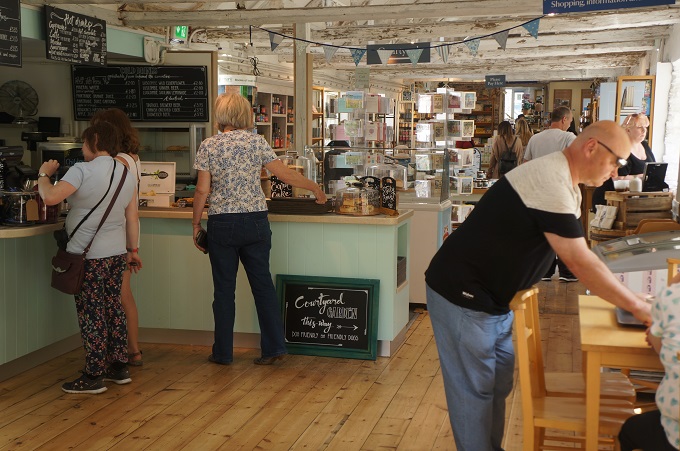
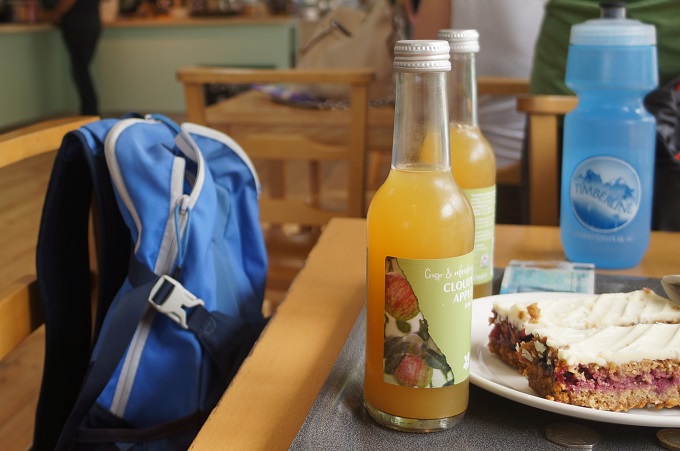
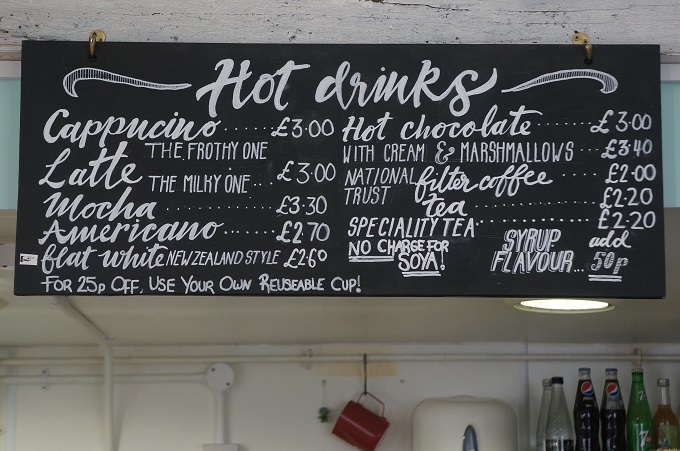
After what had been a pretty tiring morning we stopped at a café for some lunch to recharge for the afternoon. On the drinks menu we noticed you could buy a flat white – New Zealand Style. We didn’t go to The Museum of Witchcraft and Magic.

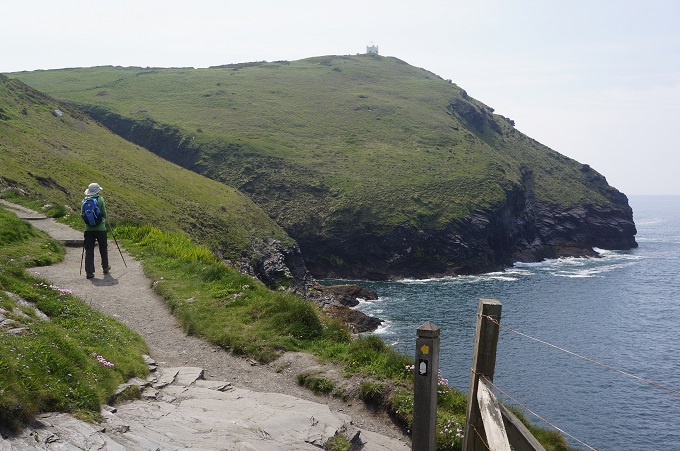
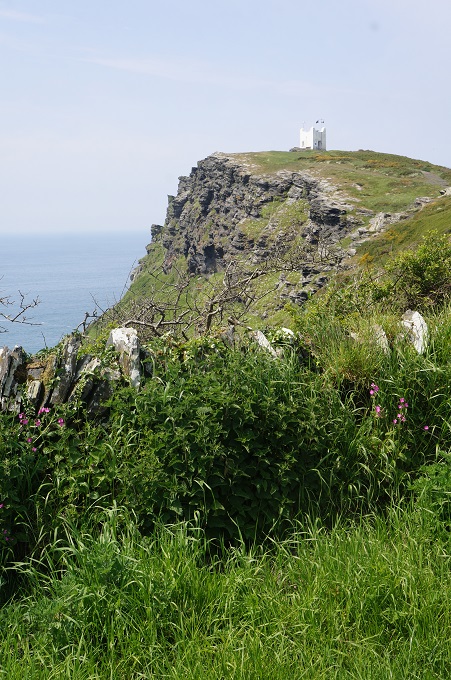
The section from Boscastle to Tintagel is a great local favourite, as it combines all the best bits of the Coast Path – headlands, sandy bays, steep valleys, waterfalls, historic features, and it is not too taxing. It is served at each end by car parks and a bus service, and there is also a camp ground and holiday park close to the path. This area is also popular with bird watchers as there are many rocky off shore islands important for breeding seabirds.

Here in Tintagel are the ruins (really only the foundations) of Tintagel Castle that is reputed to be the birthplace of the legendary King Arthur. Somewhere back in the 6th century a real king called Arthur did actually exist but all the sagas from the 12th century till today, about knights, round tables, Merlin the Wizard, etc are fiction. This hasn’t stopped the name of King Arthur being purloined for pubs, pizzas and pasties and just about everything else in the village.

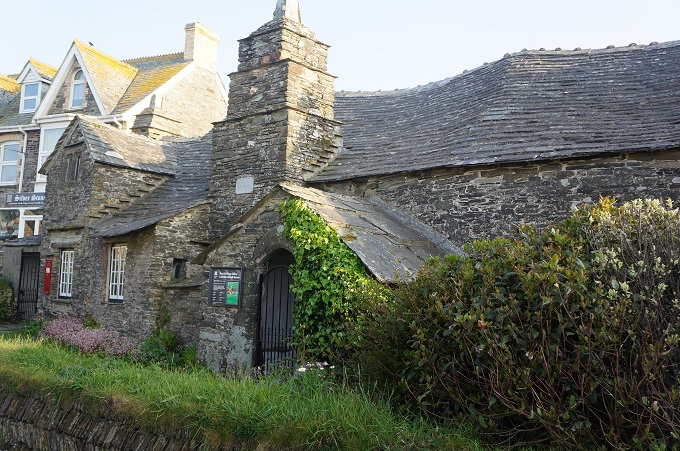
However Tintagel does have a great little treasure, the old post office. This stone building dates from around 1380 it is a rare surviving example of a Cornish manor house (a hall house). Over the centuries it has had many uses and from the 1870s it became a letter receiving house for the village. We were too late to go inside and have a look at the five rooms and the traditional garden.


Cracking Up

Bude to Crackington Haven, 16.4km, 760 metres of climbing

‘Don’t walk behind me; I may not lead, don’t walk in front of me; I may not follow, just walk beside me and be my friend’. Winnie the Pooh

Barbara set a cracking pace out of Bude this morning and Paul had cracked up long before we reached today’s destination of Crackington Haven. [Editor Barbara says that is so corny].

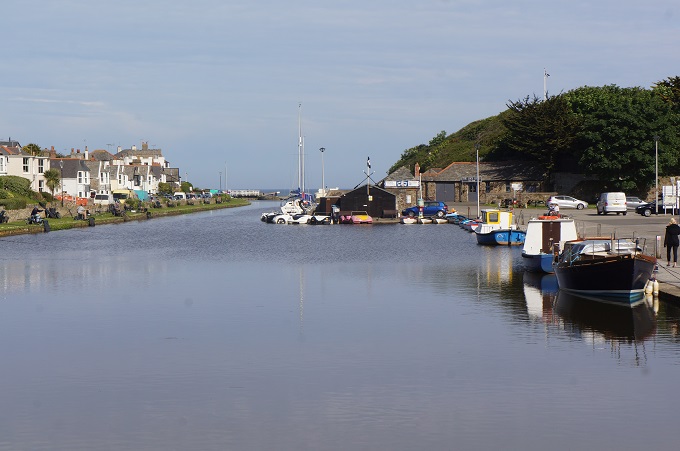
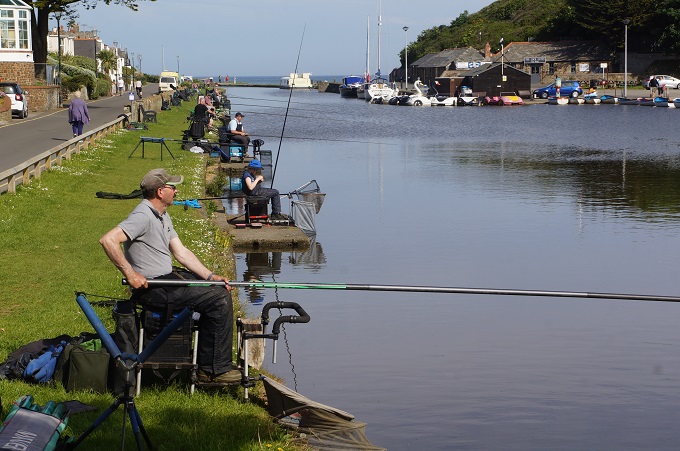
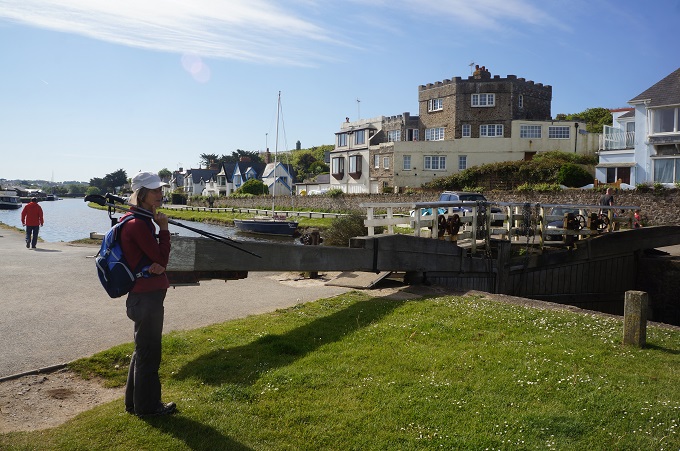
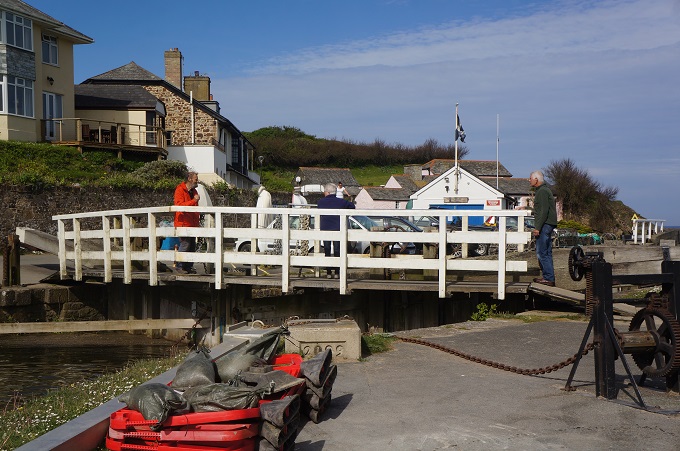
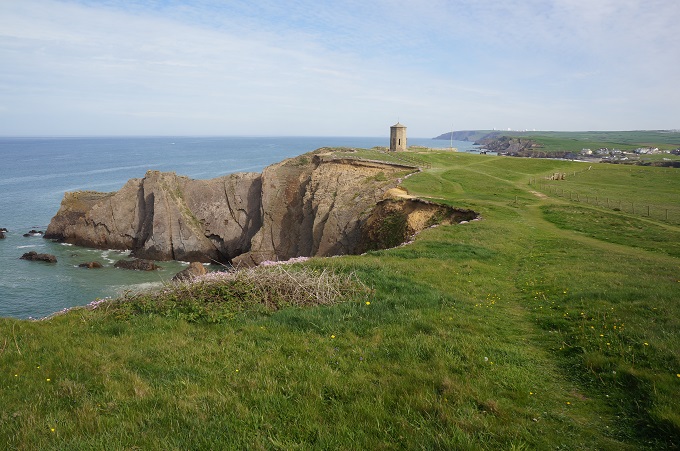
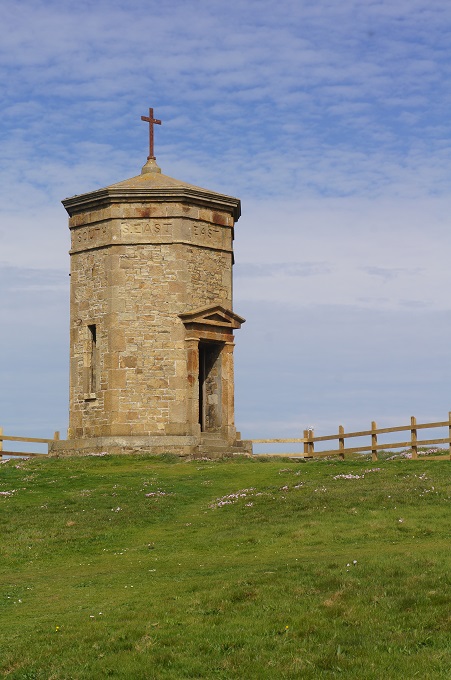
The path started at the sea lock on the famous Bude Canal. A lot of anglers were out this morning, all evenly spaced at about 20 metre centres along the edge of the canal. A gentle climb to Compass Point where there is a small compass beacon. It has the eight points of the compass around its fascia. Locally it is called the pepper pot.

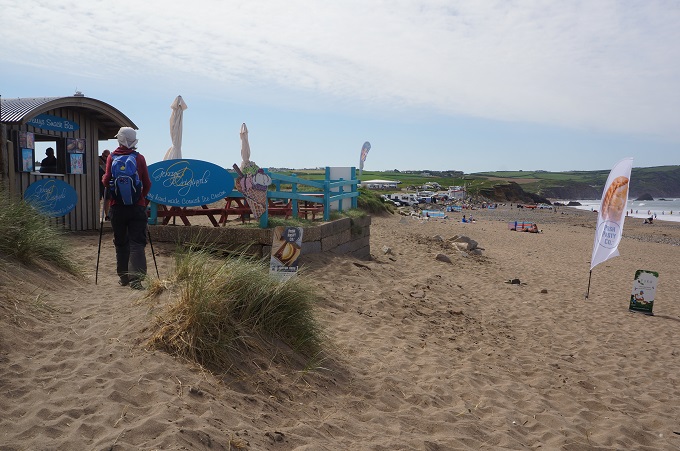
The first section was an easy cliff top grassy path to Widemouth Bay (pronounced Widmouth), a popular beach. Lots of people there on a nice Sunday morning. Surfers, swimmers, sun seekers, life guards, cafes, a pub, general store, campers, a bus service and the last public toilets until Crackington Haven 15 km away.

From here the hard work began with a succession of punishing climbs.  The highest cliffs gave some superb viewpoints. This coastline was even higher and more rugged than yesterday but you knew it would inevitably be cut by deep and steep valleys. Some of the valleys had road access down to the shore so we met a quite a few people doing short walks to one or two of the high points. The path today was like the Paekak Escarpment track on steroids.

We have trying to think of the words in English that describe the simple act of walking. So far we have come up with:

Stride, stomp, saunter, stroll, amble, jaunt, march, meander, wander, hike, lope, wend, promenade, roam, prowl, ramble, plod, tramp, strut, stagger, swagger, skip, hop, limp, shuffle, prance, tiptoe, traipse, gambol, slink, totter.

We do a lot of these in a day.

As we start out we march, stride, strut or swagger (like Jagger?).

As the day goes on we stroll, amble, and wander.

When we are lost we roam, wend and prowl.

When we are sore we tip toe and limp.

Near the end of the day we plod and stagger.

Going down to dinner in the evening we traipse, shuffle and totter.

But in our dreams as we imagine tomorrow we prance, skip, gambol and lope along.