Lest we Forget

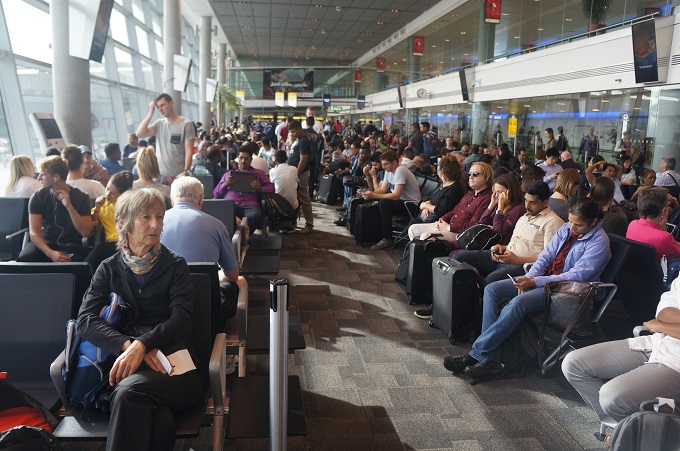
Our heads and our hearts are still confused and bewildered with the effects of jet lag. Flying is a strange experience. Crammed so closely together with strangers in a steel tube. Emerging now and then into the unnatural spaces that are airport terminals. These spaces are divorced from reality, no sense of place or time. Outside it can be dark or light, hot or cold, dry or wet, Antarctica or Abu Dhabi. Who would know? The world may have ended. Inside the terminal it is always the same artificial environment, everywhere in the world, probably everywhere in the universe. They are populated by Zombies wandering around with crooked necks looking up at the slowly changing secret codes on huge screens. Dreading the sight of the cursed words ‘Flight Delayed’.

We needed to get our heads together, not yet ready for the noise, the intensity, the pace of a great city. For me the best thing about London is its open spaces. 47% of London is green space, there are 3,000 gardens, 8 million trees (the world’s largest urban forest) and 13,000 species including us. Seven royal parks, 45 square kilometres of public parks and gardens in the City of London.

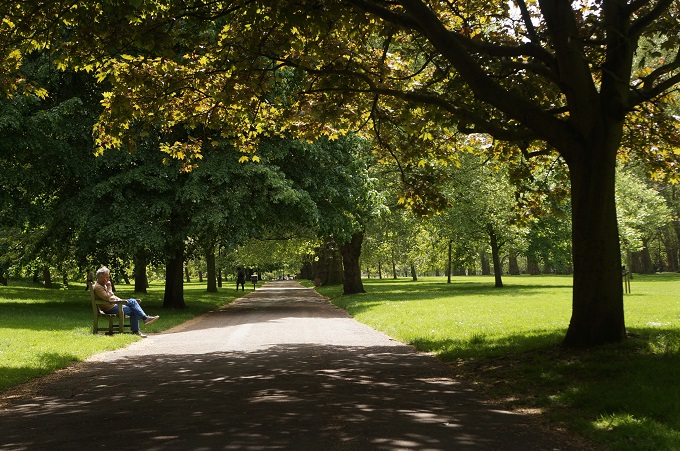
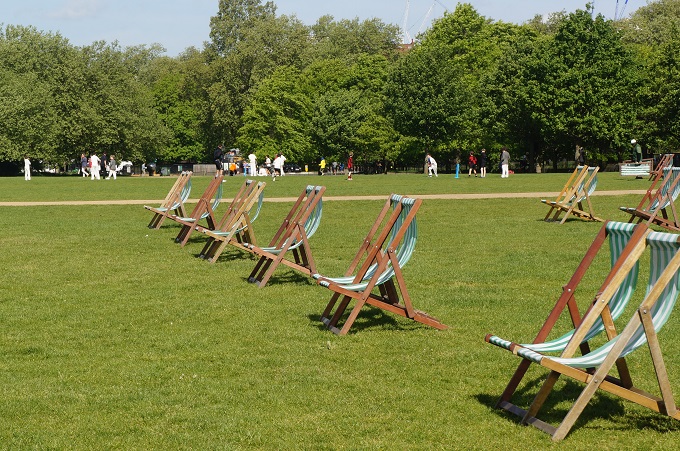
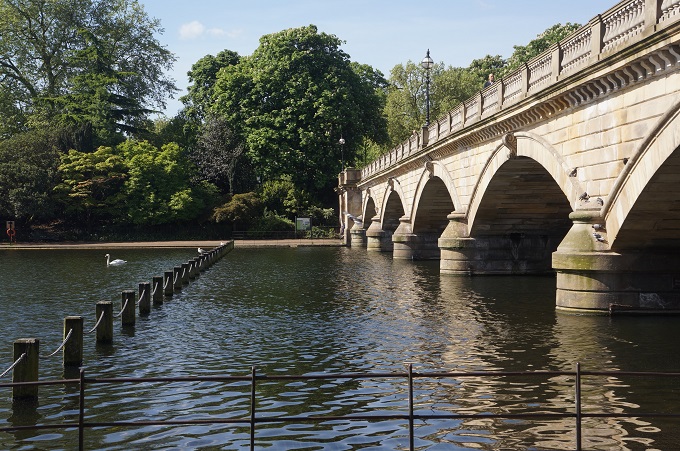
So we spent most of the day in Hyde Park, one of the greatest city parks in the world and the old hunting ground of Henry VIII. It is the largest of four Royal Parks that form a chain through London. A quiet day wandering in the meadows enjoying a warm, sunny spring day. What follows is a description of three places of interest that appealed to us.

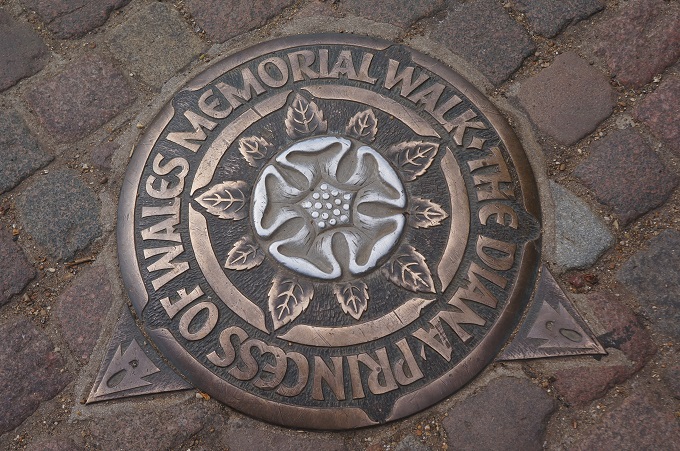
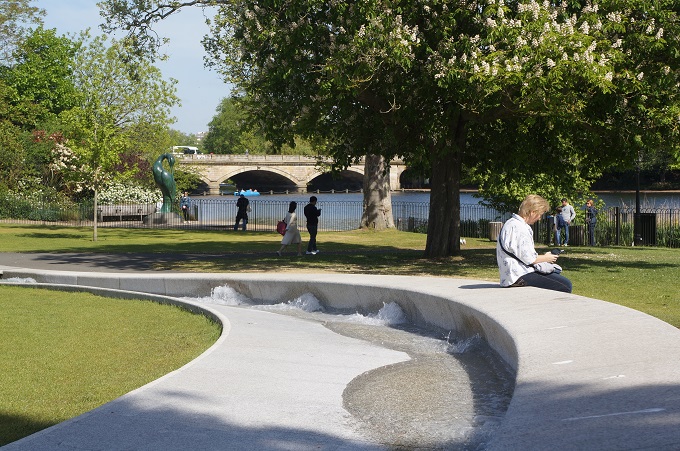
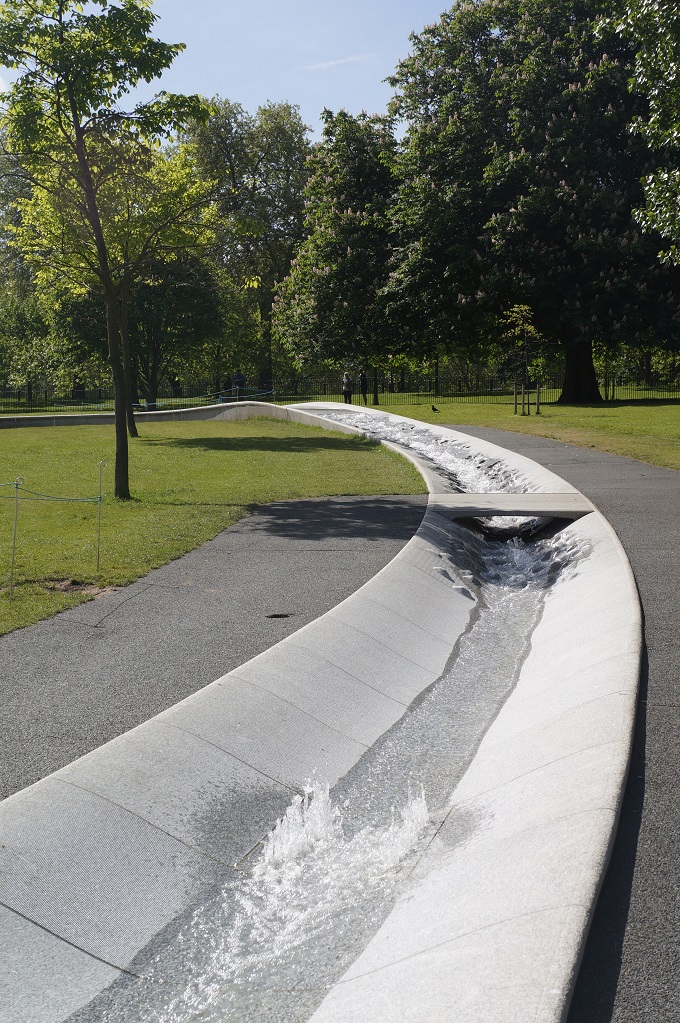
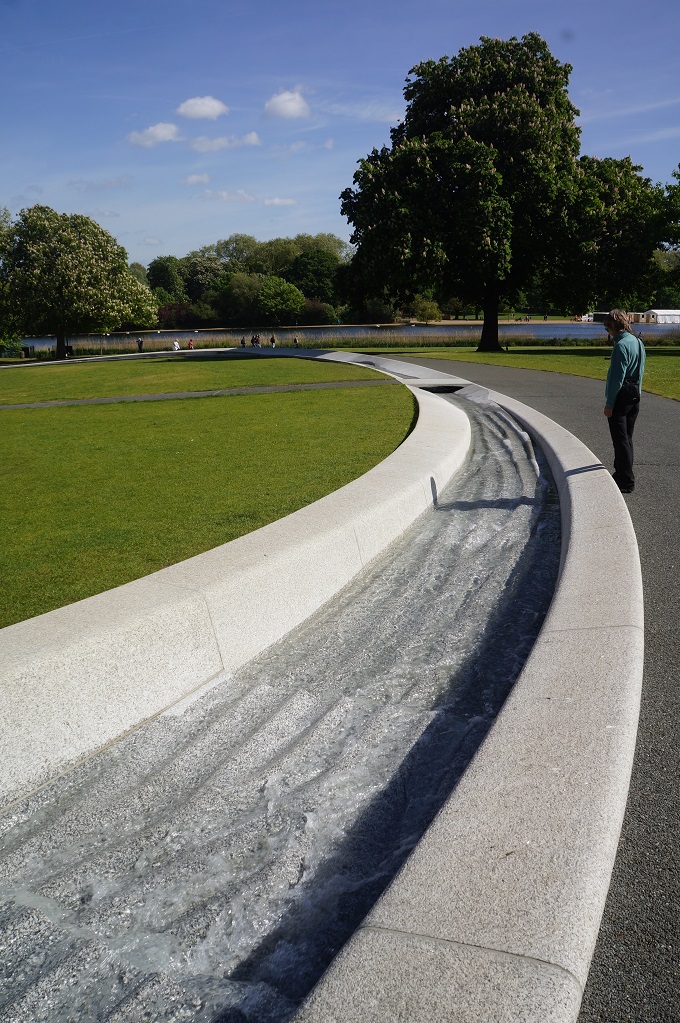
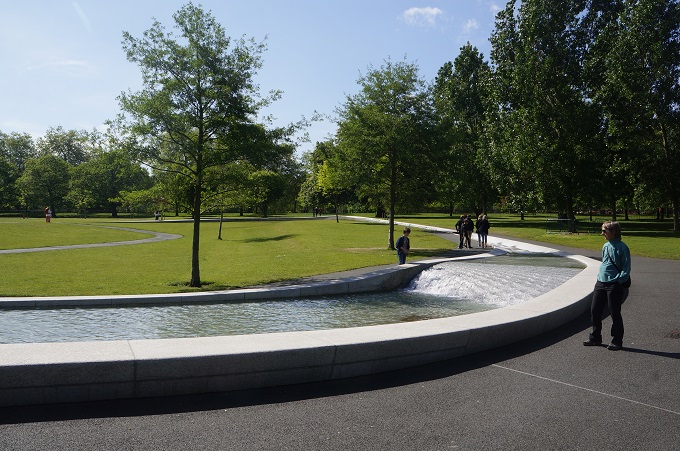
Diana, Princess of Wales Memorial Fountain. This an oval of Cornish granite slabs on the side of a gently sloping grassy hill. The oval is about 50m x 80m and the 545 slabs are shaped in many ways and form a channel like a stream bed. Water is pumped in at the top of the oval and flows down each side to meet at a pool at the bottom. One side of the stream bed descends fairly smoothly to the downhill end of the oval with gentle ripples; the other side consists of a variety of steps, rills, curves, and other shapes so that the water plays in interesting ways as it flows to the tranquil pool at the bottom. The two sides were intended to show two sides of Diana’s life: happy times, and turmoil.

You are allowed to sit on the edge of the channel and put your feet on, or walk in, the water. There are three little bridges so you can walk on the inside or outside of the oval. The play of light on the water is fascinating as it glides or slithers or tumbles over the various surfaces shaped into the granite. But the thing that interested me most was the sound. The artists Kathryn Gustafson and Neil Porter have created the sounds that water makes as it tinkles, splashes, surges or drips its way down the slope. All by just varying the shape and texture of the surface of the granite. At one point you swear large boulders are rumbling underwater down the slope but it is just the effect of some jets of water pushing up into a gentle flow of water.

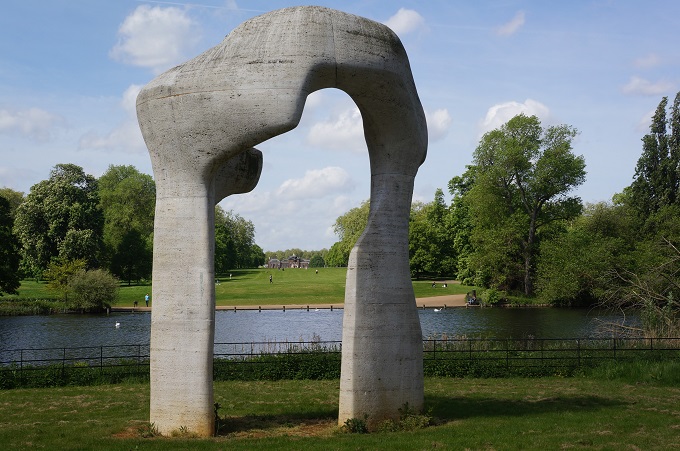
Henry Moore Arch. This 6 metre high megalith of 7 large Italian travertine stones weighs nearly 40 tonnes and is shaped as an arch. It is located on the side of a grassy slope overlooking the Long Water of the Serpentine Lake. You can stand looking through the arch, across the Serpentine and through a long avenue of trees to Kensington Palace in the distance. It is a masterful composition but unfortunately is fenced off so you can’t walk through or around or touch the arch.  Maybe because in the past it was deemed unsafe and has been disassembled, reinforced and reassembled.

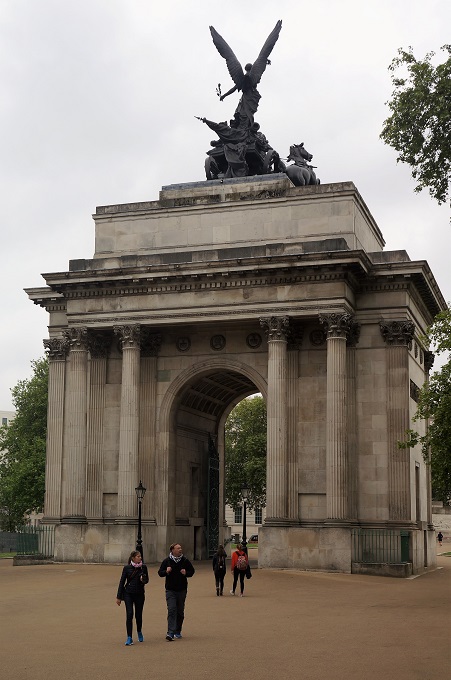
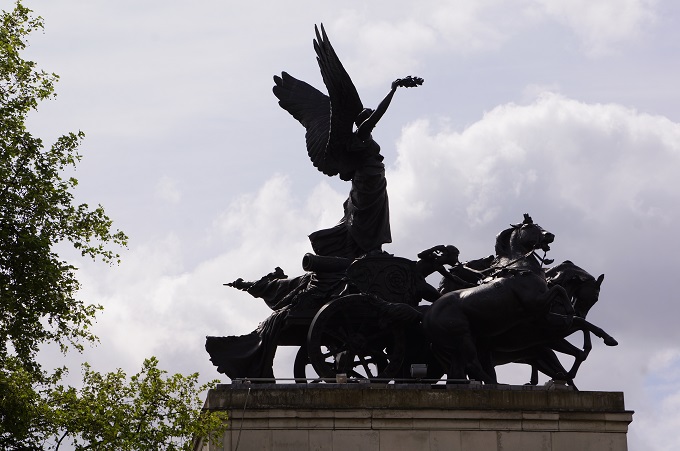
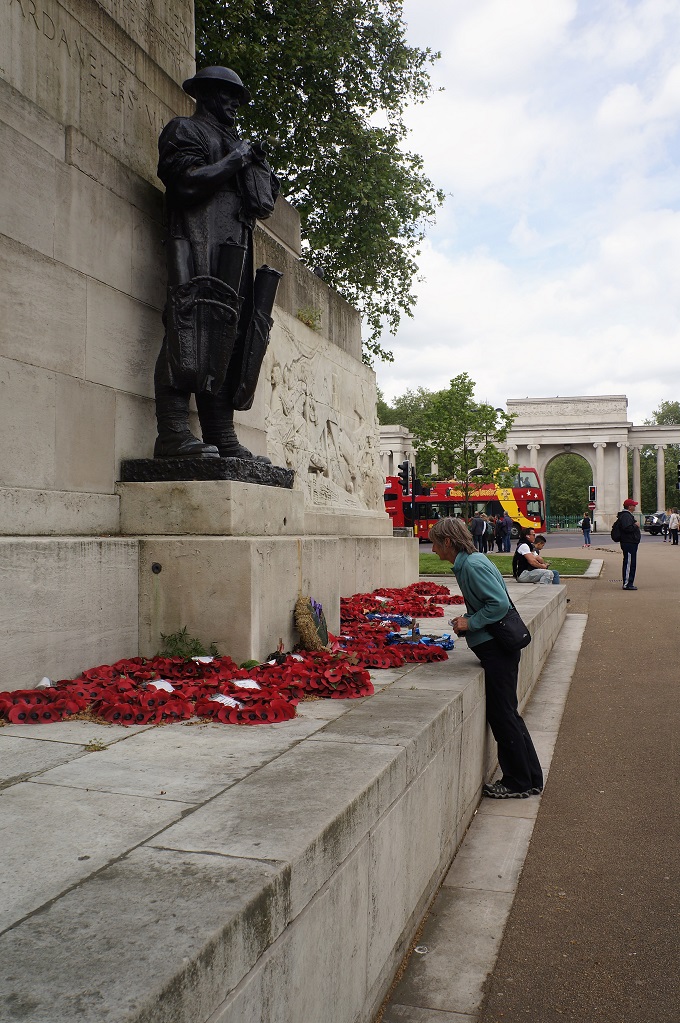
The War Memorials. On a large traffic island opposite Hyde Park Corner, between Hyde Park and Green Park, there is a collection of war memorials. In the middle of the island and dominating everything else is the Wellington Arch. A victory arch proclaiming Wellington’s defeat of Napoleon. On top of a huge ceremonial classical arch, with heavy iron gates, sits the largest bronze statue in Europe depicting the Angel of Peace descending on Quadriga, the four horsed chariot of war.

Facing this is the Royal Artillery Memorial in a much soberer style. A stone and marble pile topped with a one third over-sized stone sculpture of a howitzer. Even with the over sizing, the gun seems like a toy compared to the huge sculptures of four artillerymen. Stone reliefs show realistic scenes from WWI, unusual at the time.

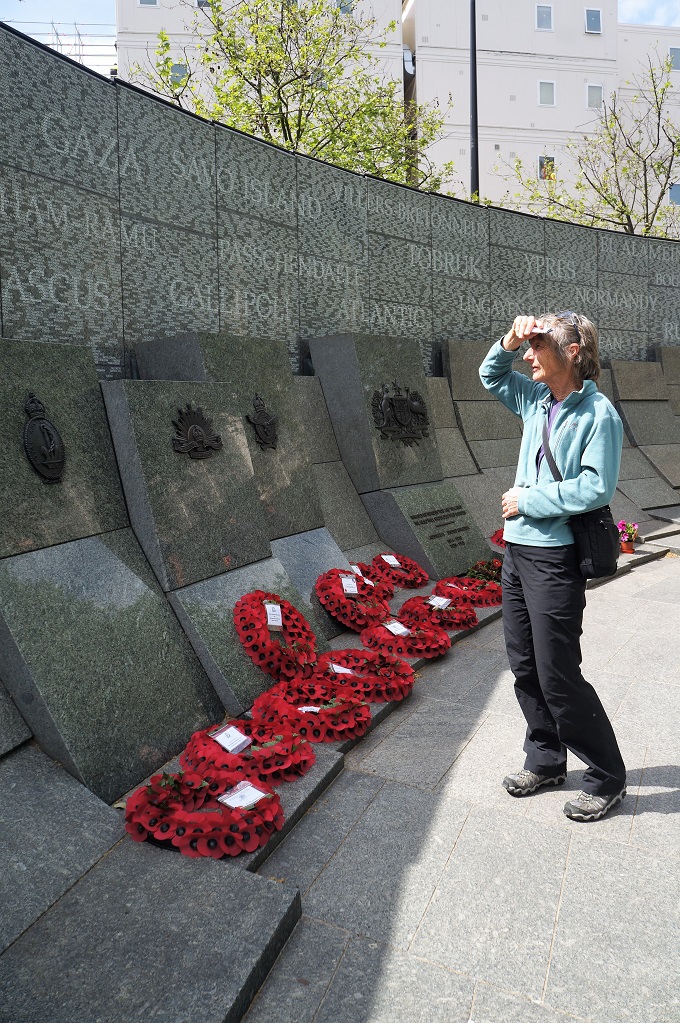
Next to this is the Australian War Memorial. This is a fairly modern grey-green granite semi circular curved wall in a slight dip forming an amphitheatre. The granite stones are inscribed with over 24,000 names of the villages and towns that Australian soldiers came from to go and fight our wars. You have to go up close as the names are quite small, about 25 mm high, but are cleverly inscribed so that standing further back you read in a much larger font the names of the 47 battles in which Australians have been involved, eg Lone Pine, Singapore, Gallipoli.

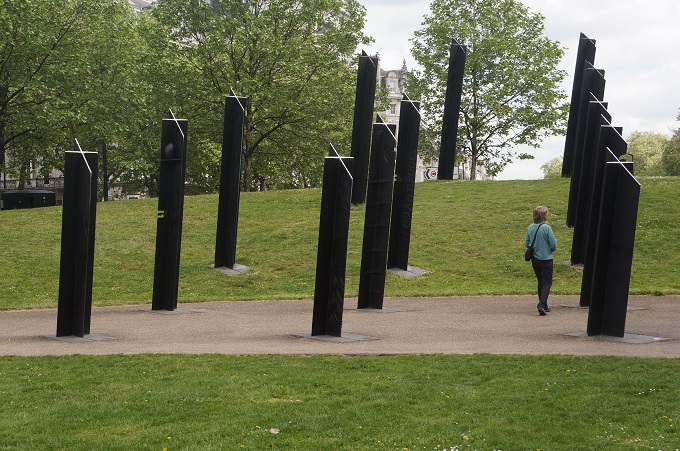
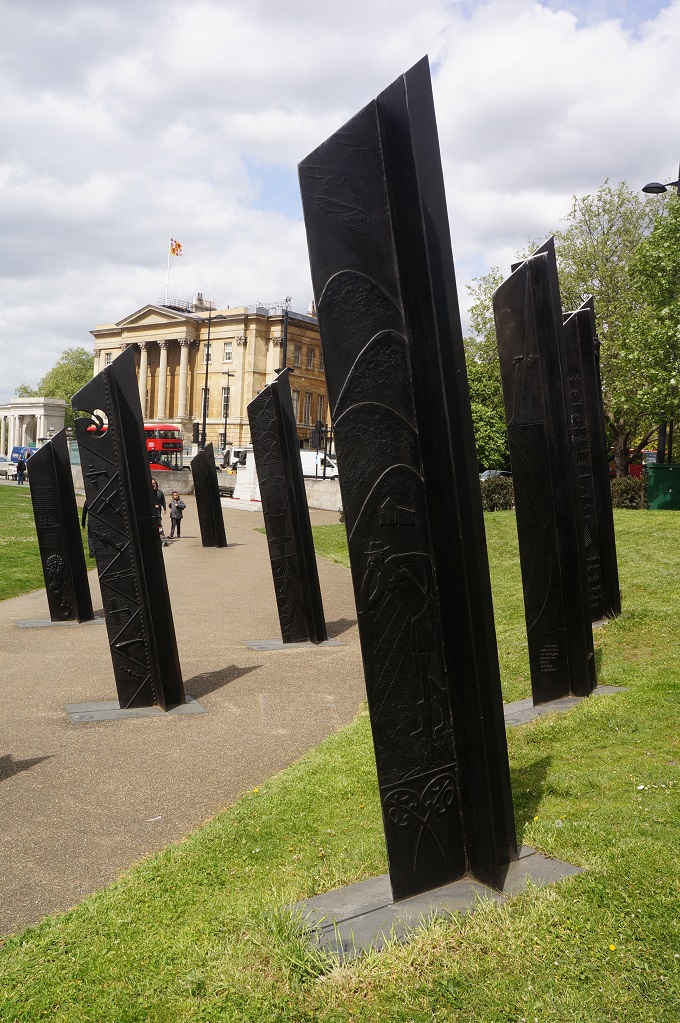
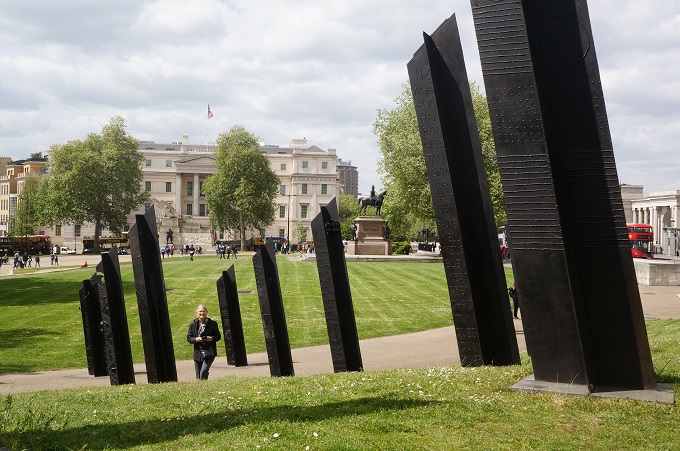
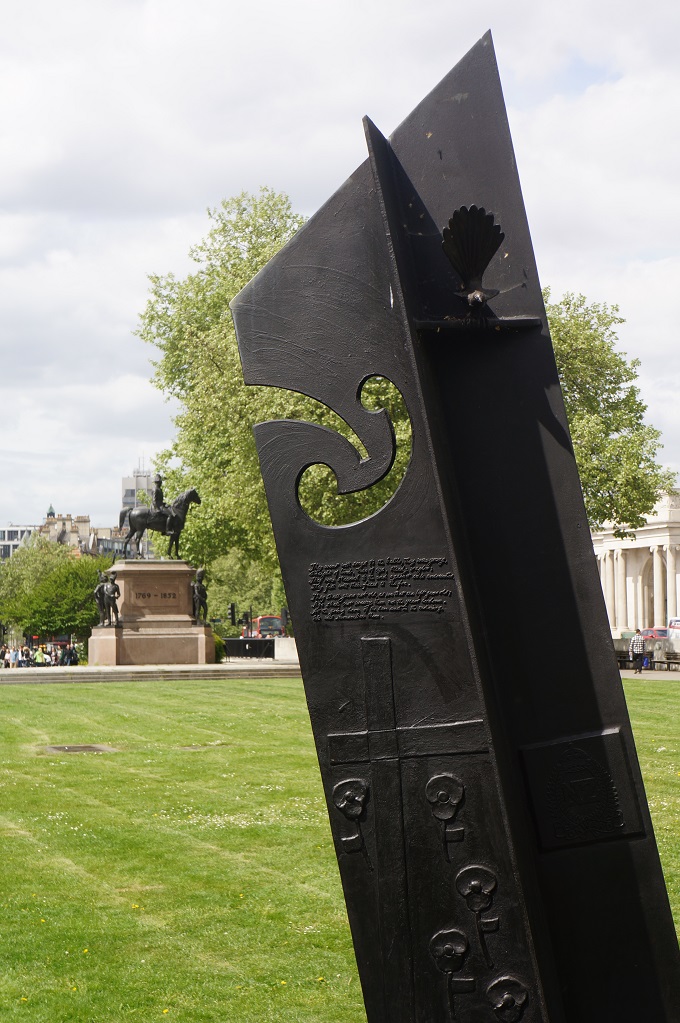
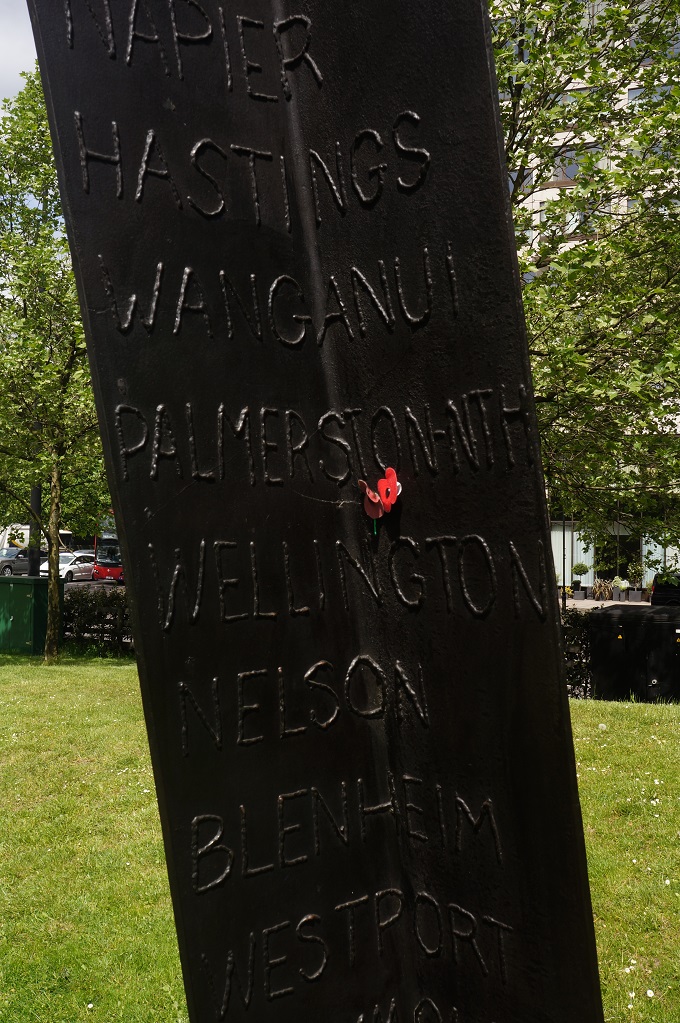
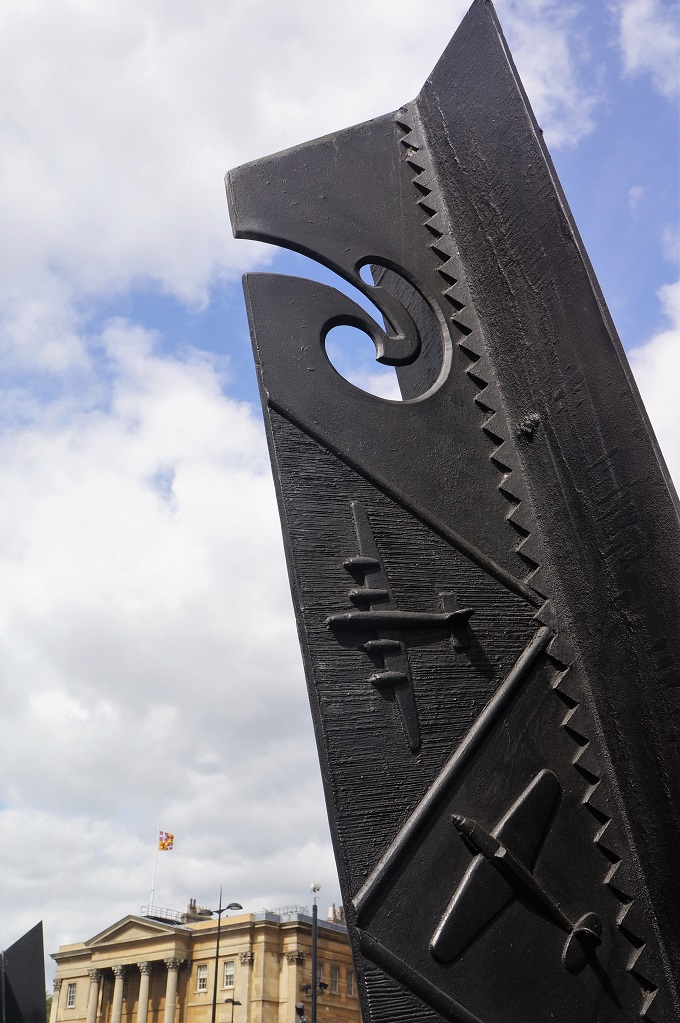
Opposite is the NZ War Memorial. This is in total contrast to all the other memorials on the traffic island and in my totally biased opinion easily the most symbolic. It comprises 16 heavy metal cross shaped girders projecting from the ground at an angle. From a distance the black painted girders look like the posture of warriors doing a haka, or the barrels of shouldered rifles, or soldiers in marching formation. The top of the girders are cut off at an angle and are polished and shiny and so they look like cross shaped grave markers. Up close the girders are decorated with texts, names, patterns, symbols, flowers, ferns etc symbolic of NZ.

The whole affair is set on a slightly sloping mound and the walking path goes right through it so you approach it from a distance, walk through it, see it close up, touch it. I think sculptor Paul Dibble and John Hardwick-Smith from Athfield Architects have done us proud but others have described it as ‘an infestation of public space’ and as ‘blisteringly unlovely’.

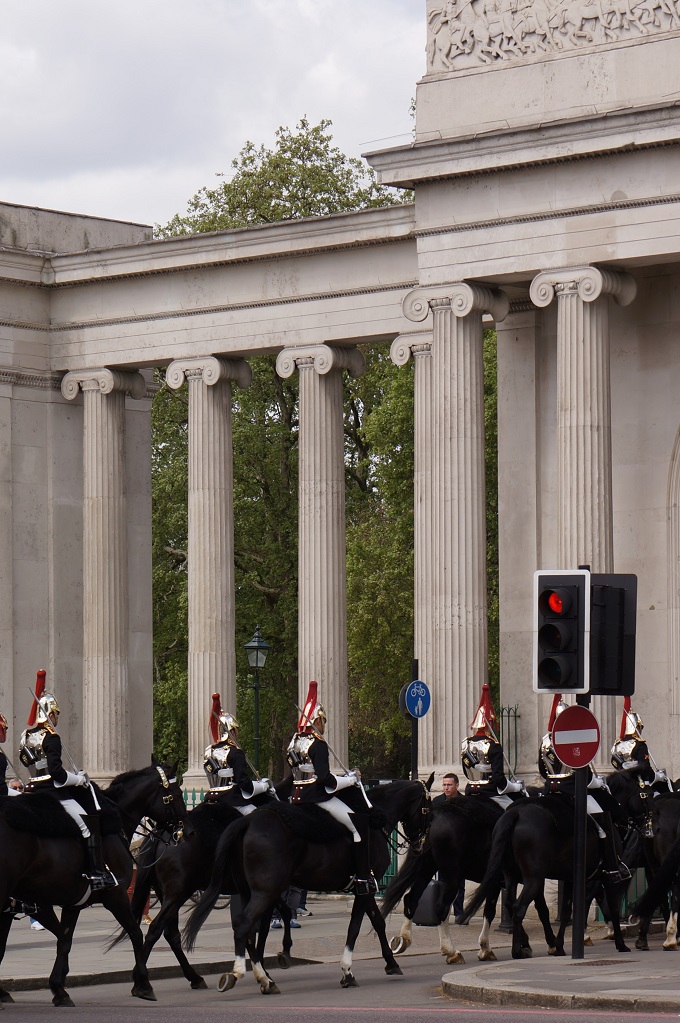
While at the war memorials a troop of The Queen’s Life Guard road past on immaculately groomed horses with breastplates shining in the sun. Each day they ride from the Hyde Park Barracks to Horse Guards Parade to change the Queen’s life guard. The is a different ceremony to changing the guard at Buckingham Palace.
 

London Calling …….

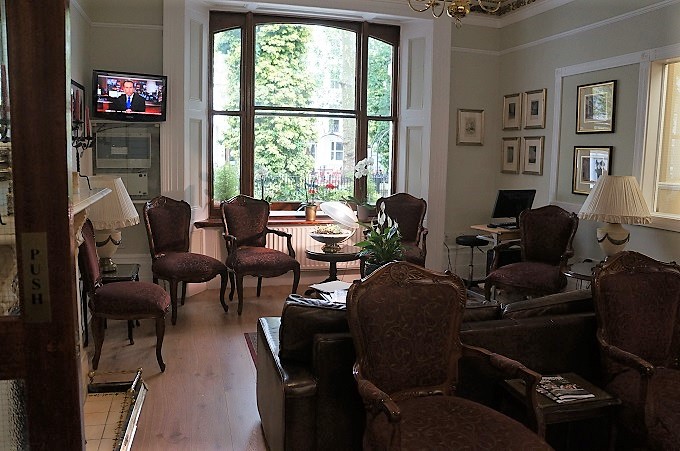
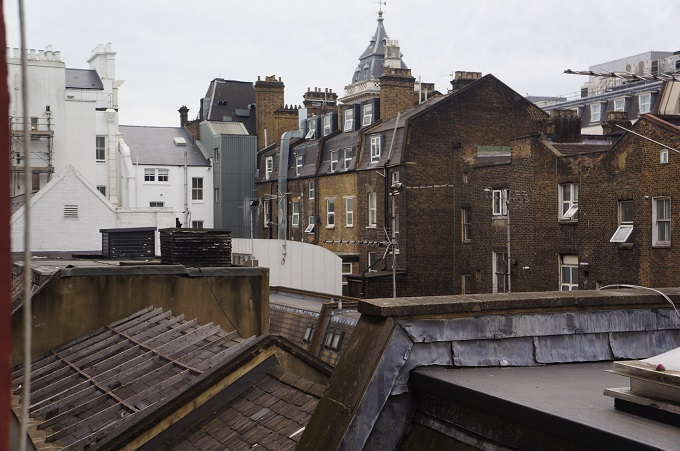
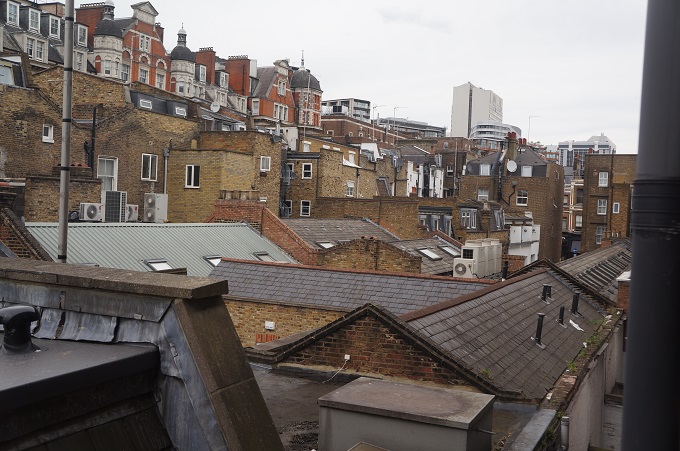
We finally made it to our Paddington hotel at about 12.15 am. Fortunately the trains were still running at that late hour and there was still someone at the hotel reception desk to check us in. It had taken a fraction over 48 hours from walking out our apartment door to entering our hotel room. A large chunk of that time at Gate 33, Terminal 3, Abu Dhabi International Airport.

We weren’t feeling too bad having managed to grab a few snatches of sleep. Our bodies were feeling a bit strange, probably from the amount of food we had eaten in relation to the almost total lack of exercise we had for 2 days.

There are a few ways to get from Heathrow to Paddington, our destination in London. The Underground (cheapest if you have an Oyster card but a change of train lines required), National Express bus (second cheapest but goes to Victoria Station about 1½ km from our hotel), The Heathrow Express (fastest – a 15 minute nonstop train ride but expensive at £22), The Heathrow Connect (same train ride as Express but half the price and makes 6 stops along the way for commuters – so takes twice as long), a taxi (the most expensive at £50 – £80 but is door to door). We chose the Heathrow Connect.
We tried to buy a ticket before boarding but the sleepy lady in the ticket office told us not to worry, just purchase a ticket on the train. On the train however, about every three minutes, the intercom kept telling us that tickets must be pre-purchased and be available for inspection, tickets could not be purchased on the train, and anyone on the train without a ticket may be subject to a penalty fare.

So we sat in fear and trepidation for the 35 minute ride but no inspectors came to interrogate us and at Paddington we quickly alighted and disappeared like thieves into the darkness of the night.

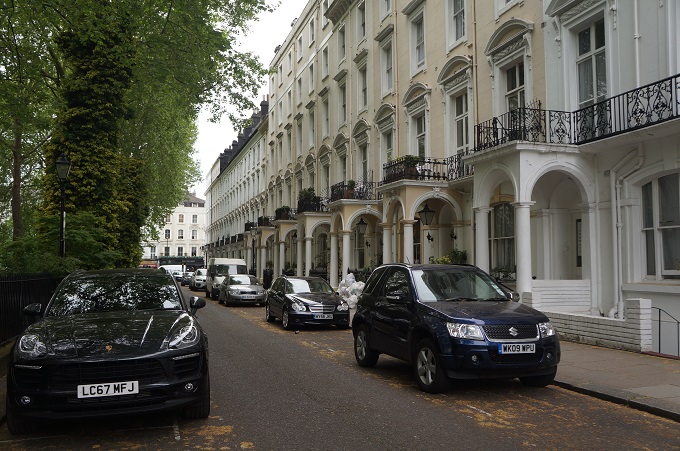
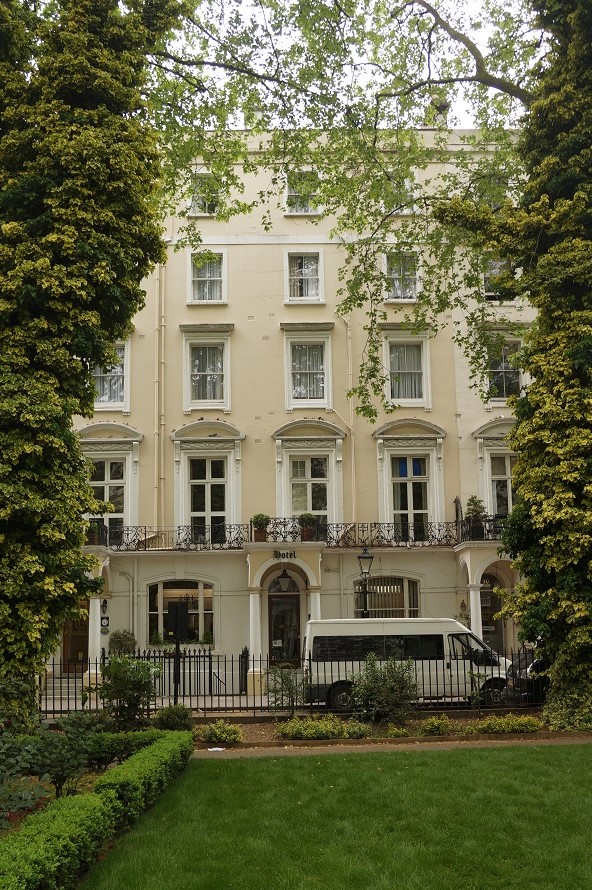
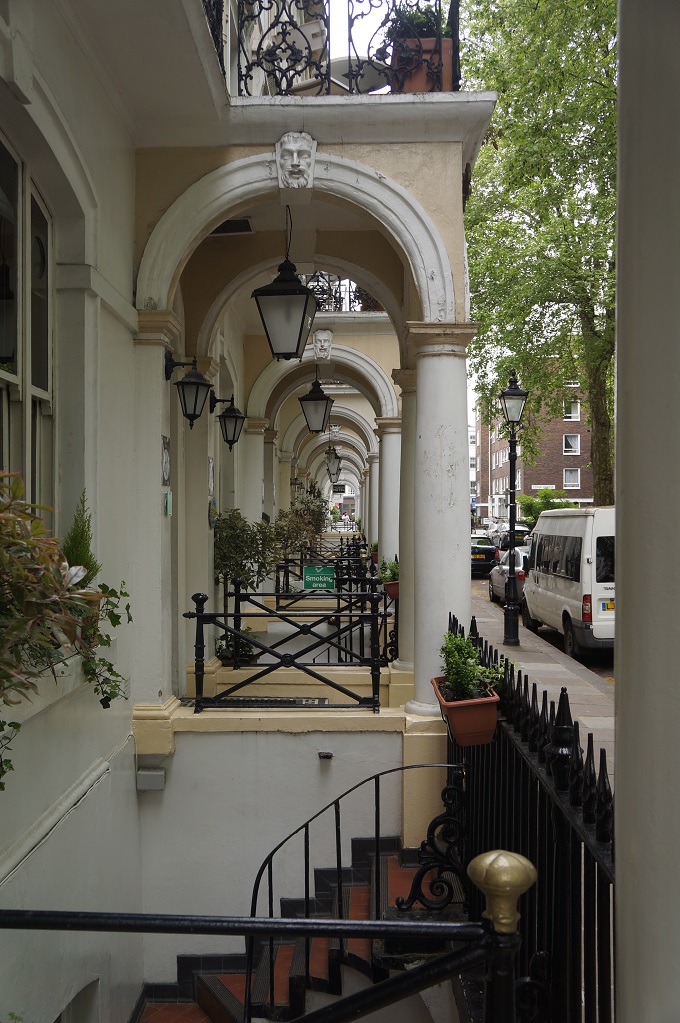
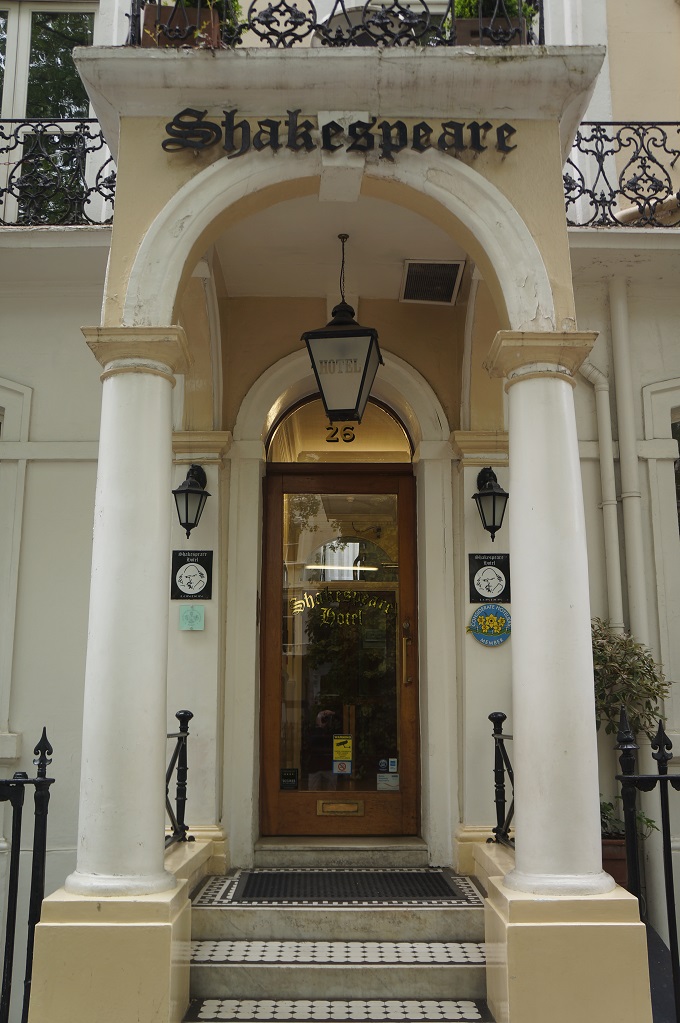
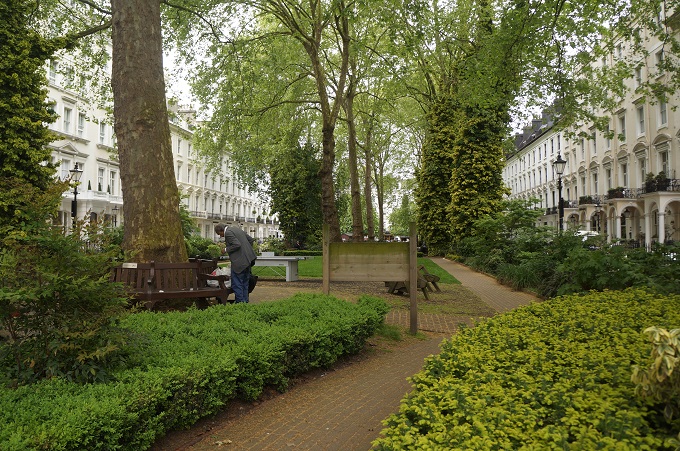
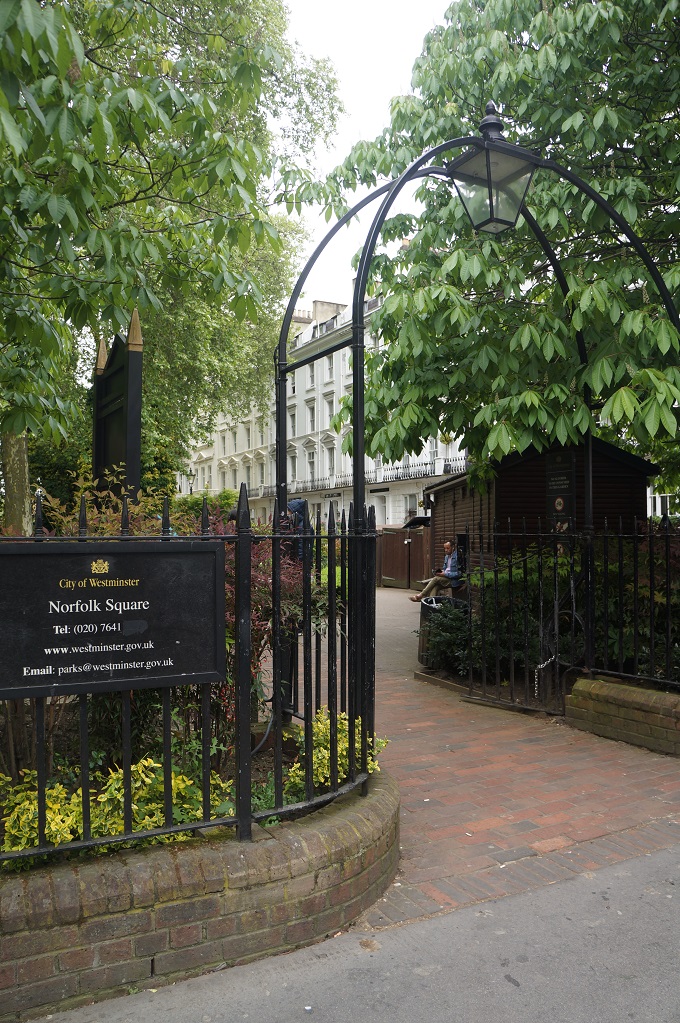
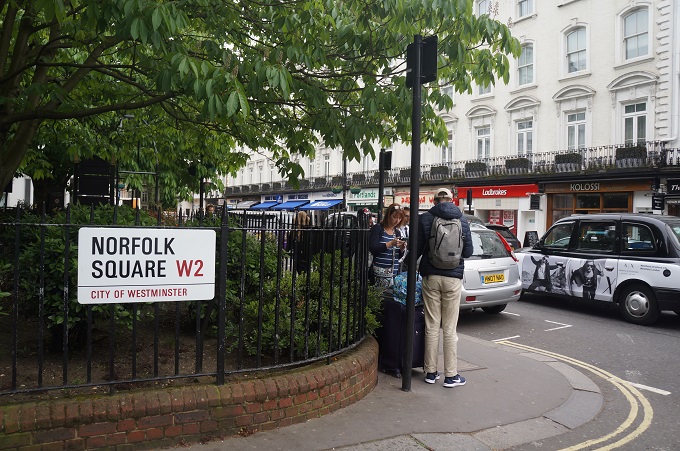
Our hotel, Shakespeare Hotel, is about 2 minutes walk from Paddington Station and is one of many hotels surrounding a square – Norfolk Square. The square was built in the early 1800s and was a private garden for the use of the nobility and their servants who lived in the houses surrounding it. The ladies of the houses would take tea in the square, in the shade of the trees, served by their maids.

The square was privately owned and maintained by the residents up till the end of WWII when the local council took it over. The residents had their own constable who patrolled the area and acted as gateman.

The houses are all 5 story + basement terrace houses with a mews at the rear for horses and carriages. Over time the large houses were subdivided into flats and in recent times reconfigured into boutique hotels. The stables in the mews have now become expensive apartments.

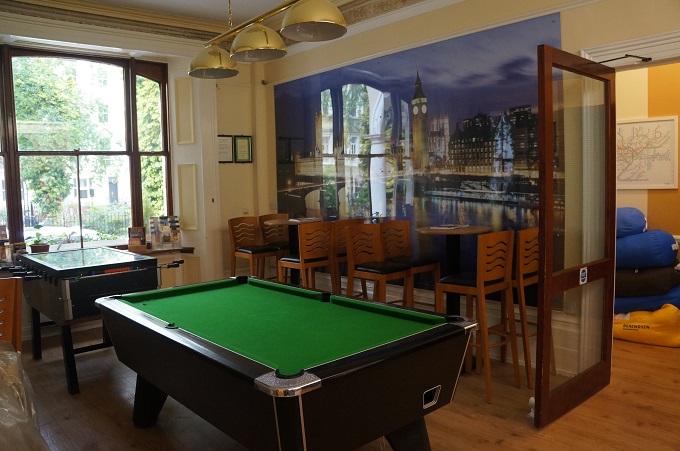
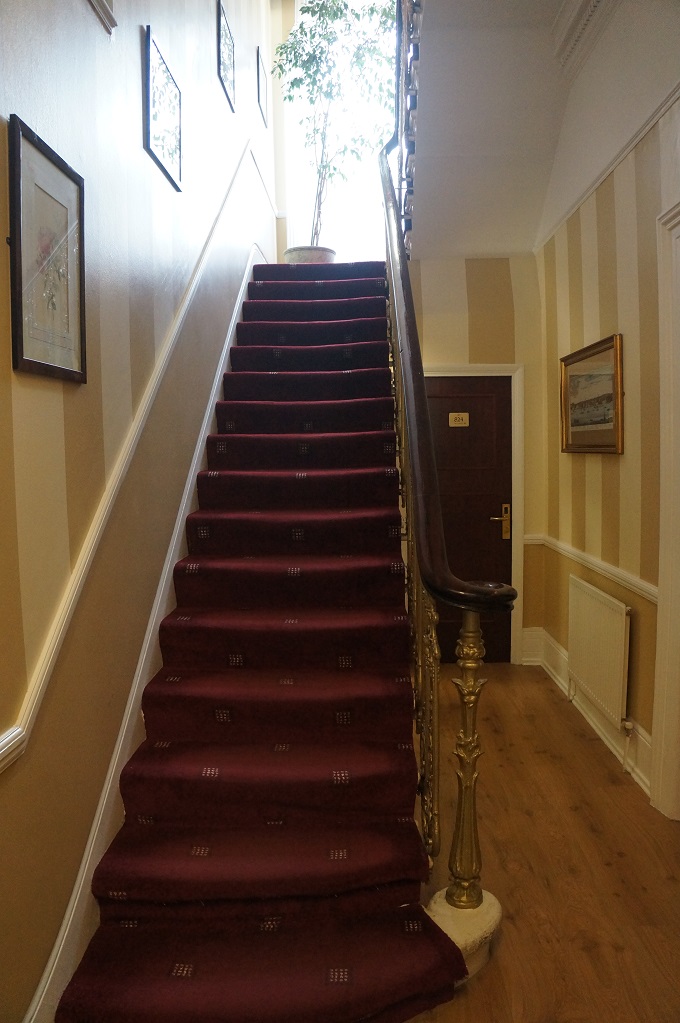
Our hotel advertises itself as being proud to offer the best value for money and affordable accommodation in Paddington, ie it’s one of the cheapest in this part of London mainly because it doesn’t have a lift so can’t get a very high star rating. Luckily we are located on the ground floor. It has all the basics and lots of character but is a bit tired and worn out (I know that feeling) but a bit quirky which is just the sort of place we like. We are feeling very comfortable already.


Back in the Day

When we arrive in London it will be almost exactly 40 years to the day since we first visited in May 1978. This got me thinking about the differences between then and now.

In 1978 we flew Wellington/Auckland/Nadi (Fiji)/Honolulu (Hawaii) to Los Angeles. After a two day stopover we flew Los Angeles/San Francisco/London over the polar route.

On the return it was London/Rome/Calcutta (now Kolkata)/Hong Kong. There may have been another stop, possibly Beirut, between Rome and Calcutta. After a two day stopover it was Hong Kong/Sydney/Wellington. Hong Kong was then still very much a British Territory (until 1997). All flights were Air NZ or British Airways. Air NZ on McDonnell Douglas DC8 and DC10, British Airways on Boeing 707 and 747.

There were no credit/debit cards as we know them, everybody used cash and traveller’s cheques (James Cook for UK and Europe, American Express for USA). Finding somewhere that would cash traveller’s cheques was often a pain. I had a Diner’s Club card but this was not technically a credit card but a ‘charge’ card as you had to pay any charges in full at the end of each month. ATMs were in widespread use in the UK but did not come to NZ until the 80s.
EFTPOS started in the USA in 1981 and was first used in NZ from 1985 in petrol stations.

1978 was still the technology dark ages. There were no personal computers yet. The internet as we know it didn’t exist. No Domain Names (1985), Google (1998), Wikipedia (2001), Facebook (2004), YouTube (2005), Twitter (2006).

The first (very, very small) commercial cellular telephone system had begun operation in the US. The first “public” mobile phone call in the UK wasn’t made until 1985. International telephone calls were hugely expensive and reserved for special occasions, Xmas, birthdays, emergencies, etc.

1978 in New Zealand:

Robert Muldoon was re-elected Prime Minister of NZ. Interestingly although National won most seats to be re-elected to government, Labour actually won most of the popular vote. Social Credit despite winning 16% of the vote gained only one seat. This was under the ‘first past the post’ system, long before MMP.

The Governor General was Sir Keith Holyoake.

The Mayor of Wellington was Michael Fowler.

After 48 years of trying, for the first time New Zealand beat England in a cricket test (at the Basin Reserve)

For the first time the All Blacks completed the ‘grand slam’ beating all four home unions Ireland, Scotland, England and Wales (the infamous Andy Haden dive test). The Irish will never let you forget that the All Blacks did lose to Munster.

It was the first time New Zealand’s population declined – largely due to emigration to Australia.

The international airline Air New Zealand (formerly TEAL) merged with the domestic airline NAC (National Airways Corporation) to form a single airline under the name Air New Zealand. It was 100% government owned.

At the Commonwealth Games in Alberta Canada, NZ won 5 gold, 6 silver and 9 bronze medals – total 20. In the just completed 2018 Games in Gold Coast Australia, NZ won 15 gold, 16 silver, and 15 bronze – total 46!

1978 in the United Kingdom:

The Monarch was Elizabeth II, in the 26th year of her reign (now in the 66th year).

Prince Charles had not yet married Lady Diana Spencer (she was 17 in 1978), they were to marry in 1981.

The Prime Minister of the UK was James Callaghan (Labour), Margaret Thatcher was the Leader of the Opposition. By 1982 Thatcher was Prime Minister but her government was on the brink of collapse when she took the gamble of going to war with Argentina to win back the Falkland Islands, and made her name in history.

Great Britain was part of the European Economic Community (joined 1975)

Inflation was 9.9%. Unemployment was 5.5% and rose to 12.5% (3,000,0000 people) in 1983.

Grease, Superman and Midnight Express were the big movies

The Bee Gees dominated music charts with tracks from Saturday Night Fever but mercifully disco fever was dying. Rod Stewart was asking everybody “Do Ya Think I’m Sexy”?

The world’s first IVF baby was born.

Our own three children were still years in the future. We were young, footloose and fancy free and enjoying our first big OE.

I had already been employed by the Wellington City Council for 10 years and only had another 30+ years to go!


etihad – had enough

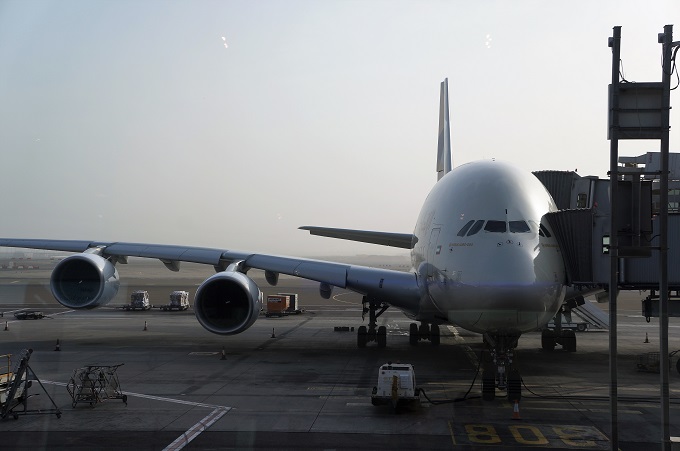
We are sitting in a departure lounge at Abu Dhabi airport, at least 9 hours behind schedule.

Everything was going swimmingly well, bus, train and flight connections all on time until Abu Dhabi.

Departure was supposed to be 8.10 am for London. There was an hour delay before we were loaded and were towed by a tractor out onto the runway. We sat there in the 35 degree heat for an hour before being towed back to the gate and sat for another hour and a half. Eventually we were taken off the plane, back through security and into the terminal food hall for a lunch on Etihad Airways.

The pilot kept giving us updates. Apparently they could start up one engine but when they tried to start up a second the onboard computer would read a bleed in an air line and shut the first engine down. It was a computer malfunction but each time the maintenance team thought they had it fixed it happened again.
Etihad are an interesting airline. The flight was on an Airbus A380 and only about two thirds full so quite a few people had three seats and could stretch out. But unfortunately not us. Sydney to Abu Dhabi is a long flight, 14½ hours and all of it at night. The plane has external cameras so you can see the fabulous views as you fly along at 38,000 ft. At night all you get are pitch black screens although one had a tiny light that blinked white and red. This was from a camera high on the top of the tail and the light was below on the roof of the cockpit.

After the safety briefing and just before take off there is a travel prayer from the Holy Quran. I don’t know what it said as it was in Arabic. Maybe the prayer originated with the aircraft maintenance team. As well as the usual flight tracker channel there is another channel which gives the direction and distance to Mecca, and the location and time of the next prayer.

The food was adequate and there is virtually no alcohol. If you ask you can get a small glass of wine with your dinner. During the night they provided ice cold drinks and ice cold muffins. At another time those who were awake got ice cold drinks and something called ‘Beyond Popcorn’, with a ‘creamy caramel flavour with real brown sugar from Mauritius’. All ‘natural, hand made, and no artificials’. Yeah right! You were left with very, very sticky fingers.

The back of the ‘Beyond Popcorn’ packet did inform us that Abu Dhabi, meaning ‘land of the gazelle’ in Arabic, was founded when a young antelope led a wandering tribe to fresh water on an island. There they erected some palm (‘barasti’) huts, coral buildings and the ruler’s fort. This simple settlement grew to become a modern cosmopolitan settlement and capital of The United Arab Emirates.

There were 202 movies on the entertainment channel but these included Chinese, Indian, Arabic, Turkish, French, Italian and German. And when you took out 7 James Bond films, all the Matrix films etc the selection was quite small. For those who are fans of orcs and elves the fourteen and a half hour flight wouldn’t have been long enough to watch all the Lord of the Rings and Hobbit trilogies.

We have just had a call. Our plane seems to have been repaired and we will start reloading in another hour. So instead of arriving in London at 1.00 pm it will be after 10.00 pm. Ah, the joys of travel.


Macs Adventure

For our self-guided walks in Spain and Ireland we used an Irish company, CaminoWays (also called IrelandWays for travel in Ireland), to organise our accommodation and transfer our bags each day. They were very good and all the arrangements on those walks went without a hitch.

However CaminoWays don’t do any walks in England so this year we are using a Scottish company, Macs Adventure. They do guided and self-guided walks and hikes all around the world.

Macs Adventure have 9 walks on the South West Coast Path and we have stitched together 5 of them and tweaked them a bit to suit the distances we want to walk and the locations where we want to stop. So they have booked all our accommodation on the Path and will transfer our bags each day.

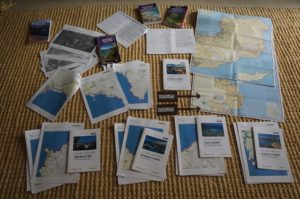
They have sent us a small mountain of background reading, books, maps, direction instructions, and they also have an app to download for our tablet and phone.

We’ll have to try very hard to get lost this year.

Late breaking news, just in:

All the maps, books, instructions, apps, etc from Macs Adventure are now redundant.

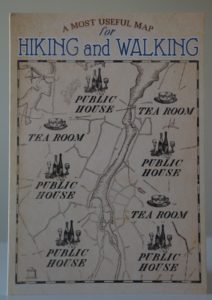
Our very good friends Ann and Jerry have given us ‘A most useful map for hiking and walking’. This is the ideal map for breaking down a long walk into a leisurely series of comfortable strolls from Public House to Tea Room, to Tea Room, to Public House.

No worries, we will never go thirsty or hungry or ever get lost.

Thank you Ann and Jerry.

SOUTH WEST COAST PATH

We have convinced ourselves that our legs have another long distance walk in them. Time will tell if our confidence is hopelessly misplaced.

After talking to some people about the Coast to Coast Path (St Bees to Robin Hood’s Bay) which we were seriously considering, we have instead decided to walk about half of the South West Coast Path.

The South West Coast Path (SWCP) is one of the 14 National Trails of England and Wales.

It starts at Minehead (Somerset) and finishes at Poole Harbour (Dorset). In between it follows the north coast of Devon, the entire coast of Cornwall, and the south and east coast of Devon.

At 1,041 km (630 miles) it is the longest of the National Trails. Although the highest point above sea level is only 318 m, the total height climbed is 35,031 m, almost four times the height of Mt Everest.

The SWCP is rated as ‘strenuous’ so this year we have designed our long, long walk into shorter days than we did on the Camino and Ireland. The path generally sticks to the cliffs above the coast (which is great as walking on sand and shingle is extra hard). The cliffs make for some spectacular walking but the coast is very undulating, crossing innumerable river valleys, so there are many rapid, steep descents before almost immediately climbing back up again. A real test of our knees!

The South West Coast Path was originally created by Coastguards patrolling England’s southwest peninsular checking every cove and inlet looking for smugglers, so it closely hugs the coast. The Path was also used by fishermen looking for shoals of fish and checking the sea conditions.

We will be walking 500 km of the Path, starting in Westward Ho! and finishing in Plymouth. We have 30 walking days with additional ‘rest’ days in Padstow, St Ives, Penzance, Falmouth and Charlestown.

I have posted our full itinerary (SWCP ITINERARY) on the page bar , just under the header photograph, of our home page.

What did we think of it and where to next

What did we think of it?

Ireland is a beautiful and interesting country to visit. They have 10 million visitors a year and make it easy to be a tourist. The Irish are very obliging, they drive on the same side of the road as us, and they sort of speak the same language. Except deep in the southwest where they also speak Irish Gaelic. The green countryside seems like home and the culture, slang and humour are all familiar. I guess because our own culture has so many influences from Ireland.

I had vaguely thought I would like to go to Ireland and see where my ancestors came from but it wasn’t really near the top of my ‘must do’ list. It was a brief visit there in 2015 by Barbara that focused our attention on the Emerald Isle.

Our intention was never to “do” Ireland in four days in a rental car, or ten days on a coach. Our plan was to spend a week in Dublin and five weeks walking a small part of the southwest where three peninsulas jut out into the Atlantic Ocean.

Our accommodation was mainly in B & Bs and a few times in small hotels. Accommodation was generally excellent. We could nitpick about minor things, but in reality these were trivial. Hospitality was great, everyone was very obliging and helpful. On request they made us packed lunches, drove us to the trail etc.

The food suited us very well. Much better than in Spain last year – although no vino tinto included in evening meals. We weren’t looking forward to ‘Full Irish Breakfast’ but in reality everywhere had other options. Every grocery and supermarket had a deli where they would make you fresh sandwiches, rolls etc with a large variety of fillings. Fresh fruit, drinks and all the usual stuff available in every village. Irish pubs have great meals, often breakfast and then meals from about noon until 9.00pm (then the live music starts). Unlike Spain where they have the afternoon siesta and don’t start evening meals until about 9.00pm. Soup and starters €5, mains €14, desserts €6, and you don’t have to drink. Unlike Spain there are no drinking fountains along the way and often no villages all day so you have to prepare and take food and drink with you for the day.

We thought we were reasonably fit when we left NZ but found some of the walking quite difficult. We hadn’t done enough training on the hills. A lot of the walking was on steep rugged hillsides with no trail, just following sheep tracks from sign post to sign post. We also hadn’t practiced tip toeing through rivers of cow muck or climbing over dozens of stiles each day. However we were accident, injury and illness free, except we each had a minor stomach upset early on. After 2 or 3 days we were up to speed and felt fit and strong. 20km days we did comfortably, 25kms you knew you had been for a hard walk, and the 36km day was way too much.

Overall we loved the walking and each morning couldn’t wait to get going. There were always many unexpected and interesting things we came across and a great variety of landscape from open fields, mountain passes, sandy beaches, rocky headlands, oak forests, tarmac minor roads to hedge lined farm roads. Ireland has thousands of ancient archeological sites so we often came across stone forts, standing stones, wedge tombs, stone circles, etc.

The weather was kinder to us than we thought it might have been. Just one day when it rained heavily for about four hours and a few others with occasional light showers. A few too many days with thick mist that obliterated any views and a few days when it was very humid – 98%. Mostly mild, cloudy days with little wind. Only one walking day of 25°C when we thought this is just getting too hot.

So where to next?

When you are walking quietly for hours on end you spend a lot of time thinking about and discussing where you would like to go next.

Of course a lot of the time you think, when today finishes I’m never walking another fricking inch in my life!!! Coach tours and cruises sound really, really good.

But in the cool of the morning when you are fresh and full of enthusiasm you do run through the list of walks you have heard about.

Trish and Al, the two Australians we met on the Dingle Way, walked the England Coast to Coast last year. This is 300 km from St Bee on the west coast to Robin Hood Bay on the east coast. They enjoyed it but said, and we already knew, it is a bit difficult and some navigation skills are needed as there is no sign posting. They walked the Camino Frances in 2015 and on the Dingle Way we were about the same ability as them. So that is one walk we are seriously considering.

We are still keen to go back to the Camino and one option is to cut out about 300 km in the middle over the Meseta (by getting the bus), and redoing the more interesting bits at the beginning and end. We would also do it in Autumn rather than spring to see some different colours.

There is the Great Ocean Walk in Victoria Australia. We have cycled this from Port Fairy to Anglesea (275km) and want to go back and walk it from Apollo Bay to the Twelve Apostles (100km in the reverse direction).

The Mont Blanc Circuit, Cinque Terre, The Amalfi Coast, etc. The list goes on and on but our legs probably only have two or three more years of long distance walking in them.

The Last Post (from Ireland)

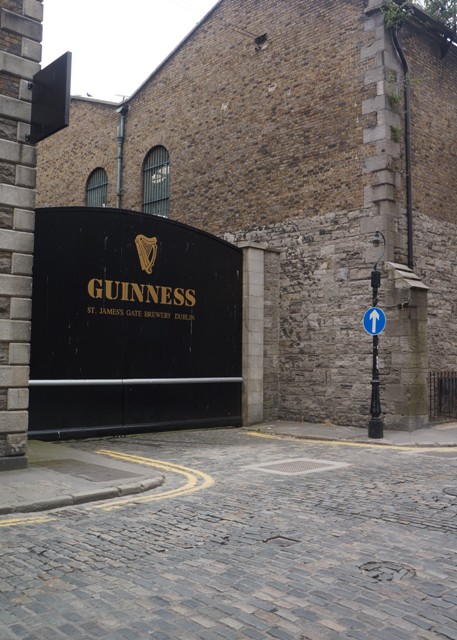
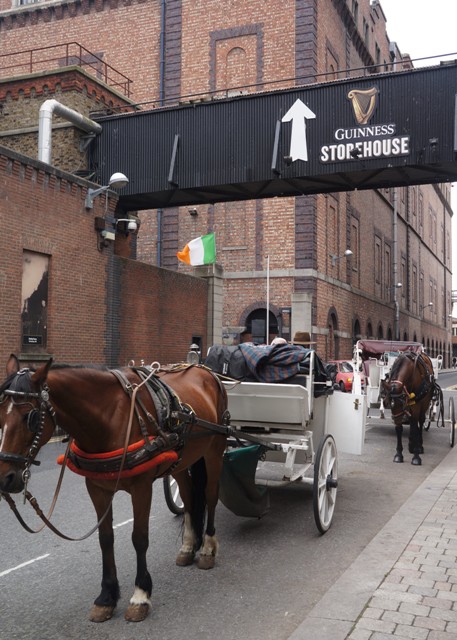
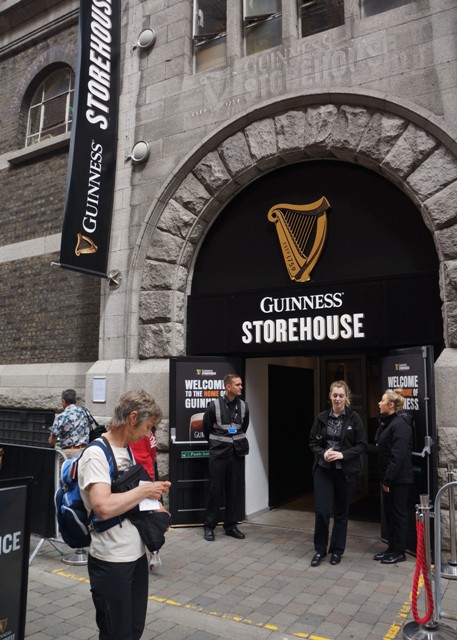
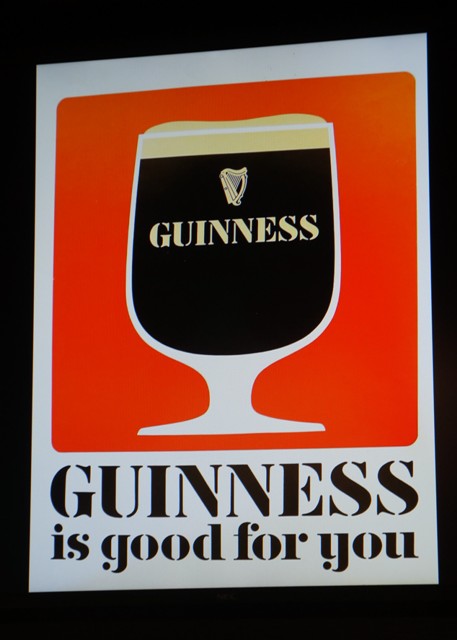
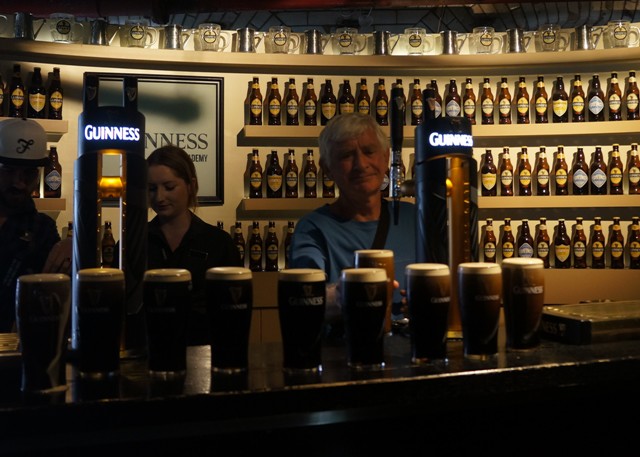
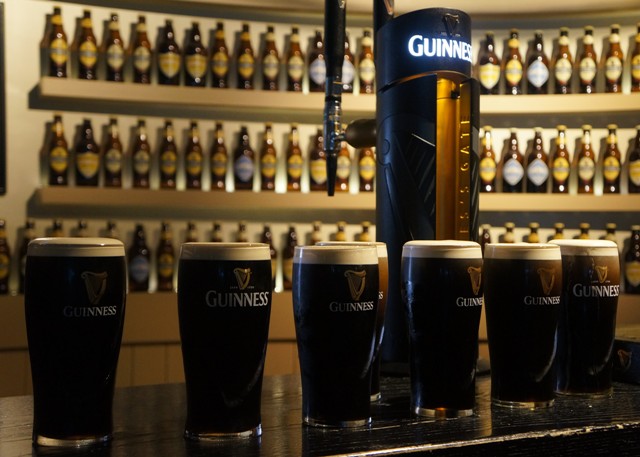
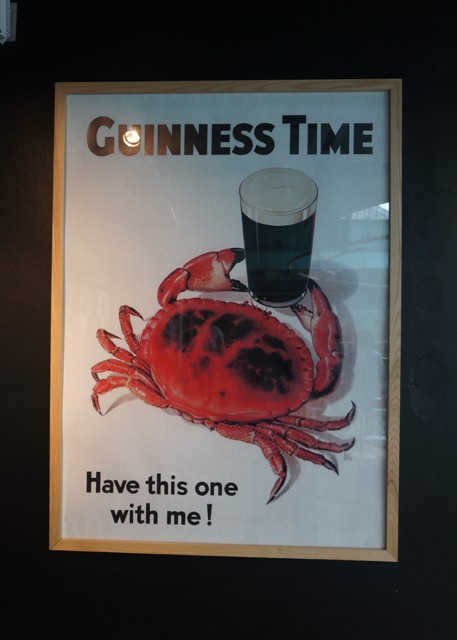
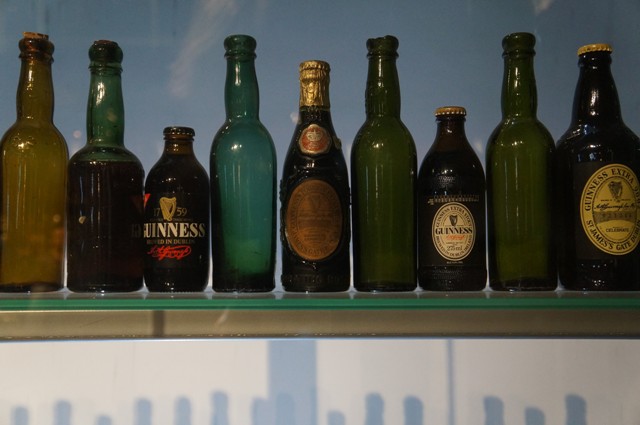
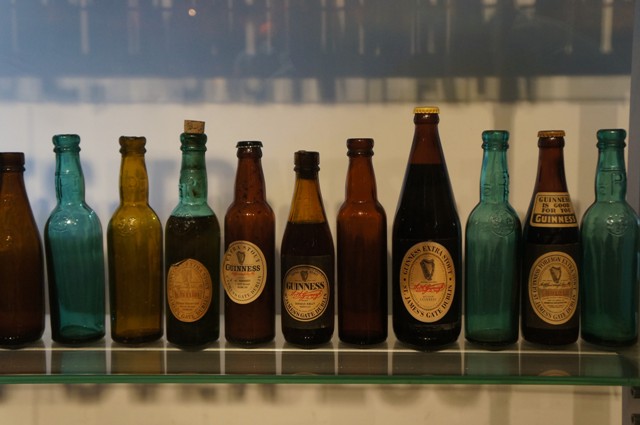
Some would say we saved the best till last. Some would say we have now ‘done’ Ireland. This is because on our last day here we went to the Guinness Storehouse.

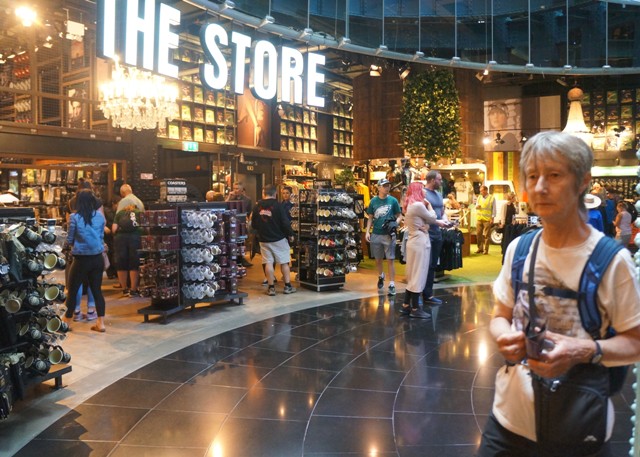
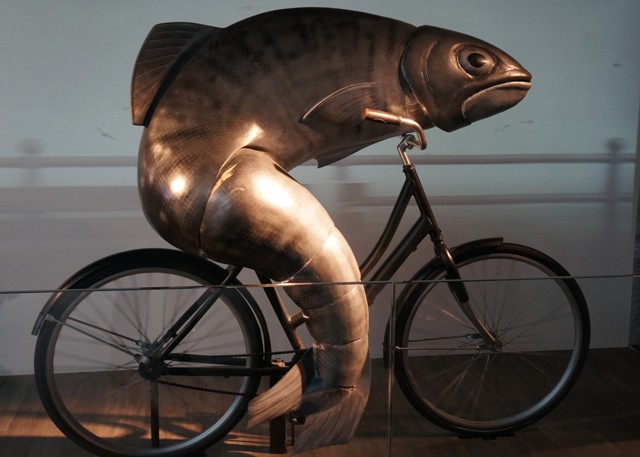
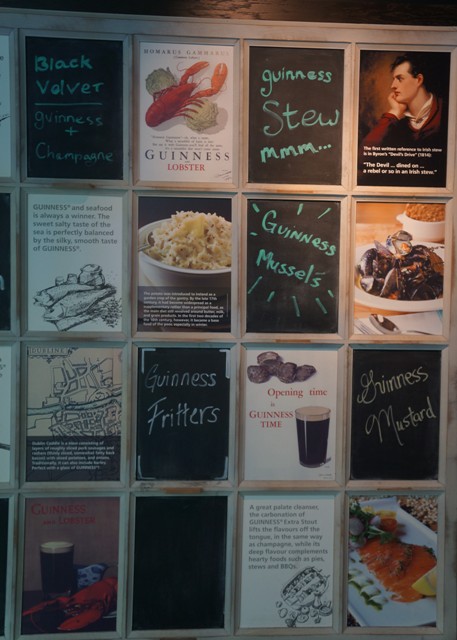
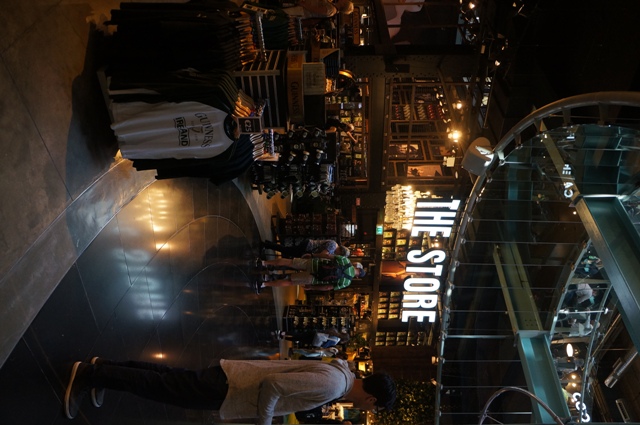
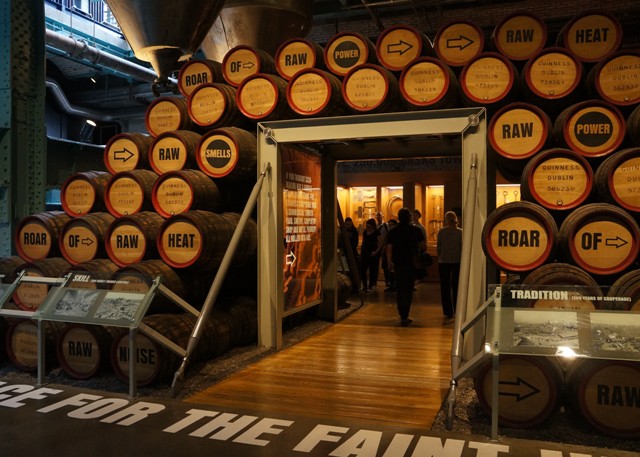
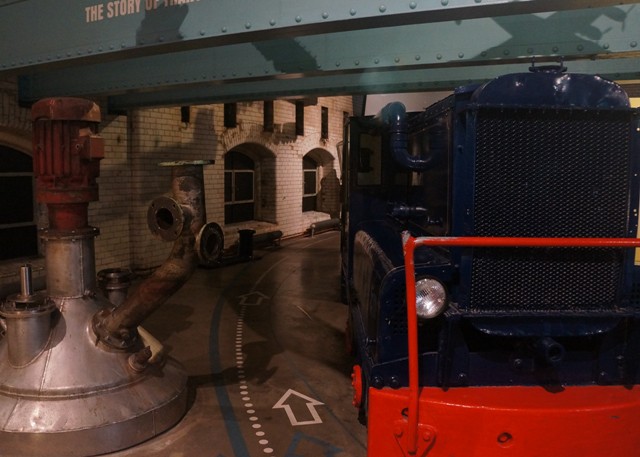
This is a massive celebration of all things Guinness. A very good, high tech, interactive attraction which everyone seemed to love, even if you have no real interest in stout, beer or Guinness.

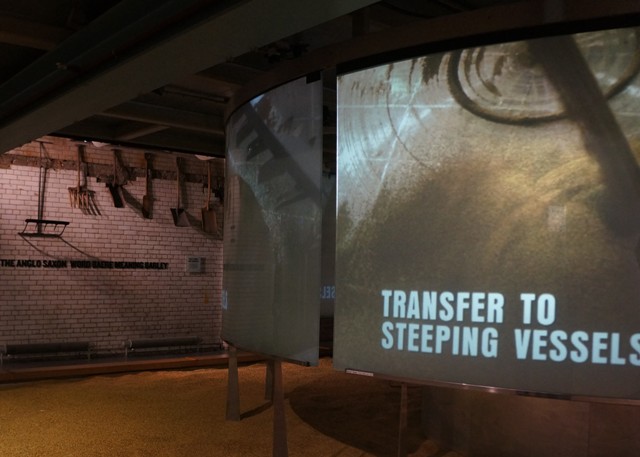
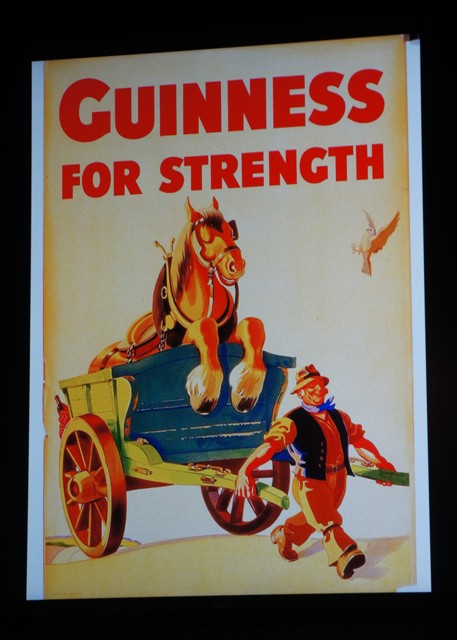
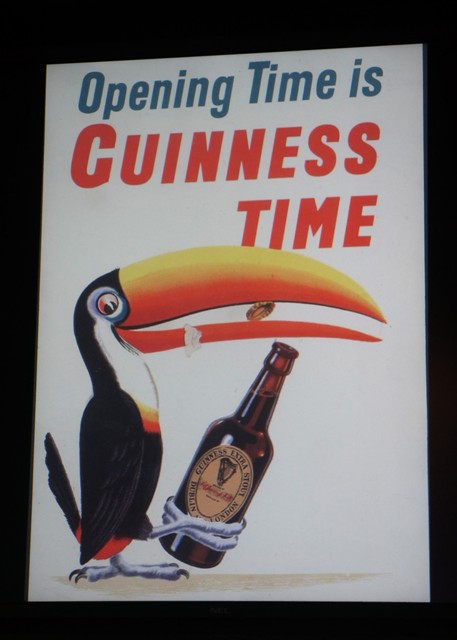
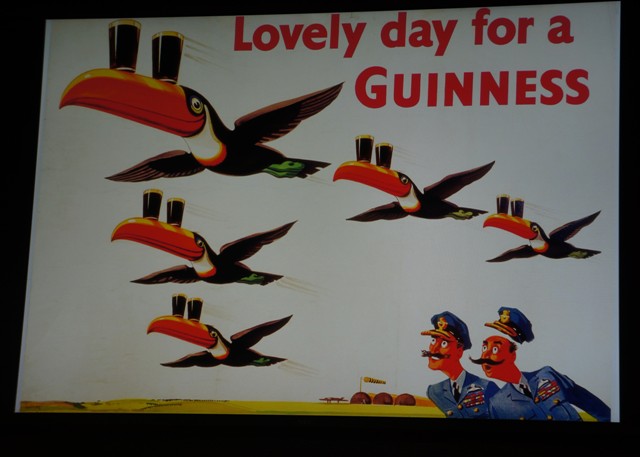
It is a story of the history, the ingredients, the process, cooperage, the transportation, the promoting and advertising of one product – Guinness. Which we now know has the colour ruby red, not black or brown.

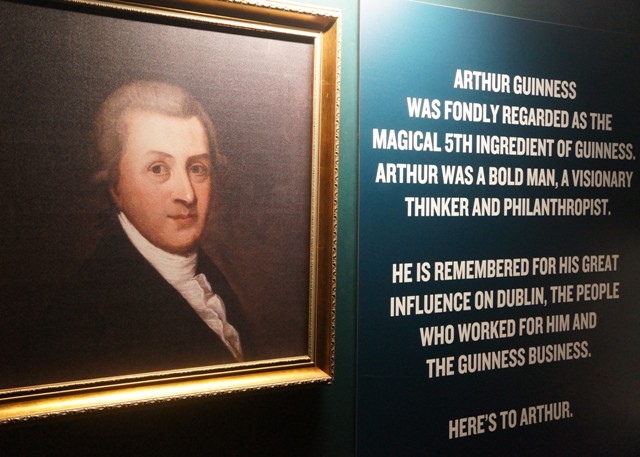
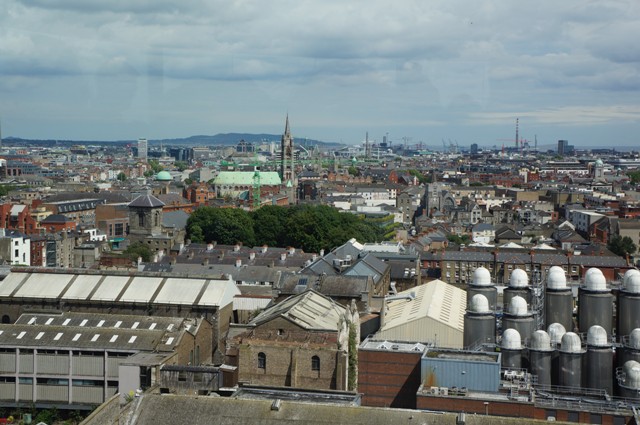
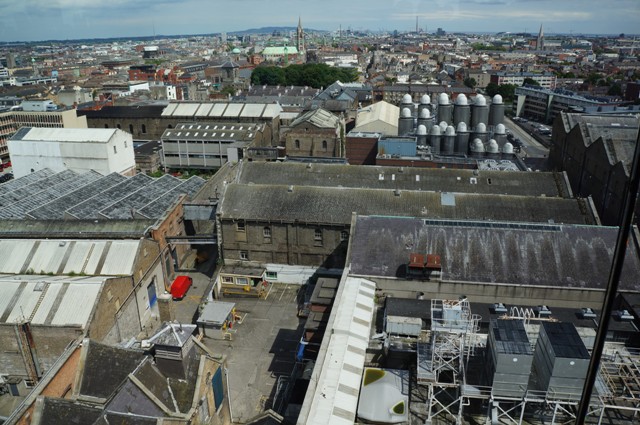
Arthur Guinness started brewing on the present site of the factory in 1759 – he signed a 9,000 year lease. The brewery buildings used today date from only 1904 but have grown to be the largest brewery in Europe.

How Guinness is made (simplified version).

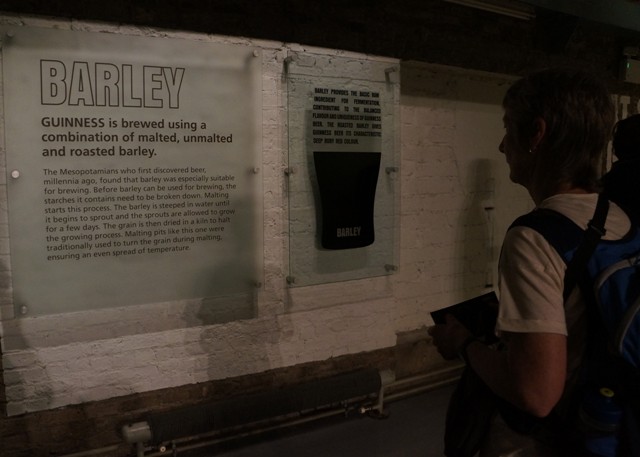
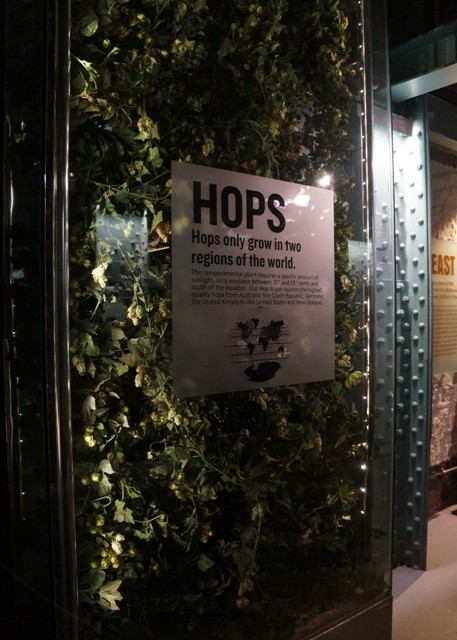
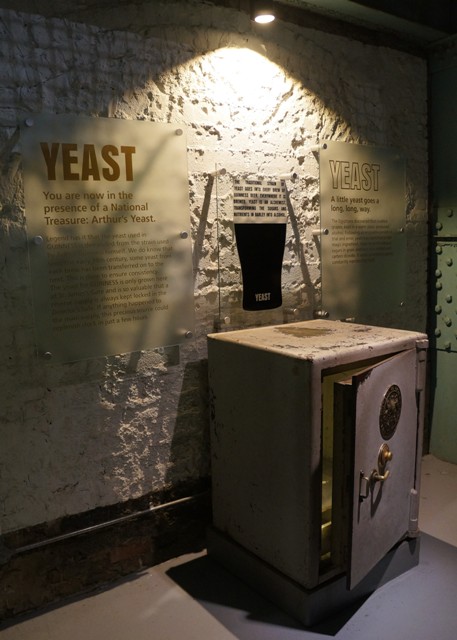
The four main ingredients are barley, hops, yeast and water.

Irish barley is prepared in three ways – malted, flaked and roasted. These are ground together to form a grist.

The grist is mixed with hot water and mashed and left to stand for an hour. Starches are turned into sugars, producing a dark, sweet wort.

Hops are added to the wort and the ingredients are boiled to very high temperatures.

The hopped wort is cooled and yeast is added. Some of the sugars are turned into alcohol. The mixture is left to ferment for 48 hours and the yeast is removed by centrifuge.

The liquid has now become a stout and is matured for 10 days before being sold to the world.

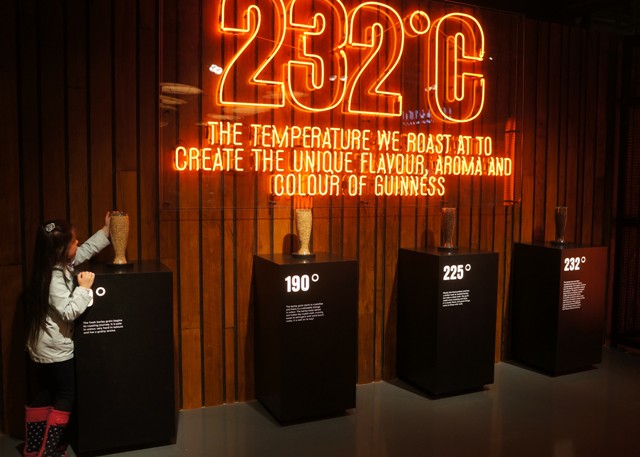
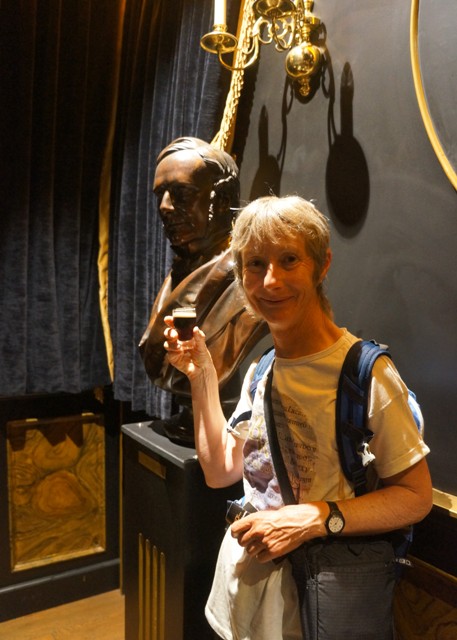
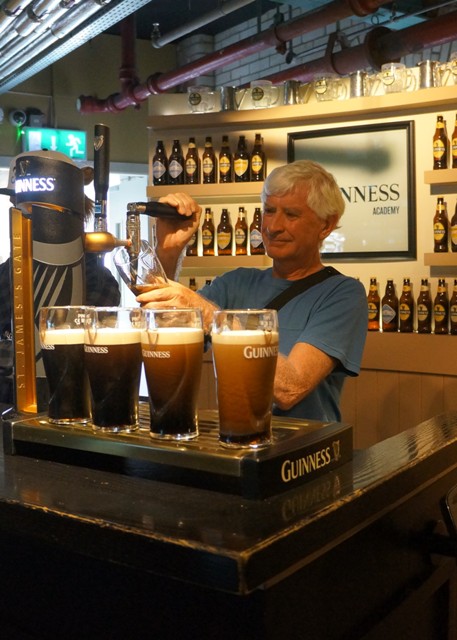
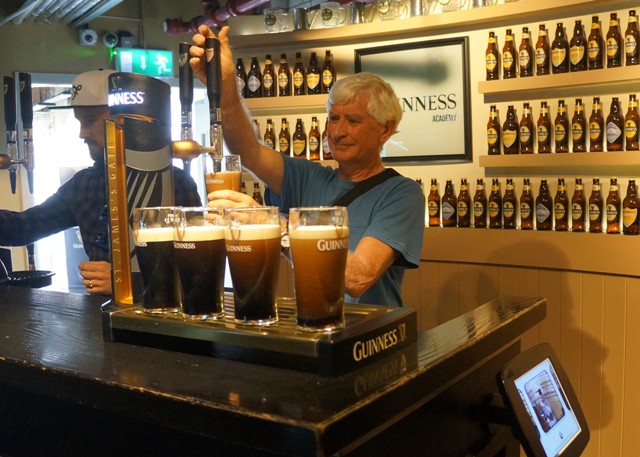
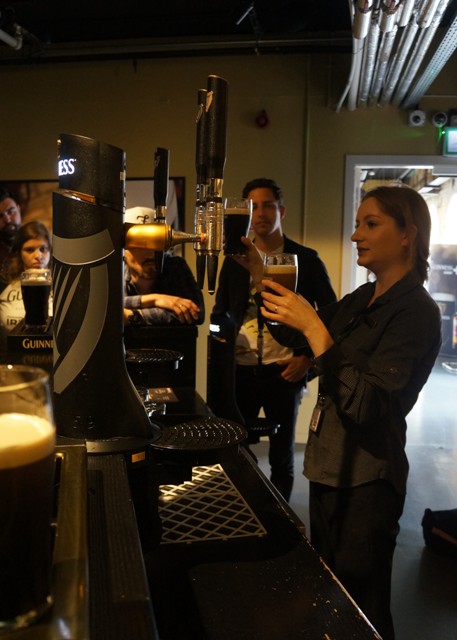
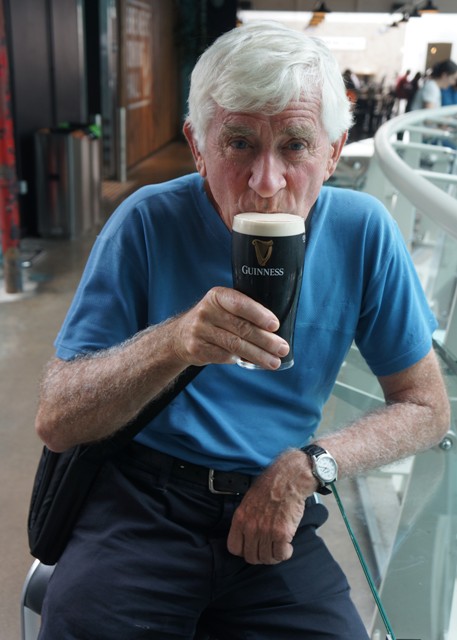
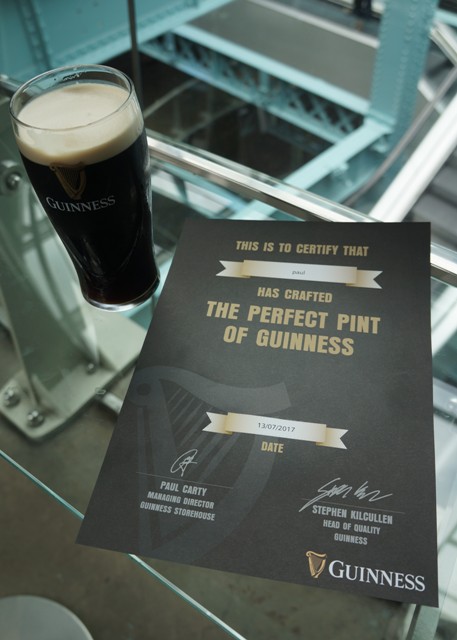
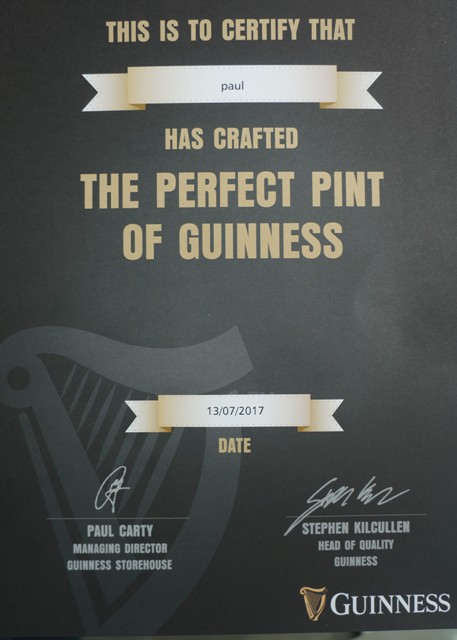
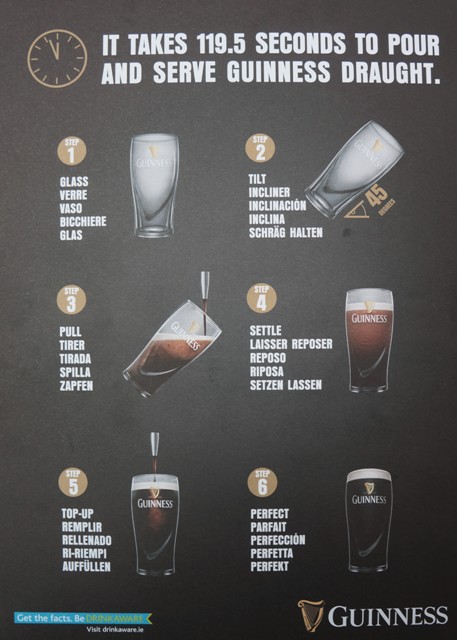
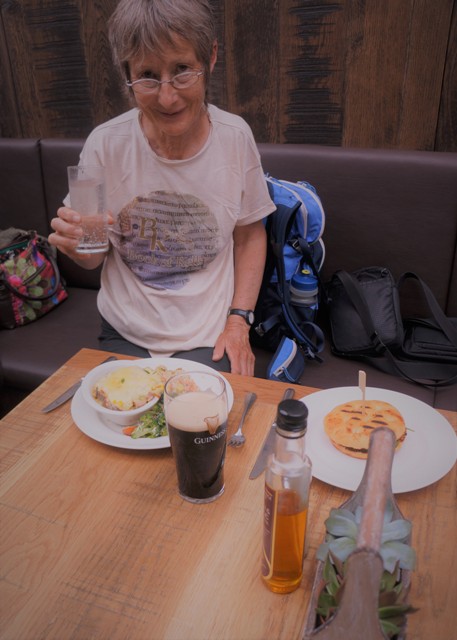
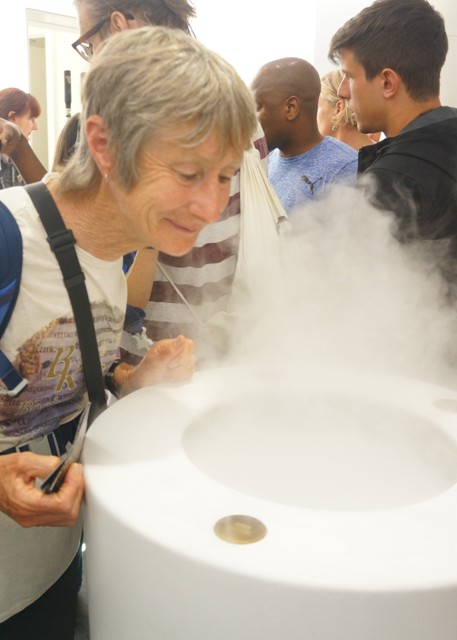
Two of the highlights were the tasting room and learning to pour the perfect pint of Guinness. It takes 119.5 seconds to pour the perfect pint. In the tasting room you got to smell the aroma of barley, hops and yeast and are then taught how to taste Guinness on the front, side and back of the tongue – from a 2 oz glass. Learning to pour was all good fun and I don’t think anyone has failed yet. You get to keep and drink the pint you have poured. So now I have a certificate to say that I have crafted the perfect pint of Guinness.

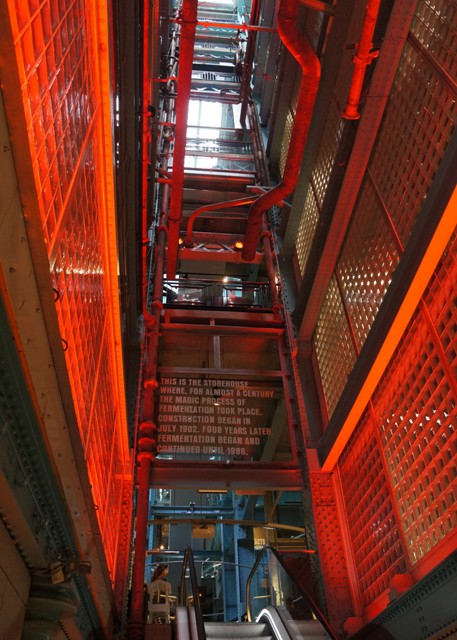
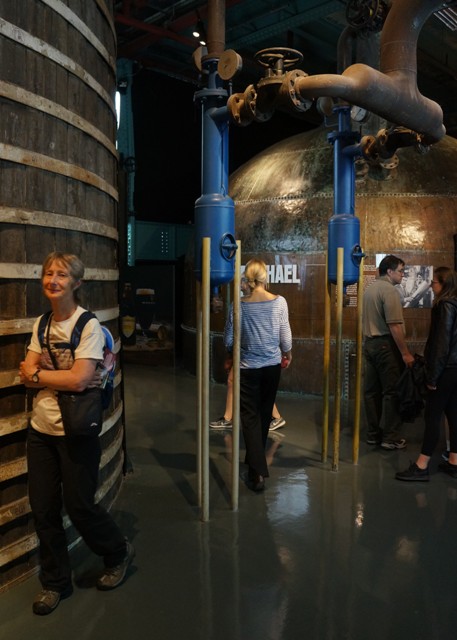
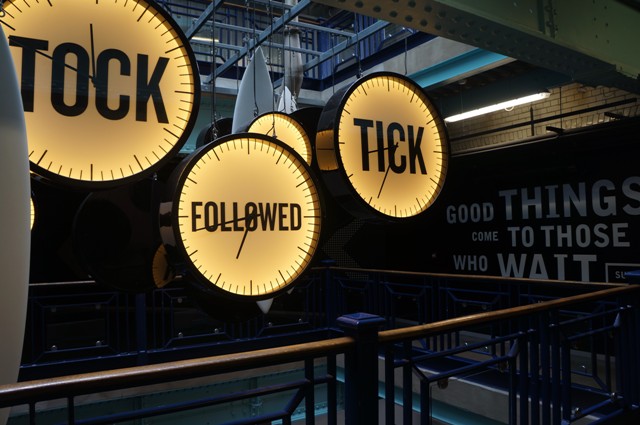
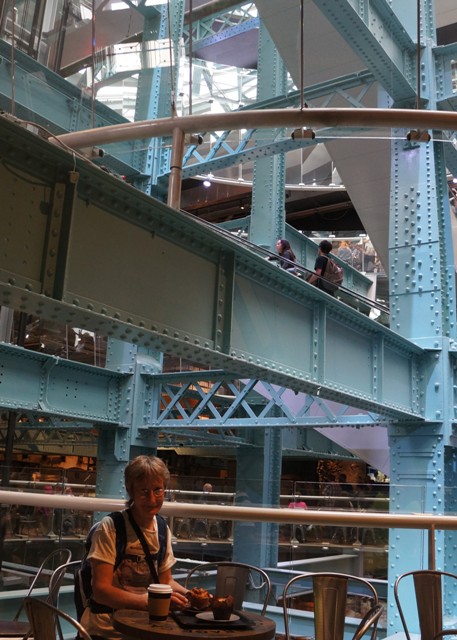
You enter the building at ground floor and move up through about six floors to the Gravity Bar at the top, which has a 360 degree view of Dublin. There are two or three cafes and bars scattered on different levels and the food is excellent. It’s in an old warehouse building but the inside has been gutted and the large circular atrium is in the shape of a giant pint of Guinness. We were there nearly four hours and were entertained for every minute.

Altogether a great place to go, even if you never touch the stuff.

We are sitting in the hotel lounge and shortly will go out to the airport. On the way home I will think about a post that summarises our adventure in Ireland and suggest where we might go next.


Culture Vultures

A day of culture in one of Europe’s most cultural cities.

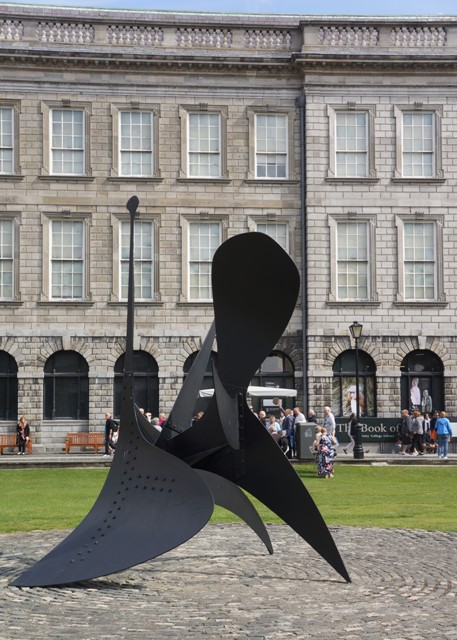
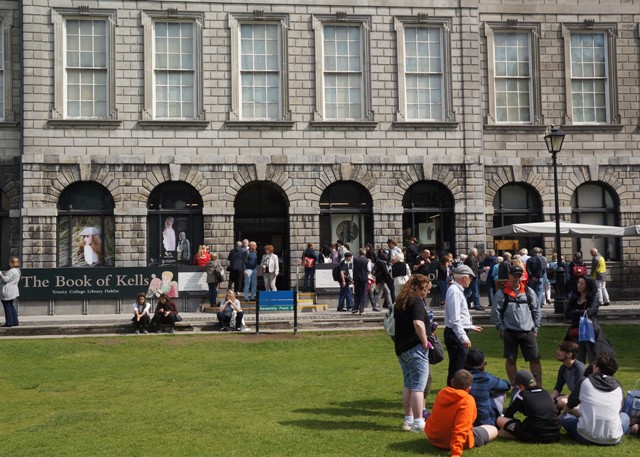
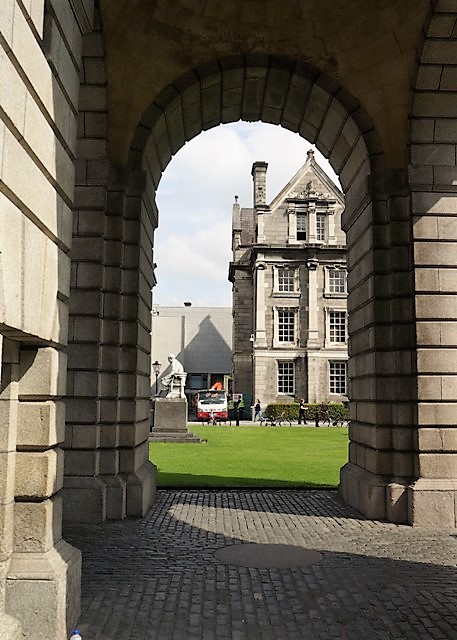
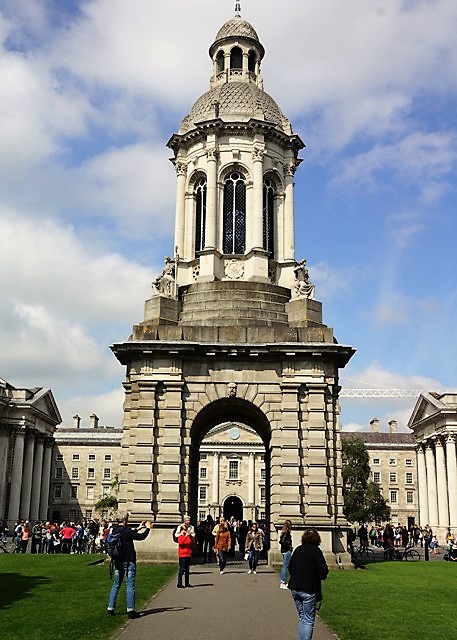
First up the Book of Kells at the Old Library, Trinity College. The Book of Kells is probably Ireland’s greatest cultural treasure and is the most famous medieval manuscript in the world. It is a lavishly decorated manuscript, written in Latin, of the four Gospels of the New Testament together with some other tables and texts. It was probably created in about 800AD by monks on the island of Iona off the west coast of Scotland. After attacks by Vikings on Iona the Book of Kells was moved to a monastery at Kells, county Meath, Ireland. It was sent to Dublin about 1653 to keep it safe during the Cromwellian period. In 1661 it was presented to Trinity College. There are other manuscripts of the same period at Trinity, The Book of Durrow and The Book of Armagh but these are not as lavish as The Book of Kells. The manuscript today contains 340 folios and is bound in four volumes. Two volumes are normally displayed at Trinity, one opened at a major decorated page and one at a text page with minor illustrations.

The Book of Kells is displayed on the ground floor of the Old Library, Trinity College. There is quite a large interpretive area where the history is explained and there are large brightly covered examples of pages from the manuscript along with explanation of the meaning in the illustrations. These are back lit and about 3 metres high by 1.5 metres wide and look rather like stained glass windows. There is an audio visual showing the making of a book from calf skin (vellum) and the pigments and techniques used in the text and illustrations. This is all very good. From there you move into a partly darkened room and in the middle is a glass topped steel cabinet. In the cabinet are the displayed manuscripts. Compared to the large copies seen previously the originals look small, dull and faded, probably due to the low level of artificial light. There is a scrum of people pressing around the cabinet and it is difficult to get a decent look. So it is a little bit of a let down. There is no photography allowed in any part of the Book of Kells display.

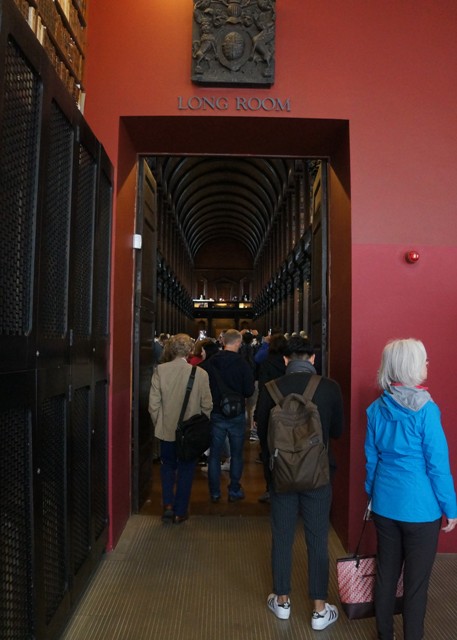
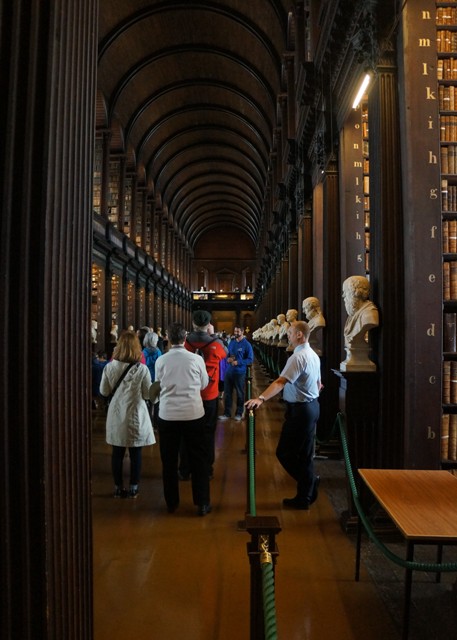
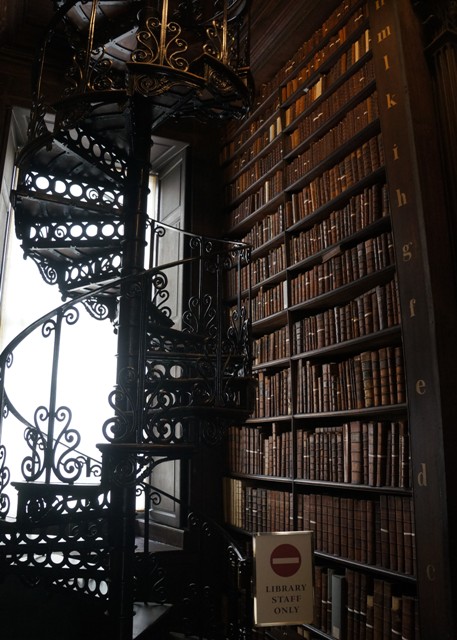
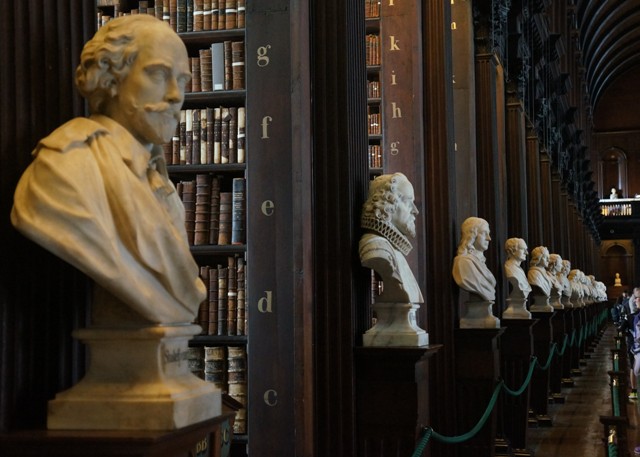
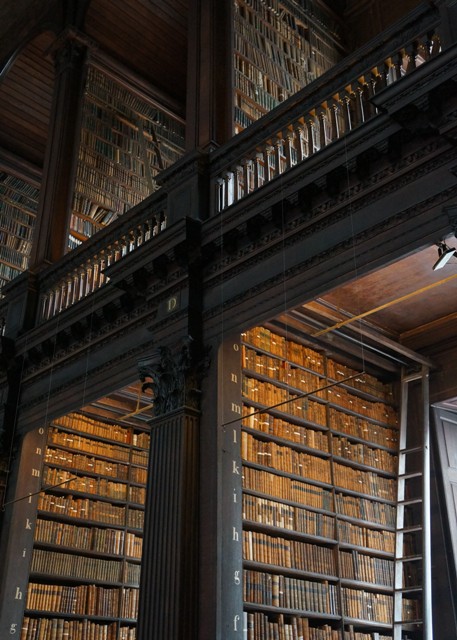
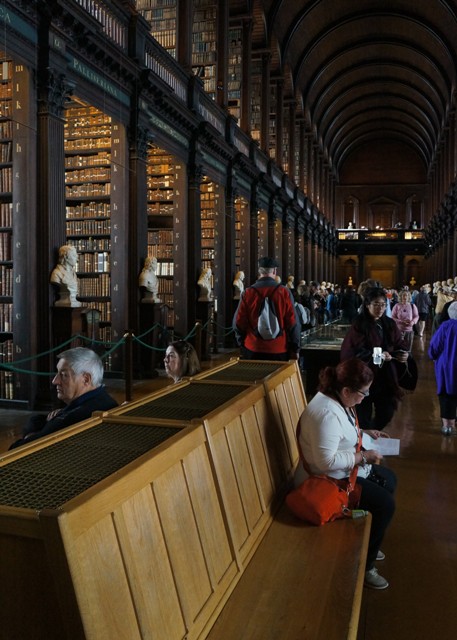
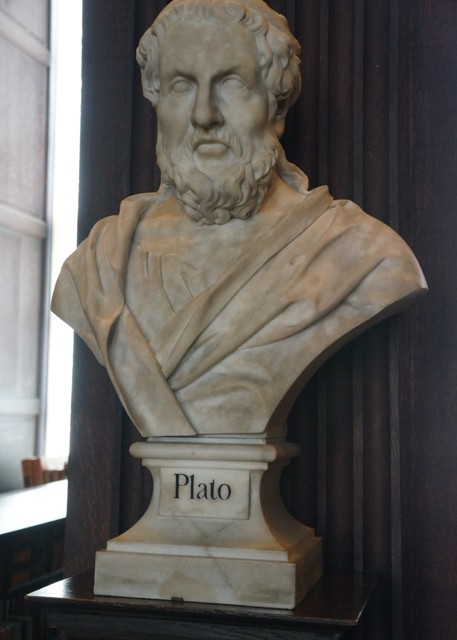
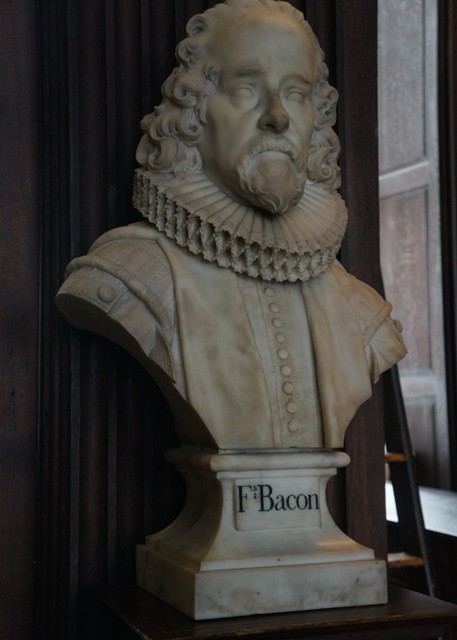
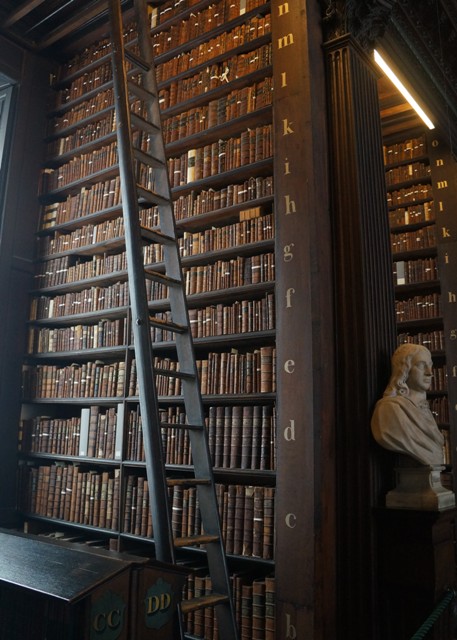
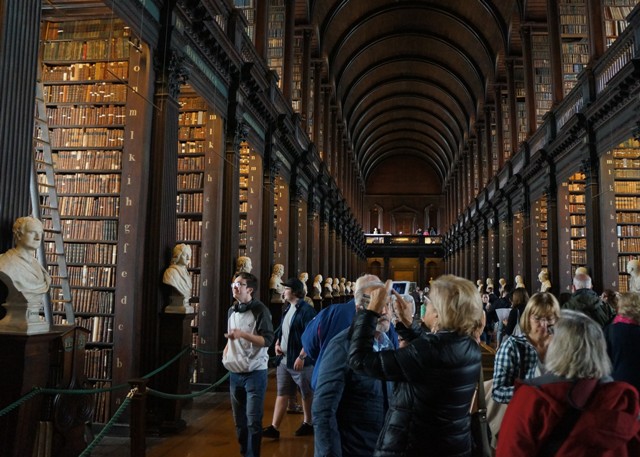
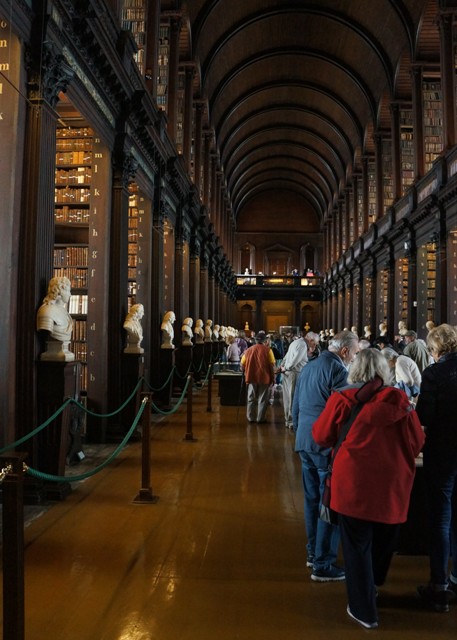
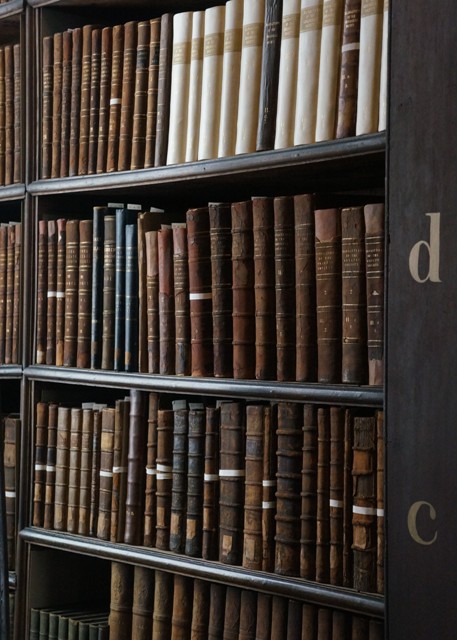
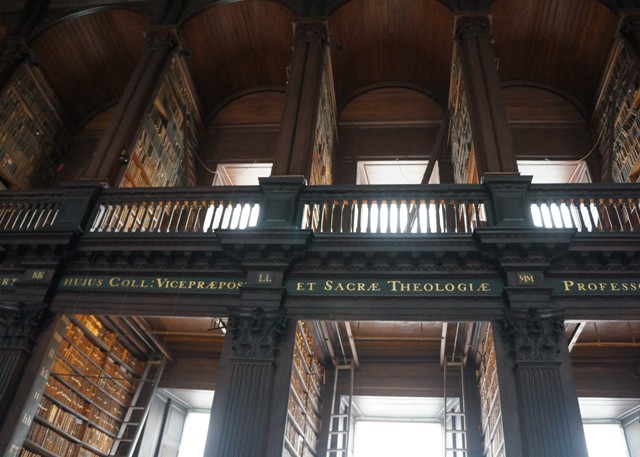
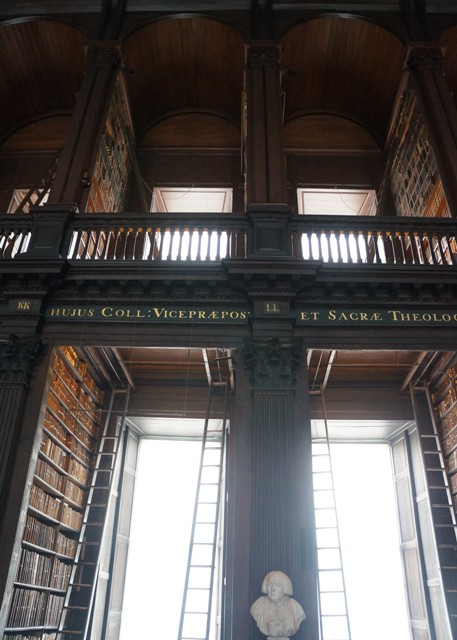
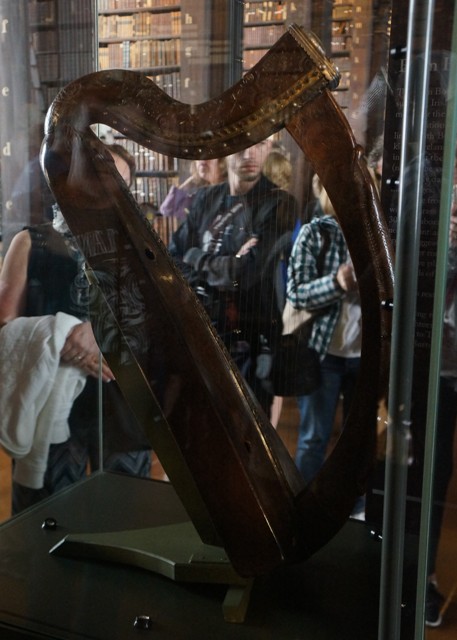
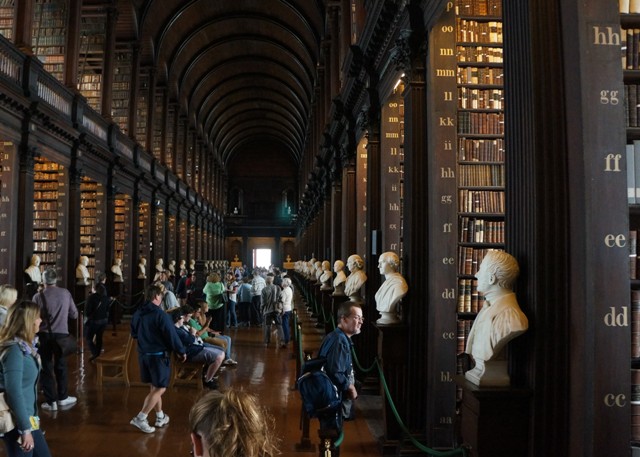
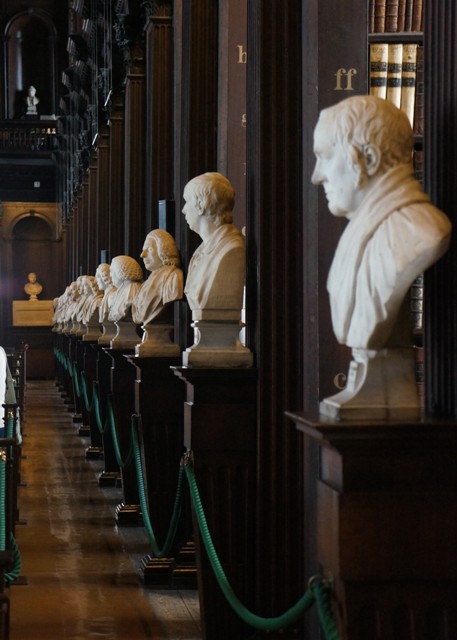
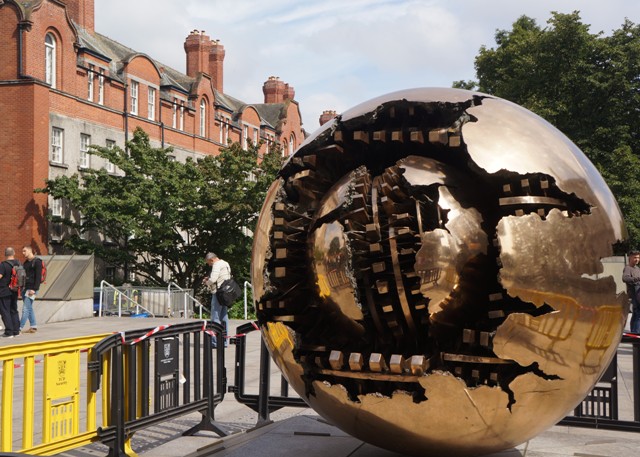
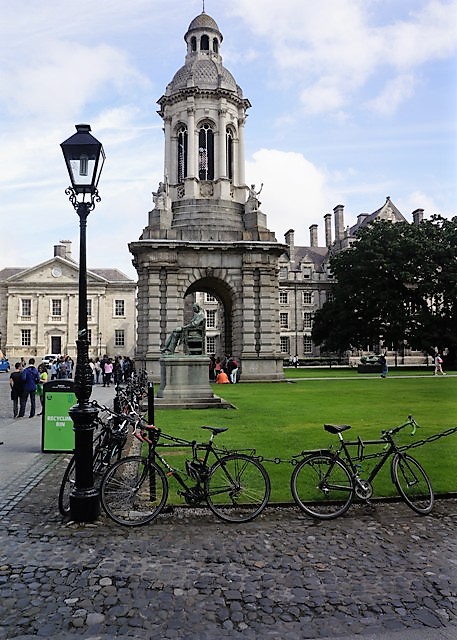
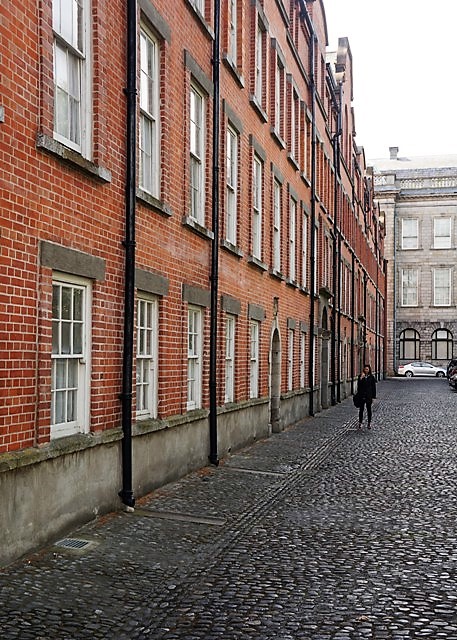
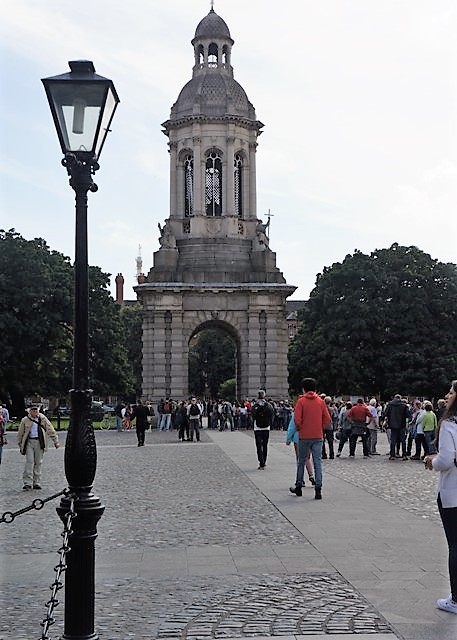
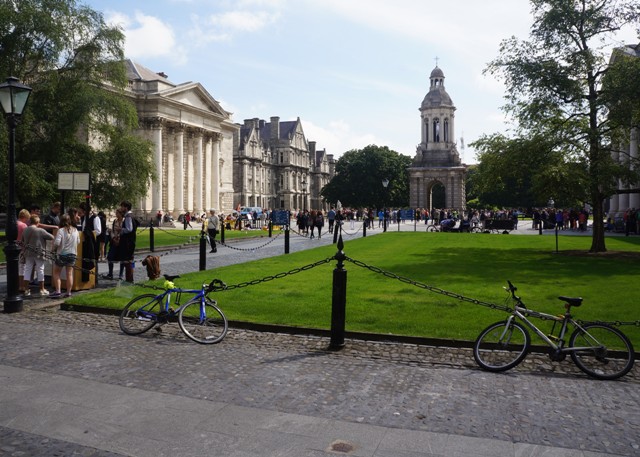
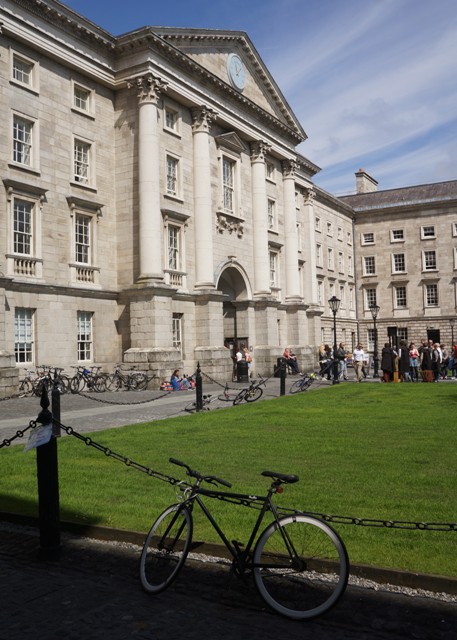
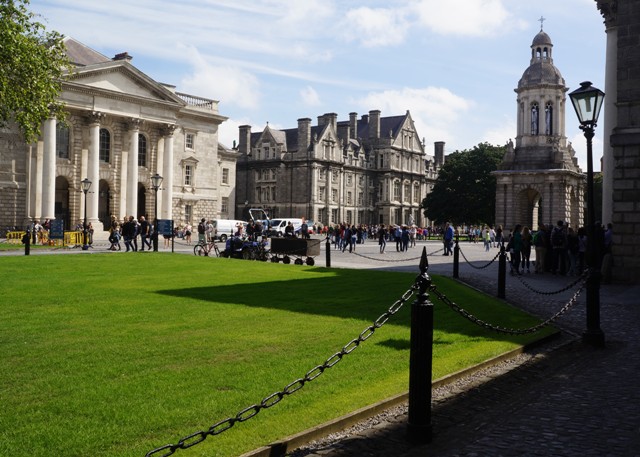
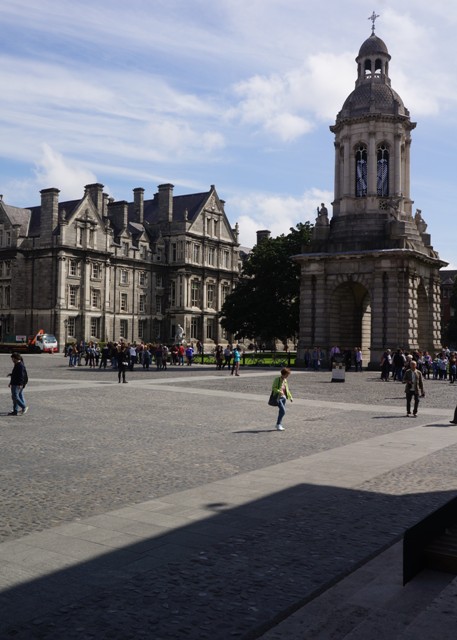
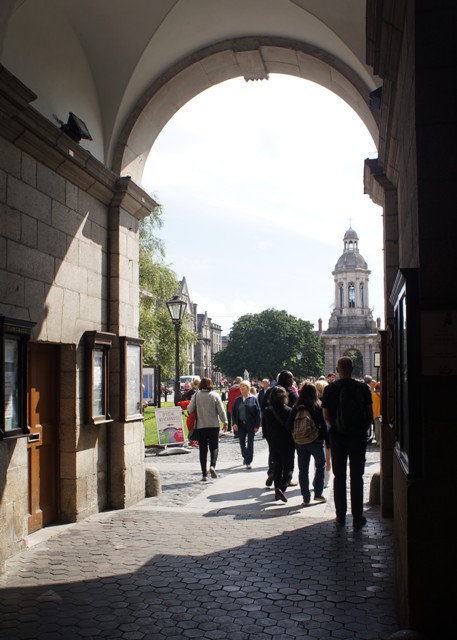
From there you go directly up to the next floor to view the Long Room of the Old Library of Trinity College. This is a wonderful space. 65 metres long, two stories high with a barrel vault ceiling. It has alcoves on two levels containing about 200,000 of Trinity College’s 6,000,000 books. Books are arranged by name of author in alphabetical order. At each alcove there is a marble bust of a writer, philosopher, statesman or religious leader. In the middle of the room is a harp, the oldest to survive in Ireland. Legend attributes it to Brain Boru, high king of Ireland (died 1014), but in fact it was made in the fifteenth century. The Long Room is still a working library with a reading room at each end and tall angled ladders to reach the highest volumes. I thought this room was an absolute joy. From there we walked around the grounds of Trinity College and that was the morning done.

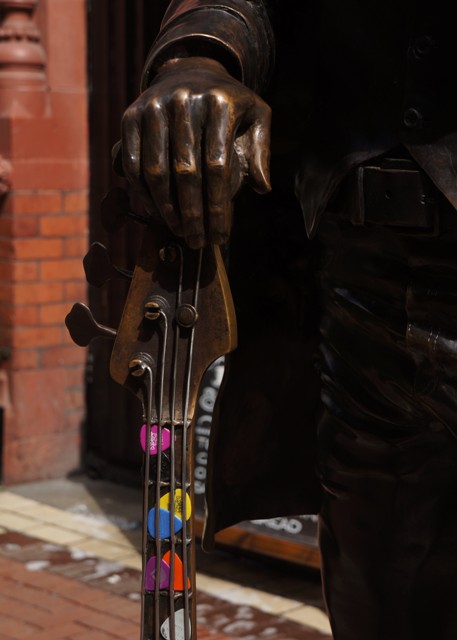
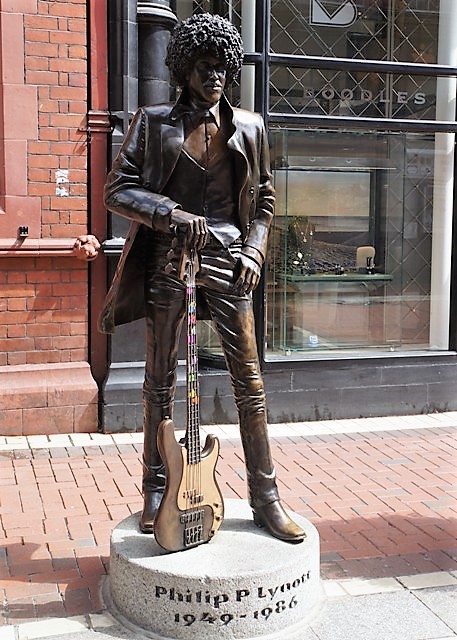
In Harry Street, near Trinity College, we found the statue of one of Dublin’s favourite musical sons, Phil Lynett, of Thin Lizy. Remember ‘The Boys are Back in Town’ and ‘Whiskey in the Jar’.

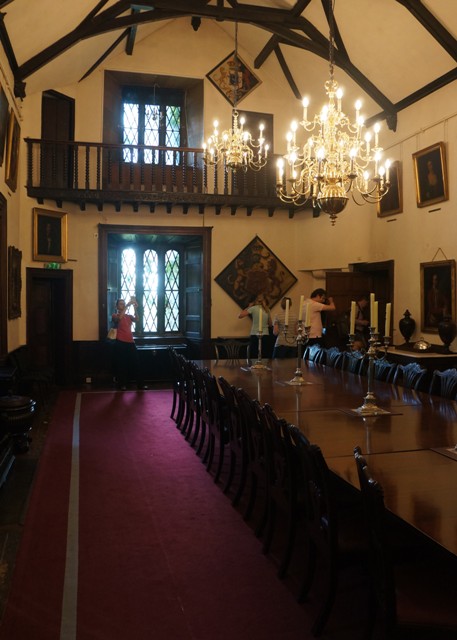
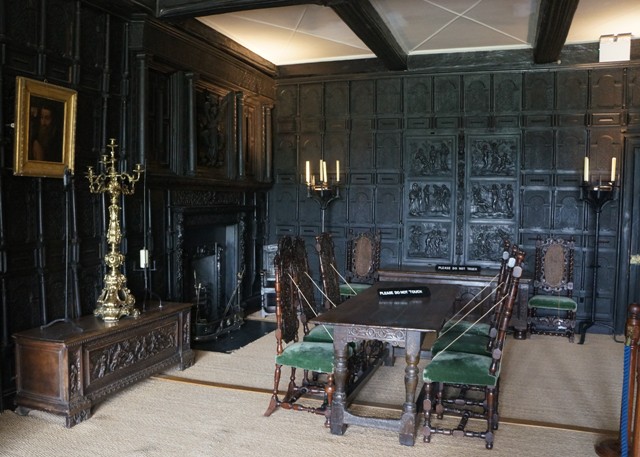
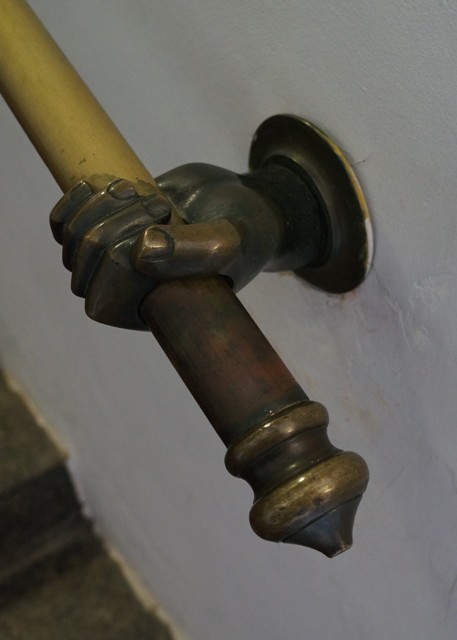
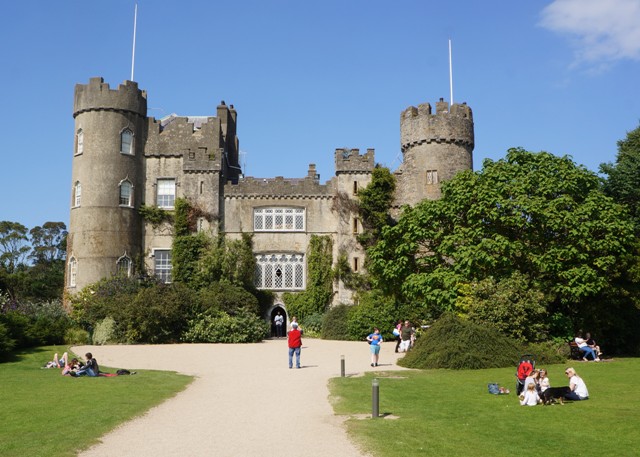
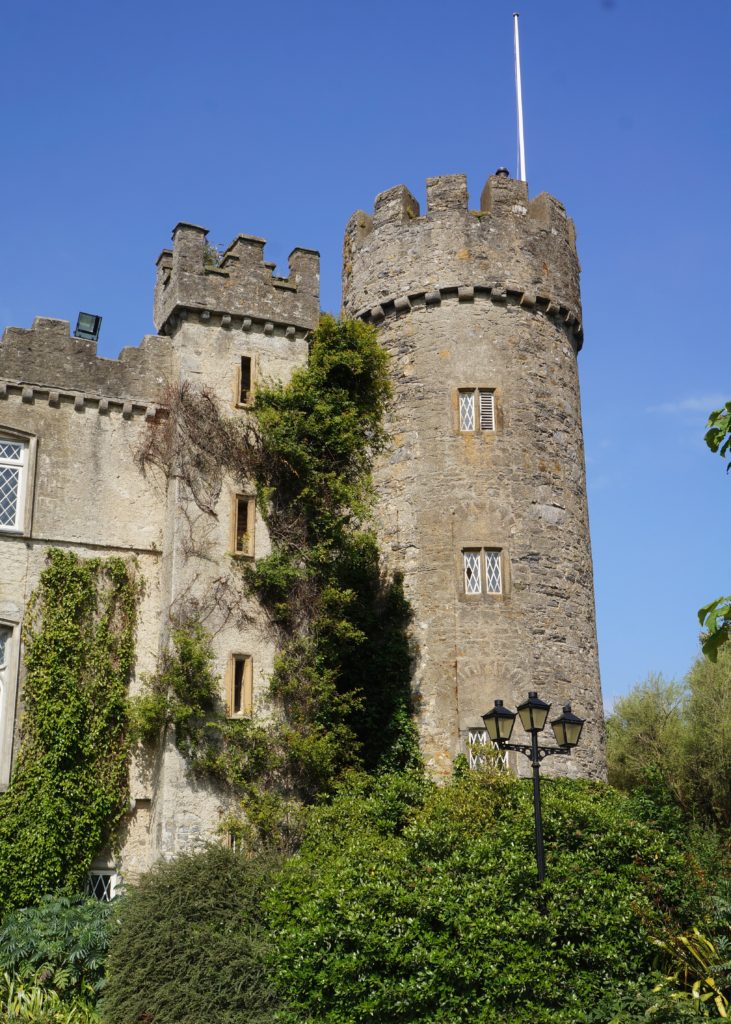
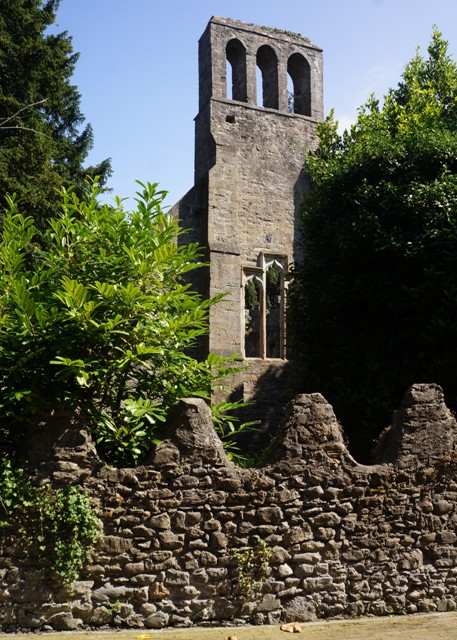
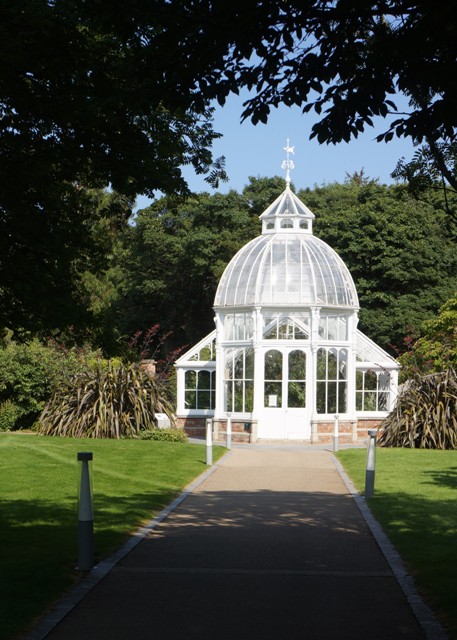
We wanted to get away from the crowds and noise of Dublin so in the afternoon we did a bus tour to Malahide Castle and Gardens. Parts of the castle date back to 1175 and it is one of the oldest Norman castles in Ireland. It was the home of the Talbot family for nearly 800 years (1185 to 1975) with only a brief interlude between 1649 and 1660 when the castle and land were seized by Cromwell’s forces. The castle and grounds were eventually inherited by the seventh Baron Talbot and when he died in 1973 it passed to his sister Rose. In 1975 Rose sold the castle and grounds to the Irish State to offset crippling Inheritance Taxes. The bus tour had us at the castle for a guided tour of the castle that took 45 minutes of the allotted one hour. The tour was very good but we would rather have spent much more time in the 260 acres of gardens. The castle is full of an eclectic collection of furniture and paintings with most of it relating to many generations of the Talbot family.

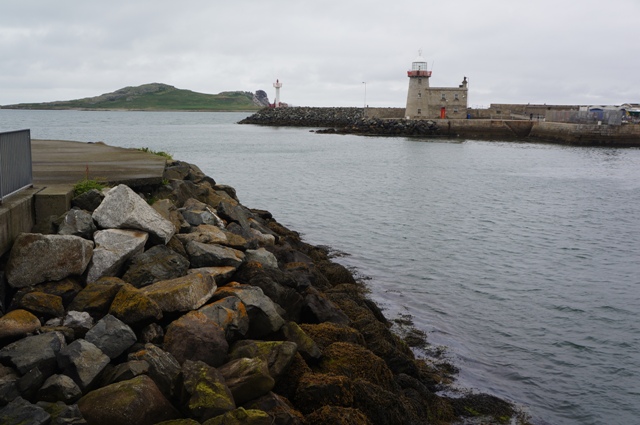
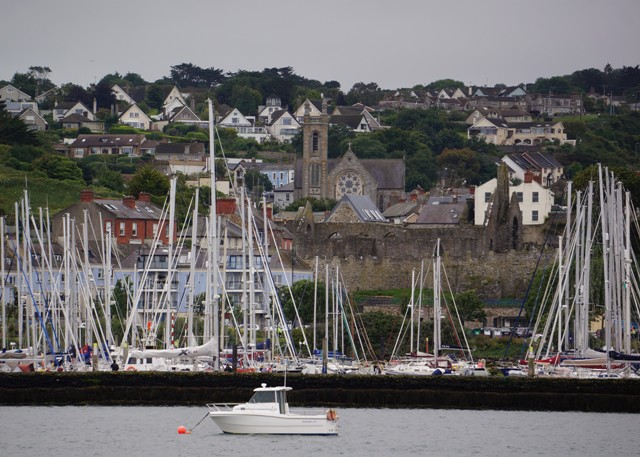
We then had a sort of Groundhog Day experience. The tour took us to Howth for a 40 minute stop. This is the same village we stopped at yesterday for morning tea on the Newgrange Tour. Today was a beautiful sunny day so the village seemed a bit more attractive than yesterday. We spent the time sitting on the wharf, eating gelato and watching seals in the bay.

Not looking forward to tomorrow when we start our trek home at 10.30pm.

Day Tripper Yeah

An early start today. Much, much earlier than we wanted. We were both awake at 4.30am. Not because it was light and bright outside and all bedrooms in Ireland have the most flimsy transparent curtains but because outside there were dozens of screeching and squawking sea gulls. When we were at the Charles Stewart 5 weeks ago we didn’t notice the birds but then we were on the main street side of the hotel. This time we face a back alley and I think the sea gulls are scrounging for food down there.

Today was a busy but most interesting day. Before leaving NZ we had booked a one day bus tour to Howth, Newgrange and The Hills of Tara. 41 of us (15 nationalities) and Eoin the driver and guide.

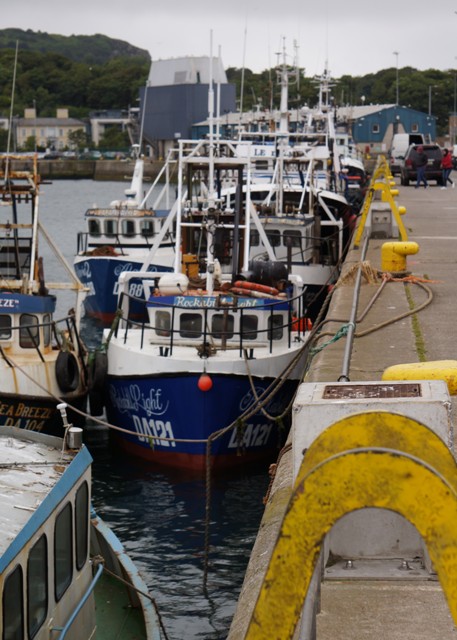
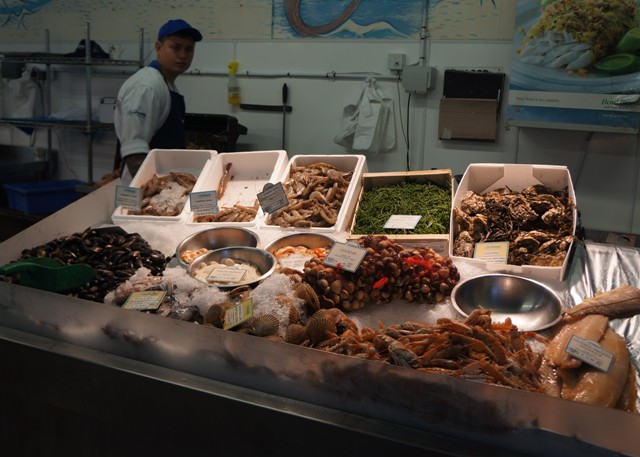
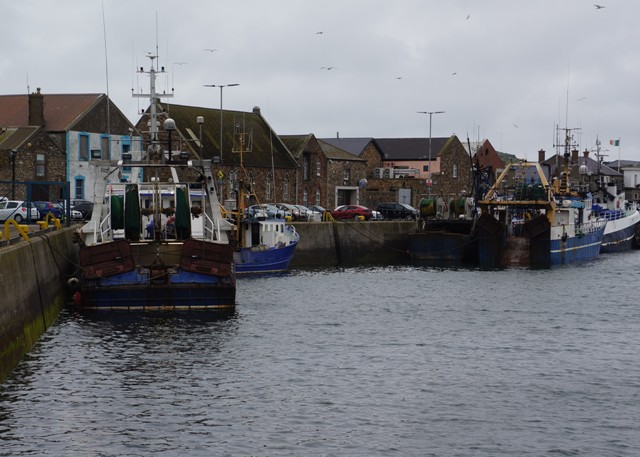
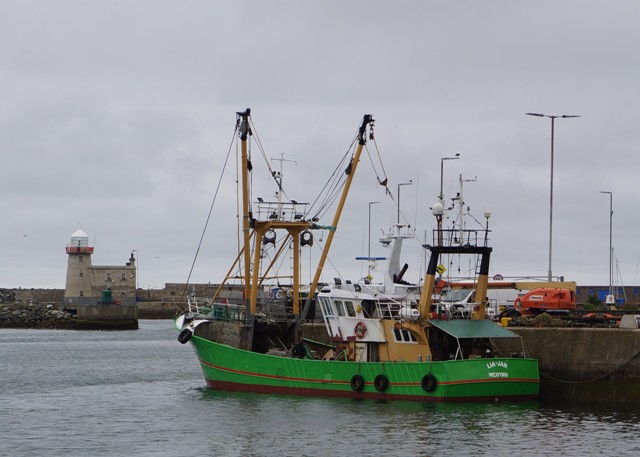
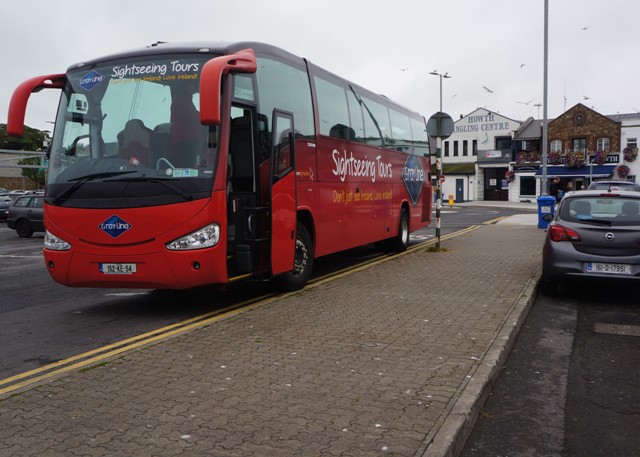
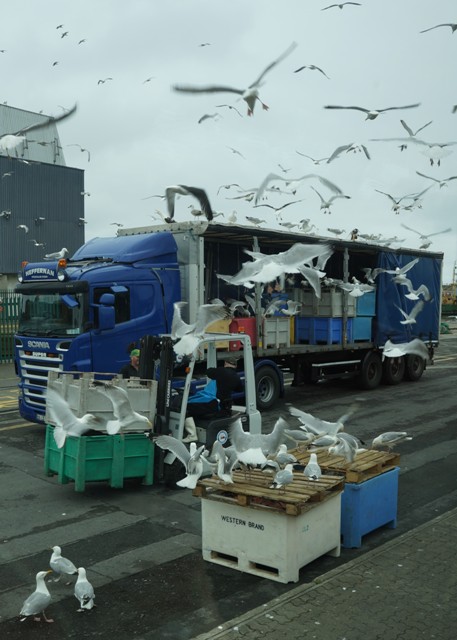
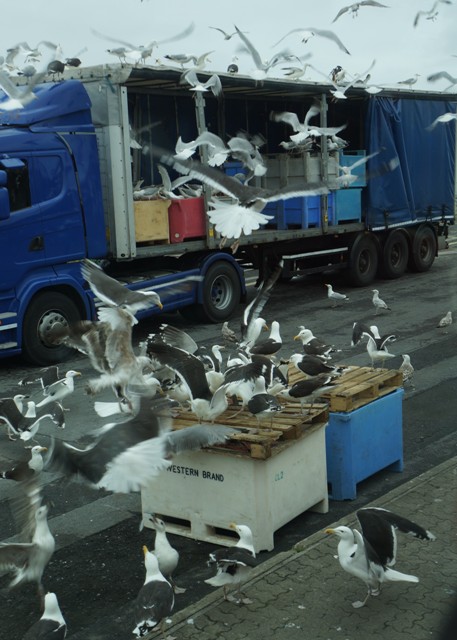
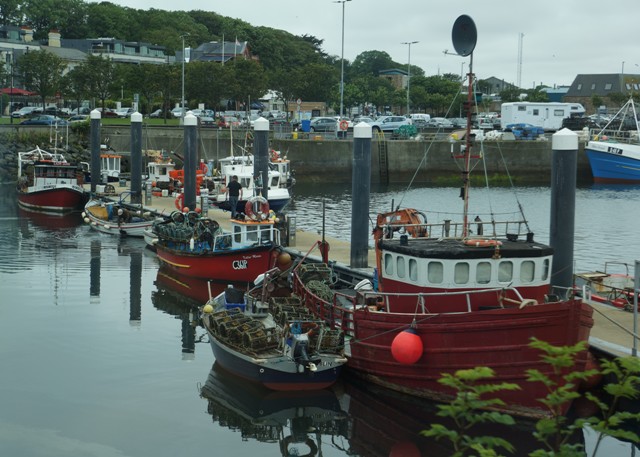
Howth is a seaside village and outer suburb of Dublin at the north end of Dublin Bay. It was a morning tea stop with just enough time to look at the fishing boats in the harbor but not enough time to get to an abbey ruin, a Martello Tower, an interesting church etc. For us it wasn’t of great interest as we had seen some much prettier and more interesting villages in SW Ireland. The most entertaining event was as we were about to leave in the bus, a large truck with a catch of fish parked alongside us. It was immediately swarmed over by hundreds of large gulls. The guys kept on unloading the truck but the gulls were everywhere, getting into the truck, into the crates, flying off with mouthfuls of fish. It was all a bit scary, reminiscent of Alfred Hitchcock’s movie The Birds.

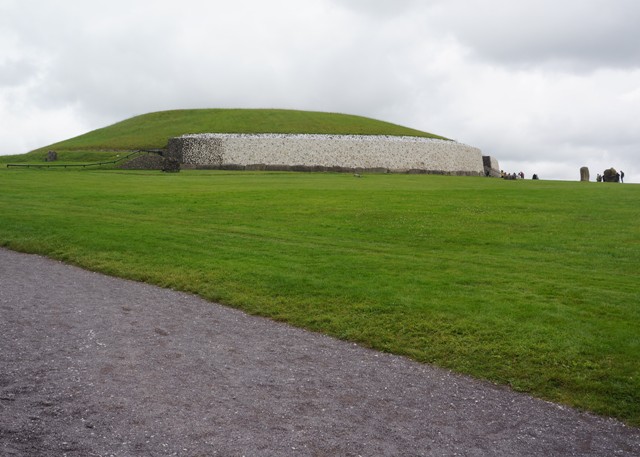
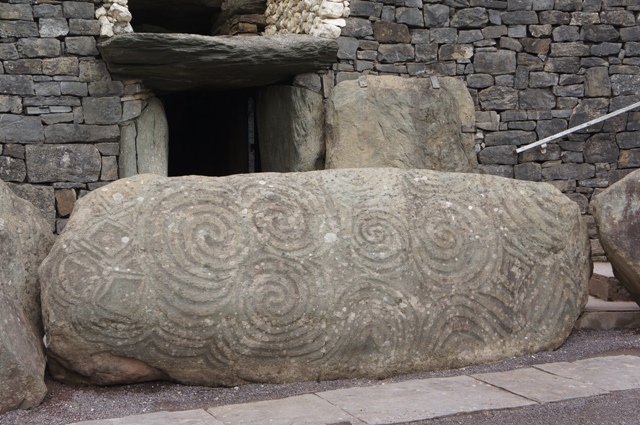
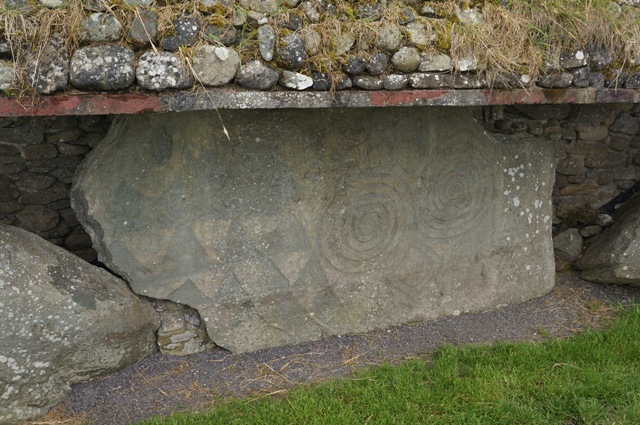
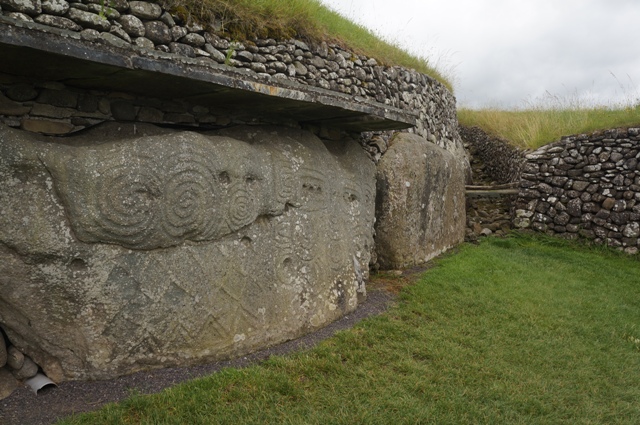
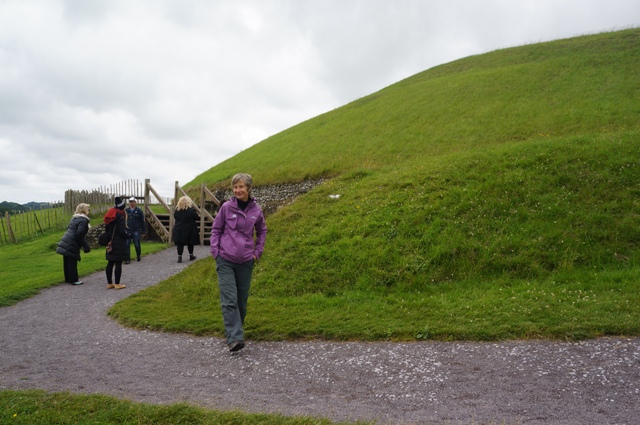
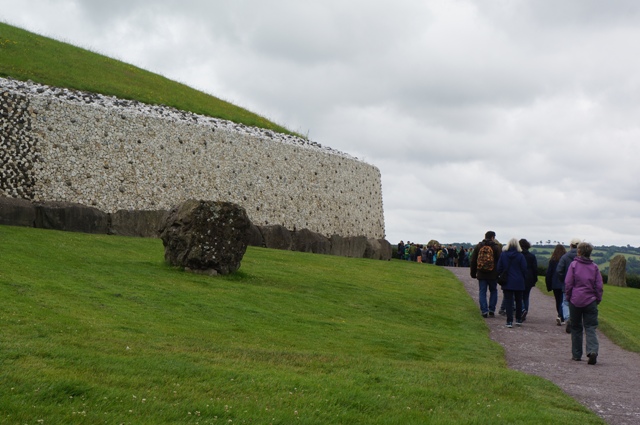
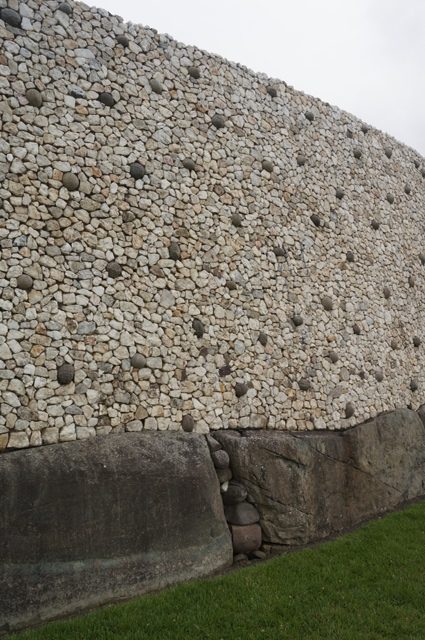
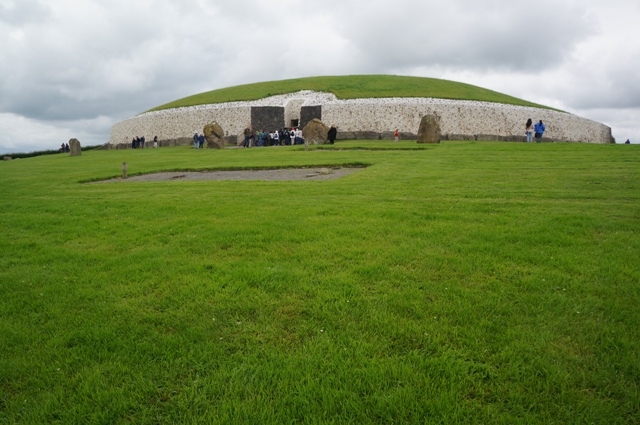
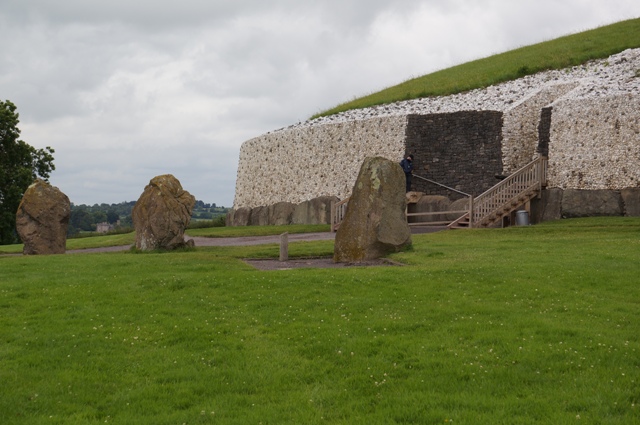
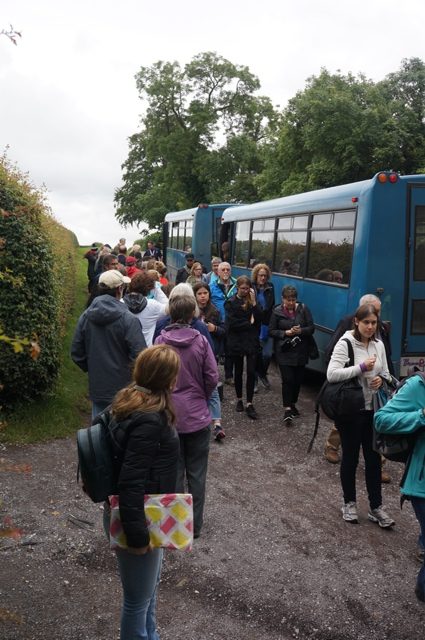
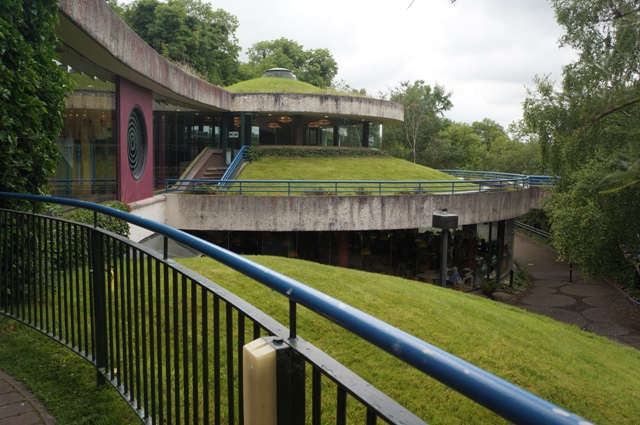
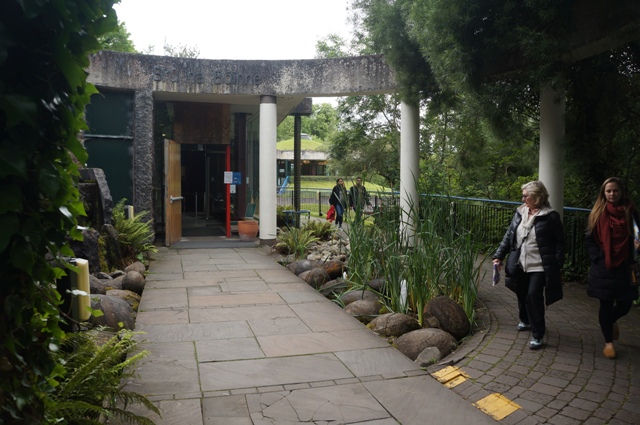
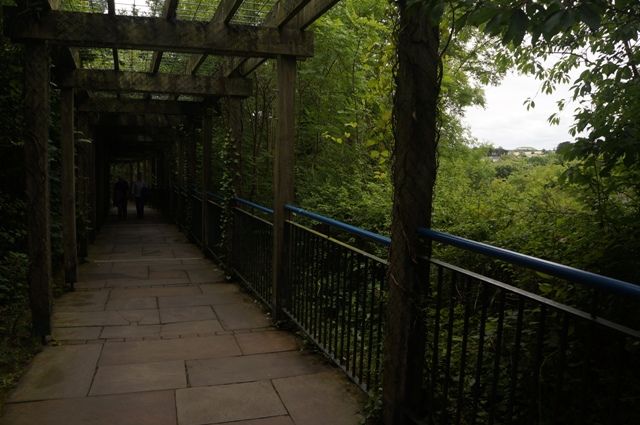
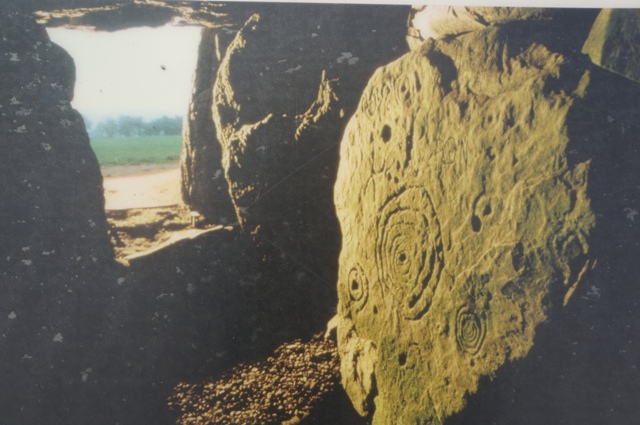
Next stop was Newgrange and this is probably the most awesome and most interesting place I have seen in Ireland. It is a 5,200 year old passage tomb located on a hill in the Boyne Valley. The experience is very well organized. The bus and car park are located a little way from an excellent visitor centre/café/souvenir shop. The walk is through a pergola under some trees. At one point, if you are looking, there is a glimpse through the trees of the hillside with the mound containing the tomb.  The visitor centre itself is half buried in the ground and is a series of circles with grass roofs, so it also looks like a mound. Here you buy tickets (ours were part of the tour deal) and you are organized into time slots of 15 minutes. Then there is a walk through more trees and over a bridge on the Boyne River to waiting mini buses. The buses then take you, in your time slots, about 2km up to the tomb site. There each group (about 20 people) is met by a guide and you get a talk for about 10 minutes on what Newgrange is all about – as far as they know. The guide then takes the group inside, up a 19m long, low, narrow rising passage to the central chamber. More explanation from the guide and then the lights are turned out and starting from total blackout there is a simulation of the winter solstice sun (Dec 21) entering the passage and the chamber. This very dramatic. Each group gets 10 minutes in the tomb before you file out. Unfortunately no photography allowed inside the tomb.

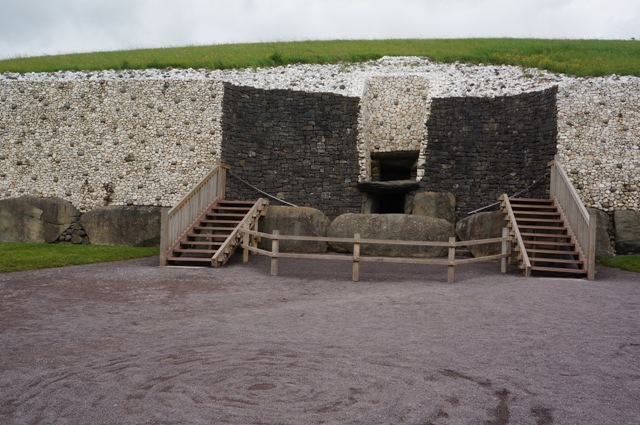
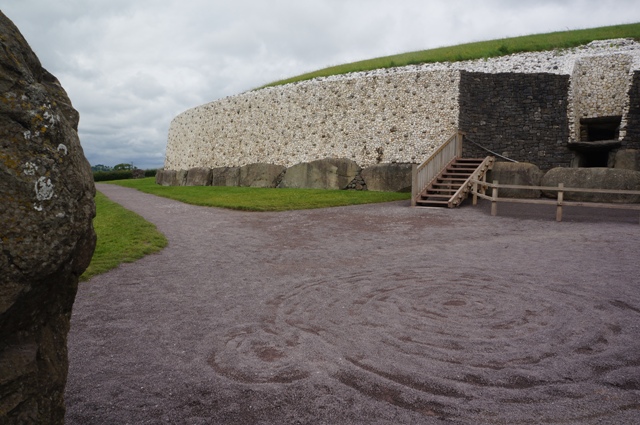
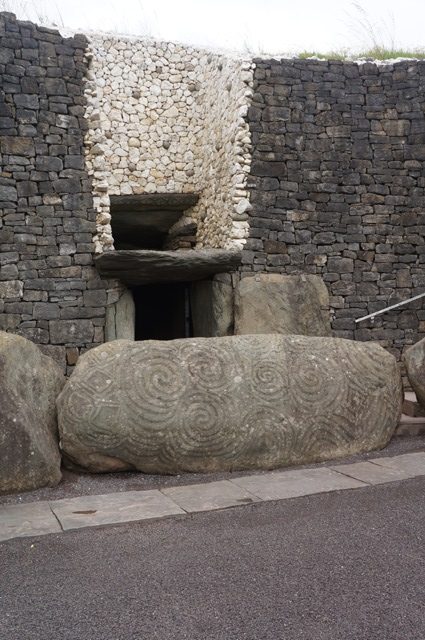
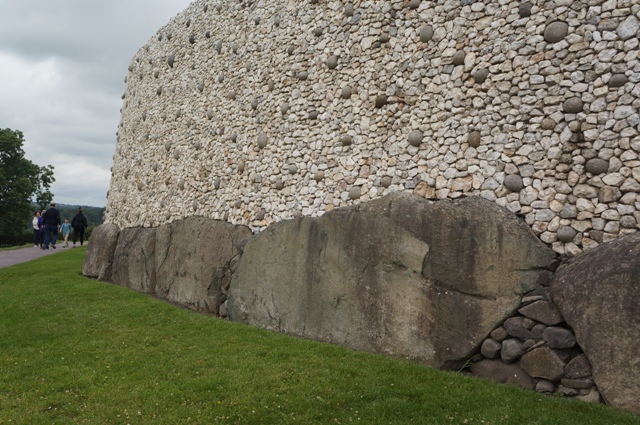
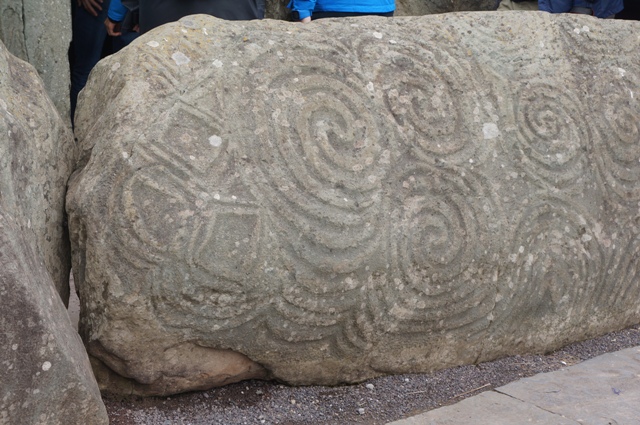
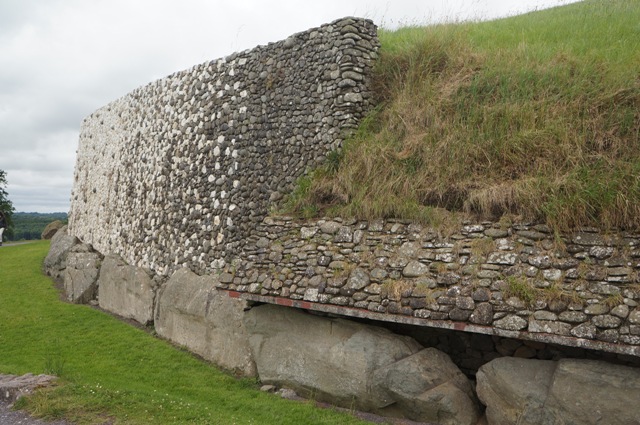
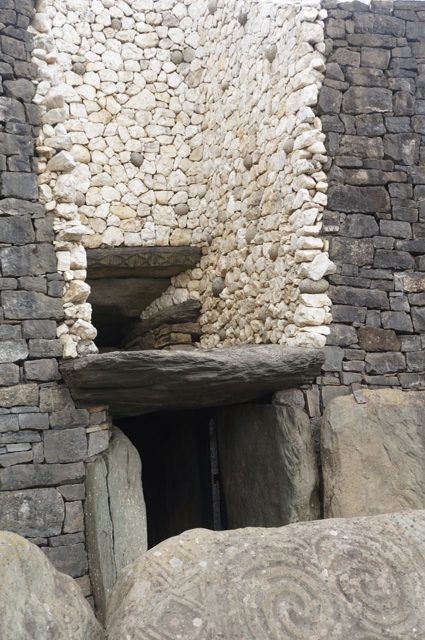
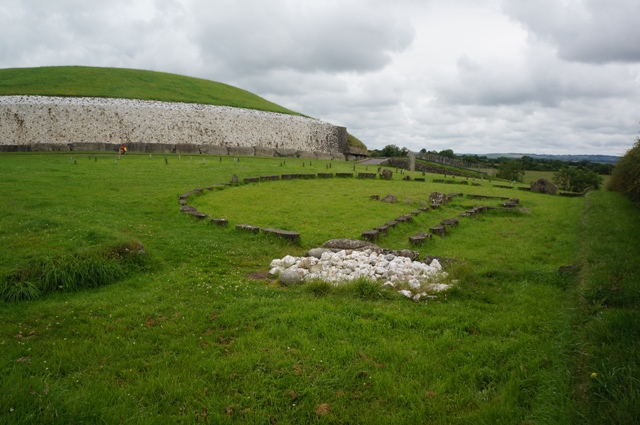
Newgrange was built by Stone Age (Neolithic) farmers and is called a passage tomb but is also thought to be a place of religious, ceremonial, astrological and spiritual importance. It is a mound 85 metres in diameter and 13.5 metres high. The base around the perimeter is retained by 97 large kerbstones some of which are decorated with megalithic art. Part of the perimeter is faced with white quartz stones which makes it look quite dramatic with the green of the grass over the top of the mound. A stone lined and roofed passage leads to a chamber with three alcoves. The chamber has a 6 metres high corbelled roof of diminishing diameter. In each of the alcoves is a large bowl shaped granite stone. The exterior front wall has been reconstructed from existing fallen material and there is some controversy about this.

In the wall above the entrance is an opening called a roof box. Its purpose is to allow sunlight to penetrate the chamber on the shortest days of the year, around December 21st, the winter solstice. At dawn, from December 19th to 23rd, a narrow beam of light penetrates the roof-box and reaches the floor of the chamber, gradually extending to the rear of the chamber. As the sun rises higher, the beam widens within the chamber so that the whole room becomes dramatically illuminated. This event lasts for 17 minutes, beginning around 9am. This is quite remarkable as Newgrange was built 500 years before the Great Pyramids and 1,000 years before Stone Henge.

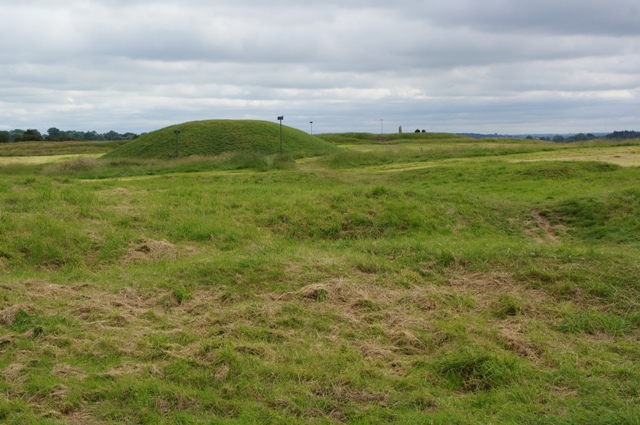
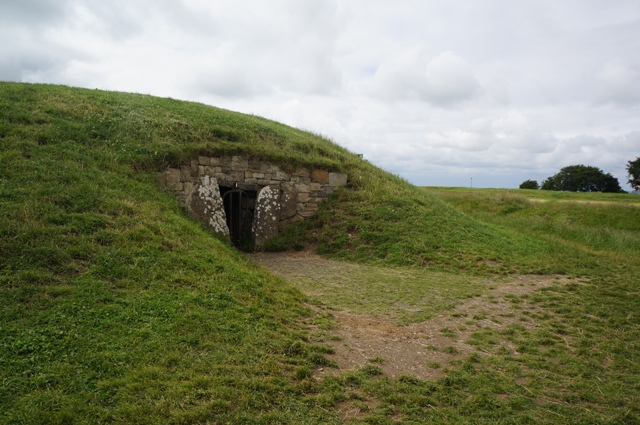
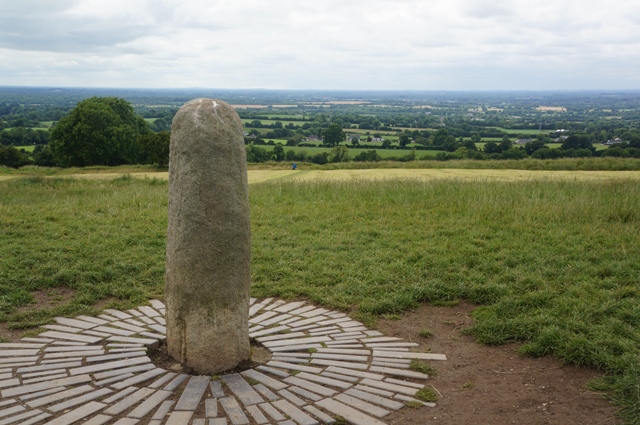
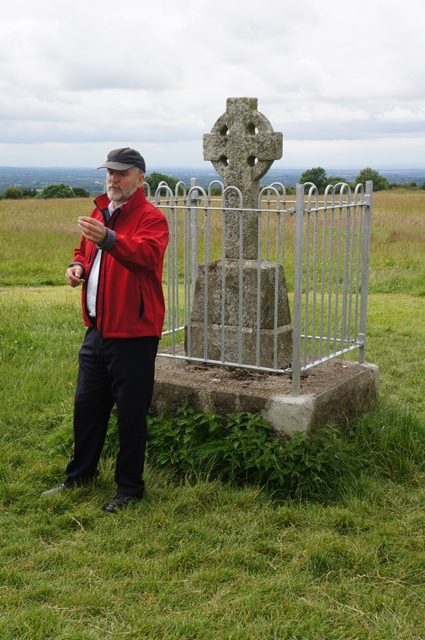
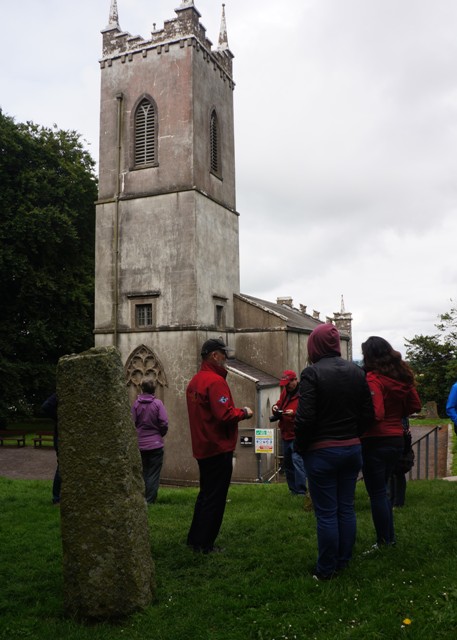
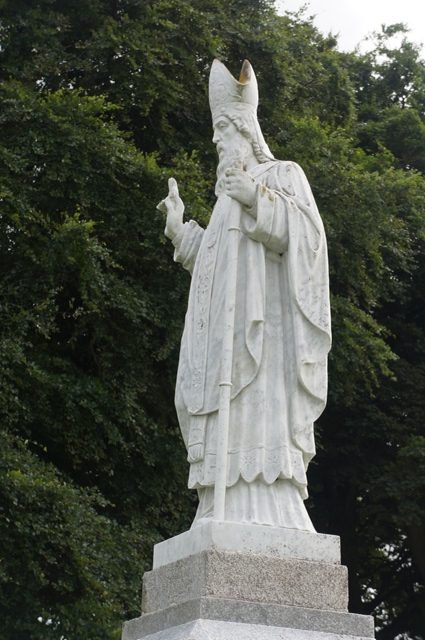
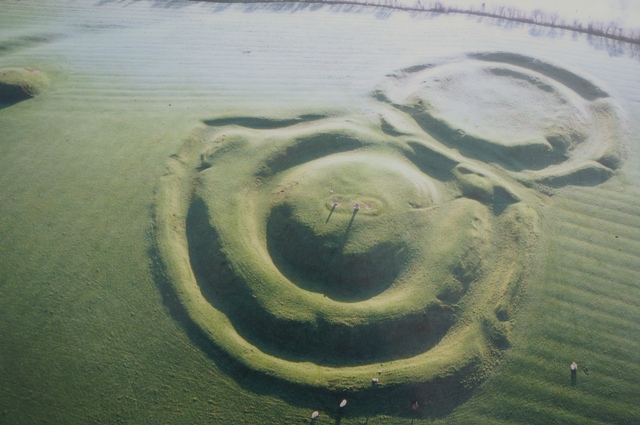
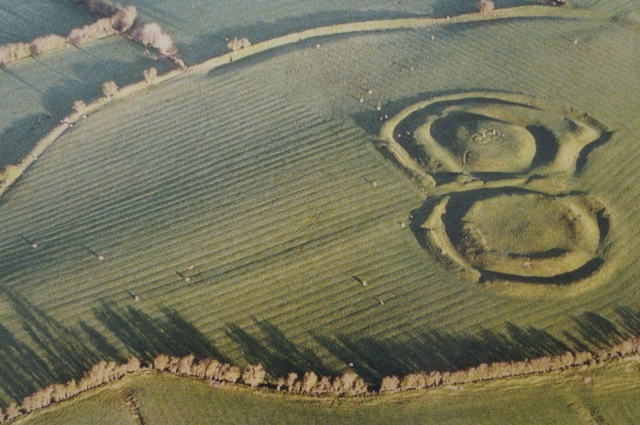
After this we went to The Hills of Tara. This is Ireland’s most revered ancient landscape of huge symbolic importance. It looks very underwhelming being a hill with a series of grassed humps and trenches with a small standing stone, a very small passage tomb (which you can’t go into), a Celtic cross, a statue of St Patrick and a chapel converted to a visitor’s centre. Tara started as the chief pagan sanctuary and communal burial place of early Ireland, about 4,000BC. The five principal roads of Ancient Ireland converged on this place. Generation after generation added to its sacred significance. Eventually it was revered so much that the kings of Ireland’s medieval kingdoms were crowned here. Each royal kingdom is thought to have its own site here. To be crowned King of Tara was considered to be crowned king of all Ireland.

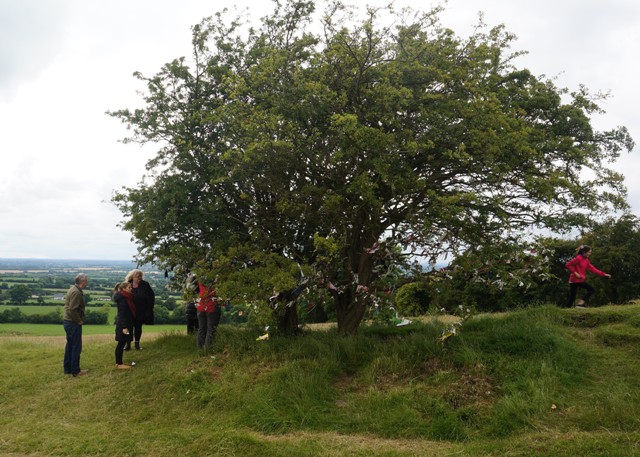
Our driver/guide gave us a long tour/history of the site but I think our minds were still at Newgrange and it was now a bit windy and cold. Archeology fatigue was starting to set in. We did learn about fairy trees. These are actually hawthorn trees and you often see them standing alone in fields. Farmers will not cut them down as that would let the fairies and their spells out. The trees are often circled with stones to further keep the spells in. People will also write wishes onto pieces of ribbon and tie them to Hawthorn trees in the hope of their wishes coming true.

A great day and for anyone visiting Ireland, in my opinion, Newgarnge is a must.